
I-was-a-broke-American-living-in-New-Zealand-A.jpeg

I was a broke American living in New Zealand. A viral TikTok turned my taco stand into 3 restaurants.

This as-told-to essay is based on a conversation with Sean Yarbrough, owner of Broke Boy Taco. It has been edited for length and clarity.

In 2022, I was flipping burgers when the owner of the burger joint asked me what I missed most about the US.

I moved to New Zealand in 2021, and what I missed most was Mexican food. My boss asked if I knew how to cook tacos, and after I told him I did, he said I could cook them the next day. I did, and we tasted them. He told me I should quit my job and sell the tacos. They were that good.

The thing was, I didn’t have any idea where to start. He told me to just buy a little flat-top grill, set up an Instagram account, and start cooking.

I was able to quit my job

A buddy of mine said I should call my venture Broke Boy Taco, and since I’ve been a broke boy my whole life, I decided to go with it.

I figured it couldn’t be all that hard — just buy ingredients, get a table, make a sign, and take a picture to tell people where I was. The burger joint I was working at — Ralph’s — reposted anything I’d put up, so I got a whole bunch of their customers to start.


Sean Yarbrough posing for photo

Sean Yarbrough is the owner of Broke Boy Taco in New Zealand. 

Courtesy of Sean Yarbrough


First, 20 people showed up when I set up outside for the first time. The second time, 40 people showed up. After that, I would say it just doubled every time I cooked, which ended up being once every three weeks to start.

Once I reached 100 customers consistently, I knew I could afford to quit my job and start selling tacos three times a week.

A restaurant owner reached out to me and said they were looking for someone to take over their kitchen because it was sitting empty. I took my little grill and cooked tacos there for six months, paying him 10% of whatever I made.

TikTok really helped my business

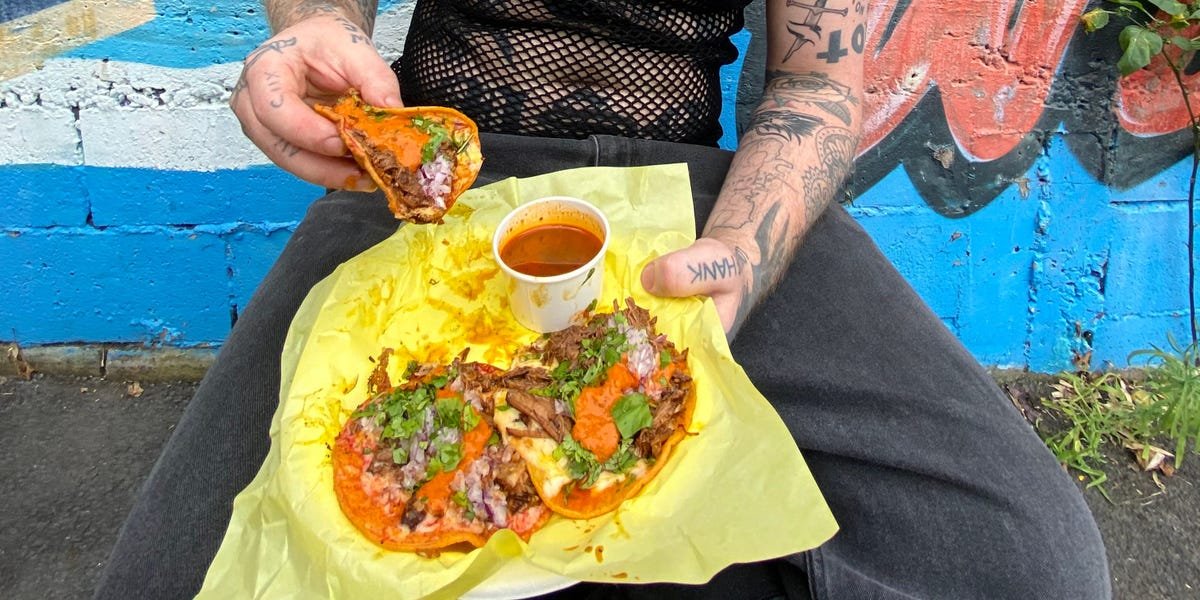
Even though I had been cooking a variety of tacos, I decided to put only three items on my menu: Coke, Birria (slow-cooked beef) tacos, and Birria ramen. It was what I liked most, and what I cooked best.

I asked a friend to record a video of me cooking on his phone and then post it to TikTok and Instagram. The next morning, I woke to thousands of new followers. When I showed up at work the next day at noon to open at 5 p.m., people were already lining up for my tacos.


Sean Yarbrough headshot

Sean Yarbrough’s friend posted about his tacos on TikTok. 

Courtesy of Sean Yarbrough


The minute I saw all those people, I knew I had hit the lottery. If I could convince people to come and try my food, I knew they’d be return customers.

I was homeless most of my childhood

As I shared with people about my story — how I’d been homeless in Kentucky for most of my childhood, how I had been a drug addict and alcoholic, how I had been in jail — they were curious to know who I was and how my tacos tasted. I wasn’t just some rich business owner who wanted to generate income. I just wanted to cook good food.

I saved money, with my eye on buying my own restaurant, and that’s what I did in October 2023.

I kept seeing that a big UFC start would show up in line to buy tacos. People were always surrounding him while he waited to get photos. I told him that if he let me know he was coming, I could get his order ready for when he arrived. We became friends, and he later told me he wanted to invest in my business, so I used the money he invested to buy a food truck.

And then I opened two more restaurants.

It’s all happened in less than three years and feels completely bizarre. It’s unbelievable that people know who I am — this guy from Kentucky cooking tacos in New Zealand. People want photos with me, and know the name of my cat.

I’ve been able to buy my first car — the first car I’ve ever bought — because of Broke Boy Taco.

Sometimes, I think back and ask if I’d change anything, because there was a lot of difficult stuff that got me to this point. I suppose, though, I might not have gotten to where I am if anything had been different.

I’m exhausted from sleeping an average of four or five hours each night, but I’m so happy. I’ve got this opportunity, and I can’t let it go. I’m keeping my head down, staying focused. If this much has happened in such a short space of time, imagine what’s ahead.


Source link

Taco-Bells-CEO-says-the-chains-magic-formula-is-fueling.jpeg

Taco Bell’s CEO says the chain’s ‘magic formula’ is fueling growth as rivals fall flat

Taco Bell CEO Sean Tresvant has a simple explanation for why his brand keeps winning while much of the fast-food industry is struggling: it’s doing more than one thing well at once.

“When you look at being a buzzy brand, you look at value, you look at digital, you look at category entry points and innovation, and all those things are working in concert with each other,” Tresvant told Business Insider. “Other brands can do one or two. When we do it, we get all four right, and we’re very good in each part of that magic formula.”

Yum! Brands, Taco Bell’s parent company, announced during its earnings report on Wednesday that the Mexican-inspired chain delivered 7% same-store sales growth in the fourth quarter, far outpacing the rest of the segment as consumers continue to pull back on dining out.

While much of the fast-food industry is grappling with slowing traffic as customers watch their wallets, Taco Bell’s growth was driven by bigger-ticket transactions, especially among younger diners, even as competitors relied heavily on discounting.

Foot-traffic data backs that up. A Placer.ai analysis of Yum Brands’ fourth-quarter performance found that Taco Bell locations held up better than many quick-service competitors during key value-driven periods, even as broader fast-food visits softened amid inflation fatigue.

Tresvant says Taco Bell’s advantage comes from combining the things competitors often struggle to balance: offering consistently good value rather than short-term deals, rapid-fire menu innovation, and a growing loyalty program that’s actually driving incremental visits. That formula, he told Business Insider, has allowed Taco Bell to keep growing traffic and relevance “in any environment,” even as other fast-food brands fight simply to stay flat.

Taco Bell’s numbers reflect its loyalty push. Tresvant said active loyalty members climbed 31% in the fourth quarter, while digital channels grew 29%, as app-exclusive drops and rewards nudged customers to visit more often. Tresvant said the goal isn’t just engagement, but turning loyalty into repeat traffic — which keeps the brand resilient.

Although value-focused options now make up 17% of Taco Bell’s menu, like its $5, $7, and $9 bundle offerings, what especially appeals to Taco Bell consumers is its pace of menu innovation — even when they’re full price. From the return of its Quesarito and recent launch of its sauce collaboration with Frank’s RedHot, to limited-time beverage offerings at its Live Más Café locations, every new rollout, Tresvant said, is “determined on consumer needs and wants.”

Fast food’s old playbook is breaking down

Across the restaurant industry, traditional quick-service strategies aren’t working as they once did because of the uneven pressure of the K-shaped economy, where lower-income consumers have pulled back on dining out while higher-income spending remains stable.

Many chains have leaned hard into deep discounting and short-term deals to lure customers back, but analysts and industry executives warn that constant promotions can erode pricing power and fail to drive meaningful traffic growth.

At the same time, competitors like Chipotle are recalibrating for smaller, wealthier consumer segments, underscoring how uneven the recovery has been across the sector.

That’s not the strategy for Taco Bell. Instead of narrowing its focus, the chain has leaned on loyalty perks and app-exclusive offers to keep a broad range of customers coming back — particularly younger diners who are more likely to engage digitally even as they cut costs elsewhere.

“We continue to innovate on the menu, but not only on the menu,” Tresvant added. “We’re going to make sure we’re innovating from a guest hospitality standpoint, we’re going to innovate in operations and innovate around the brand, not just in food.”

That means continued exploration of voice AI ordering systems, which are being tested at 600 Taco Bell locations, as well as other efficiency-optimizing technologies to streamline back-of-house operations and improve the guest experience.

It also means giving consumers new ways to stay connected to the Taco Bell brand, like its Y2K-era cross-brand collaboration with Hollister, which sold out late last year.

For Tresvant, that momentum has created rare room to experiment at a time when much of the fast-food industry is still focused on defense.

“The things we’re doing are working, and that just gives us a little bit of permission to take big swings in 2026,” Tresvant said.


Source link