
Elon-Musk-unveils-moonshot-Terafab-project-Here-are-4-takeaways.jpeg

Elon Musk unveils moonshot Terafab project. Here are 4 takeaways.

Elon Musk unveiled more details on his Terafab plans on Saturday evening — and the Tesla CEO has an ambitious vision for the project.

“We’re starting a galactic civilization,” Musk said, speaking from the defunct Seaholm Power Plant in Austin.

The Terafab is Musk’s giant chip manufacturing venture between his companies, Tesla and SpaceX. XAI is also included as the AI startup was acquired by Musk’s space company in February.

The idea of developing a chip manufacturing plant alone is “herculean,” as Morgan Stanley’s semiconductor analysts wrote in a recent note. The amount of money it would take, along with the technical know-how and specialized tools required, is why the industry is split into fabless designers like Nvidia and foundries like TSMC.

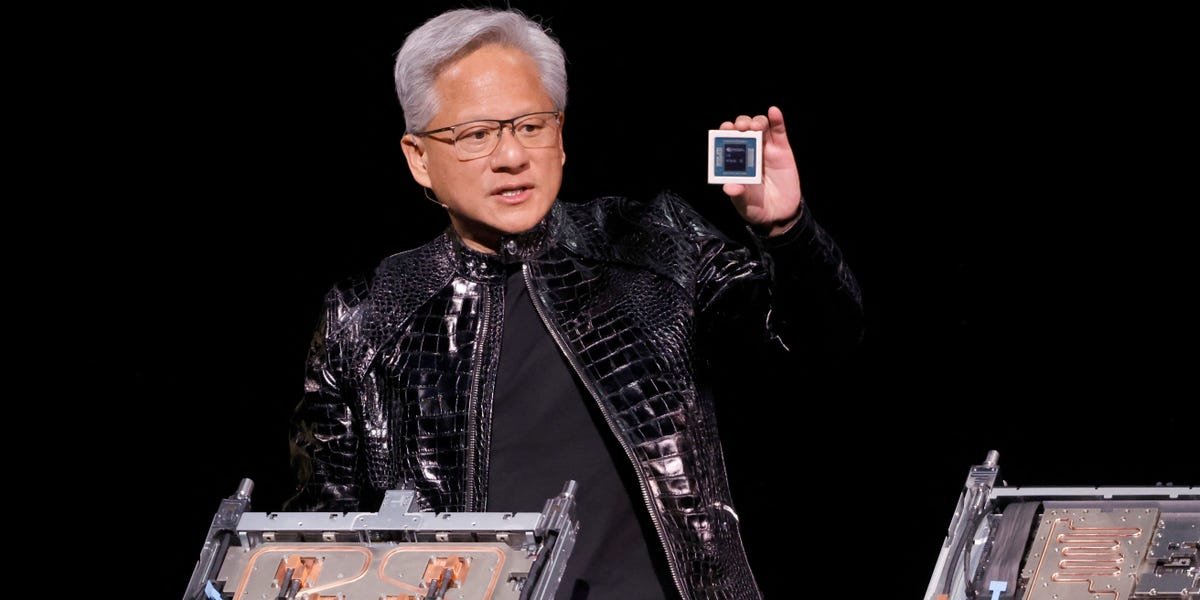
Musk said on Saturday that the Terafab is not only necessary to scale robotaxis and Optimus, Tesla’s humanoid robot, but also to deploy space-based compute. The CEO said the fab will develop chips “designed for space” in order to deploy solar-powered AI satellites.

Here are some takeaways from the announcement.

An all-in-one chip plant

Musk said the Terafab will be a comprehensive plant that will have all the necessary equipment to test, revise, and manufacture the chip.

The CEO is essentially proposing to put some of the validation stages of chip development that are typically done outside a fab plant under one roof.

“To the best of my knowledge, this doesn’t exist anywhere in the world where you’ve got everything necessary to build logic, memory, and do packaging, and test it, and then do masks, improve the masks, and keep looping it,” Musk said.

2 kinds of chips

There will be two kinds of chips the Terafab will make, according to Musk.

One will be designed primarily for Optimus and Tesla’s vehicles, which are being built and trained to be fully autonomous. Musk said the chip will “especially” be for Optimus because he expects the volume of units to be 10 to 100 times more than the volume of cars.

The other chip, called D3, will be specialized for space environments. The CEO said he expects most of the data centers to be housed in lower orbit, requiring the need for a solar-powered AI satellite.

Musk said the cost of deploying AI in space will drop “below the cost of terrestrial AI” in part because space is always sunny, giving way to more power.

“So as soon as the cost to orbit drops to a low number, it immediately makes extremely compelling sense to put AI in space,” he said. “It becomes a no-brainer, basically.”

Mini AI satellites

Part of Musk’s vision for a distributed AI computing network lies in space.

He revealed a concept design of a mini AI satellite, with each one attached with solar power to deliver 100 KW power capacity.

In the future, Musk predicted that satellites would reach the megawatt range.

The CEO said these satellites are ideal because no one wants AI computing centers “in their backyard.”

Petawatts and other moonshots

Musk proposed that in the future, his companies could establish an industrial base on the moon.

That will unlock the ability to create petawatts of AI compute — 1,000 times more than a single terawatt, he said.

The CEO also envisioned free trips to Saturn in a post-scarcity economy where everything is free.

Musk acknowledged the outlandish nature of his “abundance” proposal: “This looks a bit like the opening of Idiocracy with Mike Judge.”



Source link

5-biggest-takeaways-from-Nvidias-Q4-earnings-—-from-the.jpeg

5 biggest takeaways from Nvidia’s Q4 earnings — from the new Vera Rubin chips to an emerging risk

Nvidia moved quickly to calm investor nerves during its earnings call on Wednesday.

The chipmaker delivered another blowout earnings report that underscored how little momentum the AI boom has lost. As the world’s most valuable company by market capitalization, Nvidia topped Wall Street expectations across the board in its fiscal fourth quarter and issued a forecast that sailed past analyst estimates.

The upbeat results arrive at a delicate moment for AI-linked stocks, which have recently shown signs of fatigue.

From incorporating Groq into Nvidia systems to an update on the new Vera Rubin chips, here are the biggest takeaways from Nvidia’s fourth-quarter earnings call.

1. Nvidia is becoming the backbone of Big AI

Over the course of the call, CEO Jensen Huang repeatedly positioned Nvidia at the center of the AI industry’s biggest players.

OpenAI’s latest Codex model is trained and runs on Nvidia’s Blackwell systems, and the companies are close to reaching a multibillion-dollar partnership, he said.

Meta is deploying Nvidia GPUs in its push toward superintelligence, and Nvidia also announced an up to $10 billion investment in Anthropic.

Huang said his goal is to ensure that every form of AI — from large language models to robotics — is built on its platform.

“We want to take the great opportunity that we have as we’re in the beginning of this new computing era, this new computing platform shift, to put everybody on Nvidia,” he said.

2. Huang teases Groq integration as AI shifts to inference

When asked about Nvidia’s future road map and whether it plans to build customized chips for specific workloads, Huang said the company prefers to keep as much as possible within a single design.

That said, he teased a potentially significant move involving Groq, saying more details would come at Nvidia’s GTC conference in March.

Late last year, Nvidia struck a non-exclusive licensing agreement with Groq for its low-latency AI inference technology — a deal that also brought Groq’s founder and other top engineers on board.

“What we’ll do is we’ll extend our architecture with Groq as an accelerator in very much the ways that we extended Nvidia’s architecture with Mellanox,” Huang said, referring to the networking company Nvidia acquired in 2020.

As AI workloads shift from training large models to running them, the move suggests Nvidia isn’t going to abandon its core platform but rather fold specialized inference capabilities in.

3. Samples of the Vera Rubin chips have been shipped

Nvidia has begun shipping early samples of its next-generation Vera Rubin chips to customers.

Chief Financial Officer Colette Kress said during the earnings call that the company delivered “our first Vera Rubin samples” earlier this week and expects broader shipments of the new chips to begin in the second half of 2026.

“We expect every cloud model builder to deploy Vera Rubin,” Kress said.

Huang previously said at the Consumer Electronics Show in January that compared to the Blackwell model, Rubin has more than triple the speed, could run inference five times faster, and can deliver significantly more inference compute per watt of energy.

4. Addressing future risks

Nvidia appears concerned about whether there will be enough resources to sustain the demand for data centers.

In its latest 10-K report filed with the Securities and Exchange Commission, Nvidia listed the availability of data centers, energy, and capital to support the data center buildout as a risk factor, writing that “any shortage of these and other necessary resources could impact our future revenue and financial performance.”

“Expanding energy capacity to meet demand is a complex, multi-year process involving significant regulatory, technical, and construction challenges,” wrote Nvidia.

“In addition, access to capital can be particularly constrained for less-capitalized companies, which may face difficulties securing financing for large-scale infrastructure projects,” Nvidia added.

5. An OpenAI deal may finally be ‘close’

Huang addressed the company’s growing slate of strategic investments, including a deal with OpenAI, as questions mount over whether Nvidia’s strategy creates circular relationships with its own customers.

Speaking about Nvidia’s investments in AI companies such as Anthropic and OpenAI, Huang said the strategy is centered on strengthening the broader AI ecosystem and ensuring the next generation of software and hardware is built on Nvidia’s platform, from large language models to robotics.

“We want to take the great opportunity that we have, as we’re in the beginning of this new computing era,” Huang said.

Huang confirmed that Nvidia is “close” to finalizing a deal with OpenAI. The partnership was first outlined in 2025 as part of a massive AI infrastructure initiative that could reach $100 billion.


Source link

The-biggest-names-in-AI-are-gathering-for-a-summit.jpeg

The biggest names in AI are gathering for a summit in India. Here are 5 of the biggest takeaways.

Google CEO Sundar Pichai said the world must not let the digital divide “become an AI divide.” He said expanding access to compute infrastructure, connectivity, and training is essential as AI reshapes economies.

Pichai said AI represents “the biggest platform shift of our lifetimes” and could drive “hyper progress” across science, healthcare, and economic development. But its benefits are neither “guaranteed nor automatic.”

“We must be equally bold in tackling problems in regions that have lacked access to technology,” Pichai said. “We cannot allow the digital divide to become an AI divide. That means investing in compute infrastructure and connectivity.”

Governments must act both as regulators and innovators to ensure AI improves public services and broadens opportunity, he added.

Anthropic CEO Dario Amodei said that while AI capabilities are advancing rapidly, there’s a gap between those capabilities and real-world impact.

“There is this duality between the fundamental capabilities of the technology and the time that it takes for those capabilities to diffuse into the world,” he said.

“There are just frictions to adopt things through enterprises, and I think even more so in the developing world,” he added.


Source link

Katherine Li, West Coast breaking news reporter at the Business Insider.

3 takeaways from Elon Musk’s xAI all-hands, from a moon city to a company restructuring

XAI just had its first all-hands meeting since its merger with SpaceX.

In the recorded event on Tuesday night, CEO Elon Musk outlined a new organizational structure — the main Grok product and Grok Voice, Grok Code, Grok Imagine, and the company’s Macrohard project. The all-hands was later posted on X on Wednesday.

From a plan to build a catapult, or mass driver, on the moon to soothing nerves after the restructuring, here are the main takeaways from xAI’s latest all-hands meeting.

1. Addressing the restructure

There are now only six members left of an original founding team of 12 at xAI, following two more exits earlier this week.

Musk addressed the new restructuring.

“Because we’ve reached a certain scale, we’re organizing the company to be more effective at this scale,” said Musk. “Now, naturally, when this happens, there are some people who are better suited for the early stages of a company and less suited for the later stages.”

On Monday, Tony Wu announced his resignation in a post on X, writing that it was “time for my next chapter.” Less than 24 hours later, fellow cofounder Jimmy Ba followed suit, posting that Tuesday was his last day and thanking Musk for “bringing us together on this incredible journey.”

2. Shooting from the moon

Musk is promising the moon, literally.

“Ultimately, we see a path to maybe launching as much as a terawatt per year of compute from earth, but what if you want to go beyond a mere terawatt per year?” said Musk. “In order to do that, you have to go to the moon.”

His goal is to launch AI sattelites from the moon, he told employees.

“I can’t imagine anything more epic than a mass driver on the moon and a self-sustaining city on the moon, and then going beyond the moon to Mars, going throughout our solar system, and ultimately being out there among the stars and visiting all these star systems,” Musk added. “Maybe we’ll meet aliens.”

Google CEO Sundar Pichai is also researching the feasability of data centers in space, citing limited resources on Earth, such as water and electricity. Data centers are already facing backlash for driving up utility costs for average households.

3. Product updates and launches

A stand-alone app for XChat and a new transaction app called X Money are coming in the next few months, according to Musk.

During the all-hands meeting, Musk said that users who only want to use the messaging function could use the standalone XChat app without visiting the X platform. He said the app will also be on desktop and can handle multi-user video calls.

“For XMoney, we actually had XMoney live in closed beta within the company, and we expect in the next month or two to go to a limited external beta and then to go worldwide to all X users,” said Musk.

“And this is really intended to be the place where all the money is, the central source of all monetary transactions,” Musk added. “So it’s really going to be a game changer.”


Source link

Madison Hoff's face on a gray background

4 takeaways from the final jobs report of the year

This week brought a vanishingly rare jobs report on Tuesday after the longest government shutdown in history threw a wrench in federal data collection, and it was a mixed bag.

The new data emphasized trends we’ve been seeing this year, including unemployment inching up and a tougher market for many job seekers.

The Bureau of Labor Statistics delayed the report from December 5 to extend data collection and processing after its activities were affected by the government shutdown that lasted from October to about mid-November.

The new data allowed economists, job seekers, reporters, and more to understand how job growth looked in both October and November; the BLS didn’t produce an October jobs report last month. While the report was missing items like the October unemployment rate, it gives us a fresh look at the labor market.

Here are four takeaways from the latest jobs report.

The job market is still frozen

Both Nicole Bachaud, a labor Economist at ZipRecruiter, and Laura Ullrich, the director of economic research in North America at the Indeed Hiring Lab, described the job market as still stagnant.

The US economy added 64,000 jobs in November, surpassing the 50,000 expected. That comes after a big net loss in October, largely because federal workers who took the deferred resignation offered as part of the DOGE job cuts earlier this year finally appeared in the data after the deferment ended.

Data published by the BLS last week showed job openings have been trending upward as of October, although they’re still far below what job seekers were accustomed to a few years ago. Workers’ confidence has also been low, as October’s quit rate was the lowest since 2020.

“Job growth has been very slow over the course of 2025, and it doesn’t seem like we’ve turned around quite yet to translate the pent-up demand for hiring and the recent increase in job openings into actual hires,” Bachaud said, adding that uncertainty over tariffs, inflation, and geopolitical issues has added to companies holding back on hiring plans.

“That’s the big question mark — when is that uncertainty going to finally ease up?” she said.

Healthcare’s job growth masks weakness in many other sectors

The better-than-expected growth in November was largely helped by job growth in healthcare, so Ullrich said this “doesn’t show a whole lot of strength in the macro labor market.”

Healthcare and social assistance sectors together had a net gain of 64,000 over the month. Most industries had a decline or a small rise in employment. Manufacturing, for instance, has continued its ongoing net loss.

Healthcare has been a bright spot throughout the year, and Bachaud said there will still be demand for workers as the population ages. However, it could be challenging for job seekers to pivot into these positions. Ullrich said many jobs in the sector typically require certain training and education.

“Construction is the other industry that we saw really strong growth in, as there is demand for continued skilled trades,” Bachaud said. Construction added 28,000 jobs, with the largest growth from specialty trade contractors.

Employers still have the upper hand

Wage growth has gradually cooled and reached the lowest point so far this year in November. Average hourly earnings rose 3.5% from a year ago.

The generally softer job market has made it harder for workers to negotiate higher wages. Ullrich said physicians have better wage-setting power than roles that aren’t seeing a lot of openings and where talent is waiting on the sidelines for a role.

She said employers can probably offer lower raises to current talent, too, since more people are staying put.

“If you know people aren’t quitting, you might not have to offer them the same bump in pay that you would if the quits rate was higher,” she said. “That being said, there’s still very tight competition for certain roles.”

Unemployment is the highest since 2021

The October 2025 unemployment rate won’t ever be released because that data, typically gathered from a survey of around 60,000 households a month, couldn’t be collected during or after the government shutdown. However, unemployment had been trending upward before that, and November was the same story.

November’s unemployment rate was the highest since September 2021 and slightly higher than expected. Still, the Bureau of Labor Statistics warned of data issues with unemployment and related figures over the next few months due to the missing October household survey, so economists and others will have to see how the rate continues to pan out.

Despite the data challenges, Bachaud said the higher unemployment rate and stickier long-term unemployment, where people have been out of a job for at least 27 weeks and actively searching, indicate that it has become harder to land a job.


Source link