
Chinese-toy-exec-on-what-it-takes-to-make-the.jpeg

Chinese toy exec on what it takes to make the next Labubu

An executive of one of Pop Mart’s biggest competitors said there is a recipe for making a “golden” character like Labubu.

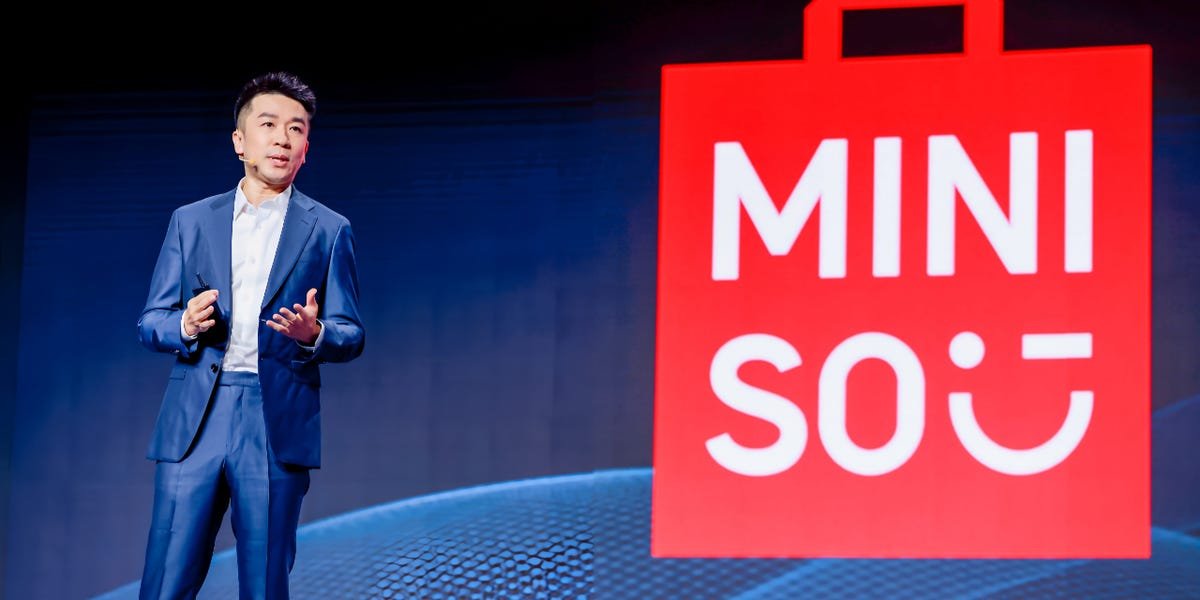
Miniso, a Chinese lifestyle company, is the force behind Top Toy, a company that makes blind boxes. Its intellectual property characters include YoYo, a little figure with a tilted head, as well as IP collaborations with Sanrio, Disney, and Chiikawa.

Robin Liu, Miniso’s marketing chief, said IPs like Labubu have driven a rise in interest in collectibles.

“To win many fans or achieve commercial success, an IP must have strong recognizability and uniqueness — not look generic,” Liu told Business Insider. “Look at Pop Mart: Molly’s pout, Labubu’s nine teeth, Cry Baby’s big tears. All have clear characteristics.”


A customer is seen checking Labubu toys at the Pop Mart shop in the Mega Bangna shopping mall.

Labubu’s distinctive teeth are what make it recognizable. 

Patrick Chengzhi Wang/SOPA Images/LightRocket via Getty Images


“Strong recognizability from the start is crucial, like a singer’s voice being memorable,” Liu said.

He said IPs often have short life cycles of three to five months, but some elements help extend their relevance. These include frequent launches of new collections within the IP and maintaining a degree of scarcity in the secondhand market.


Miniso's IP character YoYo.

Miniso has its own IP characters, like YoYo. 

Miniso


“For our own IP YoYo, the initial launches sold strongly and many channels requested more supply, but IP managers may hold back to maintain scarcity and secondhand premiums,” Liu said. “We won’t overproduce just because sales are hot. We may wait for the next generation with new themes and designs to keep products fresh.”

And lastly, he said, conducting physical pop-ups was important to get the word out about the product and let customers see it. Miniso has several concept stores called Miniso Land in China and around the world.

Top Toy is a growing business for Miniso. In its latest quarter, the toy spinoff earned sales of $80.7 million, an increase of 111% from the same period the year before. Miniso’s total quarterly sales were about $814.3 million.

As of September, Miniso had 7,830 stores globally, with over 3,400 located outside China.

The company relies on a fast product development pipeline. Every week, staff go through 10,000 prototypes, narrowing it down to a list of the top 100 products to roll out into the market, Liu said.

Collectables like Labubu have skyrocketed in popularity in recent years, as Gen Z veers away from big-ticket items toward small luxury purchases.

Labubu has enjoyed more than a year of viral success, with its toys being highly popular among “kidults” — adult toy collectors, who buy them as emotional support objects. Liu said Miniso was working to keep this consumer group hooked.

“We predict big-toy markets — adult collectibles and children’s toys — both have large growth potential, with adult collectibles expected to grow faster,” he said.

Other toys, such as Jellycat, Smiskis, and Sonny Angels, have experienced similar demand. Particularly hot in the toy industry are blind boxes, which are toys sold in packaging that keeps the toy hidden, adding an element of surprise during unboxing.

Miniso is now looking to expand its business in the US. It already has about 350 stores in the country, Liu said, and the plan is to expand beyond 500 stores.


Source link

Polymarket-takes-down-nuclear-detonation-bet-after-online-backlash.jpeg

Polymarket takes down nuclear detonation bet after online backlash

  • Polymarket was allowing traders to wager on whether a nuclear weapon would detonate this year.
  • That stirred backlash online, particularly after suspicious trading in the wake of the Iran strikes.
  • The market has now been taken down.

If you were looking to make money on nuclear detonations, you now have one less avenue to pursue.

Overnight, Polymarket took down a market that allowed users to trade on where a nuclear weapon would detonate by March 31, June 30, or simply before 2027.

Traders who bet yes on any of those timelines would be paid out if there were a nuclear detonation anywhere on Earth, including in an offensive use, a test, or even an accidental detonation.

The market had over $650,000 in total trading volume as of Tuesday, according to an archived snapshot of the site. A message on the webpage now reads: “This event has been archived.”

It’s not yet clear why Polymarket took down the site, or whether users who put money into the market will get refunds. An earlier version of the market, which covered 2025, resolved without incident last year.

A spokesperson for Polymarket did not respond to a request for comment.

The suspension came after several users on X expressed outrage about the existence of the market, particularly amid a raft of suspicious trades on the platform in the wake of the killing of Iranian Supreme Leader Ali Khamenei.

This isn’t the first time Polymarket has come under public scrutiny for hosting markets related to armed conflict.

After an anonymous Polymarket trader made over $400,000 on a suspiciously well-timed bet on Venezuelan President Nicolás Maduro’s political future, a lawmaker introduced a bill to ban prediction market insider trading by government officials.


Source link

Sam-Altman-says-concerns-of-ChatGPTs-energy-use-are-overblown.jpeg

Sam Altman says concerns of ChatGPT’s energy use are overblown: ‘It also takes a lot of energy to train a human’

Sam Altman is pushing back on the idea that ChatGPT consumes too much energy.

“One of the things that is always unfair in this comparison is people talk about how much energy it takes to train an AI model relative to how much it costs a human to do one inference query,” Altman told The Indian Express last week on the sidelines of a major AI summit. “But it also takes a lot of energy to train a human.”

Altman suggested it’s not an apples-to-apples comparison, arguing that it’s unfair to discount the years spent nurturing and educating someone to be capable of making their own inquiries.

“It takes a lot of energy to train a human,” he said, prompting some laughter in the crowd. “It takes, like, 20 years of life, and all of the food you eat during that time before you get smart.”

Altman said the clock really began thousands of years ago.

“It took, like, the very widespread evolution of the 100 billion people that have ever lived and learned not to get eaten by predators and learned how to, like, figure out science or whatever,” he said.

Altman also called out what he said were “totally insane” claims on the internet that OpenAI is guzzling down water to power ChatGPT.

“Water is totally fake,” Altman said, when asked about concerns AI companies use too much water. “It used to be true, we used to do evaporative cooling in data centers, but now that we don’t do that, you know, you see these like things on the internet where, ‘Don’t use ChatGPT, it’s 17 gallons of water for each query’ or whatever.”

In June, Altman said that the average ChatGPT query consumes roughly the amount of energy needed to power a lightbulb for a few minutes.

“People are often curious about how much energy a ChatGPT query uses; the average query uses about 0.34 watt-hours, about what an oven would use in a little over one second, or a high-efficiency lightbulb would use in a couple of minutes,” he wrote on X.

Altman said it is fair as a whole to point out the AI industry’s overall energy consumption because of the large growth in usage. He said it’s why he and other AI CEOs have pushed alternative energy sources like solar, wind, and nuclear.

Unlike other CEOs, namely xAI’s Elon Musk, Altman is dismissive of the idea that space-based data centers are realistic in the next decade, a concept that some companies have floated as a way to reduce energy consumption.

Outside of OpenAI, Altman is a major investor in nuclear energy. He previously served as chairman of Oklo, a nuclear energy startup, and has been a major backer of Helion, which plans to build what it calls “the world’s first fusion power plant” in Washington state.

In the US, data center energy consumption is becoming a major topic. Last month, President Donald Trump said he was working with tech companies on “a commitment to the American people” to ensure that citizens don’t pay higher energy bills because of a nearby data center.

Consulting firm McKinsey & Company estimated last year that data centers could account for 14% of total power demand in the US by 2050.


Source link

I-embedded-myself-in-a-vibe-coding-team-at-Geminis.jpeg

I embedded myself in a vibe coding team at Gemini’s AI hackathon in Singapore. Building an app in 7 hours takes real work.

  • I spent seven hours with a vibe coding team at Google’s Gemini 3 hackathon in Singapore.
  • Watching from the sidelines was intense.
  • From prompting and debugging to filming the demo — here’s how it all unfolded.

Just after sunrise, four vibe coding enthusiasts from Malaysia crossed into Singapore with a loose idea — and a bet that AI could build most of their app.

Hours later, they were racing to prototype it at Google’s Gemini 3 Hackathon in Singapore.

The four friends, all in their late 30s to 40s, came from different professional backgrounds. Chan Wei Khjan is an accountant. Chan Ler-Kuan lectures on AI at a private university. Loh Wah Kiang works in IT. Lee How Siem, who goes by Benny, is the chief technology officer of a Malaysian startup.

Their initial idea was a “feng shui” app to analyze properties in Singapore — a potentially lucrative use case in a market obsessed with housing and wealth accumulation. Feng shui is a traditional Chinese practice that evaluates how a person’s surroundings, along with birth factors, influence luck and well-being.

I embedded with the team at Google’s developer space in Singapore in January to observe how a vibe-coding project comes together — or nearly falls apart — in seven hours.

9:30 a.m.: The brief

Thorsten Schaeff from Google DeepMind welcomed the participants.

Lee Chong Ming/Business Insider

The assignment: Teams of up to four people had to build a working demo, publish a public repository with code, and submit a short video explaining their project by 5:30 p.m.

Each project had to fit into one of six tracks, including generative media, deep research, and enterprise orchestration.

Organized by Google DeepMind and 65labs, Singapore’s AI builder collective, the hackathon featured a 100,000-credit Gemini API prize pool, with first place getting 30,000 credits.

By the end of the day, 189 participants had built 76 projects.

10:30 a.m.: Getting started


Hackathon team getting started

The team discusses how to prototype their idea.

Lee Chong Ming/Business Insider

The team had pivoted to a new idea due to time constraints: a feng shui app that could analyse a user’s outfit and workspace through the phone camera in real time and assess how “lucky” they were.

Wei Khjan took the lead on prompting. He typed the first instructions into Claude, asking it to generate the workflow and code. Ler-Kuan focused on whether the AI’s output aligned with feng shui concepts. Wah Kiang and Benny hovered over the codebase, refining ideas and flagging issues.

“For people who don’t know how to read code, it’s helpful to have people who do,” Wei Khjan said.

While waiting for the code to be generated, Ler-Kuan opened Google’s AI Studio to design the app’s logo. They called their app “Feng Shui Banana.”

11:40 a.m.: The bugs arrive


computer screen with code

The implementation plan was generated by AI.

Lee Chong Ming/Business Insider

After about an hour, Claude generated the initial codebase for the app. It was designed to work with the Gemini Live API, enabling real-time image and text analysis. It ran but was riddled with bugs.

An error message flashed when they tested the camera feature, so Wei Khjan copied the error back into the AI and asked for it to be fixed. Minutes later, the feature worked.

It wasn’t right. The feng shui logic was off, especially where colour analysis intersected with the user’s birth timings. Ler-Kuan manually corrected the underlying dictionary and its mappings.

The team kept prompting to tighten the features: shorter explanations, clearer output, and more streamlined user interfaces.

By 12 p.m., the app was rough, but it existed.

12:20 p.m.: Lunch can wait


Testing the feng shui app

Ler-Kuan tests the camera feature on the app.

Lee Chong Ming/Business Insider

Lunch arrived. The team stayed glued to their screens.

The app didn’t respond instantly when a user changed their outfit, nor did it update its feng shui analysis in real time.

Wei Khjan explained how one prompt matters. Instead of issuing commands, he asked the AI to “discuss it with me.” The shift changed how the model reasoned, and it worked more like a collaborator.

After some prompting, the app updated with a real-time camera analysis. It was striking to watch a feature emerging from a short back-and-forth with AI.

1 p.m.: Putting the app to the test


Screenshot of me testing the app

A screenshot of the feng shui app on my phone as I test its camera feature.

Lee Chong Ming/Business Insider

I helped the team test the app.

The camera correctly identified what I was wearing: a dark green polo, a yellow participant tag, and a white name card hanging from my neck. According to the app, I was already wearing colours aligned with my luck for the day.

The app suggested small tweaks, such as additional accessories, that could enhance the feng shui of my outfit.

1:20 p.m.: Pizza break


Pizza break

The team munched down their pizzas in about 20 minutes.

Lee Chong Ming/Business Insider

They finally had lunch and joked around to ease the tension. Four hours remained before they had to submit their project.

1:40 p.m.: Back to work


Feng shui banana landing page

The landing page for their app.

Lee Chong Ming/Business Insider

Ler-Kuan shifted focus to workspace feng shui, feeding knowledge into the model and refining how the app would evaluate desks and work setups. Wah Kiang and Benny worked on the video demo.

By 2 p.m., they had a landing page that looked animated and 3D. When I asked Wei Khjan how he felt, he smiled.

The team also revisited the app’s tagline. After cycling through suggestions from multiple AI models, they settled on a line that didn’t come from an AI at all: “A wisdom, not a superstition.”

3 p.m.: Filming the demo


Filming the demo

Wah Kiang and Benny are filming Ler-Kuan as they reenact scenes for their demo video.

Lee Chong Ming/Business Insider

By late afternoon, the restlessness was showing. The team snacked and paced, then decided to film the video explaining their project.

They used Gemini to generate a storyboard for the demo video. The model laid out several scenes and drafted the script. The team followed along, filming clips and stitching everything together as they went.

Their workspace feature was also up and running.

4 p.m.: Final touches


Hackathon team scrambling

The team is hard at work as the deadline approaches.

Lee Chong Ming/Business Insider

The app had come together nicely. With some time to spare, they decided to add audio output for users who prefer listening to reading on a screen.

The first attempt to generate a voice using AI fell flat. It sounded robotic.

After debugging and several iterations, they landed on a voice they liked, similar to how a Chinese feng shui master might speak.

5:30 p.m.: Deadline


Finishing the hackathon

Taking a group photo as they submit the project.

Lee Chong Ming/Business Insider

As the deadline approached, the team was still stitching clips for their video and nitpicking the AI-generated presenter voice.

The organizers had urged teams to submit early. With about 15 minutes to spare, they made the call to lock the final cut and hit submit.

Then it was over. The hunger hit immediately, and everyone got in line for some well-deserved food.

Even as an observer, watching from the sidelines was tiring. Seven hours of vibe coding turned out to be anything but effortless.

The team didn’t win a prize, but agreed that the hackathon had been worth it.

“Sometimes, the best experiences come from saying ‘yes’ without overthinking,” said Ler Kuan. “Innovation starts with curiosity and a little bit of spontaneity.”

Do you have a story to share about vibe coding? Contact this reporter at cmlee@businessinsider.com.


Source link