
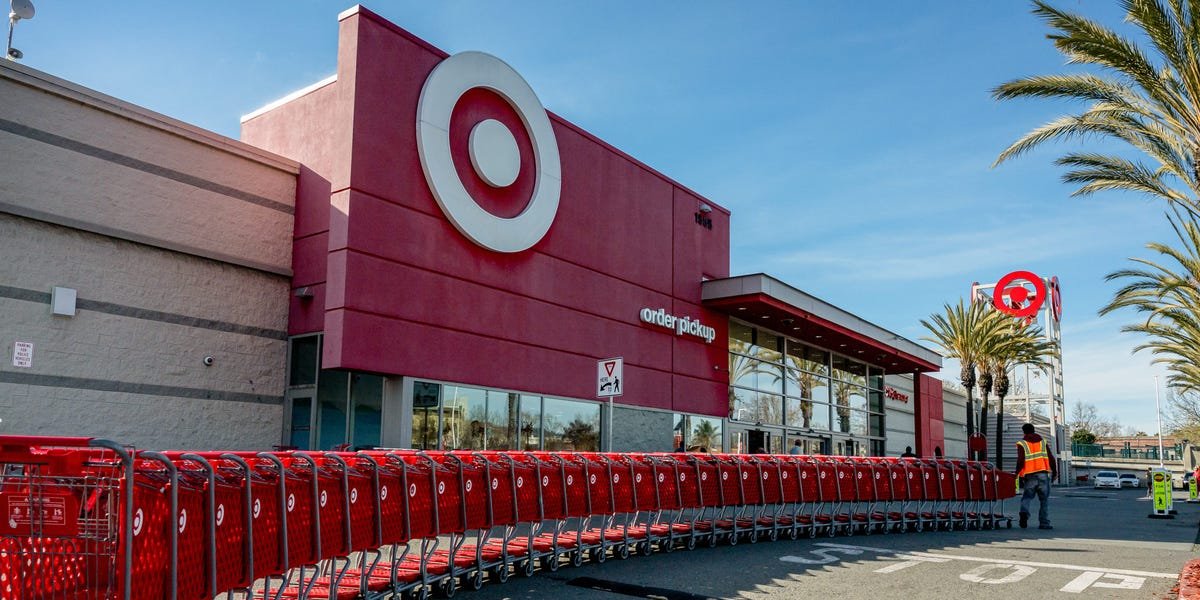
Target-has-a-warning-if-you-use-Googles-AI-to.jpeg

Target has a warning if you use Google’s AI to shop

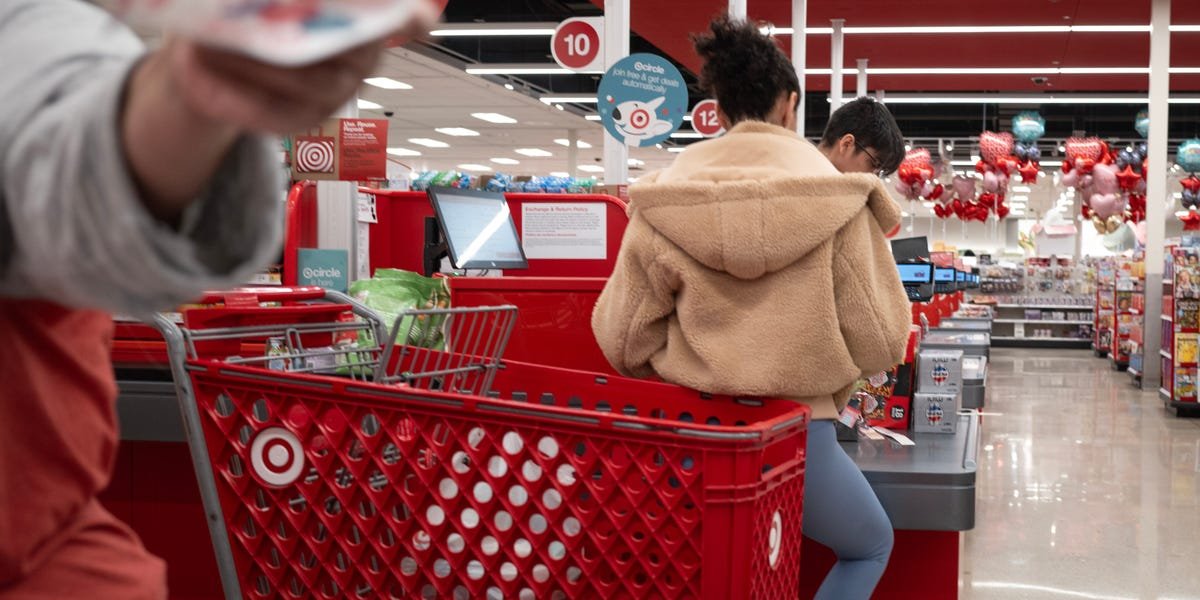
Your Target run could soon be handled by AI — and the retailer wants shoppers to know they’ll be on the hook for those purchases.

Target updated its terms and conditions on March 22 as it prepares to launch a partnership with AI bot Google Gemini. The integration could enable the AI to suggest products and complete purchases on a shopper’s behalf. The agent would not be able to buy products without the shopper’s approval.

The new terms and conditions say that if a customer authorizes an AI shopping agent to act on their behalf, those purchases and transactions would be “considered transactions authorized by you.”

In other words, the customer would still have to pay, even if, let’s say, the bot ordered the wrong item.

The policy also notes that Target does not guarantee that third-party AI tools “will act exactly as you intend in all circumstances.”

A Target spokesperson confirmed that the policy change is tied to the coming integration with Google’s Gemini AI. When that integration is rolled out, the spokesperson said products may still be eligible for in-store and online returns and exchanges.

AI agents cannot currently make purchases on a Target shopper’s behalf, though the retailer has introduced AI-powered tools designed to make shopping easier both online and in stores.

The policy changes signal how online and in-app shopping could look in the future — and how important AI is to retailers.

“This is a significant shift in that it signals the age of agentic commerce is becoming a reality for many retailers,” Neil Saunders, the managing director of retail at GlobalData, told Business Insider. “That said, I don’t think Target is expecting this to be a huge piece of their sales pie just yet — agentic commerce is still at a very embryonic stage.”

AI shopping is becoming a reality

Target — along with its competing retailers — continues to roll out new AI-powered shopping experiences.

In November, Target launched a product recommendation tool with OpenAI’s ChatGPT. Then, earlier this year, the retailer announced a separate integration with Google’s Gemini.

Instead of opening Target’s app or website, shoppers could ask Gemini for recommendations — like what to buy for a workout — and then proceed to checkout.

Because Gemini can connect to Target on a user’s behalf, rather than simply directing them to its app or website, the company spokesperson said it needed to update its terms to reflect that a third party may be involved in the transaction.

Amazon and Walmart have each rolled out in-house AI assistants — Rufus and Sparky, respectively — built directly into their platforms. Walmart also has deals with the maker of ChatGPT, OpenAI, and Google Gemini.

Both retailers have also updated their terms and conditions to account for AI. Walmart says its AI may produce text that contains “errors and omissions,” and warns shoppers they “should review and verify” all purchases before hitting checkout. Amazon has emphasized safeguards and accuracy in its AI disclosures, rather than outlining specific user liability for purchases.

Asked whether they plan to add similar language as Target, Amazon did not respond, and Walmart said it does “currently allow agents to autonomously make purchases” and “remains focused on serving our customers directly.”

“The updating of the legal terms is notable,” Saunders said. “I suspect these types of conditions will become far more common so that consumers cannot distance themselves from agents they deploy to do tasks such as buying.”

Target’s tech push

The move comes as Target is attempting to turn around its sales.

The Minneapolis-based retailer is coming off a shaky year. It reported a 1.7% decline in sales for its 2025 fiscal year, while big-box competitors like Walmart and Costco continued to grow sales.

Tech is one of the four pillars of Target CEO Michael Fiddelke’s comeback plan, which also emphasises new merchandising, an upgraded shopping experience, and strengthening relationships with employees and the community.

Target’s tech team has said it’s launching updates to help bring fresh products to stores faster, fix issues in the customer app, and help merchandising teams get products on shelves.

“I couldn’t have asked for a better time for AI to show up, because now we have a need,” Prat Vemana, the company’s chief information and product officer, previously told Business Insider. “We have a bold agenda ahead of us.”




Source link

Big-Techs-new-reality-Data-centers-are-a-war-target.jpeg

Big Tech’s new reality: Data centers are a war target

As Anthropic and the Pentagon clashed over how the military should use AI, another new reality of warfare emerged several thousand miles away: data centers are now targets.

This week, Amazon said that three of its data centers in the Middle East — two in the United Arab Emirates and one in Bahrain — had been damaged by drone strikes during the US-Iran war.

Amazon Web Services, its cloud division, evacuated staff and closed access to at least one data center due to “structural damage” and flooding caused by the Sunday attacks, according to an internal document reviewed by Business Insider.

The two UAE data centers were “directly struck,” while the Bahrain site was damaged by a drone strike “in close proximity,” Amazon said Monday.

On Wednesday, Iran’s Islamic Revolutionary Guard Corps took responsibility for strategically targeting one of the Amazon sites due to the company’s support for the US military activities, Iran’s state media said. Business Insider could not independently verify this information.

It is the first time that Big Tech data centers have been directly targeted by military strikes, and it brings a new threat to the doorstep of companies that have invested heavily in the region to keep pace with the AI boom.

The Middle East has around 4.5 gigawatts of data center capacity, with an additional 1.7 GW in the pipeline, DC Byte, a data center intelligence company, told Business Insider. Most of the planned capacity right now is for Saudi Arabia and the UAE, the firm added. 1 GW is roughly equivalent to the power needed to run the homes of a midsize city like San Francisco.

The IRGC also claimed responsibility for targeting a Microsoft site in the Middle East.

A Microsoft spokesperson said the company had no indication of any attack and that its data centers in the region were operating as normal.

Neither Google nor Microsoft’s data centers have shown any outages in the region this week, according to their service pages.

As of Friday, service at the damaged Amazon data centers remains offline or heavily disrupted. The company has recommended that customers “enact their disaster recovery plans.”

The outages underscored how dependent much of the world’s technology is on data centers. Mudassir Sheikha, CEO of the Dubai-based ride-hailing and food delivery app Careem, said earlier this week that some of its services were “impacted by an external AWS UAE outage” and had since been restored. Various banking apps also saw disruptions throughout the week.

An Amazon spokesperson pointed to the AWS Service Health Dashboard for the latest updates. A Google spokesperson did not respond to a request for comment.

Defending data centers

Data centers are typically designed to be resilient, with workloads often distributed across different regions to limit the impact of a single location being knocked offline.

However, as the AI boom clashes against turmoil in the Middle East, the billions of dollars being poured into data centers come with more risk as a new warfare strategy emerges.

“Data centers have become the new infrastructure for economies,” said James Lewis, senior advisor at the Center for Strategic and International Studies. “If you think about how people are going to build infrastructure, before it was railroads and steam engines. Now it’s data centers and fiber optics.”

The outages experienced by some services this week further highlighted how data centers could be considered a key infrastructure target in warfare.

Lewis cited the Russia-Ukraine war as another recent example in which data became central to the conflict, as Ukraine took steps to prevent Russia from accessing data stored on the country’s servers.

“The thing that has changed now in the Gulf is that people need to think about ‘how do we defend them?'” said Lewis.

Data centers emit a big heat signature that makes them difficult to hide, Lewis said.

“You’re not going to be able to hide them. The question is, can you harden them? Can you defend them? That’s what people haven’t thought about because we didn’t have to before,” he added.

Saudi Arabia is moving quickly to expand its data center capacity and position itself as a major global player in AI. The country last year launched Humain, a new company designed to build a full-stack AI ecosystem from data centers up to the models. Humain has also struck partnerships with Nvidia and AMD to build out data centers with their chips.

Meanwhile, tech giants are pledging to invest more in the region. In November, Microsoft said it plans to have invested $7.9 billion in the UAE by 2029, while Amazon pledged more than $5 billion as part of a strategic partnership with Humain last year.


Source link

Target-shifts-away-from-being-an-everything-store-in-new.jpeg

Target shifts away from being an ‘everything store’ in new strategy focused on ‘busy families’

Target is betting on “busy families” to drive its turnaround.

On Tuesday, the retailers’ executives outlined changes to Target’s stores, app, and product selection that they said will improve financial results. At the center of it all are the needs of time-crunched moms and dads, they said.

The plan involves bolstering product selection and customer service in specific product categories, such as baby clothing and care, executives said Tuesday during a presentation at Target’s Minneapolis headquarters.

“Target is not an everything store,” CEO Michael Fiddelke said at the company’s annual financial meeting in Minneapolis. “That’s not what guests want from us.”

Funding many of the changes is an additional $1 billion in investments that Target plans to make this year, including “hundreds of millions” for store staffing and training, CFO Jim Lee said. That’s in addition to $1 billion in capital expenditures that Target announced last year.

The bullseye retailer is in critical need of a return to growth after coming off more than three years of flat or declining sales, Fiddelke said.

Target said on Tuesday that it expects to report net sales growth in each quarter of 2026 after posting a 1.7% decline for its fiscal year that ended on January 31.

Target bets on baby, grocery to get its groove back

The additional investments are meant to free up store employees to provide better customer service, Fiddelke said.

In baby care, Target is expanding its Cloud Island clothing brand and testing “baby concierges” helping customers shop, said Cara Sylvester, Target’s chief merchandising officer said at the meeting.

“This is about earning trust early and strengthening relationships that extend well beyond the baby aisle and beyond the baby life stage,” Sylvester said.

Groceries will also get more investment and floor space in Target’s stores, executives said.

John Conlin, Target’s SVP of food and beverage, told Business Insider that half of the retailer’s shoppers have food in their shopping baskets. That share rises during seasonal occasions and celebrations. The company is also plowing cash into a fresh supply chain to improve its offering of those products.

Target plans to open 30 new stores and fully remodel 130 existing ones in 2026, Lee said.

Those changes are meant to be an inflection point in Target’s strategy. “There will be more newness across the assortment in those stores in the next year than we’ve seen in any year in the last decade,” Fiddelke said.

It’s not the first time that Target has tried to differentiate itself from rivals, including Walmart, by offering a more curated offering.

Over the past few decades, Target partnered with big names in fashion to design some of its clothing and home decor. It also introduced snacks and groceries with sleek packaging that bucked the reputation of store-brand food as budget-focused.

In the last few years, though, some Target customers told Business Insider that the chain lost its reputation as a “nicer Walmart.” Foot traffic declined, and some stores started to look disheveled.

Executives acknowledged many of those shortcomings in Minneapolis on Tuesday — and said their investments are designed to reclaim Target’s old position in retail.

“We used to be strong in a pacesetter in a category like home,” Fiddelke said. “We haven’t been for the last few years.”

Fiddelke, who joined Target as a finance intern in 2003, is a company insider — a potential issue as he tries to execute a new strategy, some analysts who were expecting an outsider to execute the turnaround have said.

On Tuesday, the CEO aimed to sell his decades of experience at Target —and his own lived experience — as an asset.

“Having been in the shoes of a busy-parent household myself, sometimes you just need the very best of Target right to your doorstep,” Fiddelke said.


Source link

Target-finished-out-a-difficult-year-with-declining-sales-but.jpeg

Target finished out a difficult year with declining sales, but says growth is ahead

Target likely can’t wait to close the book on last year as it looks to turn the page and return to growth.

The bullseye retailer on Tuesday reported a 1.7% decline in total sales for the last fiscal year, which ended January 31, with a 1.5% drop for the quarter. That’s including the addition of a batch of new stores and growth in its digital business.

“I’m incredibly proud of how our team navigated through a challenging year in 2025,” CEO Michael Fiddelke said in a statement. “Our team is firmly focused on writing Target’s next chapter of growth.”

Adjusted fourth quarter earnings per share of $2.44 exceeded the Bloomberg analyst consensus of $2.13, but the outlook of less than a percentage point increase in comparable sales and first quarter EPS of $1.30 were less than Wall Street estimates.

While the fourth quarter’s results extend a three-year streak of flat or declining comparable sales, the company said traffic and transactions started to pick back up in December and January, and are on track to deliver net sales growth in every quarter of 2026.

“Target saw a healthy, positive sales increase in February, serving as an important milestone on our path back to growth this year, and reinforcing my confidence in the momentum we’re building and the future we’re creating together,” Fiddelke said.

Analysts said ahead of the earnings release that Fiddelke and his team have their work cut out for them.

“Time is Target’s greatest adversary,” Mizuho analyst David Bellinger said in a weekend note ahead of the release.

“While senior management is taking the necessary steps to re-position the business, others are not standing still,” he added, referring in particular to Walmart, which has been gaining momentum as Target struggles.

“Ultimately, the company needs to show how it can better compete and define its place in the market,” UBS analyst Michael Lasser said in a note leading up to the results.

Fiddelke is set to unveil his larger turnaround strategy Tuesday morning at Target’s headquarters in Minneapolis. One month into his new role, the CEO has said he’s focused on four key priorities: improving the merchandising, elevating the shopping experience, investing in tech, and supporting workers and communities.

The company also said it was seeing strong recent performance in non-merchandise sales, including its Roundel ads business, Target Plus membership, and same-day delivery services.


Source link

Dominick Reuter

Hundreds of Target employees urge the company to keep ICE out of stores. Read the letter to leadership.

Target employees are pushing the company to take a firmer stand against ICE.

In a letter emailed to management on Friday, employees called on Target to “do the right thing” and bar federal immigration authorities from its stores. The letter, viewed by Business Insider, was signed by 284 employees, many of whom said they were residents of Minnesota, where Target is headquartered.

“Target’s continued inaction in the face of the current administration puts all of us at risk of more harm in our workplaces and represents a moral failure to protect those in our community,” said the letter, which included current CEO Brian Cornell and incoming CEO Michael Fiddelke as recipients.

A day after the letter was sent, federal agents shot and killed a second Minneapolis resident, Alex Pretti, further complicating tensions between protesters and the Trump administration.

The letter also highlights the January 7 death of Renee Good after her encounter with immigration authorities in Minneapolis. No charges have been filed in connection with Good’s death, and Deputy Attorney General Todd Blanche has said there is currently no basis for a criminal civil rights investigation. Homeland Security Secretary Kristi Noem said the officer fired in self-defense, while Minnesota Gov. Tim Walz has called for a transparent investigation.

Target has made several public moves since the letter was sent, including joining a statement with more than 60 other Minnesota businesses calling for de-escalation. Cornell also met with local faith leaders on Thursday to discuss the situation.

On Monday, Fiddelke sent a video message to staff that did not mention Trump or ICE by name, but said “the violence and loss of life in our community is incredibly painful.”

The Minneapolis-based retailer employs roughly 7,000 corporate employees at its headquarters offices, among its 440,000 employees across the US and around the world. The company also operates roughly 50 stores in the Twin Cities market.

The letter from employees highlighted Target’s scaled-back LGBTQ+ Pride collection, its wind-down of certain DEI initiatives, and its donation to Donald Trump’s inauguration fund as examples of how the company has “abandoned its community” in recent years.

Some of the demands may be outside Target’s legal ability to fully address, such as the calls on Target to block immigration authorities from its properties.

Corporate immigration attorney John Medeiros told the AP last week that law enforcement officers are typically allowed to operate in publicly accessible areas of retail businesses, like parking lots and sales floors.

Guidance from the Minnesota Attorney General’s office says employees should not interfere with agents’ lawful activities at their places of business, but neither are workers required to answer questions or tell agents whether a certain person is on the premises.

In a memo last week, chief HR officer Melissa Kremer said Target “does not have cooperative agreements with any immigration enforcement agency.”

Read the full letter from employees here:

TO: Target Leaders
FROM: Concerned Team Members
Date: Fri, Jan 23rd, 2026
Subject: Urgent Actions to Protect our Communities from ICE
We, the undersigned, are writing this letter to express solidarity with our neighbors, guests, and team members targeted by the violence perpetrated by agencies like ICE, and demand urgent action from the Target Enterprise and its leadership.
Target’s previous acts have left many rightfully concerned for its integrity. Target abandoned its community with its scale back of its Pride collection, year after year, and its winding down of DEI initiatives across the Enterprise. Then, Target went beyond mere “business decisions” when it directly funded the current administration through its $1 million donation to Donald Trump’s inauguration officially stating “We work with elected officials at all levels of government to provide the best retail experience for the more than 2,000 communities we’re proud to serve”, despite the fact that Target has never previously donated to an inauguration. On the contrary, the current ICE invasion lays bare the contempt the current administration has for the communities Target lives in as starkly shown with the cold blooded murder of our neighbor Renee Good (in which, ICE denied her accessible, lifesaving care after she had been shot by Jonathan Ross) or Trump’s threats to invoke the insurrection act against a population of peaceful protesters.
In the face of this tyranny, continued silence from our leaders will never make us safer, as already evidenced by ICE’s kidnapping and assault of two Target Richfield employees who were both minors and citizens. Target’s continued inaction in the face of the current administration puts all of us at risk of more harm in our workplaces and represents a moral failure to protect those in our community.
Despite its previous failures, Target still has ample opportunity to do the right thing. In line with the demands of community leaders like ICE Out MN and ISAIAH, we, the undersigned, demand the following immediate actions from our leaders:
  1. Issue a public statement from the leadership team and enterprise to call for an immediate end to the ICE “surge” into MN and for ICE to leave the state.
  2. Exercise Target’s Fourth Amendment right to its maximum and keep ICE out of Target stores, properties, and parking lots;
    1. Update training and policy to enable team members such as AP and Corporate Security to trespass, de-escalate, and remove any ICE agents operating illegally without a judicial warrant.
    2. Publicly post signage denying entry into Target properties to immigration authorities.
  3. Cut current and future funding from Target and its affiliates to the current administration and any causes that support ICE and its occupation of the Twin Cities.
  4. Follow the recommendations of local community leaders in what Target can do to help heal the damage our previous inaction has brought, as well as future steps of what Target can do to support our communities going forward.
If Target takes these steps, it will find that it will not be in this fight alone: The city of Minneapolis already has a separation ordinance to keep ICE off of its property and prevent collaboration between MPD and ICE and has opened litigation to challenge the current admistration’s illegal use of force; Costco and other companies have set the example of how for-profit companies can stand their ground in this administration; Over a hundred faith leaders have come together and have arranged to meet with Target leaders to advocate for our neighbors (and they continue to fight, even as Target leaders fail to take their urgent concerns and reschedules their meeting); On Saturday, at least tens of thousands of residents took to the streets at Powderhorn Park and Lake Street to demand ICE out of the Twin Cities; And now, on the date that this letter is sent, residents and workers across the Twin Cities are joining in protest in solidarity with local labor unions that have organized a day of “no work, no school, no shopping” for the 23rd , where the Twin Cities community is showing its collective power to fight back effectively against the rise of authoritarianism.
Strength comes in open solidarity, and the leaders of Target still have the chance to do the right thing. The Twin Cities and Target Team Members already stand together, but leadership must act now.
Signed, 275+ Members of the Target Team

Have a tip? Contact Dominick Reuter via email at dreuter@businessinsider.com or call/text/Signal at 646.768.4750. Use a personal email address, a nonwork WiFi network, and a nonwork device; here’s our guide to sharing information securely.


Source link

Meet-the-new-class-of-retail-CEOs-set-to-take.jpeg

Meet the new class of retail CEOs set to take the reins at Walmart, Target, and more

  • 2025 has been a big year for retail CEO transition announcements.
  • Roughly 45 retailers said they are changing leadership, up from about 32 the year before.
  • Here are some of the more notable retail chains that are getting a new CEO.

2025 may go down as the end of an era in retail.

This was the year that the longtime CEOs at two of the largest chains decided to hand the reins over to their corporate proteges.

The retirements of Walmart’s Doug McMillon and Target’s Brian Cornell come as the industry is facing an array of new (and long-term) challenges in the form of a global trade rebalancing, accelerated adoption of AI, and increasingly stretched US household budgets.

Fresh legs might be a welcome addition in this race.

Dozens of smaller retailers have taken the opportunity to shake up the C-suite as well.

Analysis from leadership consultancy Challenger, Gray & Christmas found that 43 retail companies announced CEO exits in the first 10 months of this year, up from 32 in the same period last year. A few more announcements have come through since.

Here are some of the major retail chains that are getting a new CEO in the new year.

Walmart — John Furner

Walmart’s incoming CEO, John Furner.

Walmart

Walmart said in November that the company’s US division CEO, John Furner, would become president and CEO on February 1.

Like outgoing CEO Doug McMillon, Furner has been with Walmart for decades, starting as an hourly associate and working his way up through the ranks.

Target — Michael Fiddelke


Target's new CEO Michael Fiddelke.

Target has tapped Michael Fiddelke as its new CEO.

Target

Target said in August that chief operating officer Michael Fiddelke would succeed Brian Cornell on February 1, with Cornell remaining on the board as Executive Chair.

Fiddelke has been with the company for 20 years, starting as a finance intern and moving through roles in merchandising, finance, operations, and human resources.

Camping World — Matthew Wagner


A Camping World RV dealership in Florida.

A Camping World RV dealership in Florida.

John Greim/LightRocket via Getty Images

RV dealer Camping World said in December that founder Marcus Lemonis would step down as CEO on January 1, with company president Matthew Wagner taking over.

Wagner has been with Camping World since 2007, serving in numerous leadership roles before being appointed chief operating officer in 2023 and president in 2024.

Kraft Heinz — Steve Cahillane


Kraft Heinz has tapped Steve Cahillane as its new CEO.

Kraft Heinz has tapped Steve Cahillane as its new CEO.

Kraft Heinz

Kraft Heinz said in December that it has snagged Kellanova CEO Steve Cahillane to take over from Carlos Abrams-Rivera on January 1.

The company will later split into two publicly traded companies, North American Grocery Co. and Global Taste Elevation Co., with Cahillane remaining in charge of the latter.

Cahillane has a long career leading consumer products companies like The Nature’s Bounty Co. and Coca-Cola’s Americas division. He also spent eight years with AB InBev.

Kohl’s — Michael Bender


Kohl's CEO Michael J. Bender

Kohl’s has made Michael Bender its permanent CEO.

Kohl’s

In fairness, Michael Bender’s transition effectively happened back in May, but Kohl’s made it official in late November when the retailer said Bender would go from interim CEO to a permanent appointment.

That means Kohl’s will start the new year with one less distraction under the leadership of a highly experienced retail executive who has already had a positive impact on the company.

Lululemon — Meghan Frank and André Maestrini (for now)


Lululemon interim co-CEOs Meghan Frank and André Maestrini

Lululemon has appointed Meghan Frank and André Maestrini as interim co-CEOs.

Lululemon

Athleisure brand Lululemon said in December that it was parting ways with CEO Calvin McDonald on January 31, but hasn’t yet identified a permanent successor.

In the meantime, the company said board chair Marti Morfitt would expand her role to become executive chair, and that CFO Meghan Frank, chief commercial officer André Maestrini would serve as interim co-CEOs following McDonald’s departure.

7-Eleven — Stan Reynolds and Doug Rosencrans


7-Eleven convenience store chain, close-up exterior sign logo.

A 7-Eleven store in Florida.

Jeffrey Greenberg/Universal Images Group via Getty Images

Parent company Seven & i Holdings said in December that CEO Joe DePinto would retire at the end of the year. The company’s current president, Stan Reynolds, and chief operating officer, Doug Rosencrans, are set to serve as co-CEOs until a permanent successor is hired.


Source link