Major-US-trade-groups-pressing-Trump-to-give-tariff-refunds.jpeg

Major US trade groups pressing Trump to give tariff refunds ‘en masse’

US trade groups are pressing President Donald Trump and his administration to quickly pay tariff refunds to small businesses.

In a joint press release, the Consumer Technology Association and the US Chamber of Commerce said they had filed a brief on Wednesday in V.O.S. Selections, Inc. v. Trump, a lawsuit by small businesses seeking refunds from Trump’s sweeping tariffs.

“The brief argues that an efficient, orderly process to deliver refunds is in the best interest of all parties — the Administration, the courts, and American businesses,” the press release wrote.

“On behalf of the hundreds of thousands of businesses, especially small businesses, that are now owed refunds, the Chamber and CTA are asking the court to establish an efficient, orderly process to deliver refundsen masse,” Neil Bradley, the Chamber’s executive vice president,  said in the release.

He added that the trade organizations were concerned that other parties might try to benefit from the refund process, and “the last thing our system needs is for the trial bar to be profiting off refunds owed to small businesses.”

“While this matters for every American company, refunds are existential for the many smaller businesses and startups who shouldered the tariff burden,” Ed Brzytwa, CTA’s vice president of international affairs, said in the release.

The trade groups’ filing comes after the Supreme Court ruled, in a 6-3 decision in February, that Trump’s tariffs were illegal and that his justification for invoking the International Emergency Economic Powers Act was invalid.

And on Wednesday, Judge Richard K. Eaton of the US Court of International Trade ruled that US businesses that were subjected to tariffs are “entitled to the benefit” of the Supreme Court ruling.

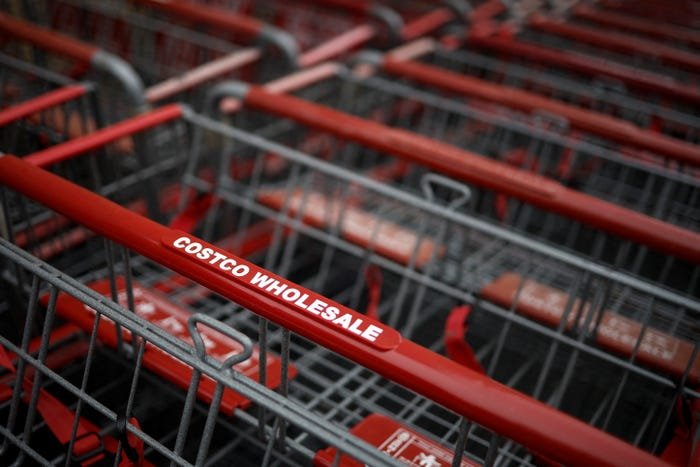
Even before Eaton’s ruling, companies had started demanding refunds. Major companies like Costco, Toyota, BYD, and FedEx filed lawsuits against the administration, seeking billions of dollars in tariff duties since they were imposed last April.

Representatives for the Trump administration did not respond to a request for comment from Business Insider.



Source link

These-companies-want-their-tariff-money-back-from-the-Trump.jpeg

These companies want their tariff money back from the Trump administration, and they’re suing

BYD’s lawsuit marks the first from a Chinese carmaker against Trump’s tariffs.

The EV giant filed the suit on February 9 and detailed nine executive orders related to trade that affected the company, including tariffs on cars, auto parts, aluminum, steel, and exports from China.

In the complaint, BYD wrote that it is seeking a refund of “all IEEPA tariffs paid to date” and “all IEEPA tariffs that may be paid in the future.”

The company also said that aside from China, its imports into the US from Canada, Germany, Mexico, and Poland were also affected.

The Chinese carmaker does not sell passenger cars in the US, but its business here includes buses, commercial vehicles, batteries, energy storage systems, and solar panels. According to its website, the company’s truck plant in Lancaster, California, employs 750 workers.


Source link

From-Gujarat-to-the-Gulf-the-shrimp-industrys-tariff-whiplash.jpeg

From Gujarat to the Gulf: the shrimp industry’s tariff whiplash

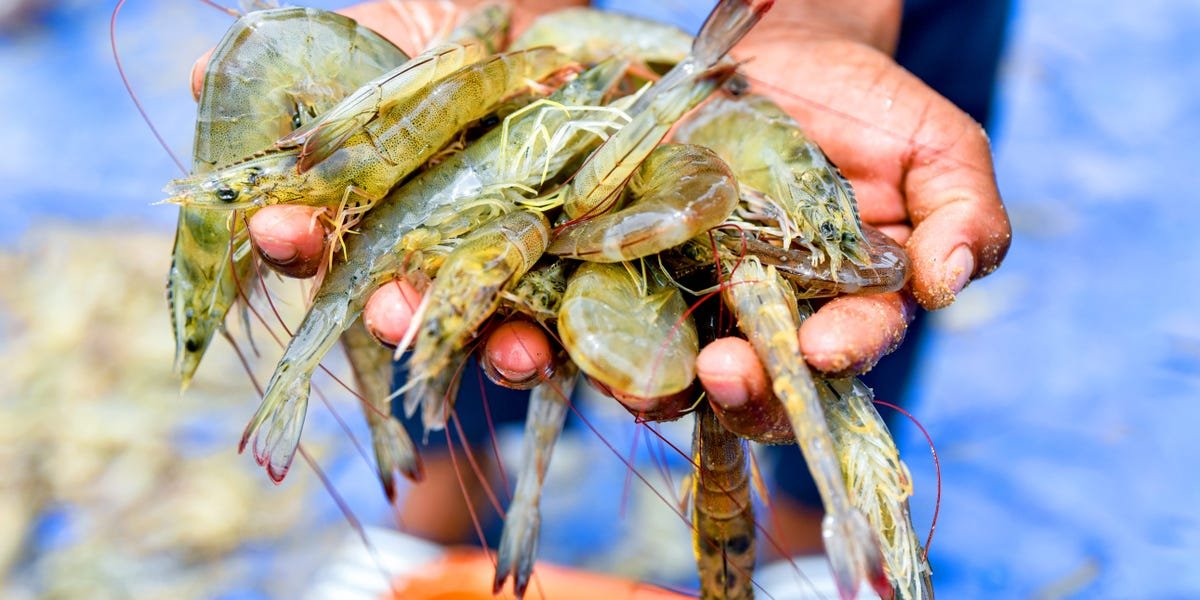
Most of the shrimp Americans consume comes from India. But in August 2025, the Trump administration announced 50% tariffs on the country. Shrimp farmers in Gujarat, who’d taken US demand and turned poor towns into valuable shrimp hubs, had to pivot.

In the US, Louisiana shrimpers applauded the tariffs but were split on whether they’d gone as far as they’d hoped. Now the Supreme Court has struck down Trump’s ’emergency tariffs’ but the President says he will still pursue them with an executive order. So, how did tariffs affect Indian shrimp farmers and Gulf fishermen? And who really wins and loses when a trade war hits an industry this global?


Source link

Headshot of Peter Gelling

Trump now says he will raise ‘worldwide’ tariff from 10% to 15%

President Donald Trump is not giving up on his tariff strategy.

The president said Saturday in a post on Truth Social that he would now impose a 15% ‘worldwide tariff.’

“I, as President of the United States of America, will be, effective immediately, raising the 10% Worldwide Tariff on Countries, many of which have been ‘ripping’ the U.S. off for decades, without retribution (until I came along!), to the fully allowed, and legally tested, 15% level,” he wrote.

In a 6-3 decision on Friday, the Supreme Court said Trump did not have the authority to impose his tariffs under the International Emergency Economic Powers Act, a national security law that allows the president to regulate economic activity during emergencies.

In a press conference following the decision, Trump said he would use a separate authority to impose a 10% global tariff on top of any existing tariffs.

The separate authority is known as Section 122, which can only be imposed for 150 days. After that, Congress must vote to extend.

A White House official later said that countries being tariffed under the authority the Supreme Court struck down will now be subject to that 10% tariff.

“With IEEPA no longer applicable, those countries will now be tariffed at the global 10% tariff using the Section 122 legal authority,” the official said in a statement to Business Insider. “This is, however, only temporary as the Administration will be pursuing other legal authorities to implement more appropriate or pre-negotiated tariff rates.”

The president’s Truth Social post on Saturday, while short on details, indicated he would raise that tariff to 15%.

The IEEPA-justified tariffs have been among Trump’s most powerful weapons in his efforts to renegotiate trade agreements worldwide. They included Trump’s so-called “Liberation Day” tariffs, announced in April, which are at least 10% on nearly every country in the world.

“During the next short number of months, the Trump Administration will determine and issue the new and legally permissible Tariffs, which will continue our extraordinarily successful process of Making America Great Again,” the president wrote in his Truth Social post on Saturday.


Source link

Kelsey Vlamis's face on gray background.

Small-business owner has paid $12,000 in tariff fees and says Supreme Court ruling leaves uncertainty

This as-told-to essay is based on a conversation with Marc Bowker, owner of Alter Ego Comics, a comic book shop in Lima, Ohio, after the Supreme Court overturned some of President Donald Trump’s tariffs. This story has been edited for length a clarity.

My first reaction to the Supreme Court decision was, “This is awesome and long overdue.” The second was, “Okay, what’s next?”

Then I saw the president say there would now be a new 10% global tariff and that the Supreme Court justices who ruled against him are unpatriotic and unloyal. So it feels like this is going to drag on forever and ever until he gets his way. It’s like death by a thousand paper cuts.

I think there are more questions remaining than answers. I appreciate the Supreme Court siding with Americans and American businesses, but it feels like it’s going to be a tug-of-war that may go on throughout this entire administration.

This administration has created a level of uncertainty in the small business landscape that I haven’t seen in 23 years of owning my store.

In addition to being a small-business owner in America, I’m a consumer in America, so I’m paying more for everything that my family consumes, from food to physical products. It’s a one-two punch for us.

I’ve already paid thousands, and there’s still uncertainty

I’ve kept a spreadsheet of every shipment that had a tariff charge, and as of today, we’ve paid over $12,000 since Trump started all of this.

We’ve had to pass on a percentage of that to our customers, and as a result, we’ve seen a slowdown in orders. Some are taking a wait-and-see mentality, or they just don’t want to pay the extra fee.

Comics themselves — a lot of which are printed in Canada — have not been impacted by tariffs. But for me and for other comic book stores, action figures, board games, and comic book supplies, like storage items, are being impacted. Action figures account for about 65% of my shop’s revenue, and they are made in China.

A lot of these orders are made far in advance, too. We were being charged tariffs on items ordered in 2023 and 2024. There’s stuff I need to order next week that ships in June of 2027. Is the tariff going to be 6%? Is it going to be zero? Is it going to be 100%? I have no idea.


Marc Bowker and his family in front of his store, Alter Ego Comics.

Marc Bowker and his family in front of his store.

Marc Bowker


It’s unclear if small businesses will get refunds or what will happen next

As for the tariff costs small businesses have already paid, are we getting that back? Probably not. Are the corporations that paid the bulk of the tariffs going to be reimbursed? Where does that come from? I feel like this is just going to cause more paperwork, more red tape, more headaches. I don’t know what the next step is.

If I could wave a magic wand, yes, there would be some reimbursement of the fees that all American businesses have had to pay. If I had to settle for something, it would be that, effective today, there are no more of these Trump tariffs.

It’s hard to be excited about the Supreme Court ruling when, within hours, the White House says it’s going to push back with more tariffs.

The administration is throwing so much at us every day that we can’t make any progress. It’s hard to see what the future will look like.

I would hate to see this stretch on the next three years of the administration. It’s going to take all this extra time that could be spent running our businesses and serving our customers, just trying to stop the government from getting its hands in our pockets.

It really feels like our elected officials are not listening to us. Historically, the Republican Party has been promoted as the party of business in the United States. If they truly were, they would be listening to constituents who are saying these tariffs are hurting our businesses.


Source link

Kelsey Vlamis's face on gray background.

Democrats demand Trump issue $1,700 tariff refunds to Americans after Supreme Court ruling

President Donald Trump previously promised Americans tariff dividend checks, but if Democrats have their way, he could be issuing refunds instead.

After a Supreme Court ruling on Friday struck down Trump’s tariffs levied under the International Emergency Economic Powers Act, Democratic lawmakers were quick to demand that the president repay Americans through tariff refunds.

“Donald Trump should return that money immediately. He has an obligation,” California Gov. Gavin Newsom said on Friday. “$1,751 per family that were taxed by Donald Trump. He took hundreds of billions of dollars from working folks, from the ag community, from small businesses for this vanity play, this illegal action, and he finally was held to account. The rule of law won out.”

Illinois Gov. JB Pritzker sent a letter to Trump calling for refunds to families in his state.

“Your tariff taxes wreaked havoc on farmers, enrage our allies, and sent grocery store prices through the roof,” Pritzker said in the letter. “On behalf of the people of Illinois, I demand a refund of $1,700 for every family in Illinois.”

The governor also sent an invoice billing that amount for more than 5.1 million Illinois families, totaling more than $8.6 billion. The invoice said it was “PAST DUE – DELINQUENT.”

When reached for comment, White House spokesman Kush Desai responded in part by saying if Pritzker “really cared about delivering economic relief for Illinois, he’d start with his own state government instead of chasing another stupid headline.”

The offices of Newsom and Pritzker did not respond to requests for comment.

Both Newsom and Pritzker are considered potential candidates for the presidential election in 2028, and they’ve both been highly critical of Trump.

The governors appeared to be basing their requests for refunds of that amount on a report released this month by Democrats on the Joint Economic Committee in Congress. The report found American families paid an average of $1,745 in tariff costs between February 2025 and January 2026, for a total of over $231 billion paid by consumers.

Other studies, including from Harvard Business School and The Budget Lab at Yale, have found that tariff costs are largely paid by American businesses and consumers.

The Supreme Court on Friday ruled that tariffs issued under the IEEPA, a national security act, had exceeded the president’s authority. Trump denounced the decision and said he would pursue additional tariffs through other avenues.

In November, Trump touted the money being collected from tariffs and floated the idea of sending $2,000 tariff dividend checks to middle and low-income Americans, though issuing such checks would likely have required an act of Congress. In January, Trump gave mixed messages about his plans for tariff rebate checks.

Now, with the IEEPA tariffs struck down, it’s likely some American businesses will try to receive refunds for the tariff costs they paid.

Despite Democrats’ stance on the issue, there’s a lot of uncertainty about whether or how refunds would happen.

The Supreme Court ruling did not touch on issuing tariff refunds.

When Trump was asked Friday if the government would now have to issue refunds, he said, “I guess it has to get litigated for the next two years.”

Treasury Secretary Scott Bessent said Friday it was “unlikely” Americans would receive tariff refunds.

“I got a feeling the American people won’t see it,” Bessent said, adding, “My sense is that could be dragged out for weeks, months, years.”


Source link

Jacob Shamsian hollis unsmiling headshot cassidy edit 2

The battle over Trump tariff refunds is next — and it will be messy

The Supreme Court on Friday overturned the centerpiece of President Donald Trump’s tariff plans, ruling the federal government illegally collected over $133 billion in taxes from American businesses.

Now comes the battle over refunds for tariffs paid, which Trump on Friday predicted could take years.

“I guess it has to get litigated for the next two years,” he said at a White House press conference, while blasting the ruling as “terrible” and “defective.”

One reason: Over 1,000 companies have filed lawsuits to claw back money from the government if the Supreme Court overturned Trump’s tariffs justified by the International Emergency Economic Powers Act.

In his dissenting opinion, Justice Brett Kavanaugh also predicted the process could become a “mess,” citing refund requests tallying “billions of dollars to importers,” even as some importers have already passed those costs to consumers.

Here are all your questions about tariff refunds, answered by experts.

Alright, who do I ask to get a refund?

Typically, the refund process would be handled by Customs and Border Protection, which collected the tariffs in the first place.

In order for that to happen, the Trump administration would need to establish a process for handling refund requests. The White House, which didn’t return Business Insider’s request for comment, has yet to signal plans to do this, said Rachel Brewster, a professor of international trade at Duke Law School.

Without a formal process in place, claims will be litigated in the Court of International Trade, which will order CPB to issue refunds to specific companies, Brewster said.

OK, so how will the court handle the process?

In the past, the Court of International Trade has ordered refunds when it has found particular taxes to be invalid — albeit on a smaller scale, according to Daniel Mach, a commercial litigator at Bryan Cave.

It’ll likely turn to the process that followed a 1998 Supreme Court decision to overturn a harbor maintenance tax, which also resulted in refunds, Mach said.

“It’s been a while,” Mach said. “Everyone’s going to be kind of figuring out the ropes as they go. But at the end of the day, it’s not an unsolvable problem.”

Given the number of claims, the Court of International Trade is likely to appoint an administrator or special master to consider each of them, rather than handling the lawsuits piecemeal, Mach said.

Groups that advocated for the Supreme Court to overturn the IEEPA tariffs have urged the Court of International Trade to develop a smooth process for refunds.

“The refunds will serve as an economic boost and allow companies to reinvest in their operations, their employees and their customers,” said David French, an executive at the National Retail Federation, in a statement.

OK, that sounds messy. How long will it take to get a refund?

The whole refund process — whether through CPB or through a class-action or administrative processes in court — could take up to two years, according to Brewster.

Have a lot of companies asked for refunds?

Yes! The cases that went to the Supreme Court were groups of small companies, including a wine importer and an educational toy retailer. But several massive corporations, including Toyota and Costco, have also filed refund lawsuits.

What about me? My Shein order was more expensive than expected.

You can try to get a refund for personal orders hit by tariffs, but it’ll be complicated.

In asking CPB or a court for a refund, you’ll have to distinguish tariffs you paid pursuant to IEEPA, which were overturned, and the tariffs justified by other laws, which remain on the books.

Individual lawsuits for IEEPA tariffs on individual retailer orders, like from Temu and Shein, likely won’t be worthwhile. The legal fees would likely exceed any potential refund. But it’s possible that some enterprising litigators would put together a class-action lawsuit to make it worthwhile, Brewster predicted.

“It was an illegally imposed tax,” she said. “So in theory, everyone is entitled to a refund.”

With reporting by Brent Griffins


Source link

Shopping carts are seen at the Costco store ahead of Black Friday in Arlington

Costco sues Trump’s tariff in bid to secure refund before Supreme Court ruling


Benoit Tessier/REUTERS

  • Costco filed a lawsuit to recover tariff payments imposed by the Trump administration.
  • The retailer challenged tariffs enacted under the International Emergency Economic Powers Act.
  • Costco is seeking a full refund of duties paid.

Costco is suing the government to recover tariff money.

The wholesale retailer has filed a lawsuit against the United States, the US Customs and Border Protection agency, and Rodney S. Scott, the Commissioner of US Customs and Border Protection.

The suit asks the US Court of International Trade to strike down tariffs imposed by President Donald Trump by executive order under the International Emergency Economic Powers Act.

In a complaint submitted Friday, November 28, the retailer said it is seeking a “full refund” of duties it paid after Trump used the emergency-powers law to levy what he described as “reciprocal” tariffs.

The complaint cited a previous lawsuit, VOS Selections, Inc. vs. Trump, filed against the Trump administration, for which the US Supreme Court heard arguments in early November.

“This separate action is necessary, however, because even if the IEEPA duties and underlying executive orders are held unlawful by the Supreme Court, importers that have paid IEEPA duties, including Plaintiff, are not guaranteed a refund for those unlawfully collected tariffs in the absence of their own judgment and judicial relief,” the complaint reads.

Costco, the White House, and the US Customs and Border Protection agency did not immediately respond to requests for comment.

This is a developing story. Check back for updates.


Source link