Im-an-Amazon-tech-lead-who-got-promoted-by-building.jpeg

I’m an Amazon tech lead who got promoted by building AI products. Here are my top vibe coding tips.

This as-told-to essay is based on a conversation with Anni Chen, who has worked in Amazon software engineering for about three-and-a-half years. It has been edited for length and clarity. Business Insider has verified her employment history.

AI helped me code, but more importantly, it helped with turning it into products. It’s the combination of grasping AI and translating it into scalable products that helped me get promoted faster.

I started off as a Software Engineer I, an entry-level role, in 2022. I was in the recommendations team working on serving recommendation widgets.

About two years ago, I started working on AI products on the side. That became huge and eventually spun off into its own team, which I’m a founding engineer of.

I was promoted in the recommendations team to Software Engineer II, and then I got promoted in the current team to senior engineer.

I focus on what we call memory, which powers personalization in generative AI experiences across Amazon.

AI writes 95% of my code

I started using AI as a side project to generate engaging titles for recommendation widgets when ChatGPT and Claude emerged. I saw how powerful it is in generating something really creative.

I started thinking: whenever I have a question or I want to code something up, I’ll just ask AI for help first before I attempt it.

I saw that the solution it came up with was leveling up my own code, and it helped me code more, too. Now I would say almost 95% of the code authored by me is written by AI.

I’m not just using AI to code; I also integrate AI’s output into products. I need to have a deep understanding of how AI works, what works well, and what doesn’t.

I have to be open and receptive to new models and tools coming out that can help with product iterations and make products better.

I work as a tech lead on large-scale LLM-driven systems in production environments, so I have a front-row seat to how AI-assisted workflows behave, not just in prototypes but under real-world scale and cross-team collaboration.

Top tips for vibe coding

The first tip is understanding the inner workings of LLMs and where they might fail.

LLMs are pre-trained — they’re trained on a large corpus, and it’s a probabilistic game. It’s followed by supervised fine-tuning, so the model will answer based on the structuring of a question and the answering format. Lastly, it’s followed by RLHF — reinforcement learning from human feedback.

By understanding these three steps, you can know, for example, when the LLM will not understand what you’re talking about, and when it needs domain knowledge from you. You will know when to use a new window or why hallucinations happen.

By understanding the limitations of the context window, you know when to break problems down. You will learn how to follow the structure to break things down into lower levels, and then you slowly focus on each component and generate.

By understanding the inner workings, you also know that you have to explain things to a peer. If you don’t explain in detail, it will default all those assumptions to the most common pattern, but that might not fit your use case.

My second tip: Think before vibe coding.

If you check the answer first, then your thoughts will be swayed by the answers. Compare your thoughts versus the LLM’s and see what the gaps are — what you didn’t know, and why the answer differs. From there, you know what implicit assumptions you haven’t told the LLM.

Thirdly, prompt for hard questions. Ask questions like what is the fallback when there is an error, or how this is going to scale? This is like a teacher asking a student, or a senior engineer asking a junior engineer to make sure the hard cases are covered. If you want the product to scale, think about it from day one and be conscious about asking those scaling questions.

Lastly, review and understand. Always review at each step, not just review after the whole code is generated. This ensures errors stop early rather than cascading all the way to the end, where you need to redo everything.

Creating wrong code is very dangerous. The presence of code makes people think, “Okay, this is good, it’s working.” But wrong code that enters production can cause more damage than the absence of functionality.

Understanding code is still important

You have to understand your own code. AI lowers the barrier to writing code, but not the responsibility for understanding it.

If something goes wrong and the code was committed by you, you’re the one responsible.

Imagine your code breaks in production, and you need to fix it, and you say, “I also don’t know, AI told me.” That’s not the correct way.

I don’t think we can entrust AI with such high-stakes tasks yet.

Understanding becomes easier with AI because it’s also a perfect learning opportunity. You can simply open another window and ask it to explain the concept.

If you ask in the same window about what it produced, it will explain only in that context. But you want to understand the concept more generally and see whether it makes sense to apply in this case.

Do you have a story to share about coding with AI? Contact this reporter at cmlee@businessinsider.com.





Source link

Palantirs-tech-head-explains-how-he-manages-stars-—-and.jpeg

Palantir’s tech head explains how he manages stars — and how he owned a big screwup to the CEO

Palantir’s chief technology officer uses a “Superman” analogy to help manage the company’s brightest talent.

On an episode of the “Invest Like The Best” podcast released on Tuesday, Shyam Sankar shared how he helps employees identify which skills to embrace and which to avoid.

“Superpowers are effortless,” he said. “My analogy for this is it Superman could fly. He could see through walls. But that wasn’t some sort of arduous thing for him to do. It’s just something he could do.”

The Palantir CTO, who has been with the defense tech giant for 20 years, added that the other side of this is identifying your “kryptonite” — in the series, a mineral fatal to Superman.

“It’s not like something you can work on. The only strategy for Superman around kryptonite was to avoid it,” Sankar said.

He added that the company supports employees in uncovering these weaknesses.

“The discovery of kryptonite usually involves you being exposed to it,” he said. “You don’t want to create a culture which is like, you fuck this up, I gotta fire you.”

Palantir culture

On the podcast, Sankar shared that he once made a big mistake, which he took to the company’s CEO, Alex Karp.

“I sheepishly went into Alex and was just completely honest,” he said. “He was also in pain as he internalized what this was going to mean. But he valued the fact that I wouldn’t try to hide it.”

Sankar added that the episode taught him that it was important to have an environment that allows mistakes.

Palantir is known across tech for its anti-hierarchical, untraditional company culture.

According to staffers on the company’s YouTube videos, Palantir is split into micro-teams, and employees report to their teammates. One hiring manager said that, for a project to which a Big Tech company would assign 30 engineers, Palantir only assigns three to four.

The company’s leadership has also embraced ditching diplomas in favor of real-world learning.

On an August earnings call, Karp, who holds a law degree from Stanford and a doctorate from Germany’s Goethe University, said “no one cares” about educational backgrounds at the company.


Source link

Patreons-CEO-says-AI-will-be-a-bloodbath-for-the.jpeg

Patreon’s CEO says AI will be a ‘bloodbath for the world’s creative people’ unless tech companies pay up

Jack Conte, the CEO of creator subscriptions platform Patreon, has a bone to pick with the Big Tech AI models.

It’s about compensation.

“The creator economy is being left out, loudly and notably,” Conte told Business Insider in an interview. “And by the creator economy, I don’t mean companies, I don’t mean Patreon. I mean creators.”

While AI companies like OpenAI and Meta are striking deals to license content from traditional media companies, “none of that infrastructure exists for independent creators,” Conte said.

In a roughly 45-minute video posted to Patreon on Tuesday, Conte further explained his personal stance on AI and the creator economy.

Conte said the key problem is that Big Tech companies don’t have much of an incentive to pay individual creators right now.

“I’m heavily in favor of some type of regulation that protects the rights holders and creators who are unable to protect themselves and go to the table with a bunch of leverage in moments like this,” he said.

AI’s standing under existing copyright law is still being assessed in real time. For example, in 2025, a federal court in California ruled that Anthropic’s training of its models on copyrighted books could be considered “fair use” if the material was lawfully obtained. Still, the AI company agreed to pay a $1.5 billion settlement to the author plaintiffs in the case after the judge ruled that copying and storing pirated books without consent did not meet the criteria for fair use. In January, a bipartisan bill was introduced in Congress to address transparency around how AI companies train on copyrighted material.

Conte wants to see AI companies start taking creators — and the rights to their content — seriously.

“I’m not anti-AI,” he said.

Patreon, a creator economy unicorn startup, has been internally using AI tools like Anthropic’s Claude and Cursor.

“I think it’s going to help humans make really beautiful things and be really self-expressive in an amazing way, just like synthesizers, just like sound and picture with movies,” Conte said. “But that doesn’t give people carte blanche to roll it out in a way that just creates a bloodbath for the world’s creative people.”

Conte doesn’t have a solution in mind yet for how creators should be compensated by companies training AI models.

“What we need to solve for is what the spirit of IP is solving for, which is how do you incentivize novelty creation?” he said.

He pointed to YouTube’s rights management system, Content ID, as a potential model. Content ID lets rights holders detect, remove, and monetize YouTube videos that feature their copyrighted work.

“Either I can remove my work from the training data, or I get paid when it’s used as training data and when it’s replicated, and I get credit for that,” Conte said. “I don’t know how to build that, but humans have done harder things.”

AI companies could start — and potentially already are — ripping a page out of social media’s playbook for paying or courting creators. Last year, Bloomberg reported that several AI companies were paying creators to license their unpublished content, including startup Moonvalley. OpenAI also recently hired Meta’s former head of partnerships, who oversaw Instagram’s relationships with celebrities and creators.

“We’re going to see some type of model emerge that compensates artists for their work,” Conte said.


Source link

Dan DeFrancesco

Management has been a casualty of AI. Now the tech is reviving it.

AI’s infusion in businesses means a reconsideration of the traditional org chart, writes BI’s Lakshmi Varanasi.

The “Great Flattening” is still all the rage, but the rise of AI agents requires their management and oversight.

Some see individual contributors having to take on more managerial responsibilities for AI agents. That blurring of lines is becoming common. McKinsey, for example, is looking for “5Xers,” or people who are deep on one topic but can also do a handful of other things well.

Others think it could lead to an era of so-called “megamanagers.”

Before you start dusting off your old management textbooks, understand this is not your parents’ type of manager. When it comes to AI agents, a lot of the management needs are more about hard, technical skills than soft ones. Cyber risk, in particular, remains high on the list of concerns for AI agents.

(Although, as the tech continues to develop, who knows if AI will eventually develop feelings and a consciousness you’ll need to handle.)

There will still likely be some level of human management, but it might be more around understanding how to team up AI agents and real workers effectively.

There’s another reason to lean into AI-agent management.

Companies want employees to go beyond mere AI use. They’re assessing whether workers truly understand the tech, which means they can apply it effectively where needed, writes Lakshmi.

Basically, it’s not enough to know the answers. You now need to show your work.

That might sound like another big hurdle for workers already dealing with an onslaught of change these days. But management of AI agents could be the solution.

Getting hands-on experience overseeing and tweaking these agents gives workers a better understanding of the tech. It’s not just about including an AI tool in your workflow. The constant back-and-forth could help employees better recognize biases or blind spots in agents.

All of that experience is likely to make them more valuable to their company. Maybe just don’t let the agent get too good.

Otherwise, you could be the one reporting into it.


Source link

Chong Ming Lee, Junior News Reporter at Business Insider's Singapore bureau.

I’m a 78-year-old retiree who’s vibe coding. Being out of the workforce doesn’t mean we can’t use AI like tech pros.

This as-told-to essay is based on a conversation with Lewis Dickson, a 78-year-old retiree and technology consultant. It’s been edited for length and clarity.

I’ve been in technology for a long time. I worked for IBM in the late 1970s. I did technology consulting for a Fortune 500 company in Atlanta from 2015 to 2024. I’ve taught many engineers and customers over the years.

I’m in semi-retirement mode now. Technology isn’t work to me — it’s fun.

When ChatGPT came out, I jumped on it. About six or eight months ago, when vibe coding became hot, I said, “Well, I need to try this out.”

I researched and found Emergent. What I liked is that they had the full stack. I didn’t have to connect anything or get my developers on the line to handle the back-end. I could just get on there and start.

I began with a couple of simple things. Now I’ve probably done a dozen or more vibe-coded apps.

The last two were for this AED company. They wanted the ability to access their existing camera provider’s website and extract their data. So I vibe-coded an app that would do that — pull that data in.

I also vibe-coded an AI voice app for them. It’s a web app, so you go to it on your phone, hit a button, and ask, “What’s our AED status?” It checks the database, then returns the information.

When I first showed the CEO a demo, he lit up. He thought it was the coolest thing he’d ever seen.

Older people can move fast

Most people think an old guy like me would have a flip phone.

When I started as a ham radio operator at 13, I was using Morse code on tubes, transmitters, and receivers. To go from that to what we’ve gone through with phones and cellphones, and then to watch that transition over the years into AI and be closely involved, I just love the technology — both the hardware and the software.

A lot of young kids today are into software but don’t know much about the hardware piece. Having a wide background comes in handy.

There’s often an assumption that gray hair means outdated technology skills. I understand where that perception comes from, but it’s not always accurate.

Many of us have moved just as quickly with the rise of AI as younger professionals. The advantage we bring is perspective: decades of experience that allow us to apply AI strategically, not just technically.

Some people would say older people retire and lose purpose. I’ve never had that problem because I’ve always had a passion for doing technical things.

I’m constantly on my laptop and phone, doing something related to AI and learning. You’ve got to watch a lot of YouTube and social media, learn what’s coming and what’s new.

How seniors can use AI for everyday life

I’m teaching AI to seniors now. In my class back in November, we were talking about data centers, what’s behind AI.

There’s a lady named Sue who’s 100 years old. Near the end of the class, Sue came up and asked, “What’s a semiconductor?”

I have a hardware background, so I answered her question at a very high level. She listened intently and wrote down a few notes.

After that class, I thought, “I need to do more for her.” So I used AI to create a video that went through the evolution of tubes in the 20s and 30s — things they could relate to — and old radios and TVs. Then we went to transistors in the late 40s and 50s, and what that meant.

The seniors I taught have now learned enough to take over their internal resident newsletter and use AI to help write it. They also created images for the newsletter with AI.

They are using AI to shop, check for bargains, and research their items.

I’ve shown them how to recognize different plants and birds with AI. They’ll walk through their garden area, take a picture, and ask ChatGPT or Gemini.

Do you have a story to share about vibe coding? Contact this reporter at cmlee@businessinsider.com.



Source link

Tech-jobs-are-getting-demolished-in-ways-not-seen-since.jpeg

Tech jobs are getting demolished in ways not seen since 2008 and the dot-com bust

It’s a tech bloodbath in the job market.

Friday’s shockingly weak jobs report showed a loss of 92,000 jobs in February across the broader economy, far below the expected gain of 55,000 jobs. After the release, economist Joseph Politano posted on X that the tech sector has had an especially rough couple of years.

“For a while, you could at least say we’re not gaining jobs the way we used to, but we’re not losing them. Everything’s kind of stagnant,” Politano told Business Insider. “That has, over the last year, completely changed, where it’s losing jobs again at one of the most rapid rates of the last 20 years.”

Tech job losses now outpace past downturns in 2008 and 2020, per Politano. Historically, Politano said, the US would usually be adding around 100,000 to 300,000 jobs in tech annually; even when there have been some pullbacks, there’s generally a quick rebound. But not this time.

Already, Politano said, this moment is clearly and significantly worse for the sector than the 2020 recession, and slightly worse than 2008. He thinks the most apt comparison is to the dot-com bust, although today’s situation still isn’t quite as dire.

“The fact that the only thing that you can compare it to is the worst tech job recession of all time is pretty bad,” Politano said. “The length is really important here. It’s been three years of job losses. It took only about four years for recovery to start from the dot-com bust, for tech to start rehiring at a semi-normal rate again. The fact that we’re now three years into this and it’s actually getting worse is a really big deal.”

Of course, as Cory Stahle, an economist at the Indeed Hiring Lab, notes, it’s not just tech that’s down in the dumps. Manufacturing, which has been cooling for the last couple of years, saw employment fall, as did the government sector. Healthcare, which had been propping up the job market, lost jobs in February, exacerbated by a roughly monthlong Kaiser Permanente strike. “Everything was looking pretty weak by different industries,” Stahle said.

ZipRecruiter economist Nicole Bachaud said February’s losses in tech-related sectors were similar to recent trends. “When we look at information continue to see a decline, and then the professional and business services, a little bit soft, but I wouldn’t say that was necessarily an out-of-place movement for that industry,” Bachaud said. “There’s been a lot of headlines looking at layoffs in tech or big changes at certain employers in tech, but overall, the layoff rate has been very low and stable.”

New college grads who leaned into STEM and other people seeking their first jobs could be especially hard hit by the tech hiring downturn.

“We’ve seen a lot about recent graduates struggling to find jobs,” Stahle said. “You really feel for those people who started studying computer science four or five years ago and were told that, ‘Hey, this is a surefire way to get in the labor market, make a good salary,’ and now we’re seeing just a continuation of this trend of fewer and fewer hires being made in the tech sector,” Stahle said.

The latest job numbers also don’t yet reflect the sweeping layoffs from Block, which excised nearly half its workforce last week. In his announcement outlining the cuts, CEO Jack Dorsey cited AI as a reason, saying that “the intelligence tools we’re creating and using, paired with smaller and flatter teams, are enabling a new way of working.” Some laid-off Block employees were skeptical about AI claims; many told Business Insider that they had already been using AI at work, and didn’t believe it could replace them outright.

Politano said that, in his view, AI is likely behind at least some of the tech labor market’s losses.

“How much of it you want to ascribe is really hard to tell, but I don’t think it’s a coincidence that computer system design is one of the industries that’s losing the most jobs,” Politano said. And, while AI firms are hiring, they’re bringing on far fewer employees than Big Tech behemoths. The types of jobs lost, and the timing of those losses, point, for Politano, to at least some impact from AI.

“We clearly haven’t seen the end of this right now,” Politano said of the future of the tech sector. “I expect that it will be this dribble of bad news for the near term going forward, but I just think that there’s no positive evidence that we’re breaking out of this post-2022 cycle that tech has been stuck in. Until you see that kind of evidence, I think there’s very little chance of a reversal.”


Source link

Chong Ming Lee, Junior News Reporter at Business Insider's Singapore bureau.

China’s smartest students used to chase tech and finance jobs. Now, they’re choosing manufacturing.

For years, China’s top graduates chased jobs in finance and tech. Now, many are heading into manufacturing and energy instead.

Employment data from Tsinghua University — one of China’s top tertiary institutions — published on its website on Tuesday shows the number of graduates entering the manufacturing and energy sectors rose 19.1% year over year for the class of 2025.

Top employers for this year’s Tsinghua graduates include Huawei, BYD, State Grid Corporation of China, and China National Nuclear Corporation, the university said.

Huawei is a global telecom equipment giant, while BYD is one of the world’s biggest electric-vehicle makers. State Grid runs China’s power grid, and China National Nuclear Corporation leads its nuclear industry.

The share of Tsinghua graduates entering the manufacturing and energy sectors has grown for six consecutive years, according to the university. Tsinghua said last year that the number of Class of 2024 graduates joining those sectors rose 11% year on year.

Often compared with MIT or Stanford, Tsinghua is widely viewed as China’s top engineering university and a key pipeline for talent entering the country’s tech and industrial giants.

The trend is not limited to China’s most elite university. At Huazhong University of Science and Technology, 2025 graduate employment statistics published in January showed about 2,000 graduates entering the information-technology sector and about 1,500 moving into manufacturing, compared with just around 300 entering finance and 240 joining construction.

The share of Chinese graduates entering manufacturing rose from 17.9% in 2020 to 22.5% in 2024, according to South China Morning Post, citing a report by MyCOS Institute, a consultancy focused on China’s education.

China’s advanced manufacturing sector gains prestige

Experts told Business Insider that several factors are driving more graduates toward manufacturing and energy jobs.

China’s industrial sectors, especially semiconductors, electric vehicles, batteries, and renewable energy, have become “highly technology-intensive and now demand top engineering talent,” said Fu Fangjian, associate professor of finance at Singapore Management University.

Many young graduates now see them as “opportunities to work on cutting-edge technologies rather than traditional factory work,” he said, adding that these jobs can offer “very competitive” salaries.

Experts say the nature of manufacturing jobs has evolved as China upgrades its industrial base.

Sectors such as electric vehicles, power equipment, and nuclear energy now require expertise in engineering, data science, and systems integration, said Zhao Litao, a senior research fellow with the East Asian Institute at the National University of Singapore.

“‘Hardware’ and advanced manufacturing are no longer seen as low-skill industries but as high-tech innovation sectors involving robotics, semiconductors, advanced materials, and industrial AI,” Fu said.

As a result, advanced manufacturing is increasingly viewed as a frontier technology sector rather than a blue-collar industry, said Zhao, who researches China’s social policy.

Highly technical engineering or research roles in this sector “carry considerable prestige among engineering students,” he added.

Tech and finance jobs lose their shine

For years, many of China’s top graduates gravitated toward internet platforms and finance, drawn by rapid growth and high pay.

But hiring in the platform economy has slowed, while tighter regulation has added more uncertainty, said Fu.

“At the same time, investment attention has shifted toward HALO sectors —hardware, industrial technology, and energy— redirecting both capital and talent,” he added.

China’s job market has long been challenging for young graduates entering the workforce.

In December, the unemployment rate for people aged 16 to 24 — excluding students — stood at 16.5%, according to data released by the National Bureau of Statistics in January. By comparison, unemployment was 6.9% for those aged 25 to 29 and 3.9% for workers aged 30 to 59.

The Chinese tech sector has been trimming headcount in recent years as companies focus on cutting costs and improving efficiency.

Alibaba’s workforce has shrunk by more than half, from about 250,000 full-time employees in March 2022 to about 124,000 in March 2025, according to a report by Chinese financial news outlet Caixin.

Baidu’s workforce stood at 35,900 at the end of 2024, down 21.1% from its peak in 2021, the report in August added.

Meanwhile, demand in manufacturing remains strong. A government manufacturing talent development plan projected that nearly 30 million skilled manufacturing jobs could go unfilled by 2025.

“China is the world’s largest producer of electric vehicles, batteries, and solar equipment, and these sectors require a large technical workforce,” said Zhao.

Government policy has also helped reshape the job landscape, experts said.

Over the past decade, China has prioritised strategic sectors such as electric vehicles, renewable energy, power equipment, and advanced materials through industrial policies, research programmes, and large-scale investment, said Zhao.

“These sectors have therefore become major employers of engineering graduates,” he added.

Universities, research institutes, and state-supported firms are aligned with these national priorities, which encourages more talented graduates to enter these fields, Fu said.


Source link

Alice Tecotzky

How wealthy tech leaders have prepped for a possible doomsday, from underground bunkers to gun stockpiles

In times of geopolitical chaos, the average person might watch a meditation video or stock up on canned goods. The wealthiest among us, however, might turn to a luxury underground bunker instead.

“When a war breaks out, or when America bombs Iran, it does cause a spike in our business,” Ron Hubbard, founder and CEO of Atlas Survival Shelters, told Business Insider in July.

This month, Hubbard said he saw a “big spike” in interest from individuals in the Middle East, and especially the UAE, after the US and Israel attacked Iran on February 28. He said he also saw a moderate business bump in the US as for the typical client request: a place to protect their family.

Larry Hall, the owner of luxury bunker company Survival Condo, told Business Insider back in July that he’s seen increased interest during geopolitical conflicts.

Hubbard said it’s safe to assume that most billionaires have some sort of shelter, though relatively few have extremely extravagant bunkers that cost tens of millions of dollars. Hall said he’s built a bunker complex with a swimming pool, and others have included a shooting range or bowling alley. Over the summer, he said he was negotiating bunker sales between $1 million and $2 million.

As Hall sees it, bunkers have become a “new status symbol of the elite” in the post-pandemic era, and are no longer as taboo as they used to be.


Interior of a bunker

The interiors of Atlas Survival Shelter bunkers can include wine cellars and televisions.

Ron Hubbard


An underground pool in a bunker from Survival Condo Projects

Larry Hall has built bunkers with a pool

Survival Condo Projects


Some of the country’s biggest tech names have hopped on the prepper trend in the last decade, buying underground shelters and collections of guns.

LinkedIn cofounder Reid Hoffman told the New Yorker in 2017 that he thinks more than half of his Silicon Valley billionaire peers have bought some sort of end-of-world hideout.

Here are some of the tech millionaires and billionaires who have invested in doomsday planning.

Bunkers — or similar tunnels or shelters

Meta CEO Mark Zuckerberg hasn’t confirmed reports that he has a survival bunker, but said on an episode of the podcast “This Past Weekend w/ Theo Von” in 2025 that he has an “underground tunnel” at his ranch in Hawaii.

In 2023, Wired reported that Zuckerberg was building a 5,000-square-foot underground shelter at the ranch. A year later, local news outlet Hawaii News Now reported that county planning documents included a “storm shelter” measuring almost 4,500 square feet. Wired reported in July 2025 that, according to planning documents, Zuckerberg bought 962 acres of land across from the existing compound and added more buildings.

The Meta CEO downplayed the initial bunker reports during an interview with Bloomberg in December, comparing the space to “a basement.”

“There’s just a bunch of storage space and like, I don’t know, whatever you want to call it, a hurricane shelter or whatever,” he said. “I think it got blown out of proportion as if the whole ranch was some kind of Doomsday bunker, which is just not true.”

A representative for Zuckerberg directed BI to his comments to Bloomberg.

OpenAI CEO Sam Altman has also denied having a bunker, saying instead that he has “reinforced basements” when Von, the podcaster, asked whether he had a hideout.

“I have underground, concrete, heavy, reinforced basements, but I don’t have anything I would call a…” Altman started to say, before Von cut him off, laughing and saying that it sounded like a bunker. Von described a bunker as “a place you could hide when it all goes off,” and Altman repeated that he didn’t yet have what he would consider a bunker.

“But it has been on my mind, not because of AI, but just because people are dropping bombs in the world again,” Altman said.

He didn’t share details of his existing “structures” at a WSJ Tech Live event in 2023, either, but did note that none of them would be helpful if artificial intelligence “goes wrong.” He also told the New Yorker in 2016 that he has a plot of land in Big Sur, California, that he could fly to if necessary.

PayPal cofounder Peter Thiel attempted to build a 10-bedroom compound in New Zealand, but the local government rejected his plans after environmentalists complained. Some suspected that parts of the estate were meant to be a doomsday bunker.

Hall told Business Insider that he’s been “flabbergasted” by some of the reported shelter locations, since California and New Zealand are near active tectonic plate boundaries.

“They’re the two places you don’t want to be building bunkers, and yet allegedly these billionaires are building in those two places,” he said.

Representatives for Altman and Thiel did not respond to Business Insider’s request for comment.

Other preparations include guns and eye surgery

Some opt for different doomsday preparations. Altman also previously told the New Yorker that he has “guns, gold, potassium iodide, antibiotics, batteries, water, gas masks from the Israeli Defense Force.”

Reddit CEO Steve Huffman told the New Yorker he’s bought guns, ammo, and motorcycles. And he’s taken it one step further — he said that in 2015, he got laser eye surgery to hopefully better his chances of survival.

Interest in doomsday-esque materials doesn’t just extend to those who are preparing for the end of the world.

Palmer Luckey, the founder of Oculus and Anduril, hasn’t referred to himself as a prepper but he owns a sizable collection of older military-grade vehicles. He said on an episode of Bloomberg’s “The Circuit” that he also owns decommissioned missile silos, some of which extend underground, where he stores what he says is the world’s largest video game collection.

“I put that in one of my missile bases, 200 feet underground,” Luckey told Bloomberg’s Emily Chang. Representatives for Luckey and Huffman did not respond to Business Insider’s request for comment.

Hall said that he thinks the association with prominent tech leaders has helped his business.

“A lot of people like to live vicariously through what other people do,” he said.


Source link

Pittsburghs-mayor-has-cold-called-dozens-of-tech-CEOs-to-get.jpeg

Pittsburgh’s mayor has cold-called dozens of tech CEOs to get them to relocate their companies to his city.

Pittsburgh’s new mayor is personally cold-calling upwards of 20 founders and CEOs across the country every week to check in on them, or to convince them to move to his city.

“Some people think it’s a prank call, but for others, it’s like, ‘wow, the mayor of Pittsburgh just called,'” said Corey O’Connor, who estimates he has called around 150 people since taking office in January. “If you’re already here, I ask, ‘How can we help you expand?’ If you’re not here, I ask ‘How do we get you to come to Pittsburgh?”

Pittsburgh has historically been known as “the Steel City” and is home to the Pittsburgh Steelers. O’Connor’s father worked as a steelworker before a long career in city politics. However, as O’Connor is quick to point out, there are no longer any steel mills within city limits, while the area is home to some of the most important startups in the U.S.

After predictions of its waning influence during the Covid era turned out to be wildly off, the Bay Area’s tech scene is now hotter than ever, largely thanks to AI. That has not stopped smaller cities like Miami and Austin from trying to grab VC dollars, especially as the cost of living in California skyrockets. Now, Pittsburgh would like to be the next Miami.

Its startups raised $1.48 billion in 2025, still a fraction of major tech hubs, but the region’s strongest venture capital year since 2019, according to PitchBook.

Standouts include Gecko Robotics, valued at $1.7 billion, which builds wall-climbing robots that inspect critical infrastructure, including power plants and industrial facilities. Abridge, valued at $5.3 billion, uses artificial intelligence to automatically generate medical documentation from doctor-patient conversations. It has emerged as one of the most closely watched AI companies in healthcare.

The most high-profile is Skild AI, which is developing foundation models for robotics, training AI systems that allow machines to operate more autonomously in real-world environments. The company raised $1.4 billion in a deal led by SoftBank Group and Nvidia in January, pushing its valuation to $15 billion, according to PitchBook.

“Our goal is to change the narrative,” O’Connor said, adding he will use every opportunity he can get to tout the city’s tech potential, especially as the spotlight will be on Pittsburgh as it prepares to host the NFL Draft in April.

Deep-seated roots in AI and robotics

The city’s AI and robotics credentials stretch back decades. In the 1960s, Carnegie Mellon professors began groundbreaking research in AI. In 1979, the first robotics institute at a U.S. university was started at CMU.

The challenge is keeping the most talented graduates from bolting to Silicon Valley.

“I’m constantly going to meet kids on campus,” O’Connor said.

Affordability is a key selling point. The median price for a single-family home in Pittsburgh and surrounding Allegheny County is 42.3 percent below the national average.

O’Connor is also trying to streamline the city’s permitting process to make it easier for tech companies to expand.

“We can get you a permit in four to five weeks, so you don’t have to wait through the government bureaucracy,” he said.

In January, Factify, a Tel Aviv-based digital document startup, said it plans to expand its presence in Pittsburgh and use the city as a major hub for customer engagement and operations.

Asked if he has successfully convinced any companies to move to Pittsburgh, O’Connor said not yet, but he is focused on the long game.

“They’re going to at least tell 10 friends that the mayor of Pittsburgh called,” he said. “That creates a buzz about the city.”


Source link

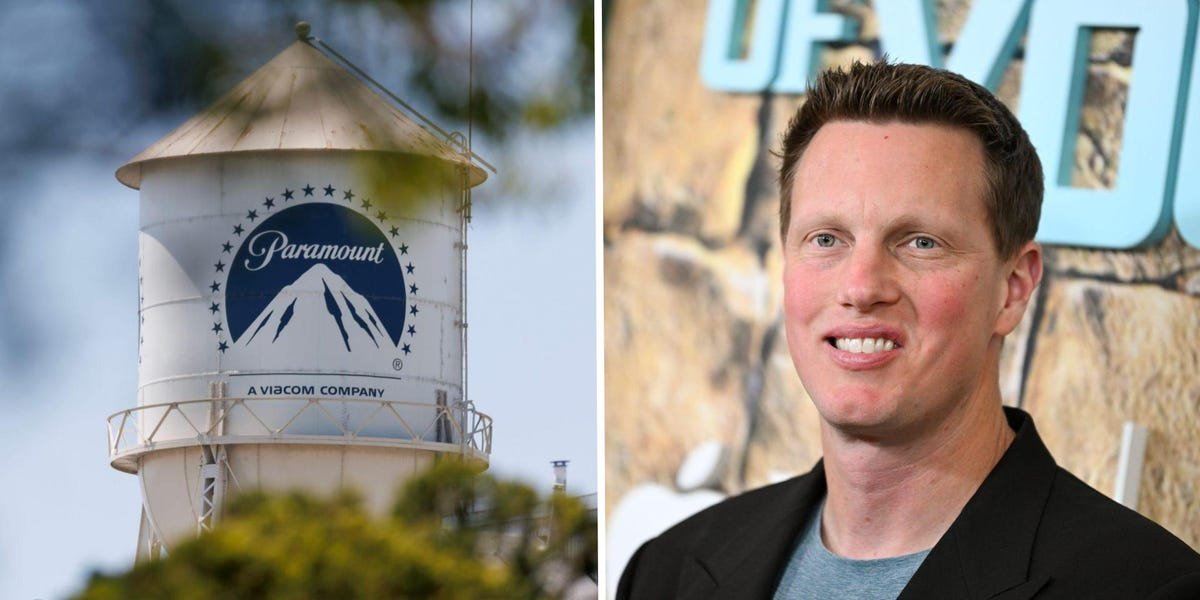
David-Ellison-has-a-message-for-Paramount-staffers-tech-is.jpeg

David Ellison has a message for Paramount staffers: tech is a key to winning

Paramount Skydance CEO David Ellison gave employees a shoutout after the media company roughly met Wall Street’s estimates in the fourth quarter.

“The progress we’ve made over the past 6+ months — from advancing our strategy to strengthening our portfolio and reorganizing our businesses to operate more efficiently and effectively — is a direct reflection of your hard work and commitment,” Ellison wrote in an email to staffers, which was viewed by Business Insider.

Ellison, who wants to turn his 114-year-old Hollywood studio into a tech-forward company, said in his memo that Paramount is focused on supercharging its tech and data capabilities.

“We recognize that in today’s highly competitive marketplace, sustainable growth depends not only on what people watch, but on the quality of the overall user experience,” Ellison wrote. “That’s why we are prioritizing investments in advanced technology and data capabilities to strengthen and differentiate our DTC offering. We are making meaningful investments across the company in innovation and technology, and we look forward to sharing more details in the coming months.”

That message comes weeks after Ellison made data a bigger part of Paramount by expanding the role of the company’s streaming data and insights team.

Paramount is planning to add short-form video to Paramount+ and is exploring ways to bring interactive features and user-generated content to its streamers, Business Insider previously reported.

In the memo, Ellison also emphasized storytelling, saying that he wants Paramount to be “the home for the industry’s leading creative talent.” While Ellison lured former Netflix original content executive Cindy Holland to run its streaming business, Paramount is losing star TV creator Taylor Sheridan to rival NBCUniversal when his contract expires.

Paramount’s biggest initiative is its quest to buy Warner Bros. Discovery, which seems increasingly open to Ellison’s advances, even though it has a signed deal with Netflix.

Paramount’s results were roughly in line with analyst expectations in its latest quarter, the first full quarter since Ellison took the helm in early August. As expected, Paramount’s full-year revenue shrank for a second straight year to $28.89 billion, just under the estimate of $28.95 billion.

Paramount+ now has 78.9 million paid subscribers, up from 77.9 million last quarter and 4% higher than a year ago. Paramount’s product chief told employees that its flagship streamer added about 1 million customers on the first day it carried UFC rights in the US, Business Insider previously reported.

Read Ellison’s memo to Paramount employees here:

Team,
Today we held our 4th quarter and fiscal year-end earnings call, where we reviewed our performance and reinforced our commitment to executing against our strategy and roadmap. Anchored by our North Star priorities, we continue to drive measurable progress across all areas of the business and remain confident that we are on the right path to deliver sustained, long-term value for our shareholders.
First and foremost, I want to take this opportunity to thank all of you. The progress we’ve made over the past 6+ months — from advancing our strategy to strengthening our portfolio and reorganizing our businesses to operate more efficiently and effectively — is a direct reflection of your hard work and commitment.
This shared commitment powers our primary focus here at Paramount: delivering exceptional storytelling. We want to be the home for the industry’s leading creative talent, ensuring they have the resources, platform and reach to bring their best stories to the broadest possible audience across film, television and streaming. Every decision we make — from capital allocation to operational priorities — is in service of this objective. And our increased investment in content creation reflects this commitment, with 11 films and 11 series greenlit since August and more to come.
We recognize that in today’s highly competitive marketplace, sustainable growth depends not only on what people watch, but on the quality of the overall user experience. That’s why we are prioritizing investments in advanced technology and data capabilities to strengthen and differentiate our DTC offering. We are making meaningful investments across the company in innovation and technology, and we look forward to sharing more details in the coming months.
One of our greatest strengths as a company is our ability to mobilize the entire ecosystem behind key priorities and events through our “Paramount One” initiative. We saw this clearly demonstrated with the launch of the UFC on Paramount+ in January. Every part of the organization — from CBS Sports to Pluto, marketing to ad sales — contributed to the promotion of this landmark partnership. This all-hands on deck mentality is a true force multiplier for the Company — and I know you’ve put the same firepower behind Survivor 50, premiering tonight on CBS!
I encourage you to review our shareholder letter for more details on our quarter and full fiscal year 2025 performance. A replay of the earnings call will be available shortly on our Investor Relations site.
I couldn’t be prouder of this team. Keep up the great work.
Let’s go!
Best,
David


Source link