
Trump-orders-federal-agencies-to-stop-using-Anthropics-technology.jpeg

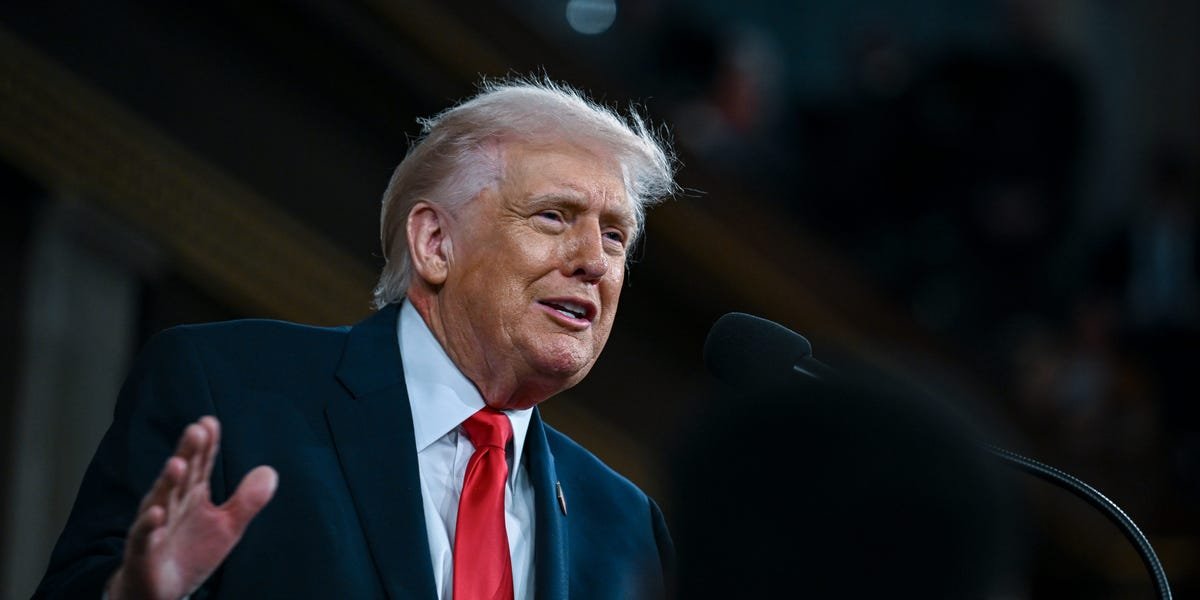
Trump orders federal agencies to stop using Anthropic’s technology

President Donald Trump says federal agencies won’t be using Anthropic’s technology anymore.

“We don’t need it, we don’t want it, and will not do business with them again,” Trump wrote on Truth Social on Friday.

It comes amid a dispute between the AI giant and the Department of Defense.

Trump said that there would be a six-month phase-out period for departments, including the Department of Defense, that are “using Anthropic’s products, at various levels.”

“WE will decide the fate of our Country — NOT some out-of-control, Radical Left AI company run by people who have no idea what the real World is all about,” Trump wrote.

Trump’s announcement comes just a few hours before the Friday evening deadline defense officials had given Anthropic to agree to the military’s terms of use for the company’s frontier model, Claude.

Earlier this week, the two parties came to an impasse over how the military can deploy Claude.

The issue appeared to revolve around two safeguards Anthropic was not willing to drop: mass surveillance of US citizens and autonomous weapons.

Defense Secretary Pete Hegseth had given Anthropic’s CEO Dario Amodei until Friday, 5:01 p.m. Eastern Time to get on board with the military. Hegseth also warned that the government could invoke the Defense Production Act — a wartime law that gives the president broad authority over a company’s resources — and designate Anthropic as a supply chain risk.

Both would be unprecedented moves by the government against an American technology company, experts previously told Business Insider.

On Thursday, Amodei published a blog post stating that the Defense Department had added language to its contract allowing for “any lawful use” of its model.

A source familiar with the negotiations told Business Insider that this language effectively gave the military discretion over how it uses Claude.

The Anthropic CEO said in his post that the company would prefer to continue serving the department but that it could not “in good conscience accede to their request.”



Source link

Alice Tecotzky

JPMorgan will spend almost $20 billion on technology this year

JPMorgan plans to boost its technology budget by almost $2 billion this year, to $19.8 billion — a roughly 10% increase compared to 2025.

Speaking at the firm’s 2026 company update on Monday, CFO Jeremy Barnum said “technology remains a major driver of our expense growth,” which is up around $9 billion for the year. The bulk of the tech expenses comes from $1.2 billion in investments, including some AI-related projects.

Later in the presentation, CEO Jamie Dimon said that returns on AI are difficult to quantify initiative by initiative. Answering a question from Wells Fargo analyst Mike Mayo, who pressed him on the bank’s technology spend on a recent earnings call, Dimon said that time saved is often “too vague” to measure concretely.

“I think the hardest thing to measure has always been tech projects,” Dimon said. “That’s been true my whole life.”

When it comes to where the firm is investing, Barnum said it’s focusing on “the highest impact areas,” such as customer service in call centers, personalized insights for clients, and technology for software engineers. GenAI is, Barnum told investors, growing as a proportion of the bank’s AI usage.


JPMorgan Company Update

A slide from the company update presentation breaks down technology spending.

JPMorgan


Some of the $2 billion increase is due to inflation hitting everyone, including higher AI hardware costs. Technology head count growth isn’t a major driver — Barnum said the bank has budgeted in some additional head count in the area to work on new products, but that the culture generally discourages hiring more people whenever a new opportunity arises.

Despite JPMorgan’s status as a tech-forward firm — and No. 1 ranking on Evident AI’s index of AI maturity at banks — executives didn’t brush off competition. Marianne Lake, in response to an earlier question from Mayo, said the bank has some strategic assets, including in data.

“Only the paranoid survive,” Lake, the CEO of consumer and community banking, said. “We aren’t walking around thinking we have the divine right to success, we are walking around thinking about how to optimize the value that we give to our customers, how to perfect our processes and our systems.”

JPMorgan isn’t the only bank spending big on technology. Its rivals are also rapidly integrating AI throughout trading floors, back offices, and more to create efficiencies and improve customer experiences. Bank of America said it plans to spend around $14 billion on technology this year.

Dimon has previously asked investors to “trust him” on his bank’s spending, saying he is trying to keep the company from falling behind during its January earnings call.

“We need to have the best tech in the world,” he continued. “That drives investment, it drives margin, it drives competition.”


Source link

Alice Tecotzky

A Goldman Sachs partner in technology shares the skills young job seekers need in the AI workplace

Bracha Cohen has a front row seat to Wall Street’s AI revolution — and to how young people can compete in it.

“I would tell the new generation of graduates, in this world where AI is so transformational, to build judgment and not just skills,” Cohen, a partner within asset and wealth management engineering, said. “AI may automate execution, but it can’t fully replace decision-making, systems thinking, and ethical reasoning.”

Cohen joined Goldman as a programmer in 1994, long before anyone had to prove AI fluency on their applications. She said that serving in various roles across business lines helped her ascend to partner, the firm’s top leaders.

Today, her engineering team in asset management focuses on automating operations to help the business scale, including through AI. As of now, the booming business — which holds a record $3.6 trillion in assets — uses AI for routine work, like analyzing and summarizing data, Cohen said.

As white-collar hiring slows and anxiety about AI in junior roles grows, Cohen said young engineers should focus less on simply completing tasks and more on how systems function. Mastering engineering fundamentals is key, she said, since AI should serve “as leverage, but not as a crutch.”


Bracha Cohen

Bracha Cohen is a partner and engineer at Goldman Sachs.

Goldman Sachs


She added that computer science majors should practice evaluating risk and crafting good questions, both for other people and AI models. Two other Goldman partners also previously said that interpersonal skills and communication are becoming increasingly crucial in the AI workplace.

And engineers who want to work on AI in particular have their own set of criteria. Dan Popescu, a newly promoted managing director and Goldman’s head of AI engineering for asset management, previously told Business Insider that the most competitive hires need a suite of skills: knowledge in AI engineering, finance, and traditional software engineering.

Goldman spent $6 billion on technology last year and has rolled out internal AI tools, including an assistant and a limited banker copilot. In an October memo, the firm laid out the latest phase of its OneGS initiative, which it says will drive efficiency, slow hiring, and create a “limited reduction” in roles.

CEO David Solomon is one of several big bank leaders who have said that, in the long run, AI won’t reduce head count, and that the firm needs to focus on attracting more high-quality talent.


Source link