

Ramp-is-telling-investors-it-is-about-to-hit-14.jpeg

Ramp is telling investors it is about to hit $1.4 billion in revenue a year, as the company prepares to go public.

Ramp, a New York-based fintech startup, has told potential investors it is on track to reach a $1.4 billion in annual recurring revenue this quarter as it prepares for a potential IPO, according to people familiar with the matter. That is up sharply from the $1 billion in Ramp’s annualized revenue— the revenue a company expects to collect over a year — in September.

The company did not respond to a request for comment.

Founded in 2019, Ramp sells a suite of financial tools centered on its corporate charge card, along with software for expense management, bill pay, and procurement. Its core pitch is that it helps companies spend less and operate more efficiently.

Run rate typically extrapolates recent revenue, often from a single month or quarter, over a full year. For a company like Ramp, whose business includes transaction-based revenue tied to customer spending, that figure can fluctuate with usage and may not reflect fully predictable revenue.

Ramp also said it is growing its customer base by about 70% year over year and expects to generate roughly $125 million in free cash flow this year, the company has been telling investors.

Additionally, Ramp stated its plans to be IPO-ready by the end of the year and is building the financial reporting and compliance infrastructure required of a public company. That does not mean it will actually go public this year, but it is preparing the company for that opportunity.

Only 30% of traders on Kalshi, a prediction marketplace, are betting the company will go public before May of 2027.

Ramp’s surging revenue has piqued VCs’ interest as the company nearly tripled its valuation in a matter of months in 2025.

Starting the year with a $13 billion valuation, Ramp closed three rapid-fire equity rounds between June and November of 2025, jumping to $16 billion, then $22.5 billion, and finally peaking at a $32 billion valuation in a round led by Lightspeed Venture Partners. Other investors include Founders Fund, Khosla Ventures, General Catalyst, Iconiq Capital, and 1789 Capital.

That valuation represents a sharp rebound from the fintech downturn, when Ramp raised a so-called down round of $5.8 billion in 2023.

Geoff Charles, chief product officer of Ramp, made headlines earlier this year when he said that all employees are expected to be AI-native.

“If you’re not using Claude code this year, no matter what your role is, you’re probably underperforming compared to others in the company,” he said on a podcast.

“The people who are still in L0, they will most likely not be at the company,” he added, referring to level zero.



Source link

Multiple-US-embassies-are-telling-Americans-they-cannot-evacuate-or.jpeg

Multiple US embassies are telling Americans they cannot evacuate or help them get out of the Middle East

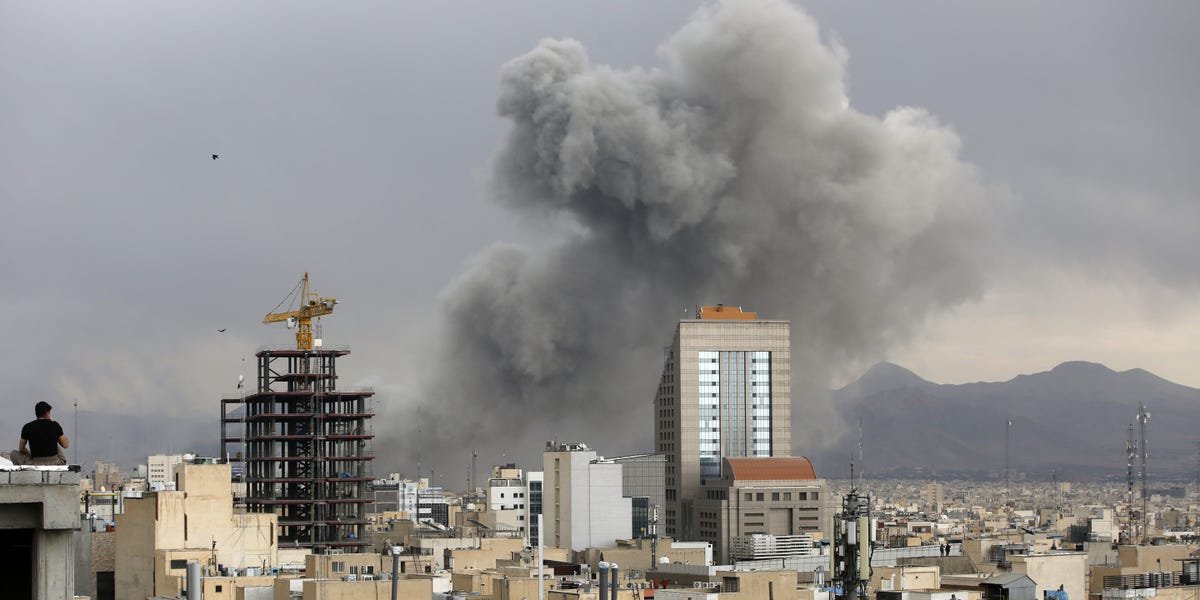
American citizens across the Middle East are attempting to follow official advice and evacuate as conflict escalates in the region following US and Israeli attacks on Iran on Saturday.

But multiple US embassies have said they are unable to help citizens trying to leave.

“The U.S. Embassy is not in a position at this time to evacuate or directly assist Americans in departing Israel,” the US Embassy in Jerusalem said in a post on X on Tuesday.

The embassy shared that the Israeli Ministry of Tourism was operating shuttles to a border crossing between Egypt and Israel at the town of Taba.

“If you choose to avail yourself of this option to depart, the US government cannot guarantee your safety,” said the US embassy, adding that they were sharing the information “as a courtesy to those wishing to leave Israel.”

President Donald Trump was asked in the Oval Office on Tuesday why evacuations hadn’t been planned beforehand, and whether he would charter planes to evacuate Americans from the region.

Trump largely didn’t address the question, other than to note how quickly the conflict broke out.

“It happened all very quickly,” Trump said. “I thought we were going to have a situation where we were going to be attacked.”

In Qatar, where Iranian retaliatory strikes have hit key energy facilities, the country’s US embassy issued a travel advisory on Tuesday, also warning American citizens they were unable to help them evacuate, saying that they should “take advantage of commercial transportation options.”

The US embassy in Qatar advised Americans who chose to stay to create a contingency plan, but said that “these alternative plans should not rely on the US government for assisted departure or evacuation.”

Most US embassies in the region have suspended normal operations as staff shelter in place, and some have shut down entirely due to heightened security risks.

On Tuesday, the US Embassy in Saudi Arabia issued a stark warning to citizens to stay away from its consulate in Dhahran, a coastal city in the east of Saudi Arabia, due to “a threat of imminent missile and UAV attacks” over the city.

“Do not come to the US Consulate,” the US Embassy in Saudi Arabia said.

On Monday, the US embassy in Jordan announced that all its personnel had temporarily departed the Embassy compound “due to a threat.” It did not specify the threat.

Iran has launched a barrage of retaliatory missiles against US allies in the region, hitting sites including US military bases, Dubai’s Burj Al Arab hotel, and the US embassy in Riyadh.

The list of countries Americans are being urged to depart from immediately is as follows: Bahrain, Egypt, Iran, Iraq, Israel, the West Bank, and Gaza, Jordan, Kuwait, Lebanon, Oman, Qatar, Saudi Arabia, Syria, the United Arab Emirates, and Yemen.

Iran, Iraq, Kuwait, Bahrain, and Qatar have closed their airspaces.

As of Tuesday, Dubai International has resumed limited flight services but continues to instruct travelers not to come to the airport unless their flight has been confirmed.

Wealthy travelers and expats in the UAE have turned to private jets and chauffeured drivers to help them flee the region, but many have been caught up in lengthy border crossings amid the rush to Saudi Arabia and Oman, where some flights were still departing.

Monica Marks, a professor at NYU Abu Dhabi, posted on X, wondering how Americans are supposed to leave the Middle East without government help.


Source link

Kaila Yu

I’m a business immigration lawyer. I’m telling my clients that if you have a valid visa stamp, return to the US now.

This as-told-to essay is based on a conversation with Tahmina Watson, a business immigration lawyer in Seattle. Business Insider has verified Watson’s employment history with documentation. The following has been edited for length and clarity.

I’m a business immigration lawyer, and in my day-to-day work with clients, I’m seeing immigration disruptions with immediate consequences, including H-1B visa holders who are outside the US being uncertain if they can return.

​​My law firm, Watson Immigration Law, assists founders and businesses in navigating the employment visa application process. It appears that, at this time, the administration is coordinating the rescheduling and delay of immigration appointments.

Non-immigrant visas generally must be scheduled at a US embassy or consulate in the person’s country of nationality or residence. From my experience, many employees accrue their holiday time and schedule immigration appointments during this period because they’re already planning to leave the country, allowing them to easily visit their designated US embassy or consulate.

These employees are now getting stuck, having already left the US, with their appointments getting rescheduled for June, July, or August 2026, and beyond.

A large group of H-1B work visa holders is stuck outside the country

Major tech companies, including Google, Apple, and Microsoft, sent memos out to their employees in the past week, warning visa-holding employees to avoid international travel amid long delays at US consulates. These policies are coming one after another, and they all intersect with each other.

The policies have created:

  • Visa-stamping delays at US embassies and consulates.
  • Expanded vetting and processing backlogs at consulates.
  • Increased risk that visa holders who travel cannot return to the US in a timely fashion.
  • Lack of guarantees once appointments are rescheduled.

If somebody is outside the country, what are employers supposed to do? Right now, my advice to clients outside the country is that if they have a valid visa stamp, they should return to the US as soon as possible.

We don’t know what changes could come, but I suggest that workers stuck abroad ask to work remotely

For someone who has left the country to obtain a new visa stamp, I’m not sure there’s a clear path to return. This includes individuals on F-1 student visas who traveled to visit family and were planning to re-enter the US. They will need that visa stamp from a consulate.

Ensure your employment is still active and consider whether remote work is an option. If an employer decides they cannot keep someone on the books, even an appointment months from now will not help if there’s no job waiting.

It’s tough to know how things will unfold. What we’re seeing is a confluence of policies coming in at the same time. For example, the Department of Homeland Security has just announced that it is replacing the lottery system for H-1B work visas, which randomly selects who receives a visa. The system is now set to prioritize higher-paid, higher-skilled workers.

Keeping social media accounts public is a good idea

Social media disclosure is being expanded from F-1 visa holders, which began during the student visa crisis, to now include H-1B workers. These applicants are required to change all social media privacy settings to public.

It could easily expand to other visa categories. The government has not provided clear guidance on what they are reviewing. By casting an overly broad net under the banner of national security, without clear standards or transparency, the administration is creating uncertainty that will ripple across families, employers, and the US economy.

Clients should limit what they post online.

My advice since November 2024 has remained the same: Avoid travel unless necessary

In 2024, I was already anticipating these issues with traveling and returning to the US. We’ve also seen issues affecting green card holders with past criminal convictions.

There are many stories of people who have lived in the US for decades, suddenly facing deportation proceedings. This is a highly precarious time for immigrants, and limiting travel is critical.

It feels like a fire hose of policies. Everyone in the immigrant ecosystem is on high alert: Immigration lawyers, immigrants, employers, investors, founders, and employees.


Source link