
NeeDoh-squishies-have-gone-viral-It-wasnt-intentional-the-CEO.jpeg

NeeDoh squishies have gone viral. ‘It wasn’t intentional,’ the CEO tells me.

Courtney Sullivan, a lawyer in Scottsdale, Arizona, was tasked with a mission: Her nieces in Texas wanted NeeDoh squishies, but their dad (her brother) discovered they were sold out everywhere he looked.

Luckily, Sullivan found some in a local store and mailed them over state lines to her nieces.

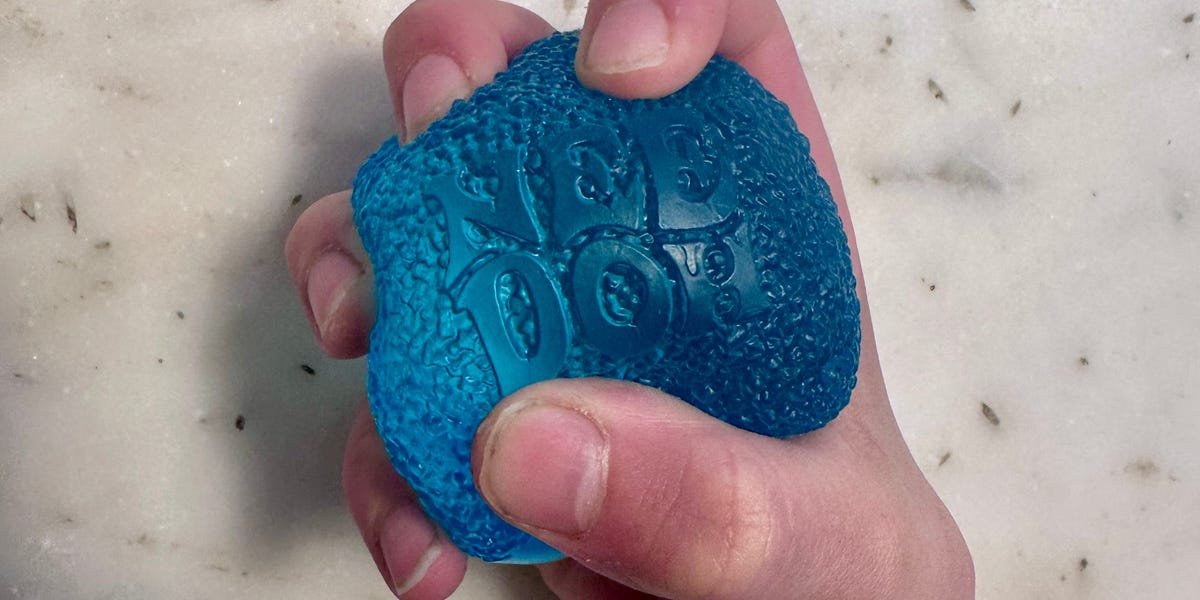
NeeDohs, colorful rubbery balls and cubes of varying textures, have gone viral on social media — and the demand is outpacing supply. It’s caused a mini-Labubu effect: Kids (and parents and aunts) are desperate to find them in stores, while knock-offs flourish and resellers jack up prices on the real thing.


nee doh nice berg

The NeeDoh “Nice Berg,” a large jelly-like squishy. 

Schylling


“Literally, within the first nine weeks of the year, we’d sold through the whole year’s inventory,” Paul Weingard, CEO of Schylling, the maker of NeeDoh, told Business Insider. “No company can plan for that. It’s been fantastic, overwhelming demand that just well outstrips our ability to replenish.”

Schylling, based in North Andover, Massachusetts, specializes in vintage or classic toys — things like wooden paddles with a rubber ball on a string, View-Masters, Big Wheels, and Lava Lamps — along with other, more modern toys. They launched NeeDoh in 2017, when fidget toys, slime, ASMR videos, and squishies were already popular with kids.

Since then, NeeDoh has been growing its sales by about two times a year, says Weingard (who declined to give exact sales numbers). The recent viral surge, which he estimates is about six times last year’s growth, has made NeeDoh the 52-year-old company’s best seller of all time.

Still, having a hit toy is great, but it can be complicated: Pop Mart, the maker of Labubu, saw its stock drop by 30% after it published an earnings report revealing that the furry dolls, which have started to fall out of favor, accounted for most of its sales.

Miguel Montano, a youth pastor in San Antonio, told Business Insider that NeeDohs are indeed a hit, like the hits he’s seen before.

“My older high school students talk about them, but it’s the freshman middle schoolers who are obsessed with them,” he said. “It’s just another fad — Labubu, Funko Pops, whatever is in. There’s an almost mindless gravitation to it.” Montano isn’t above the lure, though — he bought two NeeDohs for himself at a hefty markup from a reseller.

Weingard told Business Insider that sales of NeeDoh had been steadily rising, but really blew up this past holiday season when an advent calendar-style multi-pack went viral on social media, kicking off a craze for the sensory toys. While the “Nice Cube” is their top seller, holiday multi-packs are also driving sales. An Easter-themed pack of 10 squishies is selling for around $200 from resellers on Walmart.com.

I myself have been a victim of overpriced resellers. I paid $18 at a store that sells viral products at a local mall for a nobby gumdrop-shaped NeeDoh that my kid had been wishing for for weeks. The squishy’s regular retail price is only $6. After playing with it a little, I can admit it does have a hard-to-describe satisfying squish factor, and I’ve found myself absent-mindedly playing with it at my desk during the workday.

But the difficulty of finding these in stores is frustrating to both kids and adults. Just this week, I saw a desperate plea in my local parents’ Facebook group asking for any leads for stores that had NeeDohs in stock. Answers flooded in with various sightings. On Reddit, the NeeDoh subreddit has 10,000 weekly visitors, where people discuss where to buy them and post photos of their collections. On TikTok, I’ve been seeing ads in the TikTok Shop for products that look suspiciously like NeeDoh packaging but with a different name.

Sullivan, the aunt in Arizona, was thrilled to be able to supply her teenage nieces with the hard-to-find toys. “I grew up in the thick of the Cabbage Patch Kid craze, so he knew I’d be all over the challenge of the hunt. Unfortunately, my success has caused my husband to become interested in NeeDohs. He already took a Super Ripple for himself and has pre-reserved my next Nice Berg.”

Weingard told Business Insider that Schylling is ramping up production as much as it can. (There was an unfortunately timed stop in production in February, right as the products were blowing up online, when factories in China, which make the NeeDoh, shut down for the Lunar New Year holiday.) He said they hope to fully meet demand by the summer.

“It’s incomparable to anything else we’ve ever done in terms of the popularity and demand,” Weingard said. “It’s certainly challenging in a respect. We never designed NeeDoh to be a viral craze; it wasn’t intentional. We imagined it more in keeping with the other products in our line. We wanted to create a contemporary classic, something that would be in our line for a generation or more.”

Source link

Leaked-audio-Warner-Bros-Discovery-CEO-David-Zaslav-tells-employees.jpeg

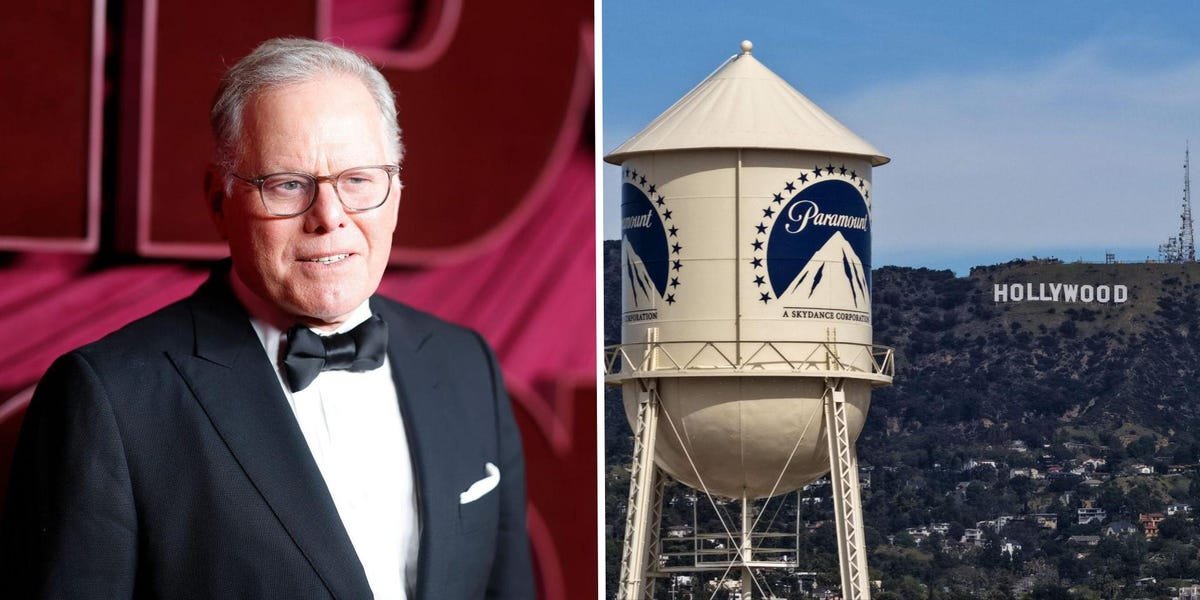
Leaked audio: Warner Bros. Discovery CEO David Zaslav tells employees Paramount deal felt ‘whiplash-y’

Warner Bros. Discovery’s CEO just pitched employees on its impending Paramount Skydance deal, after spending the last few months arguing against it in favor of the now-nixed Netflix deal.

David Zaslav told WBD staffers at a company town hall on Friday morning that he’s excited to join forces with Paramount.

“I think together, we can be a great company,” Zaslav said on the call, a recording of which was obtained by Business Insider.

“We’re getting bigger, and we’re getting stronger,” he said.

WBD had agreed to sell its studio and HBO assets to Netflix for $27.75 per share. Paramount launched a rival bid of $30 per share for the whole company, including its cable TV networks, and pitched WBD shareholders that its deal was better.

Zaslav acknowledged that the decision to switch from its Netflix deal to Paramount’s rival offer “all happened very quickly.”

“It feels a little whiplash-y,” Zaslav said, adding that he and WBD’s board of directors are still “getting our bearings.”

Paramount “acted with determination” in pursuing WBD, Zaslav said.

WBD underwent a “thorough, rigorous strategic review process” and was under a legal obligation to continue to review and evaluate unsolicited offers that could bring shareholders more value.

Zaslav suggested that teaming up with Paramount is crucial to WBD’s survival.

“If Warner Bros. is going to survive, then we needed to be bigger, and we needed to be global,” Zaslav said.

Zaslav added that “some of these companies are getting so big that they can just run us over.”

The Paramount-WBD deal still needs regulatory approval, a process that will likely take at least six to 12 more months.

“The deal may not close,” Zaslav said. “If it doesn’t close, we get $7 billion, and we get back to work.”

Last week, WBD’s board told its shareholders that there could be an employee exodus if it took Paramount’s deal, citing the $6 billion in cost savings that Ellison’s company planned to achieve. Netflix had said it planned to get $2 billion to $3 billion in savings from its deal.


Source link

Trump-tells-tech-giants-to-power-their-own-AI-ambitions.jpeg

Trump tells tech giants to power their own AI ambitions

  • President Donald Trump said he’s told top tech companies they must pay more for electricity near data centers.
  • Trump made the announcement during the State of the Union. He did not name the companies.
  • Big Tech’s data center push is driving up US electricity demand and costs.

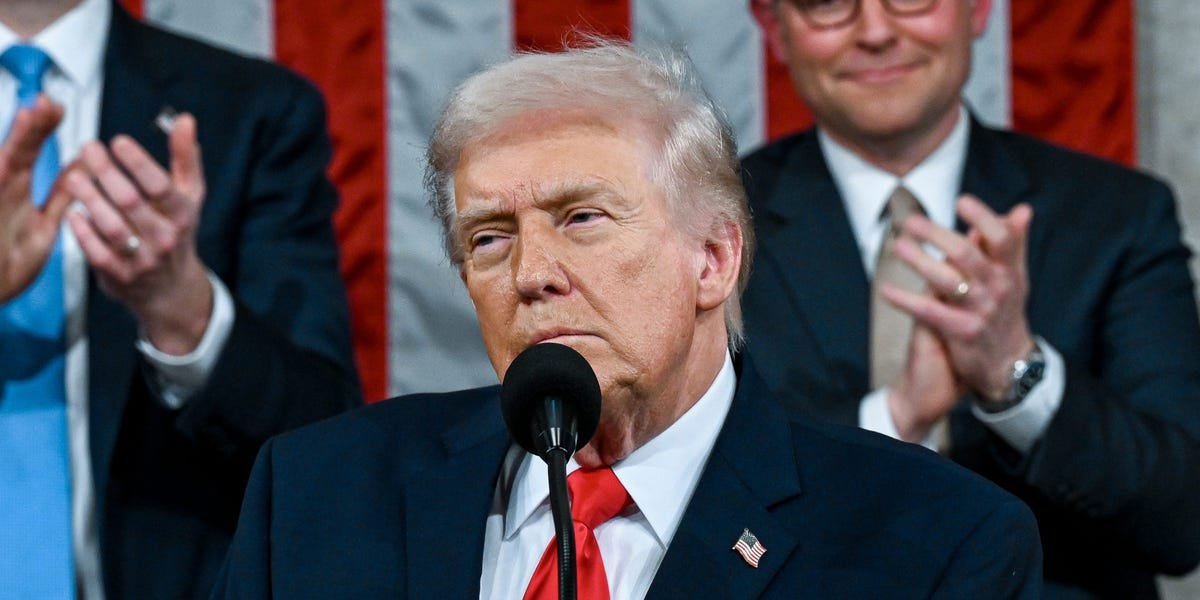
President Donald Trump said Tuesday that top tech companies have to cover their own power needs when they are building data centers.

“We’re telling the major tech companies that they have the obligation to provide for their own power needs,” Trump said during his State of the Union address on Tuesday evening, adding, “They can build their own power plants as part of their factory so that no one’s prices will go up, and in many cases, prices of electricity will go down for the community.”

Trump said he negotiated a new “rate-payer protection pledge.” He did not specify what the pledge entailed or which companies had agreed to it.

“They’re going to produce their own electricity,” he said.

Tech companies have already begun building their own off-grid infrastructure.

Politico first reported on the pledge earlier on Tuesday, saying tech companies had agreed to pay more for electricity in places near data centers. A White House spokesperson confirmed the report to Business Insider but did not provide additional details.

The announcement comes as Big Tech companies spend hundreds of billions of dollars to build AI infrastructure and data centers, driving up electricity demand in the US. Utility costs are rising across the US as a result of the increased electricity demand for data centers, a report from the Center for American Progress found.

Trump has previously said Americans should not have to pay higher electricity costs due to data centers, and that the companies that build them “must pay their own way.”

Decisions about utility costs are typically made at the state and local levels. It’s unclear how the newly announced pledges would be implemented.


Source link

Lauren Edmonds Profile Photo

Read the memo: Talent agent Casey Wasserman tells staff he’s selling his company after Epstein files fallout

Casey Wasserman is selling his high-profile sports marketing and talent agency after his correspondence with Ghislaine Maxwell surfaced in the Epstein files.

The entertainment executive informed the Wasserman Group’s 4,000 staffers about the sale in a memo on Friday.

“At this moment, I believe that I have become a distraction to those efforts,” he wrote. “That is why I have begun the process of selling the company, an effort that is already underway.”

In January, the Justice Department began to release more than 3 million pages of documents related to convicted sex offender Jeffrey Epstein, who died in jail in 2019 while awaiting trial on sex-trafficking charges.

The names of numerous prominent people, such as Bill Gates and US Commerce Secretary Howard Lutnick, have shown up in the documents. While appearing in the files does not mean a person is associated with Epstein’s crimes, some have nonetheless faced a public fallout by association.

In Wasserman’s case, the documents revealed that the entertainment mogul flew on Epstein’s jet with several people, including former US President Bill Clinton. He also exchanged emails with Maxwell, who is serving a 20-year prison sentence for sex trafficking girls for Epstein. Wasserman’s emails with Maxwell were dated 2003, long before police began to investigate Epstein and over a decade before police arrested Maxwell.

Wasserman issued an apology following the revelations, but a backlash from his roster of top talent had already begun. Singer Chappell Roan, Olympian Abby Wambach, and others said they intended to leave his agency over his association with Epstein.

“It was years before their criminal conduct came to light, and, in its entirety, consisted of one humanitarian trip to Africa and a handful of emails that I deeply regret sending,” Wasserman wrote in the memo to staff on Friday. “And I’m heartbroken that my brief contact with them 23 years ago has caused you, this company, and its clients so much hardship over the past days and weeks.”

Read the full memo Wasserman sent to his employees:

Team:
I wanted to write to you all directly to share a few important updates. Over the past couple of weeks, I have spoken to many of you directly — and I wish I could have spoken with every one of you because you all have put your hearts and souls into this incredible organization.
First and foremost, I want to apologize to you. I’m deeply sorry that my past personal mistakes have caused you so much discomfort. It’s not fair to you, and it’s not fair to the clients and partners we represent so vigorously and care so deeply about.
The pain experienced by the victims of Jeffrey Epstein and Ghislaine Maxwell is unimaginable – and I’m glad, as I’m sure you all are, that those who helped them commit their crimes are rightly being held accountable.
Hopefully by now you know the facts about my limited interactions with those two individuals. It was years before their criminal conduct came to light, and, in its entirety, consisted of one humanitarian trip to Africa and a handful of emails that I deeply regret sending. And I’m heartbroken that my brief contact with them 23 years ago has caused you, this company, and its clients so much hardship over the past days and weeks.
Other than my children and my fiancée, there are two things that matter most to me in this world: this company that I founded 24 years ago, and the dream I’ve pursued for more than a decade of bringing the Olympic Games back to the city I love.
This organization, its leadership and the entire team mean the world to me. Our 4,000 employees are the absolute best in the business. I see you put it all on the line for your clients every day. Our clients expect — and deserve — world-class representation. And that’s exactly what they get because of all of you.
At this moment, I believe that I have become a distraction to those efforts. That is why I have begun the process of selling the company, an effort that is already underway. During this time, Mike Watts will assume day-to-day control of the business while I devote my full attention to delivering Los Angeles an Olympic Games in 2028 that is worthy of this outstanding city.
I so appreciate the passion and fight you bring to your jobs. It’s why you succeed.
I am beyond proud of what this company has accomplished to date and excited to watch its next chapter.
All my best,
Casey


Source link

ChatGPTs-year-end-recap-is-here-—-and-it-tells-you.jpeg

ChatGPT’s year-end recap is here — and it tells you how many em-dashes you exchanged

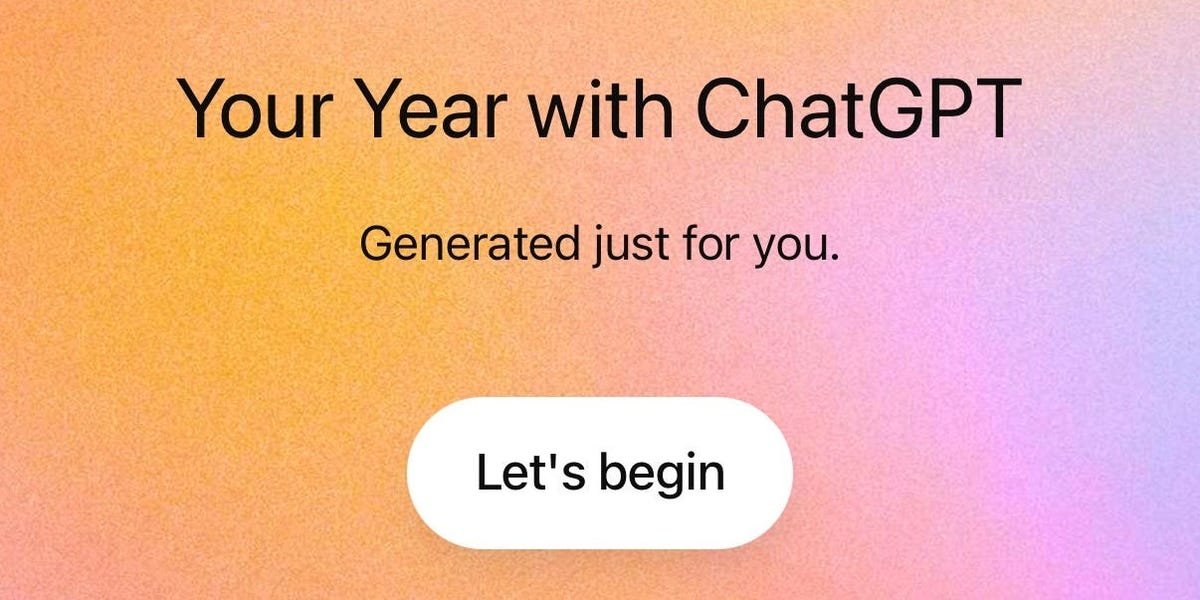
ChatGPT doesn’t want to be left out of the “Wrapped” party that Spotify popularized. So say hello to “Your Year with ChatGPT.”

OpenAI launched the new retrospective on its app on Monday, informing users about the top themes of their chats, the number of messages they have sent, and the awards they have earned.

It’ll even generate some pixel art that depicts some of the your themes.

The recap is available in the US, UK, Canada, New Zealand, and Australia. To see it, click the plus button in the app and ask, “Show me my year with ChatGPT.”

It’s available to Free, Pro, and Plus users, but not those with a business or enterprise account. (So for those with ChatGPT accounts through your work, you likely won’t be able to brag to your boss about your ChatGPT stats.)

OpenAI joins the many companies that are rolling out user rundowns for 2025. Alongside the common streamer packages from Spotify and Apple Music, there are recaps this year from LinkedIn, Uber, Dunkin’, Snapchat, Strava, Partiful, and more.

All these apps promise to show you what you’ve been up to for the past year — perhaps lightly roasting you in the process.

ChatGPT’s rundown begins with a piece of poetry, followed by the three most prominent themes, based on the user’s chat history. Then it gets into the statistics.

Users can learn how many messages they sent, their total number of chats, and their chattiest day. They can also see how many em-dashes have been exchanged throughout the chats, a figure ChatGPT often uses.


Chat stats are pictured in a Year in ChatGPT.

ChatGPT informs users of the exact number of em-dashes they exchanged.

Screenshot via Steven Tweedie


Next, the user can learn about their chat style. This is a measure of tone: ChatGPT told me that I spoke “casually, wryly, and directly.”

Then come the awards and accolades. ChatGPT awarded me the “Most Likely to Google, ‘Is this Flight Worth It?'” It’s a bit ironic — I wouldn’t Google that, I’d ask ChatGPT.

My archetype was determined to be the tinkerer, a title given to 8.5% of users. The title meant I learned by trying, and that I used ChatGPT to experiment.

OpenAI has improved its image and video creation models, recently rolling out Sora 2. The recap features an AI-generated piece of pixel art inspired by the year. I asked mine about moving to Brooklyn; it included a matcha.


A piece of pixel art from my Year in ChatGPT

ChatGPT generates pixel art describing your year.

Screenshot via Henry Chandonnet


Other features are more interactive. Want to learn what your 2026 has in store? You’ll have to wipe away the “mists of mystery” (which looks more like heaps of snow) to learn your fate. Reload the page, and you’ll see another fortune.

With that, ChatGPT’s recap comes to a close, but not before sharing an inspiring message.

“Across all the drafts, questions, and rabbit holes, you found a place to work things out,” it said. “And that’s no small thing.”


Source link