If there’s one closet staple that’s stood the test of time, it’s the denim jacket. From oversize looks to slimmer silhouettes, it’s been a consistent symbol of effortless, cool fashion for years.
Now that spring is here, it’s the perfect time to invest in a new transitional piece, whether layered over floral dresses or paired with jeans for a full-denim ensemble.
I was well overdue for a new one, so I ordered and tested three different denim jackets from Gap Inc. retailers Gap, Old Navy, and Banana Republic.
I liked them all, but one stood out as the classic wardrobe staple I was looking for — and I’ve been wearing it on repeat.
First, I tried out a trendy style from Banana Republic
I was originally drawn to Banana Republic’s washed-cotton chore jacket for its oversize, slouchy fit, which aligns with the laid-back vibe of today’s trending fashion.
Plus, I thought the relaxed silhouette would make for easy layering.
I paired the Banana Republic jacket with a lace mini dress.
Karen Santos for BI
The wore this option to brunch with a friend, so I styled the jacket with a lace mini dress and heeled boots for a feminine spring look.
Overall, I loved that this jacket offered lots of unique styling options.
However, I wish the store sold this one in petite sizes, as it was a bit too oversize on my 5’2″ frame. The Banana Republic website recommends ordering down a size or two for a more classic fit, and I definitely agree that this is the right move.
The fabric felt soft, breathable, and comfortable.
Karen Santos for BI
The fabric felt soft, comfortable, and breathable enough for spring weather, which made sense considering it was made with 100% cotton.
Does that warrant a nearly $200 price tag, though? I’m not so sure. Banana Republic has done an excellent job at positioning itself as an attainable luxury brand, but to me, that price seems a bit steep for a jean jacket.
Next, I wore a more affordable option from Old Navy
I wore the Old Navy option with white capris and wedges.
Karen Santos for BI
The oversized jean trucker jacket from Old Navy felt like a mix of a modern fit and the traditional denim look. It was structured yet roomy, with plenty of space for effortless styling.
I wore it for a day of errands, pairing it with white capris and comfortable wedges for an elevated but casual look.
Although I wasn’t blown away by this jacket, I thought it was a solid, affordable option.
Karen Santos for BI
I thought the jacket looked nice on me and fit comfortably, but it didn’t necessarily impress me. The fabric (a blend of 95% cotton and 5% recycled cotton) felt and looked a bit flimsy and wasn’t as structured as I’d expect from a classic denim jacket.
But honestly, for only $60, I thought it was a solid option.
Finally, I put on the Gap jacket for a day out
I wore the jacket from Gap with jeans and boots.
Karen Santos for BI
Although I liked the modern look of the Banana Republic jacket and the accessible price of the Old Navy one, the Gap denim jacket completely won me over.
The classic silhouette, wash, and fit reminded me of why the world fell in love with denim jackets in the first place — and why they’re still in style today.
This jacket seemed like it would be a great investment.
Karen Santos for BI
I wore this option for a Saturday outing (lunch, shopping, and walking around town) and paired it with jeans and heeled boots. The outfit gave me an instant boost of confidence — there’s nothing quite like a casual yet cool outfit to put a strut in my step.
I especially loved the durable, structured fit that seemed like it would last for years. Although the material (95% cotton and 5% recycled cotton) felt a bit tougher than the other options, it was still comfortable and breathable enough for changing spring weather.
Plus, even though the fabric makeup was similar to that of the Old Navy jacket, it felt much more durable and high-quality. So, for a wardrobe essential like this, I think it’s worth the $100 investment.
I have been wearing it regularly since I ordered it, and I know I will continue to style it throughout every season.
This story is available exclusively to Business Insider
subscribers. Become an Insider
and start reading now. Have an account? .
I used the same few ingredients to batch prepare eggs three ways, testing each method’s results.
During the experiment, I baked egg muffins, cooked a large omelette, and made a sheet pan of eggs.
I’d skip the egg muffins and omelette next time but gladly repeat the sheet-pan method.
Every morning, at least one person in my family cooks eggs.
Whether they make them scrambled or sunny-side-up, the results tend to be inconsistent. One day, the eggs are runny; the next, they’re sticky. It’s a complete gamble.
In search of a fail-proof method for making eggs that allows me to avoid chaotic, messy morning breakfasts, I attempted to meal-prep them three different ways: baking them as muffins, frying them into an omelette, and cooking them in the oven on a sheet pan.
For each method, I used the same ingredients — six eggs, ¾ cup egg whites, 1 cup of chopped red bell peppers, a small onion, and 2 ounces of crumbled feta cheese. Each batch yielded between eight and 12 servings.
Here’s how the eggs stacked up in terms of flavor, texture, and cook time.
Oven-baked egg muffins seemed like an easy-to-prep meal.
I divided the ingredients into 12 sections using the muffin pan. Jennifer Messineo
I combined all the ingredients in a bowl, then used a ladle to distribute them evenly into a 12-cup muffin pan.
It proved difficult to distribute the ingredients evenly between the cups without making a mess. Some ended up with extra feta, and others got more peppers.
I planned to cook the muffins for 20 minutes at 350 degrees Fahrenheit, but they were done after 15.
After this test, I’ll never make these egg muffins again.
My muffins were too puffy and had too many air pockets. Jennifer Messineo
I used to make eggs in a muffin tin sometimes, and the results from this test reminded me why I stopped.
Although I liked that they cooked quickly and were easy to portion, the muffins puffed up more than I expected, creating a fluffy egg with a few too many air pockets.
Also, the ingredients didn’t distribute evenly (disappointingly, I had a bite with no cheese!).
The cleanup wasn’t ideal either, as most of the egg stuck to the pan. After soaking it for days, I considered throwing it out.
By the time I finally got it clean, I’d lost the time I saved cooking eggs to scrubbing the muffin pan.
Cooking the eggs into one big omelette should’ve been straightforward.
I kept the eggs cooking over very low heat. Jennifer Messineo
When it came time to use the stovetop, I decided to make a large omelette in a 12-inch pan using the same five ingredients.
I poured the mixture into the hot, buttered pan and realized how tricky it would be to manage. To accelerate the cooking process and create a fluffy, layered dish, I tilted the pan to lift the edge of the omelette, letting the uncooked egg flow underneath.
I kept the heat low so the bottom wouldn’t overcook. After 10 to 15 minutes, I covered the pan so the center would cook through. Then, I cooked it for about 10 more minutes until the center looked firm.
I ended up having a hard time handling so many eggs in one pan.
The omelette’s consistency and flavor left much to be desired. Jennifer Messineo
Lesson learned: Omelettes aren’t meant to be batch-cooked.
I knew cooking a large volume of eggs might be an issue on the stovetop, but I was still surprised that this method took the longest, clocking in at almost 25 minutes from start to finish.
It had an overcooked, eggy smell and taste, and the texture was inconsistent, with a crispy bottom layer and soft center.
Even though I usually fry my eggs on the stovetop, this test made me reevaluate my ways. I also found it difficult to portion the omelette into equal pieces for storage.
I didn’t know what to expect when I pulled out the sheet pan.
The ingredients spread out evenly in the pan. Jennifer Messineo
Before this test, I’d never made eggs in a sheet pan. I poured the combined ingredients into the greased, stainless-steel pan and was pleased to see the vegetables and cheese spread evenly.
After baking it for 18 minutes at 350 degrees Fahrenheit, the mixture was cooked through.
It was by far my favorite way to meal-prep eggs.
I found it easy to portion and store the sheet-pan eggs. Jennifer Messineo
The eggs cooked evenly in the sheet pan, and the results had a perfect consistency.
I liked their texture, as they were fluffy but still denser than the airy muffins and omelette. The vegetables weren’t quite as soft as they were in the other methods, but they tasted fine.
I also found it so easy to remove the egg from the pan. The stainless-steel sheet’s surface distributed heat evenly and prevented any crusty edges from sticking to the pan, so cleanup was very easy.
Moving forward, I’ll skip the muffins and omelette and stick with the sheet-pan eggs.
I didn’t have to clean very much after making sheet-pan eggs, which I consider a huge bonus. Jennifer Messineo
As I expected, this test reinforced my belief that eggs are tricky to prepare.
The large omelette I made on the stovetop tasted overcooked and lacked the height I got from the oven. All factors considered, it was my least favorite (although I was nearly as disappointed by the airy, messy egg muffins).
After extensive testing, I can confidently say the sheet-pan eggs were the meal-prep winner. They stayed firm, were easy to divide into 12 even squares, and stayed in one piece when I transferred them to the freezer.
This as-told-to essay is based on a conversation with Chet Kittleson, founder of Tin Can. It has been edited for length and clarity.
About three years ago, I was picking my daughter up from school and started chatting with parents about how arduous it is to run the kids’ social lives. One mom said that she felt like an executive assistant for her daughter. There was a lot of frustration and angst toward the kids, and as a dad of three, I understood it.
But that day, I played devil’s advocate. What else are the kids supposed to do, I asked. My first social network was the landline, but my kids didn’t have that. Most of the parents I knew were delaying cellphones, but that left the kids reliant on us for coordinating meet-ups.
I got to thinking: wouldn’t it be cool if there was a landline my kids — who are now 10, 8, and 5 — could use to organize their own social dates?
The phone led to my daughter walking to school with friends
I had been working at the tech and real estate company Redfin, which I loved because the company environment allowed me to be a rising executive and an active dad. Still, I had this itch to build a company of my own. I left to start another real estate-related company, but ultimately, we didn’t have a product-market fit, and had to call it quits after about two years.
The cofounder’s daughter started walking to school with friends thanks to her landline.
Courtesy of Tin Can
The same week I wrapped up that venture, I brought my co-founders over to talk about making my landline idea a reality. We spent a week at my kitchen table, making prototypes. By the end of the week, we had five phones.
Two of the prototypes went to my daughter’s friends. Right away, we started noticing the kids organizing more playdates and sleepovers. My favorite moment came when the phone rang at about 8:15 in the morning. My daughter’s friend was inviting her to walk to school for the first time.
I want to use tech to build better in-person connections
Right away, I started getting texts from other local parents, asking if they could get a phone. I made about 50 prototypes and installed them myself. I asked customers what they liked about the phone and what they were worried about when it comes to kids and tech, which helped me refine the product.
We officially started selling Tin Cans in April of this year. For parents, the phone is a symbol of a simpler time. For kids who have often never experienced independent communication, it delivers a new superpower they didn’t know they wanted.
The company has raised $3.5 million in funding.
Courtesy of Tin Can
Today, we have Tin Cans in every state and Canada. We’ve raised $3.5 million. I’m excited to build a different type of technology company: one that uses tech to build connections and healthy relationships.
We’re trying to foster independent kids
Personally, that’s extremely meaningful to me because I’ve always struggled with anxiety and had my own challenges with screen addiction. I stopped using social media a few years ago after noticing that it was distracting me from moments with my kids.
Today, my family has two Tin Cans: one in a shared area of the home and another in my oldest’s room. These days, my kids frequently get calls from friends asking them to walk to school. They have more sleepovers or just chat with their grandparents.
There are also more subtle changes. When we pick up takeout, my kids are often the ones to go in and claim the order. That confidence is a symbol of the strong, autonomous children my wife and I are trying to raise.
One mother told us that Tin Can helped her daughter find her voice — literally. The girl started off talking quietly and timidly, but within weeks, was louder. That confidence translates to the real world, and the Tin Can lifestyle we’re hoping to foster.
When you buy through our links, Business Insider may earn an affiliate commission. Learn more
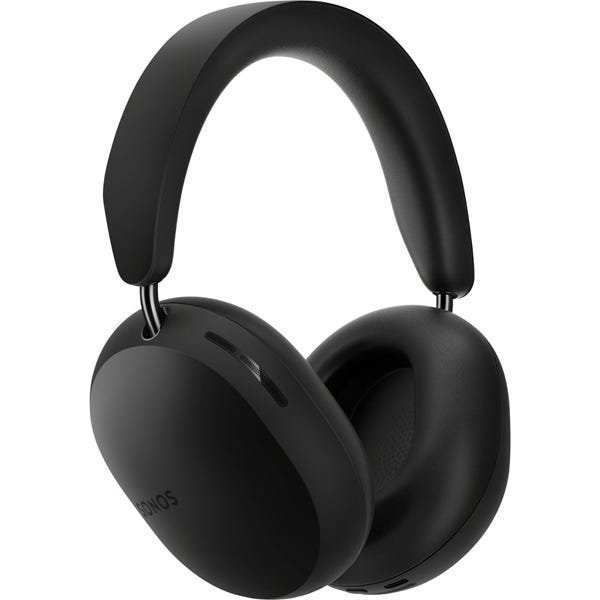
Rumors of a pair of Sonos-branded headphones have been swirling for nearly as long as the company has been a household name. After all, Sonos sells many popular wireless speakers and soundbars, so why not add a pair of headphones to the mix?
Following years of speculation, Sonos’ long-awaited headphones have arrived. They’re called the Sonos Ace ($449), and they perform great for a pair of flagship Bluetooth headphones. But the keyword there is Bluetooth. Many fans hoped the brand’s first headphones would work like its portable Roam and Move speakers, which use Bluetooth on the go but also support WiFi to stream music at home and group with other Sonos audio gear. However, WiFi streaming on the Ace turned out to be wishful thinking.
Don’t get us wrong, the Ace still stack up well against the best over-ear headphones from Bose, Sony, and Apple. But they don’t do a lot to stand out from the pack. The biggest difference, on paper anyway, is the Ace’s ability to pair with a Sonos Arc soundbar for private listening, but we could not get this feature to work with our setup. We also ran into an issue with some faint signal noise with transparency mode engaged.
Still, despite some hiccups, it’s no small feat that Sonos’ first headphones offer performance that rivals many top competitors. Even with their quirks, the Ace’s mix of great sound, fantastic noise-canceling, and an incredibly comfy fit results in a formidable pair of high-end Bluetooth headphones.
The Sonos Ace are the comfiest headphones we’ve reviewed. They also offer great noise-canceling and audio quality that rival top models from the competition. On the downside, they lack full integration with other Sonos products, and we ran into some software bugs. However, we expect Sonos will iron out those glitches in future firmware.
The Ace headphones are well-designed and easy to use
The case is stylish and functional.
Ryan Waniata/Business Insider
Apart from the issues we encountered with the headphones’ TV Swap feature (more on that below), the Ace’s setup experience is as slick and smooth as you’d expect from a brand of Sonos’ pedigree.
Opening the box reveals a fuzzy gray case made from 75% recycled plastic bottles. Unzip it, and you’ll find a minimalist pair of matte headphones in black or Soft White wrapped around a bean-shaped pouch. Designed to harbor the Ace’s dual USB-C cables for wired playback and charging, the pouch attaches via a strong magnet at the case’s center, efficiently utilizing the space. The whole layout feels equally aimed at style and substance.
The headphones themselves borrow aesthetic touches from rivals like the Bose QuietComfort Ultra and Apple AirPods Max but with a Sonos twist, bearing the same elegantly stripped-down design cues found across all Sonos products. From the Ace’s sleek rounded ear cups and laser-etched logo to their steel arms and cushy, vegan-leather pads, this is a familiar package that still manages to strike its own chord.
On the right ear cup are dual control buttons, including a multi-function “content key” for playback and volume via a mix of taps and slides. There’s also an adjacent key to swap between noise canceling and transparency modes. The two keys are easily distinguishable by touch for error-free control in nearly any setting. On the left cup is the power/pairing key and a USB-C input for charging and wired playback.
Downloading the Sonos app helps you quickly pair the headphones to your mobile device and add them to your list of Sonos devices where you can monitor status and battery life. Tapping the Settings icon lets you adjust features like bass and treble, head tracking for spatial audio effects, and multi-point audio to pair the headphones to a second device like a laptop or tablet.
The flexible band and fluffy pads give the Ace an edge in comfort
The Ace are incredibly comfortable to wear.
Ryan Waniata/Business Insider
Comfort is always subjective, but we can say without hesitation that the Ace are the most comfortable noise-canceling headphones we’ve encountered, beating out favorites like Bose’s QuietComfort Ultra and the Sony WH-1000XM5. After a week of wearing the Ace nearly all day, every day, we rarely experienced an inkling of discomfort.
Frankly, we’re not sure how Sonos did it. At 313 grams, the Ace are lighter than Apple’s AirPods Max, but still outweigh both Bose and Sony’s top models by a good 60 grams. You can definitely feel the heft as you swing your head around, but somehow between their ultra-soft pads and taut yet judicious clamping force, they manage to pull off the proverbial headphone trick of nearly disappearing on your head over time.
The fit is also quite stable, staying put even on light hikes and other semi-rigorous activities. Without an IP certification for water resistance, we wouldn’t recommend the Ace for sweaty jogs or gym regimens, but they’re excellent companions for nearly any other task.
The sound is rich, smooth, and detailed
Audio performance is on par with other top wireless headphones in this price range.
Ryan Waniata/Business Insider
The Ace offer a smooth and mellow sound signature. They have a penchant for digging up lush and vivid instrumental timbres, all spread across a deep and expansive soundstage. The overall performance stacks up well with some of the best-sounding headphones in their class.
The Ace do exhibit a darker tonal color than you’ll find in rivals like the spritely Bose QuietComfort Ultra. But this doesn’t affect the Ace’s talent for exposing fine details. Horns are breathy and full. Strings are smooth and lush. Acoustic guitars ring with a golden sheen. The ability to precisely place all these instruments in the mix may be the Ace’s most impressive sonic feature, allowing you to explore each instrument independently or simply sit back and let them wash over you.
There’s some sparkle in the treble for pristine clarity in high-flying percussion and loads of definition in instruments like buzzy synths and distorted electric guitars. At the other end, bass is full and punchy without being overwhelming. Unlike many headphones we test, the bass is fairly balanced by default, though we still dropped it down a notch or two in the EQ settings to clear up space in the soundstage. We also turned off the Loudness setting, which tended to make things sound a bit boomy.
On occasion, we wished for a bit more presence and clarity in vocals and dialogue, particularly when listening to podcasts, but we never struggled to hear minute details like vocal fry or room echos, allowing us to notice sounds we’d missed in previous listens. Hardwiring the Ace via a USB-C-to-3.5mm cable offers even better definition, including support for lossless audio at up to 16-bit/48Hz resolution.
The Ace supports head tracking for stereo content, which keeps the sound anchored when you turn your head to mimic the effect of listening to speakers positioned in a fixed location. This is also supported with Dolby Atmos 3D audio when synced with an Arc soundbar, but we couldn’t get that feature to work. However, with stereo content, head tracking works similarly to rivals, effectively simulating a home theater environment.
Noise-canceling and transparency modes are phenomenal, aside from one hiccup
The Sonos Ace (left) next to a pair of Bose QuietComfort Ultra headphones (right).
Ryan Waniata/Business Insider
The Ace’s incredible noise canceling is a triumph worth celebrating. This is top-tier cancellation that stacks up with some of the best pairs available, seeming to suck the air out of the world and plant you in an isolation chamber of solace.
We tested the feature indoors with studio speakers playing sound effects as well as outdoors on hikes and dog walks, where it was most impressive. Tapping the button can almost extinguish the world, from city din to chirping birds. Even traffic-laden streets glide into a soft whisper.
In head-to-head tests, only Bose’s mighty QuietComfort Ultra outpowered them, reducing sounds like keystrokes and drone effects to an even lower murmur. Even so, the Ace’s ability to offer such stark silence without a modicum of added white noise makes them a contender for one of the best noise-canceling headphones you can buy.
The Ace also have an excellent transparency mode that’s designed to let in environmental sounds to keep you aware. This mode is vividly clear and natural. It’s so good that we were able to wear them virtually all day without skipping a beat, similar to Apple’s latest AirPods. Though we weren’t able to test the Ace directly against the AirPods Max, based on previous listening, we’re confident you won’t find a more natural-sounding transparency mode on the market.
However, there is one notable caveat to our praise. With this mode engaged, we occasionally heard mild connection noise in the right earcup. Sonos sent us two models to test and this issue was present on both. It’s not enough to be a nuisance in most scenarios (it’s audible only when connecting for a call or between songs in a quiet room), but it’s still disappointing from headphones this pricey.
That said, it’s not uncommon for debut products to arrive with a few bugs, so this could be ironed out with firmware.
The Ace’s lack of WiFi streaming is disappointing, and we couldn’t get TV Swap to work
The Ace’s TV Swap feature is supposed to let you send audio from an Arc soundbar to the headphones.
Ryan Waniata/Business Insider
The Ace have many top features you’d expect from flagship noise-canceling headphones, like multi-point pairing, sensors to pause audio when you take them off, and various other settings from within the Sonos app. Their battery life of up to 30 hours per charge is highly competitive, and we could use them all day for multiple days without the need to charge.
However, the Ace’s inability to group with other Sonos speakers to stream music and other audio sources over WiFi is something of a letdown, even if it would have been unique among their peers. It’s not particularly surprising at this price — we would have expected another $100 or so added in to get seamless support for both WiFi and Bluetooth — but it does put the Ace in a somewhat siloed position within the Sonos ecosystem.
The consolation prize for the Sonos faithful is the ability to wirelessly switch audio between the Ace headphones and a Sonos Arc soundbar (and eventually the Beam and Ray). This is handled via a TV Swap button in the Sonos app, currently for iOS users only. This means you can hear movies and TV shows privately through the headphones without disturbing others. And this mode supports Dolby Atmos, so you can get a surround sound effect through the headphones. But even with an iPhone and a new Sonos Arc soundbar on hand, no matter how many times we tried, we couldn’t get either pair of Ace headphones Sonos sent us to sync with the Arc.
Sonos’ support team told us “You’ve encountered a rare bug that our team is aware of and working to address in a future release.” The headphones use a 5GHz connection for this feature (despite their lack of full WiFi support), so it’s possible our network played a part. But the fact that we could easily group the Arc with a Sonos Era 100 and Era 300 speaker for multi-room playback made the issue all the more curious (and frustrating).
We expect a firmware update to address this — this is Sonos, after all — and we’ll update this review with any changes as we continue to test.
Should you buy the Sonos Ace?
There are some kinks to work out, but the Sonos Ace are impressive wireless headphones.
Ryan Waniata/Business Insider
The Sonos Ace’s many talents, from their fabulous noise canceling and transparency modes to their comfortable fit and sweet sound, instantly put them in the conversation with other top wireless headphones on the market. From that perspective, they’re worth considering for those with an ample budget.
That said, their lack of full WiFi compatibility with the Sonos ecosystem may disappoint some ardent Sonos fans, not to mention the troubles we encountered, like their mild connection buzz and refusal to sync with the Arc soundbar over our network.
We still recommend putting the Sonos Ace on your shortlist — they’re just too damn comfortable and well-armed not to be — but we’ll wait until Sonos addresses the issues we encountered before giving them our full seal of approval.
Ryan Waniata
Freelance Writer
Ryan is a professional writer, editor, video host, and product reviewer. Since transitioning from audio engineering in Nashville in 2012, his portfolio has spanned the gamut, from entertainment op-eds and trends pieces to gadget how-tos and reviews on TVs, audio gear, smart home devices, and more. The author of hundreds of articles, his work can be seen on Business Insider, Reviewed, How to Geek, Digital Trends, and others. While writing and editing are his primary gigs, he’s also a seasoned video host and podcaster, having shot and written dozens of videos. In 2016 he created the entertainment podcast, Between the Streams, which ran for 150 episodes. Since becoming a product reviewer, he’s been on a constant quest to find the perfect product (which he has yet to do). He feels a deep responsibility to find readers and viewers of his work the absolute best tech for their money, whatever the budget. When he’s not writing, editing, or evaluating the latest gadget, Ryan can be found singing and playing guitar or adventuring in the lush green forests and sandy beaches of the Pacific Northwest.