TeamLab Planets quickly made a name for itself after opening its doors in 2018. It holds the Guinness World Record for the most-visited museum dedicated to a single group or artist, bringing in more than 2.5 million visitors from April 2023 to March 2024.
A popular second location in Tokyo, known as teamLab Borderless, focuses on digital art.
Both museums were launched by teamLab, an international art collective that includes artists, animators, engineers, mathematicians, and architects among its specialists. Together, they work to “explore the relationship between the self and the world,” according to the museum’s website, although global brand director Takashi Kudo said they have an even bigger goal.
“If these exhibitions cannot reach an emotional height, then we have failed,” he told The New York Times in 2024. “We have to reach people’s hearts.”
In my 30s, I was the only one of my three siblings who wasn’t married or starting a family. At holidays and birthdays, I smiled through it and lead into becoming the cool aunt to my nieces and nephew. On Mother’s Day, however, I began bracing myself.
Each year, my mom would give me a card that said something like “Happy Mother’s Day from the dog.” It was meant with nothing but love. She wasn’t trying to minimize what I didn’t have — she was trying to include me. Still, each card landed like a small, unexpected dagger.
A reminder of the life I thought I was supposed to be living, but wasn’t.
I always imagined I’d be a mom
My mom would gently explain that I was a huge influence on my nieces and nephews. That they looked up to me. That mothering my dogs counted, too. And in a real sense, she was right — I wasn’t ready to accept it. I loved my dogs deeply — they kept me grounded and accountable. I was present in my nieces’ and nephews’ lives in meaningful ways, with time and energy to play with them.
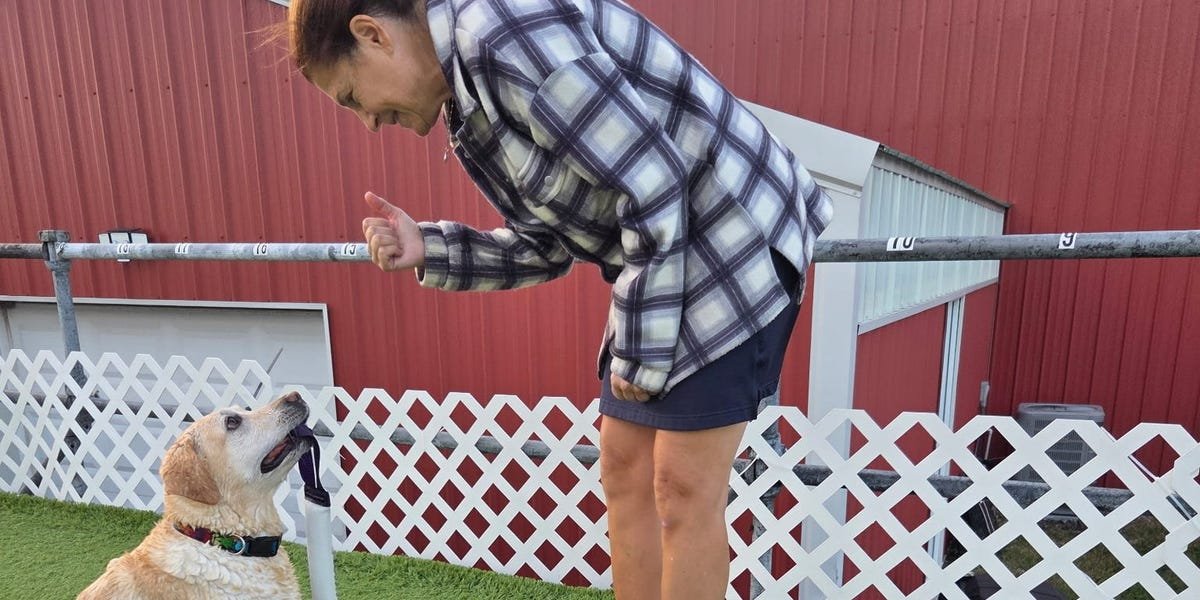
The author gets to be the cool aunt and dog mom now.
Courtesy of the author
But privately, something still felt unfinished. I had always imagined I’d be a mom — driving a carload of kids to and from sports practices. Instead, I was the kids’ biggest fan, attending every hockey game or soccer match I could. At that stage of life, it felt like I was standing on the outside of a world I wanted for myself. For years, I held two truths at once: gratitude for what I had, and grief for what I didn’t.
That tension softened slowly over time — through perspective and by watching the realities of parenthood up close rather than the polished version in my head. I now understand those Mother’s Day cards differently. I see my mom’s big heart for what it is and always has been — her way of saying: “You matter. You belong. Your life counts, too.”
I saw the benefits that came without having kids
When I once confided to a friend that my only regret in life was not having children, he said, “Yeah, but look at all you’ve done. You might not have been able to do those things if you’d had kids.” His comment shifted something. For the first time, I allowed myself to see that not having children came with benefits as well as loss.
My siblings are wonderful parents, and their kids are thriving. But even when everything is going well, parenting adult children carries a constant low-grade stress: worries about their happiness, careers, relationships, health, and the world they’re inheriting. There’s an ever-present sense of responsibility that never fully goes away.
I care deeply about my nieces’ and nephew’s happiness, but I don’t carry that same weight. Instead, I live with a different set of trade-offs. The consequences of my decisions fall on me alone. That freedom has allowed me to further my education and take risks I might not have taken putting kids first, like: leaving full-time jobs to finish a TV pilot, jumping into dock diving my lab, and chasing a new dream of owning a quarter horse rescue and competing in reining.
I can say yes to opportunities that would be impractical for someone juggling school calendars and tuition bills.
I’m the cool aunt
And I still get to show up for the kids I love. Being the cool aunt turns out to be its own form of parenting — from a distance, without daily responsibility but with real influence. My role is lighter, but it’s not insignificant. Recently, my niece decided to attend the same college where I earned a graduate degree. Before she left, she told me: “Yes, the aunt influence is real.” It was said casually, but it landed deeply. Proof that presence doesn’t require parenthood. That modeling a curious, creative, and independent life can be just as formative as enforcing rules or paying for that college degree.
There’s a peaceful relief in releasing the version of adulthood I once carried guilt for not achieving — that lingering expectation of a conventional family life.
I still think about the life I once wanted. But I no longer see it as the life I failed to have. It’s simply one path among many. And the one I’m on now — dogs, dreams, creative risks — feels intentional. I’ve kept those Mother’s Day cards because they remind me that I have the very best mom. Her words and belief in me have taken decades to fully embrace but now that I have, I know: there is more than one ways to nurture, more than one way to matter, and more than one way to build a full life.
When planning my two-week trip to Mexico, I looked beyond destinations like Cancún, Puerto Vallarta, and Cozumel. I wanted to visit central Mexico instead, which is further away from the busy cruise ports and all-inclusive resorts.
For years, I’d heard nothing but great things about Mexico City, so I put it at the top of my list. Travelers seem to always rave about the city’s atmosphere, culinary scene, and world-class museums. I couldn’t wait to check it out for myself.
However, once I arrived in the city, which is home to about 22 million people, I was totally overwhelmed. The influx of tourists for Mexico’s Día de Muertos celebrations at the time probably didn’t help, either.
There was a lot to do there, but I missed the quieter atmosphere of Santiago de Querétaro, where I’d been just a fewdays prior.
The smaller city, often shortened to just Querétaro, is home to around 1.5 million people and is located just three hours by bus from Mexico City. I knew little about the area beforehand, but was soon blown away by its colorful historic center and nearby attractions.
Mexico City gets a lot of hype, but in the end, it was the city I’d previously barely heard of that exceeded my expectations.
Querétaro’s city center is exceptionally charming
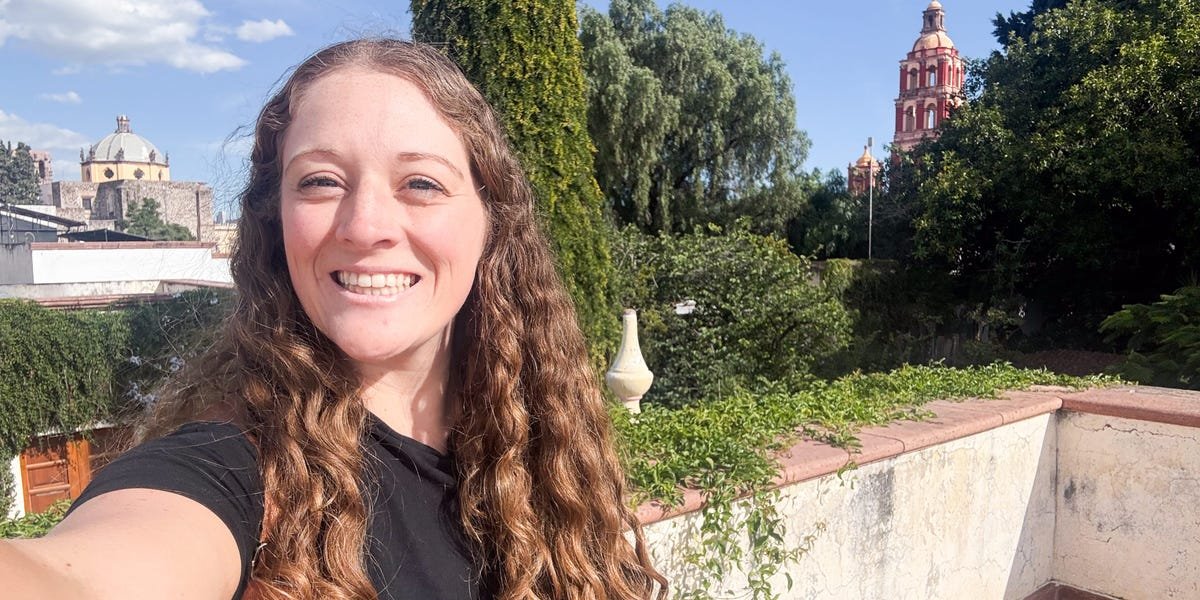
Querétaro is much smaller than Mexico City, but it has a lot to offer.
Jenna DeLaurentis
On my first morning in Querétaro, I was immediately struck by the atmosphere of the historic city center.
It’s a designated UNESCO World Heritage Site, and it’s full of tree-lined public squares. Each square acts as a meeting point for commerce, culture, and dining experiences.
Querétaro’s pedestrian-only streets are ideal for a relaxing walk.
Jenna DeLaurentis
I loved dining outdoors in these public squares. Often, musicians played soft piano music during mealtimes, and the atmosphere was alluring.
Beyond the squares, every street offered something new. On a visit to Querétaro’s Museum of Arts, I was blown away by the building’s Baroque-style architecture. The intricate design of the space was just as impressive as the artwork inside.
Querétaro’s Museum of Arts has stunning architecture.
Jenna DeLaurentis
Likewise, a brief visit to the Calendar Museum left me impressed. The small museum, which houses exhibitions on time and space, contains intricately manicured gardens in a restored mansion. The space was serene, adding another special touch to Querétaro’s endearing city center.
In contrast, I found Mexico City to be more overwhelming than charming. With millions of people, cars, and buses zooming around every corner, it was impossible to feel relaxed.
While walking around Mexico City’s maze of streets, I found myself missing the small-town feel of Querétaro.
The city is a convenient home base for day trips to other destinations, too
San Miguel de Allende is a short drive from Querétaro.
Jenna DeLaurentis
Something I loved during my time in Querétaro was the city’s proximity to several exciting destinations. I found it easy to take a day (or overnight) trip from the city.
On my visit, I took a one-night trip to San Miguel de Allende, a small city with well-preserved colonial architecture.
It was the perfect destination for a quick visit. I spent my time wandering around cobblestone streets, dining at rooftop cafes, and marveling at San Miguel de Allende’s prominent pink cathedral.
Querétaro is also within an hour’s drive to two of Mexico’s Pueblo Mágicos, or Magic Towns. There are 177 Pueblos Mágicos within Mexico, and each town has been designated to have significant cultural, historical, or architectural significance within the country.
One of these Pueblos Mágicos, Bernal, is famous for its giant monolith that towers over the town. The other, Tequisquiapan, offers a peaceful getaway where visitors can explore traditional cheese markets, vineyards, and natural hot springs.
Taking day trips from Querétaro doesn’t require a car, either. Uber is convenient throughout the area, and comfortable coach buses can take you from town to town at a low cost.
Mexico City has more to offer overall, but Querétaro is definitely worth a visit
I was excited to check out Mexico City for the first time, but it wasn’t my favorite place to visit in Mexico.
Jenna DeLaurentis
Even though I preferred Querétaro to Mexico City, there’s no denying that there’s far more to see and do in the latter.
You could spend months in Mexico City and barely scratch the surface. The city has over 150 museums and galleries along with the palatial Chapultepec Castle, massive Zócalo Square, vast green parks, and more restaurants than you could try in a lifetime.
Its National Museum of Anthropology could take an entire day to see in and of itself!
I expected to fall in love with Mexico City, but I didn’t jive with the city as much as I thought I would. For the most part, though, I’d still agree that Mexico City is worth the hype it receives. The metropolis has an addictive, bustling atmosphere, and the street-food scene is definitely out of this world.
Yet my trip was a good reminder to look beyond the most popular destinations in a particular place. I had never even heard of Querétaro before I planned my trip, but I’m so glad I took the chance to discover somewhere new.
Laura Behnke did not have time to worry about cancer when she first saw blood in the toilet.
She was trying in vitro fertilization for the fourth and final time, and her focus was on getting pregnant after three failed rounds with no healthy embryos. Everything else could wait.
A few days before the implantation was scheduled, she saw a kind of red mucus coating her stool, and thought: “‘I have been under an immense amount of stress. I know I’ve been straining. This has to be hemorrhoids, right?'”
“I just told myself, ‘You know what? Calm down, take some deep breaths, stop straining, and this will all go away, and it’ll be fine, and you can go on and have a baby,'” Behnke told Business Insider.
It would be over a year before she discovered she had rectal cancer, joining a growing cohort of younger adults being diagnosed with the disease decades earlier thanexpected.
Cancer was not on her radar
“I felt good,” she said. “There was no way I could have cancer.”
courtesy of Laura Behnke
After that fourth round of IVF, at age 41, Behnke did get pregnant. At first, she was shocked. Hearing a heartbeat at five weeks made it finally feel real. She was overjoyed.
Behnke continued to see some blood in the toilet intermittently, but it was easy to brush off because hemorrhoids are common during pregnancy. She didn’t know the difference between the drops of blood typical for hemorrhoids, and the red mucus she saw that she now knows was characteristic of colorectal cancer.
“Nobody at any point asked me: ‘What’s the bleeding like? How often is it happening?'” Behnke said. “We all just said, ‘Oh, hemorrhoids, cool. Moving on. We have other things to worry about.'”
In her third trimester, Behnke did develop a swollen external hemorrhoid, which made it hurt to sit down. For two days, she tried not to put any pressure on her bottom. In the car, she sat on a donut pillow. On the couch, she laid on her side. This bleeding looked and felt different, like bright red food dye coloring the toilet bowl. She took medication to manage the pain, and got on with the business of getting ready to be a new mom. A few months later, her daughter was born.
Behnke was enjoying being a new mom, and felt fine. She assumed the blood she saw in the toilet was caused by hemorrhoids, swollen veins that can develop around the anus, which are a common side effect of pregnancy.
courtesy of Laura Behnke
After six months of sleepless nights and newborn feedings, Behnke was finally starting to feel like herself again. She was regaining her strength, losing weight, and feeling in control of her body after years of IVF treatments and a pregnancy.
By now though, Behnke saw bloody mucus in the toilet even when she didn’t have a bowel movement, which she attributed to that pesky external hemorrhoid. Her bowels were also changing shape, and her stools sometimes coming out pencil thin.
Behnke decided to see a colorectal surgeon to get the swollen hemorrhoid removed. The doctor asked her about all of her symptoms, sparing no details about the blood or the poop, and then, to her surprise, told Behnke she urgently needed a colonoscopy.
“It could be a whole lot of things other than cancer, but we need a colonoscopy to find out for sure,” Behnke remembers her doctor saying.
After over a year of bloody stools, that was the first time Behnke heard the word “cancer” uttered.
Rectal cancer is on the rise among people in their 40s
Behnke went through radiation, chemotherapy, and then surgery to remove part of her colon.
courtesy of Laura Behnke
When the doctor told Behnke she had late-stage 3b colorectal cancer, she broke down crying. “But we have a seven-month-old!” she wailed into her husband’s shoulder.
“How could I be that sick and feel that good?” she wondered. “I had just had a completely normal and healthy pregnancy.” Suddenly, she felt a debt of gratitude to that annoying little hemorrhoid that led to her diagnosis.
The colonoscopy revealed that cancer had spread to some of the lymph nodes around her rectum, and was edging closer to other parts of her body. She was thankful that the prognosis was still relatively good. With radiation, then chemotherapy, and surgery afterwards to remove part of her colon and rectum, doctors were confident they could wipe the organ clean.
At 42-years-old, Behnke was diagnosed with what has quickly become the deadliest cancer for people under 50 in America.
“The landscape of colorectal cancer is changing rapidly,” Rebecca Siegel, an epidemiologist and the senior scientific director of surveillance research at the American Cancer Society, told Business Insider.
Experts don’t know why, but many of these new, young-onset colon cancer cases are rectal, prompting bloody stools. Other common symptoms in this age group include persistent stomach cramping or severe abdominal pain, low iron levels, and changes to bowel movements, including the narrower stools Behnke saw.
Research suggests that bloody stools are an early warning sign for about 40% of rectal cancer patients. “There’s an opportunity for earlier diagnosis, but the problem is, especially for younger people, they’re not aware of the symptoms and they don’t want to talk about the symptoms,” Siegel said. “And sometimes they even do go to the doctor with these symptoms, and they’re diagnosed with hemorrhoids or something else.”
A couple of weeks after Behnke had her first dose of radiation, she stopped bleeding into the toilet.After 25 sessions of radiation, then four months of chemotherapy, and finally, surgery that removed parts of her colon and rectum, she landed in diapers alongside her daughter for a few weeks. Doctors said every visible trace of the cancer was gone.
Slowly, over time, her colon has healed and she’s readjusted to a more normal bathroom routine, but she says things will never be quite the same down there. She prioritizes getting plenty of fiber in her diet from colorful vegetables, and also takes fiber pills twice a day, to help with the lingering symptoms.
“I am alive and I am healthy and all of this is workable,” she said.
This is not an ‘old man’s disease’ — talk to your doctor about bloody stools or unexplained stomach pain
Her daughter will start going in for colonoscopies at age 32, since that is 10 years younger than Behnke’s age at diagnosis.
courtesy of Laura Behnke
Colorectal cancer, Behnke said, is not an “old man’s disease” anymore. After her diagnosis, she urged her younger brother to get a colonoscopy, and doctors discovered he had precancerous polyps developing. Her young daughter, she said, will start having colonoscopies in her early 30s, because of her increased risk of developing colorectal cancer.
Behnke said she’s grateful she met “the right surgeon at the right time,” a doctor who asked the right questions, and didn’t dismiss her symptoms because she was too young or postpartum.
“No rectal bleeding is okay,” she said. “If you do have any sort of symptoms, any sort of concerns, anything that doesn’t feel right, you have every right to go ask a doctor about it and to demand some answers.”
Growing up with limited money, I always viewed college as a safety net, an investment that would set me up for immediate success. I started saving for tuition in high school, worked full-time in college to avoid student loans, earned straight A’s, and did all I could think of to guarantee financial success.
I felt financially secure for a short time, but everything changed when I graduated. The stability I once felt walking around my safe college town vanished almost overnight, and I was completely unprepared.
Since graduating over six years ago, I’ve moved 10 times while navigating rent increases, job changes, and the financial realities of being a young adult.
I thought life after college would be stable, but I was wrong
It took 10 months to find a job after graduating. When I finally did, I moved out of my childhood bedroom only to live temporarily with friends, and then back with my parents, recovering from the embarrassment of not being able to afford housing on my entry-level salary.
After a few months and a decent raise, I tried again. I moved into an apartment with my boyfriend (now husband) and got a dog. Since then, we’ve lived in four different apartments, moving back in with family between each one.
I’ve changed addresses so many times that my GPS has given up on me. Rising rent, post-pandemic inflation, pay cuts, unexpected debt, and even a lost tax payment forced us back home multiple times. We were fortunate to have family to fall back on, but the repeated setbacks never felt easy.
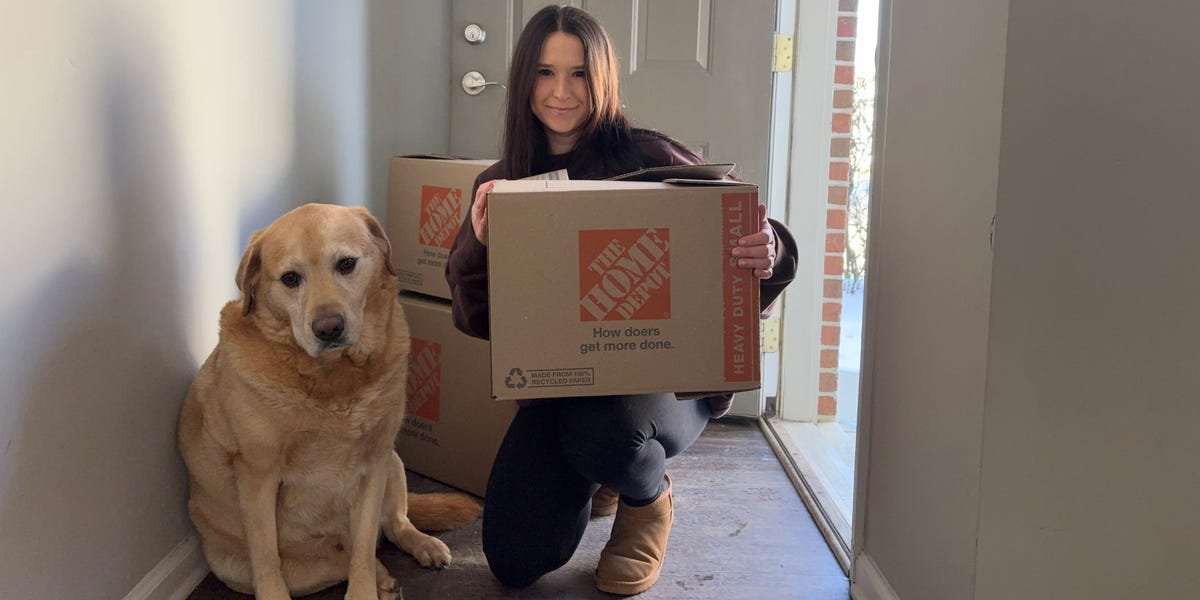
The author has faced many financial struggles since college.
Courtesy of Erin Wetten
Over six years later, I’m still not “settled” in the way I imagined. Each move taught me to handle setbacks with a little more confidence, yet, as someone who was so used to being prepared, I still felt like I was losing my sense of self.
I began to understand the emotional toll of feeling like a failure
I’ve spent my whole life measuring my self-worth in numbers — my SAT score, GPA, and items on my résumé. I planned my entire future in spreadsheets, bit my nails until they bled, and spent nights before big tests throwing up, even after weeks of studying.
That was me: an anxious, overachieving mess who crumbled at the thought of even a small failure.
Postgrad life quickly humbled me, teaching me that no amount of spreadsheets or A’s could protect me from the real world.
Every time I moved into a new apartment, I told myself, “This is it. I’ll save up, and the next move will be into a house of my own.”But it still hasn’t worked out that way. I’ve been forced to decide: Do I let that feeling drag me down, or accept that instability is a part of life and choose to enjoy the journey?
I had to find a ‘home’ within myself.
In my 20s, I’ve learned that life rarely unfolds the way we imagine, no matter how meticulously we plan. When I crossed the stage in cap and gown six years ago, I pictured a steady job, a white picket fence, and a stress-free existence waiting for me on the other side. I thought fulfillment would come from checking the right boxes in the right order, as I had always done.
Instead, I’ve never felt more fulfilled than I do now that I’ve thrown out the checklist altogether and stopped viewing life like a syllabus.
Over time, the weight of starting over lightened, and I learned to feel at home within myself, even as my physical space kept changing. Rather than feeling sorry for myself, I sought opportunity in each new set of blank walls, finding comfort and purpose from within.
My life hasn’t followed the simple, straightforward path I once expected, and I’ve come to believe that is for a reason. As someone with a Type A personality who was once consumed by anxiety over the smallest things, more rules and timelines weren’t what I needed. I needed freedom from my own expectations, and in my case, that meant getting knocked down enough times to finally loosen my grip on perfection.
No matter how many times I have to move or start over, I know I’ll be OK. I’m no longer chasing a timeline or striving for a perfect grade in life. I’m building a life that feels like mine, and letting its ups and downs shape me for the better.
When I was in junior high, I had a family history project. I didn’t know it then, but that project would spark a lifelong interest in my heritage.
In 2018, my wife (who is Cuban with Spanish ancestry) and I took a road trip through snow-capped Spanish mountains, meeting new family members that I never knew existed. When we met these relatives, we all grew close.
My wife and I then wanted to reconnect with our Spanish heritage in a whole new way. We decided that the best way to do so would be to travel to Spain for long stretches, with our toddlers.
For the past three years, we’ve spent two-month stints in Europe as a growing family.
At first, we thought long-term travel sounded impractical — and expensive
When my daughter was 2 years old, she had a 45-minute meltdown at the Miami International Airport. While we were resolving a ticketing issue for our baby boy, our daughter was throwing a loud tantrum. We endured many side-eyes from soon-to-be passengers (one of them snapped at us), and eventually, an airline employee frantically asked us to make it stop.
I thought we would never travel again, but the idea of an extended trip kept lingering in our minds.
On shorter trips, we pushed through and learned tricks that made travel easier, like using inflatable beds that rest on plane seats, small trinkets to play with, and plenty of snacks. With time, we knew we had a shot.
The author’s toddlers love traveling in Spain.
Courtesy of John Paul Hernandez
We now stay in Spain for 2 months at a time
Thanks to the flexibility of freelancing and some practice in penny pinching, we learned we could travel to Spain for two months for about the cost of a typical family Disney trip.
A trip to Disney for a family of four can cost $6,000 to $10,000 a week. An extended trip to Spain, I quickly learned, ranged from $4,220 to $4,900 for an apartment in the central parts of major cities.
When we book an apartment for a month or two in Spain, for example, we get rates much lower than for a shorter trip because Airbnb offers discounts on longer stays.
To get the family to Europe, we collect airline miles from credit card offers and fly mostly for free.
While on the trip, we rely on public transportation and shift our stay from a “tourist” experience to living like a local to continue saving money.
This worked for our trips in 2023, 2024, and 2025.
We lived like locals in Spain
When we transitioned from visiting to living in Spain, we focused on the town we were in and the people around us. We didn’t eat out for every meal, but cooked traditional dishes with local ingredients.
Our neighbors became friends, and our kids played at parks with familiar faces. Eventually, these friends invited us to their homes, and we stayed in touch after our trips.
To explore the country, we focused on different regions. For example, in year one we stayed in the Comunidad Valenciana, then on other trips in the País Vasco and Andalucía.
Once we were in these regions, we focused mainly on our home base and explored the nearby cities on weekend trips.
Our kids have gained a lot so far
Our toddlers are now willing to try different foods without hesitation, no matter where we are. They understand and use words they normally wouldn’t hear at home in the US.
As they get older in school, some of the places and events they learn about will be personal because they’ve been there and touched the stones.
My son learned to walk in Spain and has had all of his birthdays there. Spain also became a base for exploring other countries thanks to cheap, short flights.
More families can do this than you’d think
Our experiences in Spain have inspired many of our friends and family. I’m helping a cousin and a neighbor plan similar trips with their children.
With budgeting and smart planning, it’s much more affordable than two-week vacations in many parts of the US.
I’m not sure how long we’ll be able to do extended stays like this, but I do know these memories will be ingrained in our family.
They’ve helped shape my kids’ lives (our third child is on the way), and they continue to inspire us even at home in the US — by cooking Spanish meals, enjoying the present through walks, and lingering over late-night, hourslong dinners.
John Paul Hernandez is a marketing writer for tech companies. He’s based in Florida’s Treasure Coast. Connect with him on LinkedIn.
When I was a mom of one, I nailed motherhood. I was calm and patient; my child was well-dressed; the car was pristine; the chores were completed; and there was very little shouting. But as a mom of two, I just can’t parent to the same standards. Everything is messier, louder, more rushed, less organized, and good enough, just has to be enough.
Going from one child to two has, without a doubt, been one of, if not the hardest, adjustments of my entire life. One plus one does not equal two in this scenario. As a mom to a 1.5-year-old, a 3.5-year-old, a 16-year-old stepson, and two needy cats, it sometimes feels like I care for a dozen creatures.
I thought I was prepared
When I was pregnant with my second, I wasn’t naive. I didn’t think two would be easy. From the moment I brought my second home from the hospital, and he met my first with a cry that brought my first to tears as well, it has been a pinball game of crying, clinging, grabbing, and fighting.
Each child seemingly has a different, urgent need that requires individual attention and the patience of someone who has had a full night’s sleep. They both want “mommy!” all the time, especially when the other wants me.
The author says her two kids are always needing her.
Courtesy of the author
Most days, I’ll be lucky to have a sip of water and finger brush my hair into a ponytail before the madness ensues. Once spotted, I’m bum-rushed as they joust for a prime spot on my lap or in my arms. Even with one on each leg with my legs spread as wide as they possibly can, they are still fighting over me, while likely trying to bat each other away. At 40 and 30 pounds each, holding both for more than a moment is back-breaking.
Why is parenting 2 kids so hard?
Countless times since becoming a parent of two, I’ve wondered why I’m not better at this. I’ve always excelled at what I put my energy toward, but this has absolutely shattered me. Most of the time, I’m able to rescue myself from the rabbit hole of feeling like a failure by reminding myself that it feels hard because it IS hard.
Adding a child when you already have one changes every dynamic in your life, including your relationship with your first child, and adds a whole new dynamic: your children’s relationship with each other.
Corners are cut, patience and sleep are limited, and the breaks you used to have when your partner had the other child no longer exist. Oh, did I forget to mention my partner? There’s hardly any time for him. That relationship, the one that is most important in keeping everything afloat, is tested to the absolute limits.
I’m finding joy in the chaos
As I write this, both kids are at day care. It’s my one day a week without them (if they haven’t contracted the latest day care bug), and I’m surrounded by chaos.
There’s a tent in front of me and a play mop on top of what was once our living room table, now a receptacle for apple cores, half-eaten bananas, board books, sippy cups, tissues (some used), and a rotating selection of kitchen utensils.
Amid all the clutter, I see the literal and figurative crumb trails my boys have left: crackers and playdough ground into the carpet, a red fire engine toy on the armchair of the sofa, a wooden spoon deposited in boots as one exited the front door that morning.
Despite the messy, loud, hectic life I now have, I can’t wait to pick them up from day care, even though I know it will be pandemonium from the moment they see me.
I turned 57 this year. I always thought that by this point in my life, I would be taking bucket-list trips, tending a garden, and writing the novel I’ve always known was in me. Instead, my days are filled with wiping noses and every surface imaginable while keeping tabs on everything from medications to musical instruments.
My husband and I now live with our adult daughter and her six children, and because it makes the most sense, I take care of the kids, the house, the dog, and everything else while the other two adults go to work.
One day, when my daughter had to take five hours of mandatory overtime, and I was losing my cool at hour 10 of juggling meltdowns and messes, it hit me. I wasn’t the fun, easygoing, they-grow-up-so-fast-so-nothing-is-worth-getting-upset-about Grammie anymore. I had become the person holding everything together, and if nothing changed, I was going to burn out.
My busy mornings show how much I care for my grandkids
On a typical morning, I hit the ground running at 6 a.m. My daughter is able to take the first grader to the bus stop before work, so I’m “only” responsible for five kiddos most mornings.
After getting myself dressed and ready, I take the dog out and feed him, and then get my oldest grandson ready for the bus that picks him up at our door.
By then, the two preschoolers are awake, which means diaper changes and getting everyone dressed and fed. The middle schoolers need to be up, dressed in clean clothing (which is a bigger struggle than you’d think), and out the door on time. Somewhere in there, I’ll manage a cup of coffee and some sort of breakfast before we settle into the rest of our daily routine.
That’s when everything goes as it should. But when the 14-year-old misplaces his headphones, the dog gets frantic because of an early morning Amazon delivery, and the commotion wakes the toddler, it can feel like there’s no way I’ll make it through the day. Even then, the work doesn’t end when the workday does. It simply shifts into a different part of the day.
Loving my family doesn’t make the daily weight any lighter
I would take a bullet for every single member of my family. But the load is heavy, and I carry a lot of guilt for the moments I mourn the version of midlife I thought I would live.
It’s not that my daughter or my grandchildren are a burden; they’ve all been through more heartache and struggle than most people could imagine, and I’m so thankful we can provide emotional support.
But I’d be lying if I said I don’t sometimes long for the clean, quiet home I used to wake up to. My longing for that other life sometimes admittedly makes me cranky with my grandkids.
I had to change the way I showed up, or I wasn’t going to make it
A series of steps helped me change the way I show up without breaking myself down. I set an (almost) concrete bedtime for myself, completing tasks, chores, and self-care by 9 p.m. This gives me a little time to read or catch a podcast before getting to sleep at a decent hour.
The extra rest also allows me to get up a little earlier. Now, I have at least 30 minutes of quiet alone time while everyone else is still sleeping. It helps me start the day feeling grounded, rather than immediately pouring from an empty cup. I’ve experienced a huge shift in my attitude, and it seems to set the tone for everyone.
I’ve also started following some of the life advice I often give to the kids, like “Done is better than perfect.” I’m working on not holding myself to expectations I would never put on others. While I still won’t allow things to pile up until they’re unmanageable, I’m learning to be OK with leaving a load of laundry in the dryer for tomorrow.
Helping raise six grandchildren has reshaped my understanding of midlife
If there’s one thing I’ve learned in my nearly six decades on this planet, it’s that life rarely goes as planned. Letting go of dreams is tough, especially when we’re sold a picture of how midlife ought to look — but whether it defines you is your choice.
I’m choosing to embrace my current purpose and see the significance in helping to shape the hearts and minds of six amazing human beings.
This chapter of my life is messy, exhausting, noisy, and chaotic. But at the heart of it all is unconditional love, and the simple truth I carry with me is that there’s nowhere else I’d rather be.