
Ukraines-Patriot-crews-are-breaking-from-the-norm-fighting-Russian.jpeg

Ukraine’s Patriot crews are breaking from the norm, fighting Russian threats with fewer missiles

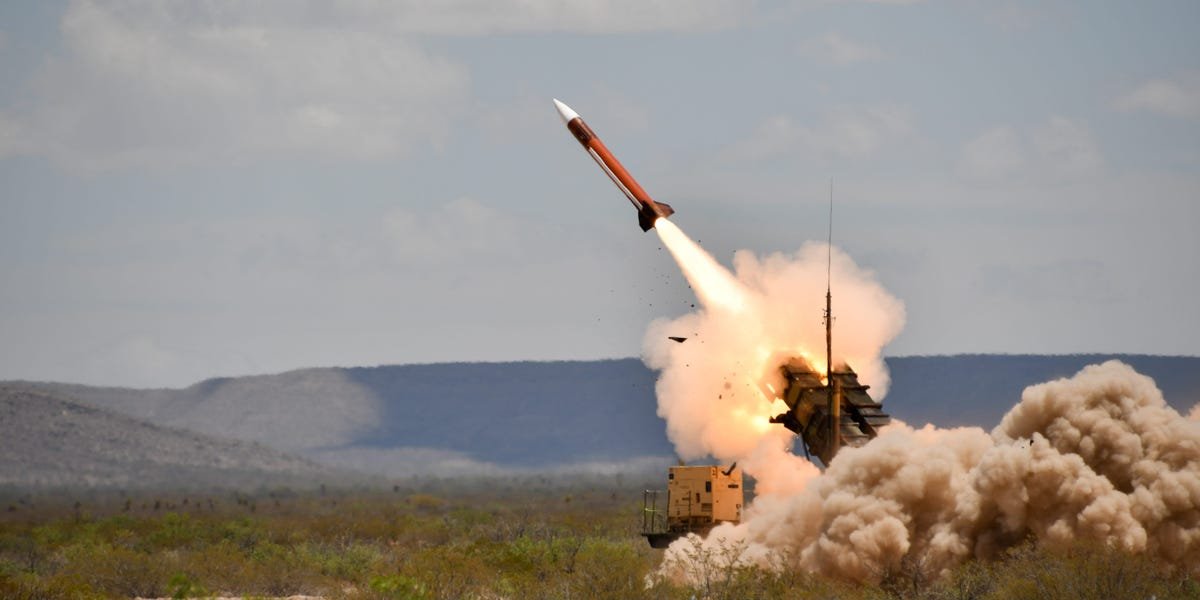
Ukrainian soldiers operating US-made Patriot air defense systems are deviating from traditional engagement practices and firing fewer interceptors in battles against incoming Russian missiles.

The commander of a Ukrainian Patriot unit said that standard air defense doctrine calls for firing between two and four interceptors at each incoming Russian cruise or ballistic missile; however, his forces are launching just one per threat amid strained stockpiles.

The commander, identified as Oleksandr in a video released over the weekend by the Ukrainian military’s Air Command West, said that Kyiv’s forces are trying to use as few interceptors as possible. He said that they need more to effectively counter Russian attacks. It’s unclear how widely this single-shot approach is practiced among the Ukrainian Patriot crews.

Launching more than one interceptor in an engagement, though costly, isn’t necessarily wasteful; rather, it is intentional risk management, prioritizing the kill over conservation. But Ukraine doesn’t have that luxury. In a high-intensity fight, the US and its allies might not either.

Yehor Cherniev, the deputy chairman of the Ukrainian parliamentary committee on national security, defense, and intelligence, said Ukraine has faced low Patriot interceptor stockpiles, forcing it to use as few as possible to engage Russian missiles.

To conserve essential interceptors, Ukraine had to learn to make the most of its capabilities, Cherniev told Business Insider. “This is the operation of the Patriot system in manual mode, without relying on automation.”


A Patriot system received by Ukraine is seen on the Day of Ukrainian Air Force on August 4, 2024.

A Western-supplied Patriot launcher at an undisclosed location in Ukraine. 

Vitalii Nosach/Global Images Ukraine via Getty Images


The American-made MIM-104 Patriot surface-to-air missile battery is the most advanced air defense system that Ukraine possesses. NATO countries have supplied Kyiv with PAC-2 and newer PAC-3 interceptors, the latter of which is estimated to cost nearly $4 million apiece.

Russian cruise and ballistic missiles that make it past the Patriots and other air defense systems have struck civil infrastructure or residential areas to deadly effect. Kyiv has repeatedly lobbied NATO states for more interceptors to replenish depleted stockpiles. The weapons are in high demand globally, though.

Some Russian bombardments include hundreds of missiles and drones, posing challenges for Ukraine’s stretched air defenders and underscoring the need for more advanced interceptors.

Mykhailo Fedorov, Ukraine’s defense minister, said on Tuesday that Germany will provide Kyiv with funding for “several hundred” Patriot interceptors as part of a new 4 billion Euro ($4.7 billion) arms package.

During the Iran war, Ukrainian President Volodymyr Zelenskyy said Kyiv would be willing to send intercerptor drones to Middle Eastern states in exchange for their vaunted Patriot interceptors.


A soldier walks past Patriot air defense systems installed at the military hub for Ukraine at the Rzeszów-Jasionka airport, in Jasionka, south-east Poland, on March 6, 2025.

The American-made Patriot system makes up the top echelon of Ukraine’s air defense network. 

Sergei Gapon/AFP via Getty Images


The US Army, the primary operator of the Patriot system, is learning from Ukraine’s experience that it is crucial to keep the batteries hidden and mobile and sufficiently stockpile interceptors, American officials told Business Insider previously.

Though Ukraine’s situation isn’t ideal, its ability to use fewer interceptors against Russian missiles could be another lesson for the US and its NATO allies concerned about their own interceptor stockpiles in the event of a major war against a near-peer adversary.

Cherniev said that NATO states don’t need to break protocol at this point since they have sufficient stockpiles and aren’t routinely attacked by massive bombardments of ballistic missiles; however, he said, this could change in the event of a large-scale war.

In the Middle East, the US and allied forces have intercepted thousands of Iranian ballistic missiles and drones over five weeks of sustained fighting. The pace and intensity of those engagements have fueled concerns about whether interceptor stockpiles can hold up in a prolonged or future conflict.

Cherniev said NATO forces may eventually be forced to start saving interceptors. “It’s better if they learn how to do this in advance from Ukrainian officers and make changes to their protocols now.”



Source link

Chong Ming Lee, Junior News Reporter at Business Insider's Singapore bureau.

Emergent’s CEO told us these are the 2 biggest threats to vibe coding

Emergent CEO Mukund Jha told Business Insider the fast-growing vibe coding movement faces two major risks.

The “biggest threat to vibe coding” is the quality of the software it produces, Jha said.

Many AI coding tools can generate apps quickly, but the output can still be buggy, fragile, or difficult to scale. The vibe coding industry depends on those systems getting better.

“There’s a big bet that the quality of software that gets produced is going to improve exponentially,” he said. “If that doesn’t happen, that’s a big threat,” he added.

Another risk could come from AI itself. Jha said it is possible the industry could eventually “skip the whole software building aspect” if autonomous AI systems become powerful enough to replace software.

“We went from like Nokia phones to BlackBerry, and then everybody went to iPhone,” he said. “It could be that the software was the BlackBerry.”

People might eventually rely on AI agents or large language models that perform tasks without needing apps, he added.

Emergent announced in February that it reached $100 million in annual recurring revenue, or ARR, in just eight months after launching. ARR is the revenue a company expects to generate in a year from subscriptions or other recurring payments.

The company said it doubled its ARR from $50 million to $100 million in a single month, underscoring the rapid growth of AI coding startups.

In January, Business Insider reported that the vibe coding startup raised a $70 million Series B round, bringing its total funding to about $100 million. Investors include Khosla Ventures, SoftBank Vision Fund 2, Lightspeed, Prosus, Together, Y Combinator, and Google’s AI Futures Fund.

Just six months earlier, the startup raised $23 million in a Series A round, highlighting how quickly top AI startups are attracting capital during the boom.

Read more about vibe coding

The rise of AI coding startups

It’s not just Emergent. Ryan Meadows, the chief revenue officer at Lovable, a Swedish vibe-coding startup, told Business Insider in an exclusive interview that its annual recurring revenue jumped more than 30% in one month, rising from $300 million to $400 million.

Meadows, said that the recent growth surge came after the launch of Claude Code, Anthropics’ AI coding tool. Rather than hurting Lovable’s business, Meadows said many developers are using both products.

“It’s a rising tide,” he told Business Insider. “We’ve been super happy with what we’re seeing.”

Other players are also seeing explosive growth. In late 2025, Cursor, another breakout company in the vibe coding space, said it had reached $1 billion in annualized revenue and was valued at nearly $30 billion, according to a company announcement in November.

But some industry leaders have warned about the rising costs associated with AI coding tools.

Billionaire investor Chamath Palihapitiya said his software company is reconsidering its use of Cursor amid rising expenses tied to AI development.

“Our costs have more than tripled since November,” Palihapitiya said on an episode of the “All-In Podcast” published Friday. “Between the inference cost that we pay AWS, which is ginormous, between our cost with Cursor, between Anthropic, we are just spending millions.”

AI companies themselves have acknowledged that more advanced features can drive up costs. Earlier this week, Anthropic introduced Code Review, a tool designed to detect complex coding issues and identify bugs. The company said the feature “optimizes for depth,” which makes it “more expensive than lighter-weight solutions like the Claude Code GitHub Action.”


Source link