
This-TikTok-vigilante-is-calling-out-what-he-says-are.jpeg

This TikTok vigilante is calling out what he says are obnoxious influencers — and getting legal threats

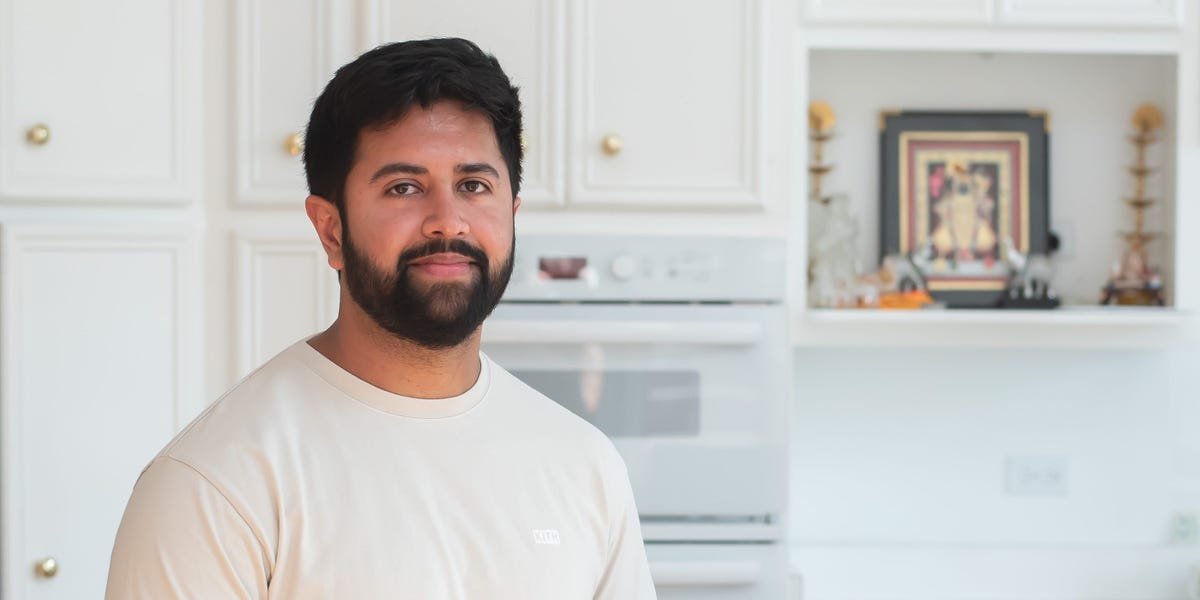
Jay didn’t set out to become the internet’s watchdog of entitled influencers.

The creator behind the Daadi Snacks account, who asked to be identified by his first name to protect his corporate day job, started posting on TikTok in 2024 to promote his family’s snack business. The company makes popcorn inspired by his grandma’s recipe that includes Indian spices.

One day, he came across a pair of influencers who were disappointed that a high-end South Indian restaurant didn’t have Chicken Tikka Masala on its menu.

“They made this comment that I thought was funny, in a way, out of touch,” he said. “So I just did a really quick stitch making fun of that, and being like, ‘Oh my God, there was, like, no chicken Tiki Marsala,’ as I said it, and that blew up.”

That video was the start of Jay’s side hustle as a prominent influencer critic. He now gets millions of views for his deadpan takedowns of creators, including tourists who don’t learn local customs and foodies who try to bully restaurants into giving them free meals.

“Come with meeee,” the New Yorker says in what’s become his trademark opening, satirizing the whiney upspeak that’s common among the targets of his critiques.

Daadi Snacks now boasts over a million TikTok followers, and while the videos aren’t traditional product marketing, Jay said they’ve helped grow awareness of his family’s brand. He doesn’t make money directly from the videos, but in addition to “Sweet Chai” and “Spicy Masala” popcorns, Daadi Snacks sells a “Come with meeee” tote and “ohmygawdyouguyz” ballcap.

Some of Jay’s targets have not been amused, at times blocking him or sending cease-and-desist letters.

His content feels especially relevant now, with influencer marketing growing faster than ever, replacing traditional media channels, and industry standards racing to keep up.

Foodie influencers under attack

Many viewers praise Jay’s videos, with one commenter calling him the “Batman of the internet.”

“Love this account and everything it stands for,” another commented.

Not everyone’s a fan, though.

“He’s literally a food influencer with an annoying voice in his ‘normal videos’ and pretending it’s all a parody just to sell popcorn,” sniffed a commenter on Reddit.

A TikToker known as themilehams, who has been targeted by Jay’s criticism, said accounts like his fuel bullying. Themilehams said in a direct message with Business Insider that they “welcome the trolls” because it helps their channel, but others might be ill-prepared for such attacks.

Jay, who often takes aim at food and travel influencers, said most feedback on his videos has been positive, and that many of his posts are based on tips from followers.

His clashes with influencers can get messy.

In January, an influencer complained that a New York café charged $25 for coffee and a “nasty danish” and booted her after three hours. Jay visited the café and showed a menu listing the most expensive combo at about $15, along with a no-weekend laptop policy he said was clearly posted.

“It makes me sick that someone tried to do this to honest, hardworking people,” he said in the video.

The poster, an Atlanta influencer who goes by BestieBri, said in a statement to Business Insider that she didn’t mean to attack the café. She said she didn’t like her pastry and that the laptop policy wasn’t posted when she visited. She added that she felt “misrepresented” by the Daadi Snacks post and had received harassing and threatening messages after it gained traction.

Jay’s taken aim at bigger fish, too.

They include the monk-turned-wellness-guru Jay Shetty, whom he colorfully ripped for his glamorous lifestyle. Shetty has defended his monk training and said he wrestles with reconciling his spirituality and entrepreneurship.

Jay also took aim at Ballerina Farm over its raw milk controversy. Multiple news outlets reported in January that samples of Ballerina Farm’s raw milk had failed two health tests in the summer of 2025. Ballerina Farm issued a statement in February, saying it passed the state’s required testing, had never recalled any products, and had stopped selling raw milk in August 2025.

Reps for Shetty and Ballerina Farm didn’t respond to requests for comment.

The creator economy is maturing

The creator economy is bigger than ever and growing. IAB estimated that advertisers would spend $43.9 billion on creator marketing this year.

Despite its size, there are no universally accepted standards for creators, and new entrants are constantly reshaping the space, said Kyle Hjelmeseth, CEO of G&B Digital Management.

“It’s not like people go to school for ‘How to show up and be an influencer,'” he said.

Hjelmeseth has launched a training program, the College of Influence, aimed at professionalizing the industry.

There have been some efforts to set industry standards, as well. A nonprofit, with ad industry support, is looking to certify creators — or create a stamp of approval — to ensure they follow some best practices. And a new public-interest organization called Deinfluence is trying to crack down on influencers who don’t disclose their funding sources.

Skepticism of influencer culture has been building for years, gaining traction with the rise of the “de-influencer” movement — a trend that urged people to question products creators promoted (while creating its own category of influencing). Los Angeles-based creator Kerry Rose Schwartz has gained a following on Instagram with her blunt restaurant reviews and criticism of paid influencer culture.

For now, Jay enjoys the work, but he doesn’t see himself doing it forever. He hopes his posts will encourage influencers to be more supportive of local businesses, so he can hang up his cape and focus on what he really enjoys: promoting local businesses.

“My hope is that things are in a position where I don’t really have to make as many videos, and I could just make small business reviews,” he said. “That’d be way more fun.”

Source link

They-were-about-to-shut-down-their-business-Then-a.jpeg

They were about to shut down their business. Then a raw TikTok changed everything.

For years, Brittany Nemandoust struggled to keep her small business afloat.

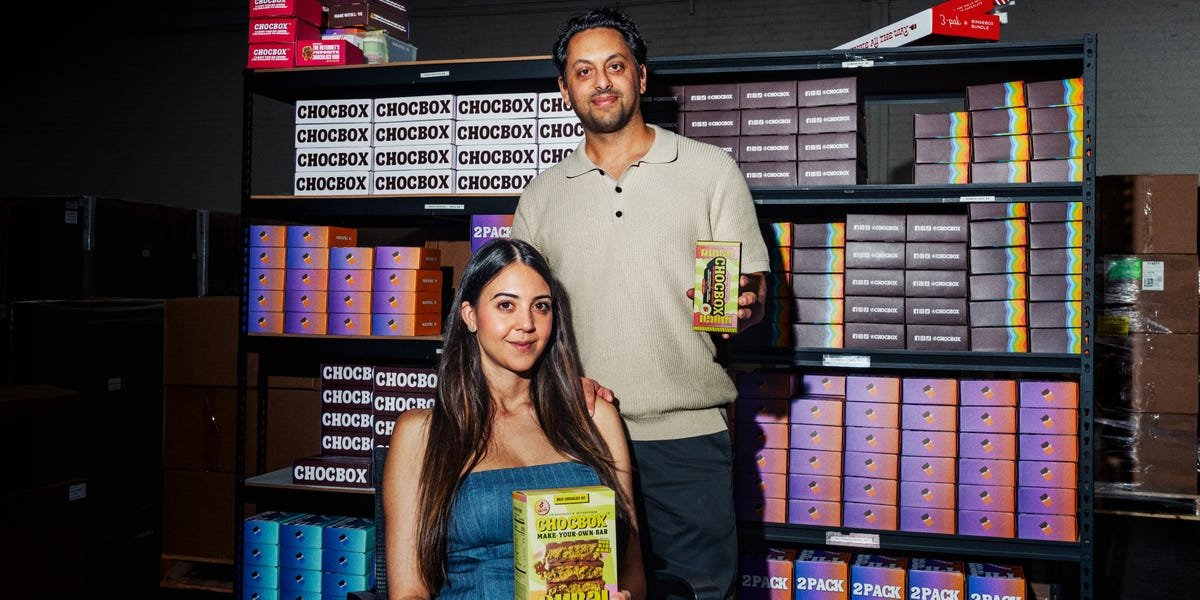
Chocbox, her DIY chocolate-making kit company, started as a pandemic project after shutdowns left her temporarily out of work as a dental hygienist. When she returned to the dental office, the business remained a side hustle.

Sales fluctuated, spiking over the holidays and slowing down during the spring and summer.

Around April 2024, she and her husband, Kevin, sat down to discuss whether it was time to shut it down. Sales weren’t enough to cover expenses, including rent for a small office in Los Angeles and payroll for a part-time employee, and Nemandoust had taken on credit-card debt to keep the company running.

On paper, closing made sense. But she wasn’t ready to give it up.

“I was really optimistic. I’m like, ‘I know that it’s going to happen at some point. It’s going to blow up,'” she told Business Insider. “I just had a feeling.”


A Strawberry Crunch Chocobox bar with their Dubai filling.

Each Chocbox kit includes a chocolate mold, pre-measured ingredients, and step-by-step instructions.

Ethan Noah Roy for BI


A few weeks later, an opportunity emerged. Nemandoust had noticed videos of a thick, pistachio-filled “Dubai chocolate” bar flooding TikTok. Influencers were trying to recreate it at home, and comment sections were filled with the same questions: Where do you get these ingredients? How do you make this?

Unlike most viewers, she already ran a chocolate kit business. Plus, years earlier, she had custom-designed a chocolate mold that was 20-30% thicker than standard molds — originally, she said, because she felt customers deserved a more substantial bar. That thickness turned out to be exactly what the viral Dubai bar required.

The couple went to a Middle Eastern grocery store in their neighborhood, bought pistachio cream and kataifi pastry, and tested their own version. Then, they filmed a video of the two of them breaking the bar in half and tasting it.

“It wasn’t a pretty video. It was just very raw,” she said, but the response was immediate.

Within 20 minutes, the video had 500 views, more than her videos typically received. Minutes later, the count doubled. By the end of the day, more than 100,000 people had viewed the video, and orders were pouring in. She hit TikTok’s daily cap for new sellers, 100 orders, that day and again the next.

There was just one problem: She didn’t have hundreds of kits ready to ship.

Managing quick growth after a viral moment

Going viral was exhilarating, but chaotic.

Two ingredients in particular — kataifi and pistachio cream — were difficult to source. Online suppliers were sold out, so she and Kevin started calling Turkish markets across Los Angeles. They even phoned gelato shops, knowing pistachio cream is often used in pistachio ice cream.

They also needed extra hands to pack orders, so they called friends, family, and anyone willing to pack boxes at odd hours.

“When you go viral, you need it now,” Nemandoust said. “You don’t have time to go through a hiring process or wait a week for a bulk order of items. You need it ASAP.”


Brittany and Kevin check out an assortment of their products.

Nemandoust launched Chocbox from her parents’ home during the pandemic. Today, she operates the business out of a 6,000-square-foot warehouse in Los Angeles.

Ethan Noah Roy for BI


In addition to pulling from every resource they had, they worked 15-hour days, waking up around 6 a.m. and finishing late at night. They often livestreamed their long days, which helped build their community that would be integral to sustained success.

“We would be up and just livestream at like 11 pm at night, blasting music, and I honestly think that’s how we started building our community — showing people the rawness of what it means to go viral,” she said.

As chaotic as that time was, the couple still focused on building systems to keep up with demand. They created instructions for assembling a kit, for how it should look when complete, and for packaging and labeling it correctly. They printed photos of finished kits and taped them to the walls, and recorded short videos demonstrating the packing process so new helpers and employees could avoid mistakes.

“The worst thing you can do when you go viral is not fulfill orders,” Kevin, who quit his corporate job in 2025 to help grow Chocbox, said. “People are dying for your product, and if you don’t send it, that can almost instantly kill your momentum.”

They also resisted the temptation to assume the viral spike would last forever. Instead, they focused on turning a moment into infrastructure: improving sourcing, tightening operations, and gradually expanding capacity. They moved from a 5-by-6-foot cubicle to larger office spaces in the same building, eventually upgrading to a 6,000-square-foot warehouse. Today, they employ eight people.

Strategies to build a lasting business

Going viral brought new customers, but didn’t guarantee customer retention. To create a lasting business, they’ve focused on building a community and creating the best possible product.


Brittany opening one of their dips for social media.

Nemandoust regularly hosts livestreams on TikTok to showcase products and connect with customers.

Ethan Noah Roy for BI


From the start, Nemandoust leaned into community-building. She livestreamed on TikTok, assembling kits in real time, answering questions, and interacting directly with viewers.

“I want people to think of me when they think of Chocbox,” she said. “I want to be part of the brand.”

The livestreams weren’t just sales channels. They became a means of building trust. Customers watched orders being packed, saw the behind-the-scenes scramble, and felt included in the growth.

Affiliates became another key pillar. TikTok’s native affiliate system allowed creators to tag Chocbox products in their videos and earn commissions. At first, influencers were simply buying the kits themselves and posting about them. Over time, the couple built a more intentional network of roughly 30 highly engaged affiliates, whom they call “Chocboxers.”

“We invest in them, and they invest in us,” Kevin said, noting that some of their affiliates earn thousands of dollars a month in commission. “They’re an extension of our brand.”

Beyond community, they’ve maintained discipline in their product strategy and kept a tight focus on a hero product: the chocolate-making kit. They later added refill kits and a jarred version of their pistachio filling, branded as “Dubai Dip,” but resisted flooding their website with dozens of flavors.


Portrait of Brittany and Kevin next to a shelf of their kits.

The Nemandousts in their Los Angeles warehouse.

Ethan Noah Roy for BI


“When we release products, they have to be really good,” Nemandoust said. “It’s never going to be mediocre.”

They’re constantly engaging with their customers, asking them what they want and using that feedback to create products that excite their community.

Today, both Brittany and Kevin work on Chocbox full time. Sales still fluctuate seasonally — peaking during the holidays and around Valentine’s Day, slowing in summer — and growth still comes with stress, but the conversation they had in April 2024 feels distant now.

They said the company recently surpassed 300,000 units sold on TikTok Shop. Just a couple of years ago, they were preparing to shut Chocbox down. From the outside, the milestone looks like an overnight success. It’s anything but, said Kevin: “If people really knew how hard it was behind the scenes, the amount of turbulence it took to get here is insane.”

That turbulence, the couple says, is the part most aspiring founders don’t see. At the end of the day, starting and maintaining a small business is “really hard,” he said. But if you want to do it, “the only thing getting in the way of starting a business is truly yourself. Just start.”


Source link

This-Ikea-plushie-is-swinging-off-the-shelves-because-of.jpeg

This Ikea plushie is swinging off the shelves because of Punch the sad viral TikTok monkey

A sad baby monkey has turned an Ikea plushie into a viral must-have.

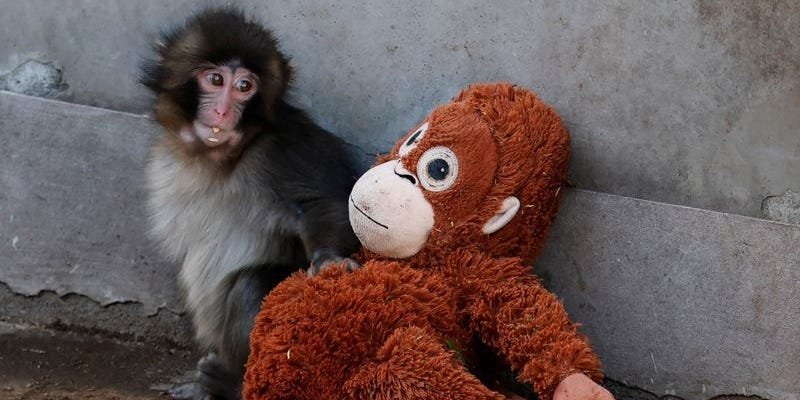
Punch, also known as Panchi-kun, is a seven-month-old Japanese macaque born in July. His mother abandoned him shortly after birth, and he was later rejected by other monkeys at Ichikawa City Zoo in Japan. To soothe him, zookeepers gave him a brown orangutan plush from Ikea.

Videos of Punch clinging tightly to the orangutan toy — hugging it after being brushed off by an older monkey, carrying it everywhere, even fending off curious monkeys who try to grab it — have racked up millions of views on TikTok. The clips turned the lonely macaque into an internet star.


monkey toy punch

Punch found comfort in an Ikea plush.

JIJI PRESS / AFP via Getty Images


A Japanese hashtag that translates to “hang in there, Punch” has also been trending, with users around the world rallying behind the baby monkey.

Viewers identified the plush as Ikea’s Djungelskog orangutan, and now it’s swinging off shelves at top speed.

Javier Quiñones, commercial manager at Ingka Group, which operates Ikea stores worldwide, told Business Insider on Monday that Ikea has “seen a clear increase in sales of the DJUNGELSKOG orangutan toy, particularly in Japan, the US, and South Korea” over the past few days.

The toy is sold out in some stores in those regions, and the company is “making sure that the toy is back in stock as soon as possible,” Quiñones said.

“The toy has long been one of our most sought-after across markets, and the story from Japan is now giving it a little extra love,” he added.

An Ikea spokesperson said the Japan team has reached out to the zoo to explore ways to help Punch.

“On February 17, IKEA donated several soft toys, including additional orangutans, as well as storage items to support Punch and enhance areas for children visiting the zoo,” the spokesperson said.

“Just like the zookeepers, we sincerely hope that Punch will soon become comfortable in an environment with the other monkeys and no longer need the soft toy,” the spokesperson added.

The orangutan plushie retails for $19.99 in the US, both in stores and online. Business Insider’s check of Ikea’s website on Tuesday found the toy out of stock at most US locations, with only about six stores still offering click-and-collect or in-store purchases.

The frenzy also spilled onto resale platforms, where prices climbed quickly.

A search on eBay on Tuesday showed multiple listings for the orangutan plush, with one seller asking as much as $328, more than 16 times the retail price.


Source link

Dan Whateley

The TikTok deal is done. Here’s what will change and what will stay the same.

TikTok’s US workers can finally breathe a sigh of relief.

The company announced Thursday that it has closed a deal to spin off parts of its US business in a new joint venture with an investor group.

“The safeguards provided by the Joint Venture will also cover CapCut, and Lemon8, and a portfolio of other apps and websites in the US,” the company said.

Adam Presser is leading the new venture, according to the company’s announcement. Presser has worked at TikTok for nearly four years, most recently leading operations and trust and safety. The venture’s seven-man, majority-American board includes TikTok’s CEO Shou Chew.

The agreement should keep the US government off its back as TikTok’s parent, ByteDance, now owns just under 20% of the new US venture. That ownership stake meets a divestment requirement set by a 2024 US sell-or-ban law targeting TikTok and other apps with owners based in countries like China, which the US has deemed a foreign adversary.

TikTok’s new US owners include tech company Oracle, private-equity firm Silver Lake, and Abu Dhabi investment firm MGX, each of which owns 15% of the new venture. ByteDance will own around 20% of the entity, and affiliates of existing ByteDance investors will own around 30%, according to a December memo from Chew. Other investors include Michael Dell’s family office and a venture run by the partners of growth investor Dragoneer.

What comes next is less clear.

While Oracle, MGX, and Silver Lake will serve as managing investors in the new US joint venture, their focus will be on areas such as data security. Key commercial activities, including e-commerce, advertising, and marketing, will remain with ByteDance.

The company began splitting up its US staff into different legal entities in January based on whether their work would remain under ByteDance’s purview, Business Insider first reported.


Source link

TikTok-reaches-a-deal-with-investors-on-its-US-business.jpeg

TikTok reaches a deal with investors on its US business

TikTok reached a deal with a group of investors to form a new joint venture for its US business, according to an internal memo viewed by Business Insider.

The buyer group will include Oracle, private-equity firm Silver Lake, and MGX, an investment firm based in Abu Dhabi, per the memo.

The deal, which TikTok expects to close in January, comes more than a year after Congress passed a law that forced its owner, ByteDance, to divest from its US operations or face a ban, because TikTok was deemed a “foreign adversary-controlled” company.

The new US joint venture will operate independently in areas like US data protection and training its content recommendation algorithm while still connecting to TikTok’s global product and business lines like e-commerce and advertising, per the memo from company CEO Shou Chew.

The announcement is the culmination of a lengthy battle for survival by TikTok, which briefly went dark in the US in January to comply with the divest-or-ban law.

TikTok and ByteDance had sought recourse through the courts, arguing that the law — the Protecting Americans from Foreign Adversary Controlled Applications Act — violated the First Amendment. In January, the Supreme Court ruled against TikTok and upheld the divest-or-ban law.

Since then, TikTok has been facing a looming deadline to find a US buyer. The app’s future remained in limbo for months as the White House repeatedly extended the deadline and administration officials sought to work out a deal.

In September, President Donald Trump signed an executive order that approved the sale of TikTok’s US operation for around $14 billion.

Trump said at the time that Oracle and Larry Ellison would be part of the deal, and Michael Dell and Rupert Murdoch may also be involved. Vice President JD Vance said the buyer group would include “four or five world-class investors.”

TikTok did not respond to a request for comment. The White House referred Business Insider to TikTok.


Source link