Im-a-64-year-old-retiree-who-bought-a-tiny-home-after.jpeg

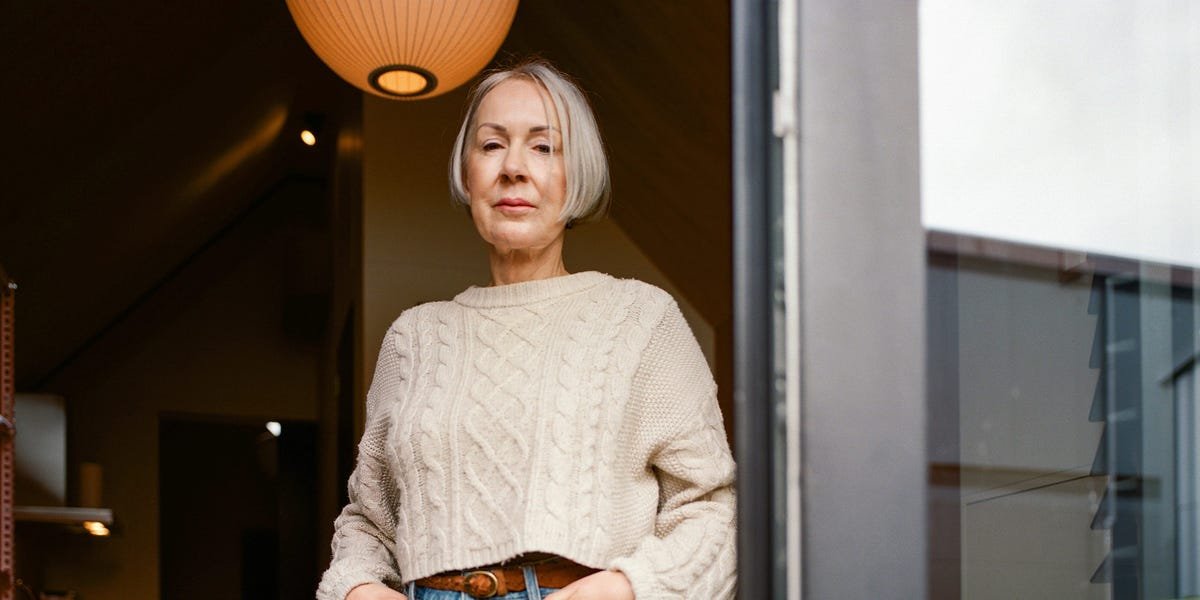
I’m a 64-year-old retiree who bought a tiny home after my divorce. It gave me a fresh start I could afford.

This as-told-to essay is based on a conversation with Margot Hollander, 64, a retired dance teacher and project manager. She lives in the Dutch tiny home village of Minitopia, Eindhoven. The piece has been edited for length and clarity.

After my divorce, I had to find somewhere to live. The rental market was tough, and as a retiree, my options for buying were limited without a mortgage.

I first came across Eindhoven’s Minitopia project in the news a few years back. When I started looking for a home in late 2023, at age 62, I found a tiny house there on a real-estate website. I booked a viewing and quickly made an offer.

I paid about $143,000 in cash for the tiny house, which was as much as I could afford. I moved into the Minitopia tiny village in January 2024. I’m very happy to have bought it at this point in my life.

Buying a tiny house was a chance to start fresh after my divorce


Margot Hollander

Hollander said her tiny home is spacious enough for her and her dog. 

Samira Kafala for BI


While I was very happy to move into a tiny home, there was a lot of downsizing involved, having moved from a regular-sized house also in Eindhoven. Even now, I’m still getting rid of clothes, shoes, and all the unnecessary things you accumulate over the years.

I think it’s good for your mind to downsize, and I’m happy to be living with less stuff.

It was a model home when I bought it, with the walls and floors finished, and the kitchen and bathroom already fitted. I enjoy interior design and added my own touches, such as shutters and new furniture.

I chose not to bring any furnishings from my old house. I wanted a fresh start. I’ve filled it with artwork that makes it feel like my own. That was important to me. After the divorce, moving here has given me independence.

I’ve found it easy to make friends

It’s easy to get to know people who live in Minitopia. The Eindhoven tiny home village is Minitopia’s largest, with space for 100 tiny houses. I meet people every time I take my dog out for a walk, and most are open and chatty.

You don’t need to make plans to go for a drink here; you can just easily fall into conversation with your neighbors. It’s the simple things, like making small talk on the way to the parking lot, that give me such a good feeling about living here.

I don’t come across too many other retired people like me. Minitopia Eindhoven is a real mix of young and old, single and married, and people with and without children. That diversity is what makes it feel like a proper community.

I wouldn’t want too many other retirees to move in. I don’t want it to become a retirement village.

As a retiree, it works well for me financially


Margot Hollander tiny home

Hollander’s tiny home was fitted out before she bought it. 

Samira Kafala for BI


I used to be a dance teacher and also worked in project management in the housing sector. Once you’re retired, it’s important to live within your means so you still have money left for other things.

The more you spend on housing, the less you have to put toward your hobbies. I like to spend my money on sports.

Financially, the tiny house works very well for me. I’ve found it’s much cheaper to run than the regular house I lived in before. I have solar panels, so I’m not paying for electricity at the moment. The ground rent at Minitopia, which is a few hundred euros a month, is far lower than what I’d have paid to rent a larger home.

I hope this is my forever home

While the house is relatively small, I have more than enough space for my small dog and me. It’s not somewhere you can easily host big dinners, but that’s what I like about it. I prefer one-on-one contact to large groups.

Overall, I see very few inconveniences to living here. I like my tiny house and the community very much.

I hope this will be my last home, though I hope I’ve got plenty of years left in it yet.



Source link

Joshua Zitser's face on a grey background

We’re a couple in our 30s who dreamed of building a tiny home. My parents had concerns, so we made a pitch deck to convince them.

This as-told-to essay is based on a conversation with Anne Leijdekkers, 32, a Dutch arts entrepreneur, and Simone Solazzo, 31, an Italian who used to work in tech. Last year, the couple moved into the house they built in the tiny-home village of Minitopia in Valkenswaard, the Netherlands. This piece has been edited for length and clarity.

Anne: At first, my parents were sceptical about our plan to build our own tiny home.

Friends will always stand behind you, but family members can be more critical. It was important for us to have them on board.

Simone used to work in the corporate world and loves PowerPoint presentations, so on Christmas Day in 2024, we used one to pitch our dream to my family.

We wanted to be financially autonomous

Simone: I liked the idea of being able to explain to them why we wanted to do this and what we were planning. The first slide said, in Dutch, “We are building our home. We’d like your support.”

In the presentation, we told them about the plan, the timeline, and where we would be living. We included our budget, which ranged from 40,000 to 80,000 euros ($47,000 to $94,000).

Mostly, the slides outlined our motivations. The first reason was to be financially autonomous.

If we were to buy a big house, we’d be committing to a big mortgage. Instead, we used our savings to pay for the construction of the tiny home, and its transportation to the Minitopia site in Valkenswaard. In total, the project cost us 75,000 euros.

We don’t have a mortgage, and our monthly costs are relatively low. We spend about 500 euros a month on ground rent, utilities, and insurance. I imagine the monthly costs of running a larger property would be considerably higher.

Living in a tiny house is like being a snail

Simone: When you have a smaller space, you have to limit your possessions to what you actually need.

Anne: It was important for us to find out whether we were capable of doing that. We wanted to show that there’s a different way to live. You don’t need an attic at the end of your life filled with so many things.

It wasn’t about being minimalist as much as decluttering. It’s almost like being a snail. We keep things compact and can move our home whenever we want.

That’s how we arrived here: putting our tiny house on a truck and moving it.

Simone: We also like that the house can evolve with us. This means it can be our forever home. For example, if we decide one day to have kids, we could easily build a second module on top.


Simone Solazzo shows photos of construction and presentation

In the presentation, the couple shared their motivations for building a tiny home, which included financial autonomy.

Joshua Nelken-Zitser


Living in a tiny home encourages you to spend time outdoors

Simone: We both felt that knowing how to build and dismantle things was an important skill to learn. We like to challenge ourselves, and building our own home felt like the ultimate challenge. It turned out to be a real learning experience.

We’ve become handier. Sometimes, when it’s raining heavily, I wake up in the middle of the night worried about a leak. But now, if something goes wrong, I know how to deal with it.

Another bonus of living in a tiny house is that it encourages you to spend more time outdoors. When you have a big house, you can do most things inside. When your home is tiny, you need to get outside and move around in nature. We haven’t lived here in the spring or summer yet, so we’re looking forward to seeing what that is like.

My parents had concerns, but they stood behind us

Anne: The final slide said, “Let’s think about it and make it together — as a family.”

Before the presentation, my parents had concerns: was it a sensible investment? What if we wanted to have children? Were we actually capable of building it ourselves? My brother even suggested we buy a pre-made tiny house on Amazon.

After the presentation, they still had concerns about the financial rationale, but they understood our dream and 100% stood behind us. That was an amazing feeling.

We spent two months planning, budgeting, and designing, and then we started building. We began the process exactly a year ago, and it took about five months. Now that it’s finished, they’re very proud of us.

Simone: Anne’s father, who is in his 70s, even helped us build it. It gave her a beautiful opportunity to spend time with him and to build new memories.

Anne: It turned out to be a really warm period in our lives.


Source link

New-York-City-homeowners-can-apply-to-build-a-backyard.jpeg

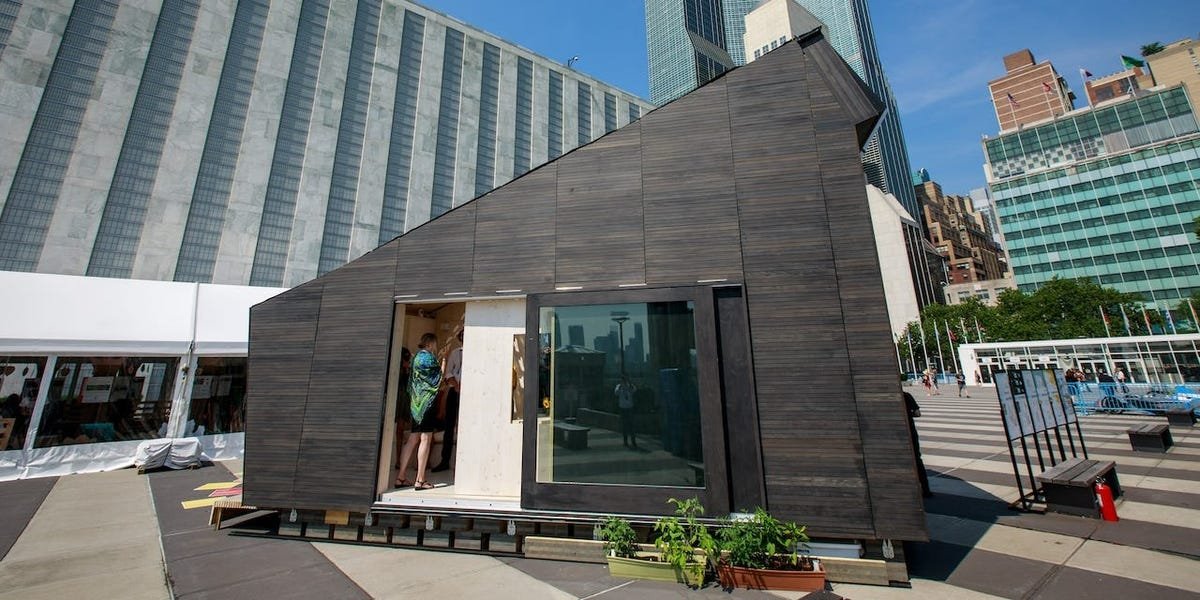
New York City homeowners can apply to build a backyard tiny home

It’s open season for some New York City homeowners interested in building a tiny home in their backyard.

Under a sweeping zoning reform Mayor Eric Adams signed into law late last year, the city made it legal for certain one- and two-family homeowners to add an additional home, also known as an “ancillary dwelling unit” or ADU, to their property.

On September 30, 2025, the city finalized its rules for backyard and attic ADUs and began accepting applications from homeowners, although the government is still working on the rules for basement units. The city estimates that the reform — part of its City of Yes for Housing Opportunity package — will help create about 25,000 new homes in backyard cottages and converted garages, attics, and basements over the next 15 years. But the success of the reform will depend in large part on homeowners navigating high construction costs and regulations.

Wil Fisher has spent the last year preparing for this. The former city government employee founded a Queens-based firm, Unit Two Development, that helps homeowners determine whether their property is eligible for an ADU and connects them with contractors and others who can help them build one. Fisher said he and his team have identified well over 100,000 eligible individual properties, and they’ve talked with more than 100 of these homeowners, who largely live in Queens and Staten Island.

“The rules of the road are now written,” Fisher said. “It was a long process, but for the most part we’re off to the races.”

Most of the people Fisher has talked with are interested in adding an ADU to house a family member, including an aging parent or a relative with disabilities who needs care, or an adult child.

Maggie Ornstein is one of these homeowners. Ornstein, 47, lives with her mother in a house in western Queens that has been home to five generations of her family since the 1800s. She hopes to build an ADU for her mother, who’s undergoing treatment for cancer and is having difficulty navigating the stairs in their two-and-a-half-story home.

Ornstein, a public health geographer, has consulted with Fisher and determined that she could legally convert her garage into a home.

“My dream for an ADU on my property would be something that would be accessible, but might also have a second floor where a family member could potentially stay if they wanted to visit, or if I wanted to be with my mom in the ADU,” she said.

After months of planning and big picture discussions with potential clients, Fisher is starting to nail down the specifics of what his clients could build and what it might cost.

“Now is sort of the pivot from the conceptual to here’s exactly what it will take, and here are the cost implications of that,” he said.

Are you a New Yorker interested in building an ADU? Reach out to this reporter to share your experience at erelman@businessinsider.com.

Dealing with costs and regulations

One inevitable obstacle homeowners face is the steep price of building in the city. Fisher estimates that adding a backyard unit or converting a garage will start between $300,000 and $400,000, depending on the project’s size. That’s compared to the city’s median home price of $800,000.

The construction cost is out of reach for many homeowners who’d benefit most from adding an ADU to their property, said Thomas Yu, executive director of Asian Americans for Equality, an advocacy organization and affordable housing provider. Yu said there needs to be a much clearer and more affordable path to adding an ADU before the regulatory reform will unleash construction in lower and middle-income neighborhoods. He suggested tax abatements or grants for homeowners with more modest means.

Many of the New Yorkers Yu and his team work with live in overcrowded homes with multiple generations of their family. They could benefit from having a home for an older relative or an adult child who couldn’t otherwise afford to stay in the city.

“The ability for that generation to achieve independent homeownership is zero, particularly in New York City,” Yu said of younger New Yorkers. “So ADUs are the next half-step that’s needed for that.”

Ornstein said she’s been discouraged by the price tag on her potential project. She’s also turned off by how extensive and involved the construction would likely be, especially given her work schedule and caregiving responsibilities. She’s hoping to find some government funding to help pay for the project.

“It’s so much more expensive than I would have anticipated,” she said. “On the one hand, you wouldn’t be able to buy an apartment in New York City for what an ADU would cost to build. But on the other, it’s really a lot of upfront cost.”

The expense and hassle of adding an ADU might not make sense for homeowners who are just looking for rental income, Fisher said. But he expects the units will be easily rentable for those who want a tenant either immediately or in the future. Adding an ADU also tends to hike the property’s resale value.

“As far as I’m seeing, construction costs are a little too high for them to be a slam dunk rental investment from day one,” Fisher said. “But for folks who have a relative or an immediate need that exists within their own family or social network, these are going to be good investments in the long term.”

ADU construction is also limited by a slew of regulations. The units can’t be bigger than 800 square feet or take up more than a third of a homeowner’s backyard. The law also restricts basement ADUs in areas prone to flooding and prohibits them in attached homes, like townhouses.

The Regional Plan Association, a pro-housing nonprofit focused on the tri-state area, found that just 68,000 lots — 12% of the city’s one- and two-family properties — are eligible to add an ADU.

The city says it’s creating a “one-stop shop” full of information for homeowners interested in building an additional unit. The site will include a set of public, pre-approved backyard ADU designs submitted by architects, designers, and builders that homeowners can use to lower design costs and speed up the construction process.

“Efficiencies that can be built in are really going to be make or break for this market,” Fisher said.


Source link