Headshot of Chris Panella.

The Army’s new drone competition is really a talent hunt. It’s scouting out what makes a top drone pilot.

The US Army used its first Best Drone Warfighter competition not just to test skills, officials say, but to identify what makes a top drone operator — and who in the force is best suited for the job.

Rather than training every soldier to fly drones, the Army is using competition to identify the skill sets of top drone operators and whether there are specific roles within units that would make the most sense for working with uncrewed aerial systems.

The effort reflects a broader shift from treating drone flying as something for all soldiers to approaching it as a specialized skill set that requires the right aptitude, training, and sustained practice.

The inaugural drone competition took place this week at the University of Alabama in Huntsville, gathering teams from across active, Reserve, and National Guard units. There were no requirements on what types of soldiers could participate or where they came from.

Rather, “it was just send your best UAS operators,” Col. Nicholas Ryan, director of Army UAS Transformation at the Aviation Center of Excellence, told reporters, prompting a mix of operators with different backgrounds and expertise.

Over three days, soldiers competed in multiple events, testing their piloting skills. The first was an obstacle course that operators navigated using first-person-view drones.


A soldier holds a drone controller.

Recent US Department of Defense directives have prioritized the development and integration of drones across the Army.

US Army photo by Spc. Michelle Lessard-Terry


The second was a hunter-killer scenario in which teams used a reconnaissance drone to survey an array of targets and decide which were highest priority for simulated strikes with one-way attack drones. The competition didn’t involve any kinetic strikes; instead, soldiers flew the drones into nets on the targets.

The third event was focused on innovation. Soldiers could build, modify, and test their own drones.

Ryan said that the Army was taking notes throughout the competition on who the top operators were, calling it talent management.

“At the end of the day,” he said, “it’s not about receiving trophies or awards,” it is about identifying what sets the top drone operators apart and figuring out how they developed those skills. The goal, he said, is to understand “what lessons can we take from this to find out who the best operator is and how they became the best operator. What skills and resources and training allowed them to become the best operator?”

Soldiers in the US and Ukraine have noticed that gamers make excellent drone pilots, as do soldiers who have experience piloting hobby drones.

“That’s something we’re absolutely looking at right now,” Ryan said.

Army leaders have previously noted a correlation between soldiers who grew up playing video games — or who are active gamers — and drone proficiency.

Troops who game have shown quick reflexes, precise hand-eye coordination, and strong spatial awareness that make them competent with drones.

At an exercise in Germany last fall, a US Army captain told Business Insider that the top pilots were soldiers who “when they got off on Fridays, then go and play video games.”

The Army has been restructuring its approach to drone warfare, rewriting its training and focusing on integrating soldiers with small drone training into front-line units. Lessons and approaches are being shared across the service, building a broader doctrine on how the Army is adopting drones.


A quadcopter drone flies on a field with trees in the background.

The competition allowed Army leadership to learn more about the skillsets and backgrounds that make drone operators successful.

US Army photo by Sgt. Aaron Troutman


Ryan said that the service is realizing that flying drones needs to be a dedicated assignment. “You can’t be a squad rifleman and a drone operator,” he said, explaining that “it’s one or the other because you have to have the level of skill and expertise in operating and employing the drones. That’s what you have to be good at and train at and focus on for most of your time.”

Other Army officials said efforts like the competition were demonstrating where drones best fit in a formation and what aspects of training are most important to maintain these highly perishable skills.

For the most part, soldiers flew their drones successfully, but the Army did take note of communication breakdowns as soldiers went through the hunter-killer lane, specifically getting drones into position and identifying and simulating strikes on targets.

“That’s an example of something we didn’t anticipate, but it’s absolutely standing out as that is something we as an Army need to do better on,” Ryan said. “If we’re going to proliferate these drones and want them to be more effective and lethal, we just need to improve on how our soldiers talk to each other to communicate when they’re using them.”

In future iterations of the Best Drone Warfighter competition, the Army hopes to include kinetic elements as well as electronic warfare and jamming to better replicate real-world scenarios.

Source link

Armed-with-longer-range-missiles-a-top-Russian-fighter-jet-is.jpeg

Armed with longer-range missiles, a top Russian fighter jet is posing a bigger threat, analyst says

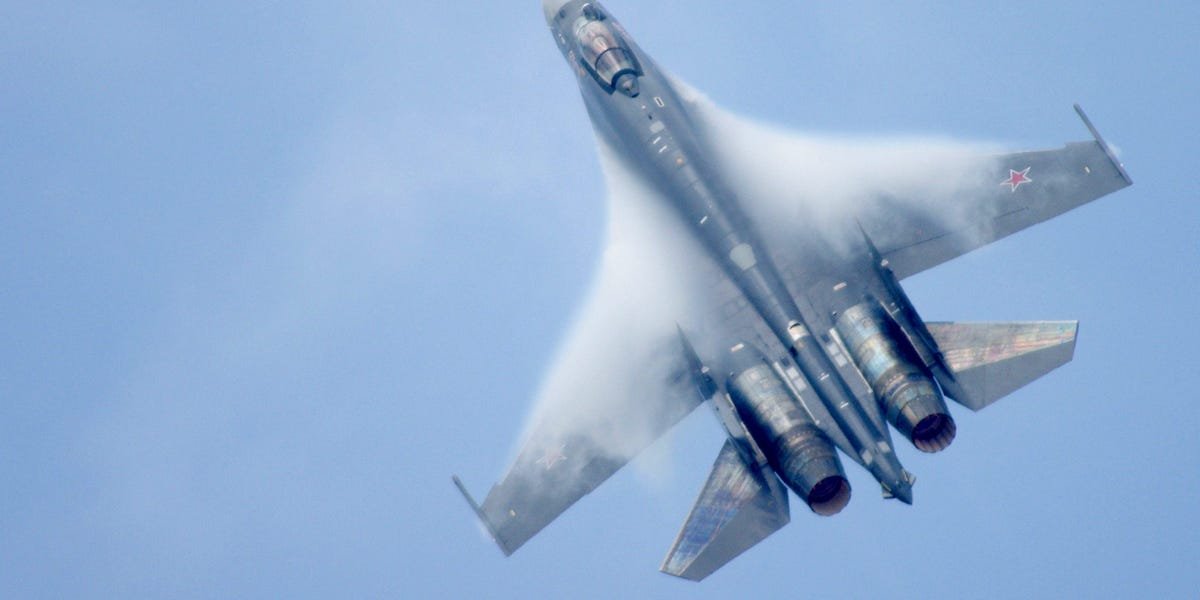
Russia’s Su-35 fighter jets are increasingly flying with longer-range air-to-air missiles that make them a potentially greater threat to NATO air operations, a leading airpower expert assessed in a recent report.

Justin Bronk, a researcher at the UK-based Royal United Services Institute, said in his assessment of Russian air power that regularly arming Su-35 and Su-30SM2 jets with R-37M missiles “has significantly contributed to increasing the threat that they can theoretically pose to NATO air operations.”

The R-37M missile, which NATO calls the RS-AA-13, is “much more capable at long range” than the R-77-1 missiles the Su-35 had previously relied on, Bronk told Business Insider in a discussion of his recent report.

R-77-1 missiles have a range of about 62 miles, while R-37M missiles are understood to have a range of around 200 miles. Real-world kills at range depend on a mix of factors, but reach still matters.

Bronk told Business Insider that the longer-range R-37M missiles had been “very much a specialist weapon” for a limited selection of Russian jets. But “now you see absolutely routine employment” of the weapon on Russia’s Su-35S.

The Su-35 fighter is “the primary air superiority aircraft for the Russians,” he added. The jet is key for Russia’s air force, with the UK Ministry of Defence in 2023 describing it as Russia’s “most advanced combat jet in widespread service.”

Bronk told Business Insider that for the NATO alliance, the regular arming of Su-35s and Su-30SM2s with the R-37M is “a problem” because it puts “more credible long-range air-to-air missiles at play from the Russian side.”

Those missiles used to be contained within a smaller part of the force, mainly Russia’s MiG-31s. Now, Bronk said, having them on more jets “is obviously a significant growth in the potential threat that they can pose to NATO aircraft in a direct conflict.”


A grey fighter jet in a light blue sky with fire visable in its two engines

The R-37M was previously concentrated on Russia’s MiG-31 jets.

Mikhail Svetlov/Getty Images


Additionally, he said, Russia’s Su-35 crews are “generally more highly selected, better trained, more capable than the crews on the MiG-31s.” Russia’s better pilots tend to fly its top jets, and those will be the pilots operating these missiles.

Having them routinely carry long-range air-to-air missiles, rather than the “really pretty limited” R77-1 that they used to carry, Bronk said, “is a significant shift.”

A missile with a longer reach

The R-37M’s combat effectiveness has been spotlighted by Russia’s full-scale invasion of Ukraine, which began in February 2022.

Late that year, a RUSI report said the R-37M, combined with Russia’s MiG-31BM interceptor aircraft, was proving to be “highly effective and difficult for Ukrainian pilots to evade due to its speed, very long range, and specialized seeker for low-altitude targets.”

At that time, it said Russia was just starting to put them on Su-35S jets.

A newer report from RUSI in November highlighted how much more the R-37M missile was being used, saying that this missile “in particular, has been used to destroy several Ukrainian aircraft at long range,” including one kill recorded at more than 109 miles.

“This is significantly beyond the engagement range of most NATO air-to-air munitions,” the report said. But it also said that the missiles’ success was “heavily determined by Ukraine’s lack of effective radar warning receivers,” something NATO has fielded far more robustly across its air forces.

The Su-35 threat

Making the Su-35 more powerful is a big move for Russia. In 2022, analysts at the RAND Corporation described the Su-35 as Russia’s “signature heavy fighter.”

Ukraine has shot down multiple Su-35s in its fight against Russia’s invasion, but Bronk said that despite reported losses, the fleet has “marginally increased since the start of the full-scale war.”

He estimated that in late 2020, Russia had about 90 Su-35s. Between eight and 10 have been lost in combat or accidents, he said, but 55 to 60 new aircraft have since been delivered — leaving Russia with roughly 135 to 140 Su-35s overall, a net increase despite the attrition.

Bronk’s analysis was based on interviews with Western air forces and ministries, data from Ukraine’s armed forces, and open-source information.

He said that the Russian air force has gained so much valuable combat experience against Ukraine that its air force is now “a significantly more capable potential threat for Western air forces than it was in 2022.”

He said that in air-to-air combat, where Russian aircraft take on Western ones, the West still has a strong advantage, but longer-range air-to-air missiles complicate the picture.

And any fight would not only be in the air. The West would face not only Russia’s air force but also its vast ground-based air defense network, which the war has also made more formidable.

Bronk told Business Insider that Su-35 crews are typically “much better at working with the ground-based air defenses,” meaning the jets can operate more effectively under the umbrella of Russian surface-to-air missile systems and are therefore “more credible as an air-to-air threat.”

He said that the improvement of those ground-based defenses throughout the war — combined with the fielding of more powerful missiles on Su-35s that are increasingly integrated with them — is one reason why Russian airpower “represents a greater threat to Western air power capabilities in Europe” than it did before the full-scale invasion.


Source link

A-top-Salesforce-executive-says-Benioffs-ICE-jokes-were-not.jpeg

A top Salesforce executive says Benioff’s ICE jokes were ‘not OK’

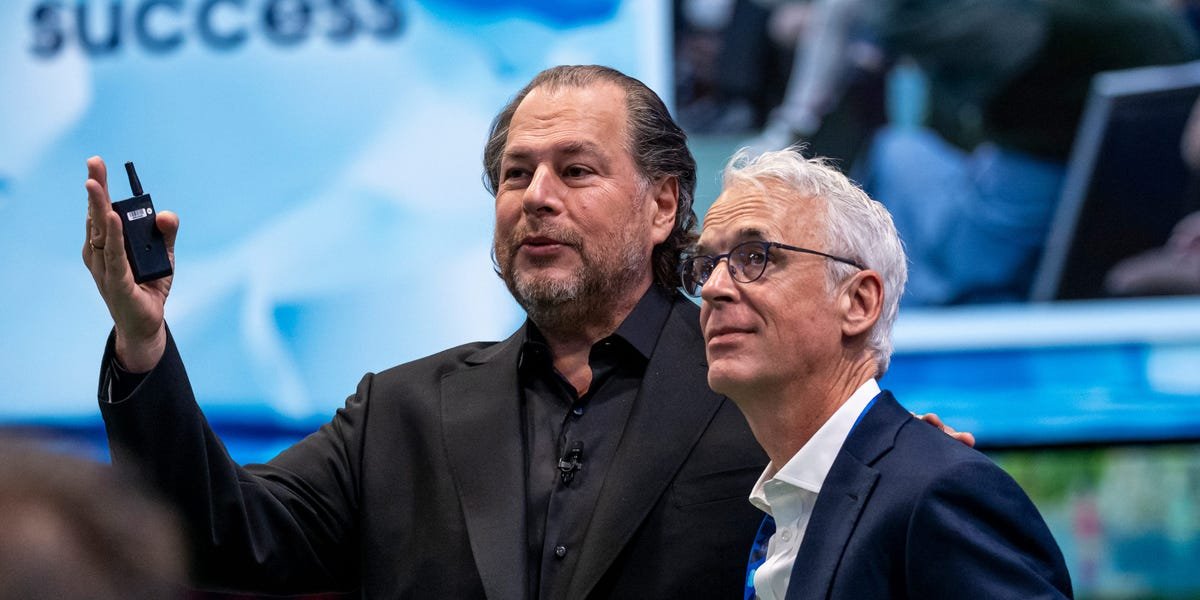
Salesforce cofounder Parker Harris addressed the controversy over CEO Marc Benioff’s ICE jokes in an internal meeting, saying he was “not OK with it,” Business Insider has learned.

“Marc made a very bad joke,” Harris, who is the company’s chief technical officer, said. “But that’s something that Marc did, and I’m not gonna call him out in public out on the internet.”

A transcript of Harris’ remarks at a meeting of the product and tech team last week was posted by an employee to a Slack channel. Business Insider verified that the transcript was accurate.

Salesforce did not respond to a request for comment. Benioff has not spoken about the jokes or the company’s reaction to them.


Marc Benioff wearing a blue suit and white shirt

Marc Benioff has not addressed the internal uproar over his ICE jokes.

Santiago Mejia/San Francisco Chronicle via Getty Images


In his meeting, Harris began by addressing a question about why many company leaders had not addressed Benioff’s comments at Salesforce’s employee-only company kickoff in Las Vegas last Tuesday.

“So I’ll start by saying that somebody already has, and it was immediately leaked,” Harris said, referring to a Business Insider story about another executive who criticized Benioff’s jokes.

“Let’s talk about it with each other and not out to Business Insider and other places because it doesn’t do us any good,” he said, adding, “It’s a violation of the Code of Conduct, and it’s a fireable offense. And if we do catch you, we will fire you.”

At the kickoff, Benioff made “multiple” jokes about ICE, including one about agents surveilling Salesforce employee travel, employees told Business Insider at the time.

Workers reacted with anger on Slack, which is owned by Salesforce. Slack General Manager Rob Seaman posted a comment saying he could not “defend or explain” his boss’ comments.

“They do not align with my personal values and I know this to be the case for many of you as well,” he wrote.

Craig Broscow, a Salesforce VP, acknowledged the “deep disappointment” in his own Slack message after the kickoff remarks.

“It would be a step in the right direction and for Marc to acknowledge as soon as possible — ideally publicly — that his attempted joke was extremely upsetting to large segments of his employee base,” Broscow said.

Speaking to his team, Harris said Seaman got in hot water for his post.

“I’ll tell you personally, and this is what Rob said as well, and I respect Rob for saying that, but he got in big trouble ’cause it went out on the internet,” Harris said. “Personally, I’m not OK with that joke.”

Harris went on to say that “it’s hard right now with what is going on [in] the US” and “what’s going in, like, Minneapolis is not about our software. Our software is not being used there.”

Harris said Salesforce is “not a political organization” and encouraged employees to make their views known at the ballot box.

“I’m going to use my democratic right to vote, and that’s how I’m gonna take action against some of the things that I’m not okay with,” he said.

He closed with saying, “So that’s my statement. It may not make you feel better. So I’m sorry if it doesn’t make you feel better. I think we should keep talking about it. I’m totally fine talking about it more. Please keep it confidential.”

Have a tip? Contact this reporter via email at astewart@businessinsider.com or Signal at +1-425-344-8242. Use a personal email address and a nonwork device; here’s our guide to sharing information securely.


Source link

Goldmans-CEO-David-Solomon-says-he-reluctantly-let-top-lawyer.jpeg

Goldman’s CEO David Solomon says he ‘reluctantly’ let top lawyer Kathy Ruemmler resign after Epstein fallout

Goldman Sachs CEO David Solomon addressed the complicated situation the firm faced this week as its general counsel and chief legal officer, Kathy Ruemmler, dominated headlines for her past connections and thousands of emails with disgraced former financier Jeffrey Epstein.

She is now set to step down this summer.

Ruemmler submitted her resignation on Thursday, which Solomon said he reluctantly accepted as the media storm grew about a variety of her contacts with Epstein and his lavish gifts to her, all of which transpired before she joined Goldman as its top legal official in 2020.

“She called me yesterday afternoon and told me that the press coverage of the work she had done previously and of this whole situation had just gotten to a level of noise and distraction that she thought it was distracting the firm,” Solomon told CNBC during a live interview on Friday. He added that he had “reluctantly accepted her resignation, but I respect her decision, and she and the firm are looking forward.”

“It was putting her in a position where it was hard for her to execute on her job and her responsibilities,” Solomon said, “and she just thought it was time to step away.”

The CEO said said that Ruemmler’s connections with Epstein predated her time at the Wall Street bank, but acknowledged the complexity the situation presented for the firm’s top leadership. Previously, Ruemmler was a member of President Barack Obama’s White House counsel, advising him on matters related to foreign policy and national security, and later served as a partner at the elite law firm Latham & Watkins before joining Goldman.

“As a CEO and a leadership team, we’re making real-time decisions with a very valued colleague that we worked with very closely, and that’s not an easy thing to work through. There is a lot of nuance to that.” He added that he was “proud of the way Kathy has handled herself and the way we’ve worked through this.”

And he added that Goldman wasn’t the only large organization facing the fallout of high-powered individuals’ apparent connections to Epstein, who died in 2019 but whose legacy has continued to cast a pall over large segments of the corporate sector.

“A lot of people are trying to work through it,” Solomon told CNBC’s Andrew Ross Sorkin when pressed for more detail on how the decision came about. He praised Ruemmler’s contributions, calling her “a tremendous human being” who had served as an “extraordinary general counsel with deep, deep experience” for the banking institution.

Ruemmler’s last day at Goldman is set to be June 30, the bank said.

Last month, Goldman representative Tony Fratto said in a statement that it is “well known that Epstein often offered unsolicited favors and gifts to his many business contacts.”

“As Kathy has said many times, she had a professional association with Jeffrey Epstein when she was a lawyer in private practice, heading the defense and investigations practice at a global law firm,” the statement said. “She regrets ever knowing him.”


Source link

Instagrams-top-exec-grilled-about-his-pay-at-social-media.jpeg

Instagram’s top exec grilled about his pay at social media addiction trial

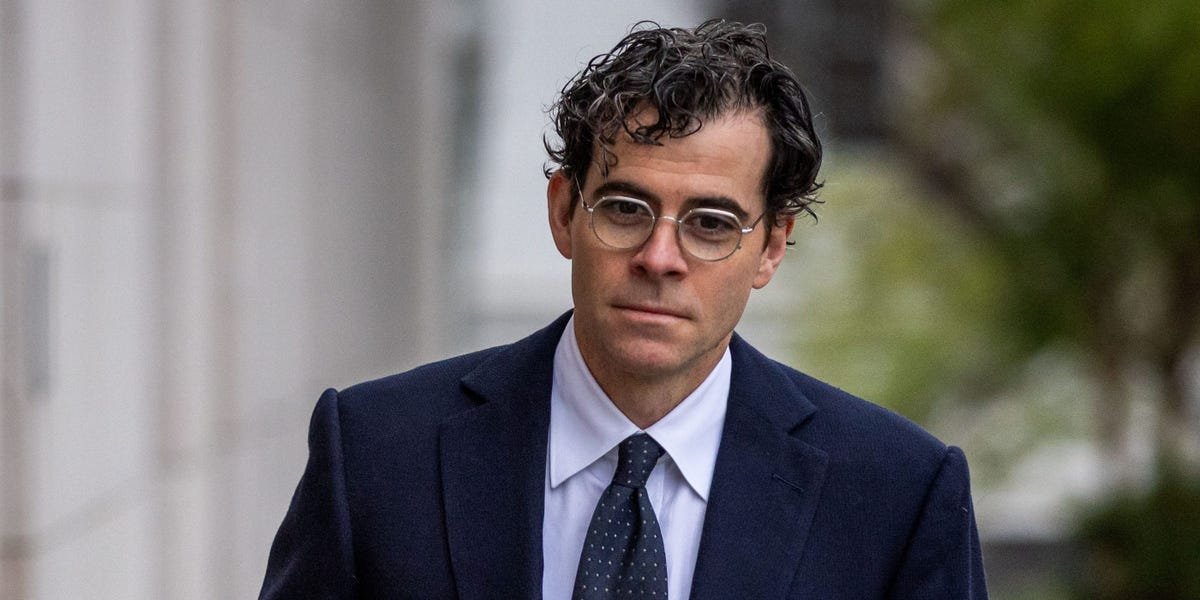
Adam Mosseri’s multimillion-dollar pay package took center stage on Wednesday as lawyers sought to link Meta’s profits to platforms that addict children.

As the first of several tech executives to testify in a social media addiction trial playing out in Los Angeles state court, the head of Instagram said he is paid roughly $900,000 a year and receives annual performance-based bonuses that can be as high as half of his salary.

Like many executives of publicly traded social media companies, Mosseri, who’s been head of Meta’s Instagram since 2018, also earns stock-based compensation.

From the witness stand, Mosseri said that his stock-based pay varies year to year but that it has been in the “tens of millions of dollars.” Some years, he said, he believes it’s been over $20 million.

Mosseri made the comments while being questioned in Los Angeles Superior Court over a lawsuit that argues Meta and YouTube knowingly engineered their platforms to addict and cause harm to kids. Snap and TikTok were also named in the lawsuit but settled before trial for undisclosed amounts.

Mark Lanier, the attorney representing the plaintiff, pressed Mosseri on how the company determined its policy on cosmetic filters, such as filters that alter users’ appearances, which was a key topic in court on Wednesday. He brought up Mosseri’s compensation again while asking whether banning filters could have hurt Mosseri’s bottom line by limiting the company’s growth.

“I was never worried about this affecting our stock price,” Mosseri said in court.

Meta declined to comment about Mosseri’s compensation.

The lawsuit centers on a 20-year-old woman, identified by the initials KGM, who says her use of social media throughout her childhood negatively affected her mental health, contributing to depression and suicidal thoughts.

The case is considered a bellwether trial that could indicate how other similar lawsuits related to social media addiction might play out.

“We strongly disagree with these allegations and are confident the evidence will show our longstanding commitment to supporting young people,” Stephanie Otway, a Meta spokesperson, told Business Insider. Otway said the company has been making ” meaningful changes—like introducing Teen Accounts with built-in protections and providing parents with tools to manage their teens’ experiences.”


Source link

Jamie Heller, incoming Editor-in-Chief

What’s the future of the software business look like? Our top tech columnist weighs in.

The future of software

Software stocks had a brutal week, aside from a Friday rally, extending what has been a rough year for the industry. I touched base with our tech columnist, Ali Barr, the best I know on AI business models. He also wrote this piece in the midst of the selloff.

Ali, you’ve been covering AI adoption and costs by big business since you started our Tech Memo newsletter. What’s your gut on whether the recent selloff was overblown?

Software business models have underpinned the tech industry for decades. Companies invest heavily upfront to build software, but each additional copy costs almost nothing to distribute. So revenue scales faster than costs, driving fat profit margins. That dynamic helps explain why Microsoft, the world’s largest software company, is so valuable.

AI challenges this model. If this new technology makes employees more productive, companies may need fewer software subscriptions. And as AI tools improve, businesses could replace existing software with AI-driven workflows or even build their own software using AI coding tools. Finally, if software companies embrace AI, that could make their services more expensive to run than traditional software. That would mean rising usage doesn’t automatically translate into soaring profitability.

If software in the AI era becomes less profitable and grows more slowly, then it’s logical that the stock prices of software companies might fall. A lot.

Big Tech spending on AI data centers and other infrastructure is set to soar again this year. How will these companies generate a return on these huge investments?

The numbers are breathtaking. Just two companies, Google and Amazon, are planning capex of almost $400 billion in 2026. A couple more years of the same, and that’s more than $1 trillion.

To get a return on this, they will have to come up with new revenue of well over $1 trillion in future years. AI is amazing and really useful, but it’s hard for some investors to see how this happens. Even if new AI products are awesome, do consumers and companies have enough money to buy all this stuff? I don’t know. One outcome could be that Big Tech giants make do with slimmer profit margins in an AI future. That’s similar to the concerns that have hammered software stocks lately.

Who are the most-interesting people to watch in the sector?

I pay attention to Andrej Karpathy. He was director of AI at Tesla and a founding member of OpenAI. He’s pretty independent nowadays, which means what he says about AI can be trusted more. Bonus: He coined the term “vibe coding.”

Aditya Agarwal was Facebook’s first head of product engineering. He was also CTO and VP of engineering at Dropbox. He’s a coding powerhouse. Recently, he used Claude to do some coding and was stunned by the power of this tool. “I am filled with wonder and also a profound sadness,” he wrote on X. “We will never ever write code by hand again. It doesn’t make any sense to do so. Something I was very good at is now free and abundant.”

I’m usually skeptical, but the start of 2026 feels like a moment of highly disruptive — and destructive — change.


Source link

Chipotle-is-targeting-the-top-of-the-K-shaped-economy.jpeg

Chipotle is targeting the top of the K-shaped economy

Chipotle Mexican Grill plans to raise menu prices by 1-2% this year — and leadership is betting that its core consumer segment, digital natives who earn over $100k, won’t mind.

Speaking during Tuesday’s fourth-quarter earnings call, interim CEO Scott Boatwright said Chipotle is focusing on boosting foot traffic and revenue amid weak comparable sales. To do that, they’re targeting their core customer, who sits firmly at the top end of the K-shaped economy.

Chipotle recently conducted a “deep dive” of consumer research to identify the demographics and desires of its core audience and refine its strategy accordingly, Boatwright said.

“What we’ve learned is the guest skews younger, a little higher income, is typically a digital native, and that their grounded purpose aligns with our North Star as a brand, around clean food, clean ingredients, high protein,” Boatwright said. “We are the way they want to eat, and we’re going to lean into that in the most meaningful way.”

“After looking at the data last week, we learned that 60% of our core users are over $100,000 a year in average household income,” he added. “That gives us confidence that we can lean into that group in a more meaningful way, whether it’s the solo occasion and/or group occasions to really drive meaningful transaction performance in the year.”

Chipotle beat revenue estimates in 2025, its earnings report released on Tuesday showed, despite comparable restaurant sales decreasing 1.7%. The company projected its comparable sales in 2026 would be “about flat,” accounting for the openings of between 350 and 370 new restaurants.

In 2026, Chipotle’s margins will remain “under pressure,” Chief Financial Officer Adam Rymer said during the call, so consumers can expect pricing to increase 1-2% to narrow the gap between rising expenses and menu prices.

The broader restaurant segment is struggling with slumping sales as the K-shaped economy has upended the typical playbook for value deals and marketing campaigns. Lower-income consumers have been cutting back on spending, especially dining out, as they face rising costs across the board, while higher-income households show no signs of slowing their spending.

To draw in traffic, Chipotle recently launched its new protein snack menu, allowing customers to purchase a single taco or a side of meat (either chicken or steak) in a cup. It has also sped up the cadence of its limited-time offer releases, such as the recent promotions for chicken al pastor and red chimichurri sauce.

Those promotions seem to be working, and are proof that Chipotle’s core customer isn’t particularly price-sensitive, Boatwright said during Tuesday’s call.

Prior to the protein snack menu debut, Boatwright said leadership considered whether the launch would result in a “consumer trade-down” effect, a common phenomenon in which price-sensitive consumers opt for a discount deal or a lower-cost menu item than they’d usually order to find better value — but “frankly, we just didn’t see it.”

Instead of becoming a cheaper alternative to their usual favorite, customers are frequently purchasing the protein side as an add-on to their typical order, which Boatwright said “gives us confidence that the core consumer is not necessarily looking for a smaller, lower price-pointed component to the menu.”

Boatwright added that Chipotle will continue to test ideas to keep consumers coming back, including more limited-time offers and drink innovations. He also teased a “Happier Hour” deal specifically to re-engage younger and lower-income customers, but he added, “I don’t know if it’ll be a meaningful unlock for Chipotle.”

Chipotle’s stock sank by more than 6% in after-hours trading.


Source link

Finland-is-trying-to-poach-top-tech-and-AI-talent.jpeg

Finland is trying to poach top tech and AI talent from the US with 2-week visas and better work-life balance

Finland is stepping into the tech talent wars.

The Nordic country is making a push for tech workers from abroad, with a particular focus on the US. The goal is to attract engineers and researchers working in deep tech, especially in the fields of quantum computing, AI, and health innovation.

The effort comes as competition for AI talent intensifies worldwide and tech workers in the US grapple with layoffs, burnout, and visa complications. KPMG’s annual survey of global CEOs found that 70% were concerned about competition for AI talent. According to BCG’s 2024 talent tracker report, the US remained dominant in attracting AI talent worldwide.

Already known for its tech scene, Finland, with a population of around 5.6 million, is positioning itself as a place where American tech workers can find a better work-life balance without sacrificing their careers — a notable contrast to the famous grindset of Silicon Valley.

“Of course, there might be long days once in a while, but it’s such a high value, and it’s also protected by law that you can’t work more than an average of 40 hours per week,” Laura Lindeman, head of the Work in Finland program, told Business Insider.

She said that even in the tech sector, when people leave work for the day, they really do leave. “Offices are silent,” she said. Employers in Finland, often ranked the happiest country in the world, also see the benefit of workers having lives outside work, she said, adding that the general sentiment is “it narrows your thinking if you only work.”

Finland is working with more than 30 Finnish tech companies and universities to promote open roles to foreign workers. A preview of the job openings being promoted under the program includes roles with Oura Health (the company behind the Oura Ring), quantum computing firm QMill, and Aalto University.

Lindeman said Americans interested in working in Finland should consider reaching out to companies or universities, even if no open roles are listed, as some employers are open to creating positions for the right candidate. While the campaign emphasizes the US, it also targets talent from India, Brazil, and other parts of Europe.

Once candidates receive a job offer, they can apply for a specialist visa through Finland’s Fast Track program. Approved applicants can receive a work-residence permit in as little as two weeks, with processing times averaging about 10 days, Lindeman said. Finland also offers integration programs to help newcomers settle in, and spouses of workers on specialist visas are eligible for work permits, she added.

Government data suggests interest from Americans is already rising. Finland granted 60 specialist residence permits to US citizens in 2024 and 85 in 2025, according to Finnish immigration statistics. The number of residence permits granted to US researchers also increased, from 35 in 2024 to 46 in 2025.


Helsinki skyline

Jordan Blake Banks, an American living in Helsinki, said Finland has a great work-life balance.

Vladislav Zolotov/Getty Images


Finland is known for a culture of work-life balance

Jordan Blake Banks, an American who moved to Finland in 2019 to pursue a master’s degree through the Fulbright program, said the country offers plenty of benefits, from its forests to its emphasis on work-life balance. After finishing her degree, Banks stayed in Finland and eventually landed a job as a sustainability consultant at Deloitte in Helsinki.

“The general idea is that the company and the colleagues respect you as a person, and that you can have your free and personal time,” she said, adding parents regularly leave work during the day for family obligations without stigma. Many Finns also take about a month of vacation during the summer, along with time off in the winter.

Banks said salaries in Finland tend to be lower than in comparable roles in the US, but she thinks the gap is offset by more affordable essential services, including healthcare, education, and childcare.

While learning Finnish isn’t necessary for working in the country — Lindeman said English is widely used in the tech industry, and about 80% of Finns speak fluent English — Banks said not knowing the language can feel isolating in everyday life.

She enrolled in a four-month integration program run by the city, where she learned the language and eventually passed the national exam required to become a Finnish citizen. Banks also met her now-wife while living in Finland.

One cultural adjustment of living in Finland, she said, has been that the people tend to be more reserved than Americans. “If you’re coming from a very friendly culture or a very warm culture, I think that could be a shock,” she said, adding she’d been able to use that to her advantage.

Banks said speaking up helped her land a paid research position at her university. “I was willing to make contact and be the brave American willing to ask for things,” she said.


Source link

OpenAI-could-generate-25-billion-in-annual-ad-revenue-by.jpeg

OpenAI could generate $25 billion in annual ad revenue by 2030, and that should worry Google, top tech analyst says

Advertising could become a $25 billion business for OpenAI — and pose a threat to Google, according to new estimates on Monday from a top tech analyst.

Evercore ISI’s Mark Mahaney sees the startup generating that level of annual ad revenue by 2030 if it executes well on rolling out this new business.

OpenAI said on Friday that free and Go users of ChatGPT would start seeing ads “in the coming weeks.” OpenAI also laid out its advertising principles, such as clearly labeling them and not sharing user conversations with advertisers.

“A path to generating several billion dollars in ad revenue in 2026, going to $25B+ by 2030, seems reasonable,” Mahaney wrote in a note to investors.

That’s based on the likely scale of ChatGPT by that time, the proven monetization of high-intent performance marketing platforms, and the current size of this market, the analyst added.

OpenAI’s revenue is growing fast already. CFO Sarah Friar said in a recent blog post that the startup’s annualized revenue topped $20 billion in 2025, up from $2 billion in 2023. However, there are big question marks over OpenAI’s losses and whether it can become profitable in the future.

Advertising could be one way for OpenAI to boost its top and bottom lines.

Mahaney noted that Google’s Search and YouTube businesses likely generated close to $300 billion in ad revenue in 2025, with Meta generating an additional $180 billion. These are highly profitable operations, with operating profit margins of 40%, according to the analyst.

ChatGPT has almost 1 billion weekly average users, many of whom share valuable details with the chatbot, such as what they want and need. Advertisers are willing to pay up for access to this treasure trove. This is the type of intent-based information that forms the backbone of the massive digital ad businesses run by Google and Meta.

OpenAI has said that initial test ads will appear at the bottom of ChatGPT answers and be relevant to the user’s conversation with the chatbot. That approach might not be too intrusive for users, while still being attractive to advertisers, Mahaney said.

“OpenAI’s move directly challenges this core revenue stream by offering an alternative, highly engaging platform for users to discover products and services,” Mahaney wrote. “If ChatGPT can successfully integrate ads that are helpful rather than intrusive, it could siphon off valuable commercial queries that traditionally go to Google.”

The analyst also warned that if OpenAI can develop a “conversational” ad format, where users research and discuss potential purchases within ChatGPT, that could prompt advertisers to shift some of their marketing budgets because this is “high-intent engagement.”

Even if ChatGPT goes all-in on ads, though, don’t expect the chatbot to take Google’s share of the market overnight, Mahaney added.

OpenAI will still have to compete with the tech ecosystem that Google has spent years creating, such as its Chrome web browser, as well as web users’ habit of Googling stuff when they need an answer, Mahaney wrote.


Source link

Inside-xAIs-all-hands-Elon-Musk-says-if-the-company-can.jpeg

Inside xAI’s all-hands: Elon Musk says if the company can survive the next 2 to 3 years, it will come out on top

Elon Musk appears to be feeling upbeat about the future of his AI company.

At a companywide meeting at xAI’s San Francisco headquarters last week, Musk told staff that if the company could survive the next two to three years, xAI would triumph over its competitors, several sources with knowledge of the meeting said.

The xAI CEO said that the company’s ability to rapidly scale its power and data capacity would be a key ingredient in the race to achieve superintelligence — which surpasses human intelligence — and become the most powerful AI company.

Musk said that xAI could achieve artificial general intelligence, which matches or exceeds human intelligence, in the next few years, even as soon as 2026, sources said.

Musk said in November that xAI had a 10% likelihood of achieving AGI with its Grok 5 model, which he has said the company plans to release early next year.

The CEO also told staff that xAI would have an advantage over other AI companies because it would have access to around $20 billion to $30 billion in funding per year, and it could benefit from its proximity to his other companies, sources said. Tesla integrated Grok into its vehicles earlier this year.

Overall, workers said Musk appeared happy with the company’s progress. One insider described the meeting as “peppy.”

Musk also theorized about building data centers in space and his plans to colonize Mars, the sources said. He said that Tesla’s Optimus humanoid robot could eventually man such extraterrestrial data centers, the people said.

Musk has previously said that Optimus could provide support for SpaceX missions as soon as next year. Google CEO Sundar Pichai and OpenAI CEO Sam Altman have publicly talked about the possibility of building data centers in space, though Pichai acknowledged that it is a “moonshot.”

In response to Business Insider’s request for a comment, the company responded with an automated message: “Legacy Media Lies.”

Over the past year, xAI has rapidly expanded the footprint of its data centers, a project it has named Colossus. Earlier this year, the company said it had around 200,000 GPUs, and Musk has said it plans to expand to 1 million GPUs.

xAI is one of many companies racing to build AGI and justify valuations worth hundreds of billions of dollars. Despite Musk’s outsize profile, xAI is still a relatively new player in a race dominated by giants like OpenAI and Google.

The AI race shows no signs of slowing down. Earlier this month, OpenAI entered a state of emergency as it raced to push out its latest model, according to reports. Google released a new Gemini model in November, and xAI has pushed new versions of Grok in rapid succession.

During the all-hands, xAI leads demonstrated several updates to existing products, such as Grok Voice, the company’s app for Tesla owners, and its agents, sources said. Some of the updates included improvements to Grok’s ability to predict outcomes, better listening functions for Grok voice, and video editing, the people said.

Do you work at xAI or have a tip? Contact this reporter via email at gkay@businessinsider.com or Signal at 248-894-6012. Use a personal email address, a nonwork device, and nonwork WiFi; here’s our guide to sharing information securely.


Source link