
Women-at-the-top-are-exhausted-and-burned-out-according.jpeg

Women at the top are exhausted and burned out, according to a McKinsey and Lean In report

Women are hitting the top of the corporate ladder only to find something waiting for them: exhaustion.

According to a report published Tuesday by McKinsey and LeanIn.org, a nonprofit founded by Sheryl Sandberg, burnout among senior-level women is the highest it has been in the past five years.

Around 60% of these women said they have frequently felt burned out at work in the past few months, compared with 50% of senior-level men, per numbers from the “Women in the Workplace” 2025 study.

Women who are newer to leadership roles are feeling the strain more acutely. Among senior-level women who have been at their companies for five years or less, 70% reported frequent burnout, and 81% said they are concerned about their job security.

“These high levels of concern align with research that shows women often face extra scrutiny when they’re new to organizations and have to work harder to prove themselves,” the report said, adding that Black women in leadership face exceptionally high burnout and job insecurity. “In contrast, when women and men in leadership have longer tenures, their levels of burnout and job security are quite similar.”

The report, an annual study of women in corporate America, surveyed 9,500 employees across 124 companies between July and August. The study also includes interviews with 62 HR executives and company-reported data from 124 organizations that together employ about 3 million people.

LeanIn.org launched a study with McKinsey in 2015 to track how women progress through the corporate pipeline and where companies fall short. The group is named after Sandberg’s 2013 book “Lean In,” which sparked a national debate about women’s ambition, leadership, and workplace equality.

This year’s findings paint a bleak picture for women at the top. Senior-level women who are hesitant to advance their careers say they see a steeper path forward compared to their male counterparts. Eleven percent of senior women who don’t want to advance say they don’t see a realistic route to promotion, compared with 3% of senior men. And 21% say more senior-level people look burned out or unhappy, nearly double the share of men who say the same.

It’s not because women are less committed — the report found that women and men are equally locked in. What differs is the desire to keep climbing, per the report.

The data shows a clear ambition gap: 80% of women want to be promoted to the next level, compared with 86% of men. That gap is widest at the beginning and the top of the pipeline — 69% vs. 80% at the entry level, and 84% vs. 92% among senior leaders.

This is the first time in the report’s 11-year history that women have shown lower interest in promotion than men, it said.

This gap in ambition to advance falls away “when women receive the same career support that men do,” the report added. In other words, companies are responsible for creating the burnout problem for women.

“This is only happening in the companies that aren’t doing the right thing when women get the full support and the same stretch opportunities. They’re not leaning out at all,” Sandberg said in a Tuesday interview with Bloomberg Television.

“What’s happening is that women face more barriers at every level of the career,” she added.

More companies are cutting back on DEI and support for women

Even as companies say they are committed to diversity and inclusion, at least one in six have reduced the teams or resources behind those efforts, the report said.

About 13% of employers have pulled back or eliminated women-focused career-development programs, and another 13% have cut formal sponsorship programs, which play a key role in helping employees advance, it added.

“Women overall are less likely to have sponsors — and this really matters. Employees with sponsors are promoted at nearly twice the rate of those without,” the report said.

The report also found that companies are rolling back remote and flexible work options, which can hinder women’s ability to stay and advance in their careers. One in four has scaled back remote or hybrid work arrangements, and 13% have reduced flexible working hours over the past year.

At the same time, the report said that women who work remotely most of the time are “less likely to have a sponsor and far less likely to have been promoted in the last two years than women who work mostly on-site.” Meanwhile, men receive more similar levels of sponsorship and promotions regardless of their work arrangement.

At the entry level, a stage where advocacy and visibility are essential, women are also less likely than men to receive stretch assignments and other opportunities, the report added.

Last year, the “Women in the Workplace” study found that more women were advancing to senior leadership roles. By 2024, women held 29% of C-suite roles, up from 17% in 2015.

However, progress fades at the entry and management levels, per the report. “For every 100 men promoted to manager in 2018, 79 women were promoted. And this year, just 81 women were,” it added.


Source link

This-company-gives-away-free-trips-and-luxury-cars-to.jpeg

This company gives away free trips and luxury cars to its top employees every year

Companies are getting creative with rewarding standout workers, but few are giving out $170,000 luxury cars or cruises to the Bahamas.

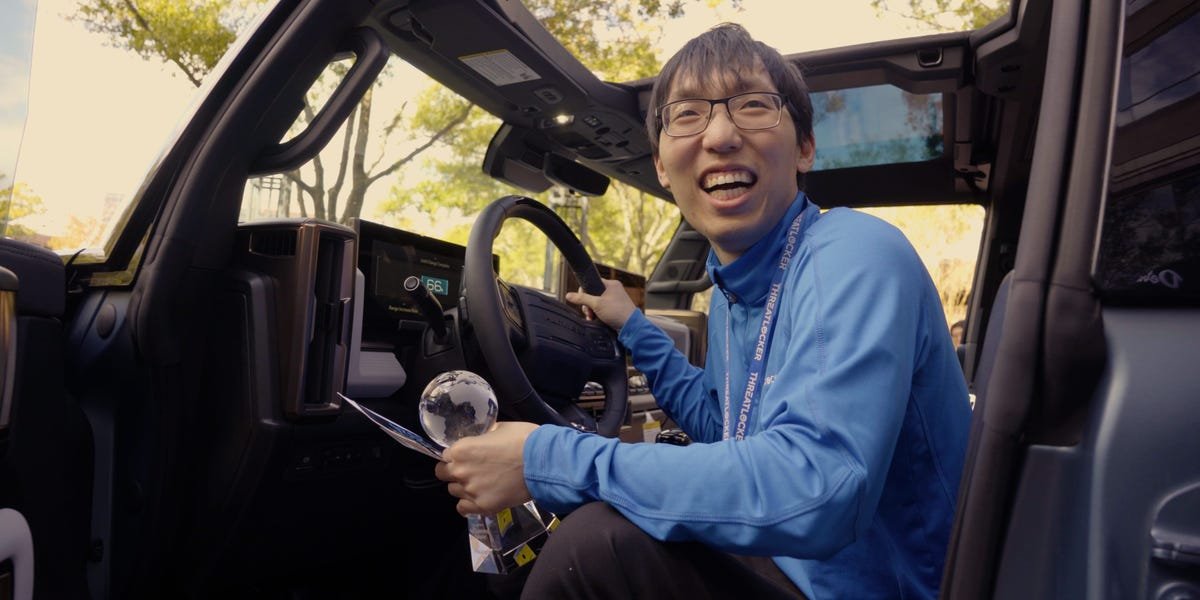
ThreatLocker, an Orlando-based cybersecurity firm with about 700 employees, gives luxury cars to its two most collaborative workers at its annual holiday party, the company told Business Insider.

The firm, which also has offices in Dublin, Dubai, and Australia, receives hundreds of votes each month for the two most helpful employees — one in the US, and one abroad. It flies in its international workers in for the holiday party.

Additionally, every manager votes for the best performer on their team that month. At the end of the year, the total votes for the top performer and the most helpful employee are combined to determine the two car recipients, the company said.

The firm usually awards an electric model, but has also handed out a $125,000 Porsche Panamera. The company hasn’t announced its car for this year yet, but told Business Insider one of the models is worth $173,000.

The tradition began in 2021 as a prize for the top performer, but CEO Danny Jenkins said it created a “dog-eat-dog” work environment. In the cybersecurity industry, teamwork is crucial to the company’s success, he said. Jenkins said the firm operates 24 hours a day with an average pick-up time of 23 seconds for any customer support issue, and colleagues need to work together to achieve that.

“Everything we do is with this matter of urgency,” Jenkins said. “So if you don’t have this teamwork where people are willing to get on a call at 2 a.m. in the morning and help each other and collaborate, then it doesn’t work.”

Jenkins said he works about 100 hours a week, and he keeps his phone on 24/7 in case issues arise.

Retaining the top

AI development has led to a boom in the cybersecurity industry, resulting in heightened demand for qualified talent. Jenkins said the company has never done layoffs and is currently hiring 40 to 50 people a month.

“I’d like to be in a situation where I don’t feel like we’re drowning because we’re constantly struggling to hire and onboard people fast enough,” said Jenkins.

That makes it all the more worthwhile to retain top talent and those who contribute to a strong culture.

He said that before the car winners are announced, between 14 and 16 runner-ups are honored in front of the company, and then offered a spot on a fully paid long-weekend getaway.

Jenkins said the trip has included a Royal Caribbean cruise to the Bahamas, as well as trips to Boston or New York. The group typically includes employees from various departments, and they all receive a spending budget of $2,500 on their trip, he said.

ThreatLocker also offers other perks to standout employees. Jenkins said that most employees work 40-hour workweeks, but sometimes teams may have to put in 18 or 19 hours straight to address an issue. Jenkins said when workers push through tight deadlines or go above and beyond, the company may reward them with court-side seats at games in the Orlando Kia Center, where the company has a permanent box.

Jenkins said the trip and car giveaway have bolstered employee success and that no car recipient has ever left the company.


Source link

A-US-pilot-school-has-banned-solo-flights-for-trainees.jpeg

A US pilot school has banned solo flights for trainees at one of the world’s top airlines after a spate of incidents

An Arizona pilot school has stopped Cathay Pacific trainees from solo flights after several incidents that went unreported, Bloomberg first reported.

Cathay Pacific, the Hong Kong flag carrier, is one of the world’s best airlines — one of just 10 globally to be ranked five stars by Skytrax.

In an internal memo, the AeroGuard Flight Training Center in Phoenix said it saw “an alarming increase in solo incidents during cadet training,” per Bloomberg.

It added that the incidents involved a wingtip colliding with a fixed object, a “bounced landing” leading to a “substantial” propellor strike, and a complete runway excursion.

“While each situation was unique, in each case the concern was the same — required consultation did not occur,” the memo reportedly said.

Bloomberg also reported that the students didn’t properly report the damage in two of the three incidents.

In a statement shared with Business Insider, Cathay Pacific acknowledged the events and added, “We are taking them seriously.”

“These incidents involve our sponsored students, who will become our employees upon successful graduation from the training course,” it said.

“They will then need to undergo additional structured training before being assigned any flying duty.”

A source familiar with the situation told Bloomberg that the decision would affect around 150 of the 250 to 300 Cathay cadets training at the school.

The decision hinders Cathay’s ongoing plans to increase its number of pilots after the pandemic, when the airline instituted steep pay cuts.

Several pilots quit during that time, with some telling Reuters that strict COVID measures in Hong Kong were affecting their mental health.

In the statement, Cathay Pacific said, “Safety guides every decision we make, and we fully support the decision of the training school.”

“We will continue to prioritize the safety and well-being of our cadet pilots and crew members, and we remain dedicated to upholding the highest standards in our training programs,” it added.


Source link