
Tech-leaders-are-raising-tough-questions-over-Matt-Shumers-viral.jpeg

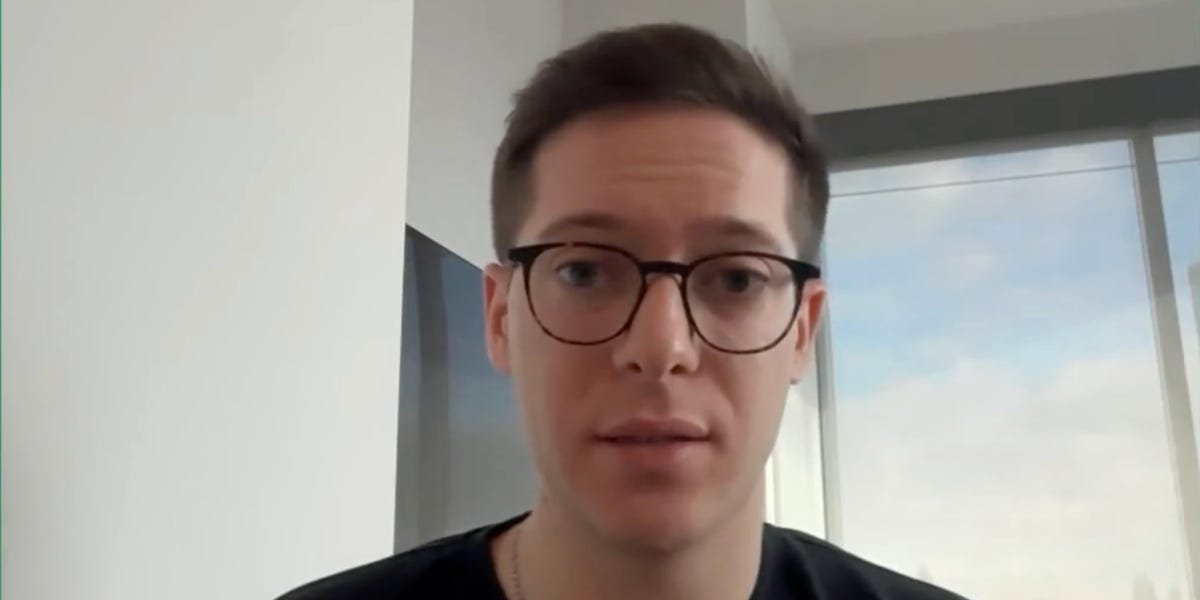
Tech leaders are raising tough questions over Matt Shumer’s viral essay on how AI will impact jobs.

Scientists and business leaders are responding to a viral essay warning of AI’s impact on jobs with a mix of agreement and skepticism.

The essay, titled “Something Big is Coming,” written by cofounder and CEO of OthersideAI, Matt Shumer, has racked up more than 60 million views on X as of Thursday.

In the 5,000-word post, Shumer said that AI could upend daily life on a scale “much bigger” than COVID, a comparison which drew pushback online. He wrote that the changes already unfolding in the tech sector are likely a preview of disruptions that could soon reach other industries as well.

“Even if there is a 20% chance of this happening, people deserve to know and have time to prepare,” Shumer told Business Insider’s Brent Griffiths in an interview.

Here’s what some of the sharpest minds in AI are saying about Shumer’s essay.

David Haber

Haber, a general partner at venture capital firm Andreessen Horowitz specializing in technology investments, posted on X that Shumer’s essay contains “great advice for how to get ahead in your job at any large company right now.”

“‘I used AI to do this analysis in an hour instead of three days is going to be the most valuable person in the room.’ Not eventually. Right now,” Haber quotes from the essay. “Learn these tools. Get proficient. Demonstrate what’s possible.”

Alexis Ohanian

The Reddit founder responded to Shumer’s initial post on X with a simple comment: “Great writeup. Strongly agree.”

Since 2023, Reddit has introduced a range of AI-driven tools, from search features that summarize user discussions to AI that sharpens its content recommendations and targets ads, but Ohanian recently emphasized that the platform must retain its humanity to stay competitive.

Eric Markowitz

Markowitz, the author and managing partner and director of research at Nightview Capital, a long-term-oriented investment firm, responded to Schumer with an essay almost as long, which criticized the practice of chasing speed and replacing the value of humanity simply because it could be done.

“These two worlds — Wall Street and Silicon Valley — have formed a feedback loop of short-termism so tight, so self-reinforcing, that they’ve confused efficiency with purpose, growth with meaning, and the elimination of people with progress,” wrote Markowitz.

“I have two research assistants. Could I replace them with AI? Of course. But their value extends their weekly output,” Markowitz added. “They give meaning to my work and I love seeing the excitement in their faces when they make a new discovery that I, alone, could not have found.”

“Let me say it again: we are not our tools. We never have been,” Markowitz wrote in conclusion.

Todd McLees

McLees, the founder of HumanSkills.AI, wrote on X that Shumer is not wrong, but he said that the advice Shumer provided is akin to “telling someone the floodwaters are rising and handing them a better bucket.”

“As AI grows in ability, our role in defining direction, values, and purpose only becomes more essential,” McLees said.

“What do you bring when the machine can do the work? That’s the only question that matters when intelligence is abundant,” McLees added. “Shumer wrote the alarm. It’s a good one. But alarms don’t tell you where to go. You have to find that within yourself.”

Gary Marcus

Marcus, Emeritus Professor of Psychology and Neural Science at NYU and founder of AI companies Robust.AI, has some harsh words for Schumer in his newsletter.

Marcuz called Shumer’s blog post “weaponized hype, filled with vivid narrative and marketing speech,” and said he did not provide real data to support the claim that the latest AI can write complicated apps without mistakes.

“Shumer’s presentation is completely one-sided, omitting lots of concerns that have been widely expressed here and elsewhere,” Marcus added, after discussing various studies that question the accuracy and productivity gain AI tools actually provide.

Vishal Misra

Misra, Vice Dean of Computing and Artificial Intelligence at Columbia University, responded in a lengthy Substack article that detailed why he doesn’t think AI is as scary as it sounds, at least not right now.

Misra wrote that many strange AI behaviors that make them seem sentient, such as perceived resistance and self-preservation, are simply a result of training data.

As for the possible elimination of jobs, Misra said he understands the anxiety, but history says we may not need to panic.

“When the camera was invented, portrait painters had every reason to panic. Their livelihood depended on a skill that a machine could now approximate,” Misra wrote.

“What happened? Painters didn’t disappear. They were freed from the obligation to faithfully reproduce reality and ventured into impressionism, cubism, abstract expressionism,” Misra added. “The camera didn’t kill painting. It liberated it.”



Source link

James Faris headshot

Bari Weiss fielded tough questions from CBS News staffers about political bias and the network’s future at a town hall

CBS News employees put top editor Bari Weiss in the hot seat during an all-hands meeting on Tuesday, asking about her vision and standards for the nearly century-old broadcast network.

The first question in the Q&A part of her town hall asked how she would respond to criticism that CBS News is turning into “a right-wing network” under her leadership.

“I’m here to do one thing. It’s not to be a mouthpiece for anybody. It’s simply to be a mouthpiece for fairness and the pursuit of truth,” Weiss said at the all-hands meeting, according to a recording obtained by Business Insider.

Weiss, who became the editor in chief of CBS News in October after Paramount Skydance CEO David Ellison bought her opinion site The Free Press, asked staffers to examine the coverage since her appointment.

“There’s a lot of noise out there, but I would just urge anyone who suggests that to look at our work and judge for yourself,” she said.

Weiss was then asked how the network’s news-gathering standards had changed since she took over.

“I don’t think our standards have changed,” she said, adding that the network was “in very capable hands” regarding editorial standards.

Weiss said she ‘was not pressured’ to hold the ’60 Minutes’ segment

Weiss caused a stir in December for a late-hour decision to delay a “60 Minutes” segment about the Trump administration deporting migrants to the CECOT prison in El Salvador. Critics questioned her commitment to hard-hitting journalism and wondered whether Paramount leadership was influencing editorial decisions at CBS News — a notion that Weiss strongly denied on Tuesday.

“I want to just say this as plainly and clearly as possible. I was not pressured by David Ellison or anyone else,” Weiss said during the town hall. Weiss acknowledged that delaying the segment after commercials had already run for it was bad timing.

“I didn’t know the screening schedule for every single thing, that specific logistical nightmare,” she said. “That’s never going to happen again. So please rest assured that nothing of that kind is ever going to happen again. You have my promise.”

That said, she added that “asking for more information” and “trying to go back to a source” for a comment was an editorial policy she wanted to prioritize to build trust with audiences, as she explained in a December memo to employees.

“I felt it was important to do our best to try and get a voice from the administration, and I’m always going to be pushing for that,” Weiss said.

Weiss had little experience in traditional TV before joining CBS News. Instead, she became known in 2020 for her dramatic exit from The New York Times, during which she alleged anti-conservative bias. Her next move, starting The Free Press, turned out to be lucrative when Ellison bought it for $150 million in October.

‘Loving America is not about jingoism’

On Tuesday, Weiss was also asked about her core values, including what one of the new guiding principles for CBS Evening News — “We Love America” — means for journalists.

“Loving America is not about jingoism. It’s not about blind patriotism,” Weiss told employees. “It’s about vociferous defense of the principles and values that have made this country exceptional and that allow us to do the work that we do. And so anyone that disagrees with that, I’d love to have a conversation with you.”

When asked whether “CBS Mornings” would undergo another shake-up, Weiss noted that it had already undergone a major change, with longtime anchor Tony Dokoupil moving to the evening show.

“Speculation about Gayle King seems to be a favorite parlor game of a lot of newspapers and people in this building, and I just want everyone here to know that she’s absolutely beloved and see her long into the future here at CBS,” Weiss said.

A shift to a ‘streaming mentality’

In prepared remarks, Weiss said that CBS News needed to “shift to a streaming mentality immediately” and that if the broadcast network stuck mainly to its linear TV strategy, “we’re toast.”

When asked about staffing or potential layoffs at CBS News, Weiss said that she couldn’t make any promises amid a “tsunami of technological change.”

“I can’t stand up here and tell you that in a moment of incredible transformation that that’s not going to mean transformation of our workforce,” Weiss said. She added that CBS News is “also hiring people to suit that.”

On Tuesday, CBS News announced 19 new contributors to the network, including writers and podcasters like Coleman Hughes and Derek Thompson.

Weiss said that if she didn’t believe digital revenue could eventually replace linear TV revenue, she “wouldn’t be standing here.” She said that linear TV wouldn’t go away, but that revenue would “decline sharply, as will the audience.”

“What winning looks like writ large for this company is building incredible journalism for audiences that are so much bigger than the one that we currently have and are maintaining on linear,” Weiss said. “That’s what winning looks like. It’s really simple.”

Have a tip or thoughts on Bari Weiss’ strategy for CBS News? Contact this reporter via email at jfaris@businessinsider.com or Signal at @jamesfaris.01. Use a personal email address and a nonwork device; here’s our guide to sharing information securely.


Source link