
Chinese-toy-exec-on-what-it-takes-to-make-the.jpeg

Chinese toy exec on what it takes to make the next Labubu

An executive of one of Pop Mart’s biggest competitors said there is a recipe for making a “golden” character like Labubu.

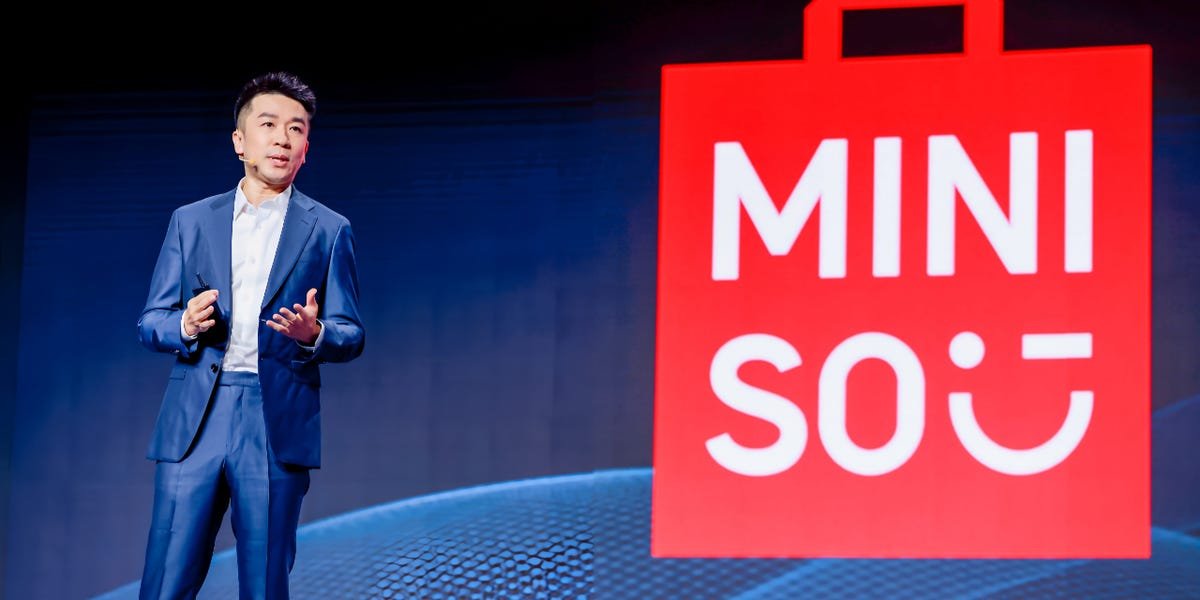
Miniso, a Chinese lifestyle company, is the force behind Top Toy, a company that makes blind boxes. Its intellectual property characters include YoYo, a little figure with a tilted head, as well as IP collaborations with Sanrio, Disney, and Chiikawa.

Robin Liu, Miniso’s marketing chief, said IPs like Labubu have driven a rise in interest in collectibles.

“To win many fans or achieve commercial success, an IP must have strong recognizability and uniqueness — not look generic,” Liu told Business Insider. “Look at Pop Mart: Molly’s pout, Labubu’s nine teeth, Cry Baby’s big tears. All have clear characteristics.”


A customer is seen checking Labubu toys at the Pop Mart shop in the Mega Bangna shopping mall.

Labubu’s distinctive teeth are what make it recognizable. 

Patrick Chengzhi Wang/SOPA Images/LightRocket via Getty Images


“Strong recognizability from the start is crucial, like a singer’s voice being memorable,” Liu said.

He said IPs often have short life cycles of three to five months, but some elements help extend their relevance. These include frequent launches of new collections within the IP and maintaining a degree of scarcity in the secondhand market.


Miniso's IP character YoYo.

Miniso has its own IP characters, like YoYo. 

Miniso


“For our own IP YoYo, the initial launches sold strongly and many channels requested more supply, but IP managers may hold back to maintain scarcity and secondhand premiums,” Liu said. “We won’t overproduce just because sales are hot. We may wait for the next generation with new themes and designs to keep products fresh.”

And lastly, he said, conducting physical pop-ups was important to get the word out about the product and let customers see it. Miniso has several concept stores called Miniso Land in China and around the world.

Top Toy is a growing business for Miniso. In its latest quarter, the toy spinoff earned sales of $80.7 million, an increase of 111% from the same period the year before. Miniso’s total quarterly sales were about $814.3 million.

As of September, Miniso had 7,830 stores globally, with over 3,400 located outside China.

The company relies on a fast product development pipeline. Every week, staff go through 10,000 prototypes, narrowing it down to a list of the top 100 products to roll out into the market, Liu said.

Collectables like Labubu have skyrocketed in popularity in recent years, as Gen Z veers away from big-ticket items toward small luxury purchases.

Labubu has enjoyed more than a year of viral success, with its toys being highly popular among “kidults” — adult toy collectors, who buy them as emotional support objects. Liu said Miniso was working to keep this consumer group hooked.

“We predict big-toy markets — adult collectibles and children’s toys — both have large growth potential, with adult collectibles expected to grow faster,” he said.

Other toys, such as Jellycat, Smiskis, and Sonny Angels, have experienced similar demand. Particularly hot in the toy industry are blind boxes, which are toys sold in packaging that keeps the toy hidden, adding an element of surprise during unboxing.

Miniso is now looking to expand its business in the US. It already has about 350 stores in the country, Liu said, and the plan is to expand beyond 500 stores.



Source link

Katie Notopoulos

I found the next hot toy trend: It’s the highland cow.

I’m calling it: If you haven’t already, you’re going to start seeing highland cows in toy aisles around the country.

After visiting one of the industry’s largest fairs earlier this week, I think I’m qualified to say: The shaggy cow is taking over as the hot new animal for plush toys.

If you’ve been paying attention to toys — or if you have kids — you probably already know capybaras are big, but they’ve been the hot thing for more than a year now. Same with axolotls, the eerily cute pink salamanders. Those trends are peaking, though.

Stuffed animals seem to go in trend cycles. In the mid-2010s, llamas and owls were all over baby and kids’ clothes and toys. Before that, hedgehogs and foxes.

Not everyone I talked to at the Toy Fair, the toy industry convention held in New York over Presidents Day weekend, agreed with my assessment. I got a few other surprising predictions:

pigeons.

frogs.

squirrels.

woolly mammoths.

But enough people I asked said the same thing — that the trending animal is the highland cow, with its caramel fur and tawny mop of hair — that I feel I can say there’s a modest consensus.


two plush animals one pig and one cow

The brown highland cow appeared all over Toy Fair.

Katie Notopoulos / Business Insider


Like I said, not everyone agreed on the cow. But there was agreement, among everyone I talked to, about three things casting a long shadow over the toy business: tariffs, TikTok, and Labubus.

I chatted with several small to midsize toy companies who said that the tariffs that began when President Donald Trump declared “Liberation Day” have hurt their businesses. One plush toy maker said they’re paying $10,000 extra per container in tariff charges for their high-end plush animals made in the Philippines. They haven’t raised prices yet, and the new fees just eat into their profit. Another plush maker said that they raised prices once after tariffs, but are trying to avoid another hike.

Toy makers’ ears must’ve been burning when Trump made comments about how perhaps kids could learn to live with just a few dolls instead of many. But Trump was right about something — kids do often have more toys now than they did 30 years ago because toys are, in fact, cheaper than ever.

The rate of inflation for toys is well below the national average for all things, meaning a Barbie or Hot Wheel costs relatively less today than it did back in 1995. (If you’re a parent looking at a mess of toys spilling out of boxes and shelves, you’re not alone.) Part of the reason toys have gotten cheaper is overseas manufacturing, which the tariffs are now hitting.

The big toy brands like Barbie, Lego, and Pokémon all had new items to debut at the fair. Among the smaller toy brands, a few trends emerged — blind boxes were huge, and many brands and distributors had cute figurines packaged in blind boxes or adopted the aesthetic of twee characters sold alongside Labubus at the Hong Kong-based retailer Pop Mart.

Still, no one seemed to think there was a clear heir apparent to Labubus, which were a singular meteoric event in the toy world (yes, there have been viral toys before, like Beanie Babies or Tickle-Me-Elmos, but the rapid internet and celebrity-fueled Labubu phenomenon feels unique).


Tokidoki toys

Tokodoki dolls are similar but different from Labubus.

Katie Notopoulos / Business Insider


“Labubu is such a great example of something from nothing, but really built on the foundation of everything. Blind boxes have been massive. Plush has been massive. It was the amalgamation of a ton of the listening, and it then getting discovered,” said Eric Morse, VP of new business initiatives at Spirit Halloween said during a panel talk about Gen Alpha trends.

Morse went on to explain they used a similar strategy for rushing out “K-Pop Demon Hunters” costumes this October after the surprise hit debuted on Netflix over the summer. (Of course, even though they pushed through a licensed costume at a far faster speed than normal, they still sold out well before Halloween, much to the ire of 8-year-olds everywhere.) “How we view the business is listen first, execute second,” Morse said.

When toy and candy trends happen rapidly on TikTok, it can be hard to predict surges in demand. And with on-again, off-again tariffs, it’s even harder to plan, lots of industry insiders told me. That’s something I kept hearing from all the vendors I talked with: uncertainty.

But one thing I feel confident about is highland cows. You heard it here first, folks.


Source link

Inside-the-rise-fall-and-resurrection-of-Toys-R-Us.jpeg

Inside the rise, fall, and resurrection of Toys R Us, the chain that once commanded a quarter of the toy market

  • Toys R Us opened pop-up stores at some US malls this holiday season.
  • The retailer has been the subject of multiple revival efforts since it ended operations in 2018.
  • Here’s a look at the history of Toys R Us, from its founding to zombie-brand status.

Toys R Us is back — again.

The latest phase of the toy store chain’s comeback came this holiday season as Toys R Us stores popped up at a handful of malls around the US. The temporary stores are part of a broader revitalization opportunity by brand management company WHP and Go! Retail Group.

It’s the latest example of how the once-dominant chain is trying to make a comeback.

Toys R Us used to operate around 700 stores in the US. Then, after years of faltering financial results, the chain filed for Chapter 11 bankruptcy before deciding to liquidate and close its operations in 2018.

Since then, there have been multiple efforts to revive the brand, including opening locations within Macy’s department stores and teaming up with Amazon.

Here’s a closer look at the history of the historic toy company, from its founding just after World War 2 to the revival attempt.

Toys R Us was founded in 1948 by Charles Lazarus after he returned from World War II.

Charles Lazarus in front of an early Toys R Us store.


Mike Derer/AP


Lazarus was inspired by what was then the emerging post-war “baby boom” and sought a way to capitalize.

The company started as a baby goods and furniture store called Children’s Bargain Town in Washington, D.C.


toys r us store

Toys R Us had a different name when Lazarus founded the chain.


Mario Tama/Getty Images


In the subsequent years, Lazarus began expanding into toys and the company officially adopted the name Toys R Us in 1957.

Over the next two decades, Toys R Us played a significant role in putting iconic toys on the map for American youngsters, such as Mr. Potato Head.


mr potato head

Former NBA player Allen Iverson holds up a Mr Potato Head toy.

AP Photo/William Thomas Cain

Lazarus was able to corner the market by buying and selling so many toys that he could negotiate more lucrative contracts than his competitors.

The company was also known for bringing big names in for promotional events or philanthropic work, such as NBA Hall of Famer Magic Johnson.


toys r us magic johnson

Magic Johnson greets kids at a Toys R Us event.


AP Photo/Thomas Kenzle


Kids and their parents would line up for hours to meet their favorite stars — and do a little shopping while they were there.

In 1966, Lazarus sold the company to Interstate Sales to help finance a larger national expansion.


charles lazarus

Lazarus appears in front of a selection of toys with former President George HW Bush.


AP Photo/File


According to Encyclopedia.com, he transitioned from chief executive to head the Toys R Us division, which was already thriving at profits of $12 million.

In 1969, Toys R Us developed its beloved Geoffrey the Giraffe character.


geoffrey the giraffe

Toys R Us still uses Geoffrey as its mascot.


AP Photo/Seth Wenig


The mascot became synonymous with the brand and its advertising campaigns over the decades.

In 1974, parent company Interstate Sales filed for bankruptcy.


toys r us giraffe

A sign outside of a Toys R Us store.


Justin Sullivan/Getty Images


Lazarus handled the restructuring process, according to USA Today.

Lazarus sold off struggling pieces of the business and got the company back on track.


toys r us 1993

A customer walks over a large floor sticker featuring Geoffrey the Giraffe.


AP Photo/Daniel Hulshizer


In 1978, it was able to file its initial public offering.

In 1983, the company opened a clothing store spinoff called Kids R Us.


kids r us

Kids R Us was one of multiple spin-off brands that Toys R Us launched.


AP Photo/Marty Lederhandler


The Toys R Us empire was steadily expanding.

Lazarus eventually stepped down as chief executive in 1994.


toys r us 1990

Turtle Mania hit Teesside today, at the opening of the new Toys R Us at Teesside Shopping Park, Sandown Way, Stockton on Tees. 6th October 1990. Pictured, Emma Michelle Todd after opening the store.

Getty Images

The move signified a series of woes for the brand, including high executive turnover and the looming pressure of ecommerce.

Building upon the success of Kids R Us, the company expanded into baby clothing with Babies R Us in 1996.


babies r us


AP Photo/Julio Cortez


The stores saw success with selling baby-related merchandise.

In the 1990s and early aughts, Toys R Us began expanding into major cities like New York.


Toys R Us store 1990


AP Photo/Richard Drew


In the Big Apple, Toys R Us opened its iconic multi-story store with a fully functioning Ferris wheel in 2001.

Around this time, Toys R Us and its spinoff brands began to experience mounting competition from fellow big-box stores like Walmart and Target.


Toys R Us black friday


Tom Pennington/Getty Images


In fact, according to The Associated Press, in 1998, Walmart had already surpassed the company as the top US toy seller.

The mounting competition led to the eventual closure of Kids R Us.


kids r us


Tim Boyle/Getty Images


All 146 Kids R Us stores were closed in 2003.

In 2005, a conglomerate of private equity firms — including Bain Capital, Kohlberg Kravis Roberts, and Vornado Realty Trust — purchased Toys R Us for $6.6 billion, taking the company private in the process.


toys r us exterior


Getty

According to USA Today, the plan was to boost Toys R Us sales and position the company for a stock offering that would allow investors to cash out.

In an attempt to compete with the ecommerce boom, the company purchased Etoys.com and Toys.com in 2009.


fao schwarz 2640


Business Insider/Jessica Tyler

That same year, it bought KB Toys and the famed New York City toy store, F.A.O. Schwarz.

In 2010 the company registered once again to go public.


toys r us


Stan Honda/AFP via Getty Images


However, by 2013 it withdrew from the process due to sales slumps, according to USA Today.

In 2015, Dave Brandon – formerly the CEO of Domino’s Pizza — took over the helm of Toys R Us.


david brandon


AP Photo/Tony Ding


According to USA Today, Brandon marked the fourth CEO over the course of 16 years “tasked with turning the company around.”

Still, the company continued to struggle, especially during the 2016 holiday season.


toys r us bikes


Joe Raedle/Getty Images


According to Business Insider, the chain lost significant traction to ecommerce giants like Amazon, Target, and Walmart.

The company officially filed for Chapter 11 bankruptcy protection in September 2017.


Toys R Us shopper


Richard Drew/AP Images

The chain hoped to gain control of its debt and continue to operate its 1,600 stores around the world as normal, according to the Washington Post.

With its hopes for a financial savior ultimately dashed, Toys R Us announced in March 2018 that it would liquidate and permanently close all of its 700-plus stores across the US.


toys r us closing


AP Photo/Julio Cortez


According to Business Insider, the decision threatened the jobs of the 33,000 people employed by Toys R Us at the time.

That same year, the company issued an emotional goodbye as it prepared to permanently shutter its Toys R Us and Babies R Us websites.

“We encourage you to stop by your local store and take full advantage of the deep discounts and deals available,” the message read. “Thank you for your business and support over the years.”

It was later announced that gift-card holders could use any remaining funds at Bed Bath & Beyond stores, according to Business Insider.

The CEO of the toy company MGA Entertainment issued a last-minute bid of $890 million to save the company.


black friday 2004 Toys R Us


Shannon Stapleton/Reuters

However, the offer was ultimately rejected by Toys R Us.

Throughout the rest of 2018, stores like Walmart began to position themselves to take over the void left behind in the market by Toys R Us.


Walmart, New Jersey

Walmart Supercenter in New Jersey

Rachel Askinasi/Business Insider

The chain strategized to overtake Toys R Us’s legacy by adding mass amounts of baby-related products to its inventory.

By the fall of 2018, abandoned Toys R Us stores had been temporarily converted into Halloween costume shops across the country.


toys r us closing 9006


Business Insider/Jessica Tyler

According to Business Insider, Halloween costume retailers Spirit Halloween and Halloween City set up shop in the abandoned stores but kept most of the remaining Toys R Us signage and wallpaper.

In February 2019, Toys R Us appeared to rise from the dead when Tru Kids Brands purchased the rights to the company.


Toys R Us store front


Courtesy of Tru Kids Brands

Tru Kids Brands also purchased the rights to the Geoffrey the Giraffe mascot with plans to revitalize it.

Later that year, Tru Kids Brands announced it would open a series of holiday pop-up stores under the Toys R Us name.


tru kids

Toys R Us redesigned store rendering.

Tru Kids

The stores would sell popular toys directly from manufacturers, meaning that any sales would directly go to the toy companies rather than Toys R Us.

Read more: Toys R Us is officially back from the dead, but its new stores won’t actually make any money selling toys

In October 2019, the company announced it was back online but with a catch — you couldn’t actually buy anything directly from the Toys R Us site.


toyrs r us dot com


ToysRUs.com


Instead, users would be directed to make purchases from Target’s website.

In fall 2019, empty Toys R Us stores were once again used for Halloween purposes — this time to host haunted houses.


Toys R Us Haunted house


Shoshy Ciment/Business Insider

The haunted houses were a far cry from the joy-filled Toys R Us stores of the 1990s.

In August 2020, it was confirmed that Toys R Us had ended its partnership with Target.


toys r us amazon


Toys R Us


Toys R Us would now partner with Amazon as its fulfillment partner, according to Business Insider.

The coronavirus pandemic decimated in-store sales for many retailers, including Toys R Us.


toys r us store

A Toys “R” Us storefront closed during the coronavirus pandemic.

Andrew Chin/Getty Images

CNBC reported in January 2021 that the retailer was facing hardships due to dwindling in-store sales amid the coronavirus pandemic. As a result, the chain’s last two remaining stores in the US officially shuttered for good, bringing an end to a years-long ordeal to attempt to revitalize the brand.

The final stores were in Texas and New Jersey, Bloomberg reported.

“Consumer demand in the toy category and for Toys ‘R’ Us remains strong and we will continue to invest in the channels where the customer wants to experience our brand,” a Tru Kids spokesperson told CNBC.

Read more: The last 2 Toys ‘R’ Us stores in the US have closed down after the COVID-19 pandemic hit sales

In 2022, Toys R Us announced it was making yet another comeback, by opening in-store shops at Macy’s around the country.


Macy's Toys R Us homepage

Macy’s Toys R Us homepage

Macy’s

The Toys R Us in-store locations opened in time for the holiday season that year.

In 2025, Toys R Us opened pop-up shops in time for holiday shoppers.


The entrance to a Toys R Us store in Maryland.

A Toys R Us pop-up location in Maryland

Alex Bitter/BI

The stores, operated by Go! Retail Group, include eight flagship locations and 20 seasonal pop-ups around the US.

The stores are different from the original Toy R Us locations.


A banner above some calendars at Toys R Us reads:

A selection of calendars sits under a banner at a seasonal Toys R Us store.

Alex Bitter/BI

Although the pop-ups use the Toys R Us name and slogans, they also feature a different product selection compared to the Toys R Us stores of years past, Business Insider found during a recent visit to one store in Maryland. The store included a wide selection of calendars, for example.

While Toys R Us technically still exists, the brand is a shadow of what it once was.


Black friday women

Customers wait in line to enter Toys R Us in Times Square on Thanksgiving evening.

Yana Paskova/ Getty Images

While some shoppers were able to check out the brand’s pop-up stores, the chain has far fewer locations than it did a decade ago.


Source link