
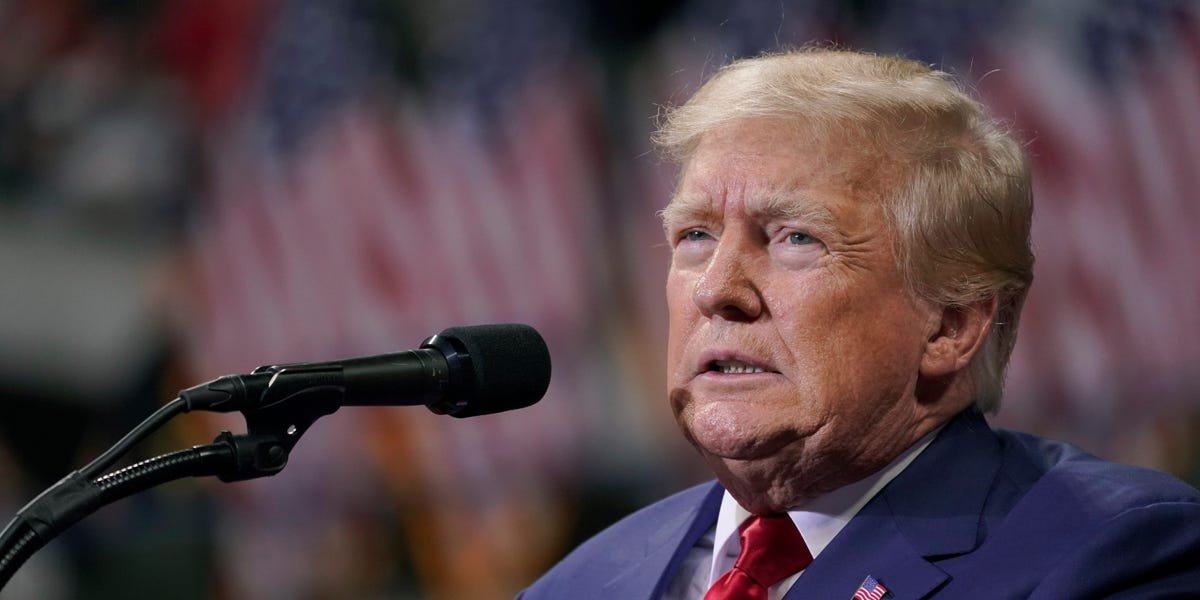
Major-US-trade-groups-pressing-Trump-to-give-tariff-refunds.jpeg

Major US trade groups pressing Trump to give tariff refunds ‘en masse’

US trade groups are pressing President Donald Trump and his administration to quickly pay tariff refunds to small businesses.

In a joint press release, the Consumer Technology Association and the US Chamber of Commerce said they had filed a brief on Wednesday in V.O.S. Selections, Inc. v. Trump, a lawsuit by small businesses seeking refunds from Trump’s sweeping tariffs.

“The brief argues that an efficient, orderly process to deliver refunds is in the best interest of all parties — the Administration, the courts, and American businesses,” the press release wrote.

“On behalf of the hundreds of thousands of businesses, especially small businesses, that are now owed refunds, the Chamber and CTA are asking the court to establish an efficient, orderly process to deliver refundsen masse,” Neil Bradley, the Chamber’s executive vice president,  said in the release.

He added that the trade organizations were concerned that other parties might try to benefit from the refund process, and “the last thing our system needs is for the trial bar to be profiting off refunds owed to small businesses.”

“While this matters for every American company, refunds are existential for the many smaller businesses and startups who shouldered the tariff burden,” Ed Brzytwa, CTA’s vice president of international affairs, said in the release.

The trade groups’ filing comes after the Supreme Court ruled, in a 6-3 decision in February, that Trump’s tariffs were illegal and that his justification for invoking the International Emergency Economic Powers Act was invalid.

And on Wednesday, Judge Richard K. Eaton of the US Court of International Trade ruled that US businesses that were subjected to tariffs are “entitled to the benefit” of the Supreme Court ruling.

Even before Eaton’s ruling, companies had started demanding refunds. Major companies like Costco, Toyota, BYD, and FedEx filed lawsuits against the administration, seeking billions of dollars in tariff duties since they were imposed last April.

Representatives for the Trump administration did not respond to a request for comment from Business Insider.


Source link

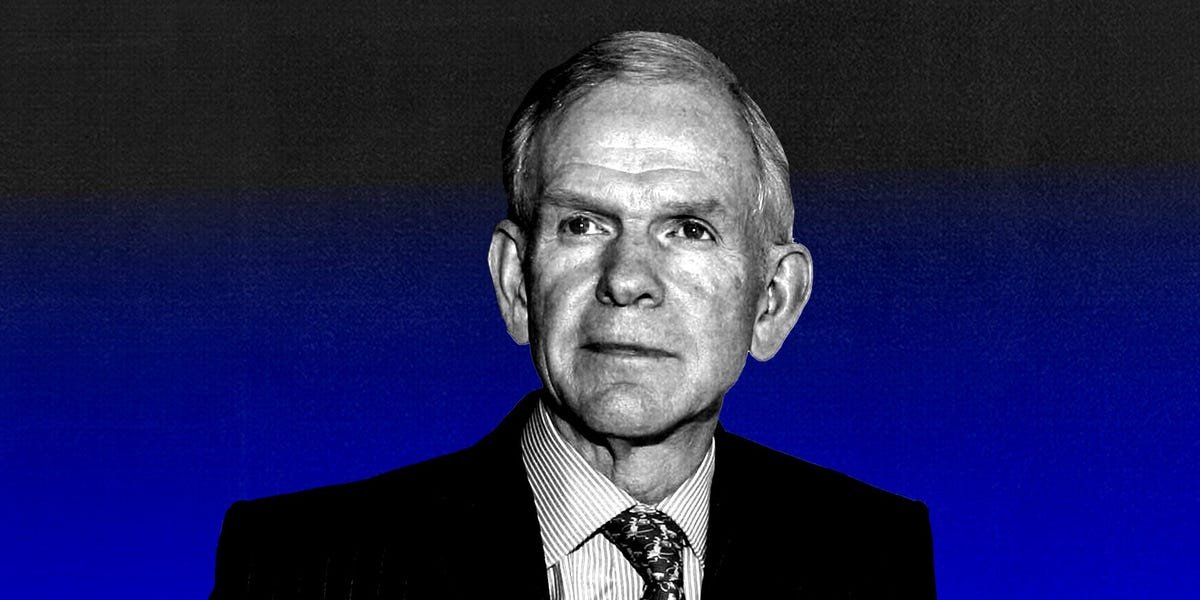
Jeremy-Grantham-called-pandemic-crash-but-screwed-up-his-trade.jpeg

Jeremy Grantham called pandemic crash but screwed up his trade: memoir

Legendary investor Jeremy Grantham raised the alarm on an AI bubble, revealed a pandemic bet that didn’t pay off, and recommended young people steer clear of Wall Street in a memoir published last month.

The GMO cofounder wrote in “The Making of a Permabear: The Perils of Long-term Investing in a Short-term World,” which he coauthored, that ChatGPT’s release in late 2022 shored up a crumbling stock market and created a “bubble within a bubble.”

There’s “no clear historical analogy to this strange new beast,” Grantham wrote, but the AI bubble is likely to “at least temporarily deflate,” allowing the original market bubble to pop.

He issued a grim outlook, warning that the massive run-up in stocks has frontloaded returns so the market’s long-term prospects “look as poor as almost any other time in history.” Investors face either a “dismal return forever or a hefty bear market followed by a normal return,” he added.

Grantham also predicted that past interest-rate hikes and “ridiculous speculation” during and after the pandemic would “eventually end in a recession.”

“The US market since at least 2020 has been in a bubble,” he wrote, adding that even though bubbles can be unpredictable, all of them have popped so far.

Right bet, wrong size

Grantham disclosed in his book that he anticipated the COVID-19 pandemic would tank the stock market, but he didn’t win big from the prescient call.

The investor wrote that he dug into every rumor about the mystery virus in January 2020, and determined it posed a serious medical and economic threat, especially if countries bungled their responses.

He took steps to protect the portfolio of his family foundation — the Grantham Foundation for the Protection of the Environment — from a slump in stocks, and later convinced his GMO colleagues to prepare for trouble too.

“I get to brag here at how early this was compared to most,” Grantham wrote. “The bad news was that when the smoke had cleared, our trade was so unlevered and so lacking in cleverness that we really might as well have done nothing.”

Grantham contrasted that with Bill Ackman, whose Pershing Square hedge fund spent $27 million on credit-default swaps (CDS) on investment-grade and high-yield CDS swap indexes in February 2020.

Those derivatives soared in value within weeks, and Ackman sold them for $2.6 billion by late March, scoring a nearly 100-fold profit. The windfall offset losses in Pershing’s equity portfolio, and Ackman plowed more than $2 billion into stocks before they rebounded.

Grantham said his comparatively lackluster pandemic trade was a reminder that he’s “good at research and judgment, but left to my own devices sometimes mediocre at implementation.”

He gave another example of that shortcoming. He recalled publishing a bullish outlook the day the stock market hit its low in March 2009, but “neither I nor our Foundation nor GMO came close to maximizing the potential rewards of such a highly confident call.”

Skip the finance job

Grantham wrote in his book that he enjoyed the “intellectual challenge” of investment management, but came to view it as a “trivial activity.”

“If I started out all over again I’d prefer to do something that has some socially redeeming features,” he wrote.

Grantham said the world needs more people with practical and scientific skills to weather hard times and tackle existential risks such as climate change.

“We are going to have desperately difficult years ahead,” he wrote. “And I would urge young people with talent to do really seriously useful stuff: engineering, farming, metal bashing and serious science and research because we are going to need those kinds of skills.”

Grantham added that his foundation invests in new ventures that could “save the day” by harnessing geothermal energy or replacing toxic food packaging with greaseproof paper.

He wrote that making strides in “something so important is more satisfying and exciting than the equivalent breakthrough in making money in the stock market.”


Source link

Nathan Rennolds

Trump threatens Canada with 100% tariffs over Beijing trade deal: ‘China will eat Canada alive’

President Donald Trump on Saturday threatened to impose 100% tariffs on all Canadian goods and products exported to the US should Ottawa make a trade deal with China.

In a post on Truth Social, Trump warned Canadian Prime Minister Mark Carney, whom he called “Governor Carney,” against making a “drop off” deal with Beijing or face the levies.

“If Governor Carney thinks he is going to make Canada a ‘Drop Off Port’ for China to send goods and products into the United States, he is sorely mistaken,” Trump wrote.

“China will eat Canada alive, completely devour it, including the destruction of their businesses, social fabric, and general way of life,” he added.

Carney made an official visit to China last week — the first by a Canadian leader since 2017 — meeting with Chinese leader Xi Jinping to discuss economic and trade opportunities between the two countries.

In a joint statement following the meeting, Ottawa and Beijing said they had committed to expanding bilateral trade and investment, as well as building cooperation in areas such as energy and agriculture.

Carney also announced that Canada would now allow up to 49,000 Chinese electric vehicles into the Canadian market on the “most-favoured-nation tariff rate of 6.1%.” In return, he said Canada expected China to lower tariffs on Canadian canola seed to around 15% by March 1.

Trump had initially said that the deal was what Carney “should be doing” and that it was “a good thing for him to sign a trade deal.”

Trump’s changing tone comes days after Carney delivered an impassioned speech at the World Economic Forum in Davos, where he opined on the changing face of global politics since Trump’s election.

“We are in the midst of a rupture, not a transition,” Carney, who did not explicitly name Trump, said, adding that “middle powers must act together because if we’re not at the table, we’re on the menu.”

Trump did not miss the opportunity to snap back at Carney during his own speech at Davos, saying the prime minister “wasn’t so grateful.”

“Canada lives because of the United States. Remember that, Mark, the next time you make your statements,” he added.


Source link