World-Cup-fans-to-pay-train-fares-of-150-for.jpeg

World Cup fans to pay train fares of $150 for the round-trip to MetLife Stadium — when it usually costs $12.90

Soccer fans heading to FIFA World Cup matches at MetLife Stadium this summer may face a transportation bill nearly as expensive as the ticket prices.

New Jersey Transit officials announced Friday in a press release that round-trip train tickets from Manhattan’s Penn Station to MetLife Stadium in East Rutherford, New Jersey, will cost $150 per person for World Cup match days. It usually costs $12.90 to make the 9-mile trip from Manhattan’s Penn Station to the stadium in East Rutherford, New Jersey.

Officials also said in their press release that the stadium bus shuttle services will cost $80 per round-trip.

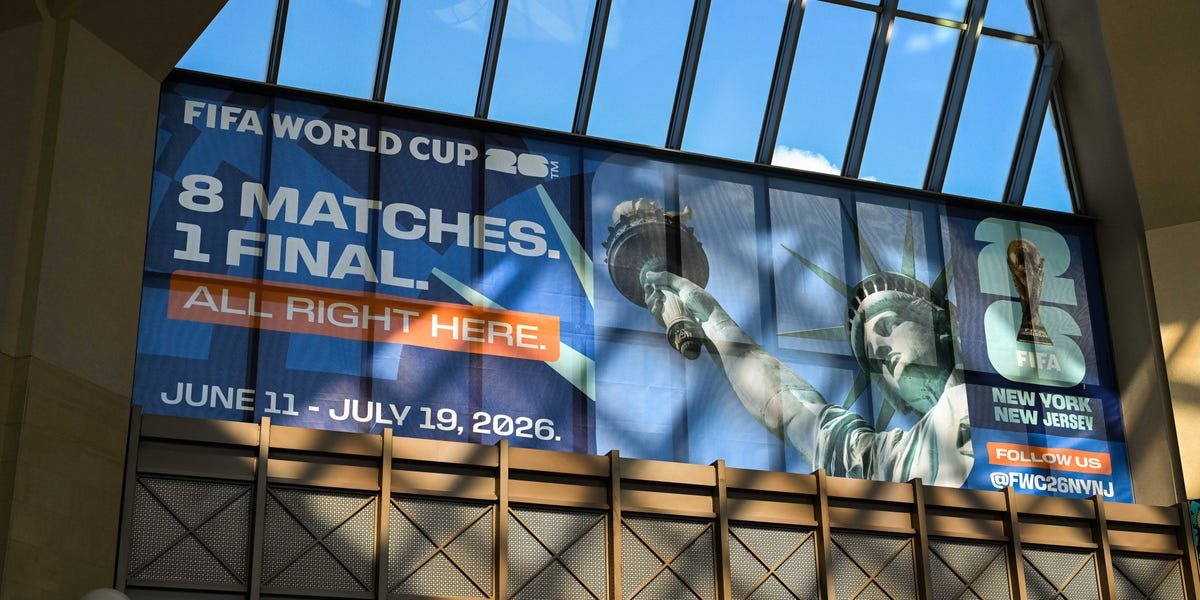
The stadium, which will host eight matches, including the July 19 final, is expected to draw more than 78,000 fans per game who will largely rely on public transit because most on-site parking will be unavailable. According to NJ Transit officials, however, only 40,000 train tickets will be sold per match day at the new price point, and they must be purchased in advance.

“This isn’t price gouging,” NJ Transit president and CEO Kris Kolluri said on Friday during a press briefing. “We’re literally trying to recoup our costs.”

The steep fare hike has sparked backlash from state leaders on both sides of the Hudson. New Jersey Gov. Mikie Sherrill said the state was left with a massive transportation bill after FIFA failed to contribute transit funding.

“We have inherited an agreement in which FIFA doesn’t contribute a single dollar toward transportation for the World Cup. And while NJ Transit is left with a $48 million bill to safely transport 40,000 fans from the stadium to wherever they’re headed, FIFA is generating $11 billion from this World Cup,” Sherrill wrote on X.

“I won’t stick N.J. commuters with that tab for years to come, that’s not fair,” Sherrill added. “FIFA should pay for the rides, but if they don’t, I’m not going to let N.J. commuters be taken for one.”

New York Gov. Kathy Hochul, however, said on X earlier this week that “charging over $100 for a short train ride sounds awfully high” to her.

FIFA did not immediately respond to a request for comment.


Source link

I-took-a-185-lie-flat-overnight-bus-across-Europe-instead.jpeg

I took a $185 lie-flat overnight bus across Europe instead of the train. It was slower — but I slept better.

  • Megan Carnegie paid $185 for a new overnight bus across Europe.
  • Twiliner, a Swiss startup, is trying to revive overnight land travel with lie-flat beds on luxury buses.
  • The pillow and duvet made the bed extra comfortable.

I’ve sat on many butt-numbing daytime bus journeys across Europe, but I’d never braved a night bus. That is, until Swiss transport startup Twiliner launched its lie-flat fleet, aiming to reinvent overland travel.

Since late 2025, it has been running two routes — Amsterdam to Zurich and Zurich to Barcelona — with several departures each week.

Designed to echo sleep-friendly airplane seating, founder Luca Bortolani told Business Insider that he’s been surprised by the breadth of travelers on board, from 18 to 85, using it for everything from business trips to leisure — and even day trips.

The company also touts its use of a renewable fuel made from waste fats and vegetable oils.

I boarded the bus in January for its longest route yet, starting in Amsterdam and traveling around 1,000 kilometers through Rotterdam, Brussels, Luxembourg, Basel, and finally ending in Zurich. It took 12 hours.

Here’s why it was better than the train.

1. There’s no reason to get to the terminal early

The bus departed from Amsterdam Sloterdijk bus station.

Megan Carnegie

My bus from Amsterdam Sloterdijk bus station was scheduled to depart at 8 p.m., and the ticket noted that passengers should arrive 10 minutes early. I gave myself far too much time to get there from Amsterdam Central Station, so I had a very cold 20-minute wait on the concourse.

The station had no amenities, so I was glad I’d eaten dinner and picked up snacks and water in advance. Unlike a train or plane, there’s almost zero pre-departure admin, so even that 10-minute window is generous.

Once the bus had arrived and my ticket had been scanned, I was on board and ready to roll in seconds. Plus, because we were traveling through the Schengen Area, a border-free travel zone comprising 29 European countries, there were no internal border passport checks, so no interruptions.

2. Room to spread out without disturbing fellow passengers


Seats on the Twiliner bus.

There are 21 seats on the bus.

Megan Carnegie

While I aspire to be a minimalist traveler, limited baggage allowance is my worst nightmare, so I was pleased I could bring a large suitcase and a carry-on bag for no extra cost.

There are 21 seats on the bus — 18 up top and three on the bottom — and I was seated at the front of the top deck.

I was blown away by how much room I had. As well as overhead shelving, there was plenty of space to leave my bag, shoes, and assortment of belongings on the carpeted floor.

3. Changing into and out of PJs for the night is a genuinely pleasant experience


Stairs on the Twiliner bus.

asfd

Megan Carnegie

On a seated night bus or train, I’d never dream of changing into proper PJs. I just board in something comfortable and hope for decent bathrooms on the other side so I can freshen up.

Not on this bus.

The hotel-grade bathroom was roomy, well-lit, and plush enough for a nighttime routine — yes, even skincare. There was space to rest my toiletries bag, change, and brush my teeth, all in motion. Bonus points for the fancy hand soap.

4. Free hot drinks and an honesty kiosk for snacks


A kiosk on a luxury buss with snacks and toiletries.

The kiosk is stocked with Swiss snacks.

Megan Carnegie

I’d eaten a proper meal before boarding, but there was also a kiosk stocked with Swiss snacks: chips, cookies, and energy bars. It was all reasonably priced and could be paid for via a QR code.

My delicious Cailler hazelnut chocolate was less than $5. I also had many refills of herbal tea from the hot drink station. We all received a bottle of water in our kit bag, and there was a freshwater tap.

Although it was too early for me to have a coffee when we pulled into Zurich bus station, a Nespresso machine and pods were available too.

5. The beds are seriously comfortable


Woman sleeping on a Twiliner bus seat.

She found the seats comfortable and easy to sleep on.

Megan Carnegie

After I settled in and streamed a show on my iPad, I touched a button to have the seat glide from upright to fully flat in around 30 seconds.

For safety, I had to strap my feet into a mesh sling clipped to the seat. It sounds fiddly, but I forgot it was there once I’d settled down.

The high sides helped block out fellow travelers, and I was given a bottom sheet, pillow, and duvet, with extras available from the steward. There’s also USB and standard electrical outlets, as well as individual reading lights.

With my earplugs in, lulled by the dimmed purple lighting and gentle road hum, I was asleep by 11 p.m. and woke just after 6 a.m., feeling cocooned and rested.

6. More expensive than the train, but much cozier and less stressful.


Twiliner bus on the road.

The bus traveled through Rotterdam, Brussels, Luxembourg, Basel, ending in Zurich

Megan Carnegie

The same journey by train would have cost around $130, or more if booked at the last minute, versus Twiliner’s fixed price of €160, or $185.

Most night buses just have a driver, who swaps out at rest stops.

On the ride, we had a customer steward on hand. He showed me to my seat, explained the safety features, and answered passengers’ questions throughout.

We arrived in Zurich almost 1.5 hours early, and he gently woke passengers, so we had time to dress and gather our things.

During the day, the train would have taken 8 hours; overnight, closer to 11, often requiring changes. That means broken sleep and constant checks to make sure you’re on the right platform, with the right ticket, and with all your belongings.

I’ll always love trains, but I’d happily book this bus again.


Source link

Sam-Altman-says-concerns-of-ChatGPTs-energy-use-are-overblown.jpeg

Sam Altman says concerns of ChatGPT’s energy use are overblown: ‘It also takes a lot of energy to train a human’

Sam Altman is pushing back on the idea that ChatGPT consumes too much energy.

“One of the things that is always unfair in this comparison is people talk about how much energy it takes to train an AI model relative to how much it costs a human to do one inference query,” Altman told The Indian Express last week on the sidelines of a major AI summit. “But it also takes a lot of energy to train a human.”

Altman suggested it’s not an apples-to-apples comparison, arguing that it’s unfair to discount the years spent nurturing and educating someone to be capable of making their own inquiries.

“It takes a lot of energy to train a human,” he said, prompting some laughter in the crowd. “It takes, like, 20 years of life, and all of the food you eat during that time before you get smart.”

Altman said the clock really began thousands of years ago.

“It took, like, the very widespread evolution of the 100 billion people that have ever lived and learned not to get eaten by predators and learned how to, like, figure out science or whatever,” he said.

Altman also called out what he said were “totally insane” claims on the internet that OpenAI is guzzling down water to power ChatGPT.

“Water is totally fake,” Altman said, when asked about concerns AI companies use too much water. “It used to be true, we used to do evaporative cooling in data centers, but now that we don’t do that, you know, you see these like things on the internet where, ‘Don’t use ChatGPT, it’s 17 gallons of water for each query’ or whatever.”

In June, Altman said that the average ChatGPT query consumes roughly the amount of energy needed to power a lightbulb for a few minutes.

“People are often curious about how much energy a ChatGPT query uses; the average query uses about 0.34 watt-hours, about what an oven would use in a little over one second, or a high-efficiency lightbulb would use in a couple of minutes,” he wrote on X.

Altman said it is fair as a whole to point out the AI industry’s overall energy consumption because of the large growth in usage. He said it’s why he and other AI CEOs have pushed alternative energy sources like solar, wind, and nuclear.

Unlike other CEOs, namely xAI’s Elon Musk, Altman is dismissive of the idea that space-based data centers are realistic in the next decade, a concept that some companies have floated as a way to reduce energy consumption.

Outside of OpenAI, Altman is a major investor in nuclear energy. He previously served as chairman of Oklo, a nuclear energy startup, and has been a major backer of Helion, which plans to build what it calls “the world’s first fusion power plant” in Washington state.

In the US, data center energy consumption is becoming a major topic. Last month, President Donald Trump said he was working with tech companies on “a commitment to the American people” to ensure that citizens don’t pay higher energy bills because of a nearby data center.

Consulting firm McKinsey & Company estimated last year that data centers could account for 14% of total power demand in the US by 2050.


Source link

I-bunked-with-3-strangers-in-a-shared-cabin-on.jpeg

I bunked with 3 strangers in a shared cabin on an overnight train in Europe. I’ll never do it again.

  • I spent 11 hours in a shared cabin on an overnight train from Vienna to Venice, Italy.
  • For less than $100, I got a bunk in a room of six beds with three other people.
  • I’ve traveled overnight on Amtrak, but in private rooms. I didn’t adjust well to the shared space.

My ride from Vienna to Venice, Italy, in October 2022 was bumpy, cramped, and awkward.

During a two-week trip through four European countries, I spent 11 hours bunking with three strangers in an overnight sleeper train.

While it was my first time traveling in a sleeper car in Europe, I’d spent 60 hours on overnight Amtrak trains in the 20-square-foot roomette and 45-square-foot bedroom accommodations, where I had private rooms.

I thought an overnight train would be the best way to travel through Europe so that I could explore more during the day. But the rough ride made sleeping hard, and I didn’t feel rested when I got to Venice.

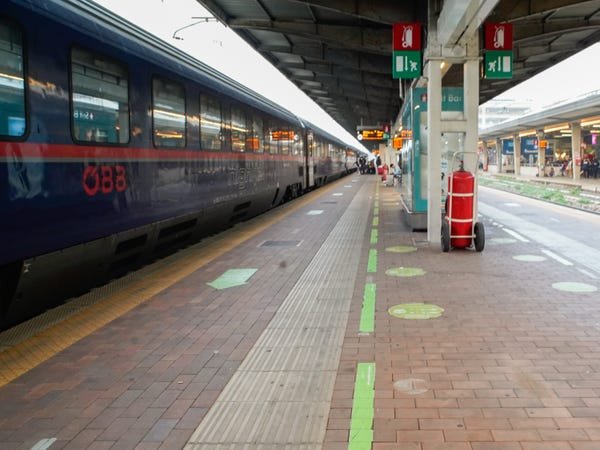
I booked my ride with the Austrian Federal Railway’s OBB Nightjet.

The OBB Nightjet train as it arrives in Venice in 2022.

Joey Hadden/Business Insider

OBB Nightjet — a rail line that operates overnight routes between Austria, Italy, France, and the Netherlands — can go as fast as 143 miles per hour.

Nightjet trains have regular assigned seats, couchette cars (seats that fold out into couches in shared cabins), and sleeper cars with bunks of four or six, which is what I booked. Some routes have private cabins, but mine didn’t.

This overnight leg of my European train trip, which came with breakfast, cost $44 with a Eurail pass. Without the pass, the ticket would have been about $84.


The author's Eurail pass on a European train.

The reporter’s Eurail pass on a European train.

Joey Hadden/Business Insider

To travel by train, I bought a Eurail pass for $477, which gives access to most European trains for a set number of days. Some trains require only a Eurail pass, while others, including overnight trains, incur an additional discounted fare.

My journey began in Austria’s Wien Meidling train station.


The station where the Nightjet took off from

Inside the Wien Meidling train station in Austria.

Joey Hadden/Business Insider

I arrived about an hour and a half before my 9:35 p.m. train so I’d have plenty of time to find the platform.

The departure screens said my train was going to Zurich. At the information desk, I learned that, unlike Amtrak, the train’s cars detach at various stations to go to different locations.


A train car on the Nightjet

Train car number two on the Nightjet.

Joey Hadden/Business Insider

I’d need to board my assigned train car; each has a number.

I paid $10 to wait for my train in OBB’s lounge.


Inside the OBB Lounge

Inside the OBB Nightjet lounge at Wien Meidling train station.

Joey Hadden/Business Insider

The lounge is free for OBB first-class passengers traveling during the day and costs about $10 for all other OBB passengers. Since I didn’t see any empty seats in the rest of the station, I paid for it.

I was surprised to find I was the only one inside the lounge since the rest of the station was full of people. There were plenty of tables and chairs available.

The lounge served complimentary refreshments and snacks, from coffee to nuts and seeds.


refreshments in the OBB lounge

Refreshments in the OBB Nightjet lounge at Wien Meidling train station.

Joey Hadden/Business Insider

It was a smaller selection than I’ve seen at Amtrak’s Metropolitan Lounge, which I’ve visited in New York, but I wasn’t hungry, so I just got a water bottle.

I went to the platform about 20 minutes before my train’s 9:35 p.m. departure.


Platform where the train takes off in Austria

The train platform the reporter used at Wien Meidling train station.

Joey Hadden/Business Insider

When the train arrived, I didn’t have time to check the car number before boarding. I just went to the closest car and asked an attendant for help.

Inside the sleeper cars, I saw narrow, dimly lit corridors full of small cabins with bunk beds.


The corridor inside the Nightjet train

A corridor inside an OBB Nightjet sleeper car.

Joey Hadden/Business Insider

An attendant led the way to my shared cabin.

My room had six bunks and a large window with a curtain. During my leg of the journey, one traveler was already there when I boarded, and two others arrived within an hour.


Inside the author's shared Nightjet cabin.

The reporter gets settled inside her shared cabin.

Joey Hadden/Business Insider

Two got off around 5 a.m., and the other stayed past my stop.

At 74 square feet, it felt like a tight space — especially with everyone’s luggage around. There was space for bags above the beds, but not enough for everyone.

I couldn’t imagine six people squeezing in there.

While my cabin was assigned, the beds were first-come, first-served.


A view of the top bunks from the train's bottom bunk

A view of the top bunks from the reporter’s bottom bunk.

Joey Hadden/Business Insider

Since I’ve experienced more bumps on higher bunks on Amtrak trains, I chose a bottom bunk.

The train provided bed sheets and a pillow.


Bunks inside the Nightjet train

Sheets for the beds inside the cabin.

Joey Hadden/Business Insider

Although they weren’t as soft and cozy as the sheets on Amtrak trains, they were better than nothing.

Temperature and shared lighting controls were above the curtained door to enter the room.


The curtains and controls in the Nightjet bunk

The door to the cabin with dials to control temperature and lighting above.

Joey Hadden/Business Insider

My fellow passengers and I agreed to turn off the lights once everyone was settled into bed.

There was an outlet and a tiny nightstand on the side of each bunk, as well as night lights above the bed. Without curtains around each bunk, I thought I had no privacy.


Lights and outlets on the Nightjet

Lights and outlets in the Nightjet cabin.

Joey Hadden/Business Insider

I longed for a way to close off my bunk for more personal space.

Other passengers in the room said hello to one another upon arrival, but otherwise, the room was quiet.


Inside the shared cabin.

Inside the shared cabin.

Joey Hadden/Business Insider

Some of us watched our devices, while others went right to sleep.

Before bed, I used one of the two bathrooms for everyone in my sleeper car. I thought it was a typical train bathroom with a toilet and a sink.


The bathroom inside the Nightjet train

A bathroom inside the sleeper car.

Joey Hadden/Business Insider

According to Nightjet’s website, only private sleeper cabins come with a shower.

When I was ready for bed, I watched TV before going to sleep. The bed was stiff and uncomfortable, in my opinion.


The author watches TV at night from her bunk.

The reporter’s view from her bed in the evening.

Joey Hadden/Business Insider

I woke up several times during the night to other travelers entering and exiting the room, or due to the bumpiness of the train.

An attendant woke me up with breakfast at 8 a.m., about 20 minutes before my stop in Venice. I got two rolls of bread with butter, jam, and coffee to eat in my bunk.


Morning breakfast on the Nightjet train

The reporter’s view with her breakfast in the morning.

Joey Hadden/Business Insider

There was no café car or common area on board for passengers.

When I got off the train in Venice, I was exhausted from the lack of sleep. I thought it made my first day in the city less enjoyable.


Outside of the Nightjet train as it arrives in Venice

The OBB Nightjet arrives in Venice.

Joey Hadden/Business Insider

“Offering our passengers a high level of travel comfort is an important concern for us,” a representative for OBB Nightjet told Business Insider. “We are constantly working on improvements to our product and also take into account the requirements of our customers.”

While sometimes it’s about the journey, not the destination, in this case, I’d rather arrive feeling refreshed so I can enjoy where I’m going. So, a year later, I booked a Nightjet private cabin to get from Venice to Vienna. That ride was far more comfortable, and I slept easily with no strangers in my cabin.


Source link

I-rode-in-business-and-first-class-on-Amtraks-NextGen.jpeg

I rode in business and first class on Amtrak’s NextGen Acela, the fastest train in the US. Here’s how they compared.

  • The Amtrak NextGen Acela is the fastest train in the US.
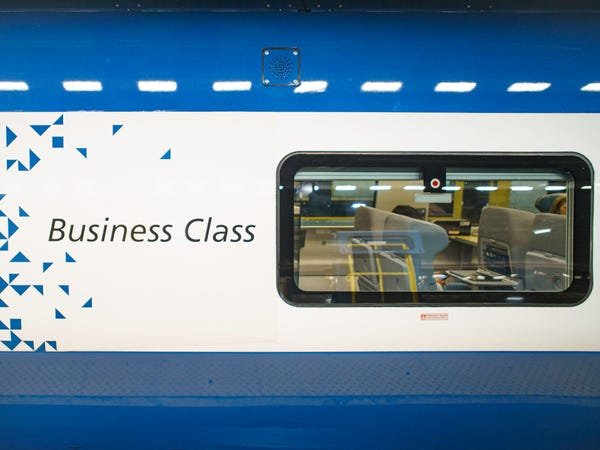
  • I booked a business-class ticket from New York City to Washington, DC, for $180.
  • Then, I traveled from Washington, DC, to NYC in first class for $450.

I spent six hours and $630 on the fastest train in America.

The Amtrak Acela is the express option for travelers in the Northeast with only business and first-class seating. In August 2025, the route got a fresh new fleet called the NextGen Acela. In addition to a futuristic look and modern amenities, the train has a top speed of 160 miles per hour, making it the fastest train in the US.

In September 2025, I booked round-trip tickets between my home in New York City and Washington, DC, on the NextGen Acela. I got a taste of both classes.

First, I spent $180 for a three-hour business-class ride from New York City to Washington, DC.

A business-class car on the NextGen Acela train.

Joey Hadden/Business Insider

Since the Acela doesn’t have coach seating, business class is the standard ticket.

Then, I rode home to New York in first class for $450.


Passengers on the left board a first-class train car on the Amtrak Acela NextGen

Passengers board a first-class car on the NextGen Acela train.

Joey Hadden/Business Insider

My first-class ticket included a meal, priority boarding, attendant service, and lounge access at the train station.

The differences between these two bookings began when I arrived at each station.


A composite image of passengers standing with luggage in a train station and a wide view of an Amtrak lounge with two tiers of seating

Inside NYC’s Penn Station (left) and inside the Metropolitan Lounge at DC’s Union Station.

Joey Hadden/Business Insider

I waited for my business-class train to Washington, DC, on the floor of NYC’s Penn Station. The waiting room was full, and it would have cost me $50 to access the Metropolitan Lounge, which is complimentary for first-class passengers.

Since I held a first-class ticket for my ride home from Washington, DC, I had access to the Metropolitan Lounge at Union Station. Other passengers can pay $35 to enter the space.

The lounge was quiet and calm. There were couches, comfy chairs, tables, and colorful works of art on the walls. I especially appreciated the espresso and beverage station, snack bins stocked with a variety of treats — all of which were complimentary — and the clean bathroom.

I boarded earlier for the first-class ride.


Passengers walk into the priority boarding line inside a train station

The priority boarding line at Union Station in Washington, DC.

Joey Hadden/Business Insider

After relaxing in the lounge, I waltzed into the priority boarding lane for my first-class ride to New York. There were fewer than a dozen people in front of me.

Unlike when I rode in business class, where I was toward the back of a long line, I had several minutes to get situated on board before the train departed.

Inside the train, the cars were color-coded.


A composite image of the inside of a blue business-class train car and a red first-class train car

Inside a business-class car (left) and a first-class car (right) on the NextGen Acela train.

Joey Hadden/Business Insider

Aboard the Acela train, I quickly caught on that blue meant business class and red meant first class. From the headrests to the bathroom doors, the matching colors made it easy to tell which car I was in.

Another key difference was the layout. There were two rows of seats on either side of the aisle in business class, while first class had a single row of seats on one side of the aisle.

The seats had all the same amenities, but my first-class one was slightly more spacious.


A composite image of a business-class seat and two first-class seats on an Amtrak NextGen Acela train

A business-class seat (left) and a first-class seat (right).

Joey Hadden/Business Insider

The NextGen Acela seats had smooth lining, soft cushions, and supportive, winged headrests. They also had reading lights, USB ports between seats, and a reclining function.

The only significant difference I noticed was that the first-class seats were larger and had more legroom. I found both to be more comfortable than any other Amtrak seat I’ve booked.

Only the first-class ticket included a meal.


An aerial view of an Amtrak chicken dinner on a tray table

The author’s complimentary lunch on the NextGen Acela.

Joey Hadden/Business Insider

During my business-class ride, I grabbed a bite in the café car, where passengers can purchase grab-and-go meals from a self-service station, as well as snacks, drinks, and quick hot meals prepared by an attendant. I ordered a breakfast sandwich, which I thought tasted pretty decent for a microwaved meal, and brought it back to my seat.

In first class, I received attendant service and had a menu of complimentary meals to choose from.

I selected the chicken dish, which consisted of a charred thigh paired with roasted squash, verde sauce, a hard roll, and a Key-lime pie in a jar.

It was the most delicious and satisfying meal I’d ever had on an Amtrak train.

The bathrooms were identical.


The author stands in front of a mirror in an Amtrak NextGen Acela train with a red shelf on the left

Inside a bathroom on the NextGen Acela train.

Joey Hadden/Business Insider

Save for the color of the door, the bathrooms in each class are the same, an Amtrak representative told Business Insider. I was impressed by how clean, spacious, and high-tech they were.

These bathrooms featured automatic doors, lights to indicate when the space was in use, and ample room to stretch. I also appreciated the touch-free faucets, soap dispensers, and hand dryers.

Ultimately, I discovered that the fastest train in America was also the most comfortable.


A composite image of the author sitting in a first-class Amtrak NextGen Acela seat and the exterior of the front of the train

The author enjoys her ride on the NextGen Acela.

Joey Hadden/Business Insider

After my back-to-back three-hour journeys on the Amtrak NextGen Acela train, I expected to be thrilled to get off the rails. But my experiences were so comfortable that I was in no rush to exit. When we pulled into NYC’s Penn Station, I let other passengers get off first while I soaked up a few more minutes in my first-class seat.


Source link

I-booked-a-business-class-ticket-on-the-new-Amtrak-Acela.jpeg

I booked a business-class ticket on the new Amtrak Acela train. It wasn’t worth the $180 price tag.

  • I paid $180 to ride in business class from NYC to Washington, DC, on the new Amtrak Acela train.
  • The train had modern amenities, like 5G WiFi, high-tech bathrooms, and ergonomic seating.
  • Despite upgrades, the high price outweighed the benefits of traveling in business class.

I’ve spent 26 hours riding the rails in business class around the world. My most recent Amtrak trip was the best business-class experience I’ve ever had in the US — but it still wasn’t worth the price tag.

In September 2025, I booked a business-class ticket from New York City to Washington, DC, on the Amtrak NextGen Acela train for $180.

The three-hour ride felt extremely comfortable and a tad luxurious. In the end, though, I couldn’t see myself splurging for it again.

I rode from New York City to Washington, DC, on the Amtrak NextGen Acela train.

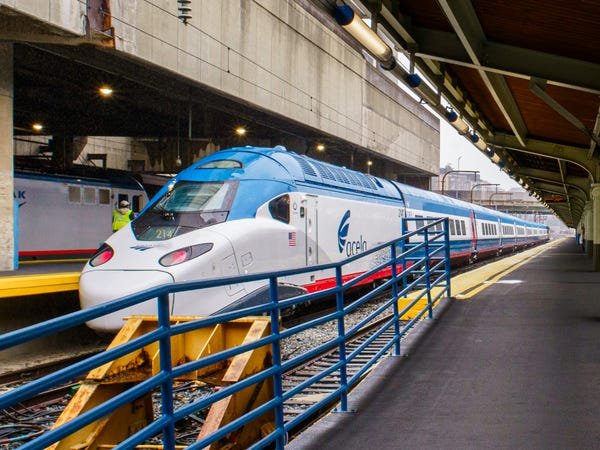
The exterior of the Amtrak NextGen Acela train.

Joey Hadden/Business Insider

The Amtrak Acela is an express service between Boston and Washington, DC. The train line introduced a new fleet on the route in August 2025, known as NextGen Acela.

In addition to being the fastest Amtrak train with a top speed of 160 miles per hour, the NextGen Acela has modern interiors and high-tech amenities.

I booked a business-class ticket for $180.


An aerial view of an Amtrak NextGen Acela pamphlet opened on a tray table

A brochure on the train.

Joey Hadden/Business Insider

The Amtrak Acela trains only have two classes — business and first. I booked my business-class ticket for $180.

Out of curiosity, I looked at the pricing for coach seating on the regional Amtrak train, which is 30 minutes slower than the Acela. It was $40.

When I arrived at Penn Station in NYC, I sat on the floor to wait for my train.


Passengers stand in line to board trains inside Penn Station in NYC.

The line to board the author’s train.

Joey Hadden/Business Insider

My train was scheduled to leave at 10 a.m., but there was a 90-minute delay. Since I was stuck at the station for longer than anticipated, I briefly considered going to the Metropolitan Lounge, an elevated space overlooking the train hall with cozy seating and complimentary refreshments.

First-class passengers and those traveling in sleeper accommodations can get into the lounge for free, but other Amtrak riders have to pay $50 to access it.

Since I’d already splurged on the business-class ticket, I decided to skip the lounge and head to the standard waiting room instead, but it was full. I finally settled for a seat on the floor against the wall until it was time to board.

Since I wasn’t in first class, I didn’t get priority boarding.


A composite image of people going down an escalator and boarding a train on an underground platform

Passengers board the train.

Joey Hadden/Business Insider

When I got in line to board, I was reminded that business class is just a standard ticket on the Amtrak Acela. Unlike business-class rides I’ve taken that also had coach seating, this trip didn’t include the perk of priority boarding.

The business-class car had a sleek, modern look.


Inside a business class Amtrak car with two passengers on the right

Inside the business-class car.

Joey Hadden/Business Insider

Retractable window shades, exposed overhead bin space, informative screens, and ergonomic seats made the car feel like a step up compared to business-class Amtrak trains I’ve booked in the past.

The seat was much more comfortable than most I’ve booked on Amtrak trains.


A composite image of an empty window seat on a train and the back of the seat in front of it

The author’s business-class seat.

Joey Hadden/Business Insider

Soft, cushy, spacious, supportive — these are the words that popped into my head when I settled into my business-class seat. A reclining function and footrest made the ride even more comfortable.

Power outlets, USB ports, and a reading light were all conveniently located on the side of the seat. In front of me was a tray table and a fold-out cupholder.

I spent most of the ride streaming YouTube videos.


A hand holds a phone playing a music video in front of a train seat back

The author watches music videos.

Joey Hadden/Business Insider

Most Amtrak trains I’ve been on have had WiFi, but in my experience, the connection has typically been too weak for much more than a Google search.

I was stoked when the NextGen Acela’s 5G WiFi was fast enough to stream YouTube videos without any issues. I passed the time by watching live sessions of my favorite bands.

The bathroom was spacious and clean with modern touches.


A composite image of a blue door leading to a business-class train bathroom and inside the bathroom with red accents, the author takes a mirror selfie

Inside the business-class bathroom.

Joey Hadden/Business Insider

I’ve learned to set the bar low for train bathrooms. Stocked toilet paper, soap, and paper towels are not a given. Cleanliness and extra space aren’t either. In my experience, some business-class bathrooms are no different from those in coach.

So I was ecstatic when I stepped inside the lavatory on the NextGen Acela. The automatic door opened into a spotless space that felt big enough for two people to do jumping jacks simultaneously.

I found it aesthetically pleasing too, with bold red accents and trendy touches, from the shelf to the mirror.

I also appreciated the touchless water, soap, and dryer functions on the sink.

Although it was much more comfortable than sitting in coach, I didn’t think a business-class ticket was worth the high price point.


Inside an empty coach cabin on an Amtrak train

A coach car on another Amtrak train.

Joey Hadden/Business Insider

“Amtrak travelers always have their preference,” an Amtrak representative wrote in an email to Business Insider. “If they want to experience these premium trains with enhanced amenities, they can. Or, if they prefer convenient and affordable downtown-to-downtown service up and down the Northeast Corridor, Northeast Regional trains offer a comfortable and enjoyable way to travel throughout the Northeast Corridor and points beyond.”

The next time I take an Amtrak train, I’ll miss the cozy seat, elevated bathroom, high-speed WiFi, and shorter travel time. Still, these perks weren’t enough for me to consider Acela’s business class to be worth more than quadruple the price of a coach ticket.


Source link