
Ive-traveled-beyond-Japans-popular-Tokyo-Kyoto-Osaka-route-There-are-4.jpeg

I’ve traveled beyond Japan’s popular Tokyo-Kyoto-Osaka route. There are 4 day trips I’d actually recommend.

The first time I visited Japan, I followed the so-called Golden Route and visited three major tourist spots: Tokyo, Kyoto, and Osaka.

It’s easy to see why these cities are so popular — they have delicious food, gorgeous temples, and endless things to see and do, no matter what you’re into.

Since moving here last year, though, I’ve been venturing beyond the usual stops to see another side of Japan.

These are the four day trips — all located within an hour or two of Japan’s biggest cities — that I’d genuinely recommend.

Saitama felt much calmer than Tokyo, but just as interesting to explore


A shot of Kawagoe Castle in Japan.

I loved visiting historic sites like Kawagoe Castle. 

tang90246/Getty Images


Saitama made it easy to see an everyday side of Japan, just outside Tokyo. Within Saitama, I split my time between Omiya and Kawagoe, but Kawagoe quickly became the highlight.

Known as “Little Edo,” it’s famous for its Edo-period atmosphere and historic buildings, now home to shops, sweets, and slower-paced sightseeing.

I browsed shopping malls, vintage stores (including BIG TIME), and hobby shops where anime merch was way cheaper than I’ve found in Tokyo.

In Kawagoe Old Town, many vendors sell Japanese sweet potato, a local specialty. I tried crispy sweet-potato chips with flavored butter dips, and I’ve learned that a long line usually means something’s worth trying.

I also visited Toki no Kane bell tower, Kawagoe Castle, and Kawagoe Hikawa Shrine. Behind the shrine is the Shingashi River, lined with cherry-blossom trees that flower in the spring.

Before heading home, I grabbed ramen in Omiya and browsed Book Off Super Bazaar, a massive secondhand store packed with clothes, home goods, games, and luxury items. I found that pairing Kawagoe with Omiya rounded out the day perfectly.

Kobe packed mountains, great food, and waterfront views into an easy, walkable day trip


Buildings and businesses in downtown Kobe, Japan.

There’s tons to do in Kobe, which I found to be a cool, walkable city. 

Alessa Hickman


Under an hour from Osaka by train, Kobe was one of my favorite stops in Japan so far.

Riding the ropeway up Mount Rokko to Nunobiki Herb Gardens was unforgettable: The 10-minute cable-car ride offered views of Kobe, the sea, and the surrounding mountains.

At the top, I explored different viewpoints and gardens before hiking down to the city. Along the way, I stopped in the greenhouse filled with tropical plants and relaxed in the hammocks overlooking the landscape.

Back in the city, I visited the historic Ikuta Shrine before heading to Kobe’s Chinatown. The streets were packed with people and food vendors selling everything from pork buns and Kobe beef skewers to incredible $3 ramen.

It’s a must-stop for foodies, and I’m already planning another trip just to eat there again.

I ended the night around Kobe Port Tower and Harborland, where the waterfront shopping and entertainment areas light up beautifully after dark.

Nara was my first day trip in Japan — and I’d still recommend it


The writer feeding a deer in Nara.

I loved feeding the deer in Nara. 

Alessa Hickman


I’ve happily returned to Nara multiple times. It’s around a 45-minute train ride from Osaka or Kyoto, making it a quick stop.

Stepping out of Kintetsu-Nara Station, you’ll find yourself surrounded by busy shops and restaurants. Walk along Higashimuki Shopping Street to reach Nakatanidou, a famous mochi shop known for its live mochi-pounding.

From there, the city opens into Nara Park, where deer roam freely through the streets and temple grounds. At one point, a deer even stood beside me at the crosswalk, waiting as if she knew exactly when to go.

Several vendors sell crackers for the deer, but you’ll quickly learn to stash them away — the deer always know who has snacks. Watching them bow before you feed them is a classic Japan experience, and it’s super fun to see in person.

The park has gardens, ponds, museums, walking trails, and temples, including the iconic Todai-ji Temple. Although the main areas can get busy, walking farther into the park leads to peaceful spaces tucked away from the nearby crowds.

Wakayama City was a hidden gem worth the trip


The writer buying pastries in Wakayama.

Wakayama had a quieter vibe than some of the other cities I’ve visited. 

Alessa Hickman


Wakayama was my furthest day trip; it took me about 90 minutes to get there from Osaka. The train ride was lovely, and the city has a quiet, local feel.

I found Wakayama to be more spread out than cities like Nara and Kobe, so although I managed to walk everywhere, some visitors might prefer taking a bus for longer stretches. With good planning, Wakayama is totally doable in a day.

I started at the free Fusion Museum, dedicated to knitting heritage and technology. For a small fee, visitors can design souvenirs using bike-powered knitting machines.

I learned the hard way that spots fill up quickly, so even though wandering through the exhibits was fun, plan to arrive early if you want to make something yourself.

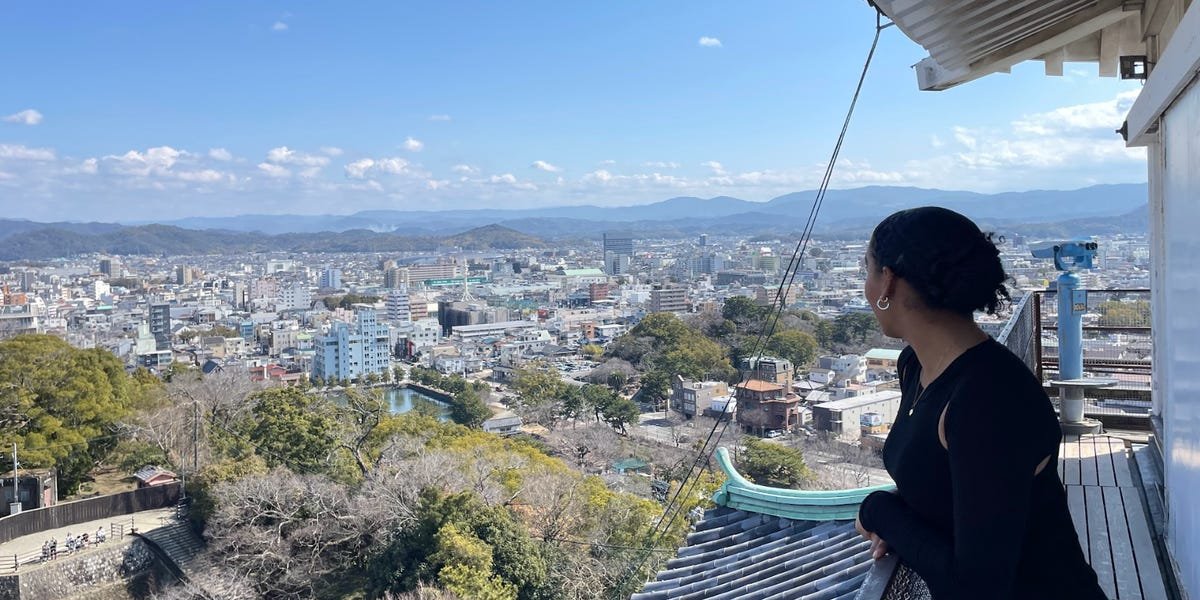
Wakayama Castle was a serious highlight. The grounds include gardens, ponds, and seasonal trees, and exhibits inside showcase historical artifacts. From the castle tower, there are 360-degree views of the city, mountains, and ocean. It was easily my favorite view in Japan so far.

After exploring, I stopped for ramen at Ramen Bakumatsu’s castle branch and enjoyed one of the best bowls I’ve had since moving here.

Later, I headed to Wakayama Marina City, a resort island in Wakaura Bay. Here, you’ll find Porto Europa, an amusement park styled after European towns, and Kuroshio Market, known for its fresh seafood and food stalls.

The long walk along the coastline, passing quiet parks and shrines on the way, was just as memorable as the destination itself.



Source link

Im-61-with-16-grandkids-Instead-of-downsizing-we-bought.jpeg

I’m 61 with 16 grandkids. Instead of downsizing, we bought a bigger vacation home to finally make family trips work.

This as-told-to essay is based on a conversation with 61-year-old Doug Beachy, a Cincinnati-based business owner who bought a vacation home with Pacaso in 2022. Pacaso is a platform for fractional ownership of luxury vacation homes. The company allows multiple individuals to co-own a second home and share ownership of the property. This conversation has been edited for length and clarity.

I’ve been married to my wife, Jamie, for 37 years. We have four married children and 16 grandchildren. Our oldest grandchild is 12, and our youngest isn’t quite one yet.

Once our kids started having children, they all moved back closer to home in Cincinnati, where we live. We own a five-bedroom home that’s about 4,000 square feet. We’re empty nesters, so there’s plenty of space for us, but when the whole family is over, everyone is on top of each other.

We’ve converted one room into a kids’ playroom and another into a nursery, and we have a finished basement where the kids can play, but family gatherings are still a bit hectic.

In the past, to bring everyone together, we would either rent a large beach house or book a cabin-style retreat in the woods here in Ohio.

We did that about every other year because it’s hard to coordinate everyone’s schedules — especially with grandkids in school — and seasonal rates for a large home are expensive. It was a big chunk of money for just a week’s experience.

We bought a vacation home

Hilton Head Island has always been a fun family destination for us. It’s an island in the Lowcountry of South Carolina, just outside Savannah, Georgia, with about 12 miles of pristine beaches.

There’s so much to do here from a family activity standpoint, in addition to simply soaking up the sun and going to the beach — it’s just a great place to relax and unwind.

Homes here can be expensive, though. The average home is priced in the upper $700,000s, and properties can sell for as much as $10 million. For a while, I thought about buying a second, larger home here, but I’m not retired yet, and I realized that putting that much money into a house where I don’t live full time just didn’t make sense.


An aerial view of homes along the shore in Hilton Head.

Hilton Head Island, South Carolina.

EyeEm Mobile GmbH/Getty Images


In early 2022, I started exploring different homeownership options, including shared or fractional ownership. That’s when I found Pacaso online and saw they had some homes available in Hilton Head.

We ultimately settled on an about 5,000-square-foot home with six spacious suite-like bedrooms — five with king-sized beds, large walk-in closets, and private bathrooms, and one with several bunk beds for the children — and seven and a half bathrooms.

As you can imagine, taking 20 people out to eat all the time is not exactly fun, so we wanted a house with a large, well-stocked kitchen. Our kitchen almost occupies the entire second floor and, by my last count, it can seat 19 or 20 people. It also has a beautiful ocean view.

Co-ownership was the best fit for us

When we bought the home, it was valued at over $5 million. We own a 1/8 share — we made a 50% down payment on our portion of the home — and there are seven other owners, whom we don’t know.

Our friends will say, “It sounds like a timeshare.” But I think it’s much more transparent than a traditional timeshare. There are no extra markups or mystery fees added on top.

I also feel that, unlike a timeshare, which can leave you feeling stuck and lose value over time, this is a long-term investment. Of course, everything depends on the real-estate market, but I feel fairly confident this is an appreciating asset.


Doug Beachy's vacation home.

The Beachy vacation home.

Courtesy of Pacaso


I think going this route, instead of buying another second or vacation home, has eliminated all the concerns I had about upsizing — like having to maintain the home ourselves or deal with high HOA fees. We wanted a place we could share with family, and this setup works well for us at this stage of our lives.

We spend more time together as a family

Pacaso provides a house manager who handles everything. It’s essentially a concierge service — the home is clean when we arrive and fully stocked with towels, linens, soaps, and disposable items, such as paper towels and paper plates.

When we go, the only thing we really need to think about is what food we want to buy, depending on what we plan to cook — and we have a lot of good cooks in the family.

We have the home reserved for 44 nights a year, and we use nearly all of that time. Not everyone in the family is there for every stay, but they come as they please.

Our family gets together more often now, about twice a year. In the summer, during the high season when the kids are out of school, we typically reserve the house for a couple of weeks at a time.


Doug Beachy and his granddaughter.

Beachy and his granddaughter.

Courtesy of Doug Beachy


The grandkids look forward to each trip and talk about it all the time. Many of them are around the same age, and they love the opportunity to spend time with their cousins.

The house came with six beach cruiser bikes, which is perfect because there are plenty of biking trails on the island. It also has a private pool and hot tub, and the grandkids love that it’s fully stocked with games and puzzles.

Our favorite things to do with them are spending time in the pool, watching the sunrise, and hanging out on the beach. We also take a lot of bike rides and play pickleball. We just love how much more quality time we’re spending together as a family.


Source link

This-company-gives-away-free-trips-and-luxury-cars-to.jpeg

This company gives away free trips and luxury cars to its top employees every year

Companies are getting creative with rewarding standout workers, but few are giving out $170,000 luxury cars or cruises to the Bahamas.

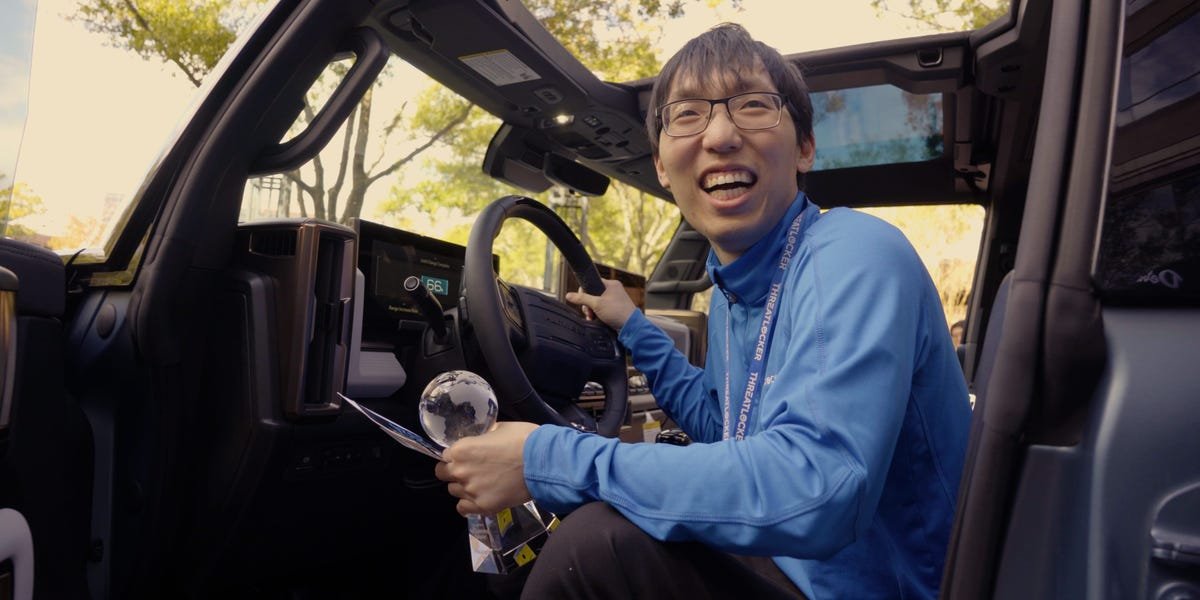
ThreatLocker, an Orlando-based cybersecurity firm with about 700 employees, gives luxury cars to its two most collaborative workers at its annual holiday party, the company told Business Insider.

The firm, which also has offices in Dublin, Dubai, and Australia, receives hundreds of votes each month for the two most helpful employees — one in the US, and one abroad. It flies in its international workers in for the holiday party.

Additionally, every manager votes for the best performer on their team that month. At the end of the year, the total votes for the top performer and the most helpful employee are combined to determine the two car recipients, the company said.

The firm usually awards an electric model, but has also handed out a $125,000 Porsche Panamera. The company hasn’t announced its car for this year yet, but told Business Insider one of the models is worth $173,000.

The tradition began in 2021 as a prize for the top performer, but CEO Danny Jenkins said it created a “dog-eat-dog” work environment. In the cybersecurity industry, teamwork is crucial to the company’s success, he said. Jenkins said the firm operates 24 hours a day with an average pick-up time of 23 seconds for any customer support issue, and colleagues need to work together to achieve that.

“Everything we do is with this matter of urgency,” Jenkins said. “So if you don’t have this teamwork where people are willing to get on a call at 2 a.m. in the morning and help each other and collaborate, then it doesn’t work.”

Jenkins said he works about 100 hours a week, and he keeps his phone on 24/7 in case issues arise.

Retaining the top

AI development has led to a boom in the cybersecurity industry, resulting in heightened demand for qualified talent. Jenkins said the company has never done layoffs and is currently hiring 40 to 50 people a month.

“I’d like to be in a situation where I don’t feel like we’re drowning because we’re constantly struggling to hire and onboard people fast enough,” said Jenkins.

That makes it all the more worthwhile to retain top talent and those who contribute to a strong culture.

He said that before the car winners are announced, between 14 and 16 runner-ups are honored in front of the company, and then offered a spot on a fully paid long-weekend getaway.

Jenkins said the trip has included a Royal Caribbean cruise to the Bahamas, as well as trips to Boston or New York. The group typically includes employees from various departments, and they all receive a spending budget of $2,500 on their trip, he said.

ThreatLocker also offers other perks to standout employees. Jenkins said that most employees work 40-hour workweeks, but sometimes teams may have to put in 18 or 19 hours straight to address an issue. Jenkins said when workers push through tight deadlines or go above and beyond, the company may reward them with court-side seats at games in the Orlando Kia Center, where the company has a permanent box.

Jenkins said the trip and car giveaway have bolstered employee success and that no car recipient has ever left the company.


Source link