These-companies-want-their-tariff-money-back-from-the-Trump.jpeg

These companies want their tariff money back from the Trump administration, and they’re suing

BYD’s lawsuit marks the first from a Chinese carmaker against Trump’s tariffs.

The EV giant filed the suit on February 9 and detailed nine executive orders related to trade that affected the company, including tariffs on cars, auto parts, aluminum, steel, and exports from China.

In the complaint, BYD wrote that it is seeking a refund of “all IEEPA tariffs paid to date” and “all IEEPA tariffs that may be paid in the future.”

The company also said that aside from China, its imports into the US from Canada, Germany, Mexico, and Poland were also affected.

The Chinese carmaker does not sell passenger cars in the US, but its business here includes buses, commercial vehicles, batteries, energy storage systems, and solar panels. According to its website, the company’s truck plant in Lancaster, California, employs 750 workers.


Source link

Greenland-says-no-thank-you-after-Trump-says-he-is.jpeg

Greenland says ‘no thank you’ after Trump says he is sending it a ‘great hospital boat’

President Donald Trump seems to be trying a new approach in his quest to take over Greenland: The president said Saturday the US would send a hospital ship to the territory.

“We are going to send a great hospital boat to Greenland to take care of the many people who are sick, and not being taken care of there,” the president wrote on Truth Social. “It’s on the way!!!”

Greenland, however, isn’t interested.

Greenland’s prime minister, Jens-Frederik Nielsen, said in a subsequent Facebook post that “it’s going to be a no thank you from here.” Greenland provides free universal healthcare for all permanent residents and citizens.

“We have a public health system where treatment is free for citizens. It’s a deliberate choice. And a basic part of our society. It’s not like that in the United States, where it costs money to go to the doctor,” he wrote. “We are always open to dialogue and collaboration. Also with the U.S. But talk to us now instead of just coming up with more or less random outbursts on social media.”

Trump has had his sights set on the Arctic island, a semi-autonomous Danish territory, since his first term in office. Trump has suggested the US could buy Greenland or even take it by force.

The president says Greenland’s location makes it strategically important as the melting of Arctic ice opens up new shipping routes and intensifies competition with Russia and China.

The island is also rich in critical minerals and already hosts a key US military base, which American officials say is vital to missile defense and Arctic security.

Major European leaders, including those from France, Germany, the UK, Italy, Spain, Poland, and Denmark, released a joint statement last month defending Greenland.

“Greenland belongs to its people,” the statement said. “It is for Denmark and Greenland, and them only, to decide on matters concerning Denmark and Greenland.”


Source link

Trump-demand-that-Netflix-fire-Susan-Rice-is-an-extraordinary.jpeg

Trump demand that Netflix fire Susan Rice is an extraordinary use of presidential power

Netflix wants President Donald Trump’s stamp of approval as it maneuvers to buy Warner Bros. Discovery.

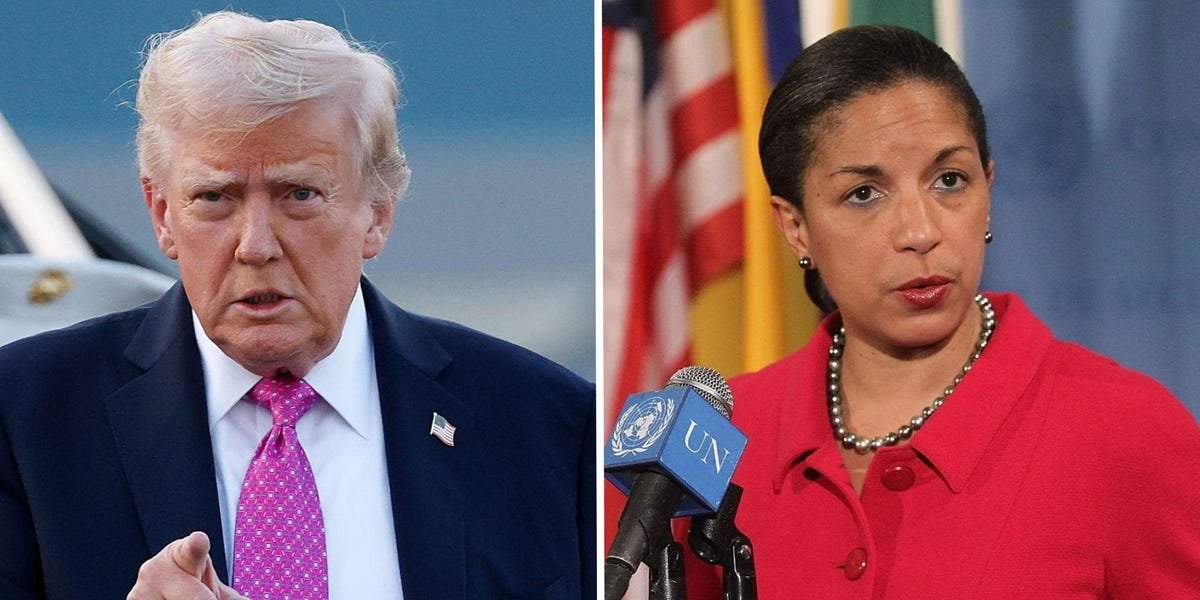
Now, Trump has a demand for Netflix: unseat board member Susan Rice.

In normal times, we would all be marveling at the spectacle of the US president telling a company in the midst of a merger fight (Paramount also wants to buy Warner Bros. Discovery) how to structure its board. During Trump 2.0, though, this has become standard stuff. Trump routinely tells companies to fire someone he doesn’t like or do something he does like.

That doesn’t mean Trump always gets what he wants. The demands alone, however, are an extraordinary use of power. We should make sure we don’t become inured to it.

Trump’s Truth Social post is a reminder that the future of Warner Bros. Discovery will run through the White House, no matter what Trump says at any given moment. (Refresher: In December, Trump said, “I’ll be involved” in the fight between Netflix and Paramount. Earlier this month, he announced that “I’ve decided I shouldn’t be involved.” Now he’s telling Netflix it will “pay the consequences” if it doesn’t fire Rice, which sure seems like he’s involved again.)

Trump himself doesn’t have the authority to stop Warner Bros. Discovery from selling itself to Netflix or Paramount, which is controlled by David Ellison and his father, the prominent Trump supporter, Larry Ellison. He can, however, instruct Attorney General Pam Bondi to sue to stop a deal on antitrust grounds.

Modern presidents have traditionally assumed an arm’s-length distance from federal law enforcement. And it’s entirely possible that any other president’s Department of Justice would also look into an antitrust case against Netflix, given its enormous market power.

Trump, however, has made it clear that he expects Bondi to act on his behalf. So if he doesn’t want Netflix to buy Warner Bros. Discovery, he can certainly make it more difficult for them.

Which makes it puzzling that Rice, who held senior roles in the Clinton, Obama, and Biden administrations, would sound off on a podcast, announcing that “elites” and “corporate interests” who accommodated Trump would one day “be held accountable by those who come in opposition to Trump and win at the ballot box.

This wasn’t a mere gaffe or misstatement. She went on at length. It was, regardless of how she intended it, a provocation aimed at the Trump White House — at the exact moment the company she’s supposed to help govern is seeking Trump’s approval.

I’ve asked Netflix for comment on Rice’s comments and Trump’s response.

We should also note that Trump’s most consistent trait is his inconsistency and that he frequently reverses himself. Last summer, for instance, he announced that Intel CEO Lip-Bu Tan was “highly CONFLICTED” and must resign. Days later, Trump met with Tan and described him as a “success.” Weeks after that, the US government acquired 10% of Intel.

Nor does Trump always follow through. Last fall, he demanded that Microsoft fire Lisa Monaco, an executive who had also worked for Clinton, Obama, and Biden. Monaco still works for Microsoft.

However, just because we don’t know how serious Trump is about pushing Rice out of Netflix — or how his administration will ultimately rule on the Netflix/Paramount race — doesn’t mean we should shrug this off.

We’re in a place where the president routinely tells companies how to run their businesses and threatens them if they don’t comply. If we get used to that, we shouldn’t be surprised when future presidents decide they can do it, too.

Disclosure: Mathias Döpfner, the CEO of Business Insider’s parent company, is a Netflix board member.


Source link

Heres-exactly-what-Susan-Rice-said-before-Trump-called-on.jpeg

Here’s exactly what Susan Rice said before Trump called on Netflix to fire her from its board.

President Donald Trump has warned Netflix to remove former US ambassador and national security advisor Susan Rice from its board “or pay the consequences.”

The stakes are high for Netflix: It’s in the middle of trying to execute a mega-deal to buy Warner Bros.

Rice, who served in senior roles in the Obama and Biden administrations, was critical of Trump’s second term in office when she appeared on the “Stay Tuned with Preet Bharara” podcast in an episode published on Thursday. Rice made comments about corporations that “take a knee to Trump,” saying they could face retribution under a subsequent Democratic administration.

After being alerted to Rice’s comments by far-right activist Laura Loomer, Trump posted: “Netflix should fire racist, Trump Deranged Susan Rice, IMMEDIATELY, or pay the consequences. She’s got no talent or skills – Purely a political hack! HER POWER IS GONE, AND WILL NEVER BE BACK. How much is she being paid, and for what??? Thank you for your attention to this matter. President DJT.”

Loomer’s post highlighted comments Rice made about corporations.

Here’s exactly what Rice said on that topic:

“When it comes to the elites, you know, the corporate interests, the law firms, the universities, the media, I agree with you, Preet, it is not, it’s not going to end well for them. For those that decided that it was, you know, that they would act in their perceived very narrow self-interest, which I would underscore is very short-term self-interest, and, you know, take a knee to Trump, I think they’re now starting to realize, ‘Wait a minute, you know, this is not popular.’
“Trump is not popular. What he is doing, whether on the economy and affordability or on immigration, now, is not popular, and that there is likely to be a swing in the other direction, and they are going to be caught with more than their pants down, they’re going to be held accountable by those who come in opposition to Trump and win at the ballot box.
“And I can tell you Preet, you know, as I talk to leaders in Washington, leaders in our party, leaders in the states, if these corporations think that the Democrats, when they come back in power, are going to, you know, play by the old rules and say, ‘Oh, never mind, we’ll forgive you for all the people you fired, all the policies and principles you’ve violated, all, you know, the laws you’ve skirted,’ I think they’ve got another thing coming.”

Netflix’s pursuit of Warner Bros. would require approval from the Department of Justice’s antitrust division.

Trump in December said that Netflix had a “very big market share,” and that its potential acquisition of Warner Bros. “could be a problem.”

However, this month, he said he “shouldn’t be involved” in the deal and would defer to the Department of Justice to investigate the proposed merger.

Paramount, backed by Trump ally Larry Ellison, the billionaire Oracle cofounder, is also trying to buy Warner Bros.

A White House official told Business Insider last week that Trump “has great relationships with all parties in this potential transaction and remains neutral in this process with no preference for either bidder.”

Netflix’s co-CEO Ted Sarandos said on a podcast appearance last week that Trump had not asked for any political concessions related to the deal.

‘I expected it to be very bad’

In the podcast interview, Rice was critical of Trump on many fronts.

When asked what worried her most about the current political situation, Rice said:

“The thing that worries me, perhaps the very most, is the abrogation of the rule of law in this country, and the fact that, you know, we are now living in a lawless society when the authorities of what is an increasingly authoritarian state exercises, you know, personal police forces, to go and execute the will of the President and do so in blatant violation of American citizens constitutional rights, their First Amendment rights, their Second Amendment rights, their Fourth Amendment rights.”
“And when you have, you know, masked armed men busting into the houses of American citizens and ripping people out of their homes in their underwear and beating them and throwing them to the ground and putting them in cars and disappearing them and denying them access to counsel or their families, when you have the same people shooting American citizens in the street for exercising their First Amendment rights, we are in a very different place, and that worries me enormously.
“And what also worries me, Preet is, you won’t be surprised to hear, is that we’re only at the beginning of what I think they may intend to try and that our very elections and our the fundamental elements of our democracy are profoundly at risk.”

When asked for her assessment of the Trump administration’s past 12 months in office, Rice said:

“Well, I expected it to be very bad, and I guess I would confess that it’s probably worse than I anticipated, but not because they’re doing things that surprised me. They told us exactly what they were going to do.”
“You know, recall Trump saying multiple times on the campaign trail, ‘If you vote for me, this one time, you’ll never have to vote again.’ Or his, you know, pledge to use the American military against the quote, ‘enemy within.’
“You know, you had Stephen Miller, foreshadowing not only the use of the Insurrection Act, but potentially the suspension of habeas corpus and the imposition of martial law. All of these are, you know, they tell you, interestingly, where they intend to head.
“But what surprised me is the speed and the efficacy of their efforts to do what they set out to do, and the fact that they have faced very little resistance from members of their own party, from the private sector, from civil society leaders and university heads and law firms and all of the, you know, the pillars of society, media — that have rolled over and played dead or hidden under rocks.
“So I think the speed and the ease with which they’ve made progress on their agenda, which they laid out very clearly in Project 2025, and elsewhere, is what surprised me more than what they’ve tried to do.”

Disclosure: Mathias Döpfner, the CEO of Business Insider’s parent company, is a Netflix board member.


Source link

Trump-demands-Netflix-fire-Susan-Rice-from-board-amid-deal.jpeg

Trump demands Netflix fire Susan Rice from board amid deal talks

  • Donald Trump has chimed in on the Netflix deal negotiations, despite previously saying he wouldn’t.
  • In a Saturday Truth Social post, the president said Netflix should fire Susan Rice from its board.
  • Rice on Thursday predicted an “accountability agenda” for corporations that “take a knee” to Trump.

President Donald Trump is calling on Netflix to remove former US Ambassador and national security advisor Susan Rice from its board, sharpening his criticism of the streaming giant as it seeks to merge with Warner Bros. Discovery amid antitrust scrutiny.

In a post on Truth Social, Trump demanded that Netflix “immediately terminate” Rice from its board of directors, “or pay the consequences,” amplifying a message from right-wing activist Laura Loomer. Loomer had urged action against Rice, criticizing her role at the company and pointing to recent remarks she made about Trump and corporate America.

Rice, who served in senior roles in the Obama and Biden administrations, recently warned companies against aligning themselves too closely with Trump. Speaking on Thursday on the “Stay Tuned with Preet Bharara” podcast, she said corporations that “take a knee” to the president and break the law should expect consequences, predicting an “accountability agenda” if Democrats take back power.

The clash comes as the streaming giant pursues a high-stakes merger that will require approval from the Department of Justice’s antitrust division.

Trump in December said that Netflix had a “very big market share,” so its potential acquisition of Warner Bros. “could be a problem.”

However, in February, he said he “shouldn’t be involved” in the deal and would defer to his Department of Justice to investigate the proposed merger, Business Insider previously reported.

Earlier this week, during an appearance on Puck’s “The Town” podcast, Netflix’s co-CEO, Ted Sarandos, said that Trump hadn’t asked for political concessions during discussions of the possible deal, but was focused on bringing jobs back to Hollywood after years of lower production.

Representatives for Netflix and Rice did not immediately respond to requests for comment from Business Insider.


Source link

Headshot of Peter Gelling

Trump now says he will raise ‘worldwide’ tariff from 10% to 15%

President Donald Trump is not giving up on his tariff strategy.

The president said Saturday in a post on Truth Social that he would now impose a 15% ‘worldwide tariff.’

“I, as President of the United States of America, will be, effective immediately, raising the 10% Worldwide Tariff on Countries, many of which have been ‘ripping’ the U.S. off for decades, without retribution (until I came along!), to the fully allowed, and legally tested, 15% level,” he wrote.

In a 6-3 decision on Friday, the Supreme Court said Trump did not have the authority to impose his tariffs under the International Emergency Economic Powers Act, a national security law that allows the president to regulate economic activity during emergencies.

In a press conference following the decision, Trump said he would use a separate authority to impose a 10% global tariff on top of any existing tariffs.

The separate authority is known as Section 122, which can only be imposed for 150 days. After that, Congress must vote to extend.

A White House official later said that countries being tariffed under the authority the Supreme Court struck down will now be subject to that 10% tariff.

“With IEEPA no longer applicable, those countries will now be tariffed at the global 10% tariff using the Section 122 legal authority,” the official said in a statement to Business Insider. “This is, however, only temporary as the Administration will be pursuing other legal authorities to implement more appropriate or pre-negotiated tariff rates.”

The president’s Truth Social post on Saturday, while short on details, indicated he would raise that tariff to 15%.

The IEEPA-justified tariffs have been among Trump’s most powerful weapons in his efforts to renegotiate trade agreements worldwide. They included Trump’s so-called “Liberation Day” tariffs, announced in April, which are at least 10% on nearly every country in the world.

“During the next short number of months, the Trump Administration will determine and issue the new and legally permissible Tariffs, which will continue our extraordinarily successful process of Making America Great Again,” the president wrote in his Truth Social post on Saturday.


Source link

Kelsey Vlamis's face on gray background.

Democrats demand Trump issue $1,700 tariff refunds to Americans after Supreme Court ruling

President Donald Trump previously promised Americans tariff dividend checks, but if Democrats have their way, he could be issuing refunds instead.

After a Supreme Court ruling on Friday struck down Trump’s tariffs levied under the International Emergency Economic Powers Act, Democratic lawmakers were quick to demand that the president repay Americans through tariff refunds.

“Donald Trump should return that money immediately. He has an obligation,” California Gov. Gavin Newsom said on Friday. “$1,751 per family that were taxed by Donald Trump. He took hundreds of billions of dollars from working folks, from the ag community, from small businesses for this vanity play, this illegal action, and he finally was held to account. The rule of law won out.”

Illinois Gov. JB Pritzker sent a letter to Trump calling for refunds to families in his state.

“Your tariff taxes wreaked havoc on farmers, enrage our allies, and sent grocery store prices through the roof,” Pritzker said in the letter. “On behalf of the people of Illinois, I demand a refund of $1,700 for every family in Illinois.”

The governor also sent an invoice billing that amount for more than 5.1 million Illinois families, totaling more than $8.6 billion. The invoice said it was “PAST DUE – DELINQUENT.”

When reached for comment, White House spokesman Kush Desai responded in part by saying if Pritzker “really cared about delivering economic relief for Illinois, he’d start with his own state government instead of chasing another stupid headline.”

The offices of Newsom and Pritzker did not respond to requests for comment.

Both Newsom and Pritzker are considered potential candidates for the presidential election in 2028, and they’ve both been highly critical of Trump.

The governors appeared to be basing their requests for refunds of that amount on a report released this month by Democrats on the Joint Economic Committee in Congress. The report found American families paid an average of $1,745 in tariff costs between February 2025 and January 2026, for a total of over $231 billion paid by consumers.

Other studies, including from Harvard Business School and The Budget Lab at Yale, have found that tariff costs are largely paid by American businesses and consumers.

The Supreme Court on Friday ruled that tariffs issued under the IEEPA, a national security act, had exceeded the president’s authority. Trump denounced the decision and said he would pursue additional tariffs through other avenues.

In November, Trump touted the money being collected from tariffs and floated the idea of sending $2,000 tariff dividend checks to middle and low-income Americans, though issuing such checks would likely have required an act of Congress. In January, Trump gave mixed messages about his plans for tariff rebate checks.

Now, with the IEEPA tariffs struck down, it’s likely some American businesses will try to receive refunds for the tariff costs they paid.

Despite Democrats’ stance on the issue, there’s a lot of uncertainty about whether or how refunds would happen.

The Supreme Court ruling did not touch on issuing tariff refunds.

When Trump was asked Friday if the government would now have to issue refunds, he said, “I guess it has to get litigated for the next two years.”

Treasury Secretary Scott Bessent said Friday it was “unlikely” Americans would receive tariff refunds.

“I got a feeling the American people won’t see it,” Bessent said, adding, “My sense is that could be dragged out for weeks, months, years.”


Source link

Jacob Shamsian hollis unsmiling headshot cassidy edit 2

The battle over Trump tariff refunds is next — and it will be messy

The Supreme Court on Friday overturned the centerpiece of President Donald Trump’s tariff plans, ruling the federal government illegally collected over $133 billion in taxes from American businesses.

Now comes the battle over refunds for tariffs paid, which Trump on Friday predicted could take years.

“I guess it has to get litigated for the next two years,” he said at a White House press conference, while blasting the ruling as “terrible” and “defective.”

One reason: Over 1,000 companies have filed lawsuits to claw back money from the government if the Supreme Court overturned Trump’s tariffs justified by the International Emergency Economic Powers Act.

In his dissenting opinion, Justice Brett Kavanaugh also predicted the process could become a “mess,” citing refund requests tallying “billions of dollars to importers,” even as some importers have already passed those costs to consumers.

Here are all your questions about tariff refunds, answered by experts.

Alright, who do I ask to get a refund?

Typically, the refund process would be handled by Customs and Border Protection, which collected the tariffs in the first place.

In order for that to happen, the Trump administration would need to establish a process for handling refund requests. The White House, which didn’t return Business Insider’s request for comment, has yet to signal plans to do this, said Rachel Brewster, a professor of international trade at Duke Law School.

Without a formal process in place, claims will be litigated in the Court of International Trade, which will order CPB to issue refunds to specific companies, Brewster said.

OK, so how will the court handle the process?

In the past, the Court of International Trade has ordered refunds when it has found particular taxes to be invalid — albeit on a smaller scale, according to Daniel Mach, a commercial litigator at Bryan Cave.

It’ll likely turn to the process that followed a 1998 Supreme Court decision to overturn a harbor maintenance tax, which also resulted in refunds, Mach said.

“It’s been a while,” Mach said. “Everyone’s going to be kind of figuring out the ropes as they go. But at the end of the day, it’s not an unsolvable problem.”

Given the number of claims, the Court of International Trade is likely to appoint an administrator or special master to consider each of them, rather than handling the lawsuits piecemeal, Mach said.

Groups that advocated for the Supreme Court to overturn the IEEPA tariffs have urged the Court of International Trade to develop a smooth process for refunds.

“The refunds will serve as an economic boost and allow companies to reinvest in their operations, their employees and their customers,” said David French, an executive at the National Retail Federation, in a statement.

OK, that sounds messy. How long will it take to get a refund?

The whole refund process — whether through CPB or through a class-action or administrative processes in court — could take up to two years, according to Brewster.

Have a lot of companies asked for refunds?

Yes! The cases that went to the Supreme Court were groups of small companies, including a wine importer and an educational toy retailer. But several massive corporations, including Toyota and Costco, have also filed refund lawsuits.

What about me? My Shein order was more expensive than expected.

You can try to get a refund for personal orders hit by tariffs, but it’ll be complicated.

In asking CPB or a court for a refund, you’ll have to distinguish tariffs you paid pursuant to IEEPA, which were overturned, and the tariffs justified by other laws, which remain on the books.

Individual lawsuits for IEEPA tariffs on individual retailer orders, like from Temu and Shein, likely won’t be worthwhile. The legal fees would likely exceed any potential refund. But it’s possible that some enterprising litigators would put together a class-action lawsuit to make it worthwhile, Brewster predicted.

“It was an illegally imposed tax,” she said. “So in theory, everyone is entitled to a refund.”

With reporting by Brent Griffins



Source link

Chong Ming Lee, Junior News Reporter at Business Insider's Singapore bureau.

Trump says he’s declassifying files about aliens and UFOs. That’s going to make some longtime betters on Polymarket very rich.

President Donald Trump says he is directing federal agencies to declassify UFO files. For traders betting on aliens, that could mean a very earthly payday.

“Based on the tremendous interest shown, I will be directing the Secretary of War, and other relevant Departments and Agencies, to begin the process of identifying and releasing Government files related to alien and extraterrestrial life, unidentified aerial phenomena (UAP), and unidentified flying objects (UFOs), and any and all other information connected to these highly complex, but extremely interesting and important, matters,” Trump said in a Truth Social post on Thursday night.

Earlier on Thursday, Trump took aim at former President Barack Obama, accusing him of improperly discussing classified material when speaking about extraterrestrial life on a recent podcast.

Trump told reporters aboard Air Force One that Obama “gave classified information” and wasn’t “supposed to be doing that,” adding that he could get him “out of trouble” by declassifying the relevant files.

Obama said in a tongue-in-cheek exchange with podcaster Brian Tyler Cohen last week that aliens are “real” and that they’re not “being kept” at Area 51. He later clarified in an Instagram post that there was no evidence during his presidency that aliens “have made contact with us.”

Aliens have always had a niche following. In prediction markets, aliens are tradable assets.

On the decentralized prediction platform Polymarket, guessing about aliens has become a high-volume betting category. Traders have poured millions of dollars into whether the US will confirm the existence of extraterrestrial life.

One of the platform’s largest markets asks whether the US will confirm that aliens exist before 2027. The market has drawn more than $4 million in trading volume as of Thursday.

Betting activity has also centered on whether a Trump administration would declassify UFO files before 2027, with odds climbing above 80% in December.

Polymarket users also placed bets on other extraterrestrial theories, including whether mysterious drones spotted over New Jersey were aliens.

If the files are released and contain anything definitive, longtime alien bettors may finally cash in.

Notable speculation about aliens and UFOs

In November 2024, unidentified drones were seen flying at night over New Jersey and other East Coast states.

The mysterious sightings unsettled residents and drew questions from local officials, fueling a wave of speculation about what — or who — was in the sky. Alien theories quickly gained traction.

At that time, Trump said the government “knows what is happening” but wasn’t sharing it.

“For some reason, they don’t want to comment. I think they’d be better off saying what it is. Our military knows, and our president knows, and for some reason, they want to keep people in suspense,” he said at Mar-a-Lago.

“Something strange is going on,” he added.

A Facebook group titled “New Jersey Mystery Drones — let’s solve it” has grown to more than 81,000 members as of writing. Users in the group continue to float the possibility of extraterrestrial involvement, alongside speculation about commercial or military craft.


Source link

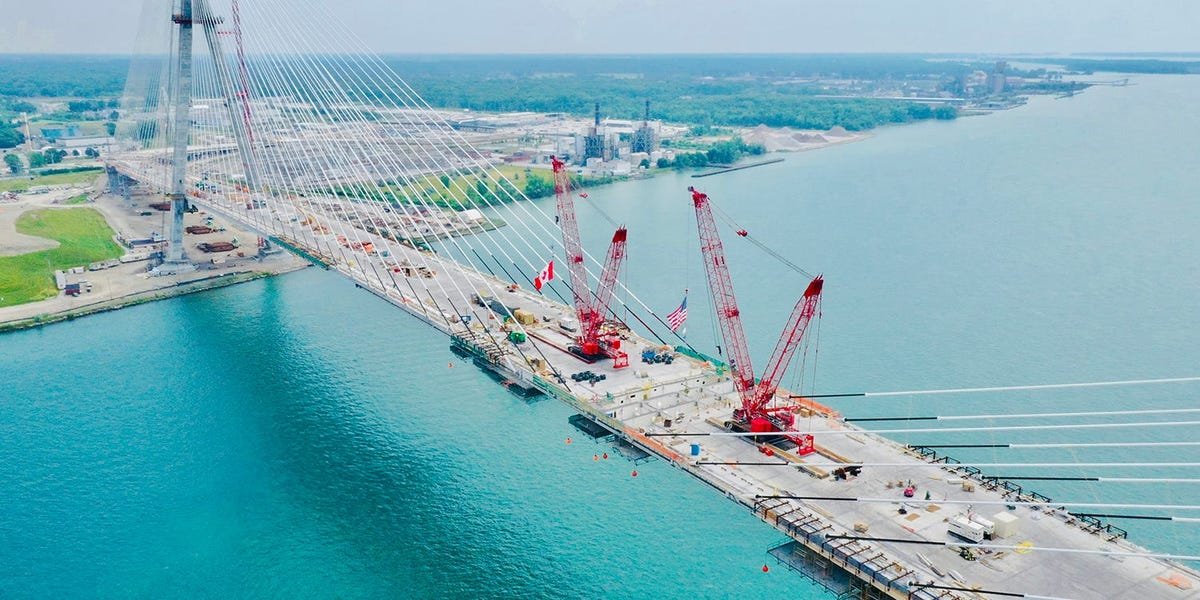
Trump-threatens-to-block-the-opening-of-a-bridge-between.jpeg

Trump threatens to block the opening of a bridge between Ontario and Michigan in ongoing spat with Canada

President Donald Trump is threatening to block the opening of the Gordie Howe International Bridge, a long-awaited new border crossing between Windsor, Ontario, and Detroit, Michigan.

In a Truth Social post on Monday, Trump said he would not allow the bridge to open until the US is “fully compensated for everything we have given them,” adding that Canada must treat the United States with what he described as “fairness and respect.”

“We will start negotiations, IMMEDIATELY. With all that we have given them, we should own, perhaps, at least one half of this asset,” Trump added.

The Gordie Howe International Bridge is expected to be completed in early 2026 and has been under construction since 2018. The $6.4 billion project is entirely funded by Canada’s Federal government, and will feature six lanes and a pedestrian and cycling path.

The University of Windsor’s Cross-Border Institute estimated in a 2021 study that the new route will save about 850,000 hours a year for trucks, which would mean billions of dollars in savings over the bridge’s lifetime. The study also found that the Windsor-Detroit corridor is the largest pathway for trade between the US and Canada.

Trump’s remarks mark the latest escalation in tensions with Canada, a key US trading partner, as the president steps up his criticism of the country.

In recent weeks, Trump has threatened to slap a 100% tariff on Canadian goods if Ottawa moves forward with a trade deal with China.

He also bristled at comments made by Canadian Prime Minister Mark Carney at the World Economic Forum in Davos, which were widely seen as an implicit rebuke of Trump’s foreign and economic policies. In January, Trump also warned that he could impose a 50% tariff on aircraft manufactured in Canada and revoke certification for newly produced planes.

The White House and the Ontario Premier’s office did not immediately respond to a request for comment.


Source link