This story is available exclusively to Business Insider
subscribers. Become an Insider
and start reading now. Have an account? .
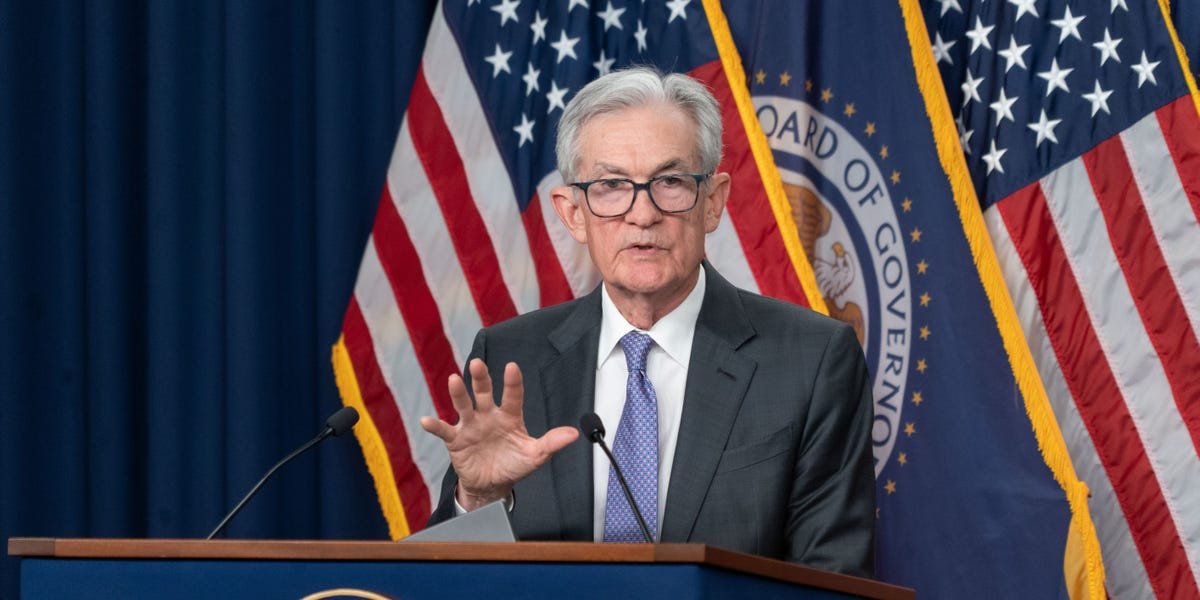
Fed Chair Jerome Powell is facing a DOJ investigation over office renovations.
Powell’s video response sparked a wave of meme-filled jokes online.
President Donald Trump has repeatedly targeted the Fed’s independence.
The internet has a surprising new muse: Federal Reserve Chair Jerome Powell.
Powell is famously mild-mannered. About four times a year, he emerges from meetings with Federal Reserve governors and regional bank presidents to hold press conferences on their analysis of jobs data, inflation reports, and subsequent interest rate projections (the infamous “dot plot”).
Not exactly typical fodder for going viral. But on Monday, after Powell released a video saying he’d been subpoenaed by the Justice Department as part of a pressure campaign, he started getting the meme treatment.
“I have deep respect for the rule of law and for accountability in our democracy,” Powell said in Sunday’s two-minute video. “But this unprecedented action should be seen in the broader context of the administration’s threats and ongoing pressure.”
Social media thought it was a banger.
Here are some of the notable reactions so far:
You know things are bad when the most boring person doing the most boring job for decades has to come out and say, “Stop trying to arrest us for doing math” https://t.co/3YCfPBFIae
President Donald Trump has called on Powell, whose term doesn’t end until May 2026, to lower interest rates more quickly. Powell has refused and insisted on the Fed’s independence. Trump has also repeatedly threatened to fire Powell.
The president denied any involvement in the DOJ investigation in an interview with NBC on Monday. “I don’t know anything about it, but he’s certainly not very good at the Fed, and he’s not very good at building buildings,” Trump said.
Meta has a new president — and she’s a former advisor to President Donald Trump.
The tech giant named Dina Powell McCormick as its president and vice chairman on Monday. Powell McCormick joined Meta’s board in April before resigning in December.
Before joining Meta, Powell McCormick served as a deputy national security advisor to Trump. The president applauded her appointment on Truth Social: “A great choice by Mark Z!!”
Powell McCormick is the second former Trump official appointed to a Meta leadership position in 2026. Last week, the company hired C.J. Mahoney, a deputy US trade representative during Trump’s first term, as its chief legal officer.
Here are three things to know about Dina Powell McCormick:
She’s served under two Republican presidents
Powell McCormick worked as a Trump advisor during his first term, with a focus on the Middle East.
She had a personal tie to the region. Powell McCormick was born in Cairo, where her father was a captain in the Egyptian army. In 1977, her family moved to Dallas.
During her stint with the Trump administration, Powell McCormick oversaw a $200 billion US-Saudi arms deal, spearheaded Trump’s Middle East tour, and was considered to take over as Trump’s chief of staff or representative to the United Nations.
She left the Trump administration in 2018.
Dina Powell McCormick reunited with Trump — and his friend Elon Musk — at a 2025 NCAA wrestling match.
Mitchell Leff/Getty Images
Powell McCormick also served under President George W. Bush. She started in a personnel role, before rising to senior White House assistant and assistant secretary of state under Condoleezza Rice.
At the time of her resignation in 2007, Powell McCormick was the highest-ranking Arab American in the Bush administration.
She spent 16 years at Goldman Sachs
After leaving the Bush administration, Powell McCormick went to Goldman Sachs, where she was hired as a managing director.
Powell McCormick shot up in stature, making partner in three years. Her rapid rise sparked some bitterness among Goldman’s underclass, according to The New York Times and Vanity Fair.
Under her leadership, Goldman launched its 10,000 Women program. She also oversaw the 10,000 Small Businesses program and served as the president of the Goldman Sachs Foundation.
Dina Powell McCormick led Goldman Sachs’ 10,000 Small Businesses program.
Dimitrios Kambouris/WireImage
Powell McCormick was popular among some of Goldman’s biggest names, including Anne Black, the former president of Goldman Sachs Gives and current managing partner at JP Morgan.
“She was really a steadfast champion for me and others of us on the team, who were all promoted thanks to her,” Black told Vanity Fair. “She elevated my game, inspired me to be creative and bold, and expected us to show results.”
Powell McCormick left Goldman Sachs in 2023.
She’s married to Sen. Dave McCormick
While Powell McCormick no longer works in politics, she’s still involved through her husband: Pennsylvania senator Dave McCormick.
The couple wed in 2019. Soon after, Dave began eyeing a Senate run, and Dina became involved in the campaign. She made trips to Mar-a-Lago with her husband and appeared in several ads.
Dave ended up conceding the Republican nomination to Mehmet Oz — also known as television’s Dr. Oz — in the 2022 race. Oz lost the general election to John Fetterman and was later appointed by Trump to lead the Centers for Medicare & Medicaid Services.
Dina Powell McCormick accompanied her husband to his 2024 swearing-in, which was overseen by then-Vice President Kamala Harris.
Alex Wong/Getty Images
In 2024, Dave ran again, narrowly winning a Senate seat and beating incumbent Bob Casey. Dina accompanied him to his swearing-in.
This story is available exclusively to Business Insider
subscribers. Become an Insider
and start reading now. Have an account? .
President Donald Trump said that he was calling for a 10% cap on credit card interest for one year.
The President cannot unilaterally cap credit interest rates; it would require an act of Congress.
This week, Trump has also announced proposals to address the affordability of housing.
President Donald Trump has taken another shot at big business, this time targeting banks.
On Friday, Trump said on Truth Social that he would call for a 10% cap on credit card interest for one year.
“Please be informed that we will no longer let the American Public be ‘ripped off’ by Credit Card Companies that are charging Interest Rates of 20 to 30%, and even more, which festered unimpeded during the Sleepy Joe Biden Administration,” Trump wrote in his social media post.
“Effective January 20, 2026, I, as President of the United States, am calling for a one year cap on Credit Card Interest Rates of 10%,” he added. “Coincidentally, the January 20th date will coincide with the one year anniversary of the historic and very successful Trump Administration.”
The White House did not immediately respond to a request for comment from Business Insider. The president cannot unilaterally impose such a cap; it would require an act of Congress to advance. Similar efforts that have been advanced in Congress have yet to become law.
The announcement, made on Truth Social, is the latest in a series of swipes at big business this week.
Earlier this week, he announced that he is instructing “representatives” to buy $200 billion in mortgage bonds, aiming to lower interest rates and monthly payments. He also said he was barring “large institutional investors” from buying up single-family homes and signed an executive order that would limit defense contractors’ corporate spending.
This is a developing story. Please check back for updates.
President Donald Trump is targeting the bank accounts of defense contractor CEOs.
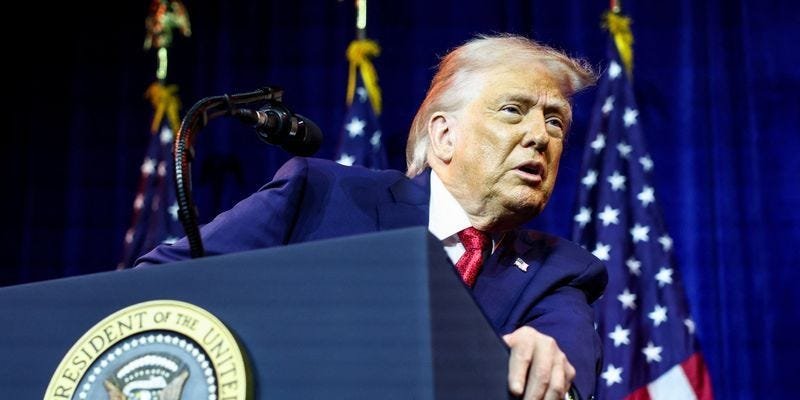
On Wednesday, Trump signed an executive order outlining new rules for defense contractors that would ban stock buybacks and dividends “until such time as they are able to produce a superior product, on time and on budget” — as well as limit executive compensation.
The order stipulates that in future contracts, if the Secretary of War were unsatisfied with a company’s performance, executive base salaries would be capped at current levels. Future contracts would also ensure compensation “not be tied to short-term financial metrics” and instead be “linked to an on-time delivery, increased production, and all necessary facilitation of investments and operating improvements.”
The goal, per the executive order, is to increase the speed of innovation at defense companies, rather than focus on corporate profits.
Trump also took aim at the leaders of defense contractors in a series of posts on Truth Social on Wednesday.
Every time Madeline publishes a story, you’ll get an alert straight to your inbox!
Stay connected to Madeline and get more of their work as it publishes.
“Executive Pay Packages in the Defense Industry are exorbitant and unjustifiable given how slowly these Companies are delivering vital Equipment to our Military,” Trump wrote. “Salaries, Stock Options, and every other form of Compensation are far too high for these Executives.”
He proposed that no executive should earn “in excess of $5 million” until their production speed and maintenance improve, though the executive order did not cap pay at that exact amount.
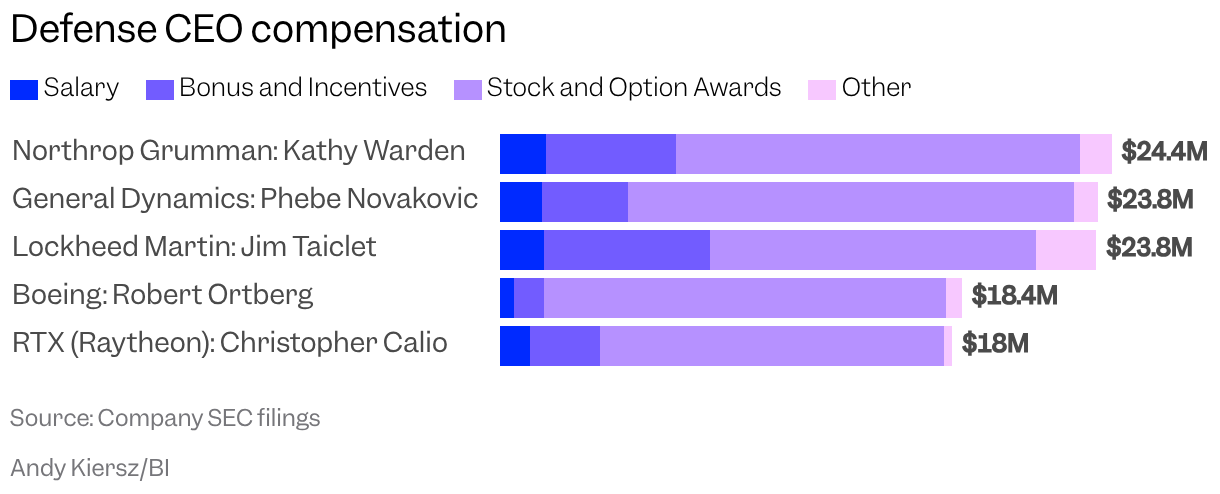
The leaders of the big five defense contractors — Lockheed Martin, RTX (formerly known as Raytheon), Northrop Grumman, Boeing, and General Dynamics — each earned more than $18 million in total compensation in 2024, the most recent year for which data is available. Their total income was a combination of salary, incentives, stock options, and other forms of compensation, including the value of security services and changes in the value of pension funds.
While exceeding the $5 million cap proposed by Trump by magnitudes, the CEOs’ compensation pales in comparison to that of some other business leaders.
Dozens of CEOs earned more than them in 2024. James Robert Anderson, who runs materials manufacturer Coherent, had a pay package of more than $100 million last year. The CEOs of Starbucks, GE, and Microsoft each made more than $75 million.
Executive pay and stock transactions are part of Trump’s larger plans for the military. On Wednesday evening, he said on Truth Social that America’s military budget should be increased to $1.5 trillion in 2027, up from the record 2026 defense budget of $901 billion.
That sent defense stocks climbing on Thursday morning, gaining back what they’d lost following the signing of the executive order.
In a statement to Business Insider regarding the order, a spokesperson for Lockheed Martin said the company “shares President Trump’s and the Department of War’s focus on speed, accountability, and results, and will continue to invest and innovate at scale to ensure our warfighters maintain a decisive advantage and are never sent into a fair fight.”
Boeing and General Dynamics declined to comment, and Northrop Grumman and RTX did not immediately respond to requests for comment.
This story is available exclusively to Business Insider
subscribers. Become an Insider
and start reading now. Have an account? .
Trump wants to spend $1.5 trillion on the US military in 2027.
He said that the raised budget would secure the country during “very troubled and dangerous times.”
The budget would be financed from “tremendous” tariff revenue, he said on Truth Social.
President Donald Trump says the US will be spending a lot more on the military next year.
Trump said in a Truth Social post on Wednesday that he had decided to raise the US’s military budget in 2027 from $1 trillion to $1.5 trillion.
“This will allow us to build the ‘Dream Military’ that we have long been entitled to and, more importantly, that will keep us SAFE and SECURE, regardless of foe,” Trump said.
He said that the larger budget would be financed by the tariffs he has imposed on almost all countries, and would secure the US during “very troubled and dangerous times.”
Trump said in the post that tariff income was so “tremendous” that even after allocating $1.5 trillion to the military budget, the US would still be able to pay off its debts and pay dividends to “moderate income” Americans.
Trump’s proposed military budget is significantly higher than the budget approved by Congress for defense spending in 2026: $901 billion. The 2027 budget increase must be approved by Congress.
Trump’s post about raising the military budget followed another post targeted at defense contractors. He criticized firms like Raytheon for issuing large dividends to shareholders, doing stock buybacks, and offering “exorbitant” pay packages to executives.
The president prohibited these companies from doing so until they pour more investments into manufacturing plants and equipment.
Stock prices for defense companies saw boosts in after-hours trading on Wednesday following Trump’s announcement of a larger military budget. Raytheon’s stock rose nearly 4% and Lockheed Martin’s rose more than 6%.
The post came after the US military conducted a raid on Venezuela last week and captured the country’s President Nicolás Maduro and his wife, who are now being prosecuted in New York. Trump threatened Colombia, Cuba, and Mexico with similar military intervention.
This story is available exclusively to Business Insider
subscribers. Become an Insider
and start reading now. Have an account? .
President Donald Trump announced a plan to import over 30 million barrels of Venezuelan oil to the US market.
Venezuela’s interim president, Delcy Rodríguez, has not commented on Trump’s proposal.
Trump is considering subsidizing oil companies to expand their operation to Venezuela.
President Donald Trump said he’s wasting no time when it comes to oil in Venezuela.
In a post on Truth Social on Tuesday, Trump said that the interim president of Venezuela will “be turning over” between 30 and 50 million barrels of sanctioned oil, and that the oil would be sold at market prices, with the revenue overseen by him as president to ensure it benefits both Venezuela and the US.
“It will be taken by storage ships, and brought directly to unloading docks in the United States,” Trump wrote on Truth Social.
He added that he directed Energy Secretary Chris Wright to carry out the plan “immediately.”
It is unclear if the plan will face legal hurdles, and further details are unknown. The White House did not immediately respond to a request for comments.
The current interim leader of Venezuela is Delcy Rodríguez, who was sworn in as acting president on January 5, 2026, after the US captured and detained the country’s former President Nicolás Maduro, alongside his wife. Rodríguez is a longtime Maduro loyalist and originally served as the Vice President of Venezuela. She has so far not spoken out on whether she would cooperate with Trump’s plan.
Trump’s comments build on his previous remarks that he would “take back” Venezuela’s oil reserves and revive the country’s battered energy sector, which has faced sanctions and mismanagement.
Trump also previously said in an interview with NBC News that the US could reimburse American oil companies for expanding their operations in Venezuela, but he did not have an estimate on how much the subsidy would cost.
Even though a larger supply could lead to lower costs for American consumers, the downward pressure on prices could disincentivize large oil companies from investing in Venezuela. It could also take years to build functioning infrastructure.
Venezuela’s oil production currently accounts for less than 1% of the global oil output, despite possessing the world’s largest known oil reserves.
President Donald Trump said on Saturday that the United States had captured Venezuelan President Nicolás Maduro and his wife, Cilia Flores, following a “large-scale strike” on Venezuela.
Attorney General Pamela Bondi has said that Maduro and Flores have now been indicted in the Southern District of New York.
Maduro was charged with drugs and weapons offenses, Bondi said, adding that they would “soon face the full wrath of American justice on American soil in American courts.”
Venezuela said the US had carried out strikes on Caracas and the coastal states of Miranda, Aragua, and La Guaira early Saturday.
Trump had repeatedly threatened Venezuela with military action in recent months as tensions with Maduro soured over what the Trump administration says are drug trafficking networks in the country. Caracas has maintained that Washington’s aim is to overthrow the Venezuelan government.
This story is available exclusively to Business Insider
subscribers. Become an Insider
and start reading now. Have an account? .
US presidents have redecorated the Oval Office in different ways since it was first built in 1909.
Most presidents have sat at the Resolute Desk, but others brought in their own personal furniture.
President Donald Trump has added numerous gold embellishments to the Oval Office.
It’s been nearly 100 years since the Oval Office was first built under President William Howard Taft. Throughout that time, US presidents have each made different design choices to redecorate the formal workspace.
Some presidents, like President George H.W. Bush, have brought in their own furniture to replace the Resolute Desk. Others, like President Donald Trump, have reinstated vintage Oval Office pieces while adding their own personal flair.
Take a look at how the Oval Office has changed through the years.
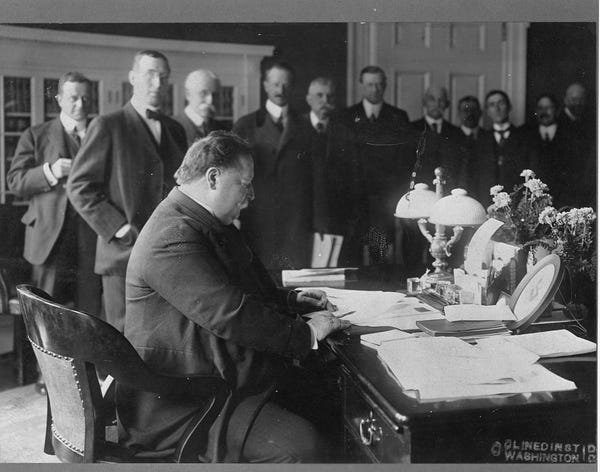
The first iteration of the Oval Office was built under President William Howard Taft in 1909 as part of an expansion of the West Wing.
President William Howard Taft in the Oval Office. B.M. Clinedinst/Library of Congress/Corbis/VCG via Getty Images
Inspired by the White House’s oval-shaped Blue Room, the president’s formal workspace was designed by architect Nathan C. Wyeth.
Taft’s Oval Office featured an olive-green color scheme.
President Franklin D. Roosevelt redesigned and moved the Oval Office as part of another West Wing expansion in 1934.
President Franklin D. Roosevelt in the Oval Office. History Archive/Universal Images Group via Getty Images
The Oval Office was moved to the southeast corner of the White House.
Roosevelt kept a variety of items on his desk, including photos of his sons, ceramic animal figurines, and an appointments easel with his daily schedule, according to the Franklin D. Roosevelt Presidential Library and Museum.
President Harry Truman’s Oval Office was the first to feature a rug with the presidential seal.
President Harry Truman with staff in the Oval Office. FPG/Archive Photos/Getty Images
Truman decorated the Oval Office with the turquoise rug and matching curtains. The walls were painted a lighter seafoam green.
President John F. Kennedy was the first president to use the Resolute Desk in the Oval Office.
The Resolute Desk in the Oval Office. Cecil W. Stoughton/White House Photo
The Resolute Desk, made of wood from the British ship H.M.S. Resolute, was gifted to President Rutherford B. Hayes by Queen Victoria in 1880. Previous presidents kept the desk in the second-floor office of the White House Residence and the Broadcast Room, according to the White House Historical Association.
President Lyndon Johnson replaced the Resolute Desk with his own desk, which he’d used as a US senator and vice president.
President Lyndon Johnson in the Oval Office. Corbis via Getty Images
He also redecorated the Oval Office with white drapes with red trim, evoking the American flag.
President Richard Nixon chose bold hues of blue and yellow to decorate the Oval Office.
President Richard Nixon’s Oval Office. Bettmann Archive/Getty Images
Nixon’s Oval Office rug, in the same blue color as the American flag, was designed by first lady Pat Nixon.
President Gerald Ford changed the color scheme of the upholstery to burnt orange and khaki.
President Gerald Ford in the Oval Office. Historical/Corbis via Getty Images
Ford’s decor included the wheel from the SS Mayaguez, an American container ship that was seized by Cambodian forces in 1975 and rescued at Ford’s direction.
Ford also added a mahogany Seymour tall case clock in 1975.
The Oval Office in 1975. Bettmann Archive/Getty Images
The clock, built between 1795 and 1805, has remained in the Oval Office under every subsequent president since 1975.
President Jimmy Carter brought the Resolute Desk back to the Oval Office.
President Jimmy Carter in the White House’s Oval Office. Corbis via Getty Images
Otherwise, he left most of Ford’s decor.
President Ronald Reagan redecorated the Oval Office during his second term with a rug designed by first lady Nancy Reagan.
Ronald Reagan in the Oval Office. HUM Images/HUM Images/Universal Images Group via Getty Images
The rug featured the presidential seal in the center with sunbeams emerging from the middle, surrounded by a border of olive branches.
President George H.W. Bush redid the Oval Office in shades of blue and gold and brought in the C&O desk that he used as vice president.
President George H.W. Bush’s Oval Office. Susan Biddle/White House via CNP/Getty Images
The Resolute Desk was moved to the Residence Office.
President Bill Clinton chose Arkansas-based interior designer Kaki Hockersmith to give the Oval Office a new look.
President Bill Clinton’s Oval Office. BILL O’LEARY/The Washington Post via Getty Images
Hockersmith designed the yellow curtains and the blue rug with the presidential seal. Clinton also chose to bring the Resolute Desk back to the Oval Office.
First lady Laura Bush designed a new rug for President George W. Bush’s Oval Office.
President George W. Bush in the Oval Office. Greg Mathieson/Mai/Getty Images
The rug featured a sunbeam design with the presidential seal at its center, reminiscent of Reagan’s rug, and a lone star in a nod to Bush’s home state of Texas.
President Barack Obama added striped wallpaper and a new rug with a quote from Martin Luther King Jr.
President Barack Obama in the Oval Office. HUM Images/Universal Images Group via Getty Images
The quote on the border of the rug read, “The arc of the moral universe is long, but it bends toward justice.”
During his first term, President Donald Trump reinstalled Reagan’s rug and added a portrait of President Andrew Jackson.
President Donald Trump in the Oval Office during his first term. Official White House Photo by Joyce N. Boghosian
He also brought back Clinton’s gold curtains and chose a new off-white wallpaper.
President Joe Biden brought back Clinton’s Oval Office rug and added new portraits.
President Joe Biden’s Oval Office. Bill O’Leary/The Washington Post via Getty Images
Biden hung portraits of Franklin D. Roosevelt, Thomas Jefferson, and Alexander Hamilton.
In his second non-consecutive term, Trump has made significant changes to the Oval Office, adding numerous gold embellishments.
President Donald Trump in the Oval Office. Demetrius Freeman/The Washington Post via Getty Images
Many of the gold decor pieces in Trump’s Oval Office came from the White House collection, but Trump also imported some statuettes from his Mar-a-Lago estate in Palm Beach, Florida.
Trump also added flags representing different branches of the US military and additional presidential portraits, with President George Washington in the prominent center spot above the fireplace mantle.
This story is available exclusively to Business Insider
subscribers. Become an Insider
and start reading now. Have an account? .
President Donald Trump announced new “Trump-class” ships for the US Navy Golden Fleet.
Trump said up to 25 ships will be built, with construction starting immediately.
The first of these ships is the USS Defiant.
President Donald Trump on Monday shared details about new additions to what he’s calling the US Navy’s “Golden Fleet.”
Two “Trump-class” ships, which the president described as “battleships,” were announced Monday afternoon at a press conference alongside Pentagon chief Pete Hegseth, Navy Secretary John Phelan, and Secretary of State Marco Rubio.
Trump said they would be “AI-controlled” and have “lasers,” and he said that the design would be led by the US Navy with his aesthetic input.
The first of these ships will be called the USS Defiant, Phelan said. Posters of the warship were on display at the press conference held at Trump’s Mar-a-Lago Club in Palm Beach, Florida.
“We’re desperately in need of ships, and I have approved a plan for the Navy to begin construction of two large battleships,” he said. “We used to build the Iowa, the Missouri, the Alabama. These will be 100 times the force and power. Each one of these will be the largest battleships built in the history of our country.”
The president said that eventually “20 to 25” of the “Trump-class” ships will be made, and construction will start “immediately.”
The ships will be triple the size of an Arleigh Burke-class destroyer, according to the US Navy, and they will be capable of launching Conventional Prompt Strike hypersonic missiles and the Surface Launch Cruise Missile-Nuclear.
This story is available exclusively to Business Insider
subscribers. Become an Insider
and start reading now. Have an account? .
Homeland Security Secretary Kristi Noem said the Trump administration would pause the diversity visa lottery.
In an X post, she said the suspect in the Brown and MIT shootings had entered through the program.
The green card lottery program issues about 55,000 visas a year.
Kristi Noem, the Secretary of Homeland Security, says the Trump administration would pause the diversity visa lottery program in the wake of the Brown University and MIT shootings.
In an X post on Thursday, Noem said that the man wanted in connection to the Brown University shooting had entered the US in 2017 through the program, commonly known as the green card lottery.
The Brown University shooter, Claudio Manuel Neves Valente entered the United States through the diversity lottery immigrant visa program (DV1) in 2017 and was granted a green card. This heinous individual should never have been allowed in our country.
She added that President Donald Trump had long opposed the lottery.
“At President Trump’s direction, I am immediately directing USCIS to pause the DV1 program to ensure no more Americans are harmed by this disastrous program,” she wrote.
The diversity visa entry program offers 55,000 visas a year to people from countries with low rates of immigration to the US. It’s a multi-step process that includes an interview and medical examination.
Valente, a Portuguese national and former Brown University student, was found dead from a self-inflicted gunshot wound in a New Hampshire storage facility, officials said in a press conference on Thursday.
In addition to killing two and wounding several others in the Brown University shooting, officials said they also believed he is connected to the killing of a Massachusetts Institute of Technology professor earlier this week.