Judge-halts-Trumps-90000-square-foot-White-House-ballroom-construction.jpeg

Judge halts Trump’s 90,000-square-foot White House ballroom construction

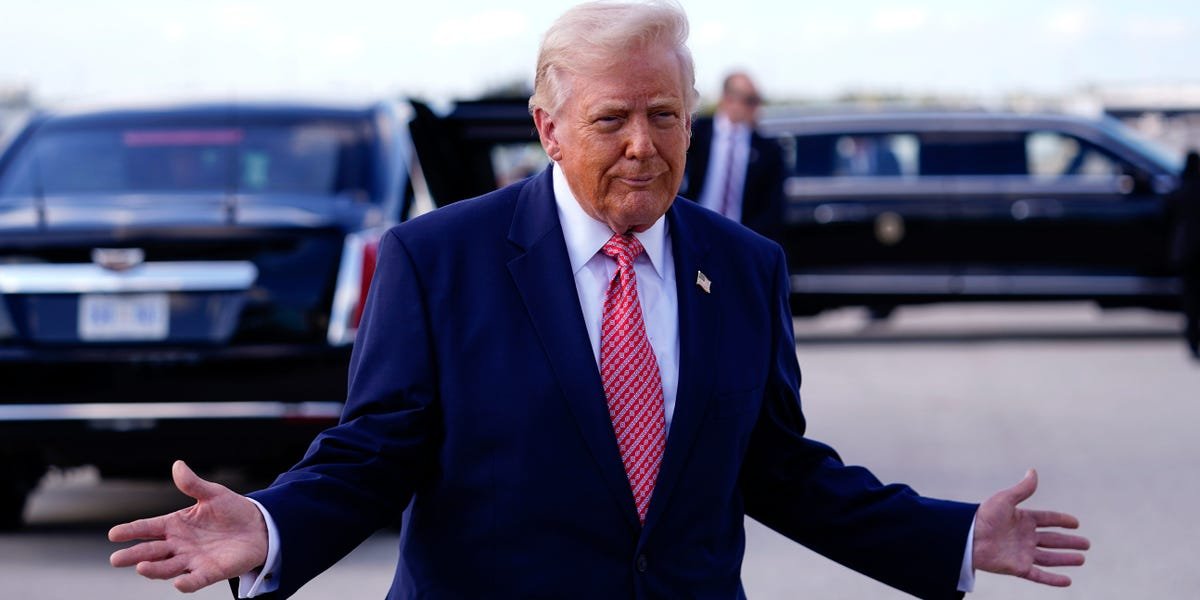
A federal judge on Tuesday ordered President Donald Trump to stop construction on a new White House ballroom, citing a lack of congressional approval.

“Unless and until Congress blesses this project through statutory authorization, construction has to stop!” US District Judge Richard Leon of the District of Columbia ruled on Tuesday.

The ruling gives the White House 14 days to comply with the order, allowing them time to ask a higher court to pause it while they appeal.

The Trump administration didn’t immediately return a request for comment, but filed a notice preserving its right to appeal. Trump on Truth Social blasted the organization that sued him, saying the ballroom project “is under budget, ahead of schedule, being built at no cost to the Taxpayer, and will be the finest Building of its kind anywhere in the World.”

The White House in July announced plans to build a new ballroom to host guests of the roughly 230-year-old building. The new 90,000-square-foot ballroom would be “ornately designed” and able to seat “650 people” — up from 200, the press release said.

The construction would cost an estimated $400 million. A list of donors to the project provided to Business Insider by the White House included large tech companies, including Apple, Amazon, and Meta.

Preservationist group The National Trust for Historic Preservation of the United States sought to block construction, arguing that the renovations would disrupt the building’s historic character and that the White House lacked the legal authority to carry them out.

“The President of the United States is the steward of the White House for future generations of First Families. He is not, however, the owner!”, the judge said.

“But here is the good news,” the judge added. “It is not too late for Congress to authorize the continued construction of the ballroom project.”


Source link

Jamie-Dimon-on-Trumps-debanking-lawsuit-Id-be-angry-too.jpeg

Jamie Dimon on Trump’s debanking lawsuit: ‘I’d be angry, too’, but it has no merit

  • JPMorgan CEO Jamie Dimon said he understood why the president was angry over debanking.
  • Trump alleged in a $5 billion lawsuit that JPMorgan shut down his accounts for political reasons.
  • Dimon said the suit “has no merit,” and that banks sometimes can’t share why they shut down accounts.

JPMorgan CEO Jamie Dimon said he can see why President Donald Trump is upset about having had his bank accounts closed years ago, an issue at the crux of the president’s $5 billion lawsuit against the bank and Dimon himself.

“I agree with them. They have the right to be angry. I’d be angry, too,” Dimon said when asked about the suit during a CNBC interview. “Why is a bank allowed to do that? But they’re forced to do it.”

Dimon reiterated that the suit, filed in Miami-Dade County court in January, “has no merit.” In it, Trump alleged that JPMorgan shut down his accounts for political reasons in the wake of the January 6 riot at the Capitol. JPMorgan confirmed in a court filing last month that it closed accounts linked to Trump and some of his businesses, including hotels and housing developments, in February 2021.

“We don’t do it, generally, for political, religious reasons, for other reasons, and sometimes we can’t even tell those people,” Dimon said on Monday. Sometimes, banks have to shutter them because customers aren’t providing the necessary information about the source and use of their funds, and because the accounts cause general “legal and regulatory risk,” he added.

Dimon predicted that the case could wind through the courts for years.

Trump has railed against banks allegedly denying conservatives services and signed an executive order in August aimed at eliminating “politicized” debanking. In the suit against JPMorgan, Trump claimed the bank closed his accounts because of “woke” beliefs and put him on a “blacklist” available to other banks.


Source link

Ayelet Sheffey

Trump’s attempt to quickly axe a key affordable student-loan repayment plan gets shut down in court

Student-loan borrowers might not lose a key affordable repayment plan just yet.

On Friday, a court dismissed a proposed settlement announced by the Department of Education and the state of Missouri in December that would have eliminated the SAVE income-driven repayment plan ahead of schedule.

President Donald Trump’s “big beautiful” spending legislation called for phasing out SAVE by 2028. This latest update means that the department has to stick with that timeline, and it cannot eliminate the plan before 2028 without court approval or a lengthy negotiated rulemaking process.

John Ross, Missouri’s district court judge, wrote in his ruling that the settlement was not presented to the court, and that federal law allows courts to “exercise jurisdiction only over cases or controversies,” which he said does not exist in this case because both the Department of Education and Missouri have agreed on the outcome they’re seeking without debate.

“It appears that there is no longer a live case or controversy sufficient to authorize the Court to enter a judgment on the merits,” Ross wrote.

The SAVE plan was created by former President Joe Biden in 2023, and it intended to give borrowers cheaper monthly payments with a shorter timeline to loan forgiveness. The plan has been halted since 2024 due to lawsuits seeking to block it, and while Trump’s “big beautiful” spending legislation included a provision to eliminate SAVE over the next few years, the settlement would have done so much sooner than anticipated.

Ross also wrote in a footnote that it’s “not lost on the Court that millions of borrowers who enrolled in the SAVE plan have patiently awaited clarity while this litigation has proceeded. However, that clarity must come from the Department of Education, and not from this Court, which is no longer empowered to weigh the merits of a case that is now moot.”

Winston Berkman-Breen, legal director at advocacy group Protect Borrowers, said in a statement that the court’s ruling means the department can now move forward with relief under the SAVE plan.

“As of today, not only is there no legal barrier to delivering those rights through the SAVE plan, but the Secretary has a legal obligation to do so,” Berkman-Breen said. “The U.S. Department of Education must immediately identify borrowers who are eligible to have their loans cancelled under SAVE and instruct their student loan servicers to cancel those loans.”

A Department of Education spokesperson told Business Insider that the department is evaluating the court’s decision.

The department said in December that, should the settlement be approved, it would not enroll any new borrowers in the SAVE plan, it would deny pending applications, and move the 7 million enrolled borrowers to other repayment plans. Those borrowers would have a limited time to prepare to make their payments.

Have a story to share? Contact this reporter at asheffey@businessinsider.com.


Source link

I-went-to-Trumps-State-of-the-Union-This-was.jpeg

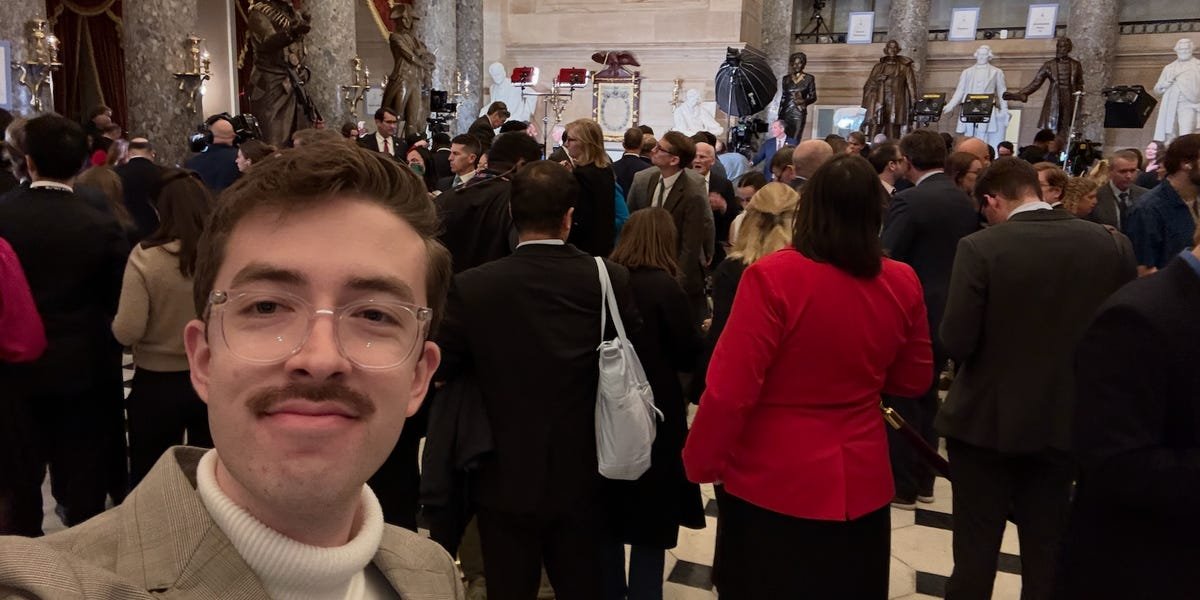
I went to Trump’s State of the Union. This was the moment when the room’s mood shifted.

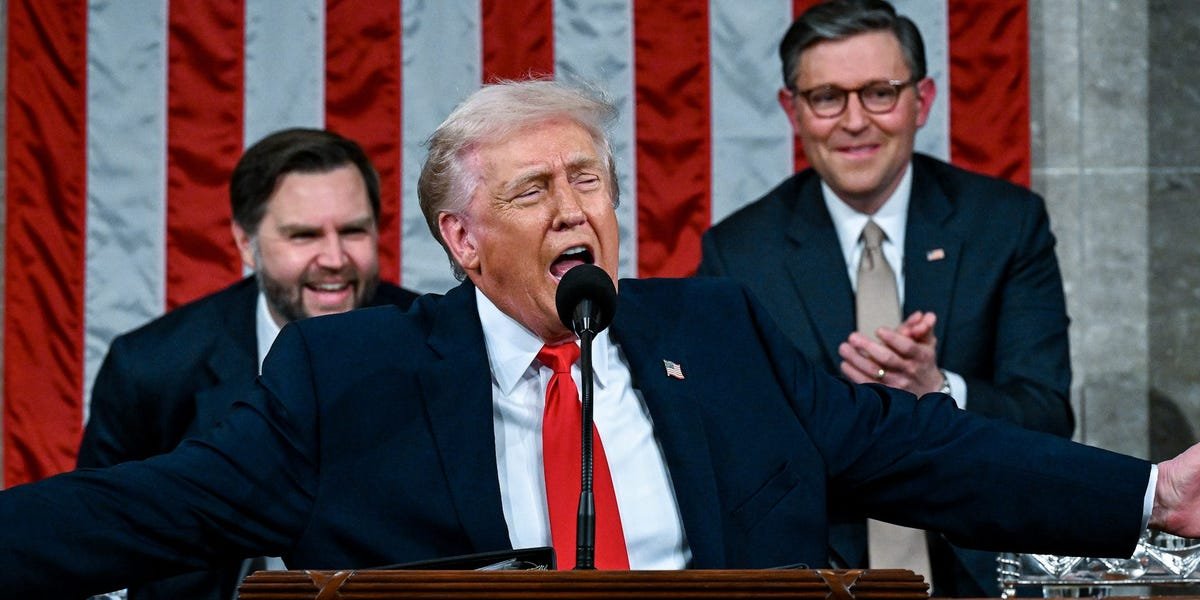
In the House, the chamber is evenly divided between the Republican side and the Democratic side. But you wouldn’t know it from Tuesday night’s speech.

There were noticeably fewer Democrats on hand, with several seats appearing to be empty on their side of the aisle. Several Republicans, apparently taking advantage of the open space, even sat on the Democratic side.

Many of the Democratic women who did attend could be seen wearing white, a color associated with the suffragette movement.

Ahead of the speech, House Minority Leader Hakeem Jeffries encouraged Democrats to either boycott the speech or sit in silent protest, an apparent effort to avoid the disruptions that marked last year’s speech.

Rep. Becca Balint of Vermont was among dozens of Democrats who opted to attend the “People’s State of the Union” — a rally sponsored by the liberal groups MeidasTouch and MoveOn that was held on the National Mall — instead of the speech.

“I want to be surrounded by positive people who are really thinking about how to bring this country together,” Balint told me. “I cannot normalize this anymore. I just can’t.”

One Democrat who chose to attend, Rep. Gabe Vasquez of New Mexico, told me before the speech that he believes it’s “important for me to be there to see what the president has to say.”

“People can choose to do what they want, but I feel like it’s part of my job to show up,” Vasquez said.


Source link

Lucia Moses

Who is Susan Rice, the former national security advisor in Trump’s crosshairs?

President Donald Trump has demanded that Netflix remove former US ambassador and national security advisor Susan Rice from its board, stepping up his criticism of the streaming giant as it seeks to merge with Warner Bros. Discovery amid antitrust scrutiny.

Rice, who served in senior roles in the Obama and Biden administrations, recently warned companies against aligning with Trump. Speaking on the “Stay Tuned with Preet Bharara” podcast published Thursday, she said corporations that “take a knee” to the president and skirt the law should expect consequences, predicting an “accountability agenda” if Democrats take back power.

“There is likely to be a swing in the other direction,” and these companies are “going to be caught with more than their pants down,” Rice said.” They’re going to be held accountable by those who come in opposition to Trump and win at the ballot box.”

Rice, a Democrat, has a long career in US foreign and domestic policy, working under Democratic presidents.

She served in the Clinton administration from 1993 to 2001, including roles at the National Security Council and as assistant Secretary of State for African Affairs.

Under Obama, Rice served as US ambassador to the UN, becoming the second-youngest person at 44 and the first Black woman to represent the US at the UN. She later served as head of the Domestic Policy Council under Biden.

She was born in Washington, D.C., and graduated from Stanford with a degree in history. She worked in management consulting for McKinsey and Company before entering government.

Rice has previously faced criticism from the right. In her 2019 memoir, “Tough Love: My Story of the Things Worth Fighting For,” she wrote that she was a frequent “villain” for conservative media.

After the 2012 killing of four Americans in Benghazi, Libya, Republicans accused her of misleading the public in interviews discussing the attacks. She was later cleared by subsequent investigations.

She also faced scrutiny by Trump and his allies for “unmasking” senior Trump officials to understand why the crown prince of the United Arab Emirates was in New York in 2016.

Unmasking is when senior government officials ask to learn the identity of a US citizen whose name has been withheld in intelligence reports about communications, such as intercepted calls. In some situations, national security officials argue that knowing the person’s identity is necessary to interpret and assess the intelligence information.

As UN Ambassador, Rice supported US intervention against Muammar Gaddafi.

Rice has written op-eds supportive of the Biden administration and accusing Trump of undermining democracy. In a 2025 column in The New York Times, Rice accused members of Trump’s national security team of “reckless negligence” after they discussed sensitive national security matters on Signal.

Disclosure: Mathias Döpfner, the CEO of Business Insider’s parent company, is a Netflix board member.


Source link

Kavanaugh-in-dissent-Bad-policy-or-not-Trumps-tariffs-were.jpeg

Kavanaugh in dissent: Bad policy or not, Trump’s tariffs were ‘clearly lawful’

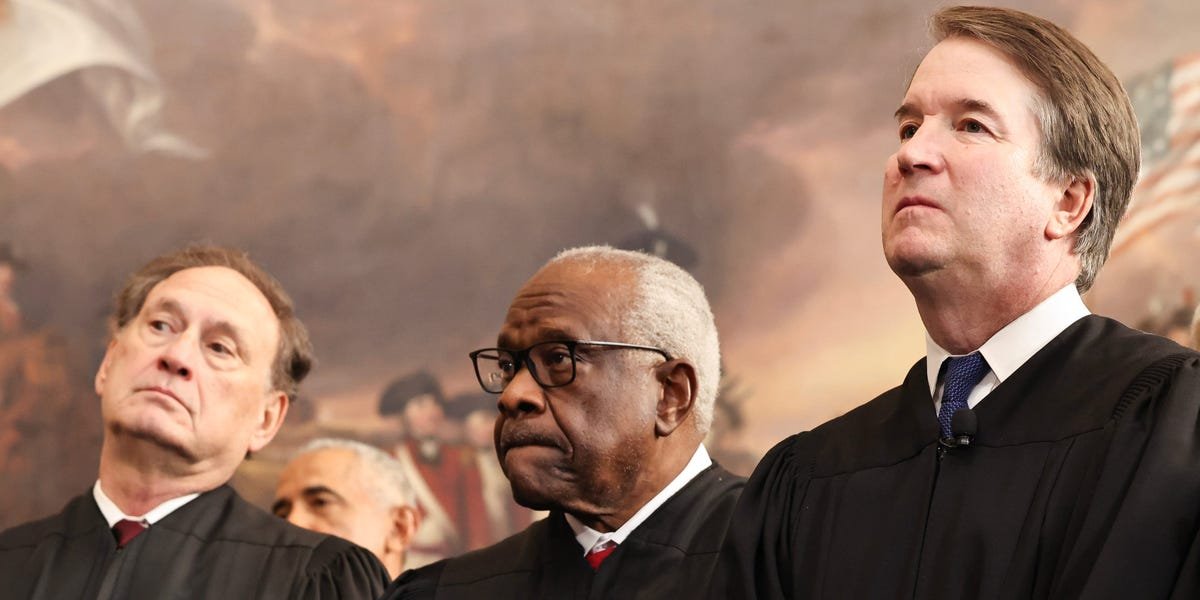
Three conservative justices of the US Supreme Court — Brett Kavanaugh, Clarence Thomas, and Samuel Alito — broke with the majority Friday, arguing that President Donald Trump had clear authority to impose his sweeping tariff policy.

The three dissenting justices said the president’s tariffs were perfectly legal under the 1970-era law Trump used that says presidents can “regulate” importation in the case of emergencies.

“The tariffs at issue here may or may not be wise policy,” Kavanaugh wrote. “But as a matter of text, history, and precedent, they are clearly lawful.”

The three justices also noted that the majority 6-3 decision is silent on how to return billions of dollars in tariffs that have already been collected.

That process “is likely to be a ‘mess,'” as was acknowledged at oral arguments, Kavanaugh wrote in a lengthy dissent that Thomas and Alito joined.

The two dissents differed with the majority on two fronts: Trump’s bypassing of Congress in imposing tariffs, and the legality of the president’s invocation of the International Emergency Economic Powers Act, or IEEPA.

In the dissent written by Kavanaugh, the justices argued that presidents have “commonly” imposed tariffs to regulate imports throughout American history.

Interpreting IEEPA to exclude tariffs “creates nonsensical textual and practical anomalies,” Kavanaugh wrote. As with quotas and embargoes, tariffs are a “traditional and common tool to regulate importation,” he said.

“It does not make much sense to think that IEEPA allows the President in a declared national emergency to, for example, shut off all or most imports from China, but not to impose even a $1 tariff on imports from China,” Kavanaugh wrote.

Reversing the tariffs may be an exercise in futility, Kavanaugh added. Even without IEPPA, “numerous other federal statutes authorize the president to impose tariffs and might justify most (if not all) of the tariffs at issue in this case,” Kavanaugh wrote.

In a separate dissent, Thomas tackled the constitutional question, arguing that the Constitution allows Congress to delegate tariff authority to the president.

“Historical practice and precedent confirm that Congress can delegate the power to impose duties on imports,” he said.


Source link