Supreme-Court-strikes-down-swath-of-Trumps-tariffs-—-but.jpeg

Supreme Court strikes down swath of Trump’s tariffs — but he has other options

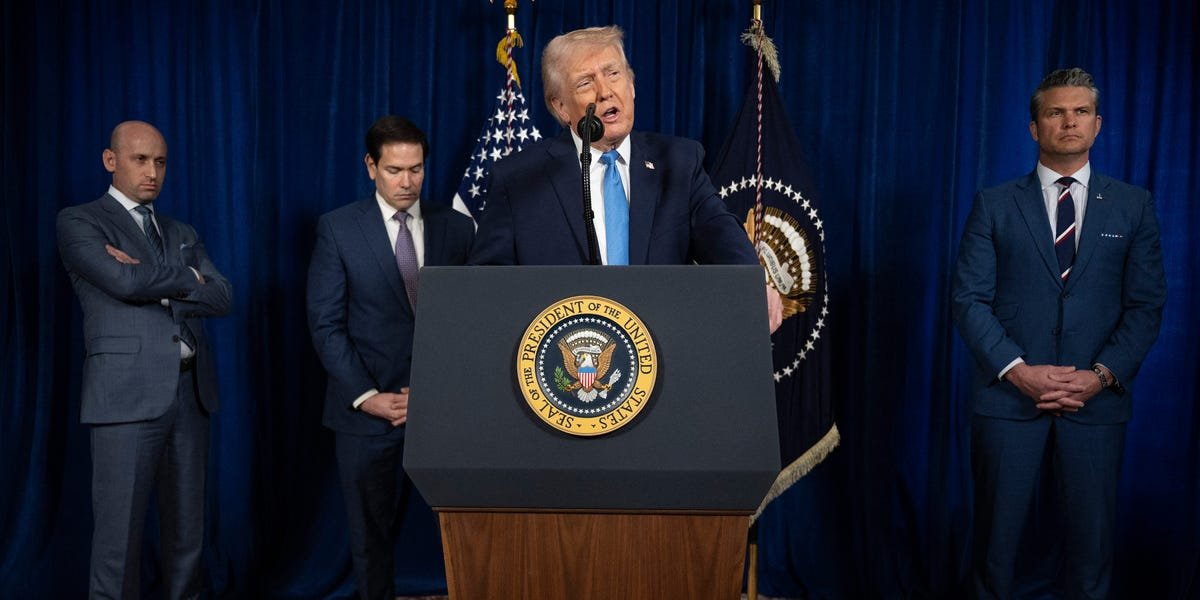
The Supreme court struck down a chunk of President Donald Trump’s sweeping tariff policy on Friday, finding a new limit to the expansive presidential powers he has sought.

The 6-3 decision centered on the tariffs Trump justified under the International Emergency Economic Powers Act, a national security law that allows the president to regulate economic activity during emergencies.

Those IEEPA-justified tariffs have been one of Trump’s most powerful weapons in his efforts to renegotiate trade agreements around the globe. They include Trump’s so-called “Liberation Day” tariffs, announced in April, which are at least 10% on nearly every country in the world.

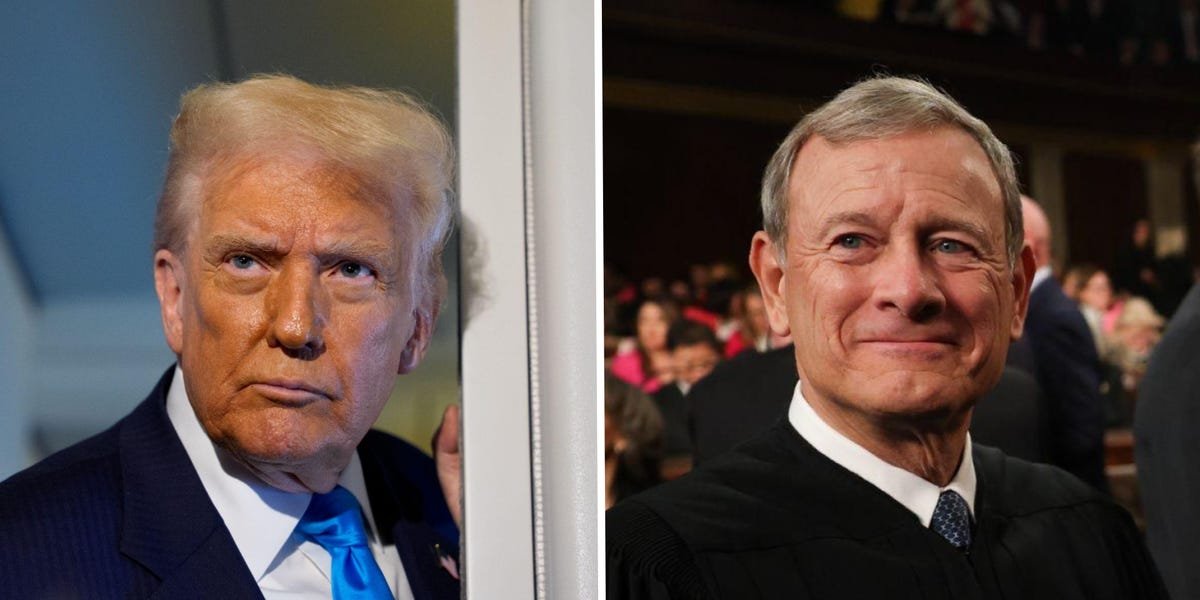
The Trump administration’s use of the law went too far, wrote Chief Justice John Roberts in the majority opinion. Trump would need a distinct law from Congress “to justify his extraordinary assertion of the power to impose tariffs,” he wrote.

“What common sense suggests, congressional practice confirms,” he wrote. “When Congress has delegated its tariff powers, it has done so in explicit terms, and subject to strict limits.”

The Supreme Court’s decision comes as the United States trade deficit is shrinking, largely due to the Trump administration’s tariffs, which are taxes on imported goods. It shrank to $29.4 billion in October, the lowest figure since 2009, according to recently published Commerce Department data.

Two groups of businesses filed lawsuits challenging Trump’s authority to impose tariffs through IEEPA. The Supreme Court combined their cases and put it on the fast track, holding oral arguments at the beginning of its November term.

IEEPA, a Carter-era law, gives presidents the power to “regulate” importation in times of emergency. The Trump administration claimed that it included the ability to impose tariffs — a position no other president has taken.

Lawyers representing the businesses argued that Congress has been clear about taxation and tariff powers in other laws, and would have been clear if IEEPA were meant to confer those powers to the president.

During oral arguments, most judges expressed skepticism about the Trump administration’s arguments. Justice Neil Gorsuch, whom Trump appointed to the bench in his first term, said taxes were “part of the spark of the American Revolution” and should get careful treatment.

“The power to reach into the pockets of the American people is just different,” Gorsuch said. “And it’s been different since the founding.”

The Supreme Court’s ruling does not affect the tariffs that Trump has imposed using other laws, and Trump still has the power to issue additional tariffs using those laws.

But his administration has favored IEEPA because of its perceived flexibility. The other laws that allow presidents to impose tariffs without explicit Congressional approval have limits — including built-in expiration dates and caps on the amount taxed. They also make it more difficult to target particular countries, rather than certain industries.

This is a breaking story. Please check back for updates.


Source link

Take-a-look-inside-The-Beast-Trumps-15-million-bulletproof.jpeg

Take a look inside ‘The Beast,’ Trump’s $1.5 million bulletproof presidential limousine

Updated

  • US presidents are driven in a heavily armored limousine nicknamed “The Beast.” 
  • It features a secure communications system and a fridge stocked with the president’s blood type.
  • Military cargo aircraft transport the presidential limousine for use abroad.

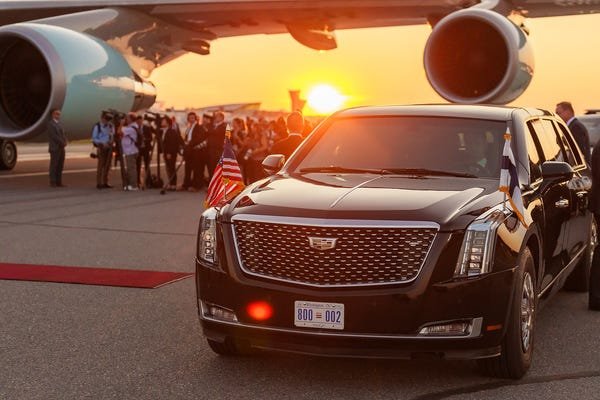
When US presidents aren’t flying on Air Force One or taking helicopter trips in Marine One, they’re driven around in a presidential limousine nicknamed “The Beast.”

Weighing 20,000 pounds and outfitted with advanced security and communications systems, the newest model of “The Beast” debuted during the first Trump administration in 2018. It reportedly cost around $1.5 million to build.

The vehicle made headlines in August when Russian President Vladimir Putin rode in the limousine alongside President Donald Trump as the two met in Alaska to discuss the war in Ukraine.

Take a look inside the famous vehicle.

US presidents travel in a secure limousine nicknamed “The Beast.”

“The Beast” waited on the tarmac as President Joe Biden disembarked Air Force One in Helsinki.

Official White House Photo by Adam Schultz

US presidents rode Lincoln limousines for most of the 20th century until the 1980s, when the Reagan administration switched to Cadillacs.

The latest model of the presidential limousine was commissioned by the US Secret Service in 2014 and used for the first time in 2018 by President Donald Trump.

Designed to look like a longer version of a Cadillac XT6, the chassis of the car is actually that of a Chevrolet Kodiak truck produced by General Motors, NBC News reported. The vehicle weighs around 20,000 pounds and cost around $1.5 million to build.

The heavily armored vehicle is bulletproof, blast-resistant, and sealed to withstand biochemical attacks.


The Beast presidential limo

Members of the Secret Service outside the presidential limousine.

SAUL LOEB/AFP via Getty Images

While details about the limousine’s security measures remain classified, NBC News reported that the vehicle features a night-vision system, tear gas firing capabilities, and door handles that can be electrified to prevent intruders.

The windows are believed to be 3 inches thick, and the vehicle’s armor is around 8 inches thick.

“The Beast” is also equipped with medical supplies, including a refrigerator stocked with the president’s blood type.


Donald Trump and UK Prime Minister Keir Starmer in The Beast.

Donald Trump and UK Prime Minister Keir Starmer in the US presidential motorcade.

Official White House Photo by Daniel Torok

The limousine’s secure communications system can dispatch the launch codes for nuclear weapons.

The presidential seal appears throughout the design of the car.


The presidential seal is seen inside the door of US President Joe Biden's limousine

The presidential seal inside the door of “The Beast.”

ANDREW CABALLERO-REYNOLDS/AFP via Getty Images)

The seal, featuring an eagle holding an olive branch and 13 arrows in its talons below a banner reading “E Pluribus Unum” (“Out of many, one”), appears on both the interior and exterior of the passenger door.

The limousine can seat up to seven people.


Joe Biden and Jill Biden in The Beast

President Joe Biden and first lady Jill Biden waved as they rode in the presidential limousine.

Official White House Photo by Adam Schultz

The interior features water bottle holders and plush leather seats. Previous presidential limousines have also included a fold-out desk, according to the US Secret Service.

“The Beast” travels with the president.


The President's limousines are loaded aboard a US Air Force C-17 in preparation for a trip.

The president’s limousines as they are loaded aboard a US Air Force C-17.

US Secret Service

Presidential limousines are transported by military cargo aircraft, such as US Air Force C-17s, for use during the president’s travels, according to the US Secret Service.

When abroad, the presidential limousine flies the American flag and the flag of the host country.


The Beast presidential car in 2021

The US presidential state car, nicknamed “The Beast,” at Windsor Castle in the UK.

Pool/Max Mumby/Getty Images

When Biden visited the UK in June 2021, the presidential limousine flew both the American flag and the Union flag.

On Inauguration Day, Secret Service agents change the car’s license plates as a new president takes power.


Secret Service agents change license plates on the presidential limousine

Secret Service agents changed the license plates on Inauguration Day.

Alex Brandon/AP

Some presidents have used the Washington, DC, “End Taxation Without Representation” license plates, while others have removed the slogan.

On President Donald Trump’s second Inauguration Day, Secret Service agents gave “The Beast” a good shine.


A Secret Service agent shines the presidential limousine.

A Secret Service agent cleaned the presidential limousine.

Andrew Harnik/Getty Images

Biden and Trump rode to the 2025 inauguration ceremony together in the presidential limousine.

Russian President Vladimir Putin rode in “The Beast” with Trump in August.


President Donald Trump enters The Beast

Trump and Putin entered The Beast after they arrived for a meeting in Alaska.

Andrew Harnik/Getty Images

Ahead of a meeting on August 15, 2025, to discuss the war in Ukraine, Trump and Putin unexpectedly rode in the car together. The ride lasted fewer than 10 minutes and offered the leaders the opportunity to talk privately. Putin was seen smiling from within the vehicle.

Accompanied by the presidential motorcade, “The Beast” remains an instantly recognizable symbol of the power of the presidency.


The Beast.

The presidential limousine.

Andrew Harnik/Getty Images

“It is safe to say that this car’s security and coded communications systems make it the most technologically advanced protection vehicle in the world,” the assistant director for the US Secret Service’s Office of Protective Operations said in a statement on the organization’s official website.


Source link

Lauren Edmonds Profile Photo

Trump’s former chief economic advisor says workers are ‘suffering’ in America’s K-shaped economy

President Donald Trump has boasted about strengthening the US economy since returning to the Oval Office. Meanwhile, millions of Americans say they’re struggling to afford food, rent, and other basic necessities.

Gary Cohn, Trump’s former chief economic advisor, said both these realities are true right now in America.

“If you look at gross domestic product, which is the overall output of the US economy, we’re trending about 5% right now, which is a very high growth rate in the United States,” Cohn said on CBS’ “Face the Nation” on Sunday.

Cohn, who is now IBM’s vice chairman, also cited promising trends in inflation and unemployment rates.

However, those numbers don’t give the whole picture.

“That said, we’ve got an interesting economy,” Cohn said. “We have a massive wealth effect at the top end, and we have got hardworking Americans having a very difficult time paying their bills, and they are suffering in this economy.”

That’s why, Cohn said, the Trump administration is making affordability a key issue going forward.

“The White House is going on the offensive. The president is going to spend time out on the road talking about affordability,” Cohn said. “Affordability will be the issue between now and the mid-term elections.”

The widening gap between wealthy and lower-income Americans is often described as a “K-shaped economy.” That’s when people at the top see profound economic growth, while those at the bottom, who are more sensitive to economic shifts, face financial stress. Some economists have cautioned that a K-shaped economy portends bad days ahead.

“A silent majority of consumers is increasingly strained by a two-year affordability crisis and elevated borrowing costs,” Gregory Daco, a chief economist at EY, said in a recent LinkedIn post. “Slower income growth is pushing many upper-median, median, and lower-income families to draw down savings and rely more heavily on credit to sustain their habits.”

The chief economist of RSM, Joe Brusuelas, said in a recent briefing that the US would need to undergo policy shifts to reshape the economy, but that likely won’t happen in 2026.

“When I take a look at the policy landscape, it’s all tilted toward the upper spur of the K,” he said. “So I’m expecting a further widening of that fundamental inequality in coming years.”


Source link

12-details-you-might-have-missed-in-Melania-Trumps-documentary.jpeg

12 details you might have missed in Melania Trump’s documentary

  • Melania Trump’s documentary, “Melania: Twenty Days to History,” premiered in theaters on January 30.
  • It follows Melania Trump in the 20 days leading up to the 2025 inauguration.
  • The “very private” first lady was deeply involved in the film’s creation, producer Marc Beckman told Business Insider.

First lady Melania Trump is no stranger to cameras, but this time, she’s the one calling the shots.

Her new documentary, “Melania: Twenty Days to History,” provides a glimpse into her life and work during the 20 days leading up to President Donald Trump’s 2025 inauguration.

It was released in theaters on Friday. After its theatrical run, “Melania” will stream on Amazon, which paid $40 million for the film and a forthcoming docuseries set for release this summer.

The first lady served as both its star and producer.

“She’s a very private and very selective person as to who she speaks to and what she does,” Marc Beckman, Melania Trump’s senior advisor and a producer of the film, told Business Insider. “We thought that this would be the appropriate opportunity to share a little bit more, to open the lens a little bit more into her family life, her career, and her philanthropy, all as she becomes first lady of the United States of America again.”

Beckman said that the first lady was deeply involved in the film’s creation.

“She participated not just with the creative direction, but in production and post-production,” Beckman said. “She was in the edit room. She was helping with color correction. She was very much involved with music selection — every song was selected by her.”

Critics largely panned “Melania” for not offering major revelations and for lacking journalistic rigor due to Trump’s oversight. Instead, they felt like it largely focused on surface-level moments from her life.

Still, there were some new details we learned about Trump’s life from the documentary, from how she left her mark on her husband’s inaugural address to insight into her favorite musical artists, and there were some surprising cameos.

Melania Trump is a Michael Jackson fan.

Melania Trump listens to Michael Jackson in the car.

PRAKASH SINGH/AFP via Getty Images

The film opens with “Billie Jean” by Michael Jackson playing over aerial footage of Mar-a-Lago. The song reappears later as Melania Trump sings along while riding in the car and names it her favorite Michael Jackson hit.

She described Mar-a-Lago as her “refuge from the outside world, a place where I can exhale.”


Mar-a-Lago.

Mar-a-Lago.

Joe Raedle/Getty Images

“Melania” follows Melania Trump as she divides her time between Trump Tower in New York City, Mar-a-Lago in West Palm Beach, Florida, and Washington, DC.

The Florida estate holds special meaning for the first lady, who remembers it as the place “where Baron took his swim lessons with his grandfather, played golf with his father, and took his first tennis lesson with me.”

At President Jimmy Carter’s funeral, Melania Trump was also mourning the first anniversary of her mother’s death.


Donald and Melania Trump at Jimmy Carter's funeral.

Donald Trump and Melania Trump at Jimmy Carter’s funeral.

Haiyun Jiang/Pool/Getty Images

Carter’s funeral was held on January 9, 2025, one year to the day after the death of Melania Trump’s mother, Amalija Knavs.

“Grief comes in waves when you lose someone who means so much to you. I will be sitting in the Washington Cathedral, paying respect to President Carter, but I know my beloved mother will be on my mind,” she said in the film’s voiceover.

During a dress fitting, designer Herve Pierre revealed a closer look at her inauguration gown, which he constructed with no visible seams.


Donald Trump and Melania Trump at an inaugural ball.

Donald Trump and Melania Trump at an inaugural ball.

Jabin Botsford/The Washington Post via Getty Images

In the film, Pierre said the seams on the dress were entirely hidden beneath the black band zigzagging across it.

“You don’t give the recipe,” he said. “It’s like a mystery.”

First lady Brigitte Macron of France made a surprise cameo in the documentary.


Brigitte Macron and Melania Trump.

Brigitte Macron and Melania Trump in 2019.

REGIS DUVIGNAU/POOL/AFP via Getty Images

The film showed a video call between Macron and Melania Trump, where they spoke about working together on her Fostering the Future and Be Best initiatives focused on children’s well-being.

“My next step and my next goal is to foster relationships and work on it with like-minded leaders and establish a coalition,” Melania Trump said. “And when we do, I hope you will join me.”

“With pleasure. I go everywhere with you,” Macron said.

The film also featured an appearance by Queen Rania of Jordan.


Queen Rania of Jordan with Melania Trump at the White House in 2017.

Queen Rania of Jordan and Melania Trump.

Pool/Getty Images

In the days leading up to her return to the White House, Melania Trump also recruited Queen Rania of Jordan for her coalition during a meeting at Mar-a-Lago.

The film included a meeting with Aviva Siegel, a released Israeli hostage who was held by Hamas.


Aviva Siegel.

Former Hamas hostage Aviva Siegel.

FABRICE COFFRINI/AFP via Getty Images

Aviva Siegel was held for 51 days before being released on November 26, 2023, as part of a temporary ceasefire deal brokered by the Biden administration. In the documentary, Melania Trump comforted Siegel and pledged Donald Trump’s support for releasing the remaining hostages, including Siegel’s husband, Keith Siegel.

“I know that once he’s commander in chief, I know that’s his priority. I’m sure of it,” Melania Trump said.

One of the final title cards of the film reads: “Melania Trump played a key role in securing the release of Keith Siegel after 484 days as a hostage in Gaza, just 12 days after the inauguration.”

The first lady revealed what she was thinking about right before entering the Capitol Rotunda for the inauguration.


Melania Trump at the Capitol Rotunda.

Melania Trump at the Capitol Rotunda on Inauguration Day.

Kenny Holston-Pool/Getty Images

“Walking into the Capitol Rotunda, I felt the weight of history intertwined with my own journey as an immigrant — a reminder of why I respect this nation so deeply,” she said in the film’s narration. “Everyone should do what they can to protect our individual rights. Never take them for granted because in the end, no matter where we come from, we are bound by the same humanity.”

As the first naturalized US citizen to serve as first lady, Melania Trump has previously spoken about her “arduous” pathway to citizenship.

She said she was “relieved” when the inaugural parade was moved indoors to the Capitol One Arena.


Melania Trump at Capital One Arena.

Melania Trump at the Capital One Arena.

Jabin Botsford/The Washington Post via Getty Images

Though the move was due to frigid temperatures in Washington, DC, on Inauguration Day, Melania Trump said she preferred an indoor space for security reasons after her husband survived an assassination attempt in July 2024.

“Being in a more secure and closed space brought a certain peace of mind,” she said.

Melania Trump contributed to Donald Trump’s inaugural address.


Donald Trump delivers his inaugural address.

Donald Trump’s inaugural address.

SHAWN THEW/POOL/AFP via Getty Images

In a scene toward the end of the film, Donald Trump was shown practicing an inauguration speech as Melania Trump watched.

“My proudest legacy will be that of a peacemaker,” he said.

“And unifier,” Melania added.

Her addition made it into the final draft of Donald Trump’s inauguration speech.

The film ends with a behind-the-scenes look at Melania Trump’s official White House portrait shot by photographer Régine Mahaux.


Melania Trump's official White House portrait.

Melania Trump’s official White House portrait.

Régine Mahaux/The White House

Mahaux, who has photographed the Trump family for over 20 years, describes Melania Trump as “very reserved, but deeply intentional.”

“I think what people don’t always see in her is a curiosity that she has for the world,” she told Business Insider. “I think the documentary reflects her sense of duty, her discipline.”

Mahaux also took Melania Trump’s White House portrait during Donald Trump’s first term in 2017.

“The first portrait was about discovering her new duty and her new role, and now this time, the portrait was an affirmation,” Mahaux said. “She really knew what she was. She was really embracing it and ready to get to work.”


Source link

Taylor Rains

Trump’s threat to ‘decertify’ Canadian planes is a safety risk

President Donald Trump’s threat to “decertify” Canadian-made aircraft — the backbone of many US carriers’ regional jet fleet — is a threat to aviation safety, industry watchers said Friday.

The president also doesn’t have the authority to unilaterally declare planes unworthy to fly in the US, Henry Harteveldt, an aviation industry authority and president of Atmosphere Research Group, told Business Insider. That authority belongs to the FAA.

The trade spat — another in a continuing back-and-forth between Trump and Canada — comes after Canada hasn’t fully certified newer US-made Gulfstream jets to fly in its skies. (It has certified older models.) Gulfstream planes are used almost exclusively by private aviation companies, governments, and the ultrawealthy.

Trump said on Thursday night, in a Truth Social post, that he would “decertify” Canada-made Bombardier jets until Canada approved the Gulfstream models. He also threatened a 50% tariff on “any and all” Canadian aircraft sold in the US until the situation was corrected.

Bombardier said in a statement that it’s in contact with the Canadian government. The FAA referred Business Insider to the White House. A White House official said decertification would not immediately affect aircraft already in operation; it would apply only to new deliveries.

That would be a relief for US airlines like American, Delta, and United, whose regional affiliates operate Bombardier CRJ aircraft to cities across the country.


SkyWest crj700.

Regional carrier SkyWest, operating on behalf of the Big 3 and Alaska Airlines, is the largest operator of Canadian-made planes. It has 238, per Cirium.

Fabrizio Gandolfo/SOPA Images/LightRocket via Getty Images


Still, any move to decertify these more than 2,000 passenger airliners and private jets — part of almost 5,550 Canadian-made aircraft and helicopters certified in the US, according to Cirium — could trigger thousands of flight cancellations a day. A 50% tariff would likely raise airline ticket prices.

Aviation analysts said Trump’s threat posed a safety risk in itself.

“Anything that intrudes on the turf of safety regulators coming from politics, trade issues, or personal grievances is a very, very bad idea,” Richard Aboulafia, managing director of the aviation consultancy AeroDynamic Advisory, told Business Insider.

Aboulafia said aircraft certification is intentionally non-political for a reason: Regulators are meant to evaluate risk, not respond to trade threats. Once certification becomes a political weapon, trust in the system erodes for manufacturers, operators, and the flying public, he contended.

Why is the Gulfstream certification delayed in Canada?

In Canada’s case, the delay in certification is likely not obstructionism but the result of independent regulatory decisions.

For the Gulfstream G700 and G800, Canada hasn’t completed its own certification, while the FAA has granted Gulfstream a temporary exemption from certain fuel‑icing rules designed to ensure aircraft engines and systems operate safely in extreme cold.

The FAA waiver means Gulfstream has until the end of this year to meet those requirements — meaning the aircraft is operating under essentially conditional certification in the US, despite being allowed to be delivered.

These waivers are not unusual and are typically granted to allow new aircraft to enter service while completing certain technical tests and paperwork, rather than because the planes are unsafe.

Still, history shows what can sometimes go wrong when thorough certification and safety protocols are deprioritized. The most consequential example was the Boeing 737 Max, which suffered two fatal crashes in 2018 and 2019 due to systemic design issues, killing 346 people.

More recently, in early 2024, a door plug separated on another 737 Max due to quality-control issues at Boeing’s Washington factory, further exacerbating scrutiny of production and certification. No one died in that incident.

Part of the reason the 737 Max issues slipped past regulators is that, for decades, global authorities often relied on reciprocal approvals, effectively rubber-stamping each other’s certifications to speed aircraft to market.

The Max disasters exposed the risks of that approach. Today, regulators — including those in Canada — are expected to conduct their own full assessments rather than automatically rely on approvals from foreign authorities.

The FAA itself is taking extra precautions before certifying the Boeing 737 Max 7 and 10, as both aircraft have technical problems that could lead to engine overheating. Boeing initially asked for a waiver but rescinded it amid the scrutiny.


Source link

Treasury-Secretary-Scott-Bessent-says-Trumps-Greenland-push-is-about.jpeg

Treasury Secretary Scott Bessent says Trump’s Greenland push is about avoiding a ‘hot war’

Treasury Secretary Scott Bessent says President Donald Trump is serious about annexing Greenland.

Trump amped up the rhetoric on Saturday, announcing on Truth Social that the United States would impose new tariffs on Denmark, which controls Greenland, and other European countries unless they hand Greenland over.

Speaking to Kristen Welker on NBC News’ “Meet the Press” on Sunday, Bessent said Trump’s push to take over Greenland was not an empty land grab but a strategy to prevent future conflict.

“The national emergency is avoiding a national emergency,” Bessent said. “It is a strategic decision by the president. This is a geopolitical decision, and he’s able to use the economic might of the US to avoid a hot war, so why wouldn’t we do that?”

Greenland is strategically located in the Arctic, acting as a buffer between North America and Russia. It is also home to minerals important to the manufacturing of future technologies.

Trump has recently said that at least part of his reasoning for wanting to annex Greenland is so it can house his Golden Dome missile defense project.

“The president is trying to avoid a conflict,” Bessent said.

That project remains in early planning stages, however, and Denmark has never said it wouldn’t allow Golden Dome infrastructure on its territory. The United States already has a military base in Greenland.

The spectre that the United States — recently emboldened by its surprise raid on Venezuela that netted its leader, Nicolás Maduro, allowing it to move to open the country’s oil industry — could force Europe’s hand by targeting its economy or even take Greenland by force, has rankled US allies across the Atlantic.

European Union leaders held an emergency meeting on Sunday, during which they called Trump’s tariff threat economic blackmail.

“Tariff threats undermine transatlantic relations and risk a dangerous downward spiral,” the eight EU nations targeted by Trump said in a joint statement released on Sunday.


Source link

Greenlanders-say-Trumps-talk-of-buying-the-island-crossed-a.jpeg

Greenlanders say Trump’s talk of buying the island crossed a line

If Greenlanders weren’t concerned by President Donald Trump’s threats to annex the territory in his first term, many of them are now.

In the days since the United States’ surprise raid into Venezuela, there’s been a renewed focus on Trump’s interest in the island, sparking fear among locals.

“I don’t know what he’s able to do. Most of me is trying to tell myself, ‘Don’t worry, everything’s going to be fine,’ but still I’m worried,” Tupaarnaq Kreutzmann Kleist, a sheep farmer in South Greenland, told Business Insider’s Sarah Andersen on Tuesday.

Casper Frank Møller, CEO and cofounder of Greenland tourist company Raw Arctic, echoed Kleist’s concerns, saying that he and many of his peers are worried about how the situation may affect their finances.


Casper Frank Møller on a boat with mountains in the background.

Casper Frank Møller, CEO and cofounder of Raw Arctic.

Raw Arctic


“We’ve made investments into developing our tourism aspects of our company, and it comes with risk now because of the geopolitical situation and the threats by Trump, so of course, yeah, we’re all really worried,” he told Business Insider on Tuesday.

In a statement to Business Insider on Tuesday, White House press secretary Karoline Leavitt confirmed that Trump and his team are discussing a range of options to pursue Greenland, including “utilizing the US Military.”

A US takeover feels more realistic than ever

Trump’s had his sights set on the Arctic island, a semi-autonomous territory of Denmark, since his first term in office. He has argued that Greenland’s location makes it strategically important, as the melting of Arctic ice opens up new shipping routes and intensifies competition with Russia and China. The island is also rich in critical minerals and already hosts a key US military base, which American officials say is vital to missile defense and Arctic security.

When Trump initially raised the topic of buying Greenland in 2019, Greenlandic influencer and engineer Qupanuk Olsen told Business Insider she and other locals thought it was a joke, and said she still didn’t take it seriously when Trump resurfaced talks in late 2024.


Qupanuk Olsen sitting at table.

Qupanuk Olsen is one of Greenland’s most prominent influencers.

Mark Adam Miller


That changed when Donald Trump Jr. visited Nuuk in January 2025. “That’s when we realized that Trump’s words were no longer just words,” Olsen said in June. “They are real, and he means what he says.” Business Insider wasn’t able to reach Olsen this week for a follow-up.

In the wake of the raid on Venezuela, Møller said on Tuesday that Trump’s threats to annex Greenland feel “much more realistic that it will actually happen” than when he spoke with Business Insider in January 2025.

A country dividing

US interest had at least one positive effect, Olsen said in June: It pushed Greenlanders to think more seriously about their place in the world and the need to speak for themselves.

“It was such a huge wake-up call for everyone in Greenland because suddenly we needed to have an opinion whether we still want to stay under Denmark, whether we should become independent, or whether we should become a state under the United States,” she said. “We certainly had options. So those options were helpful in the beginning for the independence movement.”


Tupaarnaq Kleist in a blue shirt at a kitchen table in her home.

Tupaarnaq Kleist is a sheep farmer in Greenland.

Mark Adam Miller


That mindset may be shifting. Kleist said she’s worried that “we as the local indigenous Greenlandic people are slowly going against each other now,” she told Business Insider on Tuesday. Some want to stand with America, others with Denmark, she said. Ultimately, though, the dream is for Greenland to become its own independent country, she added.

“We want Greenland to be the Greenlanders, and we’re not for sale. We are not to be taken over,” Møller said.

Naaja Nathanielsen, Greenland’s minister of natural resources, business, energy, justice, and gender equality, said in June that she sees much of the American administration’s interest in Greenland as an opportunity for collaboration. But she said the way Trump is going about it is wrong.


Naaja Nathanielsen in black shirt in office setting.

Naaja Nathanielsen is Greenland’s minister of natural resources, business, energy, justice, and gender equality.

Mark Adam Miller


“I think if we take the temperature down a bit and de-escalate the conflict level and the rhetoric, I think we can, in agreement with each other, find many paths forward that are mutually beneficial for both the US and for us,” Nathanielsen said in June. “But we don’t appreciate being talked about as a commodity, as something you can buy or sell or acquire or take. That is, of course, offensive to all people.”

In an email on Tuesday, Nathanielsen told Business Insider that she stands by what she said in June.

“The people of Greenland find the current situation unsettling, and it causes a great deal of anxiety,” she wrote. “We will continuously promote the idea of alliances and partnerships over colonialism. We have had our share of that.”

The debate heats up

Denmark, Trump has argued, is not doing enough to safeguard Greenland. “We need Greenland from the standpoint of national security,” Trump told a group of reporters on Air Force One on Sunday.

The same day, Denmark’s Prime Minister Mette Frederiksen urged the US in a statement to “stop the threats against a historically close ally.” Frederiksen has previously rejected Trump’s suggestions outright, telling him that Greenland is not for sale and that any idea of annexation is “absurd.”

Frederiksen has warned that any US military action against Greenland would severely damage NATO unity, raising questions about whether the alliance could withstand such a conflict between allies.

On Tuesday, major European leaders, including those from France, Germany, the UK, Italy, Spain, Poland, and Denmark, released a joint statement defending Greenland. “Greenland belongs to its people,” the statement said. “It is for Denmark and Greenland, and them only, to decide on matters concerning Denmark and Greenland.”


Source link

Heres-what-the-smartest-people-in-foreign-policy-business-and.jpeg

Here’s what the smartest people in foreign policy, business, and economics are saying about Trump’s raid on Venezuela

President Donald Trump on Saturday announced that the US had conducted a raid on Venezuela, resulting in the capture of Venezuelan President Nicolás Maduro and his wife, and big names in business and foreign policy have been reacting as the aftermath unfolds.

Here’s what they’ve been saying:

Charles Myers

Myers, chairman of political risk consulting firm Signum Global Advisors, told Business Insider that foreign investment in oil, tourism, and construction will be the “centerpiece” of Venezuela’s financial recovery going forward, adding that he expects the country’s economy will grow “faster over the next two years than people anticipate because of the extent or scale of foreign investment.”

Myers, also a former head of investment advisory firm Evercore, is planning a trip of 15-20 investors to visit Venezuela in March to identify investment opportunities. Signum Global Advisors has hosted similar trips for investor groups in Syria and Ukraine.

Ian Bremmer

Bremmer, founder of the political risk research and consulting firm, Eurasia Group, in a post on LinkedIn, wrote that the “US presumption is next Venezuelan leaders will now do what the Americans want because they’ve just seen the ‘or else.'”

Accompanying the post was a photo of a drawing of a horse. The hindquarters of the horse were drawn in intricate detail, and labeled “SOF operation to capture Maduro,” referencing the special operations forces mission that was executed early Saturday. The horse’s head was depicted as a rudimentary children’s drawing, captioned “plans for future of Venezuela.”

“I wouldn’t exactly call it a plan,” Bremmer added.

In a separate post, he wrote: “The law of the jungle is dangerous. What applies to your enemies one day can apply to you the next. Make no mistake where the world is heading here.”

Bill Ackman


Bill Ackman

Bill Ackman has expressed support for many of the Trump administration’s policies, foreign and domestic.

PATRICK T. FALLON/AFP via Getty Images


The billionaire hedge fund manager wrote in a post on X that “The removal of Maduro will lower oil prices, which is good for America and very bad for Russia. A weaker Russian economy will increase the probability that the war in Ukraine ends sooner and on more favorable terms for Ukraine. And Putin will be sleeping in his safe room from this point going forward.”

Henry Gao

Gao is a senior fellow at the Center for International Governance Innovation and a law professor at Singapore Management University. In a series of posts on X, he said the raid on Caracas ushered in “the brave new world of international law.”

“Maduro’s capture has triggered the biggest revival of international law since Grotius — and overnight turned everyone on X into an international law wonk, eager to compare Venezuela to Taiwan,” he wrote.

“But China has never treated the Taiwan issue as a matter of international law,” he continued. “It has always been framed as an internal affair, with Taiwan regarded as a renegade province. The reason China has not acted is not because it lacks legal justification, but because it lacks the capability. Thus, US ops in Venezuela provide China with no additional legal justification.”

Sen. Elizabeth Warren

The Democratic senator from Massachusetts is a former Harvard Law professor who holds deep expertise in bankruptcy and consumer finance. In a post on X, she wrote that Trump’s action to seize Maduro, “no matter how terrible a dictator he is — is unconstitutional and threatens to drag the US into further conflicts in the region.”

“What does it mean that the US will ‘run’ Venezuela, and what will Trump do next around the world?” Warren wrote. “The American people voted for lower costs, not for Trump’s dangerous military adventurism overseas that won’t make the American people safer.”

Elon Musk


President Trump and Elon Musk i nthe White House.

Elon Musk and Donald Trump in the Oval Office.

Kevin Dietsch/Getty Images


The Tesla and SpaceX CEO spent most of Saturday posting praise for the Trump administration and the military operations in Venezuela, posting that it was “heartwarming to see so many Venezuelans celebrating their country freed from a brutal tyrant.”

In another post, Musk retweeted a White House image of Maduro aboard the USS Iwo Jima after being apprehended, with the caption “Congratulations, President Trump! This is a win for the world and a clear message to evil dictators everywhere.”

Musk and Trump have had a tumultuous relationship over the years, alternating between appearing to be close allies and trading sharp criticisms in the media.


Source link

Ayelet Sheffey

Trump’s sweeping student-loan repayment overhaul goes into effect in the new year. Here’s what’s changing.

The new year is bringing a host of new changes for millions of student-loan borrowers.

Beginning in July 2026, the student-loan provisions signed into law in President Donald Trump’s “big beautiful” spending legislation are set to begin taking effect. Those provisions include rolling out new student-loan repayment plans, new borrowing caps, and eliminating existing income-driven repayment plans, which could result in higher monthly payments for borrowers.

Here’s what the Trump administration has in store for student-loan repayment in 2026.

New student-loan repayment plans

Beginning in July, the Department of Education plans to begin its process of eliminating existing income-driven repayment plans and replacing them with two options: a standard repayment plan and a new Repayment Assistance Plan.

The standard repayment plan would set fixed payments for borrowers over a 10 to 25-year period based on the borrower’s original balance. The Repayment Assistance Plan would serve as the income-based option for borrowers; it would set payments at 1% to 10% of the borrower’s income, with a minimum monthly payment of $10 and forgiveness after 30 years.

It’s less generous than the existing income-based repayment plan, which forgives balances after 20 or 25 years, and former President Joe Biden’s SAVE plan, which would forgive balances after as few as 10 years of payments.

Borrowers who took out loans before July 1, 2026, will have until 2028 to enroll in RAP before the other plans phase out. Borrowers who take out loans after July 1, 2026, will only have RAP and the standard repayment plan as available repayment options.

Borrowing caps for advanced degrees

In addition to new repayment plans, Trump’s spending legislation eliminated the Grad PLUS program, which allowed graduate and professional students to borrow up to the full cost of attendance for their programs.

It also implemented new borrowing caps for borrowers seeking advanced degrees. Graduate students would have a cap of $20,500 a year or $100,000 over a lifetime, and professional students would have a cap of $50,000 a year and $200,000 over a lifetime.

The Department of Education also proposed instituting a revised definition of a “professional” program, which included 10 programs that would qualify for the higher borrowing cap, including medicine, law, and dentistry. The new definition was a key point of contention with stakeholders who negotiated the terms with the department because the revised definition leaves out advanced programs like nursing, some of which have tuition that is above the proposed caps.

Eliminating the SAVE plan

Trump’s spending legislation included eliminating the SAVE plan as part of its phase-out of existing income-driven repayment plans by 2028. However, his administration announced a proposed settlement with the state of Missouri in December that would end the SAVE plan as soon as the court approves the settlement.

It means that the 7 million borrowers enrolled in SAVE would have a limited period of time to find a new repayment plan and restart their monthly payments at a higher amount. Additionally, the department said that it would deny pending applications to SAVE, which would include 450,000 borrowers who have expressed interest in enrolling in the plan.

Expanding eligibility for income-based repayment

The Department of Education is expanding eligibility for income-based repayment plans by removing the requirement of partial financial hardship. Prior to Trump’s spending legislation, borrowers seeking to enroll in an IBR plan were required to have a monthly payment based on their income that was less than the amount needed to pay off their full balance over 10 years.

Removing that requirement, which the department said would be completed in December 2025, means that borrowers with higher incomes would be eligible to enroll in IBR. Additionally, the department said that servicers would hold IBR applications that would otherwise be denied, and the applications would be processed once the updates to IBR were completed.


Source link

Judge-rejects-bid-to-overturn-Trumps-100000-H-1B-visa-application.jpeg

Judge rejects bid to overturn Trump’s $100,000 H-1B visa application fee

A federal judge cleared the way for the Trump administration to slap a $100,000 fee on new H-1B visa applications.

US District Judge Beryl Howell in Washington, DC, ruled Tuesday that the steep increase is lawful, handing the administration a win as it pushes to curb immigration and steer hiring toward US workers.

The US Chamber of Commerce and Association of American Universities, which challenged the policy in court, can appeal the decision.

This is a developing story; please check back for more.


Source link