
Uber-and-DoorDash-have-an-identity-theft-problem-and-its.jpeg

Uber and DoorDash have an identity theft problem, and it’s costing people on tax day

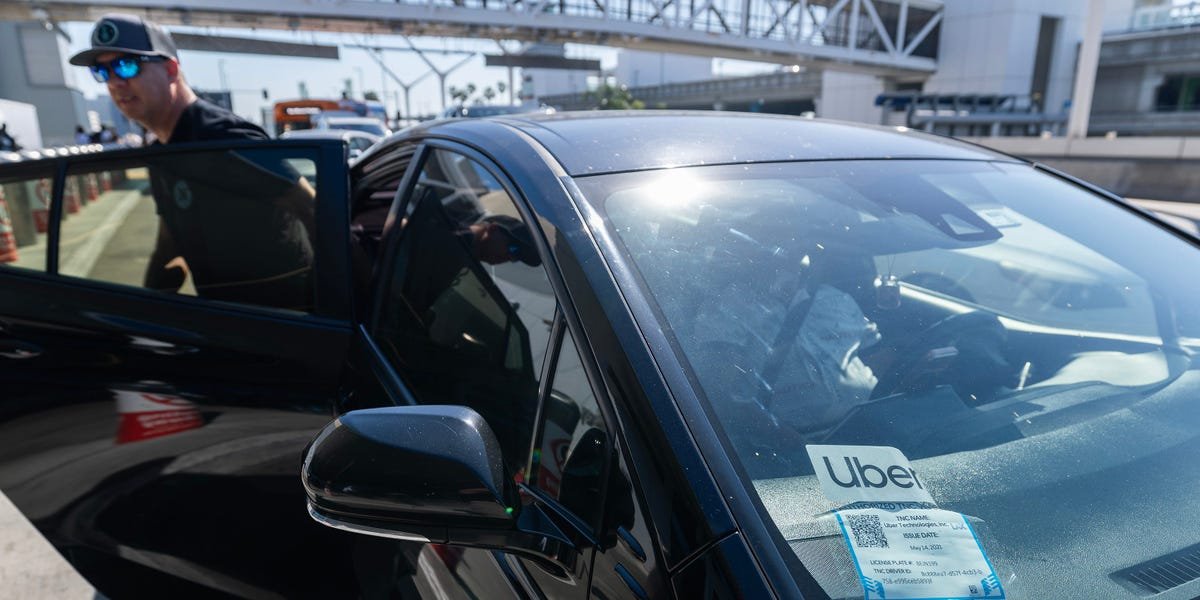
Uber and DoorDash are telling the Internal Revenue Service that some people earned thousands of dollars on their platforms — though the people say they never worked for the apps at all.

One such individual is taking his claims to court. Damian Josefsberg alleged that Uber reported over $1,200 in earnings in his name to the IRS for 2021 tax year, in a complaint filed in a Florida court last month. Josefsberg, who lives in Florida and runs a laser alignment company, has never worked for the app, Kenneth Dante Murena, his attorney, told Business Insider.

The lawsuit is seeking class-action status, which would add plaintiffs with similar experiences to the complaint.

An Uber spokesperson confirmed that Josefsberg never worked for the app and directed Business Insider to a form on its website titled “1099 delivery error,” which asks people to submit erroneous tax forms, a picture of their government ID, a selfie with their ID, and a police report so Uber can investigate.

Josefsberg’s experience points to a problem Uber and other gig-work apps have faced for years: the people who drive passengers or deliver food aren’t always who they say they are, and some have bought accounts on illegal markets rather than getting proper access by signing up.

The apps have responded with new verification efforts, such as asking workers to regularly submit selfies or to show up in person to verify their identity.

Uber has issues with ID verification, safety, the lawsuit says

Apps like Uber have added millions of gig workers to their platforms over the last decade and a half, and Josefsberg’s lawsuit alleges Uber isn’t doing enough to verify those workers’ identities.

“Screening barriers such as ‘clean’ background checks, issue-free driving records, or the ability to work legally in the United States impede Uber’s abilities to rapidly increase its driver pool and thus its trip deliveries,” the lawsuit reads.

The Uber spokesperson said the company disagrees with the claims in Josefsberg’s lawsuit. The company “maintains robust safeguards designed to detect and prevent fraudulent activity, and we continually enhance these systems to address emerging tactics,” the spokesperson said.

Uber also said that it conducts background checks on drivers, including reviews of their driving and criminal records.

Drivers whose real identities and backgrounds are unknown pose a safety risk to passengers, Murena said.

Uber is facing multiple lawsuits that allege the company is liable for sexual misconduct, including rape, by its drivers.

“The public at large would like to know that Uber is confirming that the drivers are who they say they are,” Murena said.

Josefsberg’s lawsuit seeks damages from Uber and a correction to his tax record, because the company reported the income to the IRS under his name.

Murena said he’s received roughly two dozen calls from others who also received 1099s from Uber despite saying they’ve never worked for the app.

DoorDash reported $24,000 in income for one worker

Other ride-hailing and delivery apps have faced similar issues.

Christie Reynolds, who works for an after-school program in Rio Rancho, New Mexico, told Business Insider that she’s never worked for DoorDash.

Last month, though, she got a letter from the IRS saying that DoorDash had reported $24,000 in income under her name for 2023. The letter, which Business Insider reviewed, also said the previously unreported income would prevent her from claiming the Child Tax Credit.

Reynolds said that she contacted the IRS, which told her that DoorDash needed to handle the correction to her tax records. She’s unsure how to do that, she said, since she’s neither a DoorDash customer nor a gig worker.

After Business Insider shared details of Reynolds’ case, a DoorDash spokesperson said that the “root cause is identity theft unrelated to the DoorDash platform.”

“In rare instances that an individual believes their identity was fraudulently used to dash, we encourage them to contact DoorDash support immediately,” the spokesperson said, while offering to get in touch with Reynolds.

While Reynolds hasn’t been able to figure out how someone got a hold of her personal details to set up the DoorDash account, she said that her personal information was exposed in at least two data breaches over the last several years.

The next step she plans to take is to talk to a friend who is a lawyer for advice, she said.

“Right now, I’m just in a bad place,” Reynolds said. “I don’t know what to do.”

Do you have a story to share about Uber, DoorDash, or another gig app? Contact this reporter at abitter@businessinsider.com or via encrypted messaging app Signal at 808-854-4501. Use a personal email address, a nonwork WiFi network, and a nonwork device; here’s our guide to sharing information securely.



Source link

Screen Shot 2020 09 04 at 6.22.07 PM

Your next ride with Uber could be in the sky

Uber riders can hail a car, motorbike, or boat, depending on where they are in the world. Soon, helicopter-like air taxis will join that list.

Passengers will be able to book an air taxi ride through the Uber app in Dubai before the end of 2026, the company said on Wednesday. The option will use flying electric vehicles created by startup Joby Aviation.

Joby’s aircraft can fit up to four passengers and are flown by commercial pilots, the companies said. Joby will operate four landing locations, or “vertiports,” in Dubai, connecting Dubai International Airport with a mall, a hotel on Palm Jumeirah, and the American University of Dubai.

While Uber and Joby don’t have immediate plans to bring the air taxis to the US, the companies said that Joby is in the final stage of certifying its service with the Federal Aviation Administration.

“We’ve long believed in the power of advanced air mobility to transform how people move through cities,” Sachin Kansal, Uber’s Chief Product Officer, said.

The Uber partnership makes “this new mode of transportation familiar and accessible, connecting the ground and the sky through a system designed to save people time and fit seamlessly into how they already move,” said Eric Allison, Joby’s chief product officer.

Passengers will be able to book Uber Air rides on Joby aircraft alongside regular ride-hailing trips, the companies said. Air taxi trips will also include Uber Black pickup and drop-off from passengers’ origin and destination.

Once approved, Joby plans to eventually offer its service in markets including New York, Los Angeles, the UK, and Japan.

Joby’s planned Dubai debut comes almost six years after the startup acquired Uber Elevate, the ride-hailing app’s air mobility division. Under the 2020 deal, Uber invested $75 million in the company.

It was one of multiple divisions that Uber shed as transportation demand cratered during the first year of the pandemic. Around the same time, Uber sold its self-driving car division to startup Aurora — something it made up for last year by announcing a partnership with Lucid and Nuro for robotaxis.

Have a tip? Contact this reporter at abitter@businessinsider.com or via encrypted messaging app Signal at 808-854-4501. Use a personal email address, a nonwork WiFi network, and a nonwork device; here’s our guide to sharing information securely.


Source link

Screen Shot 2020 09 04 at 6.22.07 PM

CEO Dara Khosrowshahi says Uber has a quiet edge in the robotaxi wars

Uber Eats might end up playing a key role in its parent company’s robotaxi business, Uber CEO Dara Khosrowshahi said.

The ride-hailing app is working with multiple companies, such as Alphabet-backed Waymo, to make self-driving cars available through its app. Waymo’s robotaxis have already proven more efficient than most human Uber drivers in cities such as Atlanta and Austin, Uber has said.

One big question hanging over robotaxis, though, is what happens to the vehicles during times of the day when demand for rides is low, Khosrowshahi said on Uber’s fourth-quarter earnings call on Wednesday.

He pointed to one solution: Have them drive orders to customers through Uber’s food delivery and freight businesses.

Some delivery services, such as DoorDash, are also experimenting with robotaxis for food deliveries. Uber offers both ride-hailing and delivery, meaning robotaxis on its network could shift between the two as demand for each changes, Khosrowshahi said on Wednesday.

“Having delivery and freight as part of our logistics ecosystem gives us an opportunity to actually use these vehicles at a structurally higher utilization than anyone else,” Khosrowshahi said.

While ride-hailing accounted for over half of Uber’s revenue in the fourth quarter, its delivery business grew by 29%, a faster clip than the 18% growth rate its ride-hailing segment posted in the same period.

How efficiently companies use the autonomous vehicles that they put on the streets is one of the challenges hanging over the technology.

Safety is another. Last month, a Waymo car injured a child near a school in Santa Monica, California, the latest in a series of accidents involving self-driving cars. Waymo said it is cooperating with a federal probe into the accident.

While it doesn’t operate self-driving cars directly, Uber is experimenting with ways to train the AI behind robotaxis using data it collects from human drivers, Khosrowshahi said. Uber has a partnership with Nvidia to collect that data, for instance. Last month, Uber said it would launch AV Labs, an arm focused on similar training efforts.

Khosrowshahi said the goal is to make self-driving cars more reliable and avoid situations such as last year’s Waymo blackout in San Francisco, when a power outage prompted the company to suspend services. “The real world can create unexpected circumstances,” he said.

Robotaxis also require infrastructure to store, charge, and repair. Some companies, such as startup Voltera, are building depots for those purposes in anticipation of a robotaxi boom in the coming years.

Have a tip? Contact this reporter at abitter@businessinsider.com or via encrypted messaging app Signal at 808-854-4501. Use a personal email address, a nonwork WiFi network, and a nonwork device; here’s our guide to sharing information securely.


Source link

How-much-Uber-pays-tech-workers-in-2025-with-some.jpeg

How much Uber pays tech workers in 2025, with some roles earning up to $410,000

Uber is hiring people as it tries to become a “super app.” So how much is it paying them?

You’re probably familiar with the millions of gig workers who drive you to the airport or deliver your food. Now, Uber is looking to expand those services — with self-driving cars, for example — as well as offer customers targeted offers.

“We’re slowly moving towards a super app of sorts,” CEO Dara Khosrowshahi said.

Some of the people whom Uber has hired as it tries to make that vision a reality have come from outside the US via H-1B visas.

Companies are required to submit this work visa data, which includes salary information, to the US Department of Labor for all foreign hires. However, the compensation figures don’t include equity or other benefits that employees can receive in addition to their base pay. The filings also include industry average pay rates for US workers.

The process for obtaining an H-1B visa, however, is changing.

In September, President Donald Trump instituted a $100,000 fee for the visa. And proposed changes to H-1B visa rules would tilt the already competitive visa lottery in favor of the highest-paid applicants, lawyers told Business Insider.

Uber filed to hire 945 workers through the H-1B visa program during the 2025 federal fiscal year, according to filings with the US Department of Labor. That’s more than the 778 filings that Uber made during 2024.

Here’s a look at the jobs that Uber disclosed salaries for:

Computer and Information Systems Managers can make up to $410,000

Staff Software Engineer: $225,200 to $258,800

Manager, Engineering: $231,700 to $287,000

Manager, Applications Development: $195,600 to $210,500

Senior Manager: $234,100 to $299,700

Staff Software Engineer, TLM: $242,000 to $249,300

Senior Director, Engineering: $360,000 to $410,000

Data Scientists can earn up to $207,200

Scientist, Tech: $111,966 to $176,400

Senior Scientist, Tech: $151,700 to $207,200

Senior Applied Scientist: $186,307 to $208,062

Staff Scientist, Tech: $219,100 to $250,000

Applied Scientist: $133,100 to $179,100

Data Scientist: $125,950 to $153,700

Data Scientist, Tech: $129,750 to $160,700

Data Scientist III: $150,000 to $175,019

Data Analyst: $156,600 to $161,000

Data Analyst, Tech: $116,750 to $162,200

Senior Data Scientist: $150,400 to $164,300

Information Technology Project Managers can earn up to $215,900

Product Manager: $158,700 to $197,000

Senior Technical Program Manager: $202,500 to $231,400

Senior Program Manager: $144,500 to $170,100

Operations Research Analysts can make up to $185,300

Business Analyst – Operations II: $110,075 to $117,554

Scientist, Tech: $149,650 to $174,900

Senior Scientist, Tech: $169,800 to $185,300

Senior Operations and Logistics Manager: $135,600 to $142,850

Regional Operations Manager: $101,300 to $140,950

Manager, Sales Operations: $157,400 to $166,900

Manager, Central Operations: $157,100 to $161,900

Senior Program Manager: $143,000 to $178,800

Strategic Operations Manager: $111,900 to $166,600

Software Developers can make up to $312,700

Machine Learning Engineer: $178,900 to $198,500

Senior Machine Learning Engineer: $219,900 to $235,500

Software Engineer: $98,516 to $198,500

Software Engineer II: $113,308 to $135,005

Software Engineer III: $131,003 to $188,084

Staff Software Engineer: $207,800 to $273,000

Staff Software Engineer, TLM: $246,400 to $263,000

Senior Staff Engineer: $260,400 to $312,700

Senior Software Engineer: $151,819 to $242,000

Staff Applications Developer: $225,100 to $251,100

Senior Applications Developer: $179,500 to $209,700

Other positions can make up to $206,000

Manager, Technical Accounting: $164,600 to $166,900

Manager, Strategy and Planning: $155,000 to $173,600

Senior Manager, Strategic Finance: $192,300 to $206,000

Manager, Central Operations: $140,900 to $160,200

Product Designer: $157,100 to $174,600

Business Insider has been collecting pay data for tech companies. Find more here.

Do you have a story to share about Uber? Contact this reporter at abitter@businessinsider.com or 808-854-4501.


Source link

SNL-spoofed-Uber-Eats-Wrapped-Then-Uber-actually-did-it.jpeg

‘SNL’ spoofed Uber Eats Wrapped. Then Uber actually did it for real.

Your Uber spending is coming back to haunt you — for real.

Just days after “Saturday Night Live” aired a satirical skit about an “Uber Eats wrapped” and the horrors of discovering how much you spent on it this year, Uber made the embarrassment real with a Spotify-style year-end recap.

On Monday, the company launched a new year-in-review feature called “YOUBER,” which compiles users’ activity across both Uber and Uber Eats.

It’s unclear if “SNL” knew about Uber’s plans before its spoof. It’s also unclear how long Uber had the recap in the works, or if it was influenced by the skit. Uber and NBCUniversal did not immediately respond to a request for comment.

The feature echoes the sketch that aired on Saturday night, which lays bare how quickly people who willingly participate in data tracking recoil when that data reflects something they don’t want to know.

The skit started with an innocuous character who was delighted to find that she was one of Sabrina Carpenter’s top global listeners in 2025. Then the skit took an ominous turn when an advertisement claimed to reveal who the characters “really are” this year, featuring an “Uber Eats wrapped.”

One character learned he had eaten more chicken nuggets than 99% of users worldwide. Another was assigned an “Uber Eats age” — a riff on Spotify’s “listening age” — only to be told his was “Dead.” The humiliation peaked when a character realized he had spent $24,000 on Uber Eats in a year, prompting him to scream into a pillow in response.

To access the actual feature, which is only available in the US at the moment, look for the “YOUBER” banner in your app, and it will show riders where they went, how often they opted for Uber Comfort, and which restaurants they returned to again and again.

The feature also assigns users one of 14 “Uber Personality Profiles,” including “Do-Gooder” for Uber Electric loyalists, “Rise & Shiner” for early-morning riders, and “Delivery Darling” for customers who “live for deliveries of all kinds.”

And if you don’t want to endure your guilt alone, you can always share it. Uber offers a “Share this Story” button directly within the app.


Source link

Uber-is-turning-trip-and-takeout-data-into-insights-for.jpeg

Uber is turning trip and takeout data into insights for marketers

Uber wants advertisers to level up their marketing by tapping into data on the millions of rides and deliveries its users order every day.

The ride-hailing giant is announcing the launch of a new insights platform called Uber Intelligence on Monday, the company exclusively told Business Insider.

Launched in partnership with the data-connectivity platform LiveRamp, Uber Intelligence will let advertisers securely combine their customer data with Uber’s to help surface insights about their audiences, based on what they eat and where they travel.

It uses LiveRamp’s clean room technology, which lets companies aggregate their data in a privacy-safe environment, without sharing or seeing each other’s raw or personally identifiable customer information.

A hotel brand could use Uber Intelligence to help identify which restaurants or entertainment venues it might want to partner with for its loyalty program, for example.

Uber also hopes the platform can act as a flywheel for its broader ad business. Marketers can use the data clean room for segmentation, such as identifying customers who are heavy business travelers, then targeting them with ads on their next trip to the airport in the Uber app or on screens inside Uber cars.

“That seamlessness is why we’re so excited,” Edwin Wong, global head of measurement at Uber Advertising, told Business Insider in an interview. He added that the aim is for marketers to begin saying, “‘Oh, I’m not just understanding Uber, I’m understanding Uber in my marketing context.'”

Uber’s other route to revenue

Uber Intelligence is the latest step in the evolution of Uber’s ad business. Uber officially launched its dedicated advertising division in 2022. It offers an array of ad formats in the Uber and Uber Eats apps, on in-car tablets, in emails to its users, and on car tops.

The company said in May that its ad business had reached a $1.5 billion revenue run rate — the figure it has projected to hit by the end of 2025 — which would represent a 60% increase on last year. The company doesn’t break out a more specific ad-revenue figure and hasn’t provided an update on the run-rate number since May.

Uber Intelligence forms part of a bespoke set of services it offers its top advertisers. Earlier this year, it launched a creative studio where brands can partner with Uber to deliver more bespoke campaigns, such as offering rides to Miami F1 Grand Prix attendees in a luxury vehicle sponsored by La Mer, packed with freebie skincare products.

Andrew Frank, analyst at the research firm Gartner, said the launch of Uber Intelligence is another signal that Uber’s ad business is maturing.

“Early-stage ad businesses tend to focus exclusively on selling inventory while more mature ones focus more on delivering differentiated value through targeting and measurement solutions that help brands understand and optimize the impact of their spend,” Frank told Business Insider.

Uber’s unique source of “terrestrial data” put it in good standing against the likes of Amazon, Google, and other retail media networks that emphasize the value of their data-driven insights, Frank added. However, he said Uber may need to address privacy concerns related to aggregating highly sensitive data in order to maintain consumer trust and to comply with evolving global regulators as a collector of first-party data.

Vihan Sharma, chief revenue officer of LiveRamp, said its platform provides technical guarantees to ensure “zero movement of data.”

“The whole objective of a clean room technology is to build trust between data owners and consumers and the advertising ecosystem,” Sharma said.


Source link