
North-Korean-ballistic-missiles-made-with-outdated-methods-from-up.jpeg

North Korean ballistic missiles made with ‘outdated methods’ from up to 50 years ago: Ukraine MOD

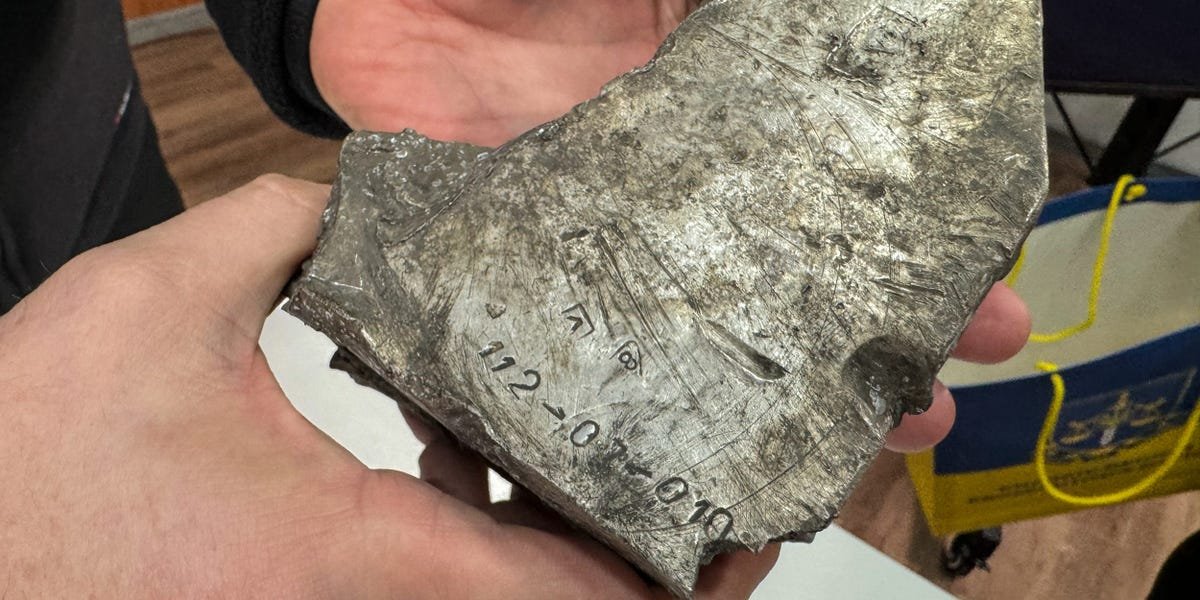
A new Ukrainian analysis of two North Korean ballistic missile types found that the weapons were built with commercial electronics, but likely made with methods that were outdated by up to 50 years.

Officials said the findings, published by Ukraine’s defense ministry on Thursday, came after military engineers and scientists conducted “laboratory studies” on debris from solid-fuel KN-23 and KN-24 missiles used on Ukrainian territory in early 2024.

The report found that while the North Korean missiles bore similarities to Russian counterparts, they used less energy-efficient fuel and required engines that were 50% larger to travel the same range.

“At the same time, outdated methods are used during production, and the quality of the soldering is about 50 years old,” the defense ministry wrote.

It added that forensics had found the missiles to be tipped with graphite, a “relatively cheap solution” to protect them from heat while in flight.

The defense ministry said its forensics team identified the KN-23 and KN-24 using South Korean schematics and photographs from North Korean factories, denoting seven key similarities. It added that the KN-23 had a specific frame diameter used only by North Korea.

The KN-23, also known as the Hwasong-11A, was first revealed by Pyongyang during a military parade in 2018, and is often compared to Russia’s Iskander-M short-range ballistic missile. The other missile, the KN-24, made its public debut as the Hwasong-11B in 2019, and bears some similarities to the US-made ATACMS tactical ballistic missile.

The Ukrainian report, however, wrote that instead of being direct analogs to the Iskander-9M723 missile, the North Korean missiles showed signs that Pyongyang had “refined some initial version of the Iskander ballistic missile development.”

Meanwhile, the missiles’ control units were found to contain “civilian components from leading brands,” the defense ministry said.

“Pyongyang is apparently purchasing these chips to circumvent sanctions,” its statement read.

Ukraine’s military intelligence agency, GUR, said in late 2024 that it had found components in the KN-23 and KN-24 manufactured by companies in China, Japan, Switzerland, the UK, and the US.


Head of the Kharkiv Regional Prosecutor's Office Oleksandr Filchakov holds wreckage of a North Korean missile.

Ukraine said in 2024 that the debris it found was consistent with that of North Korean missiles. 

Denys Glushko /Gwara Media/Global Images Ukraine via Getty Images


Kyiv first reported the use of the KN-23 in January of that year, saying that Russia had launched the missiles at Kharkiv. Ukrainian officials said at the time that the munitions were highly inaccurate and unreliable, with at least half exploding in the air before reaching their targets.

The next month, Ukraine also said it had shot down KN-24 missiles launched by Russia against Kyiv. It accused North Korea in early 2025 of supplying the Kremlin with at least 148 ballistic missiles.

Since the start of the war, Russia has sought to strengthen ties with North Korea, receiving troops and arms to help drive Ukraine out of Kursk and sustain its invasion. The US and South Korea have raised concerns beyond that, warning that Pyongyang has been gaining valuable combat knowledge in both troop tactics and arms-making.


Source link

The-US-is-sending-a-new-drone-killer-to-the-Middle.jpeg

The US is sending a new drone-killer to the Middle East. It’s logged over 1,000 Shahed intercepts over Ukraine.

The US Army is deploying an American-made counter-drone system that has intercepted more than 1,000 Shahed-type drones in Ukraine to the Middle East, two defense officials confirmed on Saturday to Business Insider.

One of the US officials, who spoke on the condition of anonymity to discuss military developments, said that the Merops system will arrive in the Middle East within a week. Once it arrives, it’ll be ready for combat in a matter of days.

They declined to say how many systems the US is sending to the Middle East, only that the deployment will include a large quantity of interceptors.

The Associated Press first reported the Merops deployment.

The counter-drone system, which uses a roughly $15,000 interceptor, would give US and allied forces a much cheaper air defense option against Iranian drones, compared to expensive surface-to-air missiles.

The weapon’s deployment to the region comes as Iran has launched thousands of cheap attack drones at the US military and its allies across the Middle East after the US and Israel began Operation Epic Fury on February 28.

The Shahed drones, which cost roughly $20,000 to $50,000 according to available estimates, complicate the air defense picture.

In significant quantities, they can overwhelm even advanced air defense systems, or at the very least force Patriot and Terminal High Altitude Area Defense (THAAD) crews to expend millions of dollars in interceptors to defeat a threat only a fraction of that cost.

How the Merops works

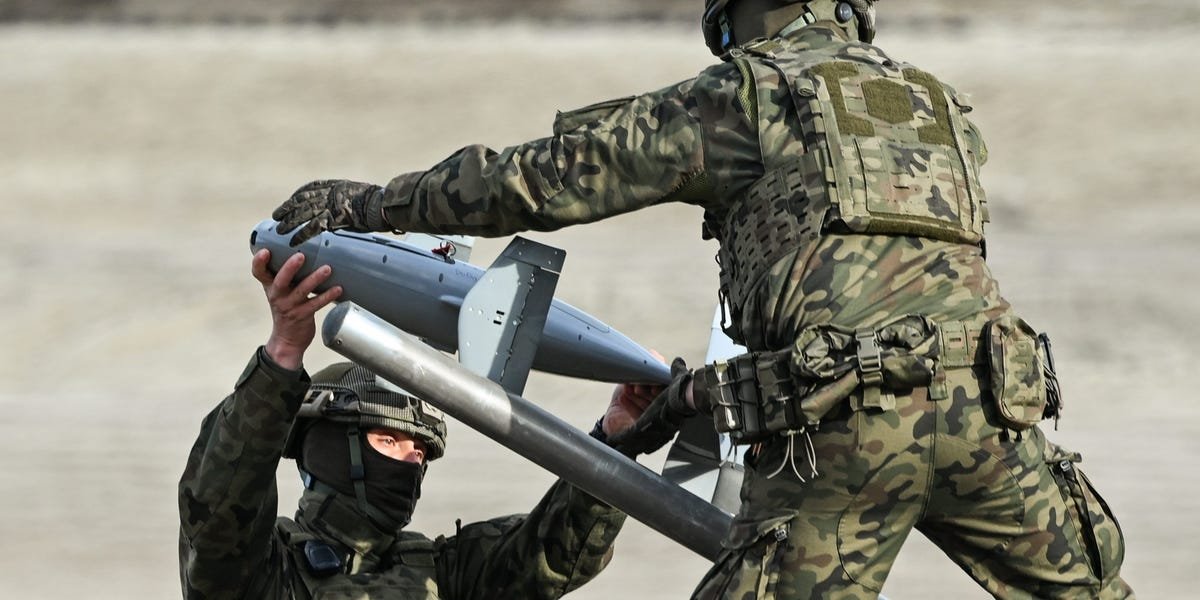
The Merops counter-drone system launches a propeller-driven drone called the Surveyor, which is a few feet long, can be carried by a single soldier, and uses artificial intelligence to navigate in jammed environments.

The overall system includes the Surveyor interceptor, a ground control station, and launch stations — all operated by a four-man crew with a commander, a pilot, and two technicians.

Its developer, the American initiative Project Eagle, says the Merops is tailor-made for taking down propeller-driven and jet-powered drones like the Shahed. So far, it’s logged over 1,000 kills against such uncrewed aircraft.

The Surveyor can fly at speeds of over 175 mph, meaning it’s more than fast enough to catch Iran’s commonly used propeller-driven Shahed-136, which flies at around 115 mph. Jet-powered versions of the Shahed reportedly fly as fast as 230 mph and are more challenging threats.

If the Surveyor, which can be mounted with a small explosive warhead, fails to hit its target, it can deploy a parachute to allow retrieval and relaunch of the drone.


A Surveyor drone descends while suspended from a parachute.

A Surveyor drone can be retrieved if it fails to hit any targets.

Artur Widak/NurPhoto via Getty Images


When Business Insider observed a demonstration of the Merops in Poland last year, one of the launchers was mounted on the back of a pickup truck.

A push for interceptor drones

According to one of the defense officials Business Insider spoke with, US forces in the Middle East are to be trained by Army soldiers from Europe to operate the Merops. The system is also being sent to countries in the region where US troops are not deployed.

The second defense official said that Merops’ use in Ukraine has provided the Army with air defense information that has already proven valuable in Eastern Europe and will now be useful for the Middle East.

US Army soldiers in Europe have taught NATO allies how to operate the Merops system, which was deployed to the alliance’s eastern flank following Russian drone incursions into Polish airspace.

Meanwhile, Ukrainian President Volodymyr Zelenskyy said on Thursday that his country had received a direct request from the US for help with countering Shahed drones.

Zelenskyy shared that he “gave instructions to provide the necessary means and ensure the presence of Ukrainian specialists who can guarantee the required security.”

Over the past year, Kyiv has focused heavily on building and deploying an arsenal of cheap interceptor drones to counter Russia’s versions of the Shahed, which the Kremlin launches in hundreds-strong waves at times.

Ukrainian interceptor drones cost around $2,500 each, and Zelenskyy has said that his country makes 1,000 of them a day.

All of these broader developments come amid the backdrop of President Donald Trump saying in an early morning TruthSocial post on Saturday that Iran had agreed to stop attacking US allies in the region.

“Iran, which is being beat to HELL, has apologized and surrendered to its Middle East neighbors, and promised that it will not shoot at them anymore,” he wrote. The president also threatened additional action against Iran, warning that the US is going to hit it harder.


Source link

Matthew Loh Headshot

Ukraine says its own Flamingo missiles flew nearly 900 miles to strike Russian Iskander factory

Ukrainian President Volodymyr Zelenskyy said on Wednesday that his country had struck a Russian military industrial plant with locally made cruise missiles that flew nearly 900 miles to reach their target.

Ukrainian officials earlier reported that the missile strike on Saturday had hit a plant in Votkinsk, an industrial town in Russia’s Udmurt Republic, some 860 miles from the Ukrainian border.

“We carried out precise strikes with Flamingo missiles at a range of 1,400 kilometers,” Zelenskyy said at a press conference in Kyiv. “I believe this is truly a success for our industry.”

Such an attack would be one of the longest-range strikes carried out so far by the Flamingo, which is touted as one of the star products in Ukraine’s local defense manufacturing scene. Kyiv has been aggressively trying to expand its weapons industry as a complement to Western supplies and as a future export sector.

The Flamingos’ target, the Votkinsk plant, manufactures some of Russia’s key munitions, such as ballistic missiles for the Iskander system and the submarine-launched Bulava missile.

Russia has not officially confirmed that the factory was hit, but Alexander Brechalov, the governor of the Udmurt Republic, said on Saturday that an unspecified facility in the region had been attacked and three people were sent to hospital.

Brechalov did not say if the Flamingo was used, but warned against drone threats over the region.

Ukrainian open-source groups later published satellite images that appeared to show damage to one of the workshops at the Votkinsk factory, with a gaping hole in its roof and signs of fire damage.

That evening, Kyiv had unleashed a large wave of drones and missiles into Russia in one of its biggest ever long-range attacks.

Russia’s defense ministry said that it shot down 77 Ukrainian drones on Saturday, but did not mention any Ukrainian missile threats.

Zelenskyy declined to say how many missiles or drones Ukraine launched in total on Saturday.

“There were interceptions by Russian air defense, there were also missiles that were not intercepted, and there were direct hits,” Zelenskyy said. “But the most important thing is that all the missiles that were launched all reached the target.”

Kyiv has often compared the Flamingo to the US-manufactured Tomahawk, saying that the Ukrainian turbofan-powered missile is much cheaper to make per unit and has a longer range of 1,900 miles.

The ground-launched Flamingo, however, takes up to 40 minutes to prepare for launch.

Ukraine is also still trying to build up its arsenal of the missile, with reports from last October saying that its manufacturer, FirePoint, hoped to produce up to seven a day by the end of 2025.

Kyiv said earlier this month that manufacturing had been affected by a recent Russian strike, with Zelenskyy warning that Ukraine had to “work on increasing quantity” of the Flamingo.

“We had certain technical problems because one large production line was destroyed as a result of a missile strike. They have already relocated and resumed production,” Zelenskyy had said at the time.


Source link

Macron-said-that-Ukraine-now-gets-two-thirds-of-its-intelligence.jpeg

Macron said that Ukraine now gets ‘two-thirds’ of its intelligence from France, not the US

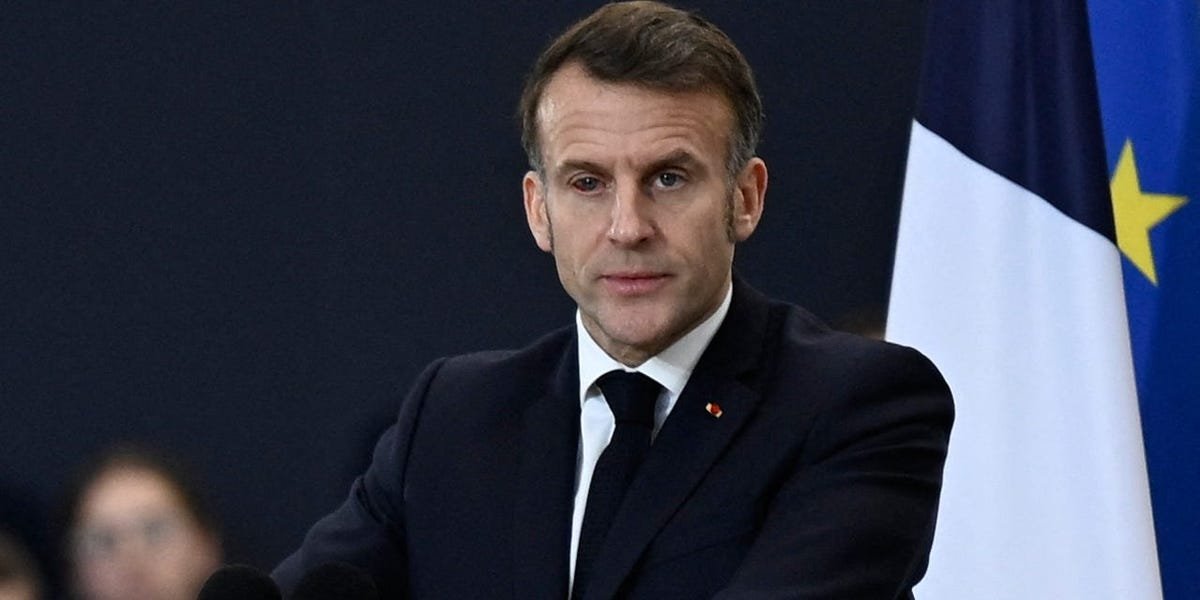
French President Emmanuel Macron said on Thursday that his country has now overtaken the US as the main provider of intelligence to Ukraine.

“Where Ukraine was overwhelmingly dependent on American intelligence capacity, a year ago, two-thirds is today provided by France. Two-thirds,” Macron said in a New Year’s speech to the French military.

The French leader’s comments indicate a shift in the dynamics of Western contributions to the war and suggest that the US may have scaled back its military relationship with Ukraine.

The US briefly suspended intelligence-sharing and aid to Ukraine in March 2025, as the Trump administration was attempting to negotiate a ceasefire between Kyiv and Moscow. After roughly a week, Washington said it was lifting the suspension.

But it’s been unclear so far whether the Pentagon has continued to provide intelligence at the same level as it did during the Biden administration.

The New York Times previously reported that, in those years, US-Ukrainian intelligence-sharing ties had been so close that officials from both countries worked in the same facility to coordinate military strikes.

One of the most vital roles played by US intelligence at the time was providing targeting data and situational awareness for Ukrainian troops, especially when the latter were using American-made systems for the attacks.

Ukraine has since been trying to develop its own strike capabilities, including long-range precision missiles, that might allow it to strike Russia without Western approval.

It’s also unclear exactly how Macron quantified two-thirds of Ukrainian intelligence capabilities. His speech did not say whether he was referring to two-thirds of the intelligence provided by Ukraine’s foreign partners or to two-thirds of all the intelligence used by Ukraine’s forces.

The Élysée Palace and French defense ministry did not respond to requests for comment sent outside regular business hours. Ukraine’s defense ministry and the Pentagon have also not responded to similar requests for comment on Macron’s remarks.

The French president’s point on intelligence-sharing with Ukraine aligns with his larger push to position Paris as a regional military leader, while the Trump administration seeks to curb American involvement in Europe. President Donald Trump has also recently rattled European leaders by alluding that the US could try to take over Greenland, a Danish territory.

Macron said on Thursday that France had helped Ukraine to rebuild its forces and provided Kyiv with security guarantees in the event of a ceasefire.

Last week, European NATO members and the US issued a declaration that said willing countries would form a multinational, “European-led” force to provide “reassurances” to Ukraine and stave off a second Russian invasion or attack.

“The signal sent to our Ukrainian partners, to other Europeans, and to the world is that we are ready,” Macron said. “We are ready to sustain this effort of resistance. We are ready to deter new aggressions or to maintain peace on our soil.”


Source link