
Ukraines-Patriot-crews-are-breaking-from-the-norm-fighting-Russian.jpeg

Ukraine’s Patriot crews are breaking from the norm, fighting Russian threats with fewer missiles

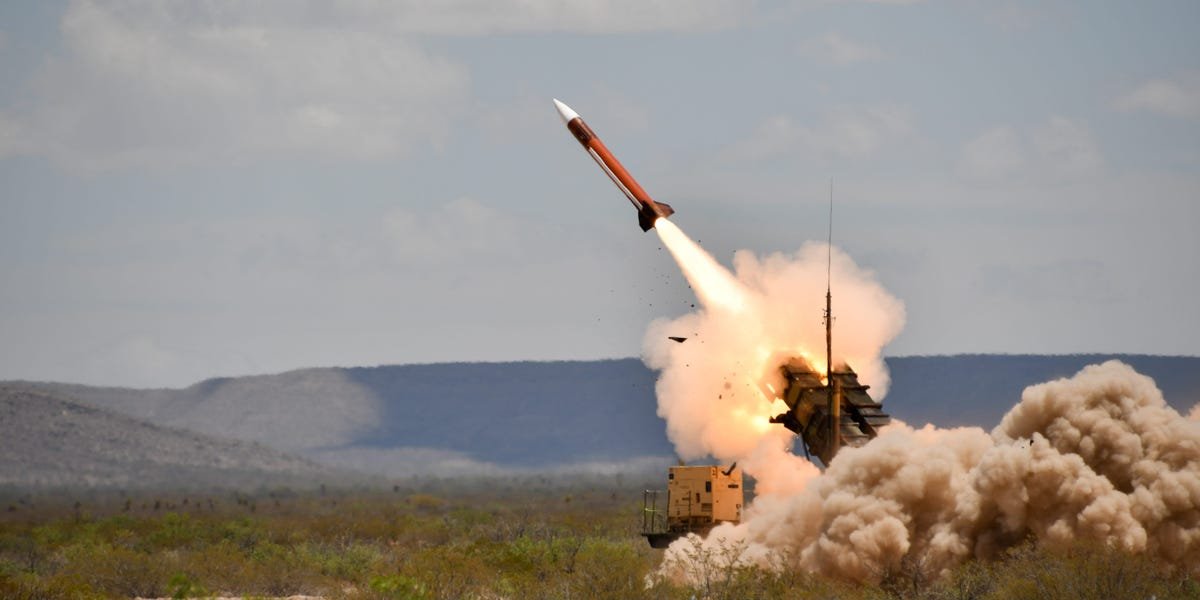
Ukrainian soldiers operating US-made Patriot air defense systems are deviating from traditional engagement practices and firing fewer interceptors in battles against incoming Russian missiles.

The commander of a Ukrainian Patriot unit said that standard air defense doctrine calls for firing between two and four interceptors at each incoming Russian cruise or ballistic missile; however, his forces are launching just one per threat amid strained stockpiles.

The commander, identified as Oleksandr in a video released over the weekend by the Ukrainian military’s Air Command West, said that Kyiv’s forces are trying to use as few interceptors as possible. He said that they need more to effectively counter Russian attacks. It’s unclear how widely this single-shot approach is practiced among the Ukrainian Patriot crews.

Launching more than one interceptor in an engagement, though costly, isn’t necessarily wasteful; rather, it is intentional risk management, prioritizing the kill over conservation. But Ukraine doesn’t have that luxury. In a high-intensity fight, the US and its allies might not either.

Yehor Cherniev, the deputy chairman of the Ukrainian parliamentary committee on national security, defense, and intelligence, said Ukraine has faced low Patriot interceptor stockpiles, forcing it to use as few as possible to engage Russian missiles.

To conserve essential interceptors, Ukraine had to learn to make the most of its capabilities, Cherniev told Business Insider. “This is the operation of the Patriot system in manual mode, without relying on automation.”


A Patriot system received by Ukraine is seen on the Day of Ukrainian Air Force on August 4, 2024.

A Western-supplied Patriot launcher at an undisclosed location in Ukraine. 

Vitalii Nosach/Global Images Ukraine via Getty Images


The American-made MIM-104 Patriot surface-to-air missile battery is the most advanced air defense system that Ukraine possesses. NATO countries have supplied Kyiv with PAC-2 and newer PAC-3 interceptors, the latter of which is estimated to cost nearly $4 million apiece.

Russian cruise and ballistic missiles that make it past the Patriots and other air defense systems have struck civil infrastructure or residential areas to deadly effect. Kyiv has repeatedly lobbied NATO states for more interceptors to replenish depleted stockpiles. The weapons are in high demand globally, though.

Some Russian bombardments include hundreds of missiles and drones, posing challenges for Ukraine’s stretched air defenders and underscoring the need for more advanced interceptors.

Mykhailo Fedorov, Ukraine’s defense minister, said on Tuesday that Germany will provide Kyiv with funding for “several hundred” Patriot interceptors as part of a new 4 billion Euro ($4.7 billion) arms package.

During the Iran war, Ukrainian President Volodymyr Zelenskyy said Kyiv would be willing to send intercerptor drones to Middle Eastern states in exchange for their vaunted Patriot interceptors.


A soldier walks past Patriot air defense systems installed at the military hub for Ukraine at the Rzeszów-Jasionka airport, in Jasionka, south-east Poland, on March 6, 2025.

The American-made Patriot system makes up the top echelon of Ukraine’s air defense network. 

Sergei Gapon/AFP via Getty Images


The US Army, the primary operator of the Patriot system, is learning from Ukraine’s experience that it is crucial to keep the batteries hidden and mobile and sufficiently stockpile interceptors, American officials told Business Insider previously.

Though Ukraine’s situation isn’t ideal, its ability to use fewer interceptors against Russian missiles could be another lesson for the US and its NATO allies concerned about their own interceptor stockpiles in the event of a major war against a near-peer adversary.

Cherniev said that NATO states don’t need to break protocol at this point since they have sufficient stockpiles and aren’t routinely attacked by massive bombardments of ballistic missiles; however, he said, this could change in the event of a large-scale war.

In the Middle East, the US and allied forces have intercepted thousands of Iranian ballistic missiles and drones over five weeks of sustained fighting. The pace and intensity of those engagements have fueled concerns about whether interceptor stockpiles can hold up in a prolonged or future conflict.

Cherniev said NATO forces may eventually be forced to start saving interceptors. “It’s better if they learn how to do this in advance from Ukrainian officers and make changes to their protocols now.”



Source link

Ukraines-drone-war-showed-the-West-it-needs-to-view.jpeg

Ukraine’s drone war showed the West it needs to view small drones less like prized gear and more like expendable ammo

Ukraine’s large-scale drone war is pushing Western militaries to treat small drones less as high-end equipment and more as expendable ammunition that isn’t meant to come back.

US Army and British Army officials, as well as a NATO veteran who volunteered to fight in Ukraine, told Business Insider that effective drone warfare requires sending large numbers forward — and accepting many will be lost as a routine cost.

Maj. Rachel Martin, the director of the US Army’s new drone lethality course, told Business Insider that the conflict shows that “if you’re going to flood the zone with drones,” especially in a combat situation where electronic warfare is heavy, “you’re going to lose a lot of drones.”

She said it’s a “transition from the army of old,” where a lost drone was “a significant emotional event” that was reported to senior leadership. In Ukraine, it’s different. “Drones go down all the time.” There, losses are typically shrugged off, rather than investigated.


A figure in camouflage gear squats with their arm up and a small drone hovering above him, with another figure in camouflage standing behind and holding a controller, under a grey sky and on grass and with two cars, light and dark grey, behind them

Drones are key to Ukraine’s fight, and the idea that many will be lost is understood across the military.

Sean Gallup/Getty Images


That shifting mindset is shaping how Western militaries train.

Lt. Col. Ben Irwin-Clark, the commanding officer of the British Army’s 1st Battalion of the Irish Guards, told Business Insider that his battalion has changed its training to allow drones to be damaged or even destroyed to reflect battlefield realities. “I absolutely think they need to be disposable because otherwise you’re not training realistically,” he said.

Not high-end equipment

Jakub Jajcay, a former special forces member from Slovakia who fought in Ukraine, told Business Insider that if NATO militaries want to start using drones for real missions, they “need to get used to the fact that they’re basically expendable material more akin to ammunition or fuel or gasoline, things like that, rather than specialized high-end pieces of equipment that need to be looked after.”

He said when he was serving in the military for his home country, “drones were very specialized pieces of equipment.”

The drones were fairly expensive, he shared, “and there was always a sort of bureaucratic process” in using them. Sometimes, only designated individuals were allowed to use the drones.


A figure in camouflage gear and with their back turned holds an arm up holding a small black drone under a blue cloudy sk,y and on shubbery

Ukraine uses small drones differently from the way that Western militaries did in previous conflicts.

Paula Bronstein/Getty Images


If something happened to a drone, “that would’ve been a big problem in training. If we had lost a drone, somebody would’ve been in big trouble for that.” The war in Ukraine shows how poorly that peacetime mindset fits large-scale combat.

Russia’s invasion of Ukraine has featured drones on an unprecedented scale. Ukraine says roughly 80% of its strikes are carried out using drones rather than other weapons. Many never reach their targets and are lost along the way, though.

Cheap drones worth several hundred dollars have destroyed weaponry worth millions. But many of them don’t have any effect. A report last year from the UK’s Royal United Services Institute said that “between 60 and 80% of Ukrainian FPVs fail to reach their target, depending on the part of the front and the skill of the operators.”

Some drones are jammed or disrupted by electronic warfare, while others are shot down or get their cables cut. Sometimes they’re knocked out by soldiers on their own side.

Many of the drones on the battlefield are single-use, designed to explode when they hit their target, but many of them are destroyed, damaged, or disabled before they even reach that point.

Jajcay said that even drones designed to be used again and again “have a lifespan of maybe a few dozen missions at most.”

He also said that drones failed “all the time,” and those losses were expected.


Four men in camouflage stand under a blue cloudy sky that has a small grey drone hovering in it with an explosive hanging from it

Allies want to learn as much as possible from Ukraine’s drone warfare.

Paula Bronstein /Getty Images


The West is changing its view

The US Army is recognizing and learning from these dynamics in Ukraine, as are other Western militaries, as they incorporate the idea that drones cannot be treated as overly precious assets into their drone warfare training and doctrine.

Maj. Wolf Amacker, who leads the Army’s Unmanned Aircraft Systems and Tactics Branch at the Aviation Center of Excellence, told Business Insider that out of the thousands of drones used daily, only around 30% of them hit their targets, while many others don’t have a significant impact on their targets.

The Army is learning that lots of drones need to be sent forward.

Irwin-Clark told Business Insider that the way the UK sees drones has also shifted. He said “every time there’s an iterative change in technology in the battlefield, everyone gets very excited about it and the ownership of that asset tends to be far too high.”


US Army soldiers during drone operator training.

The US Army is training troops for drone warfare.

US Army/Leslie Herlick


He said that often when a new and powerful technology emerges, senior leaders will try to tightly control it, arguing that because there are only a handful available, only a select few should have the authority to decide when it’s used. The assets are carefully protected, at least initially. Later on, trust is imparted to soldiers to handle technology previously in the charge of higher-ups.

That pattern, Irwin-Clark said, is “exactly what’s happening with drones.”

His battalion wrapped the first drones it received years ago in bubble wrap, “and we didn’t fly them very often,” he said. “When we did,” he continued, “we made sure we flew in the middle of a field with nothing, no obstacles around.”

Now, his battalion is deliberately crashing its latest drone delivery into targets, while looking at how to make repairs. “It really doesn’t matter if we break them,” Irwin-Clark said.

The US is coming at it the same way. Martin, who previously commanded a Gray Eagle drone company, said her course takes into account that “drones crash. I’ll say that to the day I die having owned drones as a commander: drones crash.”

Secretary of Defense Pete Hegseth said last year that the defense department needs to view small drones as consumables rather than “durable property” — more like ammunition than valuable equipment. It’s a change that Jajcay described as “a step in the right direction.”

Western armies were using various drones in warfare before Russia’s invasion, often using them as surveillance platforms or tools for launching missile strikes. Small drones weren’t used the way they’re being used in Ukraine, but the US, UK, and others are learning drone lessons from the war.

Martin said the ongoing conflict in Ukraine shows that even when you lose drones, it’s ultimately “still cheaper than employing missiles on specific targets.” That’s an equation the US Army can’t totally ignore.

“They’re cheaper, and you’re not putting human lives in danger” to carry out the mission, she shared. And the Army knows that “they’re going to crash. It’s going to happen.”


Source link

Saab-is-considering-arming-its-Gripen-jets-with-a-proven.jpeg

Saab is considering arming its Gripen jets with a proven drone-killer rocket after watching Ukraine’s war

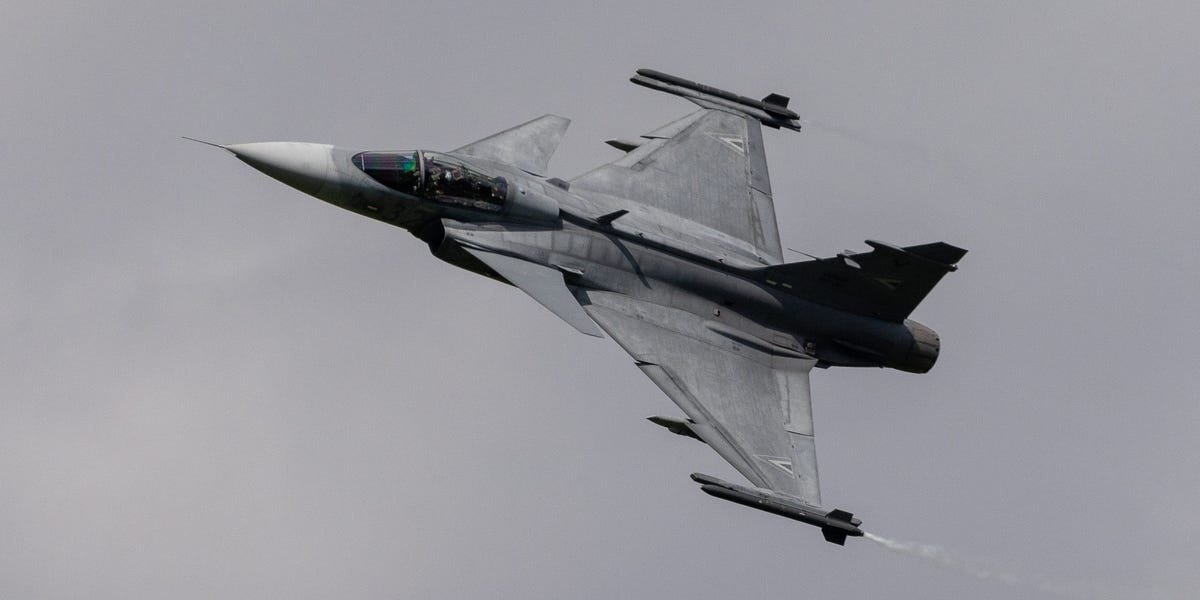
Swedish defense prime Saab is exploring the Advanced Precision Kill Weapon System as a cheaper armament option for its JAS 39 Gripen fighters, firm executives told Business Insider this week.

“The APKWS is in interest because other platforms are now integrating 70mm guided rockets. So we are, of course, eyeing that capability now,” Jussi Halmetoja, operations advisor for Saab’s air domain, said at the Singapore Airshow.

Halmetoja said the company was looking at ways to integrate the weapons system, which uses a guided version of the Hydra 70mm rocket, onto its older Gripen C and latest Gripen E models.

He made the comments as he and Mikael Franzên, chief marketing officer for the Gripen program, discussed the company’s observation from the Ukraine war that it needs more inexpensive weapons to counter uncrewed aerial systems.

“I mean, right now we are using very expensive weapons to kill very cheap drones,” Franzén said of traditional Western air combat.

He added that Saab is hoping to potentially equip the Gripen with systems that can fit multiple munitions onto a single hardpoint.

“If you can have four or 10 on each hardpoint, then you can kill a lot more drones,” Franzên said. The APWKS is typically mounted on aircraft with multilaunch pods.

Kyiv has signed a letter of intent with Sweden to potentially acquire up to 150 Gripen E fighters in the coming years. Ukraine’s air force has yet to fly the jet, which is touted as an ideal fighter for battling Russia because it’s built to operate from dispersed, rugged airfields and in the Arctic domain.

Kyiv is now flying much of its small fleet of F-16 Fighting Falcons from such small airfields, often moving the aircraft to increase their survivability.

But Franzén and Halmetoja said the Gripen can turn around much faster from dispersed airfields and be ready for a new mission within 10 minutes of landing.

Sweden, South Africa, Brazil, Thailand, Czechia, and Hungary are among the countries that fly the Gripen.

The APWKS, meanwhile, is already being deployed across various systems in Ukraine.

For example, the VAMPIRE counter-UAS systems feature a four-barrel launcher for the guided Hydra rockets that can be mounted on a pickup truck.

The cost of using one APKWS round is estimated at $20,000 to $35,000, compared to weapons more typically associated with modern fighters, such as the AIM-9 Sidewinder, which costs roughly $450,000, and the AIM-120 AMRAAM, which costs roughly $1 million.

Concerns about missile costs against cheaper drones have risen steadily since the war began, and as Russia has continuously grown its loitering munitions mass manufacturing.

Outside Ukraine, the US military has also been using the APWKS to recently fight drone attacks in the Middle East. The weapons system, loaded on American F-16s and F-15s, was responsible for roughly 40% of the drone kills scored by US forces against Houthi drones during last year’s Operation Rough Rider.


Source link

Matthew Loh Headshot

How Ukraine’s war-hardened cities kicked into ‘blackout mode’ as Russia plunged entire regions into the winter dark

A new wave of Russian strikes on Ukraine’s energy infrastructure has put two of its biggest regions to the test, as local cities rolled out plans for dealing with their worst blackouts in years.

Their prepared “blackout mode” response provides some insight into how urban centers might steel themselves for energy crises in wartime, especially during cold months. Ukraine’s winter can turn brutal in January and February, when temperatures typically drop to 18°F.

Mass blackouts can also disrupt water and sewage systems, hospitals, public transportation, and road control, including traffic lights.


Ukrainian residents queue up for water with plastic bottles on the street.

Ukrainians in Dnipro must collect water at public access points during power outages.

Roman Mykhalchuk/Suspilne Ukraine/JSC “UA:PBC”/Global Images Ukraine via Getty Images


Both Ukrainian troops and civilians have long learned to cope with frequent energy shortages in the winter, maintaining backup generators, battery-powered lamps, and stockpiles of coal or gas.

But Moscow’s latest attacks on Zaporizhzhia and Dnipropetrovsk, two eastern Ukrainian regions, plunged both areas into almost total darkness this week.

Regional leaders have described it as their biggest energy crisis since 2022, when Ukrainians first faced wartime power outages. Borys Filatov, the mayor of Dnipro, Dnipropetrovsk’s largest city, said the situation there was one of the most severe in the country and had risen to the level of a “national emergency.”

“This is the first total blackout in the entire region in recent years,” Ivan Fedorov, Zaporizhzhia’s governor, said in a statement on Thursday.

As national authorities reported that over 1 million people had lost heat and water, local officials rushed to restore power and open access to facilities prearranged for the blackouts.

One of their prepared responses was to deploy “invincibility points,” or earmarked emergency shelters equipped with heat, communication, and basic necessities.

Some local governments publish a map with available locations for civilians. The city of Dnipro, for example, maintains a list of mostly schools, municipality buildings, and metro stations designated as safe spots.

Civilians are meant to visit these shelters to “warm up, charge your gadgets, and wait out the power outage,” per the municipal government.


Ukrainians gather around power sockets to charge their phones.

A key feature of invincibility points, such as this one in Odesa, is the ability to charge your phone.

Yan Dobronosov/Global Images Ukraine via Getty Images


A video published by Oleksy Kuleba, Ukraine’s vice prime minister for reconstruction and the minister for community and territorial development, showed one point in Dnipropetrovsk that appears to be located in a small convenience store.

Kuleba said the region’s energy sector had been hit with a “massive blow,” and that over 5,000 people visited 500 such locations in the city of Dnipro within 24 hours after the power outages began.

Kuleba added that neighboring regions in Ukraine had donated 45 generators to Dnipropetrovsk, where some of its trains had switched to burning onboard fuel for power.

Zaporizhzhia’s governor, Fedorov, also said on Thursday that the region had 400 established invincibility points, with 200 ready for visitors within two hours.

“Residents could warm up, call their relatives, drink hot tea, and, if necessary, stay overnight,” he said.

Filatov, Dnipro’s mayor, said on Thursday that the city had set up 130 water dispensers, which his staff marked on Google Maps, and that disrupted public transport would be temporarily replaced by buses.


Ukrainian residents queue up for the bus.

Dnipro residents queue up for a bus, which local authorities said would replace critical public transport disrupted by the blackout.

Roman Mykhalchuk/Suspilne Ukraine/JSC “UA:PBC”/Global Images Ukraine via Getty Images


Hospitals were already equipped with alternative power sources and necessities, while parts of the city, on the western bank of the Dnipro River, were supported by backup power, he added.

“The city’s sewage system is also powered,” Filatov said.

Notably, Filatov said that while authorities had extended local school holidays to January 11, kindergartens would operate on four-hour shifts “because it’s clear that parents are also in a difficult situation.”

In Zaporizhzhia, Fedorov said the region had been left “completely without electricity” on Wednesday evening.

“We immediately went into ‘blackout’ mode and started working according to a clear plan,” he said.

Zaporizhzhia’s hospitals similarly switched to backup power within minutes, and the region’s traffic lights “worked autonomously,” he added.

Restoring power as the shelling continues

Ukrainian officials have since said that power has been partially returned to both regions, with Kuleba reporting on late Thursday evening that water and heating in Dnipropetrovsk had been restored to over 1.7 million people and 270,000 people, respectively.

Energy supplier DTEK said that around 700,000 families in the Dnipropetrovsk region once again had access to electricity, though it added that Russian bombing was continuing.

“An exhausting day for energy workers in the Dnipropetrovsk region,” the company said.

Fedorov warned repeatedly on Thursday evening of incoming drone and guided missile strikes over Zaporizhzhia. He later said that Russia had carried out over 728 strikes, including drone attacks, artillery shelling, and multiple-launch rocket system strikes across Ukraine that day.

Both Zaporizhzhia and Dnipropetrovsk are close to the southern and eastern front lines in Ukraine.

Kyiv has often accused Russia of specifically targeting energy infrastructure during the winter to exhaust and punish Ukrainian civilians, which is a war crime but is often difficult to prove.

The Kremlin has often responded that its strikes were intended for legitimate military targets, though the years have shown that critical facilities are regularly damaged or destroyed by the attacks.

“There is no military sense in such strikes on the energy sector, on infrastructure, which leave people without electricity and heating in winter conditions,” said Ukrainian President Volodymyr Zelenskyy on Thursday.


Source link

Under-threat-Ukraines-drone-schools-are-going-to-great-lengths.jpeg

Under threat, Ukraine’s drone schools are going to great lengths to stay off Russia’s radar

The leaders of several drone schools training Ukraine’s operators for the fight against Russia say they’re targets and they have to act accordingly — tightly protecting information and even moving around.

Throughout its invasion of Ukraine, Russia has launched huge drone and missile barrages at factories, training sites, and civilian infrastructure across the country, often far from the fighting in the east, straining Ukrainian defenses and serving as a constant reminder that nowhere in the country is completely safe.

Drones are prolific on the battlefield in Ukraine. Operators are priority targets. It stands to reason the schools training them for war would be too. Officials from three drone schools told Business Insider that they take steps to avoid getting hit.

Tetyana, a Ukrainian veteran who goes by the call sign “Ruda” and is now the head of R&D for Dronarium, a drone training school with sites in Kyiv and Lviv, said that it must follow strict safety rules because “the entirety of Ukraine is not safe, missile-wise, drone-wise.”

Dmytro Slediuk, head of the education department at Dronarium, told BI the safety measures, including not disclosing publicly exactly where its training centers are located and also changing their location “from time to time,” are necessary to prevent Russia from interfering with its training

To keep certain location data from getting out, the school doesn’t allow photos and videos that might reveal where its facilities are based.

The school has been mentioned by Russia’s military bloggers, influential pro-war accounts that often circulate operational details and commentary to large audiences. Though they are typically in favor of the war, they are also sometimes critical of Russia’s performance and dispute some of its defense ministry’s claims.


Two figures stand in an open field beside a launcher with a grey winged drone in the air

Drone schools say they’re targets for Russia.

Ivan Antypenko/Suspilne Ukraine/JSC “UA:PBC”/Global Images Ukraine via Getty Images


Rybar, a media outlet with 1.5 million Telegram subscribers, listed Dronarium as an example of Ukraine’s drone training efforts. The UK has sanctioned Rybar, initially presented as a milblogger but actually a partially Russian government-sponsored information warfare operation, and the US has offered up to $10 million for information.

Tetyana said Russian outlets have been writing about the school since 2022, the year Russia started its full-scale invasion. “As long as they write and talk about us, it means that they are afraid of us,” she said. But it also means that they’re on Russia’s radar.

She said the school and its attendees strictly adhere to a set of critical cybersecurity rules, and said there are also general safety rules in place. “When the air raid siren is on, all training activities, all the work, everything gets suspended, and we deconcentrate and get into safe shelters.” She said no one is complacent.

Vitalii Pervak, CEO of another training school, Karlsson, Karas & Associates, said that safety steps are crucial because “the Russians are constantly hunting for places where military personnel gather.”

Ukrainian officials have confirmed that Russia has hit some Ukrainian military training sites, killing personnel. It’s the kind of thing air defenses can try to prevent, but Ukraine has suffered shortages throughout the war. Ukraine has also successfully hit Russian bases and gatherings of Russian personnel.

The key is to prevent Russia from gaining sufficient knowledge of the school to target it. Its steps include “everyone who works at KK&A, including the cleaners,” having to do a polygraph security interview.

He said they don’t share any information about the location of the training center or about the appearance of the instructors or cadets.

“Some of our employees may have relatives or acquaintances in occupied territories who could be tortured by Russians for indirect contact with someone who opposes Russia,” Pervak said. “This secrecy also protects the instructors and cadets themselves, as well as their relatives, from attacks by Russian agents.”

He said that while the added security “hinders publicity to some extent — good things should be spoken about loudly — war dictates its own conditions. We are well aware that failing to observe the principles of secrecy may result in the death of staff or cadets.”

Viktor Taran, the CEO of the Kruk Drones UAV training center, said that “Russia is interested in destroying us.”

“Thanks to God and air defence, we’re still operating.”


Source link