
Amazon-says-USPS-exited-talks-at-eleventh-hour-while-a.jpeg

Amazon says USPS exited talks at ‘eleventh hour’ while a financial cliff looms for the delivery agency

The way millions of Amazon packages move across the country could shift dramatically.

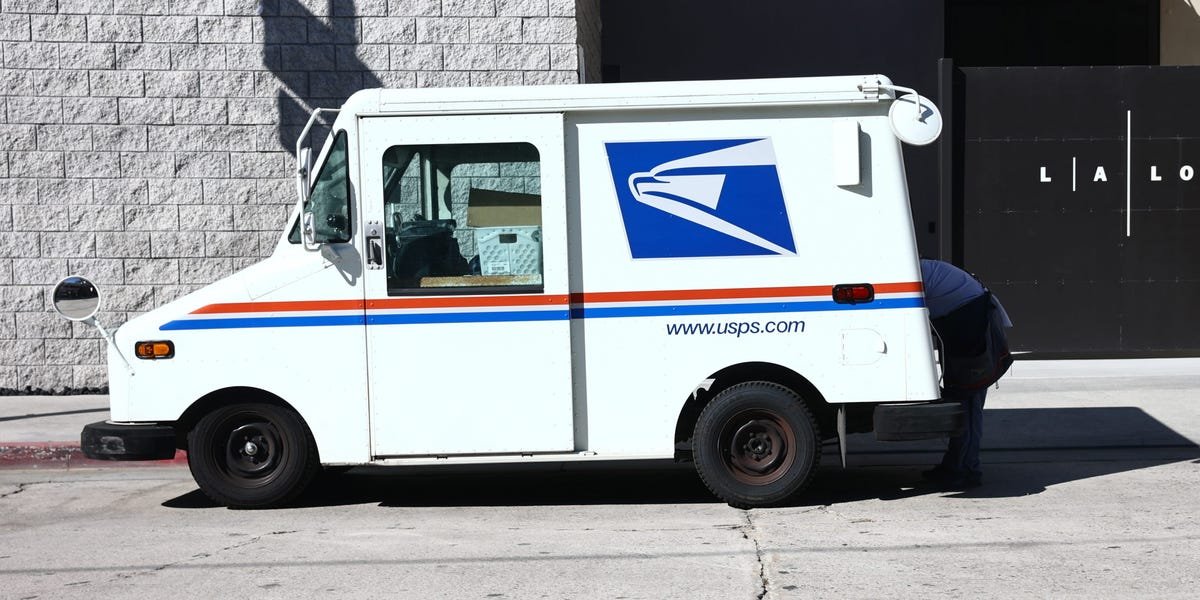
Amazon said on Wednesday in a statement that a key partnership with the United States Postal Service unraveled late last year after months of negotiations.

The e-commerce giant said that its goal was to expand the volume of packages it routes through the federal carrier. However, it said that after spending more than a year working toward a renewed long-term agreement with USPS, talks suddenly collapsed in December, with the agency exiting discussions at the “eleventh hour.”

The Wall Street Journal first reported on Wednesday that Amazon is preparing to significantly scale back its reliance on USPS when the current contract expires later this year. The company has historically been the USPS’s largest shipping partner, handling billions of deliveries annually.

Amazon said in its statement that it remains open to continuing the relationship with USPS and is seeking further discussions with leadership, but warned that time is running low for a deal.

The strained negotiations come as the USPS faces a financial cliff. Postmaster General David Steiner told lawmakers on Tuesday in a written statement that the agency could run out of cash within a year if current conditions persist. In a testimony before Congress on Tuesday, he described the organization as being at a “critical juncture,” with limited options to stabilize its finances.

Under federal law, USPS operates as a self-funded entity, relying on postage and service fees rather than taxpayer dollars. That model has come under strain for years as traditional mail volumes decline and costs continue to rise.

Since the mid-2000s, the agency has posted losses in nearly every fiscal year. It ended 2025 with a multibillion-dollar deficit and has continued to report quarterly losses driven by rising labor, healthcare, and operational expenses.

As of 2026, USPS has hit its statutory borrowing limit and can no longer take on additional debt. In 2025, President Donald Trump floated a plan to privatize USPS, but there have been no follow-ups.

In recent years, Amazon has been shifting its logistics strategy by building a vast delivery network of its own instead of relying on third parties, including acquiring its own fleets of trucks, planes, and regional air hubs.

Even so, USPS has remained an important partner for Amazon, particularly for last-mile delivery. Steiner told Reuters in December that Amazon used USPS 1.7 billion times a year for packages.

USPS did not immediately respond to a request for comments.


Source link

The-USPS-is-nearing-a-financial-breaking-point-postmaster-general.jpeg

The USPS is nearing a financial breaking point, postmaster general warns: ‘We were thrown an anchor’

The head of the US Postal Service is warning lawmakers that the agency would run out of cash within the next year unless Congress steps in.

On Tuesday, David Steiner, the postmaster general, called the situation a “critical juncture” during a House Oversight hearing.

“In about a year from now, the Postal Service would be unable to deliver the mail if we continue the status quo,” Steiner said. “I like to say that we got thrown overboard and into the water. But, instead of tossing us a life jacket, we were thrown an anchor.”

The agency is federally mandated to deliver mail to every address — rural or urban — across the US, six days a week.

USPS hasn’t turned a profit since 2006.

Last fiscal year, the 250-year-old agency said it lost $9 billion, following a $9.5 billion loss in the fiscal year 2024. The agency’s debt limit, meanwhile, rests at $15 billion.

To help address the problems, Steiner, who took over as USPS’s top role last year, proposed increasing the agency’s borrowing authority and raising stamp prices.

USPS isn’t designed to operate like a typical profit-driven company, Amrou Awaysheh, the associate professor of operations and supply chain at Indiana University, said. It’s designed instead to deliver important packages — including prescriptions, mail-in ballots, and letters — to all residents.

“Private carriers frequently hand off the ‘last mile’ to USPS in these places because the routes aren’t profitable for them,” Awaysheh told Business Insider. “If USPS has to pull back, there is no obvious private player ready to match its universal coverage at the same prices.”

Steiner said part of the agency’s financial challenges stems from Americans sending fewer letters.

He pointed to a dramatic long-term decline in mail volume. At its peak in 2006, USPS delivered 213 billion pieces annually.

That has plunged to about 109 billion today — a drop he said represents roughly $81 billion in lost revenue at current stamp prices. Right now, he reported that 71% of USPS delivery routes are losing money.


A line of USPS trucks from the back outside of a brick building.

USPS said fewer Americans are sending mail. It’s lost more than $18 billion since 2024. 

: Spencer Jones/GHI/UCG/Universal Images Group via Getty Images


“No company could weather that much revenue loss,” Steiner said.

USPS is also facing the possibility of losing a significant portion of its package business with Amazon, its largest customer.

According to a person familiar with the matter, USPS could lose at least two-thirds of its Amazon shipping volume by the fall.

An Amazon spokesperson said in a statement that it “wanted to increase our volumes with the USPS,” but the agency “abruptly walked away at the eleventh hour.”

USPS didn’t immediately respond to a request for comment from Business Insider.

“Losing Amazon’s high volume, high-frequency stream will be difficult to replace in a competitive market,” Donnafay MacDonald, the retail industry research director at Info-Tech Research Group, told Business Insider. “The issue at hand is the effect this has on USPS per unit costs, as relatively lower volumes usually lead to increased per unit costs.”

Steiner said on Tuesday that his agency needs to bring in more cash — and added that it won’t get there just by making more cuts to services or jobs.

“We can do anything you want,” he said. “But someone has to pay for it.”


Source link