2-months-after-his-arrest-in-Venezuela-Nicolas-Maduro-still.jpeg

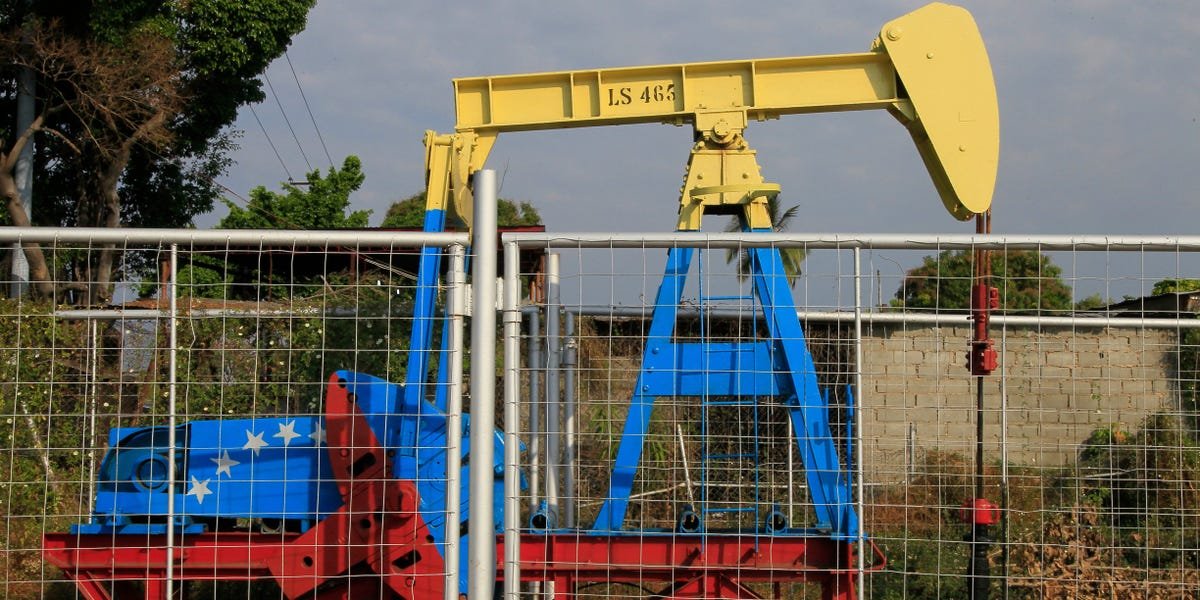
2 months after his arrest in Venezuela, Nicolás Maduro still has a long road to his criminal trial

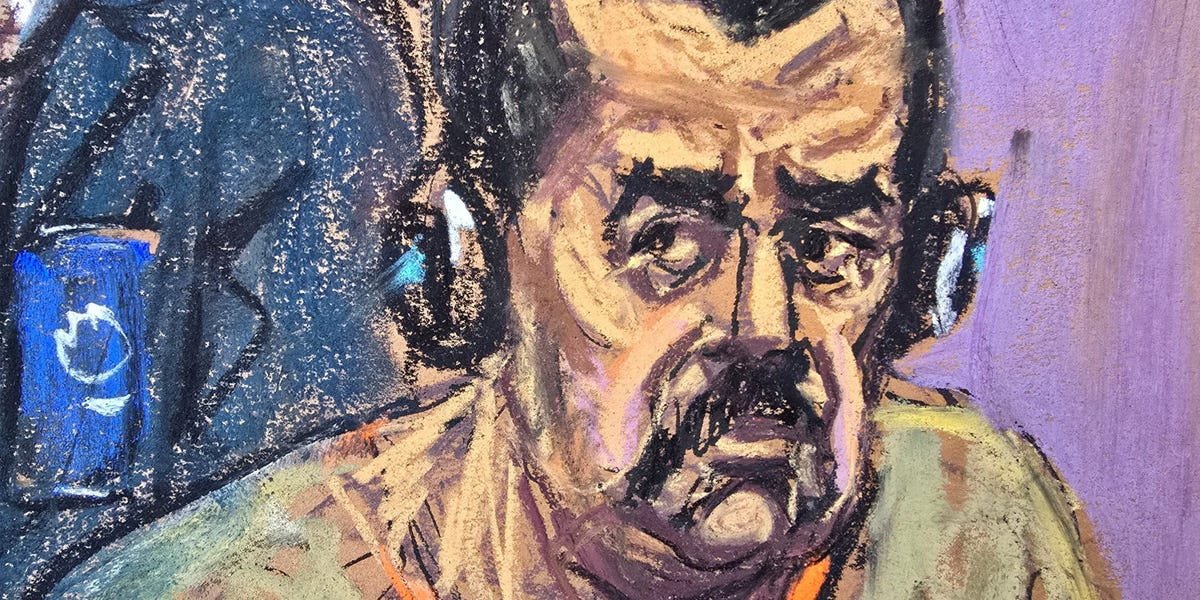
Eighty-two days after US military forces seized him and his wife from Caracas, Nicolás Maduro, the toppled president of Venezuela, walks into his 26th-floor Manhattan courtroom for the second time.

He has a long road to his trial.

The US Justice Department’s narco-terrorism and weapons charges against Maduro and his wife, Cilia Flores, still do not have a trial date. His attorney has said he expects “voluminous” motions challenging his seizure and detention.

The criminal case hasn’t gotten to those issues yet.

Thursday’s hearing focuses on how those lawyers will get paid.

The Venezuelan government has said it would pay for Maduro’s and Flores’s legal fees. But the payments are being held up by the US Treasury Department, which has not issued a waiver on the sanctions against Venezuela. Kyle Wirshba, the lead prosecutor in the case, said the payments were withheld because of “national security and foreign policy” reasons.

The issue appears to annoy US District Judge Alvin Hellerstein, the 92-year-old judge overseeing the criminal case.

Peering through his large, round glasses that magnified his cheeks, he asks Wirshba how — when the Trump administration was doing business with Venezuela — Maduro and his wife could possibly present a “national security” threat.

“The defendant is here. Flores is here,” Hellerstein says. “They present no national security threat.”

Since their arrest, Maduro and Flores have been held in the Metropolitan Detention Center, the infamous Brooklyn jail that has also been the temporary home of Sean “Diddy” Combs, Luigi Mangione, Sam Bankman-Fried, and Jeffrey Epstein’s associate Ghislaine Maxwell.

Thursday’s court hearing, across the East River, in Manhattan, begins 40 minutes late. Across the street from the courthouse, groups of pro-Maduro and anti-Maduro protesters shout at each other in front of a playground.

When Maduro walks into the courtroom, he has a bright, beaming smile on his face.

“Good morning!” he booms, wearing a jail outfit of a drab khaki smock over a bright orange shirt.

He shakes hands with his lead attorney, Barry Pollack, best known for representing Julian Assange. Then he turns to the journalists sitting on dark-wood benches in the audience and wishes them “good morning” again.

Flores, wearing the same outfit, plus a brown scrunchie holding back her blonde hair, says nothing.

When they sit at the defense table, they wear big, black headphones through which they hear the court proceedings translated into Spanish for them.

During the hearing, Flores’s attorney ​Mark Donnelly says “First Lady Maduro” needed an echocardiogram to evaluate an issue with her heart.

“There are no titles to be used in this court,” the judge says, before telling the lawyer to keep him informed if Flores didn’t get the treatment she needed in jail.

Venezuela’s now-former first couple ended up in New York City to face an indictment brought by the Department of Justice.

Prosecutors accuse them of participating in a decadeslong drug-trafficking conspiracy involving Colombian terrorist organizations, which enriched themselves and their family at the expense of Venezuelan citizens. The charges include narco-terrorism, cocaine importation, and machine gun possession.

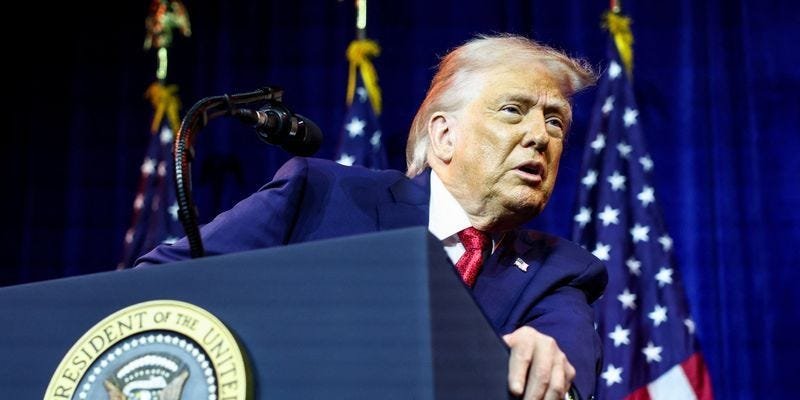
In January, after US forces captured the couple from a military fort in Caracas where they were staying, President Donald Trump called Maduro an “illegitimate dictator” responsible for funneling “colossal amounts of deadly illicit drugs” into the United States.

The President said that he and his wife “now face American justice” for their “campaign of deadly narco-terrorism.”

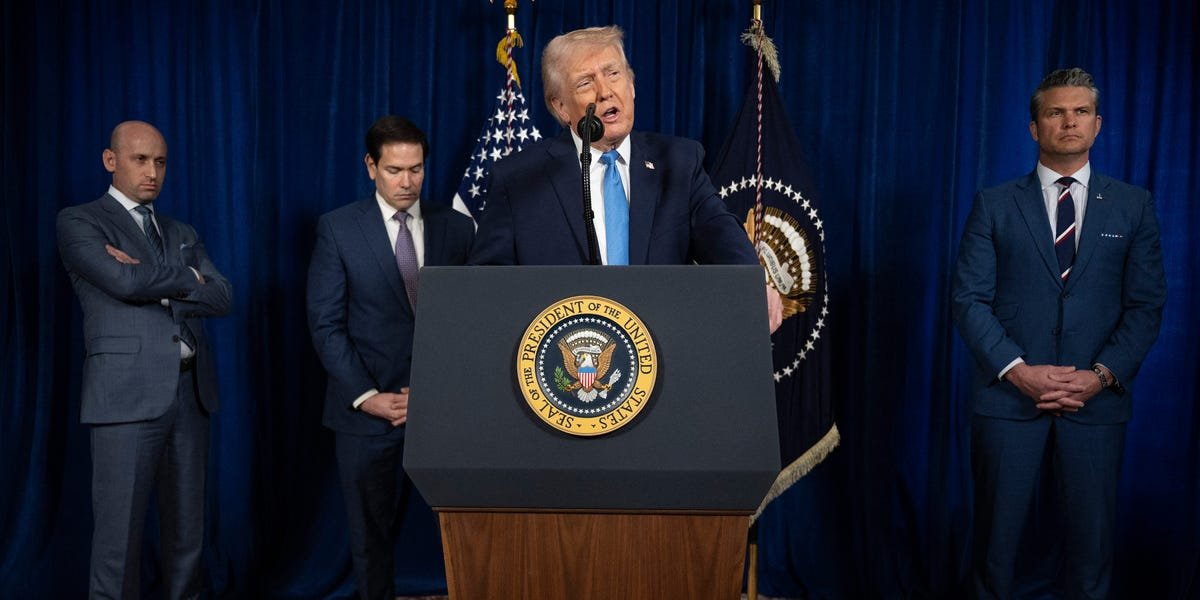
From the White House on Thursday, Trump called Maduro a “very dangerous man who has killed a lot of people” and said the charges against him were for just “a fraction” of his conduct — with more to come.

“Other cases are going to be brought, as you probably know,” he said.

But today is not yet about the core of the matter.

Wirshba, the prosecutor, argues that it would be inappropriate for OFAC, the part of the Treasury Department that grants licenses for sanctions waivers, to allow Maduro and Flores to access the wealth of the nation they “plundered.”

According to Wirshba, Maduro should have anticipated he could not have gotten the money from Venezuela to the US due to the sanctions, leading Hellerstein to remark upon the oddness of the Venezuelan president being captured from his nation and brought to New York City.

“He didn’t think he would be in this court?” The judge asks with a sarcastic tone.

Hellerstein — who has overseen cases involving financial scammers like Charlie Javice, former Trump lawyer Michael Cohen, and the 9/11 terror attacks in his 28 years on the bench — calls Maduro’s case “unique.”

While there have been other cases that addressed whether criminal defendants could use potentially “tainted” funds to pay their lawyers, all of those cases involved money that was already held in a US bank. In any case, Hellerstein says, Venezuela had already agreed to pay for the legal defense.

When a criminal defendant can’t afford their own lawyer, a judge can appoint one for them. But Hellerstein says the “investigative responsibilities” that would be required to defend the complex narco-terrorism case would overwhelm the resources of a publicly-funded lawyer.

But it remains unclear what Hellerstein could do about it. Forcing OFAC to issue a waiver would require a separate lawsuit brought in a different court, in Washington, DC, Wirshba says.

The only remedy, Pollack says, was to “dismiss the case” and let Maduro walk free.

Hellerstein initially pours cold water on the idea.

“I’m not going to dismiss the case,” he says.

But if OFAC didn’t soon change its position, he would consider it.

“I think it is such a serious step — I’m not going to take it now,” Hellerstein said.

After one and a half hours, Hellerstein decides he would hold another hearing, at an unspecified later date, to determine what steps he should take.

When Maduro leaves the courtroom, he only glances back at the audience behind him. He shakes the hands of his attorneys and walks stiffly toward the door. Flores kisses her lawyer, Donnelly, on the cheek.

Outside, the protesters are leaving. As a man passes by the courthouse, he yells: “Viva Maduro!”


Source link

Russian-oil-firm-says-it-will-keep-its-Venezuela-assets.jpeg

Russian oil firm says it will keep its Venezuela assets after US military operation

  • Russia’s state-owned Roszarubezhneft says its Venezuelan oil assets belong to the Russian state.
  • Roszarubezhneft holds stakes in oil joint ventures with Venezuela’s state-owned PDVSA energy giant.
  • President Trump has talked about US control and investment after the January 3 military operation.

Russia’s state-owned oil company Roszarubezhneft sought to draw a line around its oil holdings in Venezuela after a US military operation on January 3 reshaped the South American country’s political landscape.

“All assets of Roszarubezhneft JSC in Venezuela are owned by the Russian state,” the company said in a statement carried by Russian news agency TASS on Tuesday.

Roszarubezhneft took over Rosneft’s Venezuelan holdings in 2020 after US sanctions forced the oil giant to exit. It now holds stakes in five joint ventures with Venezuela’s state oil company PDVSA.

The company — owned by a unit of the Russian Ministry of Economic Development — said on Tuesday that the assets were acquired at full market value and approved by Venezuelan regulators.

Roszarubezhneft’s statement came as Venezuela’s oil sector faces fresh uncertainty after the recent US raid that resulted in the capture of deposed Venezuelan President Nicolás Maduro.

After the operation, President Donald Trump said the US could run Venezuela and touted plans for American oil companies to invest in the South American country’s vast but rundown oil sector.

Russian President Vladimir Putin has not commented publicly on the operation in Venezuela. Moscow’s relationship with Caracas includes deep energy ties — a key pillar of Russia’s economy — alongside defense and diplomatic cooperation.

The Russian foreign ​ministry has called for Maduro’s release and for dialogue between the US and Venezuela.

Investors are watching whether the tensions spill over into energy flows.

Global oil prices have been weighed down in recent years by ample supply and slowing demand growth.

But analysts say geopolitical risks are rising, with Venezuela and renewed tensions involving Iran back in focus.

Some analysts warn that the risk of an oil price shock — a sudden surge in prices that can ripple through markets and the global economy — is increasing as geopolitical conflicts intensify.


Source link

A-Venezuela-oil-revival-could-set-up-winners-—-and.jpeg

A Venezuela oil revival could set up winners — and losers — in US energy

Not all American energy companies stand to benefit from a potential revival of Venezuela’s oil industry following the US’s capture of Venezuelan leader Nicolás Maduro.

Energy stocks rose on Monday as investors priced in potential gains from renewed US access to Venezuela’s massive oil reserves. But analysts say smaller companies could struggle to benefit from a recovery in the country’s energy sector.

Additional Venezuelan oil supply over the coming years could be “negative for shale producers” that don’t have a footprint in Venezuela, Daan Struyven, the head of oil research at Goldman Sachs, said on the firm’s “Exchanges” podcast, published on Tuesday.

That’s because prices and volumes could come under pressure if supply growth over the next five to 10 years comes from Venezuela rather than from US shale, he added.

The potential strain on shale reflects a key difference in oil quality. Venezuelan crude is heavy and sulfur-rich, while US shale production is dominated by lighter oil. Many US Gulf Coast refineries were originally designed to process heavier crude, making Venezuelan barrels a better fit.

Greater access to Venezuelan crude could therefore benefit refiners while undermining demand for lighter shale barrels.

While light shale oil and heavy crude like Venezuela’s are not directly interchangeable, increased supplies of heavy oil can still reshape refinery demand and pricing across the broader market. That kind of change would indirectly pressure US shale producers, who have long been the engine of America’s shale revolution.

“In the US, the first casualties would likely be some oil producers, particularly smaller shale firms with high debt and thin margins,” Philippe Le Billon, a professor at the University of British Columbia who studies the political economy of natural resources, wrote in The Conversation on Sunday.

Furthermore, oil prices have already been under pressure in recent years due to ample supply and sluggish demand growth.

US benchmark West Texas Intermediate crude futures are trading around $56 a barrel, while Brent futures are around $60 a barrel. Both are down around 2% so far this year after falling 20% last year.

Even an increase in Venezuela’s oil production in the medium term could put downward pressure on oil prices, making it harder for higher-cost US shale producers to justify new drilling, researchers at Columbia University’s Center on Global Energy Policy said in a Sunday post.

That dynamic could intensify the pressure on US shale producers.

“This complicates the notion that the US would unambiguously ‘win’ from a Venezuelan oil revival. Energy geopolitics creates winners and losers on all sides,” wrote Le Billon.


Source link

Donald-Trump-says-Venezuela-would-give-30-to-50-million.jpeg

Donald Trump says Venezuela would give 30 to 50 million barrels of oil to the US, to be controlled by him

  • President Donald Trump announced a plan to import over 30 million barrels of Venezuelan oil to the US market.
  • Venezuela’s interim president, Delcy Rodríguez, has not commented on Trump’s proposal.
  • Trump is considering subsidizing oil companies to expand their operation to Venezuela.

President Donald Trump said he’s wasting no time when it comes to oil in Venezuela.

In a post on Truth Social on Tuesday, Trump said that the interim president of Venezuela will “be turning over” between 30 and 50 million barrels of sanctioned oil, and that the oil would be sold at market prices, with the revenue overseen by him as president to ensure it benefits both Venezuela and the US.

“It will be taken by storage ships, and brought directly to unloading docks in the United States,” Trump wrote on Truth Social.

He added that he directed Energy Secretary Chris Wright to carry out the plan “immediately.”

It is unclear if the plan will face legal hurdles, and further details are unknown. The White House did not immediately respond to a request for comments.

The current interim leader of Venezuela is Delcy Rodríguez, who was sworn in as acting president on January 5, 2026, after the US captured and detained the country’s former President Nicolás Maduro, alongside his wife. Rodríguez is a longtime Maduro loyalist and originally served as the Vice President of Venezuela. She has so far not spoken out on whether she would cooperate with Trump’s plan.

Trump’s comments build on his previous remarks that he would “take back” Venezuela’s oil reserves and revive the country’s battered energy sector, which has faced sanctions and mismanagement.

Trump also previously said in an interview with NBC News that the US could reimburse American oil companies for expanding their operations in Venezuela, but he did not have an estimate on how much the subsidy would cost.

Even though a larger supply could lead to lower costs for American consumers, the downward pressure on prices could disincentivize large oil companies from investing in Venezuela. It could also take years to build functioning infrastructure.

Venezuela’s oil production currently accounts for less than 1% of the global oil output, despite possessing the world’s largest known oil reserves.


Source link

Heres-what-the-smartest-people-in-foreign-policy-business-and.jpeg

Here’s what the smartest people in foreign policy, business, and economics are saying about Trump’s raid on Venezuela

President Donald Trump on Saturday announced that the US had conducted a raid on Venezuela, resulting in the capture of Venezuelan President Nicolás Maduro and his wife, and big names in business and foreign policy have been reacting as the aftermath unfolds.

Here’s what they’ve been saying:

Charles Myers

Myers, chairman of political risk consulting firm Signum Global Advisors, told Business Insider that foreign investment in oil, tourism, and construction will be the “centerpiece” of Venezuela’s financial recovery going forward, adding that he expects the country’s economy will grow “faster over the next two years than people anticipate because of the extent or scale of foreign investment.”

Myers, also a former head of investment advisory firm Evercore, is planning a trip of 15-20 investors to visit Venezuela in March to identify investment opportunities. Signum Global Advisors has hosted similar trips for investor groups in Syria and Ukraine.

Ian Bremmer

Bremmer, founder of the political risk research and consulting firm, Eurasia Group, in a post on LinkedIn, wrote that the “US presumption is next Venezuelan leaders will now do what the Americans want because they’ve just seen the ‘or else.'”

Accompanying the post was a photo of a drawing of a horse. The hindquarters of the horse were drawn in intricate detail, and labeled “SOF operation to capture Maduro,” referencing the special operations forces mission that was executed early Saturday. The horse’s head was depicted as a rudimentary children’s drawing, captioned “plans for future of Venezuela.”

“I wouldn’t exactly call it a plan,” Bremmer added.

In a separate post, he wrote: “The law of the jungle is dangerous. What applies to your enemies one day can apply to you the next. Make no mistake where the world is heading here.”

Bill Ackman


Bill Ackman

Bill Ackman has expressed support for many of the Trump administration’s policies, foreign and domestic.

PATRICK T. FALLON/AFP via Getty Images


The billionaire hedge fund manager wrote in a post on X that “The removal of Maduro will lower oil prices, which is good for America and very bad for Russia. A weaker Russian economy will increase the probability that the war in Ukraine ends sooner and on more favorable terms for Ukraine. And Putin will be sleeping in his safe room from this point going forward.”

Henry Gao

Gao is a senior fellow at the Center for International Governance Innovation and a law professor at Singapore Management University. In a series of posts on X, he said the raid on Caracas ushered in “the brave new world of international law.”

“Maduro’s capture has triggered the biggest revival of international law since Grotius — and overnight turned everyone on X into an international law wonk, eager to compare Venezuela to Taiwan,” he wrote.

“But China has never treated the Taiwan issue as a matter of international law,” he continued. “It has always been framed as an internal affair, with Taiwan regarded as a renegade province. The reason China has not acted is not because it lacks legal justification, but because it lacks the capability. Thus, US ops in Venezuela provide China with no additional legal justification.”

Sen. Elizabeth Warren

The Democratic senator from Massachusetts is a former Harvard Law professor who holds deep expertise in bankruptcy and consumer finance. In a post on X, she wrote that Trump’s action to seize Maduro, “no matter how terrible a dictator he is — is unconstitutional and threatens to drag the US into further conflicts in the region.”

“What does it mean that the US will ‘run’ Venezuela, and what will Trump do next around the world?” Warren wrote. “The American people voted for lower costs, not for Trump’s dangerous military adventurism overseas that won’t make the American people safer.”

Elon Musk


President Trump and Elon Musk i nthe White House.

Elon Musk and Donald Trump in the Oval Office.

Kevin Dietsch/Getty Images


The Tesla and SpaceX CEO spent most of Saturday posting praise for the Trump administration and the military operations in Venezuela, posting that it was “heartwarming to see so many Venezuelans celebrating their country freed from a brutal tyrant.”

In another post, Musk retweeted a White House image of Maduro aboard the USS Iwo Jima after being apprehended, with the caption “Congratulations, President Trump! This is a win for the world and a clear message to evil dictators everywhere.”

Musk and Trump have had a tumultuous relationship over the years, alternating between appearing to be close allies and trading sharp criticisms in the media.


Source link

A-group-of-about-20-US-investors-is-already-planning.jpeg

A group of about 20 US investors is already planning a trip to Venezuela in March

A group of about 20 US investors is already planning to travel to Venezuela in March, following Saturday’s news that the country’s president, Nicolás Maduro, had been taken into US custody.

Charles Myers, the chairman of the political risk advisory firm Signum Global Advisors and a former vice-chairman of the investment advisory firm Evercore, told Business Insider that the mood among investors he has spoken to is one of “cautious optimism” following news of Maduro’s ouster.

“I think the centerpiece of Venezuela’s success, looking out 12 months or even 24 months, is foreign investment,” Myers said. “A big part of the Venezuela story, starting today, is foreign investment, especially in oil and gas, which is pretty straightforward, but there are massive opportunities in construction, in tourism.”

Myers said it’s not the responsibility of his firm to take a “moral position” on whether it was right or wrong for the US to involve itself in Venezuela’s government, but rather to help the firm’s clients anticipate investment opportunities or mitigate risk due to geopolitical events.

However, he added, his firm “very much expected” the situation in Venezuela would unfold as it has, and has been preparing investor groups to be ready to travel to the country when the opportunity presents itself. Signum previously hosted similar trips for asset managers and hedge funds to visit Syria and Ukraine.

“People have seen this coming, especially very smart investors, and many of them have actually bought bonds in anticipation of this,” Myers said. “But there’s a very strong degree of cautious optimism, even more so than we saw with Syria, just because this is a United States-directed action.”

“The United States will play a pivotal role in everything, especially the Venezuelan economy, starting today,” Myers added, “So, I think the reaction has been more enthusiastic than perhaps other situations like this.”


Source link