
US-planning-for-the-Maduro-raid-eyed-a-time-when.jpeg

US planning for the Maduro raid eyed a time when much of the Venezuelan military was expected to be on holiday, memo reveals

US planning for the high-risk raid to apprehend Venezuela’s former president, Nicolás Maduro, centered on a time when much of the country’s military would be on holiday leave, a newly released memo reveals.

The December 23 memorandum from the Department of Justice’s Office of Legal Counsel offers fresh details about how the US planned to pull off the daring nighttime raid to capture Maduro in his fortified compound and transport him to New York to stand trial. The former leader has pleaded not guilty to the drug and weapons charges he faces.

The raid began late on January 2 and ran into the next day. President Donald Trump said on January 3 that the initial plan was for the operation to occur four days earlier, on December 30, but he decided to wait for better weather.

“The expected duration of the operation within Venezuelan territory is [redacted] hours,” wrote T. Elliot Gaiser, a US assistant attorney general, wrote in the late December DOJ memo, which looks into the legality of the raid and was made public this week. Much of the planning section is blacked out.

“In order to minimize casualties, the strike will take place at 0100 am (local time) on a date where a maximum number of Venezuelan military would be on leave for the holidays,” Gaiser wrote.


A squad of Venezuelan Air Force K8W aircraft overflies during the 2025 Venezuela industrial aviation expo at the Libertador Air Base in Maracay, Aragua State, Venezuela, on November 29, 2025.

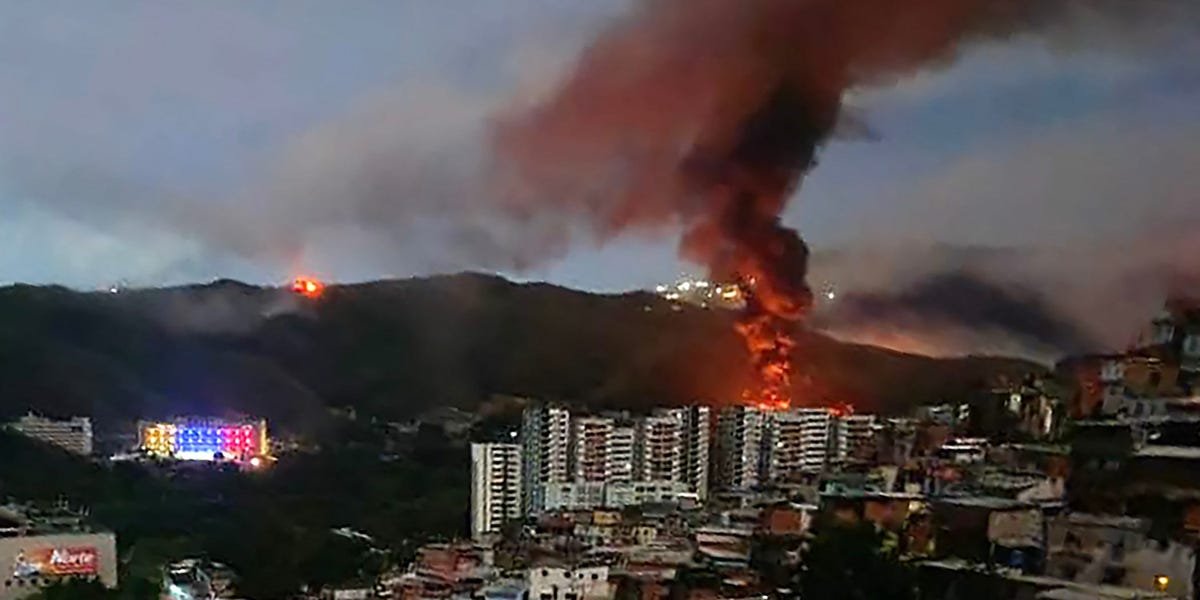
The US attacked Venezuelan military targets as part of its raid earlier this month.

Federico PARRA/AFP via Getty Images


It’s unclear how many soldiers were away when the US actually executed the operation in January. Dozens of Venezuelan and Cuban security personnel were killed, the two countries said after Operation Absolute Resolve concluded.

The DOJ memo, which cited Pentagon planning information and details how the US could effectively present the action as a law enforcement operation rather than an act of war, said that the US expected to encounter “significant resistance” from Venezuela’s air defenses.

That anticipated resistance includes several dozen anti-aircraft systems on the approach to Fuerte Tiuna, a major military installation in Caracas where Maduro and his wife were believed to be and, indeed, were at the time of the operation.

The memo outlined how US aircraft would strike air defense systems to clear a path for assault forces to reach Tiuna. It said that the Pentagon aimed to target a local power switching station to keep the power off, which could explain Trump’s post-raid remarks that a “certain expertise” was used to turn off the lights in Caracas.

The US could have also carried out a cyberattack or employed electronic warfare capabilities. “Kinetic operations will be preceded by non-kinetic action,” the memo said.


A fuel tanker truck drives past US Air Force F-35 Lightning II and F-22 Raptor fighter jets on the tarmac at the former Roosevelt Roads naval base, after US President Donald Trump said the US has struck Venezuela and captured its President Nicolás Maduro, in Ceiba, Puerto Rico, January 3, 2026.

More than 150 US aircraft participated in the operation.

Eva Marie Uzcategui/REUTERS


The memo was published several days before the raid, so it’s unclear how US planning may have changed between the time it was written and the actual operation.

Dan Caine, the chairman of the Joint Chiefs of Staff, said on January 3 after the raid that more than 150 US aircraft participated in the operation, including stealth jets, electronic attack aircraft, surveillance and reconnaissance planes, airborne early warning aircraft, bombers, and drones.

Many of these aircraft targeted and engaged Venezuela’s air defenses to clear a path for low-flying helicopters carrying the forces that stormed Maduro’s compound and apprehended the former president and his wife, consistent with the planning memo.

The US didn’t lose any aircraft during the raid. A helicopter took a hit but still remained operational, and a defense official said seven American service members were wounded during the night.

“Risks to the mission are significant,” the memo said, adding that its “success will depend on surprise.” In the aftermath, Caine said the US achieved “totally the element of surprise.”



Source link

Theron Mohamed — Profile Picture

Warren Buffett’s Chevron bet stands to gain if the US delivers a Venezuelan oil boom

Investors are scrambling to identify potential winners from the US capture of Venezuelan leader Nicolás Maduro and President Donald Trump’s plan to “run” the nation and deliver an oil boom. Berkshire Hathaway is one contender thanks to its large bet on Chevron, the only US oil major still operating in Venezuela.

Berkshire — now led by Greg Abel following Warren Buffett’s recent retirement as CEO — is Chevron’s largest corporate shareholder with a 6% stake worth about $19 billion, assuming Berkshire hasn’t altered the wager since its latest portfolio update.

The conglomerate counted the oil major as its fifth-largest stock position at the end of September 2025, representing about 7% of the total $267 billion value of its US stock portfolio.

Berkshire poised to profit


Greg Abel

Greg Abel took over as Berkshire Hathaway CEO at the start of 2026.

Kevin Dietsch/Getty Images


Venezuela has the world’s largest proven crude oil reserves, but decades of underinvestment in its oil infrastructure mean it only produces about 1% of global oil output.

Chevron has secured short-term exemptions to US sanctions on Venezuela, allowing it to produce and export limited amounts of the country’s oil.

Rivals, including Exxon Mobil and ConocoPhillips, left Venezuela years ago following the nationalization of the country’s oil industry and government seizures of foreign-owned assets.

Trump said over the weekend that he envisions large US oil companies coming to Venezuela, fixing and modernizing its pipelines and refineries, and supercharging the country’s oil production.

Excited investors piled into oil stocks on Monday. Chevron shares surged as much as 6.3% on the day to a nine-month high of about $166, briefly valuing Berkshire’s stake at over $20 billion. They retreated on Tuesday but are still up nearly 3% so far in 2026.

Chevron already has stakes in five production projects in Venezuela, thanks to partnerships with affiliates of the country’s state oil company.

On an earnings call in August, CEO Mike Wirth highlighted Chevron’s deep foothold in the country. He said it has been operating in Venezuela for more than a century, and has “played an important role in regional energy security, as well as maintaining American economic interests.”

Chevron’s presence in Venezuela means it “stands to benefit from any reopening,” Maurizio Carulli, a global energy analyst at Quilter Cheviot, said in a Tuesday note.

The oil major has the personnel, licenses, and oil fields “ready to ramp up immediately,” Charles-Henry Monchau, CIO of Syz Group, also said in a note on Tuesday.

Not an overnight winner

Industry analysts have warned it will take years and huge sums to revitalize Venezuela’s oil sector, and US companies won’t want to invest heavily until they’re confident they won’t have assets seized or contracts changed down the line.

That suggests Venezuela won’t be an overnight game changer for Chevron or Berkshire.

Berkshire has further exposure to the oil industry via Occidental Petroleum, its next-largest stock holding after Chevron. It owns more than a quarter of the energy explorer and producer — a stake worth $11 billion today.

A Chevron spokesperson told Business Insider in a statement: “Chevron remains focused on the safety and wellbeing of our employees, as well as the integrity of our assets. We continue to operate in full compliance with all relevant laws and regulations.”


Source link

Latest-updates-Trump-says-the-US-has-captured-and-indicted.jpeg

Latest updates: Trump says the US has captured and indicted Venezuelan President Nicolás Maduro

President Donald Trump said on Saturday that the United States had captured Venezuelan President Nicolás Maduro and his wife, Cilia Flores, following a “large-scale strike” on Venezuela.

Attorney General Pamela Bondi has said that Maduro and Flores have now been indicted in the Southern District of New York.

Maduro was charged with drugs and weapons offenses, Bondi said, adding that they would “soon face the full wrath of American justice on American soil in American courts.”

Venezuela said the US had carried out strikes on Caracas and the coastal states of Miranda, Aragua, and La Guaira early Saturday.

Trump had repeatedly threatened Venezuela with military action in recent months as tensions with Maduro soured over what the Trump administration says are drug trafficking networks in the country. Caracas has maintained that Washington’s aim is to overthrow the Venezuelan government.

Follow this liveblog for updates.


Source link