Bolt Data and Energy, a data center development firm that was cofounded late last year by former Google CEO Eric Schmidt, is negotiating a deal that would allow it to begin construction on a large data center project it is planning in West Texas.
Schmidt’s firm is in discussions with Google, his former employer, according to two people with direct knowledge of the talks. The tech giant, one of the leaders in the race to develop and commercialize artificial intelligence, is considering a commitment of 250 megawatts, according to one of the people. The other person said it was too early to characterize the exact size of the potential transaction because it was still under discussion.
The sources spoke on the condition of anonymity because the potential transaction is still being arranged and the talks are confidential.
“We don’t comment on rumors,” a Google spokeswoman told Business Insider, declining to comment further. Google announced last year that it plans to build $40 billion of cloud and AI infrastructure in Texas by 2027.
The potential deal highlights how Big Tech is racing to secure the power, physical infrastructure, and land needed to fuel AI, even as the costs and financial risks of those bets loom.
Every time Daniel publishes a story, you’ll get an alert straight to your inbox!
Stay connected to Daniel and get more of their work as it publishes.
In December, Bolt completed its first funding round, raising $150 million from investors, including $50 million from Texas Pacific Land Corporation, a public company that owns large tracts of land in West Texas. As part of the investment from TPL, Bolt will develop data centers on land in TPL’s portfolio.
A presentation detailing Bolt’s development plans, shared with Business Insider, said that TPL’s land would give it access to abundant power and water for cooling. These commodities have become increasingly strained as data center development has boomed around the country.
The presentation states that Bolt’s development would begin with an “initial 250 megawatt facility” and expand in 250-500 megawatt increments into a 5 gigawatt campus.
Bolt’s plan is one of several large-scale projects that have been envisioned in Texas to cater to the AI race. Fermi, a public company co-founded by former Texas governor and US Energy Secretary Rick Perry, has plans for an 11-gigawatt campus in Amarillo.
In December, Business Insider revealed that Amazon had pulled back a $150 million cash advance it had pledged as part of a preliminary deal to anchor the project. Fermi’s disclosure of the reimbursement of that advance caused its stock to fall by 50%. Fermi’s CEO, Toby Neugebauer, told Business Insider that although Amazon had reclaimed its advance, the negotiations for it to take space with Fermi were still ongoing.
Major bank lenders who extended $38 billion to finance the construction of data center campuses in Shackleford County, Texas, and Port Washington, Wisconsin, for Oracle and OpenAI, meanwhile, have had difficulty selling off pieces of the huge loan to other banks and investors. Those troubles stem, in part, from worries about whether Oracle’s credit will be strained by its massive AI spending.
To help allay concerns, Oracle announced it would raise as much as $50 billion in debt and equity in 2026 to continue to pursue its AI buildout while also maintaining “a solid investment-grade balance sheet.”
Last week, Alphabet, Google’s parent company, revealed in its fourth-quarter earnings report that it plans to spend between $175 and $185 billion on capital expenditures in 2026, roughly double its outlay in 2025. The spending is being done largely to pay for AI equipment and infrastructure.
A record wave of spending has been announced by big technology companies on AI this year, including Amazon’s disclosure during its earnings last week that it would spend $200 billion alone this year.
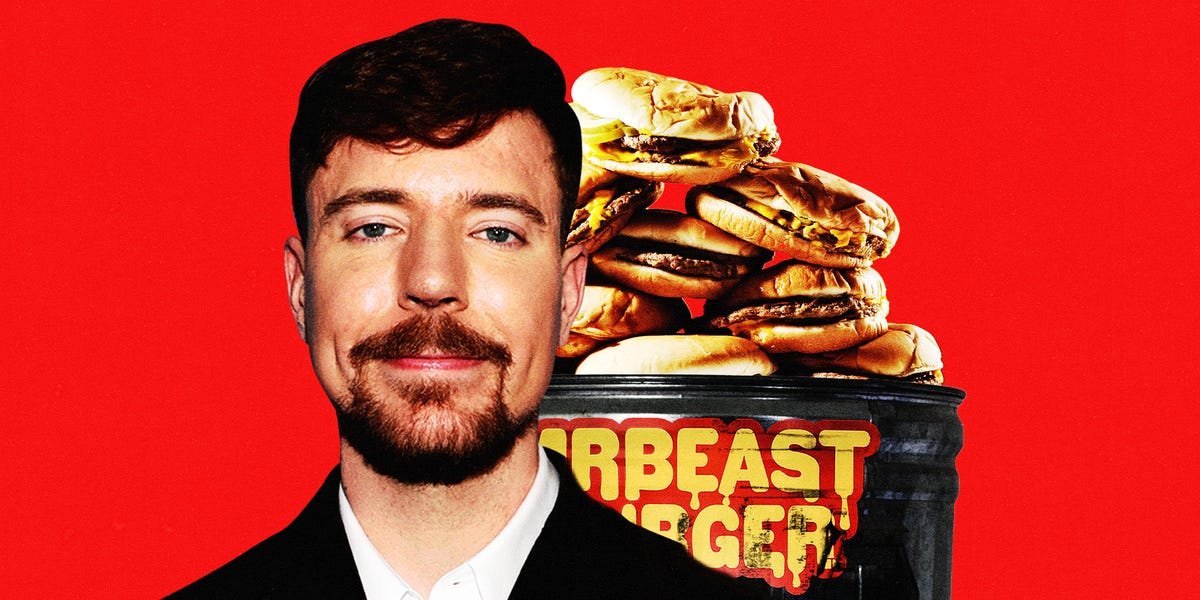
It was nearly six in the morning on a Tuesday in mid-2023, and Jimmy Donaldson, better known to the world as MrBeast, had been up for hours sending a stream of frustrated texts about MrBeast Burger, his nearly three-year-old food venture.
The YouTuber was furious with his business partners over customer complaints of undercooked burgers, and tensions had reached a breaking point.
He was done.
“As long as I have no control, I couldn’t care less about it,” Donaldson, who is known to be exacting and kill projects he doesn’t believe are up to snuff, texted a friend.
These texts — revealed as evidence in a legal battle between MrBeast and his partner Virtual Dining Concepts that could go to trial later this year — represent a stark departure from the grand ambitions Donaldson had described for the brand just six months earlier. They are part of thousands of pages of contracts, messages, and depositions that show how the partnership imploded and reveal a confrontational side of Donaldson far different from his polished, smiley persona on camera.
MrBeast Burger, a largely delivery-only venture that sells burgers and fried chicken sandwiches, was meant to be a cornerstone of a food empire that would “run circles” around Nestlé, Donaldson said in a text exchange with his cousin in December 2022.
“I want to go down the food rabbit hole and become a god in this space,” he wrote. “The king of healthy food innovation.”
By mid-2023, the promising fast-food endeavor had become a colossal headache for Donaldson.
“I was getting destroyed online, and it was impacting how people viewed me, and it made me chronically depressed,” he later said of the experience in a deposition.
The MrBeast Burger saga provides a cautionary tale for independent creators about the potential downsides of handing over control to third parties, and to brands about working with influencers who insist on tight creative oversight.
A promising start or a recipe for disaster?
Plenty of celebrity-brand deals have been fruitful, but for every Kim Kardashian and Skims partnership, there’s a Kanye West and Gap flameout. Each partnership brings its own nuances and complexities, and “virtual dining” businesses like MrBeast Burger come with built-in risks.
MrBeast Burger’s food is made by various “ghost kitchen” partners ranging from 7-Eleven and Red Robin to local mom-and-pops. That meant low overhead and few barriers to entry for the brand, but the potential for uneven food quality.
For social media creators, whose livelihoods depend on their relationships with fans, reputation is paramount.
“The inherent risk is, when you do these licensing deals, the creator’s name is the product,” said Keith Gelman, founder of entertainment marketing agency Talent Partnership Advisors, who has negotiated partnerships with celebrities including Snoop Dogg and Reba McIntyre. “The audience doesn’t distinguish between the operator and the creator.”
MrBeast and VDC came from different business and cultural worlds.
Donaldson was 22 when MrBeast Burger launched in 2020. He’d soared to internet fame through videos involving cash giveaways and stunts like being buried alive. His business was mainly run by family members, a close circle of friends, and his management team at Night Media.
VDC’s founder, Robert Earl, is a British expat restaurateur and TV personality best known for founding Planet Hollywood before moving with his son into the virtual dining business. Often seen sporting colorful shirts, Earl is at home with movie stars like Arnold Schwarzenegger and Bruce Willis. YouTubers like MrBeast were not in his orbit when his son signed the influencer for a burger partnership.
Robert Earl, front, with celebrity pals.
Denise Truscello/WireImage
MrBeast Burger launched in 2020 with a bang.
Donaldson set up a pop-up version of the restaurant near his hometown of Greenville, North Carolina, where he slid wads of cash into burger bags and handed out free iPads. He posted a video of the event, which crossed 200 million views on YouTube — a marketer’s dream.
“We were beyond slammed and ill-prepared for his incredible following and demand that ensued,” Earl told Business Insider shortly after MrBeast Burger’s launch. “It was beyond any expectation.”
After selling over 1 million sandwiches in just a couple of months, the company expanded to over 1,000 restaurants in 2021.
Donaldson was giddy with excitement about the possibilities. Early on, he began musing about merging MrBeast Burger with his candy brand Feastables and going public.
He imagined a $10 billion IPO — and he wanted an even bigger stake in the business.
“I’ll get my equity, everyone who built the channel will get their equity, and the investors will get sick returns,” he wrote in a text in late 2022.
Fans gather at the first physical MrBeast Burger restaurant opening in 2022.
Dave Kotinsky/Getty Images for MrBeast Burger
Raw burgers and soggy fries
Despite a hot start, there were early signs of trouble.
Customer complaints about product quality — including undercooked burgers, soggy fries, and incorrect orders — began appearing on social media almost immediately.
The worst part for Donaldson: There was little he could do about it.
Many of the hundreds of restaurants that sold MrBeast Burger’s food operated independently, which meant tracking down any mistakes was like playing a game of whack-a-mole.
The problems MrBeast Burger ran into are common for ghost kitchen brands with many locations, Rich Shank, a senior principal at the food-service consultant and research firm Technomic, told Business Insider.
“There’s just a lot of variances and nuances in the ghost kitchen space that make it challenging,” he said, including standardizing ingredients, cooking processes, and other factors that differ from kitchen to kitchen.
Complaints about MrBeast Burger started appearing soon after its launch.
Beast Investments vs. Virtual Dining Concepts
VDC used a variety of methods to monitor quality issues, including working with the guest feedback platform Tattle to analyze customer satisfaction. It hired a third-party firm, Intellishop, to send “mystery shoppers” to order from various MrBeast Burger locations and see what they delivered. At one time, about 5% of orders were coming back wrong, more than double VDC’s target rate of around 2%, according to an email from VDC CEO Stephanie Sollers.
Sollers said in a deposition that incorrect orders were an unfortunate feature of “most restaurant businesses.” For Donaldson, the complaints were personal.
“People were ridiculing me and saying I didn’t care,” Donaldson said in a deposition.
Donaldson’s lawsuit compared his philosophy to that of Yankee great Joe DiMaggio: “There is always a kid who may be seeing me for the first time. I owe him my best.”
Donaldson’s solution was the same one he applies to his YouTube content: “obsess over it” until he figures out an answer.
He proposed to VDC that each restaurant could submit a photo of every item to verify its quality before sending it to customers, and he wanted to hire someone to make quality control their obsession.
That kind of micromanaging wouldn’t be “operationally prudent” and would be “a very quick way of having your line cooks want to quit,” Shank said.
Jimmy Donaldson poses with fans at the opening of the first physical MrBeast Burger restaurant in 2022.
Dave Kotinsky/Getty Images for MrBeast Burger
The beef enters the boardroom
Undercooked food was not the only source of tension in MrBeast Burger land.
Donaldson accused VDC in his lawsuit of having used his name, image, and likeness in social posts and trademarks without his consent. He also told associates he wanted a larger ownership stake to gain control over MrBeast Burger’s destiny and get out of what he called in a text a “fucked deal.”
In November 2022, Donaldson made the first in a series of attempts to acquire nearly all of the company from VDC.
The stakes were high. Tech billionaire Chamath Palihapitiya, an investor in MrBeast’s company, said in a 2023 email that the creator’s media business was a break-even proposition that had “some enterprise value but not much.”
“The real value is using it as a platform to launch CPG and other kinds of companies,” Palihapitiya wrote. “We need to own at least 80% of each company.”
The problem: Donaldson’s company only owned 50% of MrBeast Burger, and the newest deal he’d signed made that agreement indefinite.
The negotiations, which dragged on for months, led to the complete fracturing of MrBeast’s relationship with VDC.
During one meeting with VDC, Donaldson banged a clothes hanger on the table out of frustration. In another, the YouTuber claimed Earl showed him a desk drawer of lawsuits to make the point that he wasn’t afraid of being sued. (Earl denied this.)
“Let’s throw a grenade in the room of VDC,” Donaldson wrote in one text as negotiations continued.
In the background, Donaldson took other steps to try to seize control. His lawyers shot a letter to VDC alleging breach of contract, and his team changed the passwords on the MrBeast Burger social accounts, cutting off VDC’s access.
“Robert is dead to me once the deal closes,” he texted his cousin during the negotiations.
“Fuck those pieces of shit,” he wrote to a friend.
In June 2023, his rage went from texts to tweets when he fired off a string of posts about MrBeast Burger that would become central to VDC’s countersuit.
MrBeast tweeted that if he had the ability to shut down MrBeast Burger, he “would have done so a long time ago sadly.” He added that sometimes when you’re young, “you sign a shit deal.”
After Donaldson’s tweets, one VDC investor pronounced the venture “dead and buried.” VDC’s complaint called it “sabotage.”
Amid the feud, MrBeast Burger’s ghost kitchen revenue fell from around $64 million in 2022 to about $45 million in 2023, court documents said.
Behind the scenes, Donaldson was working on his ‘new giga brain play’
As the negotiations stalled, Donaldson hatched a new plan. The first step was to go to court and request termination of the partnership and a ban on VDC using his name or image.
In a series of text messages, he called it “the new giga brain play.”
The full plan went something like this: Win the VDC lawsuit, make a deal with Burger King or McDonald’s for MrBeast Burger 2.0, do $100 million in sales, and eventually be bought out for $300 or $400 million.
The result, he wrote, would be “a legendary dub” — online speak for “win.”
In July 2023, Donaldson’s company sued VDC, portraying the YouTuber as a victim seeking to escape an unfair contract that had tarnished his reputation as a philanthropic, family-friendly entertainer.
VDC fired back soon after with its own lawsuit, saying Donaldson had walked away from a promising deal and failed to meet various contractual obligations, including appearances and promos.
“But for Donaldson’s opportunism, disparagement, and interference, MrBeast Burger would have continued its explosive growth,” VDC’s suit says.
The MrBeast Burger brand lost customers and market partners after Donaldson went scorched earth, Earl said in a deposition. A deal with Red Robin fell through, and a plan to distribute the burgers in supermarkets, which could bring in $500 million a year, never materialized, he added.
Donaldson’s lawsuit said that VDC had earned millions from the endeavor, while the creator hadn’t earned “a dime.” Earl said in a deposition that Donaldson’s mother and financial manager instructed VDC to reinvest the money in the business.
Donaldson has been doubling down on his Feastables candy line, which launched after MrBeast Burger.
Don Arnold/WireImage
MrBeast enters a new era
Donaldson, meanwhile, moved on. By the time of the lawsuit, his focus had turned to Feastables, the candy line he launched in 2022.
“I’m never giving up control of Feastables so I can always do what’s best for my fans,” he said in a July 2023 tweet contrasting the business with MrBeast Burger. “Harsh lesson to learn.”
So far, it’s been a winning strategy. Feastables generated over $200 million in 2024 and was profitable, according to investor materials from early 2025 viewed by Business Insider.
“I just obsess over the product,” he said during a deposition when asked why Feastables had been successful.
Donaldson has taken more control of his company, Beast Industries. The company, now some 450 employees strong, is mostly centralized in Greenville. Donaldson made Silicon Valley vet Jeff Housenbold his in-house CEO and parted ways with his external management company.
In large part thanks to Feastables, Beast Industries was valued at about $5 billion in a 2024 capital raise.
Donaldson’s plans for Beast Industries will again put control at odds with expansion.
His road map includes launching in new categories like mobile phones and financial services — with help from $200 million in fresh funding from a crypto company — that will require bringing on partners.
In investor pitch materials from early 2025, Beast Industries said its plan for Beast Financial was to partner with a “scaled fintech partner to white label a suite of products,” tailored to MrBeast’s audience and supported by financial literacy content. Partnership is simply a necessity for creators with big business ambitions.
“There’s no way that a lot of these creators could just on their own build and run a hundred million or billion dollar brand,” Eric Bogard, CEO of talent-firm UnderCurrent Management, which operates a product division called Viral Goods, told Business Insider. “You absolutely need a third party.”
As for MrBeast Burger, it marches on amid the winding legal fight, long after Donaldson stopped promoting it. You can still order his Beast Style crinkle-cut fries and smash burgers from hundreds of ghost kitchens around the world — from Singapore to Switzerland — according to its website, which still features photos of a beaming Donaldson.
MrBeast’s zombie brand lives on, even if it’s dead to its creator.
There is a yearslong lag in the AI hype cycle, according to one former AI researcher turned venture capitalist.
Jenny Xiao, who cofounded Leonis Capital in 2021 after a stint at OpenAI, said the current investment excitement around AI is far behind the actual research.
“There is a massive disconnect between what researchers are seeing and what investors are seeing,” Xiao said on the Fortune Magazine podcast this week.
What’s being discussed at the biggest AI conferencesis as much as 3 to 5 years behind what researchers are thinking about, Xiao said.
“We are so behind the technical frontier, and that’s the gap I really want to bridge,” she added.
Every time Lakshmi publishes a story, you’ll get an alert straight to your inbox!
Stay connected to Lakshmi and get more of their work as it publishes.
Xiao, who dropped out of a Ph.D. program in economics and AI to take a researcher role at OpenAI, founded Leonis Capital to bridge the worlds of venture capital and deep academic AI research.
“With AI, there needs to be a new generation of founders. There needs to be a new generation of VCs,” she said.
It’s also the first time investors need to be able to provide financial support to both the market and the technology, she added. Unlike SaaS companies, which were built on a “stable tech stack,” AI is moving fast. To keep up, Xiao said investors are going to need to be as technical as the founders.
If she has one piece of advice for investors who haven’t gone deep into the technical side, it’s that they should know “AI progress isn’t linear,” she said.
They should know AI progress happens in “lumps,” she said. So, questions about why AI progress is slowing down or speeding up aren’t the best way to characterize the rate of development.
“It’s neither of those two extremes,” she said. “It’s somewhere in between.”
Leonis Capital did not immediately respond to a request for comment from Business Insider.
A top Silicon Valley investor has an antidote for “quiet quitting.”
Bill Gurley is a general partner at venture capitalist firm Benchmarkand the author of “Runnin’ Down a Dream, How to Thrive in a Career You Actually Love.” Gurley told Neal Freyman and Toby Howell on the “Morning Brew Daily” podcast that aired on Sunday that it is “horrific” how some people are actively disengaged at work, but the heart of the matter is that people “aren’t ending up in the right place.”
“We developed this mindset where you push kids toward economic safety — doctors, lawyers, jobs where unemployment is low, and salaries are high,” said Gurley. “But we’ve pushed a lot of kids into what I call the ‘career industrial complex.'”
Gurley said that the “career industrial complex” means pushing children toward a “résumé arms race” of standardization and credential accumulation, rather than encouraging curiosity and exploration.
A simple test as to whether you would be successful in your dream job, said Gurley, is whether you would be willing to learn on your own time.
“I like to say, you know, if you have three episodes of Breaking Bad left, would you study this instead?” said Gurley. “Like, does it compete with what you do in your free time?”
Gurley added that he once did a survey where he asked 10,000 people if they would choose a different career if given the chance to go back in time, and 60% said yes.
Gurley’s comments came as workplace trends such as “job hugging” and “quiet cracking” emerged in 2025.
While workers feared layoffs and the prospects of landing new roles dimmed for many young professionals.
A Gallup poll done in 2024 found that employee engagement in the US fell to its lowest level in a decade, with only 31% of employees feeling engaged. Additionally, workers under the age of 35 are less engaged compared to other age groups.