
Where-TSA-wait-time-chaos-is-the-worst-and-how.jpeg

Where TSA wait time chaos is the worst, and how to check if you’ll be impacted

If you’re flying in the US, get ready to stand in line.

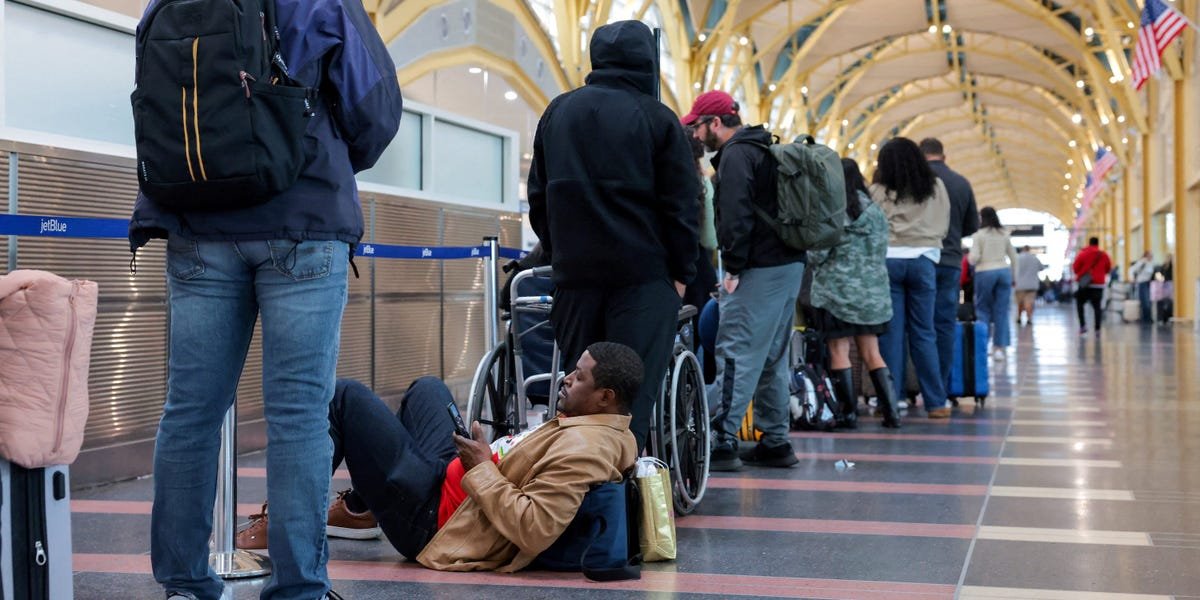
Airports across the US are continuing to see lengthy waits at security checkpoints as scores of TSA workers call out due to missed paychecks.

A partial government shutdown has left the Department of Homeland Security and its Transportation Security Administration unfunded and their agents unpaid at the height of the spring break travel season.

As many as 10% of all TSA agents called out on several days this week, DHS updates showed, with absence rates averaging as much as 20% in some airports.

Security lines in affected airports are spiking unpredictably from day to day, and sometimes even from hour to hour.

“The current unpredictability is being driven by unpredictable staffing levels, basically, how many TSA officers are showing up for work on any given day,” Sheldon H. Jacobson, the founder professor of engineering at the University of Illinois Urbana-Champaign and an expert on airport security screening, told Business Insider.

“TSA officers have historically been cross-trained to do many different tasks, so the number that show up is the key factor,” Jacobson said.

How long are the TSA delays?

Delays at TSA checkpoints across the US have been unpredictable in recent days, with some airports hit much harder and wait times varying massively from day to day.

On Thursday, among major airports, delays appeared to be worst at Houston George Bush International Airport, where lines at some checkpoints exceeded 2 hours. By late thursday night, the waits were 5 minutes at the maximum.

Hartsfield-Jackson Atlanta International Airport, the world’s busiest by passenger numbers, has been among the worst-affected, with delays of over 90 minutes on most days this week. By late Thursday night, however, there was no wait.

In a Wednesday X post, the airport encouraged travelers to allow extra time for screening and to arrive at least 3 hours before their flight.

In an X post on Tuesday, the airport said there was congestion at the international checkpoint due to domestic travelers trying to bypass long lines in the domestic terminal. The airport said domestic travelers should use the domestic checkpoints.


Passengers in line at Fort Lauderdale airport.

Passengers faced lengthy lines at Fort Lauderdale-Hollywood International Airport on Thursday, March 19. 

Taylor Rains/Business Insider


Lines at checkpoints in three terminals at JFK, the New York area’s biggest airport, were over 35 minutes early Friday morning, while waits at Newark were 7 minutes. At LaGuardia, the wait was around 1 minute.

During the Thursday morning travel rush, waits at Dallas-Fort Worth were over 25 minutes.

At Denver, the US’s 4th-busiest airport, lines were 15 minutes on Thursday. night.

In Philadelphia, lines stretched down escalators in the terminal building, as video shared by one local news reporter showed.

Some airports have so far avoided the hourslong queues. Business Insider’s Taylor Rains flew out of Las Vegas on Monday and saw minimal TSA lines.


The empty TSA line at Las Vegas airport.

The general and TSA PreCheck lines at Las Vegas airport were empty on Monday night. 

Taylor Rains/Business Insider


However, the unpredictable nature of the delays means travelers should plan for long waits even if their airport hasn’t yet experienced problems. Airports like Denver and Seattle have asked the public for food, gift cards, and basic supplies to support TSA staff working without pay.

How to check TSA wait times

The easiest way to avoid the stress of missing your flight is to give yourself extra time in the airport. Many airports are advising travelers this week to arrive up to three hours before their flight, even for domestic flights.

Many airports, including major hubs like Atlanta, Houston, JFK, Newark, Philadelphia, Dallas-Fort Worth, and Denver, have been posting TSA wait times live on their websites.


Long security lines at Houston Hobby Airport.

Travelers at Houston Hobby Airport faced lines up to three hours long earlier in March. 

Brett Coomer/Houston Chronicle via Getty Images


These can also provide more specific insights. For example, DFW’s website shows the wait times at each checkpoint.

You can also use the MyTSA mobile app. It provides estimated wait times in 15-minute intervals based on average checkpoint data. The app, however, will use historical data if the live data cannot be retrieved. The TSA also says it is not “actively” managing its sites during the partial shutdown, and so the app may not always be updated.

How long will the TSA delays persist?

On Thursday, Transportation Secretary Sean Duffy said airport delays could get even worse.

“As we get into next week and they’re about to miss another payment, this is going to look like child’s play, what’s happening right now,” Duffy said on CNBC.

Some airports could even be forced to shut, both Duffy and Adam Stahl, the TSA’s acting deputy administrator, said.




Source link

TSA-delays-Which-airports-have-long-lines-and-how-to.jpeg

TSA delays: Which airports have long lines, and how to check the wait time at your airport

TSA checkpoints at US airports continue to face pressure amid an ongoing partial government shutdown that is now nearly a month old.

Numerous airports are telling passengers to allow longer than usual to clear security, as staff shortages cause more congestion and longer lines.

On Friday, Austin-Bergstrom International Airport told travelers to arrive up to three hours before their flight. Photos and videos shared by travelers online showed lines stretching from the terminal building into the parking lot.

Ava Brendgord, a reporter for local NBC affiliate, KXAN News, shared a video of the line snaking out of the building at around 5 a.m. local time on Friday morning.

By 7 a.m., lines had returned to more normal levels, local news outlets reported.

Similar scenes played out at many other airports this week, and things could worsen over the weekend as Americans travel for Spring Break and TSA agents face their first $0 paycheck, increasing the likelihood they will skip work.

Though waits were nowhere near the three hours some passengers experienced at Houston Hobby Airport last weekend, there was significant congestion at some airports on Friday morning. One Business Insider employee traveling from LaGuardia saw a lengthy line, and at JFK, wait times exceeded 20 minutes at most TSA screening points.

Atlanta Airport, the world’s busiest by passenger numbers, said it expects to serve 250,000 travelers this weekend, and advised people to arrive three hours early.

How to check wait times


Travelers wait in line at New York's LaGuardia airport.

Travelers wait in line at New York’s LaGuardia airport.

Cadie Thompson/Business Insider


The easiest way to avoid the stress of missing your flight is to arrive as early as you can. Many airports are advising travelers this week to arrive up to three hours before their flight.

To check TSA wait times, many airports, including major hubs like Atlanta, Houston, JFK, Newark, Philadelphia, Dallas-Fort Worth, and Denver, post them live on their websites.

These can also provide more specific insights. For example, DFW’s website shows the wait times at each checkpoint.

You can also use the MyTSA mobile app. It provides estimated wait times in 15-minute intervals based on average checkpoint data. The app, however, will use historical data if the live data cannot be retrieved. The TSA also says it is not “actively” managing its sites during the partial shutdown, and so the app may not always be updated.


Source link

A headshot of Insider's Pete Syme

Here’s how to check TSA wait times before your flight

Air travel is facing disruption due to long lines at airport security checkpoints.

Sunday and Monday saw hourslong waits at several airports, as Transportation and Security Administration officers missed their first full paycheck since the partial shutdown began.

At Houston’s Hobby Airport, travelers were warned to expect security lines stretching up to three hours. Delays were also reported at New Orleans, Atlanta’s Hartsfield-Jackson, and Miami International.

A political dispute over federal funding for the Department of Homeland Security has led to TSA officers working without pay.

Airport operations had largely avoided major disruption until Sunday, when some staff did not show up to work.

While disruption seems to have moderated on Tuesday, travelers are being advised to arrive early and allow extra time to clear security, as wait times can shift depending on staffing levels and peak travel periods.

Here’s how you can stay prepared

One simple way to monitor conditions is to check the website of the airport you’re flying from.

Many airports, including major hubs like Atlanta, Houston, JFK, Newark, Philadelphia, Dallas-Fort Worth, and Denver, post live wait times on their websites.

These can also provide more specific insights. For example, DFW’s website shows the wait times at each checkpoint.

On Tuesday morning, all these airports had average wait times of under 30 minutes.

Most US airports also frequently update their own websites with travel advisories for passengers. For instance, on Tuesday morning, Houston Airports, which manages both Houston Hobby and George Bush International, has a notice telling travellers to arrive early.

You can also use the MyTSA mobile app. It provides estimated wait times in 15-minute intervals based on average checkpoint data.

It should be noted that the app says it sometimes uses historical data if the live data cannot be retrieved. The TSA also says it is not “actively” managing its sites during the partial shutdown, and so the app may not always be updated.

Alternatively, flight-tracking websites like Flightradar24 and FlightAware can also give insights into airport conditions.

FlightAware has a “Misery Map” which shows flight delays at airports around the country, which could be affected by the security lines.

Flightradar24 also shows the average delay for departing flights if you select an airport.

TSA PreCheck lanes remain open nationwide, though the agency has warned they could be suspended at individual airports if staffing shortages worsen.


Source link

Meagan Drillinger, freelance writer

I travel for a living and can’t wait to get back to Mexico

After cartel violence erupted across the Mexican state of Jalisco this week, images and videos of burning cars and buildings, shuttered storefronts, and cities grinding to a halt hit the news. Flights into and out of Puerto Vallarta and Guadalajara were canceled. Residents were told to shelter in place and to ensure they had enough food and water. Tourists were on lockdown and frightened.

I watched it all from far away in Seattle, where I’m currently traveling, as my phone lit up every 15 seconds with messages of panic, forwarded video footage, and WhatsApp voice notes from friends and loved ones on the ground in Puerto Vallarta.

For most people, Puerto Vallarta was just one of several cities mentioned in the news cycle, but for me it was different — it’s been my chosen home base for the last five years.

I travel for a living, but Puerto Vallarta has always been special

My relationship with this city on Mexico’s Pacific coast began more than a decade ago, on my first visit in 2013. At the time, Puerto Vallarta was just another reporting assignment at a beach destination, but something hit differently, and I kept returning. It became the place I ran to whenever I needed a break from real life. Each visit stretched longer. By much of 2024 and 2025, I was there full-time.

When you spend that much time in a place, it stops feeling like an escape and becomes the backdrop of real life. You learn the traffic patterns, see familiar faces at the coffee shops and bars, pick up your mail. Routine sneaks up on you; it becomes home.

You also build relationships. As I watched footage of a still-smoldering flame-licked car skeleton at an intersection just a few blocks from my last address, I listened to voice notes from friends. Fear sounds different when it comes from people you love.

For decades, Puerto Vallarta has been framed as one of Mexico’s easiest international trips

You don’t need to be a seasoned traveler or an adrenaline seeker to feel comfortable there. There are direct flights, large resorts, familiar comforts, and an infrastructure built around welcoming visitors.

Read more stories about Mexico travel

Plus, it’s jaw-droppingly gorgeous with that broad, blue curve of the Bay of Banderas and the jungle-covered crown of peaks that rise behind it.

For many Americans, Vallarta has been shorthand for “safe Mexico.” Could incidents like this change that perception? Inevitably, for some.

Travel decisions are rarely driven by data alone. They are fueled by emotion, personal tolerance for uncertainty, and individual experience. As happens after virtually every high-profile incident in Mexico, reactions tend to fall into familiar categories. There will be people who write Mexico off forever as a country to visit or live. Others will decide to wait and see.

And there will be people, like me, who are already itching to return because they understand something fundamental about moments like this: They’re traumatic precisely because they are disruptions, not constants.


Woman near ocean in Mexico

The author says reports of violence in Mexico this week only increased her desire to return.

Courtesy of Meagan Drillinger


Like any place anywhere, Puerto Vallarta and Mexico are much more than their worst moments

Violence in Mexico is real. It’s serious. It’s also limited to very specific parts of a massive country. Mexico is vast and regionally complex. Episodes of cartel-related violence, while alarming, do not function as a constant across daily life in most destinations Americans visit.

Moments like Sunday’s violence highlight a perception gap that often shapes how Americans think about risk abroad versus risk at home. Americans tend to discuss violence in Mexico as though it exists in a fundamentally different category of danger. Yet in recent years, the US has developed its own unsettling familiarity with public acts of violence, mass shootings, random attacks, and sudden disruptions.

There is no longer a clean psychological divide between “safe at home” and “dangerous abroad.” We are, increasingly, navigating variations of the same reality.

I have no hesitation about returning to Puerto Vallarta

Living in Puerto Vallarta has not made me dismissive of safety concerns. What happened across Jalisco is devastating and serious. But living there has grounded my understanding of the city in lived experience rather than episodic headlines. It has made moments like Sunday’s violence feel personal without altering my relationship to Puerto Vallarta.

Watching the videos didn’t make me want to run further from Vallarta. If anything, it made me wish I were there with the community I love.

So, when do I plan to return? Soon. I’ll be heading back to Mexico in early March, this time to Puerto Escondido, Oaxaca, nearly 1,000 miles away from Puerto Vallarta. (Yes, Mexico is really big.) I have no hesitation about going. And, truthfully, if logistics allowed, I would go back to Puerto Vallarta this week. It’s not just a vacation destination to me, and it’s not just a clip on the news. It is nearly 13 years of memories, friendships, routines, and a sense of home that I have built over time.

Like any place anywhere, Puerto Vallarta and Mexico are larger than their worst moments. Like any place you love, those moments do not erase the steadier, more enduring reality of everyday life that surrounds them.


Source link

Sam-Altman-says-he-cant-wait-to-get-Elon-Musk.jpeg

Sam Altman says he can’t wait to get Elon Musk under oath

  • Sam Altman said he’s “really excited” to get Elon Musk under oath.
  • Their case will go to trial in April, a California judge said in January.
  • Musk has accused OpenAI and Altman of misleading him into thinking it would remain a nonprofit.

Sam Altman is pumped to take on Elon Musk in court.

“Really excited to get Elon under oath in a few months, Christmas in April!” the OpenAI CEO said in a Tuesday evening X post.

He also reposted his chief security officer Jason Kwon’s X post, with the caption “concerning.”

The post contained screenshots of a court filing from OpenAI’s attorneys, which said that Musk preferred using messaging apps like Signal or XChat with message retention settings of a week or less.

Altman and Musk took their yearslong public feud to the next level in 2024. Musk, who is Tesla and SpaceX’s CEO, launched a lawsuit against OpenAI and Altman in February 2024, accusing Altman of jeopardizing its nonprofit mission.

Musk said that he contributed $38 million to OpenAI, thinking it would remain a nonprofit. He was one of the company’s founders, along with Altman, PayPal cofounder Peter Thiel, and others.

Despite OpenAI’s attorneys’ attempts to have the case thrown out, a California judge said in a January hearing that there was enough evidence to go to trial, which is set for April.

The billionaire duo have been trading barbs on social media. Musk attacked OpenAI’s ChatGPT on January 20, writing “Don’t let your loved ones use ChatGPT.” He was responding to an X post alleging that the chatbot has been linked to multiple deaths since 2022.

Altman responded to Musk’s post, slamming Tesla’s Autopilot system as unsafe, and questioning xAI’s Grok chatbot. Grok has faced criticism from governments in several countries after reports of Grok users uploading pictures of women and minors and asking the chatbot to undress them.

Representatives for Musk and Altman did not respond to requests for comment from Business Insider.


Source link

Ukrainian-Droid-lay-in-wait-on-a-road-at-night.jpeg

Ukrainian ‘Droid’ lay in wait on a road at night and ambushed Russians with an M2 Browning

A Ukrainian brigade has released footage of one of its uncrewed ground vehicles opening fire on a Russian armored personnel carrier, offering a rare glimpse at the emerging technology in action.

The 5th Separate Assault Brigade said on Wednesday that it deployed a Droid TW 12.7 — a remotely operated tracked system developed by a Ukrainian defense tech company — on a road deemed likely to be a route for advancing Russian troops.

The brigade said that the ground-based drone later encountered a Russian MT-LB, a lightly armored fighting vehicle often used to transport infantry.

Thermal footage filmed at night from the uncrewed ground vehicle, or UGV, shows it opening fire on the vehicle, its operator swerving a targeting reticle across the MT-LB’s front.

Business Insider could neither independently verify when nor where the footage was filmed.

The Droid TW 12.7 is equipped with an M2 Browning machine gun that fires .50 caliber rounds, which would typically pierce an MT-LB’s armor.

The 5th Brigade said it used armor-piercing incendiary rounds for the mission.

Sparks fly from the armored vehicle’s chassis as it slows to a crawl and drifts in front of the UGV, which continues firing point-blank.

“The 12.7 mm bullets punch through the MT-LB’s side, striking the crew and onboard systems,” a narrator said in the 5th Brigade’s video, referring to the metric measurement for .50 caliber bullets.

The MT-LB appears to be aimlessly crawling past the drone, indicating that its driver is incapacitated or its controls are damaged.

The UGV then pivots and begins firing on the rear of the MT-LB, “killing the infantry in the troop compartment,” the narrator said.

The 5th Brigade said that it found in the morning that the MT-LB crew and their passengers were “completely wiped out,” publishing short clips of the aftermath shot by a first-person-view aerial drone.

Wednesday’s published footage provides insight into how UGVs are increasingly used on the battlefield in Ukraine, where troops on both sides are experimenting with ground drones to perform missions that human soldiers must otherwise conduct.

While official statistics show that uncrewed aerial vehicles still dominated the drone warfare space last month, the spread of UGVs offers a possible future where Kyiv can rely on remotely operated systems for ground operations instead of risking its troops.

This year, Ukraine said that it aims to manufacture and deploy at least 15,000 UGVs across the battlefield.

Ukrainian and Russian teams have developed hundreds of such systems, ranging from buggies that can ferry provisions near the front lines to trucks outfitted with remotely operated machine guns.

The 5th brigade and DevDroid, the company that makes the Droid TW 12.7, did not respond to requests for comment sent outside regular business hours by Business Insider.


Source link