I-took-the-same-grocery-list-to-Walmart-and-Costco.jpeg

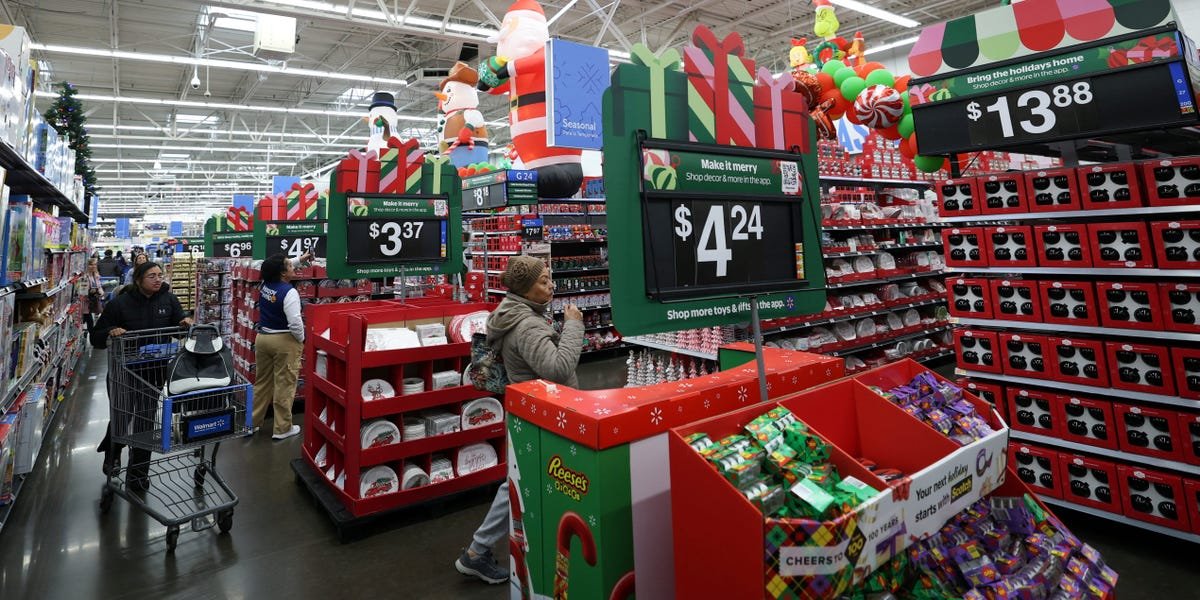
I took the same grocery list to Walmart and Costco. When it comes to prices and value, I found a clear winner.

Based on my math and this particular haul, Costco generally offers lower prices.

However, the only way to reap the benefits is to purchase bulk-sized quantities, which isn’t for everyone. The real value depends on how much you can reasonably consume.

Produce is the perfect example. It’s hard to eat six heads of romaine or 10 pounds of potatoes before they go bad, even for veggie lovers.

Although these items are cheaper at Costco, large packages make it easier to waste food (and therefore money). The same goes for Costco’s mega-sized spices, chips, egg cartons, and beyond.

Plus, Costco has a $65 annual membership fee, so you’d have to spend enough to make it worth it — though breaking even is an achievable goal for most shoppers, especially families, since Costco carries more than groceries. Members also get discounts on things like travel, rental cars, tires, and gas.


Source link

How-Walmart-and-Google-became-key-to-the-search-for.jpeg

How Walmart and Google became key to the search for Nancy Guthrie

In the search for Nancy Guthrie, authorities have relied not only on traditional investigative work but also on data trails tied to two of the world’s largest companies.

Google and Walmart have both emerged as significant players in the high-profile investigation, assisting local Arizona law enforcement and the FBI as they work to locate the 84-year-old mother of “Today” show host Savannah Guthrie.

Authorities believe that Nancy Guthrie was abducted from her ranch-style home in the Catalina Foothills, just outside Tucson, AZ, nearly three weeks ago.

A major break in the case came more than a week into the elderly woman’s mysterious disappearance, thanks, in part, to the help of Google.

Initially, authorities said they were unable to retrieve any footage from Nancy Guthrie’s Google-owned Nest doorbell camera because she did not have a subscription to store her video feed.

That changed when investigators, working with “private sector partners,” managed to cover some doorbell footage from “residual data located in backend systems,” FBI Director Kash Patel said in a previous statement on X.


A

Police believe Nancy Guthrie was taken from her home on February 1.

Rebecca Noble/REUTERS


The footage, released widely to the public by the FBI on February 10, revealed a masked and armed man outside Nancy Guthrie’s home appearing to tamper with the doorbell camera on February 1, the day she vanished.

It took Google engineers several days to recover the footage, CNN has reported, citing a person familiar with the investigation. Google did not respond to Business Insider’s request for comment.

The tech giant is attempting to obtain additional video from Nancy Guthrie’s other home cameras, Pima County Sheriff Chris Nanos told NewsNation in a report published on Wednesday.

“We’ve asked Google, ‘Hey guys, can you do this?’ and they said the very same thing, ‘Sheriff, we don’t think we can get anything, but we’ll try,” Nanos said, adding that investigators remain “hopeful.

Meanwhile, authorities believe the backpack the suspect wore in the doorbell camera footage was a 25-liter “Ozark Trail Hiker” backpack sold exclusively at Walmart.

A spokeswoman for the Pima County Sheriff’s Department said this week that investigators are working with Walmart management to “identify and isolate the individual who purchased the backpack.”

In an interview with CBS News, Nanos described the backpack as “one of the most promising leads” in the case.

The sheriff said investigators have been scouring surveillance footage from local Walmart stores and that the megaretailer has turned over records of all Ozark Trail Hiker backpack purchases from the last several months, the news outlet reported.

A Walmart spokesman declined to comment on the matter.


Video image of a person of interest in Nancy Guthrie disappearance.

The FBI released this image of a suspect in the disappearance of Nancy Guthrie.

FBI


So far, the only item that has been “positively identified” on the suspect in the doorbell camera footage is the Ozark Trail Hiker packpack, a Pima County Sheriff’s Department spokeswoman said.

“Investigators are working to determine where the other items may have been purchased,” the spokeswoman said.

Nancy Guthrie’s disappearance has gripped the nation. Her famous daughter, Savannah Guthrie, has issued tearful video messages, pleading for her mother’s safe return.

Authorities have not publicly identified any suspects or persons of interest in the case.

DNA found at Nancy Guthrie’s property is being analyzed by investigators, the sheriff’s department said this week.

Earlier this week, Nanos, the sheriff, said the Guthrie family, including all siblings and spouses, has been cleared as possible suspects in the case.

“The family has been nothing but cooperative and gracious and are victims in this case,” Nanos said.


Source link

Line chart

Inside Amazon’s ‘mind-blowing’ plan to fix groceries and beat Walmart

For years, Amazon was cast as Walmart’s great disruptor. Now, it’s borrowing from the retail giant it once sought to upend.

The company is rolling out Walmart-inspired ideas, including “Supercenter” warehouses, a new distribution layer known internally as the “1DC” network, and microfulfillment centers within Whole Foods stores, according to internal documents obtained by Business Insider.

The shift reflects a hard lesson: mastery of e-commerce does not translate into dominance in groceries, particularly perishable items that drive frequent shopping. Walmart’s dense network of stores and distribution centers, designed to move everyday goods quickly and cheaply, has proved difficult to replicate.

Nearly a decade after paying $13.7 billion for Whole Foods, Amazon still trails Walmart in everyday grocery shopping, and is now reshaping its retail infrastructure to compete head-on with Walmart’s Supercenter model.

Earlier this month, plans emerged for a roughly 225,000-square-foot Amazon megastore near Chicago. Bigger than a typical Walmart Supercenter, the new concept is designed to let customers buy “fresh groceries, household essentials, and general merchandise — all in one trip,” according to Amazon.

Michael Levin and Josh Lowitz, cofounders of Consumer Intelligence Research Partners, called the move “mind-blowing” and said “it reveals a degree of Walmart jealousy that we didn’t expect.”

Powerful store network

There’s a lot to be jealous about. With roughly 90% of the US population estimated to live within 10 miles of a Walmart store, the company’s 5,000-plus locations give it a powerful edge in selling fresh food and other perishables, along with many other everyday staples.

According to research firm Numerator, Walmart accounted for about 21% of the US grocery market, both online and in-store, as of September. Amazon and Whole Foods, meanwhile, each held roughly 1.6% of the market.

Meanwhile, Walmart is leveraging its Supercenters to deliver online orders faster, challenging Amazon at its own game.

That’s fueled a surge in Walmart shares, valuing the company close to $1 trillion. The stock is up almost 150% over 5 years, far outpacing Amazon’s roughly 53% gain (although Amazon is still worth more).

Amazon does well with non-perishable goods and everyday essentials such as toothpaste and paper towels. Overall, it offers millions of products for same-day delivery.

But when it comes to more delicate food items, such as pears, meat, and cheese, the company knows it has more work to do.

A company spokesperson said Amazon serves more than 150 million US grocery customers, offers nearly 3 million grocery and household items, and provides same-day delivery in more than 9,000 cities and towns.

Grocery is an “ever-growing” part of its fast-delivery business, the spokesperson added, while noting that in 2025, Amazon added perishable groceries to its Same-Day Delivery service, now available in 2,300 locations, allowing customers to shop without trade-offs between speed, selection, and savings.

Amazon’s Supercenter ambition

One element of this fresh Amazon effort is a new type of same-day delivery warehouse internally called an “SSD Supercenter.” SSD refers to sub-same-day deliveries, typically within four hours. Unlike traditional SSD warehouses that tend to be smaller, these facilities are designed to be larger to close the selection gap, specifically with “Walmart” in groceries, the document said.

Internal planning documents show Amazon intended to launch at least five such sites last year. Amazon wanted to test whether customers would “step-change their shopping habituation and engagement” once the Supercenter warehouses went live, one of the documents stated. Amazon planned to add products not currently sold on its site to the new warehouse and take a more hands-on approach to inventory sourcing, with in-stock targets above 95%, according to the document.

Sub-same-day grocery delivery is still a tiny part of Amazon’s business. At the end of September, it had 30 million eligible customers for this service, according to one of the internal documents obtained by Business Insider. Only 1.6 million of them, or roughly 5%, shopped through the service.

Speed, at scale

Amazon’s Supercenter warehouses are part of a broader push to expand same-day grocery delivery. Internal forecasts called for at least 34 US same-day grocery sites in 2025. Amazon already operates over 80 same-day facilities nationwide, though not all handle groceries, according to Marc Wulfraat, president of logistics consultancy MWPVL.

Amazon is also planning to take the model overseas. Under an initiative known as Project Taylor, the company plans to expand sub-same-day grocery delivery across Europe. It also plans to pilot sub-two-hour “ultrafast” deliveries in London in 2026, one of the documents showed.

A new “1DC” layer in the network

Less visible, but just as important, is a new upstream distribution layer called “1DC.”

These facilities store the most frequently purchased products and replenish fulfillment centers as demand emerges. That can shift weeks’ worth of inventory out of space-constrained fulfillment centers and into distribution sites optimized for palletized storage and rapid transfer.

One internal document described the change as a move from a “push” system, in which inventory is positioned based on forecasts, to a “pull” system that allows fulfillment centers to draw inventory from distribution centers as needed.

Amazon began rolling out the 1DC concept last year through new buildings and retrofits. By the end of 2025, the company planned to operate a dozen of these centers, capable of moving at least 20 million units a week, according to one of the documents. As of October 2025, the facilities only handled non-perishables, including shelf-stable food items, but not frozen or chilled products, the document stated.

“Untenable”

The 1DC idea emerged after Amazon introduced one-day delivery in 2018, one of the documents stated. Longer delivery windows once allowed the company to rely on a single layer of warehouses that could ship inventory from any fulfillment center to any customer. But faster delivery promises made that model “untenable,” forcing Amazon toward a structure long used by traditional retailers, the document added.

MWPVL’s Wulfraat said Walmart pioneered the distribution-center model that stores inventory for replenishing retail locations, while Amazon built its business around fulfillment centers that ship directly to consumers. Amazon also operates a cross-dock network to resupply its fulfillment centers, he said, and the 1DC sites represent a newer, more targeted layer of that system focused on high-velocity items.

Amazon’s spokesperson told Business Insider that 1DC is part of a broader initiative the company previously announced to regionalize its delivery operations and reduce shipping costs.

Whole Foods as infrastructure

Perhaps the clearest signal of Amazon’s shift is its rethinking of Whole Foods. Once positioned mainly as a premium grocer, the chain is increasingly treated as logistics infrastructure.

Amazon has begun installing micro-fulfillment centers in the back of select stores, effectively turning them into local hubs for online orders.

One upgraded Whole Foods site in suburban Philadelphia, announced last year, now fulfills Amazon orders from the back of the store. The model lets shoppers buy Whole Foods-specific items while also ordering products available only on Amazon, reducing the need to shop at other retailers.

Amazon expects this store to serve roughly 100,000 e-commerce units a week by consolidating deliveries from nearby stores, and forecasts online order adoption to grow to 10% by the end of 2026, according to one of the documents.

This approach also mirrors Walmart’s strategy of using its stores to fulfill online orders. Walmart said last year that it can offer same-day delivery to 93% of US households through its store-fulfilled network, with about 35% of those orders arriving within three hours.

The perishables problem

The success of Amazon’s new approach depends on one of the hardest problems in logistics: perishables.

Internal plans show Amazon aiming to expand its perishables distribution capacity from 2.6 billion units in 2025 to 3.3 billion units by the end of 2026. The increase would come from new distribution centers and tighter operational standards across the existing network.

The push is central to Amazon’s same-day delivery strategy and its broader grocery ambitions. Company documents stress that delivering high-quality perishables quickly and reliably is essential to scaling the business.

The goal is expansive. One document calls for making perishables available to “100% of Prime customers” as quickly as possible.

Have a tip? Contact this reporter via email at ekim@businessinsider.com or Signal, Telegram, or WhatsApp at 650-942-3061. Use a personal email address, a nonwork WiFi network, and a nonwork device; here’s our guide to sharing information securely.




Source link

Meet-the-new-class-of-retail-CEOs-set-to-take.jpeg

Meet the new class of retail CEOs set to take the reins at Walmart, Target, and more

  • 2025 has been a big year for retail CEO transition announcements.
  • Roughly 45 retailers said they are changing leadership, up from about 32 the year before.
  • Here are some of the more notable retail chains that are getting a new CEO.

2025 may go down as the end of an era in retail.

This was the year that the longtime CEOs at two of the largest chains decided to hand the reins over to their corporate proteges.

The retirements of Walmart’s Doug McMillon and Target’s Brian Cornell come as the industry is facing an array of new (and long-term) challenges in the form of a global trade rebalancing, accelerated adoption of AI, and increasingly stretched US household budgets.

Fresh legs might be a welcome addition in this race.

Dozens of smaller retailers have taken the opportunity to shake up the C-suite as well.

Analysis from leadership consultancy Challenger, Gray & Christmas found that 43 retail companies announced CEO exits in the first 10 months of this year, up from 32 in the same period last year. A few more announcements have come through since.

Here are some of the major retail chains that are getting a new CEO in the new year.

Walmart — John Furner

Walmart’s incoming CEO, John Furner.

Walmart

Walmart said in November that the company’s US division CEO, John Furner, would become president and CEO on February 1.

Like outgoing CEO Doug McMillon, Furner has been with Walmart for decades, starting as an hourly associate and working his way up through the ranks.

Target — Michael Fiddelke


Target's new CEO Michael Fiddelke.

Target has tapped Michael Fiddelke as its new CEO.

Target

Target said in August that chief operating officer Michael Fiddelke would succeed Brian Cornell on February 1, with Cornell remaining on the board as Executive Chair.

Fiddelke has been with the company for 20 years, starting as a finance intern and moving through roles in merchandising, finance, operations, and human resources.

Camping World — Matthew Wagner


A Camping World RV dealership in Florida.

A Camping World RV dealership in Florida.

John Greim/LightRocket via Getty Images

RV dealer Camping World said in December that founder Marcus Lemonis would step down as CEO on January 1, with company president Matthew Wagner taking over.

Wagner has been with Camping World since 2007, serving in numerous leadership roles before being appointed chief operating officer in 2023 and president in 2024.

Kraft Heinz — Steve Cahillane


Kraft Heinz has tapped Steve Cahillane as its new CEO.

Kraft Heinz has tapped Steve Cahillane as its new CEO.

Kraft Heinz

Kraft Heinz said in December that it has snagged Kellanova CEO Steve Cahillane to take over from Carlos Abrams-Rivera on January 1.

The company will later split into two publicly traded companies, North American Grocery Co. and Global Taste Elevation Co., with Cahillane remaining in charge of the latter.

Cahillane has a long career leading consumer products companies like The Nature’s Bounty Co. and Coca-Cola’s Americas division. He also spent eight years with AB InBev.

Kohl’s — Michael Bender


Kohl's CEO Michael J. Bender

Kohl’s has made Michael Bender its permanent CEO.

Kohl’s

In fairness, Michael Bender’s transition effectively happened back in May, but Kohl’s made it official in late November when the retailer said Bender would go from interim CEO to a permanent appointment.

That means Kohl’s will start the new year with one less distraction under the leadership of a highly experienced retail executive who has already had a positive impact on the company.

Lululemon — Meghan Frank and André Maestrini (for now)


Lululemon interim co-CEOs Meghan Frank and André Maestrini

Lululemon has appointed Meghan Frank and André Maestrini as interim co-CEOs.

Lululemon

Athleisure brand Lululemon said in December that it was parting ways with CEO Calvin McDonald on January 31, but hasn’t yet identified a permanent successor.

In the meantime, the company said board chair Marti Morfitt would expand her role to become executive chair, and that CFO Meghan Frank, chief commercial officer André Maestrini would serve as interim co-CEOs following McDonald’s departure.

7-Eleven — Stan Reynolds and Doug Rosencrans


7-Eleven convenience store chain, close-up exterior sign logo.

A 7-Eleven store in Florida.

Jeffrey Greenberg/Universal Images Group via Getty Images

Parent company Seven & i Holdings said in December that CEO Joe DePinto would retire at the end of the year. The company’s current president, Stan Reynolds, and chief operating officer, Doug Rosencrans, are set to serve as co-CEOs until a permanent successor is hired.


Source link

Walmart-just-doubled-down-on-the-Christmas-delivery-wars.jpeg

Walmart just doubled down on the Christmas delivery wars

As Christmas approaches, Walmart is giving shoppers something pretty much everyone can use: a little more time.

Imagine you’re just arriving to Christmas Eve dinner with your in-laws and your niece says she’s been wanting a talking plush Bluey doll.

You find it in your Walmart app, place the order in a tap, and by the time dessert is ready, your gift is at the doorstep. (You can even get the whipped cream you forgot to bring for the pie, too.)

Such last-minute shopping options are becoming increasingly possible as major retailers make a big push into ultrafast delivery.

Case in point: Walmart told Business Insider exclusively that its shoppers will be able to place store-fulfilled express delivery orders as late as 5 p.m. local time on Christmas Eve — a full hour later than last year.

“More people are using Express Delivery to get their items faster, and December is when it truly shines,” Walmart’s chief e-commerce officer David Guggina said in a statement. “No one delivers for customers like Walmart, from the first Holiday deal to the final gift on Christmas Eve.”

The retail giant can now reach 95% of US households in three hours or less, and the company has said that more than a third of shoppers opt to pay extra for three-hour-or-less delivery.

Those express delivery numbers jump by 2.5X in December compared with the year’s average, the company said.

The company also told Business Insider that it recently rolled out a new “Get it Now” option in the Walmart app, which shows shoppers an estimated number of minutes to receive an item, and lets them place the order in one tap.

Walmart said earlier this month that it fulfilled its fastest Black Friday order in 10 minutes, with big increases in both the volume and speed of deliveries fulfilled from its stores.

But Walmart isn’t the only player in the ultrafast delivery game: Amazon and Target are also racing to offer last-minute fulfillment options on Christmas Eve.

Target says customers can get orders within two hours via curbside or in-store pickup, or opt for same-day delivery for a $9.99 fee, with stores closing at 8 p.m. on Christmas Eve.

And Amazon will show an “Arrives before Christmas” message on items that can be delivered as late as Christmas Eve via delivery or one of the company’s 25,000 pickup locations.

Correction, December 9, 2025 — An earlier version of this story misstated the delivery category that more than a third of Walmart shoppers opt to pay for — it is three-hours-or-less delivery.


Source link