
We-wanted-to-freeze-time-with-our-daughters-So-we.jpeg

We wanted to freeze time with our daughters. So we rented out our house and sent them to school in 3 countries in one year.

We were racing to keep up with our packed family schedule. Days blurred into school, work, gymnastics, birthdays, and dinner parties — energizing in theory, exhausting in reality. We were scraping by.

I remember peak multitasking: listening to my 6-year-old read aloud while making breakfast, and trying to finish putting on eyeliner while the eggs finished cooking in the pan.

My husband and I longed for wide-open days to actually connect, but school holidays were never long enough to decompress. We could see how easily the years might slip by, buried in logistics, until suddenly the kids were packing for college.

We wanted to freeze time. So we hatched a plan to leave our “normal” life for a year and have a wild adventure together as a family.

We came up with a plan

In July 2024, we rented out our London home, stored our belongings, and took the bus to Heathrow with two backpacks and a carry-on.

We weren’t wandering aimlessly. We planned to live in three locations, traveling for five weeks before and after each stop.

I pivoted my marketing consultancy toward travel writing and speaking, while my husband’s academic research guided our shortlist of places we wanted to live. His research enabled legal residency which allowed the girls to attend school. We chose Japan, the US, and the Netherlands, staying three to four months in each.

We picked Tsukuba, Japan, to immerse ourselves in a completely unfamiliar culture; Great Neck, New York, near where we’re both from, to give our daughters a taste of American life and spend rare time with family; and Leiden, the Netherlands, to experience its bike- and water-centered lifestyle.

Residency came with a lot of admin.


A woman wearing a fluffy hat in Hokkaido, Japan.

Lucas had a plan to homeschool her daughters in Japan (pictured), but ended up sending them to a local school.

Provided by Lisa Lucas


For Japan, we had originally planned to homeschool. Our 8-year-old surprised us by asking to attend a local Japanese school, despite only knowing a few phrases she had picked up during the three weeks we spent traveling around the country.

The school welcomed both girls. Like their classmates, they walked to school alone, changed into indoor shoes, helped serve lunch, and cleaned the classrooms.

In New York, we lived with family outside the city. The girls rode a yellow school bus for the first time, while my husband commuted by train. It was a stark contrast to London — no uniforms, more complicated mornings, and the sobering reality of active-shooter drills.

In Leiden, the girls attended a small international school. Students biked along canals and tended their own garden plots as part of a Dutch gardening program.


Two young girls wearing bike helmets looking out to the water in Leiden, the Netherlands.

Their daughters enjoyed cycling while living in Leiden, the Netherlands.

Provided by Lisa Lucas


We packed light

Living out of backpacks forced minimalism. I loved escaping the endless to-do list of home life and focusing on actually living.

I wore a single black maxi dress almost every day in Asia — biking through alleys or hiking through the jungle — and it somehow worked.

If anything, I’d bring even less next time. With fewer possessions, our mental bandwidth expanded. We could focus on fun, without guilt.

Parenting on the road

When we first told the girls about our plan, our youngest cried. They loved their friends, their teachers, and the rhythm of school. They couldn’t imagine leaving and not coming back. We tried tempting them with volcanoes and snorkeling in Indonesia.

They came around, somewhat. They loved most moments, but they also always wanted to go home. We promised it would only be a year.


Family in a truck with Mount Bromo, Indonesia in the background

The family spent time exploring other parts of Asia, including a trip to Mount Bromo, a volcano in Indonesia.

Provided by Lisa Lucas


Our priority was making them feel safe and secure. We talked about adaptability as a life skill, but we also held them close and reminded them they were loved.

Most days, we’d say, “We’re still on the trip,” and it made us feel like a team. The girls learned how to be the new kid, make friends, and settle into unfamiliar rhythms. They learned you can reinvent your life more than once.

The intensity bonded us. We had waterfalls to ourselves, watched wild snow monkeys, and made friends who invited us to visit them in Cozumel. I celebrated my usually grim January birthday on a Thai beach.

In the US, we were present for heavy family moments, including my grandfather’s passing.

We were still on the trip — until we weren’t

Returning to London after 13 months felt surreal. Our 6-turned-7-year-old kissed the ground at Heathrow.

The trip changed us. It gave us shared memories — Hokkaido cream, a road trip from New York to Miami, sunsets from an Alpine hut — but more importantly, it clarified what matters: slow time together, not renovations or packed calendars.

We’re happy to be home, blender included. But we’re already dreaming about our next extended adventure.

Do you have a story about taking a gap year that you want to share? Get in touch with the editor: akarplus@businessinsider.com.

Source link

We-wanted-to-get-away-from-the-cold-so-we.jpeg

We wanted to get away from the cold, so we left Michigan and retired in Panama. We’re not planning to move back.

This as-told-to essay is based on a conversation with Greg Kitzmiller, a 64-year-old American retiree living in Panama. It has been edited for length and clarity.

I was born and raised in Michigan, where I met my wife, Jen, and where we built our life together.

In 2016, I retired from my job as a manufacturing supervisor. My wife retired from her law career over a year later.

The year before she retired, my main goal was to find a place where we could live the best life during our retirement. I did a lot of research on various countries, and Panama kept coming to the top of the list.


A man and woman standing on the beach in Panama.

For their retirement, the couple wanted to live in a warm place where their money could go further.


Greg Kitzmiller.


We were eager to escape the snow, so my first priority was eternal summer. We also wanted to stay close to the US to make traveling back easy. The fact that Panama uses the US dollar only added to its appeal.

We hadn’t spent our whole lives planning to retire abroad, but after watching HGTV shows, we both thought that this was something we could do.

Panama also offers a special Pensionado visa for retirees, which comes with incentives such as discounts on utility bills, medication, and even transportation.

Before making the move, we took a few exploratory trips to Panama. Our first trip was a weeklong in October 2017. After my wife retired, we came back in February 2018 for a nine-week trip, touring different areas to see if it felt like the right fit.


Snow-covered driveway of a house in Michigan.

Coming from Michigan, they were eager to get away from the snow.


Greg Kitzmiller.


During that trip, the weather was beautiful. When we went home to Michigan and saw the snow on our driveway, my wife turned and said to me, “We’re moving, right?” And I said, “Yeah, we are.”

We sold our house quickly. We held a few garage sales, donated what we didn’t need, and fit our lives into five suitcases. In June 2018, we officially moved to Panama.

Our kids were OK with the decision.

We have two daughters in Texas and one in Alabama. We’re no further from them now than we were in Michigan. Moreover, the world has gotten so small. We can get on a video call with the kids and the grandkids anytime.

With the help of a real-estate agent, we bought our two-bedroom condo for $210,000 in Coronado, which is about an hour and a half from Panama City by car.

Our condo is in a country club community, where the golf course wraps around our building, and we have 180-degree views of the ocean and the mountains.


View from a condo bedroom in Panama.

The couple bought a two-bedroom condo in Coronado.


Greg Kitzmiller.


Even though I’ve joined several Facebook groups, it’s the people we met at church that make up the core of our social circle.

Moving to Panama sparked an unexpected passion for writing.

When we started talking about moving here, one of Jen’s friends at work said, “Well, you should write a blog.”

It wasn’t that easy, since I’m not very tech-savvy, but I did it. I still maintain the blog and publish a newsletter. And, right after we got here, I connected with a writer’s group.

Being a part of that group led me to do a lot of things in my retirement that I never thought I would do.


Bookshelves in a bookstore in Panama.

Kitzmiller published his first book about his experience retiring in Panama in 2020.


Greg Kitzmiller.


I published my first book in 2020 about our experience of retiring in Panama. Since then, I’ve started writing in different ways, including a detective fiction series — I’m working on the fourth installment.

Writing wasn’t something I expected to do in my retirement, but there’s a strong community of artists, authors, and musicians here. When you surround yourself with other people who are talented in those ways, it fosters your own talent.

My retirement has been very fulfilling.

Our health is better, too. It helps that there is always an abundance of fresh fruit and vegetables around.


A couple smiling over a meal at a restaurant.

Kitzmiller says being surrounded by a thriving community of artists has encouraged his own passion for writing.


Greg Kitzmiller.


If I had it to do over, I would’ve learned Spanish when I was young. When you’re in your 60s, it’s hard to learn a new language. I almost always understand what’s being said, but don’t verbalize very well, unlike my wife, who is fluent.

Every day’s a little different. We have a few social groups, including one where we play dominoes every week. We rotate between houses, someone makes lunch, and we spend the afternoon playing.

Initially, we figured we’d come for 10 years and then evaluate if we wanted to stay. It’s only been eight years, but we’ve already decided that this is where we want to be.

We’re not planning to move back to the US. There’s honestly not much we miss.

Do you have a story to share about relocating to a new city? Contact this reporter at agoh@businessinsider.com.


Source link

Im-a-senior-lawyer-and-only-work-25-hours-a.jpeg

I’m a senior lawyer and only work 25 hours a week. I wanted to be present for my kids.

This as-told-to essay is based on a conversation with Maddi Thimont, 37, based in London. It has been edited for length and clarity.

I always wanted a big career in law. I finished my law degree in 2007 with first-class honors and got my big break at a private law firm, gaining experience in corporate law.

It was very busy, with long hours, but it was amazing training, so it suited me really well at the time.

Securing my next role in corporate counsel at a Big Tech firm was a real career high. It was intense, but the experience really shaped me. But then, I became a mother of two, and at first, the perks of working for such a big brand were indisputable. Despite that, I started wondering if I could really have it all.

I wanted a 4-day week

This company had a great plan allowing a phased return from maternity leave, so both times, I did two and a half days a week for eight weeks. Being able to gradually get back into my career while still spending time with my children was priceless. Then, for the second half of the year, I worked a four-day workweek.

That was when it started to get tricky, and when I began to question: can I have it all? I had hoped that I could make a four-day workweek my new normal, but there wasn’t much of a precedent for it in my team, so I felt like I’d be navigating uncharted territory on my own.


Maddi Thimont running race

Maddi Thimont says her weekends start at 3:10 p.m. on Fridays.

Courtesy of Maddi Thimont


And based on the pace I was already familiar with, I anticipated that I would have just had to fit a full-time load into less time. The thought of that didn’t thrill me, so that’s when I started to think about other opportunities.

I took a job that allowed me to have a shorter workday

I booked a call with a life coach to talk about what I wanted to do. I told her my ideal job would involve being intellectually stimulated during the day, but then to be around for my children, now aged 3 and 5, in the evening.

I started manifesting, in a way, by looking for my dream job as a senior lawyer that I could do during school hours. I did a double take when I saw a head of legal role advertised on LinkedIn for data analytics company Sagacity for 25 hours a week.

Just before Christmas 2023, I had an interview with the outgoing general counsel there. She talked about how she gave up her legal career for 15 years while raising her kids, and when she wanted to get back into it, someone gave her a chance in a part-time role. She wanted to pay that forward.

I did the math with my husband, and with our eldest close to starting school — meaning we’d have lower day care fees to pay — we were confident that we could make my new part-time salary work. I started my new job in March 2024 as Sagacity’s head of legal, working 10 a.m. to 3 p.m., five days a week. A year later, I was promoted to general counsel.

I have clear priorities and processes

What helps is having a really clear “ticket” system at the company for anyone who needs legal support. They raise a ticket, which goes into our legal dashboard with a deadline and a priority level (high, medium, or low). My team and I then provide an anticipated response date.

I’ve also created more templates and FAQs so people can be empowered to not have to come to legal for every single thing.

I am now on the senior leadership team and have frequent one-to-ones with other members to help prioritize my work. Then, obviously, if the CEO needs something, it usually takes priority.

I’m also very efficient with my time. If someone asks for a half-hour meeting, I try to cut it down to 15 minutes. I won’t accept a meeting without an agenda, either. I also don’t tend to have many coffee breaks or lunches with colleagues. I know it might sound a bit sad, but every minute counts.

I get to have a big career and be with my kids

I recognize that I’m in a privileged position to do this, as my husband is a lawyer too and works full-time as a partner at a firm. But I honestly feel so lucky, because our lives have totally changed.

Now, I still get to be a senior lawyer, and I can take the kids to their afternoon activities, like swimming and piano, and I can see how well they’re doing, which I love being part of. On Fridays, we just chill. I always say that our weekend starts at 3:10 p.m. on Friday.

With my shorter working hours, I have also found time to fit in additional opportunities. For example, I recently passed a well-recognised GDPR data protection qualification. I was also able to train for and complete the London Marathon.

Without this way of working, I would have likely continued on the corporate path with the long hours, paying for nannies, and after-school clubs. The alternatives may have been to take a demotion or find a part-time job doing something else, or just not work at all – none of which were right for me.

Committing to both work and the kids can feel intense at times – but I think the positives outweigh the negatives. Our family life is quite calm, so everything feels fulfilling.


Source link

Living-abroad-for-28-years-gave-me-everything-I-wanted.jpeg

Living abroad for 28 years gave me everything I wanted — and a quiet guilt I still carry

I grew up on the shores of Lake Erie, in a town just south of Buffalo, New York. Ice was something we chiseled off a car in winter, not something that’s dropped into a drink. For me, life on a tropical island was a pipe dream.

In high school, I was the geeky kid, always excited to read stories in Time and The New York Times about exotic, far-off places. I knew early on that I wanted a job that would allow me to experience global events firsthand.

A semester abroad in France cemented my ambition. I lived with a family who also rented to an American expat. He talked casually about his Swiss ski holidays, escapes to Greece and Turkey, and his favorite cafés in Paris.

I already knew then, at 21, that was the life I wanted. Why work in “boring” New York or Chicago when I could aim for Paris, Hong Kong, or London?

After working as an editor in New York City for several years, my then-wife got offered a job in Singapore. It was the golden opportunity we both wanted. What we thought would be a posting of just a few years turned into decades. We divorced in 2011, but both stayed in Singapore, building our careers and lives.


Kris LeBoutillier on assignment 25 years ago in Vietnam, posing with a group of locals near the Ho Chi Minh Mausoleum in Hanoi.

LeBoutillier, 25 years ago in Vietnam, posing with a group of locals near the Ho Chi Minh Mausoleum in Hanoi.

Provided by Kris LeBoutillier


Singapore was the jolt my career needed

I’d always wanted to be a photojournalist, so in 2000 I decided to pursue it full-time. My location made me a standout. Asia was entering a travel boom, and magazine editors needed photographers on the ground. To paraphrase the cliché: I was in the right place at the perfect moment.

I’ve shot for National Geographic Traveler across Australia, Vietnam, Cambodia, Thailand, and India — Singapore was the perfect base. I could be ready to go anywhere in Southeast Asia with just a few hours’ notice.

My photography career eventually gave way to something more permanent and corporate, although still rooted in Singapore. I became a content director, producing and directing videos across the region.

It was a natural evolution for a writer-photographer in a world rapidly shifting to digital content.


Kris LeBoutillier posing with a camera in Rajasthan, India.

LeBoutillier traveled to Australia, Vietnam, Cambodia, Thailand, and India (pictured) on assignment.

Provided by Kris LeBoutillier


Living overseas for 28 years changed me

But it has come with a cost. My mother grew older, got sick, moved into a managed care facility, and then passed away suddenly.

I made every effort to visit twice a year, especially in the summer and around Christmas. But there was always a tinge of guilt and remorse that I wasn’t there more.

On one of my last trips back before she died, I remember her saying, “Haven’t you been in Singapore long enough?” She was always supportive of my choices, but as she approached 80, and her health declined, she wanted me closer to home.

She was getting the care she needed in the nursing home, but there was no substitute for a visit from me, my presence — complete with stories about my life overseas.

Was I selfish? Perhaps, but I also would never trade the life I have.


Kris LeBoutillier and his wife are posing near a sunset in Singapore.

LeBoutillier and his wife, Jamie, are raising their family in Singapore.

Provided by Kris LeBoutillier


Will I return to the US?

Probably, although I’m not sure, because everything is different. I remarried three years ago. I have a 9-year-old daughter from a previous marriage and a toddler son with my wife, Jamie. Both kids have US passports and deserve an American identity and a place to put down roots. They’ve been to the US to meet their cousins and my oldest friends, but have never had the chance to live there or fully experience life as Americans.

Recently, I told my daughter that she’d visited Manhattan when she was a toddler. Her response: “Where is that?” It was a stark realization.

They should know the country that shaped who I am.

Would I recommend an expat life to someone? Absolutely. I got the life I dreamed of. And despite the challenges and distance, it gave me everything I hoped for when I was that kid, growing up near Buffalo, reading about the rest of the world.

Do you have a story to share about living abroad? Contact the editor at akarplus@businessinsider.com.


Source link

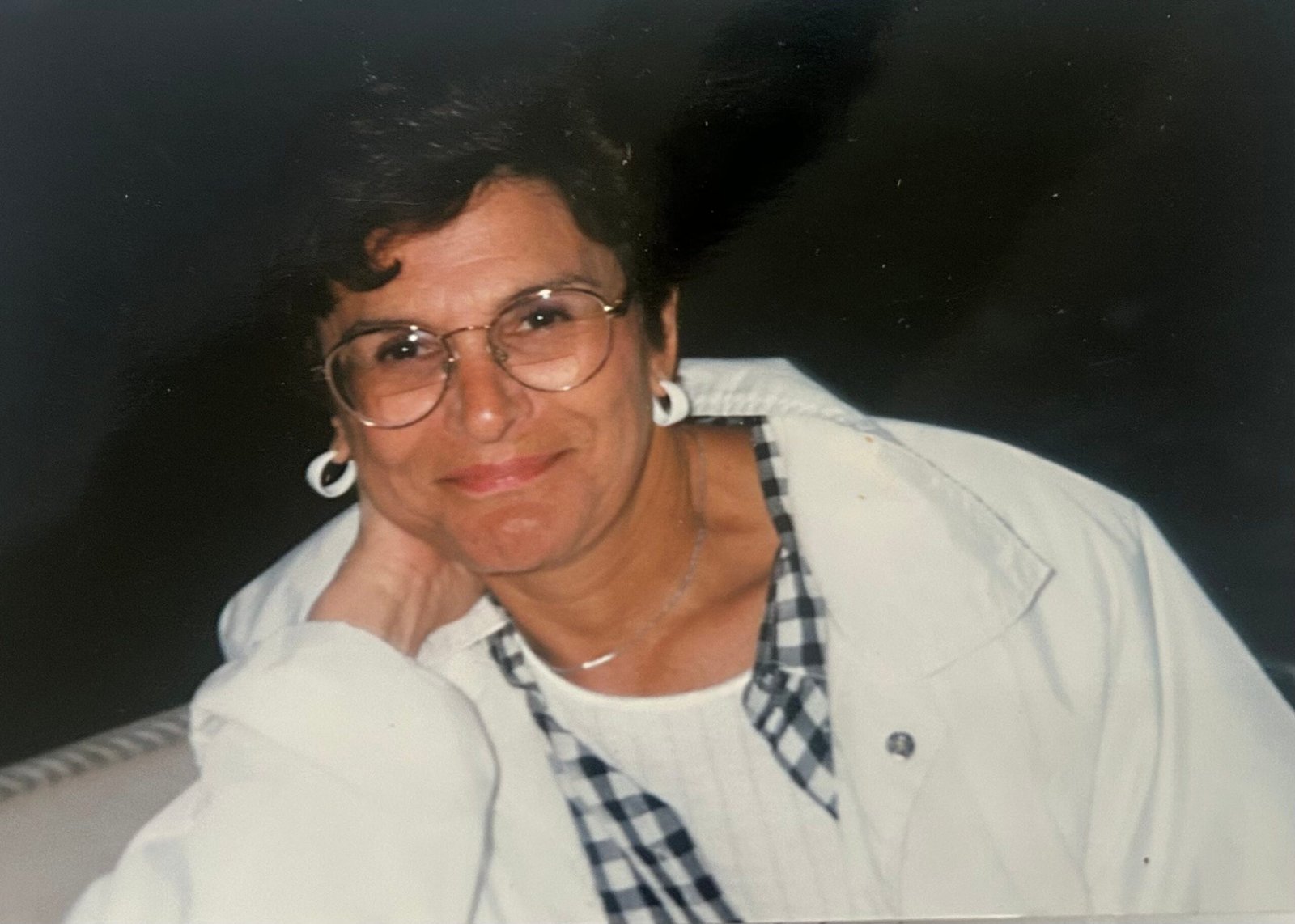
Woman posing for photo in the 80s

I wanted to be perfect like my grandmother. Then she asked me a question that changed my approach to life.

The author’s grandma was a perfectionist.

  • My grandmother’s terminal cancer diagnosis taught us both to let go of perfectionism.
  • Her lifelong pursuit of order and perfection shaped our family’s habits and expectations.
  • Facing illness, she embraced acceptance and inspired me to value effort over unattainable ideals.

My grandmother strove for perfection, convinced that it was an attainable goal if only you worked hard enough.

This meant eating less to lose weight. Food deprivation became a family bonding activity when my grandmother was on a diet. Diets lasted decades. We had marathon cleaning weekends while friends went to the mall. Play clothes were swapped out for school clothes for our rare trips to Burger King. Random dust checks were performed to ensure vacuuming of floors was done correctly. I’ll never forget her finger with a perfectly manicured nail grazing the cool Italian tile floor. Chore lists graced our refrigerator in the same way my friends’ quizzes and pictures graced theirs.

My grandmother wanted and demanded order, believing it led to perfection. My childhood was spent trying to please. She did not expect more from us than she did from herself, though. I hold many memories of Gram chastising herself for her too-big thighs or her less-than-stellar self-control around chocolate. It was a weakness that caused her significant guilt.

I followed her steps

Years later, as I began my own journey toward motherhood, I vowed that my children would not endure what I had. I would allow them to make messes. That dog I always wanted, but was never allowed to have because pets were dirty, would complete the large family I also always wanted. Perfection would become what it was meant to be, a foolish ideal — not a reality to strive for at all costs.

Family birthday
The author’s grandmother was diagnosed with terminal cancer.

Instead, I repeated exactly what I knew. My kids had to have matching outfits, picture-perfect Christmas cards, and all the things perfection required. I would clean and exercise until I reached the point of exhaustion. I worked out through all four pregnancies and directly after.

I recall throwing a birthday party for my son. He was turning 3 or 4. Someone commented on how great I looked. “Nicole makes sure everything is always perfect,” someone else said. I reveled in the praise. Gram heard the comment and smiled. We shared a common bond. When one of us inched closer to it, the other one felt proud.

Then my grandmother was diagnosed with cancer

The exhaustion of parenting four kids and attempting to create the perfect world for them and me was intense. I was stuck in a cycle. It would not break until one sunny fall day. I was running around attempting to clean and wrangle the kids for lunch. The plan was to work out after they took their naps. The phone rang, and my grandmother greeted me on the other end. All I heard was the word sick. I assumed it was regarding my grandfather, who had had heart problems for decades. I thought perhaps it was another heart attack.

“No, baby, it’s me. I’m sick.” It was shocking. Gram had lived a life of such order and perfection. She was in her 70s and active. She took only one pill for high blood pressure. Gram had Stage 4 ovarian cancer, which meant we discovered it late. We looked up the statistical odds of survival. My grandmother had a terminal illness.

The diagnosis changed her. For the first time, her constant need for perfection seemed foolish. Weight didn’t matter, nor did matching a purse to shoes to a blouse. When Gram lost her hair, one of her most beautiful features, and found herself struggling to keep the house clean, she understood things had to change. Maybe a wig wouldn’t be so bad. Maybe hiring someone to come in and help was OK. Her new favorite saying became, “Don’t sweat it.” What mattered was time and how she spent it.

She asked 1 simple question

When she saw me working myself to death to provide a perfect life for my family, Gram realized I had become just like her. She said, “Perfection isn’t worth it. It isn’t even real.” Then, she asked a question that changed everything for me.”Did you do your best?” When I answered that I had, she said, “Well, that’s all you can do then.”

It changed the way I lived my life and significantly reduced the pressure on me.

Watching her health diminish and understanding that she had limited time helped Gram realize what was important. Perfection and holding onto unrealistic expectations and ideals no longer fit into her life. Watching her learn this lesson allowed me to learn it alongside her. She taught me so that I didn’t have to wait until I was in my 70s battling a terminal illness. When I remember her now, I am forever grateful.

Read the original article on Business Insider

Source link

Paramount-wanted-to-use-24-billion-in-Middle-Eastern-money.jpeg

Paramount wanted to use $24 billion in Middle Eastern money to help buy WBD. That’s not why Netflix won.

Larry and David Ellison, who own Paramount, want to use $24 billion in Middle Eastern money to finance their bid for Warner Bros. Discovery. Is that a problem for WBD?

You might think so — especially since $10 billion of that came from the Saudi government. That’s the same government that US intelligence said killed a Washington Post journalist in 2018. The kind of partner you might think a major American media conglomerate would want to keep at arm’s length.

But that’s not a problem WBD raises in its newest communication to shareholders, where it urges them to take the deal offered by Netflix instead.

What actually worries WBD about the Ellisons’ bid isn’t the Ellisons’ particular partners. It’s that the Ellisons had partners.

In a regulatory filing that tells the backstory of the proposed WBD sale, WBD execs and their reps repeatedly told the Ellisons they wanted a firm commitment that Larry Ellison — currently the world’s 5th-richest man, with an estimated net worth of $243 billion — would guarantee the deal himself.

Instead, WBD argues, the Ellisons never gave them the assurances they wanted.

The filing does bring up the fact that money from Middle Eastern sovereign wealth funds would likely complicate regulatory issues for a proposed Ellison/Paramount deal. (Ditto for a proposed $1 billion investment from China’s Tencent, which the Ellisons later took out of their proposal.) But those are presented as technical hurdles. Not moral or patriotic dealbreakers.

And they’re just part of a laundry list of complaints WBD makes about the Ellisons. Among them: A December 2 tweet from New York Post reporter Charlie Gasparino, which WBD said violated a confidentiality agreement Paramount had signed.

And when it comes to the main pitch WBD is making to investors, all of that stuff disappears. It just boils down to “we did our homework, and the Netflix deal is better.”

That’s not shocking: If you’re a WBD investor, you are (supposedly) only interested in getting the maximum value for shares. And WBD’s filing argues that Netflix is the one that can pay the most.

Now we’re waiting to see what the Ellisons do next: Many observers believe they’ll return with yet another, higher bid. Will this one have Gulf money, too?


Source link