Diane-Warren-has-set-a-record-for-the-longest-losing.jpeg

Diane Warren has set a record for the longest losing streak in Oscars history. Here are her 17 Oscar-nominated songs.

Updated

  • Diane Warren has set a record for the longest losing streak in Academy Awards history.
  • At the 2026 Oscars, Warren lost her 17th bid for best original song.
  • Her nominations include songs performed by Celine Dion, Aerosmith, Lady Gaga, Becky G, and Kesha.

Diane Warren went home empty-handed from the 2026 Oscars on Sunday, marking her 17th straight loss for best original song.

“Well at least I’m consistent! And I set a new record tonite!!” Warren wrote on social media after “Golden,” the hit song from Netflix’s “KPop Demon Hunters,” secured the award.

Indeed, Warren is now the most-nominated person in history to have never won a competitive Oscar.

“I’m consistent as fuck,” Warren told Variety in 2025 on the after-party red carpet. “I’m the Terminator of the Oscars — I’ll be back. That’s in my Arnold Schwarzenegger voice. I’m coming back. You can’t get rid of me.”

Warren, who has also written pop hits with stars like Taylor Swift, Mariah Carey, and Cher, is also the most-nominated woman in the category’s history. She trails just two others for the all-time record: Johnny Mercer (18) and Sammy Cahn (26). However, of those three legendary songwriters, only Warren has never won the award.

All 17 of her nominated songs are listed below in chronological order.

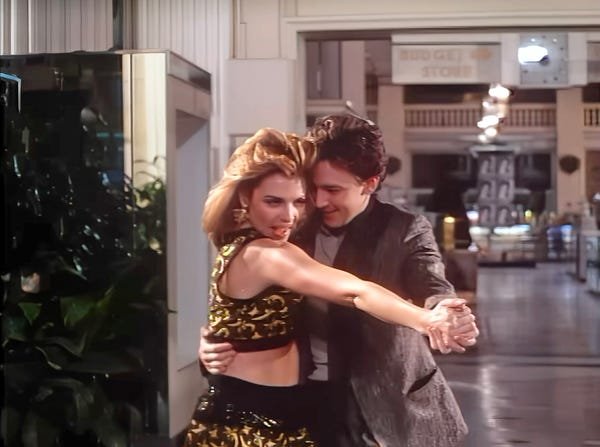
“Nothing’s Gonna Stop Us Now” from “Mannequin” (1987)

Kim Cattrall and Andrew McCarthy starred in “Mannequin.” 


Starship/YouTube


Performed by: Starship

What beat it: “(I’ve Had) The Time of My Life” from “Dirty Dancing”

“Because You Loved Me” from “Up Close & Personal” (1996)


Celine Dion performs in 1996.

Celine Dion performs in 1996. 

Pete Still/Redferns

Performed by: Celine Dion

What beat it: “You Must Love Me” from “Evita”

“How Do I Live” from “Con Air” (1997)


Trisha Yearwood won a Grammy Award for

Trisha Yearwood won a Grammy Award for “How Do I Live.” 

Timothy A. Clary/AFP via Getty Images

Performed by: Trisha Yearwood

What beat it: “My Heart Will Go On” from “Titanic”

“I Don’t Want to Miss a Thing” from “Armageddon” (1998)


Steven Tyler of Aerosmith performs

Steven Tyler of Aerosmith performs “I Don’t Want to Miss a Thing” at the Oscars. 

Timothy A. Clary/AFP via Getty Images

Performed by: Aerosmith

What beat it: “When You Believe” from “The Prince of Egypt”

“Music of My Heart” from “Music of the Heart” (1999)


Gloria Estefan performs with *NSYNC in 1999.

Gloria Estefan performs with *NSYNC in 1999. 

KMazur/WireImage

Performed by: Gloria Estefan and *NSYNC

What beat it: “You’ll Be in My Heart” from “Tarzan”

“There You’ll Be” from “Pearl Harbor” (2001)


Faith Hill performs at the

Faith Hill performs at the “Pearl Harbor” premiere. 

Steve Granitz/WireImage

Performed by: Faith Hill

What beat it: “If I Didn’t Have You” from “Monsters, Inc.”

“Grateful” from “Beyond the Lights” (2014)


Rita Ora performs

Rita Ora performs “Grateful” at the Oscars. 

Kevin Winter/Getty Images

Performed by: Rita Ora

What beat it: “Glory” from “Selma”

“Til It Happens to You” from “The Hunting Ground” (2015)


Lady Gaga performs

Lady Gaga performs “Til It Happens to You” at the Oscars. 

Kevin Winter/Getty Images

Performed by: Lady Gaga

What beat it: “Writing’s on the Wall” from “Spectre”

“Stand Up for Something” from “Marshall” (2017)


Common and Andra Day perform

Common and Andra Day perform “Stand Up for Something” at the Oscars. 

Kevin Winter/Getty Images

Performed by: Andra Day and Common

What beat it: “Remember Me” from “Coco”

“I’ll Fight” from “RBG” (2018)


Jennifer Hudson performs

Jennifer Hudson performs “I’ll Fight” at the Oscars. 

Kevin Winter/Getty Images

Performed by: Jennifer Hudson

What beat it: “Shallow” from “A Star Is Born”

“I’m Standing With You” from “Breakthrough” (2019)


Chrissy Metz performs

Chrissy Metz performs “I’m Standing With You” at the Oscars. 

Craig Sjodin/ABC via Getty Images

Performed by: Chrissy Metz

What beat it: “(I’m Gonna) Love Me Again” from “Rocketman”

“Lo Sì (Seen)” from “The Life Ahead” (2020)


Laura Pausini in the music video for

Laura Pausini in the music video for “Lo Sì (Seen).” 


Laura Pausini/YouTube


Performed by: Laura Pausini

What beat it: “Fight for You” from “Judas and the Black Messiah”

“Somehow You Do” from “Four Good Days” (2021)


Reba McEntire performs

Reba McEntire performs “Somehow You Do” at the Oscars. 

Chris Polk/Variety/Penske Media via Getty Images

Performed by: Reba McEntire

What beat it: “No Time to Die” from “No Time to Die”

“Applause” from “Tell It Like a Woman” (2022)


Diane Warren and Sofia Carson perform

Diane Warren and Sofia Carson perform “Applause” at the Oscars. 

Kevin Winter/Getty Images

Performed by: Sofia Carson

What beat it: “Naatu Naatu” from “RRR”

“The Fire Inside” from “Flamin’ Hot” (2023)


Becky G performs

Becky G performs “The Fire Inside” at the Oscars. 

Rich Polk/Variety via Getty Images

Performed by: Becky G

What beat it: “What Was I Made For?” from “Barbie”

“The Journey” from “The Six Triple Eight” (2024)


H.E.R. and Diane Warren on the Oscars red carpet.

H.E.R. and Diane Warren on the Oscars red carpet. 

Michael Buckner/Penske Media via Getty Images

Performed by: H.E.R.

What beat it: “El Mal” from “Emilia Pérez”

“Dear Me” from “Diane Warren: Relentless” (2025)


Kesha and Diane Warren attend The Hollywood Reporter's Nominees Night.

Kesha and Diane Warren attend The Hollywood Reporter’s Nominees Night. 

Olivia Wong/WireImage

Performed by: Kesha

What beat it: “Golden” from “KPop Demon Hunters”


Source link

Theron Mohamed — Profile Picture

Greg Abel pays tribute to Warren Buffett in his first letter as Berkshire Hathaway CEO, calling him a ‘very hard act to follow’

Greg Abel paid tribute to Warren Buffett and reassured Berkshire Hathaway shareholders he wouldn’t do anything drastic as their new CEO in his first letter to them on Saturday.

Buffett handed Berkshire’s reins to Abel at the start of this year, ending a six-decade run during which he transformed the failing textile mill into a sprawling conglomerate worth more than $1 trillion.

The legendary investor oversaw a 6,100,000% return for Berkshire shareholders between 1965 and 2025, trouncing the S&P 500’s total return of 46,100% including dividends. His compounded annual gain of 19.7% was nearly double the index’s 10.5% figure over a 60-year timeframe.

“Warren is obviously a very hard act to follow,” Abel wrote, continuing Buffett’s decades-long tradition of penning an annual shareholder letter.

Berkshire’s new boss dedicated the first section of his letter to Buffett, praising everything from his patience and judgment to his investing prowess, legacy as an educator, track record as a CEO, and the unique company he built with the late Charlie Munger.

Abel used the letter to properly introduce himself to shareholders, and even tried to inject some of Buffett’s trademark wit.

“I will not be your CEO for the next 60 years as simple arithmetic makes that — shall we say — an ambitious plan,” he quipped.

More of the same

Abel made it clear to shareholders that he “gets it” — he understands what makes Berkshire special and has no plans to ruin it.

He walked through what he called Berkshire’s “foundational values”: its decentralized model, integrity, financial strength, capital discipline, risk management, and operational excellence.

Abel lingered on the topic of capital discipline, showing he’s aware of how much scrutiny Berkshire has received for hoarding more than $370 billion of liquid assets.

He signaled there won’t be any rushed deals or immediate dividend payouts on his watch. He described Berkshire’s cash pile as both its rainy-day fund and its “dry powder” for stock purchases and acquisitions, but said he’ll remain disciplined in spending it “regardless of the size” of the company’s reserves.

Digging into the details

Abel’s letter contained several key nuggets for close followers of Berkshire.

First, he described its Kraft Heinz investment as “disappointing” with a return “well short of adequate,” echoing Buffett’s uncharacteristic bashing of the food giant.

Second, Abel broke out the five stakes in Japanese companies purchased by Buffett a few years ago. The dedicated table showed Berkshire paid a total of $15.4 billion for positions worth a combined $35.4 billion at December’s close, and collected $862 million in dividends from them last year.

Third, he revealed that Ted Weschler now oversees about 6% of Berkshire’s investments after assuming control of the recently departed Todd Combs’ portion of the company’s portfolio.

Abel also positioned Weschler as one of his key deputies, writing that his “impact extends beyond these investments” to weighing in on big opportunities and Berkshire’s businesses, and providing other support.

Finally, he signaled a shift to a bigger brain trust at Berkshire. Instead of Buffett and Munger holding court for the entire Q&A at Berkshire’s annual meeting, as they did for many years, Abel will field questions with Berkshire’s insurance chief, Ajit Jain, and later with Katie Farmer and Adam Johnson, two of his top deputies.


Source link

Headshot of Ben Shimkus

Skeptical of the ‘SaaSpocalypse’? Bill Gurley says you should channel your inner Warren Buffett and strike

Bill Gurley has some suggestions on how you might invest in the so-called SaaSpocalypse if you believe the companies still have value.

Software-as-a-Service stocks have stumbled to start 2026. Investors worry that new AI generative tools — particularly Claude Code’s latest app-building update — could become direct competitors with legacy SaaS giants like Salesforce, Atlassian, and DocuSign.

Appearing on CNBC’s Squawk Box, Gurley, the longtime Benchmark general partner, acknowledged the concerns and compared it to another disruptive moment in tech.

“Right after Facebook went public, there was a concern about this mobile transition, and their stock went from $42 to like $18. That was fear of a technology disruption,” he said.

Still, Gurley emphasized that today’s SaaS fears feel unusually widespread.

“I’ve never seen a disruption that had this much anxiety and go across so many companies,” he said.

Yet he noted that even AI-native companies aren’t abandoning traditional software vendors. Anthropic, which makes the Claude chatbot, uses tools from Workday and Salesforce, he said.

“They’re paying for these things,” he said.

If the stocks continue to fall, Gurley suggested that investors who believe in the SaaS companies channel Warren Buffett, who has long argued that moments of panic are the perfect time to buy.

“You shouldn’t be blogging about what’s wrong with the prices,” he said. “You should be quiet and picking them up off the floor.”

He’s worried about circular investment


A person walks on a pathway toward AMD's glass-filled offices. There is a gray sign outside that says the company's name

AMD and Meta just announced a deal on Tuesday morning. Gurley said he is worried about the deal’s structure.

Justin Sullivan/Getty Images


Gurley expressed concern about the increasing circularity of deals between AI companies and the firms building their massive physical infrastructure.

“This is a little bit odd that we got started this way from the very beginning,” he said, referring to early transactions between Microsoft and OpenAI that involved cloud credits flowing back into Microsoft’s Azure business.

There’s a fresh example of intertwined AI and infrastructure agreements on Tuesday morning: Meta and Advanced Micro Devices announced a deal in which Meta would buy six gigawatts of computing power from the chipmaker.

The arrangement could also result in Meta owning up to 10% of AMD’s stock.

Gurley said he once described similar AI and infrastructure deal structures to ChatGPT without naming the companies involved.

“It spit out words like Enron and WorldCom,” he said. “All I did was describe the structure of the deals. I didn’t say which companies they were.”

Gurley said he doesn’t think regulators will step in to fix the circularity issue.

“When it comes undone — and it will come undone one day for reasons we can talk about — I think people are going to point these things and say they shouldn’t have existed,” he said.

AI as ‘jet fuel’

For workers worried about AI’s impact on their jobs, Gurley was far more optimistic.

He called AI “jet fuel” for people passionate about their work (something he has also said on X), and argued that the tools can dramatically accelerate skills and productivity.

“You can learn faster than you could have ever learned at any point in history right now,” he said. “You can fire this thing up and get it on your side.”

Even in an era of sweeping technological disruption, Gurley said he wouldn’t choose a different path if he had to start all over again.

“If we lived in a society where all jobs paid the same, I would have still done venture capital,” he said. “I just had so much fun being a part of it.”

Gurley didn’t respond to a request for comment from Business Insider.


Source link

Why-Berkshire-Hathaways-New-York-Times-bet-is-a-fitting.jpeg

Why Berkshire Hathaway’s New York Times bet is a fitting end to the Warren Buffett era

Warren Buffett’s Berkshire Hathaway bought one new stock in his last quarter as CEO: The New York Times Company. It’s a fitting final bet for the Buffett era.

The famed investor’s conglomerate scooped up around 5.1 million shares of the newspaper publisher, securing a stake worth $352 million at December’s close, a Tuesday filing revealed.

The position’s small size points to one of Buffett’s two investment managers at the time — Ted Weschler and the since-departed Todd Combs — making the purchase.

Read all about it

Buffett is a lifelong lover of newspapers. He delivered 500,000 papers as a teenager running multiple routes, and for years, he challenged shareholders to best him at newspaper tossing during Berkshire’s annual meetings.

He went from throwing newspapers to owning dozens of publishers, including The Buffalo News and The Omaha World-Herald. He was close friends with the late publisher of The Washington Post, Katharine Graham, and one of the paper’s biggest financial backers.

By 2010, the billionaire stock picker was openly worried about declining circulation and advertising revenues for newspapers.

During Berkshire’s 2010 meeting, he recalled looking at the circulation of major titles such as the San Francisco Chronicle, and said it “blows your mind how fast people are dropping it.”

“The world has really changed, in terms of the essential nature of newspapers,” he said.

In 1965 or 1970, there was “probably nothing looked more bulletproof than a daily newspaper where the competition had melted away,” he continued. “But it’s a form of distributing information and entertainment that has lost its immediacy in many cases.”

Buffett pointed out that people no longer rely on papers to find out how their stocks were performing, or whether their sports team won. The resulting decline in circulation made newspapers less attractive to advertisers, he noted.

“And so you get this chicken and egg thing that the newspaper becomes less valuable as the advertisers float away, and the advertisers float away as the subscribers diminish,” he said.


Warren Buffett newspaper toss

Warren Buffett made the newspaper toss a fixture at Berkshire Hathaway’s shareholder meetings.


Rick Wilking/Reuters


Despite his concerns, he acquired 28 daily papers in the early 2010s.

“Charlie and I believe that papers delivering comprehensive and reliable information to tightly-bound communities and having a sensible Internet strategy will remain viable for a long time,” Buffett wrote in his 2012 letter to shareholders. “Charlie” referred to his late business partner, Charlie Munger.

“Newspapers continue to reign supreme … in the delivery of local news,” he added.

Buffett struck a far more bearish tone in 2019, telling Yahoo Finance that he expected only a few national titles, such as The New York Times, to survive, while the rest would “disappear.” He also bemoaned the demise of the newspaper ad business.

“It went from monopoly to franchise to competitive to … toast,” he said.

Berkshire’s surprise return

Buffett offloaded Berkshire’s newspapers to publisher Lee Enterprises in 2020. Given his long history in the newspaper business and eventual exit from it, it’s striking to see Berkshire return with its recent stock purchase.

One reason was undoubtedly The New York Times’ recovery in recent years. It grew revenues by 9% to $2.8 billion and its net income by 17% to $344 million last year, as subscription revenues rose 9% and advertising revenues jumped 12%.

A key driver was the paper’s addition of 1.4 million digital-only subscribers, which lifted its total subscriber count to 12.78 million as of December 31.

The publisher’s stock price has already seen some of the benefits. After collapsing from over $50 in mid-2002 to below $5 in early 2009, it has surged roughly 15-fold — including 50% in the past year — to trade at a record high of $74 at Tuesday’s close.

The shares gained another 3% in Wednesday’s premarket, perhaps marking one of the final cases of the “Buffett Effect,” where other investors mimic his buys and sells, moving markets.

The publisher’s comeback might explain why Buffett and his team decided to revisit one of his favorite industries so soon after turning the page.


Source link

Jamie-Dimon-says-he-called-Warren-Buffett-after-poaching-his.jpeg

Jamie Dimon says he called Warren Buffett after poaching his protégé

Jamie Dimon didn’t have much trouble telling Warren Buffett he’d hired one of his top lieutenants.

The JPMorgan CEO said that he called Buffett after hiring Todd Combs in December, who will lead a new $10 billion group at the bank and act as a special advisor to Dimon.

“It’s a free country, and people make their own decisions,” Dimon said in an interview at the Chamber of Commerce on Thursday. “I did call Warren. He probably wouldn’t have preferred it, but he said, ‘if he’s going anywhere, at least he’s going to you.'”

Combs had been at Berkshire since 2010, where he served as CEO of Berkshire-owned Geico and as one of Buffett’s two investment managers. In a press release, Buffett said that Combs “has resigned to accept an interesting and important job at JPMorgan,” and that the bank made “a good decision.”

In his own press release about the hire, Dimon called Combs, a former member of JPMorgan’s board, “one of the greatest investors and leaders I’ve known.” Dimon has praised Buffett time and again over the years, saying that he “represents everything that is good about American capitalism and America itself” after the 95-year-old announced he would step down as Berkshire’s CEO. Business Insider contacted Berkshire Hathaway and JPMorgan for comment.

Dimon, 69, addressed questions of his own future as a corporate leader during Thursday’s interview. When asked whether he wants to stay in the job his characteristic five more years, Dimon said yes, “at least.”

“I love what I do. It’s up to the board how long I do it. As long as I have the energy and the spit in the eye and the fire in the gut, yeah, I want to do it,” he said.

And he said he has absolutely no interest in becoming the Fed Chair: “Absolutely, positively, no chance, no way, no how for any reason.” (Dimon reiterated the importance of the central bank’s independence in the interview, which has come into question in recent days given the Justice Department’s investigation. He said that President Donald Trump also thinks we need an independent board.)

If a president offered him the job of Treasury Secretary, however, Dimon said he would “consider it.” He’d need to understand “what they want and how they want to operate” before making a decision.

For now, though, Dimon said he’s happy to be his own boss.


Source link

Theron Mohamed — Profile Picture

Warren Buffett’s Chevron bet stands to gain if the US delivers a Venezuelan oil boom

Investors are scrambling to identify potential winners from the US capture of Venezuelan leader Nicolás Maduro and President Donald Trump’s plan to “run” the nation and deliver an oil boom. Berkshire Hathaway is one contender thanks to its large bet on Chevron, the only US oil major still operating in Venezuela.

Berkshire — now led by Greg Abel following Warren Buffett’s recent retirement as CEO — is Chevron’s largest corporate shareholder with a 6% stake worth about $19 billion, assuming Berkshire hasn’t altered the wager since its latest portfolio update.

The conglomerate counted the oil major as its fifth-largest stock position at the end of September 2025, representing about 7% of the total $267 billion value of its US stock portfolio.

Berkshire poised to profit


Greg Abel

Greg Abel took over as Berkshire Hathaway CEO at the start of 2026.

Kevin Dietsch/Getty Images


Venezuela has the world’s largest proven crude oil reserves, but decades of underinvestment in its oil infrastructure mean it only produces about 1% of global oil output.

Chevron has secured short-term exemptions to US sanctions on Venezuela, allowing it to produce and export limited amounts of the country’s oil.

Rivals, including Exxon Mobil and ConocoPhillips, left Venezuela years ago following the nationalization of the country’s oil industry and government seizures of foreign-owned assets.

Trump said over the weekend that he envisions large US oil companies coming to Venezuela, fixing and modernizing its pipelines and refineries, and supercharging the country’s oil production.

Excited investors piled into oil stocks on Monday. Chevron shares surged as much as 6.3% on the day to a nine-month high of about $166, briefly valuing Berkshire’s stake at over $20 billion. They retreated on Tuesday but are still up nearly 3% so far in 2026.

Chevron already has stakes in five production projects in Venezuela, thanks to partnerships with affiliates of the country’s state oil company.

On an earnings call in August, CEO Mike Wirth highlighted Chevron’s deep foothold in the country. He said it has been operating in Venezuela for more than a century, and has “played an important role in regional energy security, as well as maintaining American economic interests.”

Chevron’s presence in Venezuela means it “stands to benefit from any reopening,” Maurizio Carulli, a global energy analyst at Quilter Cheviot, said in a Tuesday note.

The oil major has the personnel, licenses, and oil fields “ready to ramp up immediately,” Charles-Henry Monchau, CIO of Syz Group, also said in a note on Tuesday.

Not an overnight winner

Industry analysts have warned it will take years and huge sums to revitalize Venezuela’s oil sector, and US companies won’t want to invest heavily until they’re confident they won’t have assets seized or contracts changed down the line.

That suggests Venezuela won’t be an overnight game changer for Chevron or Berkshire.

Berkshire has further exposure to the oil industry via Occidental Petroleum, its next-largest stock holding after Chevron. It owns more than a quarter of the energy explorer and producer — a stake worth $11 billion today.

A Chevron spokesperson told Business Insider in a statement: “Chevron remains focused on the safety and wellbeing of our employees, as well as the integrity of our assets. We continue to operate in full compliance with all relevant laws and regulations.”


Source link

Berkshire-Hathaways-new-CEO-has-a-higher-salary-than-Warren.jpeg

Berkshire Hathaway’s new CEO has a higher salary than Warren Buffett

  • Berkshire Hathaway disclosed that Greg Abel will make $25 million in his new CEO role.
  • Abel’s pay is a significant increase from Warren Buffett’s famous $100,000 salary.
  • Abel is expected to maintain Berkshire Hathaway’s investment philosophy.

Berkshire Hathaway is paying its new CEO, Greg Abel, $25 million each year, a big bump from Warren Buffett’s pay.

The company disclosed Abel’s annual cash salary in a filing with the Securities and Exchange Commission on Tuesday. He took on the role at the Omaha-based company on January 1.

Buffett, who retired last year, famously took an annual salary of $100,000 with no bonus or stock awards for over 40 years. Bloomberg estimates his net worth at $150 billion, the tenth-richest person in the world.

As Berkshire Hathaway’s former CEO and current chairman, Buffett recommended to his board of directors how much he should be paid and set compensation for Abel and other executives.

Abel, who was previously Buffett’s deputy, was paid $21 million last year. CEOs of S&P 500 companies were paid an average of $18.9 million in 2024.

At Berkshire’s annual shareholder meeting last year, Buffett, who is 95, announced that he would be stepping down after 55 years as the conglomerate’s CEO. Hours later, the board unanimously voted for Abel to replace him.

“I think the time has arrived where Greg should become the chief executive of the company at year end,” Buffett told the audience at the meeting.

Abel, 62, has been Berkshire Hathaway’s vice chair of non-insurance operations since 2018. He’s also chair of Berkshire Hathaway Energy, which Buffett hailed as one of the conglomerate’s four “jewels” in his annual shareholder letter in 2021, the same year Buffett first tapped Abel as his successor.

Investors expect Abel to maintain the company’s current investment philosophy. He is known for having a more hands-on leadership style than Buffett.


Source link

Theron Mohamed — Profile Picture

Warren Buffett resigning as CEO but not chairman, said retiring worse than death

Warren Buffett is days away from stepping down as Berkshire Hathaway’s CEO, but at age 95, he’s skipping retirement to stay on as chairman. That’s not a shock from the investor who “tap dances to work.”

After revealing his resignation plans to Berkshire shareholders in May, Buffett said he would “still hang around” and “could conceivably be useful” to his successor, Greg Abel.

“I’m not going to sit at home and watch soap operas,” Buffett told The Wall Street Journal after his big reveal. “My interests are still the same.”

In his Thanksgiving letter, Buffett said he still works at Berkshire’s Omaha headquarters five days a week, and sometimes has a “useful idea” or gets approached with an offer.

Buffett’s lasting dedication isn’t surprising, as he’s famously devoted to Berkshire. Since taking control in 1965, he has transformed it from a failing textile mill into a world-beating conglomerate that owns scores of businesses such as Geico and NetJets, and huge stakes in public companies including Coca-Cola and Kraft Heinz.

“We’ve got the best job in the world,” Buffett said about himself and the late Charlie Munger during Berkshire’s annual meeting in 2000. “We get to work with people we like and admire and trust every day of the year. We get to do what we want to do, the way we want to do it.”

Investing Berkshire’s capital inside and outside the company is the “most enjoyable thing to do in the world,” Buffett said during the 2012 meeting. “I get to paint my own painting,” he continued, adding that he has “a lot of fun” with his coworkers.

Buffett has said for decades that retirement doesn’t appeal to him, and he much prefers to keep working as long as possible.

“Berkshire is my first love and one that will never fade,” he wrote in his 1991 shareholder letter, recalling that when a student asked when he planned to retire, he replied: “About five to 10 years after I die.”

Buffett said during Berkshire’s 1996 meeting that the idea of retiring was “unthinkable” for him: “That would be the worst. I think death would be second.”


Source link