A-Star-Wars-and-Top-Gun-producer-is-joining-the.jpeg

A ‘Star Wars’ and ‘Top Gun’ producer is joining the micro drama craze. Read his pitch deck.

Micro dramas are entering their Hollywood phase as new players aim to give the format the star treatment.

The latest example is Tommy Harper, a prolific film producer whose credits include “Star Wars” and “Top Gun: Maverick.”

Harper is going small for his next act. He’s launching VeYou, an app for the made-for-mobile soaps that originated in Asia and have taken off among women viewers.

Harper raised an undisclosed amount of seed funding for VeYou from lead investor S32, a venture firm led by Google Ventures founder Bill Maris, whose other investments have included 23andMe, Impossible Foods, and Nest.

Harper wants to make VeYou the ‘HBO’ of micro dramas

Micro dramas — also called verticals and mini dramas — are known for being low-budget productions with wild plotlines.

Newer entrants like Harper are trying to evolve the format, using AI-driven special effects to lend a cinematic feel.

VeYou plans to offer action, romance, and drama titles, both licensed and originals made by Harper’s own studio, Tiny Verticals. The first original will be “Love Under Fire,” an action romance starring vertical drama star Kasey Esser, who wrote the series alongside Harper.

“We’re going to ramp up the quality level and the storytelling,” Harper said. “We’re going to be your HBO in the space.”

VeYou has secured distribution on Google TV and Google Play, with distribution on Apple’s iOS to follow. It’ll also use marketing channels like TikTok and Meta’s platforms to attract audiences.

VeYou is adopting the low-cost, viewer-pay model common in the vertical space. The series will cost $100,000 to $250,000 to make. Harper said licensed series will cost viewers $4.99 apiece and originals will be $10.99. Other payment options and advertising will follow.

How VeYou plans to compete

Harper is aware of the challenges facing micro dramas. They cost a fraction of a traditional feature-length movie, but often lose money because of the high cost of marketing. VeYou is a startup without massive financial backing.

“I’m competing with the big Chinese companies that are throwing tons of money at this, so we have to be very, very strategic, and we have to make things that are good quality,” he said.

Harper plans to work with people with large social followings to help market VeYou. He’s also in talks with brands to fund verticals and help market them in exchange for product placement.

Other Hollywood players have delved into micro dramas, which streaming consulting firm Owl & Co. estimates generated $1.4 billion in the US in 2025. Fox Entertainment invested in Holywater, a Ukrainian company behind the micro drama app My Drama, while Disney gave micro drama app DramaBox a spot in its accelerator program.

Harper sees micro dramas as a chance for more Hollywood jobs

Harper said he was excited about verticals’ ability to test concepts that could turn into TV shows or films, while helping employ talent as traditional Hollywood work becomes scarcer.

“It is extremely hard for young talent to get involved in TV and film right now,” he said. “And this is a place for them to do it.”

Harper knows some in Hollywood look down on micro dramas. He said he got similar reactions when he started working in TV. He believes attitudes will change as new players get involved.

“I had people call me going, ‘I don’t understand why you’re doing television. You know, you do big movies,'” he recalled. “I know we have to make better stories on this platform. That’s what we’re going to do.”

Here are select slides from the pitch deck Harper used to raise his seed round, shared exclusively with Business Insider:

VeYou wants to elevate the micro drama format.


VeYou

Its pitch deck lays out the opportunity.


VeYou pitch deck 2


VeYou

VeYou says micro dramas are poised to become a $26 billion industry globally by 2030.

VeYou says micro dramas have an image problem.


VeYou pitch deck 3A


VeYou

The slide reads:

The format works, but the stories don’t fit the culture.

Dramatic storytelling drives compulsive spending — but 57% of viewers say there’s too much violence.

The content carries a real stigma and social sharing is low because of that.

VeYou wants to expand the format’s appeal.


VeYou pitch deck 4


VeYou

Founder Tommy Harper has had a successful career in Hollywood.


VeYou pitch deck 5


VeYou

The slide calls Harper one of Hollywood’s highest-grossing producers, with films that have made more than $4 billion at the global box office and include some of the industry’s biggest franchises.

VeYou plans to use AI to improve its series.


VeYou pitch deck 6

VeYou

This slide lays out the VeYou formula:

Premium content at scale: Made for a global audience with our network of production partners. Licensed series, dedicated studio & producer partners, and originals with AI-assisted production

Discovery: Free episodes get fans invested
Existing fan communities, talent & social media, Google TV + app store feature + distribution deals

Watch & binge: Episodic: Unlock · Share

AI learns: Scene analytics inform marketing, UX & greenlight decisions

Franchise IP: Expansion for breakout properties — films, TV & books


Source link

The-fight-with-Iran-shows-high-intensity-modern-wars-hinge-on.jpeg

The fight with Iran shows high-intensity modern wars hinge on having a substantial air defense arsenal

The US and Israel’s fight with Iran shows just how key air defenses have become in higher-intensity modern wars, conflicts increasingly defined by long-range missile and drone attacks.

The conflict, which killed Iran’s Supreme Leader, has been heavily focused on air defenses, either knocking them out to permit air operations or leaning hard on them to shield bases from retaliatory strikes.

The US and Israel said their strikes focused on Iran’s air defenses and missile launch sites, and US and partner forces in the countries attacked in response relied on a mix of air defenses to fend off Iranian weapons.

Kuwait, home to installations like Ali Al Salem Air Base that hosts US troops, reported on Sunday that it had faced 97 ballistic missiles and 283 drones. Defeating this kind of barrage demands deep air defense arsenals.

When air defenses fall short

US Central Command on Saturday said the strikes on Iran aimed to “dismantle the Iranian regime’s security apparatus” and prioritized locations “that posed an imminent threat,” listing Iranian air defense capabilities, missile and drone launch sites, and military airfields as targets.


Black and white aerial footage shows a large aircraft on tarmac with the word 'Unclassified' written on the top in large, neon-green letters

US Central Command shared footage of strikes on Iranian targets, including Iranian air assets.

US Central Command/X


The Israel Defense Forces said that they had “dismantled the majority of the aerial defense systems in western and central Iran” and are “paving the way towards establishing aerial superiority over the skies of Tehran.”

On Saturday, Israel used around 200 jets to drop hundreds of bombs on 500 targets on Saturday, including Iran’s air defense systems and missile launchers.

Having insufficient air defenses can leave a country severely vulnerable in a war of ranged strikes by creating a permissive environment for enemy airpower, as well as munitions, to find their targets, be they military installations or senior leadership. Over the past day, Iran has suffered serious losses to both.

Air defenses matter in a missile fight

Air defenses have been critical for the US and its allies this weekend.

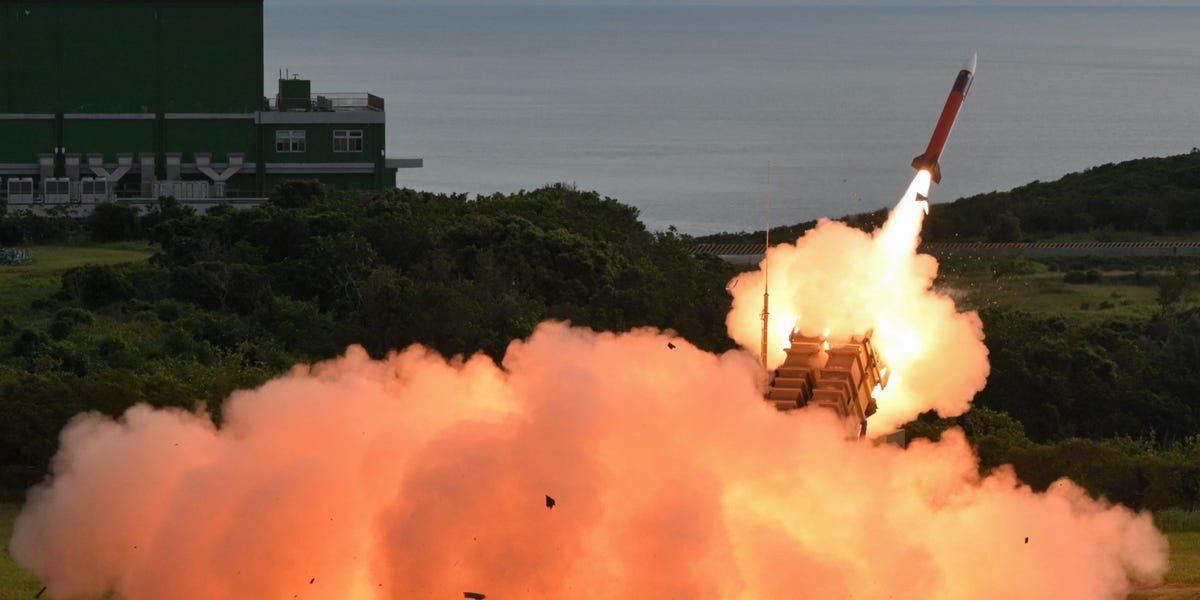
CENTCOM said it was able to defend against hundreds of Iranian missile and drone attacks, with no casualties. A US official told Business Insider that US-made MIM-104 Patriot surface-to-air missile systems and Terminal High Altitude Area Defense, or THAAD, batteries were used to protect the Middle East from Iran’s retaliatory strikes. Warship-launched interceptors and aircraft were also involved, as they’ve been in other engagements involving big Iranian missile barrages.

Nations attacked by Iran, countries like Qatar, the United Arab Emirates, and Bahrain, said they were largely able to intercept Iran’s missiles, sometimes stopping entire waves. Details are still emerging, but damage appears minimal. Casualties, likewise, have been extremely limited thus far, at least compared to what they might have been otherwise.


Smoke rises in the sky after blasts were heard in Manama, Bahrain, February 28, 2026.

Some of Iran’s retaliatory strikes were successful, but countries reported intercepting entire waves of attacks with air defenses.

Stringer/REUTERS


That was only day one though. Iran has a large missile arsenal, and it has pledged to continue its attacks. Continued large barrages will put tremendous strain on air defense arsenals.

Along with other current and potential conflicts, Iran is yet more evidence that much of modern war has become ranged missile fights. If you don’t have good air defenses, you may very well lose.

This is a very different way of war compared to the fights against terrorists and insurgencies that the US and its allies waged for decades in the Middle East.

More would be needed for higher-end threats

China and Russia both field substantial missile arsenals that they are continuing to expand. The West is aware, but the war in Ukraine, where Russia bombards Ukrainian cities nightly with massive mixes of missiles and drones, has been a real wake-up call.

Ukraine has been developing its own air defenses while seeking additional options from partners. Each barrage is extremely demanding. In one engagement, Ukraine expended nearly $100 million in interceptors fighting off Russian attacks.

Much of the West has allowed air defense arsenals to atrophy, but there are significant new investments in air defense across the NATO alliance.

The NATO chief pledged a fivefold increase in air defenses, driven by the alliance’s increased spending. Established manufacturers are increasing production, and new systems are being created. President Donald Trump wants his Golden Dome missile defense system to protect against complex attacks from Russia and China.

But air defense systems and their missiles are expensive and time-consuming to make, and the industry is struggling to keep up with increasing demand, even with companies boosting output.

Mick Ryan, a retired Australian major general and strategist with a focus on future war, said that the heavier demand could cause new problems. Patriot interceptor missiles are critical to Ukrainian defenses, but are in heavy demand at present in the Middle East,” he wrote on Saturday.

Russia, he said, will want to “exploit any temporary Ukrainian capability gaps while American attention and production capacity focuses on Iran.”

The US will also need to maintain a strong air defense posture in both Europe and the Pacific as well, even as it fights Iran.

Ryan warned that concentrating US missile defense assets in the Middle East could degrade its deterrence in the Pacific: “Every carrier in the Gulf, every squadron in Europe, every missile defence battery protecting Middle Eastern countries represents capacity unavailable for containing Chinese expansion.”


Source link

Screen Shot 2020 09 04 at 6.22.07 PM

CEO Dara Khosrowshahi says Uber has a quiet edge in the robotaxi wars

Uber Eats might end up playing a key role in its parent company’s robotaxi business, Uber CEO Dara Khosrowshahi said.

The ride-hailing app is working with multiple companies, such as Alphabet-backed Waymo, to make self-driving cars available through its app. Waymo’s robotaxis have already proven more efficient than most human Uber drivers in cities such as Atlanta and Austin, Uber has said.

One big question hanging over robotaxis, though, is what happens to the vehicles during times of the day when demand for rides is low, Khosrowshahi said on Uber’s fourth-quarter earnings call on Wednesday.

He pointed to one solution: Have them drive orders to customers through Uber’s food delivery and freight businesses.

Some delivery services, such as DoorDash, are also experimenting with robotaxis for food deliveries. Uber offers both ride-hailing and delivery, meaning robotaxis on its network could shift between the two as demand for each changes, Khosrowshahi said on Wednesday.

“Having delivery and freight as part of our logistics ecosystem gives us an opportunity to actually use these vehicles at a structurally higher utilization than anyone else,” Khosrowshahi said.

While ride-hailing accounted for over half of Uber’s revenue in the fourth quarter, its delivery business grew by 29%, a faster clip than the 18% growth rate its ride-hailing segment posted in the same period.

How efficiently companies use the autonomous vehicles that they put on the streets is one of the challenges hanging over the technology.

Safety is another. Last month, a Waymo car injured a child near a school in Santa Monica, California, the latest in a series of accidents involving self-driving cars. Waymo said it is cooperating with a federal probe into the accident.

While it doesn’t operate self-driving cars directly, Uber is experimenting with ways to train the AI behind robotaxis using data it collects from human drivers, Khosrowshahi said. Uber has a partnership with Nvidia to collect that data, for instance. Last month, Uber said it would launch AV Labs, an arm focused on similar training efforts.

Khosrowshahi said the goal is to make self-driving cars more reliable and avoid situations such as last year’s Waymo blackout in San Francisco, when a power outage prompted the company to suspend services. “The real world can create unexpected circumstances,” he said.

Robotaxis also require infrastructure to store, charge, and repair. Some companies, such as startup Voltera, are building depots for those purposes in anticipation of a robotaxi boom in the coming years.

Have a tip? Contact this reporter at abitter@businessinsider.com or via encrypted messaging app Signal at 808-854-4501. Use a personal email address, a nonwork WiFi network, and a nonwork device; here’s our guide to sharing information securely.


Source link

Walmart-just-doubled-down-on-the-Christmas-delivery-wars.jpeg

Walmart just doubled down on the Christmas delivery wars

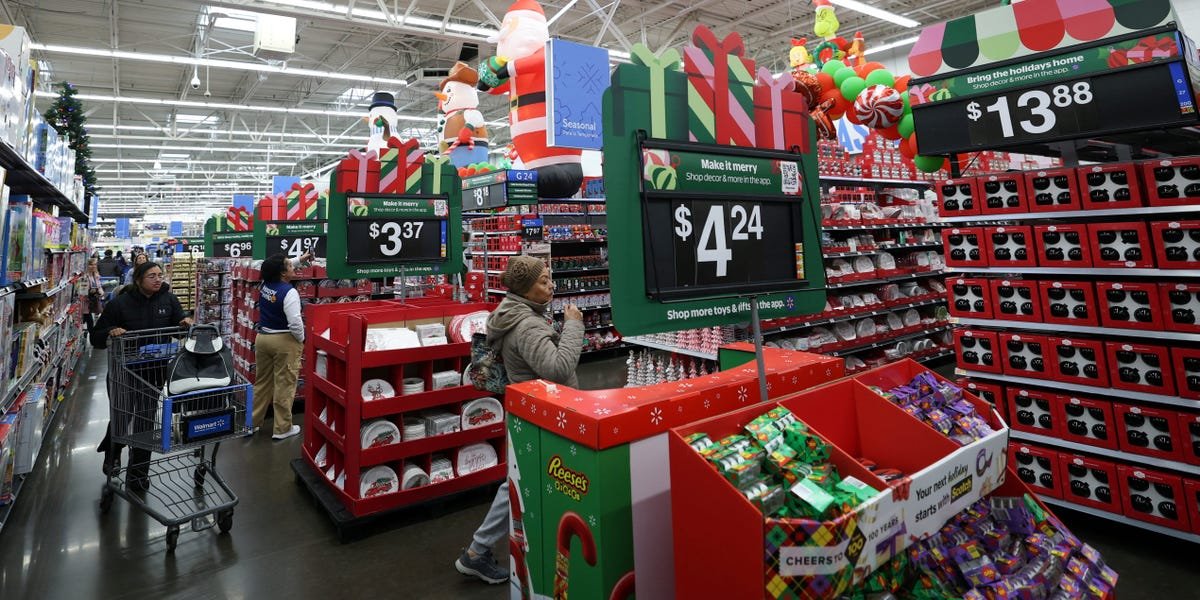
As Christmas approaches, Walmart is giving shoppers something pretty much everyone can use: a little more time.

Imagine you’re just arriving to Christmas Eve dinner with your in-laws and your niece says she’s been wanting a talking plush Bluey doll.

You find it in your Walmart app, place the order in a tap, and by the time dessert is ready, your gift is at the doorstep. (You can even get the whipped cream you forgot to bring for the pie, too.)

Such last-minute shopping options are becoming increasingly possible as major retailers make a big push into ultrafast delivery.

Case in point: Walmart told Business Insider exclusively that its shoppers will be able to place store-fulfilled express delivery orders as late as 5 p.m. local time on Christmas Eve — a full hour later than last year.

“More people are using Express Delivery to get their items faster, and December is when it truly shines,” Walmart’s chief e-commerce officer David Guggina said in a statement. “No one delivers for customers like Walmart, from the first Holiday deal to the final gift on Christmas Eve.”

The retail giant can now reach 95% of US households in three hours or less, and the company has said that more than a third of shoppers opt to pay extra for three-hour-or-less delivery.

Those express delivery numbers jump by 2.5X in December compared with the year’s average, the company said.

The company also told Business Insider that it recently rolled out a new “Get it Now” option in the Walmart app, which shows shoppers an estimated number of minutes to receive an item, and lets them place the order in one tap.

Walmart said earlier this month that it fulfilled its fastest Black Friday order in 10 minutes, with big increases in both the volume and speed of deliveries fulfilled from its stores.

But Walmart isn’t the only player in the ultrafast delivery game: Amazon and Target are also racing to offer last-minute fulfillment options on Christmas Eve.

Target says customers can get orders within two hours via curbside or in-store pickup, or opt for same-day delivery for a $9.99 fee, with stores closing at 8 p.m. on Christmas Eve.

And Amazon will show an “Arrives before Christmas” message on items that can be delivered as late as Christmas Eve via delivery or one of the company’s 25,000 pickup locations.

Correction, December 9, 2025 — An earlier version of this story misstated the delivery category that more than a third of Walmart shoppers opt to pay for — it is three-hours-or-less delivery.


Source link