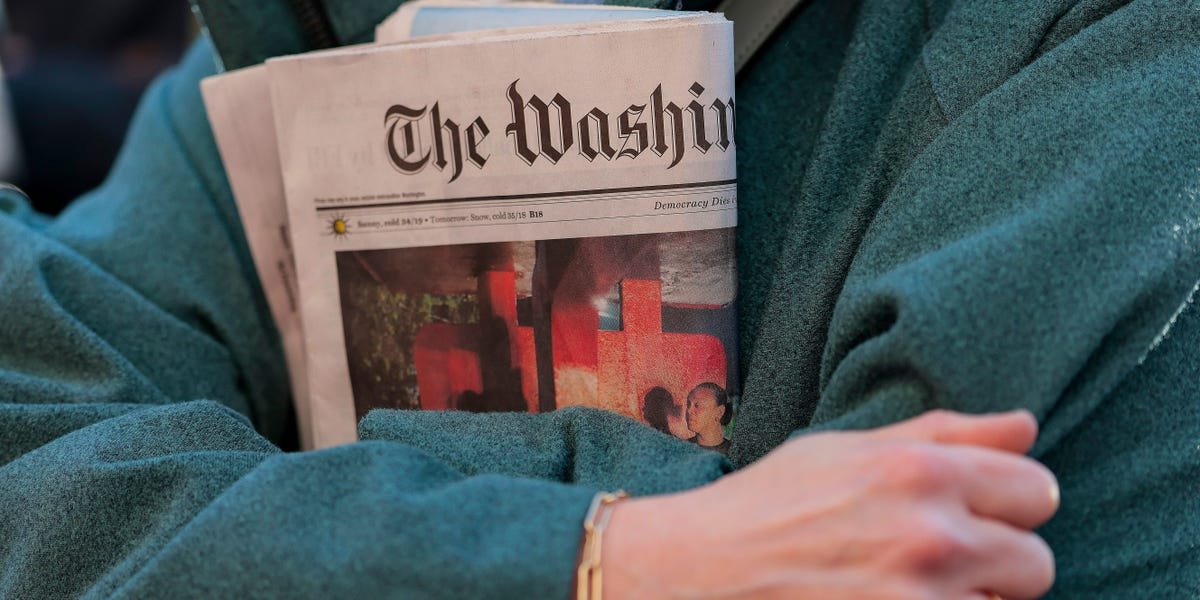
Jeff-Bezos-speaks-out-about-The-Washington-Post-for-the.jpeg

Jeff Bezos speaks out about The Washington Post for the first time since mass layoffs — and focuses on ‘data’

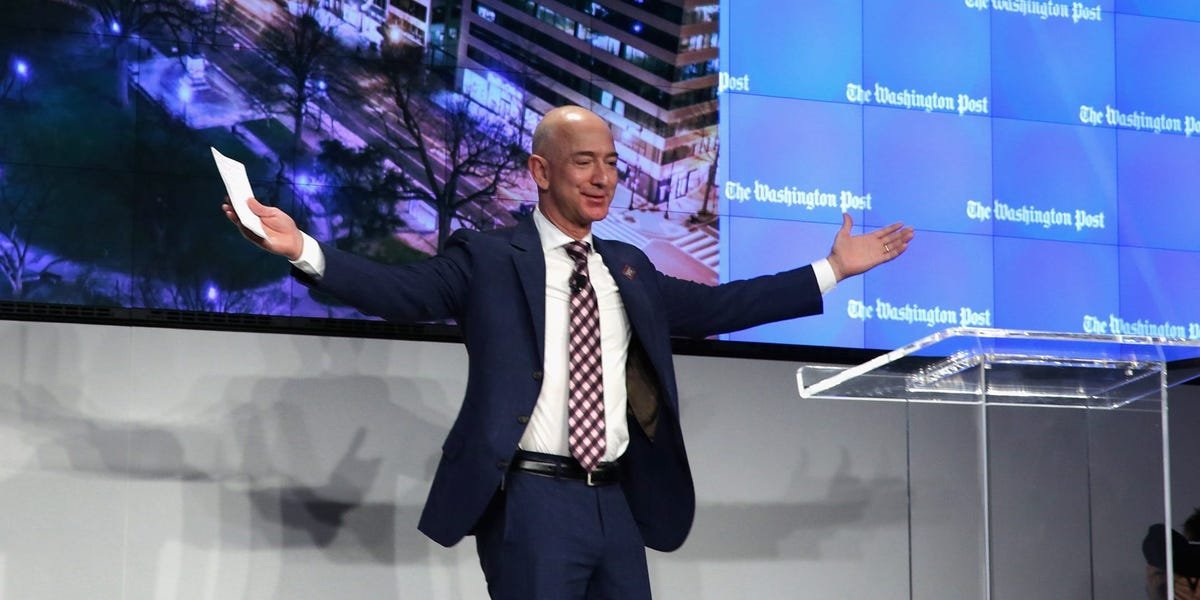
Washington Post owner Jeff Bezos gave his first public statement since the paper enacted massive job cuts this week, and it focused on “data” and understanding reader interests.

The billionaire Amazon founder, who built one of the world’s most valuable companies with a relentless focus on customer satisfaction, indicated he wanted to see that same energy at the Post.

“The Post has an essential journalistic mission and an extraordinary opportunity,” Bezos wrote. “Each and every day our readers give us a roadmap to success. The data tells us what is valuable and where to focus.”

Bezos’ statement came as Post CEO Will Lewis announced he was stepping down, to be replaced in an interim capacity by Post CFO Jeff D’Onofrio.

Bezos’ statement struck a similar tone to comments made by the paper’s top editor, Matt Murray, in addressing staff earlier this week.

“Today is about positioning ourselves to become more essential to people’s lives in what has become a more crowded, competitive, and complicated media landscape,” Murray said during a staff call on Wednesday. “For too long, we’ve operated with a structure that’s too rooted in the days when we were a quasi-monopoly local newspaper.”

Murray sent staffers a detailed memo on Wednesday that outlined focus areas in which he said the Post demonstrates “authority, distinctiveness, and impact.” Those priority areas will include politics, national affairs, national security, and other forces “shaping our future,” like science and business, Murray wrote.

Murray spoke repeatedly about focusing on areas of reader interest and understanding audience data in an appearance following the layoffs on the Puck podcast “The Grill Room.”

The messaging from Bezos and Murray could help appease some critics who have seen moves by the Post in recent years as rooted in political ideology and not data — though it will be difficult to win them over.

The Post faced a revolt both inside the newsroom and among readers when Bezos made a late-hour call in 2024 that the paper wouldn’t endorse a presidential candidate for the first time in 36 years. NPR reported that more than 200,000 subscriptions were canceled in the days following.

The paper faced another round of criticism in February 2025 when Bezos decided to reorient the Post’s opinion section — generally considered the owner’s prerogative — around personal liberties and free markets.

Former Post executive editor Martin Baron, who worked closely with Bezos during his tenure as top editor, wrote in a LinkedIn post after the layoffs that the paper’s challenges had been made “infinitely worse by ill-conceived decisions that came from the very top.”

Critics of Bezos’ moves have said he should consider financially supporting the paper, given its role in society.

“It just seems heartbreaking that he doesn’t feel the paper is important enough to bankroll,” Sally Quinn, the longtime journalist and widow of former Post executive editor, Ben Bradlee, said this week on CNN.

Bezos said in his statement that he felt the Post’s leadership going forward could build an “exciting and thriving next chapter” for the paper.


Source link

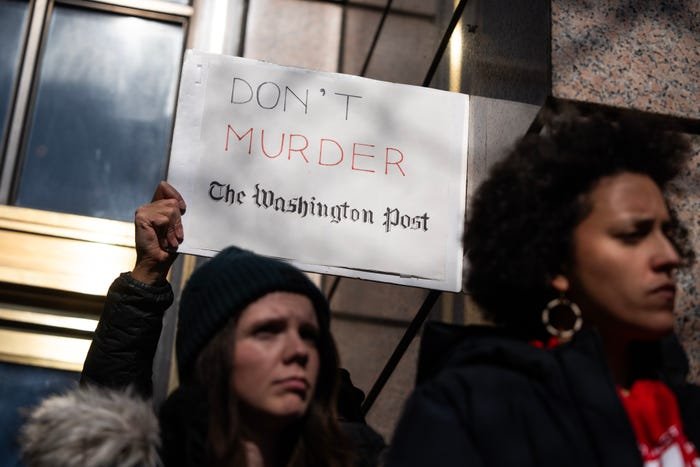
A person holds a protest sign which reads

Washington Post union calls for Jeff Bezos to sell the paper after CEO resigns


Tom Williams/CQ-Roll Call, Inc via Getty Images

  • The Washington Post’s CEO, Will Lewis, departed the paper on Saturday following sweeping layoffs.
  • The Post’s union, in a statement, called Lewis’ exit “overdue.”
  • The union also called for Jeff Bezos, who owns The Post, to sell the publication.

Unionized staffers from The Washington Post issued a statement supporting the abrupt Saturday departure of the publication’s CEO, Will Lewis, and called for Jeff Bezos to sell the paper.

“Will Lewis’s exit is long overdue,” the Washington Post Guild’s statement, which was published on X, read. “His legacy will be the attempted destruction of a great American journalism institution. But it’s not too late to save The Post. Jeff Bezos must immediately rescind these layoffs or sell the paper to someone willing to invest in its future.”

Representatives for the Post union did not immediately respond to a request for comment from Business Insider.

On social media, laid-off reporters celebrated the news of Lewis’ departure. Jada Yuan, a former culture writer at the Post, wrote that she had “never been more thrilled with a news alert.”

“Will Lewis, the absent, ineffective publisher of @washingtonpost has resigned. Or been fired,” she added. “It sucks that it happened after he couldn’t even show up on zoom to lay off 1/3 of the company. But the important thing is he’s gone.”

Lewis’ exit was announced Saturday afternoon, just days after sweeping layoffs hit the legacy publication, leaving hundreds of reporters out of work.

The publication’s unionized employees held a “Save the Post” rally earlier this week, focused on Bezos and Lewis, and said there were risks to press freedom and independent news if legacy publications like the Post are unable to continue operating.


Source link

Will-Lewis-couldnt-fix-the-Washington-Post-Thats-on-Jeff.jpeg

Will Lewis couldn’t fix the Washington Post. That’s on Jeff Bezos.

Will Lewis, the former CEO and publisher of the Washington Post, had a terrible tenure at the paper. The two years he spent there, which ended Saturday with a two-paragraph memo, are chiefly notable for a series of cuts and layoffs, culminating in a 30% bloodletting days ago.

But let’s be clear: This one is on Jeff Bezos.

Most obviously, that’s because Bezos owns the Post, and Bezos was the one who hired Lewis to run the business for him.

Bezos was also the one signing off on Lewis’s actions at the paper, which mostly amounted to making the paper smaller while telling the staff that “people are not reading your stuff.”

And slightly less obviously, it was Bezos who dramatically worsened the Post’s business outlook. He decided not to endorse a presidential candidate in 2024, weeks before the election — a move that outraged many Post readers, who saw the non-endorsement as an attempt to cater to Donald Trump.

That led to more than 250,000 subscriber cancellations, a huge problem for a paper whose circulation peaked at 3 million in 2021.

The best case argument you could make for Lewis era at the Post, if you are inclined, would go something like this: Bezos, who bought the Post in 2013 and then invested heavily in staff, realized a few years ago that he now employed many more people than his business would support. So he brought Lewis in to do the grim work of shrinking the publication. Now that work is done, so Lewis can do something else and Bezos can find someone to help the Post grow again.

But the timing of Lewis’ departure — late afternoon on a Saturday, following days of howling from Post employees and many others about Lewis and Bezos’ stewardship of the paper — suggests this was not a long-in-the-making move.

And again, whether Lewis jumped or was pushed doesn’t matter in the end. The Washington Post is Jeff Bezos. He gets praise if things are going well — which, for several years after his purchase, seemed to be the case — and blame when it doesn’t.

Here I’ll also point out that Bezos, who has no problem being seen jet-setting around the world in a style befitting the world’s fourth-richest man, has been totally MIA during his paper’s recent turmoil.

On Saturday, when the paper announced it had promoted Post CFO Jeff D’Onofrio to acting publisher and CEO, Bezos finally attached his name to a public statement, promising that the new Post would thrive by giving readers things they wanted to read.

“The data tells us what is valuable and where to focus,” he said in a Post press release.

That might qualify for an insight 30 years ago, when newspapers were struggling to respond to the internet. Now that’s table stakes, and you would hope the guy who created Amazon has more up his sleeve.

I have a bunch of ideas,” for the Post, Bezos said in the fall of 2024. “I’m working on that right now.”

We’re still waiting.


Source link

Headshot of Peter Gelling

Read the memos sent to staff announcing Washington Post publisher Will Lewis’ resignation

Will Lewis’ two-year tenure as publisher of the Washington Post is over.

His time leading the nearly 150-year-old newspaper, which was bought by billionaire Jeff Bezos in 2013, was marked by buyouts and shrinking coverage. Most recently, on Wednesday, the Post laid off hundreds of journalists, many of them covering foreign affairs.

Employees and supporters gathered outside the Post’s offices on Saturday to protest the drastic cuts.

“Each and every day our readers give us a roadmap to success. The data tells us what is valuable and where to focus,” Bezos said in a statement on Saturday, his first public comments since the layoffs. “Jeff, along with Matt and Adam, are positioned to lead The Post into an exciting and thriving next chapter.”

Below are the text of memos emailed to Post staff announcing Lewis’ departure and the appointment of Chief Financial Officer Jeff D’Onofrio as acting publisher.

Will Lewis’ email to staff

“All – after two years of transformation at The Washington Post, now is the right time for me to step aside. I want to thank Jeff bezos for his support and leadership throughout my tenure as CEO and Publisher. The institution could not have a better owner.

During my tenure, difficult decisions have been taken in order to ensure the sustainable future of The post so it can for many years ahead publish high-quality nonpartisan news to millions of customers each day.

With gratitude, Will”

Post PR email announcing D’Onofrio’s appointment

“The Washington Post is announcing Jeff D’Onofrio as its acting Publisher and CEO, effective immediately.

D’Onofrio, a strategic business leader and proven architect of the new media landscape, joined The Post in June 2025 as Chief Financial Officer following leadership roles across global companies including Raptive, Tumblr, Yahoo and Google. He succeeds William Lewis, who has served as Publisher and CEO for the past two years.

“The Post’s resolute commitment to writing the first rough draft of history anchors and imprints its future,” said D’Onofrio. “I am honored to become part of charting that future and to take the lead in securing both the legacy and business of this fierce, storied American institution.”

“The Post has an essential journalistic mission and an extraordinary opportunity. Each and every day our readers give us a roadmap to success. The data tells us what is valuable and where to focus,” said Jeff Bezos, owner of The Washington Post. “Jeff, along with Matt and Adam, are positioned to lead The Post into an exciting and thriving next chapter.”

D’Onofrio served as Chief Financial Officer for Raptive, the largest digital ad management company serving over 6,000 creators and publishers. He oversaw the finance, human resources and data and analytics teams, while negotiating key partnerships and acquisitions that helped power Raptive to impressive revenue and profit growth.

Immediately prior to his role at Raptive, D’Onofrio was Chief Executive Officer at Tumblr and held other key leadership positions there including President, Chief Operating Officer, and CFO. His expert fluency in both today’s media business landscape also grew from his leadership and management roles at Google, Zagat, Yahoo!, and Major League Baseball (MLB Advanced Media).”


Source link

Washington-Post-publisher-Will-Lewis-is-out-days-after-sweeping.jpeg

Washington Post publisher Will Lewis is out days after sweeping layoffs

  • The Washington Post’s chief executive, Will Lewis, announced his departure on Saturday.
  • Jeff D’Onofrio will serve as the interim CEO and publisher, effective February 7.
  • Lewis’ departure comes days after sweeping layoffs at the legacy publication.

Will Lewis is out as chief executive at the Washington Post, days after sweeping layoffs hit the legacy publication and following a rocky two-year tenure that saw the Post struggle to stabilize its business.

The newspaper said Saturday that Jeff D’Onofrio, CFO, would serve as the interim CEO and publisher, effective immediately.

Lewis’s departure comes after hundreds of Washington Post journalists were laid off across the company this week, in what executive editor Matt Murray described in a memo as part of a strategic reset. The cuts were felt across the newsroom, including the sports section, international, books, DC metro, and audio.

As news of the layoffs spread, Lewis came under widespread public criticism, both for the financial challenges at the Post and for not participating in the dissemination of the news. After Murray made the staff-cut announcements himself, Lewis was seen attending Super Bowl festivities.

In a note Saturday, Lewis said “now is the right time for me to step aside” and thanked Jeff Bezos, the paper’s owner.

D’Onofrio, who joined the Post in June 2025, said in an email to staffers on Saturday: “This is a challenging time across all media organizations, and The Post is unfortunately no exception.”

This is a developing story. Please check back for updates.


Source link

After-Jeff-Bezos-bought-the-Washington-Post-things-went-great.jpeg

After Jeff Bezos bought the Washington Post, things went great — for a while. I asked an insider what happened.

Lots of people are angry at Jeff Bezos because of the massive cuts he’s ordered at his Washington Post. But a decade ago, Bezos was widely celebrated for his ownership of the Post, which he had bought for $250 million in 2013.

Under Bezos’ ownership, the Post made huge investments in tech and staff. And readers loved the results — especially during the first Trump era, when the paper turned profitable.

Now things are very different: The Post says it has been losing gobs of money for the past few years, and Bezos has made a series of moves interpreted as a shift toward Trump — which spurred reader revolts, which made things even worse. And all of that led to this week’s cuts.

I talked to Erik Wemple, a New York Times media reporter who previously worked at the Post for 14 years, to try to reconcile the two eras of Bezos and the Post, and to get a sense of what might happen next. You can hear our entire chat on my Channels podcast; what follows is an edited excerpt from our conversation.

Peter Kafka: What shape was the Post in when Bezos bought it in 2013?

Erik Wemple: The Graham family, which had owned the Post forever, was an amazing steward for the paper. But they had to scale back their newsroom, because the internet had blown holes in classified ads. Classifieds used to be huge at The Washington Post.

At the time Bezos bought it in 2013, it was not dysfunctional. These were really good journalists, but the paper was in a bit of a funk. It wasn’t a reclamation project, but it had seen better days.

It was faded when he bought it.

Correct. And when Bezos came in 2013, he really wowed the staff. We all asked him questions. He answered those questions with tremendous enthusiasm and competence. He seemed really energized by this.

What did he think he was going to do?

When he came in, he was energetic, but deferential on the particulars of running the newspaper. He’s like, “You know what? I’m not in this business, but I do know how to organize discussions about the future of a business.” And that’s what he did. I was in one of them; it was really remarkable.

He had these things that he believed in. He was important in guiding conversations. And it was really remarkable because he backed it up with money. He invested in the newspaper. He invested in political coverage, big time. Investigative went up. International got a huge, huge boost. And the technology did too.

This is exactly what you want from your billionaire tech owner: Give us a bunch of money. Improve our tech. Also, stay away. Don’t tell us what to do.

That was exactly the sentiment. And one of the things you mentioned in there is really worth pausing on for a second, which is the lack of intervention, the lack of meddling. He just sort of looked on. And the newsroom really, really, really roared. Especially in the first Trump period.

So not only does this produce great journalism, it seems like it becomes a business success story — the paper becomes profitable again. Then, after Trump left the White House, there was a lot of hand-wringing about what happens after the Trump bump. People expected audiences to decline across lots of different publications, and that happened, so it makes sense that the Post would struggle a bit. But the numbers you hear about the reported losses — $77 million in 2023, $100 million in 2024 — are staggering. I still don’t understand how you can swing to losses like that just because your traffic goes down. What am I missing?

I share your knowledge gap.

One of the things that has been reported and pretty well substantiated is they may have over-indexed on staff growth. They vaulted up over a thousand in early 2021, up to 1,100. So I think they got ahead of themselves, and they had to pair that back. That’s one of the things.

Another consideration is that the digital advertising market sort of dried up, so that was a big deal.

It’s all somewhat of a mystery, but I don’t doubt that there are meaningful losses.

Can this just be as simple as the Post overhiring? Lots of companies have done that — the tech guys did during the pandemic.

No, I don’t think so. Especially if you look at the more recent past, when they tinkered with the opinion side and shot themselves in the foot.

In October 2024, the Post announced it would not be endorsing a candidate in the presidential election. And that happened after the Washington Post editorial board had drafted an editorial in favor of Kamala Harris. And hell broke loose — a subscription desertion of hundreds of thousands.

That’s an astonishing number. I remember thinking that it couldn’t be real.

The cause and effect could not have been more direct. People said, “No way. I’m not giving my money to this organization.”

The Post has continued to do lots of news reporting that is critical of the Trump administration. Which made me curious about this line in editor Matt Murray’s explanation of the cuts this week. He praises the work the paper has done, and then points out problems, and says “even as we produce much excellent work, we too often write from one perspective, for one slice of the audience.”

It almost sounds like what David Ellison and Bari Weiss say about remaking CBS News. Does that mean we should expect the Post’s news reporting to change in some sort of ideological way?

If Matt Murray or any of his top editors had actually edited that memo, they would’ve asked for specifics. And they would’ve put a big question mark alongside that and ask, “What the hell are you talking about here? Why are you speaking in such elliptical language? Why are you trying to whisper to the newsroom some message that you’re not willing to articulate?”

We need to ask him exactly what he’s saying. I think that that is coded language, and I think that could be political.

It’s a strange thing for the executive editor to be saying. It’s almost as if he’s asking for some force to adjust the newsroom cadence and its sensibility — when he has the power to do that.

(Editor’s note: Business Insider contacted the Post for comment, but didn’t hear back immediately.)

Why does Jeff Bezos own The Washington Post? It seems to be nothing but a headache for him the last few years. It doesn’t seem like it helps him curry favor with Donald Trump. It’s not like he’s using it to buy the “Melania” documentary for $75 million. What is the upside for him, and why does he continue to own it, do you think?

Erik Wemple: I have no idea. That is something all of us in the media trade have been trying to figure out. It is entirely a black box.

Many years ago, he seemed to be deriving a great deal of satisfaction from this. There was a close bond between The Washington Post Establishment and Bezos. I’m pretty sure it isn’t as strong as it once was.

So I think that the enjoyment he got from his association with his institution has probably faded.

But in 2024, he said, “We saved The Washington Post once, and we’re going to save it a second time.” So there’s another challenge, right? I guess that that would be something that he would derive some pleasure from. And I would imagine that if he wanted to get really involved and engaged, the way he was back in 2013-2015, the newsroom would welcome that.

A lot of the success stories we hear about in digital media these days are specifically publications that are focused largely or entirely on Washington, DC: Politico, Axios, Punchbowl, Semafor. Some of them have direct DNA from The Washington Post. Is there any chance of the Post reclaiming any of that, either through an acquisition or just by focusing on Washington and policy?

They have this Washington Post Intelligence thing now, which is sort of akin to that. But I don’t know if there are new streams of revenue opening up at the Post. And I think that that’s one of the reasons that the staff is so disaffected and so disappointed in the current management — they don’t see any sort of progress towards new business.

They’re just seeing cuts.

I think they’re seeing cuts. And also a fair amount of silence. I don’t think that they’re getting the feedback from management that they deserve.



Source link

Peter Kafka

Billionaires like Jeff Bezos can save The Washington Post until they decide they won’t. We need a better model.

The cuts at The Washington Post are brutal.

They are brutal for the paper’s readers, who lose crucial coverage like sports and international reporting. And they are brutal for hundreds of Post employees, including lots of people whose work I pay to read with my Post subscription.

The Post’s cuts have also led lots of people to point out the obvious — that Post owner Jeff Bezos, who is currently the world’s fourth-richest man, worth an estimated $261 billion, could easily fund the paper’s losses … forever, without ever noticing the tab.

For the record: I also wish that Bezos would take his loose change and spend it on journalism.

Note that I didn’t say “journalism instead of” because when you are talking about Bezos-level wealth, you don’t have to choose: You can pay for journalism and rockets and superyachts and Venetian weddings and parties in St. Barts. (And yes, I realize that Bezos’ Amazon expenditures on things like the “Melania” doc are different from Bezos’ personal spending. The point is, he can afford it. In the same way that I can afford to buy a fancy coffee now and then.)

I’m also not weighing in on how much of the Post’s problems are the same problems facing every news organization, versus ones Bezos exacerbated by pivoting toward Trump. Or whether the new Post plan — focus on a handful of topics it thinks will resonate with a national audience, like politics and wellness — makes sense or is simply a too-late move already made by many Post competitors.

But the focus on Bezos underscores the problem the Post has been facing for years: It was a money-losing operation that relied on a billionaire’s goodwill. First, to buy it from its previous owners, who let it go for the price of a Joe Rogan podcast deal, and then to fund its losses for years.

Maybe Bezos really is sick of paying for the Post’s losses. Maybe funding the Post no longer syncs with a turns out, Donald Trump is actually good now, worldview. The point is that the Post has been in the can’t-win position of hoping Jeff Bezos would continue to fund those losses for years. Now he doesn’t want to. (Bezos has yet to comment publicly on the cuts; Matt Murray, the Post’s top editor, told his staff that the cuts are meant to help “reinvent The Washington Post for this new era. This work is difficult, but is essential.”)

Which, again, points out how precarious a position just about every news organization in the US is in right now.

There are a handful of really excellent publications, which are controlled by billionaires or very wealthy families — The New York Times, The Wall Street Journal, and Bloomberg News — that are aimed at an upscale, national audience, and they are doing well. There are some thriving startups and niche publications that tend to focus on topics that rich people — or their employers — will pay to learn more about. (Several of them, it turns out, are focused on power and Washington, DC — a sector the Post should have owned.) And there are various forms of aggregators that make a living by repackaging news other people generate, like newsletter publisher 1440.

And that’s … kind of it. The local news market is so bad we routinely use the word “desert” to describe it. There have been many attempts to solve that, and people keep trying new ways to tackle the problem. I wish all of them well because we really, really need local news. TV news is contracting because TV is contracting. Magazines are now frequently “brands attached to hotels or travel agencies.”

Faced with this grim reality, it’s natural to look at Bezos and think: Just pay for it. And again — I wish he would. But relying on billionaire goodwill is a hope, not a plan.

Journalism — no matter how much we right-size, automate, and innovate — is expensive. And up until the internet, journalism usually existed in the US in spite of those costs because it was bundled with other things people (subscribers, advertisers) were willing to pay for.

Now that bundle has been torn apart, so we need both new models that support what we have today — and ownership structures that will be satisfied with self-sustaining businesses, not ones with huge profit expectations. If I knew how to do that, I’d be doing it. I just know that hoping a billionaire will fix it isn’t the answer.


Source link

A-GoFundMe-for-laid-off-Washington-Post-staffers-crossed-130K-in.jpeg

A GoFundMe for laid-off Washington Post staffers crossed $130K in a few hours and drew a big donation from Kara Swisher

Money is pouring in for workers impacted by Wednesday’s layoffs at The Washington Post.

As of writing, over 1,000 supporters had donated more than $130,000 combined to a GoFundMe page set up for let-go journalists.

The fundraising push, launched just a few hours after company executives began cutting workers, was set up by Post reporter Rachel Siegel and the newsroom’s union. Its top donor, tech journalist and former Post employee Kara Swisher, gave $10,000.

Swisher, who recently made a push to buy the Post from its billionaire owner, Amazon founder Jeff Bezos, wrote on Threads that she had the means to “donate a decent chunk of dough to these hardworking employees,” and urged others to follow.

Other top donors appeared to be former Washington Post staffers, such as Eugene Robinson and Fred Barbash.

The Post’s haul, and the speed at which it drew in six figures, make it an outlier among media layoff fundraisers. Laid-off staffers at Vox Media pulled in about $7,000 in their January GoFundMe, while Teen Vogue got about $41,000 after November layoffs.

“Post Guild members have come together to support their colleagues with this GoFundMe,” said a spokesperson for the Washington Baltimore News Guild, which represents the paper’s union. The spokesperson blamed “inexcusable business decisions of top Post leadership” for the cuts.

“The Washington Post is taking a number of difficult but decisive actions today for our future, in what amounts to a significant restructuring across the company,” a Post spokesperson said in a statement on the layoffs. “These steps are designed to strengthen our footing and sharpen our focus on delivering the distinctive journalism that sets The Post apart and, most importantly, engages our customers.”

The Post’s layoffs, which its newsroom union said impacted hundreds of workers, were designed to trim costs and refocus its efforts around a smaller set of coverage areas, executive editor Matt Murray told employees over Zoom on Wednesday morning.

The company is shutting down its podcast, “Post Reports,” and letting go of journalists focused on sports, books, and foreign affairs. It’s restructuring its D.C. metro coverage, and investing in areas like politics and national security that “demonstrate authority, distinctiveness, and impact,” Murray wrote in a memo to staff, viewed by Business Insider.

“Today is about positioning ourselves to become more essential to people’s lives in what has become a more crowded, competitive, and complicated media landscape,” Murray told staffers during the call. “For too long, we’ve operated with a structure that’s too rooted in the days when we were a quasi-monopoly local newspaper.”


Source link

Scientists-finally-think-they-know-where-the-most-dangerous-part.jpeg

Scientists finally think they know where the most dangerous part of this US earthquake zone is and it’s bad news for Washington

Hidden off the US Western shore, beneath the Pacific Ocean, is the Cascadia Subduction Zone. This fault is capable of generating earthquakes larger than magnitude 8 that can be felt hundreds of miles away, and a recent study has pinpointed the most dangerous segment along its 700-mile-long stretch.

The results will help scientists assess earthquake and tsunami risk for this region, including one particularly vulnerable state: Washington.

“This has been a subduction zone that’s been under-studied with the kinds of tools that we have available now,” geophysicist Suzanne Carbotte, a Bruce Heezen Lamont research professor at Columbia University, told Business Insider.

Armed with state-of-the-art technology that can probe deep beneath the ocean floor and create images, Carbotte and her team produced the first comprehensive survey of Cascadia’s complex, below-ground composition. They published their work today in the peer-reviewed journal Science Advances.

The researchers discovered that Cascadia is broken up into at least four segments, which had been suggested by previous studies but never confirmed, Carbotte said.

The picture “before our study was a smooth surface with no obvious relationship to this segmentation,” Carbotte said. “But that smooth surface was based on very, very sparse data. And in places, no data.”

This new picture provides a much more accurate view of Cascadia’s complexity, and of the risk it poses to the US West Coast.

How the Cascadia Subduction Zone causes earthquakes


Diagram of the cascadia subduction zone

In the Cascadia Subduction Zone, the Juan de Fuca plate is slowly subducting under North America. As these two tectonic plates move against each other, it could trigger a giant earthquake.

USGS/Wikimedia commons


Cascadia is essentially the border between two tectonic plates: the massive North American continent, and the smaller Juan de Fuca plate.

The Juan de Fuca plate is gradually sliding (or subducting) eastward beneath the North American plate, which creates a megathrust fault: a place where tectonic plates move against each other in a dangerous way.

The stress that’s driving the Juan de Fuca plate under North America is continuous, Carbotte explained, but the plate’s movement is not. Sometimes, it gets stuck.

When locking up like this, the plates can only absorb stress for so long before they finally rupture, triggering an earthquake, she said.

This is what scientists think happened about 300 years ago when the zone ruptured offshore and the resulting earthquake formed a massive tsunami that slammed into the coast of Japan.

While Cascadia hasn’t produced a great earthquake since 1700, it’s only a matter of time.

Scientists can’t predict earthquakes but they can get a better idea of risk by understanding the fault’s complex structure deep below ground.

Carbotte and her team have moved the needle significantly on that front.

Zeroing in on risk


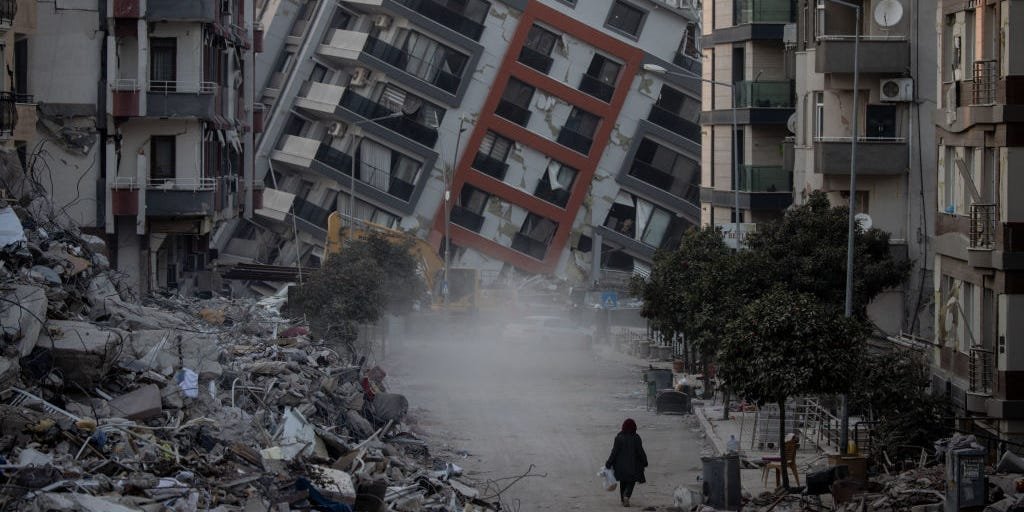
A partially collapsed building in Turkey after an earthquake

A partially collapsed building in Gaziantep, Turkey, after a 7.8 magnitude earthquake rocked the city. The Cascadia Subduction Zone can produce even larger, more dangerous quakes.

Chris McGrath/Getty Images


Carbotte and her team found lots of variability in the megathrust’s structure, which likely means that the hazard varies at different locations along the fault, said Janet Watt, research geophysicist at US Geological Survey Santa Cruz who was not involved in the study.

“It’s not a one-size-fits-all answer, but it gives us an appreciation for that complexity,” Watt, speaking about Carbotte’s results, told BI.

Additionally, understanding that Cascadia is broken up into segments is key to assessing earthquake hazard, Watt said. That’s because this segmentation means that the megathrust could rupture in pieces, rather than all at once. This could impact the size of future earthquakes, because shorter ruptures trigger smaller quakes.

What’s more, the unique characteristics of each of these segments means each one poses a different level of risk. Another key finding from Carbotte’s study is that one of Cascadia’s segments is probably more likely to produce a great earthquake than the others.

This particularly dangerous segment essentially spans the coast of Washington, running from the northern Oregon border to southern British Columbia. It’s flatter and smoother than the other segments, meaning it could trigger the largest earthquakes, Carbotte told BI in an email.

Plus, this segment likely extends further into the US than the others, which is bad news for the state of Washington. If this segment ruptured, Washington’s coastal communities could face the most extreme shaking, although the quake would extend far beyond state borders, Carbotte wrote.

Knowing that could help this state prepare for the worst-case scenario. “I think this is an example of a study that will lead to action in the future in terms of building resiliency along the coastline. And it’ll be exciting to see where the science takes us,” Watt said.

Carbotte’s research emerges in the context of many other studies that are currently working to bring our picture of Cascadia into sharper focus.

“This is one particular study of a larger community effort that is going on to [understand] the system, and then communicate what that means to communities on the coastline and inland, and how we can actually turn science into action,” Watt said.


Source link