Lloyd Lee

Alphabet CEO could earn up to $692M under a new equity package that’s linked to Waymo for the first time

Alphabet’s chief executive just got a new equity pay package that, for the first time, ties a chunk of his payout to Waymo, the company’s robotaxi service.

In an SEC filing posted on Friday, the company awarded CEO Sundar Pichai a three-year equity cycle that could be worth up to $692 million if the CEO meets the board’s performance targets.

Much of the package remains unchanged from the CEO’s 2022 award, according to the filing. The new incentives revolve around the value of two of Alphabet’s “Other Bets”: Waymo and Wing Aviation, a drone delivery service.

According to the filing, Pichai could be awarded up to $260 million depending on the increase in Waymo’s per-unit value over a three-year period, as determined by the compensation committee — essentially, the board’s estimate of what a single Waymo equity unit is worth.

The company doesn’t list specific operational milestones Pichai will have to reach. A spokesperson for Alphabet declined to comment.

In addition, the company granted the CEO Wing-linked equity units that could be worth up to $90 million, contingent on the company’s per-unit value over the next three years.

Tying Pichai’s compensation to Waymo and Wing is a signal that Alphabet no longer views the two entities as moonshot experiments but rather as assets representing valuable, scalable businesses

The board said in the filing that “incentivizing Mr. Pichai to focus his efforts on developing and scaling Alphabet’s later stage Other Bets, such as Waymo and Wing,” is in the best interests of Alphabet and its stakeholders.

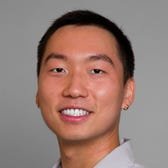
Waymo, which began as a project inside Google’s moonshot factory in 2009, has driven over 200 million autonomous miles to date. This year, the company expanded its commercial service to 10 markets, serving riders in Dallas, Houston, San Antonio, and Orlando.

Wing is another moonshot factory venture that began in 2012. The company, which provides last-mile drone delivery services, became an independent Alphabet subsidiary in 2018. Wing announced in January that it would expand to more than 270 Walmart stores by 2027.

Pichai maintains a base salary of $2 million, unchanged since 2020, and will be awarded performance stock units (PSUs) tied to Alphabet’s total shareholder returns relative to the S&P 100. The max value of the PSUs could be worth up to $252 million.

There’s also a time-based equity package that will award Pichai $84 million, provided he stays with the company for the next three years.


Source link

Microsoft-backed-Wayve-raises-15-billion-to-take-its-robotaxis-global.jpeg

Microsoft-backed Wayve raises $1.5 billion to take its robotaxis global and take on rival Waymo in London

Wayve is revving up its global robotaxi ambitions with fresh funding as it prepares to take on Waymo in London.

The UK-based autonomous vehicle software startup announced early Tuesday in the UK that it had raised $1.5 billion from a host of Big Tech giants and major automakers.

The funding round, which values the startup at $8.6 billion, includes $1.2 billion from investors including Microsoft, Nvidia, and Uber, as well as Mercedes-Benz, Nissan, and Stellantis.

It also includes additional capital from Uber, which is tied to deployments of Wayve-powered robotaxis across the globe. The two companies have a deal to launch self-driving vehicles on Uber’s app in over 10 markets worldwide, starting with London this year.

“We’ve been learning to drive on British roads for the last eight years, and so this is our home turf,” Alex Kendall, CEO of Wayve, told Business Insider in an interview.

The CEO said the latest funding round is key to pursuing the company’s ambition to license its software to major automakers and robotaxi fleet platforms like Uber.

Unlike Tesla or Waymo, Wayve is solely focused on developing software for other companies looking to deploy self-driving cars. It is not building its own fleet of robotaxis.

Kendall said owning a fleet is expensive, and Tesla’s approach to building its own car can be a constraint since it limits the company to one vehicle platform.

“Everyone wants autonomy, but not everyone wants to buy a Tesla,” he said.

Kendall added that Wayve’s AI driver is designed to be generalizable — the same way a human can quickly learn to drive different cars and in new cities.

That allows Wayve’s technology to quickly adapt to new driving environments and learn new road rules, from switching to the opposite side of the road to right turns at a red light, without relying on high-definition mapping and sensors, the approach taken by rivals like Waymo. It also allows the AI driver to be adapted by different automakers, which may have different sensor configurations on their cars, such as lidar or cameras.

“Because that’s what we’ve built, it enables us to take this business model that enables high-margin software revenues,” Kendall said.

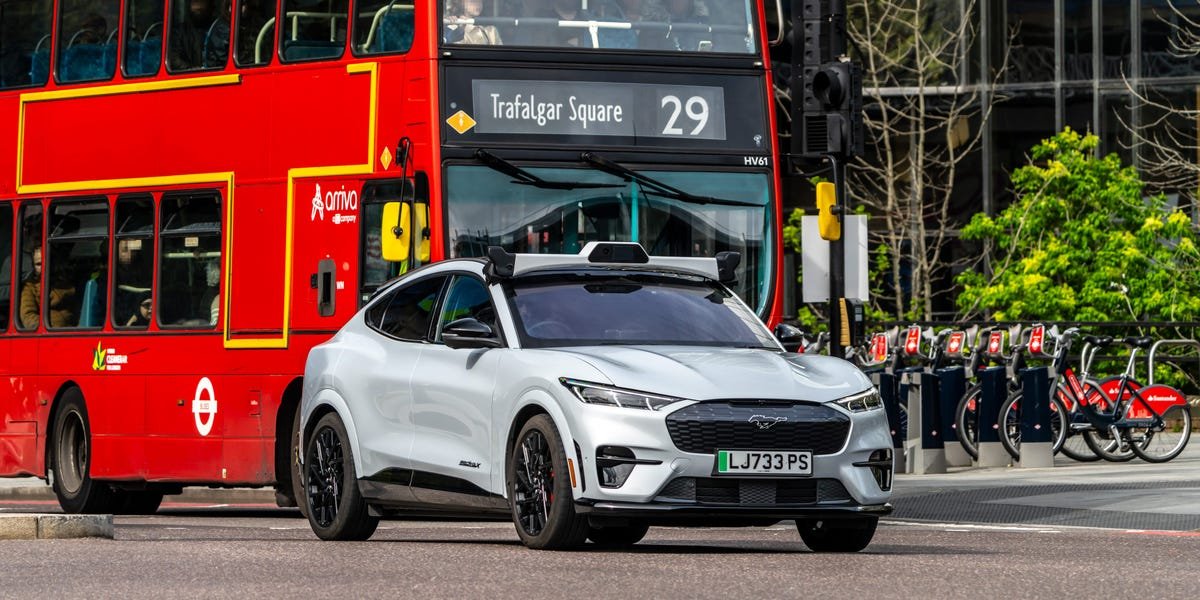
Wayve says that over the past year, its fleet of Ford Mach-Es outfitted with its AI driver has driven in more than 500 cities across Europe, North America, and Japan without being trained on city-specific data.

The company is also planning to license its technology to carmakers as an advanced driver-assistance system like Tesla’s Full Self-Driving, which handles most driving tasks with human supervision. Wayve has a deal with Nissan that will see its AI tech power the Japanese carmaker’s ProPilot driver assistance system from 2027.

The UK-based startup has been testing its tech in London since 2017, and its public debut comes as the city’s robotaxi scene gets increasingly crowded.

Waymo is aiming to begin operating its autonomous vehicles in London, its first international location, this year, while Wayve vehicles will be joined on the Uber app by robotaxis from Chinese tech giant Baidu, which is also partnering with Lyft.


Source link

Lloyd Lee

Why Waymo believes robotaxis must be safer than human drivers

If people can drive with their eyes, can an AI drive only with cameras?

Tesla leans on that analogy to defend its hotly debated cameras-only approach to autonomous cars.

“It should be solved with cameras just like how every other human or animal lives around this world,” Ashok Elluswamy, Tesla’s vice president of AI, said at the ScaledML Conference on January 29. “Self-driving problem is thought of as a sensor problem. It’s actually not a sensor problem, it’s an AI problem.”

Alphabet’s Waymo has a fundamentally different engineering approach to autonomy. Srikanth Thirumalai, Waymo’s vice president of onboard software, pushed back on Elluswamy’s comparison.

“I think the bar is higher than human driving,” he told Business Insider.

The contrast between Waymo and Tesla goes beyond philosophy and is built into the hardware.

Tesla wants to reach autonomy with fewer than 10 cameras and an AI trained on billions of miles of real-world driving data. Waymo also relies on AI, but is paired with a multi-sensor system — 29 cameras, five lidars, and six radars — to give the AI driver different ways to perceive an environment. The Alphabet company has so far deployed about 2,500 robotaxis across multiple US cities.

The debate often boils down to cost and safety: More sensors could increase costs, which could be a barrier to scale. Fewer sensors could present safety challenges, some say, which is another constraint for mass robotaxi adoption.


Srikanth Thirumalai

Srikanth Thirumalai, Waymo’s vice president of onboard software

Lloyd Lee/BI


Thirumalai manages a team of more than 600 people building Waymo’s AI driver software. During a rare interview at Waymo’s HQ, which spans multiple buildings, the vice president told Business Insider he expects the sensor suite to shrink over time as the hardware improves and gets cheaper. But he framed the lidar or no-lidar debate as a distraction from the company’s safety-oriented objective.

“Given where the technology is right now, the question is what is it going to take for that product to be safe?” he said. “So you work backwards from that safety bar and say, ‘What does it take to build a safe product?’ And then keep pushing and iterating and innovating to reduce the cost of the sensors, and to improve the quality of the software and how it uses the sensors.”

The soft-spoken Thirumalai looked to the future and explained his position.

“In three to five years, will our sensor stack look different than it is right now? Absolutely.”

Waymo has previously said it expects the next generation of robotaxis to have fewer sensors: 13 cameras, four lidars, and six radars. A Waymo spokesperson previously told Business Insider that the company expects to serve public riders by late 2026.

A Tesla spokesperson did not respond to a request for comment.

How safe should a robotaxi be?

Humans can be bad drivers. They’re easily distracted, swayed by emotions, and can be slow to make the right decisions. Leaders in autonomy will say they’re driven by a mission to build something safer than humans. The challenge is defining what “safer” means in a way that regulators, riders, and engineers can measure.

“This notion of what the bar is is a very important question,” Thirumalai said. “And one that we have only refined over the years, and in some cases, we’re still sort of discovering what the bar is.”

Instead of an arbitrary goalpost that says robots will be multiple times safer than a human driver, Thirumalai said Waymo looks at individual driving cases and assesses how often those events can occur.

“We break it down and say, ‘Well, how often do those events actually occur per million miles of driving? And how serious are those events?” he said, adding that his team can then aim for a lower incident rate.

Thirumalai and even Waymo’s top brass aren’t selling perfection. A human fatality caused by a robotaxi isn’t a matter of if but when, Waymo co-CEO Tekedra Mawakana has said.

Reports and videos shared across social media have shown that AVs can make mistakes, whether in school zones, emergency response scenes, bad weather, or even seemingly ordinary driving scenarios.

“People might say, ‘Hey, look, this is AI. We never want it to make a mistake.’ That is an unachievable bar,” Thirumalai said.


Source link

Waymo-shut-down-service-during-San-Franciscos-blackout-because-its.jpeg

Waymo shut down service during San Francisco’s blackout because its driverless taxis got confused

When a power outage hit San Francisco on Saturday, local drivers had to navigate more than just darkened roads and inactive stoplights.

Footage shared on social media shows some Waymo robotaxis stalled in traffic, clogging roadways and causing disruptions. One video on X showed at least five Waymos crowding an intersection, forcing human drivers to maneuver around them.

A Waymo spokesperson told Business Insider that the company has suspended its services in the area because of the power outage.

“Our teams are working diligently and in close coordination with city officials, and we are hopeful to bring our services back online soon. We appreciate your patience and will provide further updates as soon as they are available,” the spokesperson said.

The power outage affected about 130,000 Pacific Gas & Electric customers on Saturday. In an X post on Sunday, the company said a fire caused “significant and extensive” damage to its substation. The company said crews are working to restore power for 21,000 San Francisco residents.

On X, Tesla CEO Elon Musk used the incident to promote his company’s own robotaxis. “Tesla Robotaxis were unaffected by the SF power outage,” he wrote.

Tesla and Waymo are direct competitors in the autonomous ride-hailing market, but are relying on different technologies to get them there.

Tesla robotaxis use cameras and AI to find their way around. Waymo uses a suite of light sensors, radar, cameras, and detailed maps that are uploaded and regularly updated. That means sudden changes to the areas where a Waymo robotaxi operates could impact its ability to navigate.

Waymo, owned by Alphabet Inc., debuted its autonomous ride-hailing service to the public in 2018 in the Phoenix metro area.

The company has expanded its services to other cities, including Austin and Atlanta, through a partnership with Uber, but it hasn’t all been smooth sailing.

In May, Waymo recalled the software for more than 1,200 cars after some collided with “chains or gates.” More recently, a Waymo vehicle hit and killed a beloved bodega cat in San Francisco, sparking outrage from residents.


Source link

Henry Chandonnet is pictured

I worked at Tesla and Waymo. Here are the leadership lessons I bring to my startup.

This as-told-to essay is based on a conversation with Spencer Penn, the 33-year-old founder of LightSource, who lives in San Francisco. It’s been edited for length and clarity.

I moved to California 10 years ago, back when Tesla was a boutique car business. We were making 1,000 vehicles a week.

My friends and family were telling me it was a big career mistake to work at Tesla. They said it would never be someone’s main car, that it’s a tech toy, that it’s an iPad with wheels on it. But I was just excited to see what this Elon guy was up to.

My interactions with Elon were always very positive, but I’m not a fanboy. There were some things that were very notable about his leadership style.

Tesla is a very flat organization. When I was there, even relatively young and out of college, it was two levels between Elon and me. That’s very unusual to have such close proximity so early in your career.

Just because it’s a flat org structure, doesn’t mean it’s a horizontal power dynamic. Elon is the king. What he says goes. If you wanted to get something done, you really did have to go through Elon.

The drawbacks were that the guy didn’t have that much time. In 2017, he was running three different companies: Tesla, SpaceX, and Neuralink. He was just getting started with OpenAI. He had two and a half days a week to really focus on Tesla exclusively. You’d have to get things approved in that period of time.

But he was also very focused on the product. He would get involved in the way that things felt. If you wanted to change a texture on a paint, you’d want to get his buy-in.

Many CEOs go the opposite direction. They let themselves get so far removed from the product. Elon always felt the product was the thing, and the innovation would be what drives the company forward.

I like to embody that here at our company. I still do demos. If you take your hands off the wheel, things might veer in a direction you don’t like.

Elon has a knack for setting overly ambitious goals. There are benefits and drawbacks. Sometimes, you lose credibility. Certain products like the new Roadster were unveiled back when I was an employee, and they’ve yet to be delivered.

But there are certain things where you shoot for the moon and you do hit the stars. Nobody thought Starlink would be as successful as quickly as it has been.

If you apply the right amount of pressure, you can see where the leaks are. That kind of ambition is everything.

That’s the final thing Elon does: he’s really a risk taker. He’s bet the company multiple times; he always keeps putting the chips back on red. I think about that a lot. Sometimes it can be hard for professional management to take the risks they need to. Sometimes you can sleepwalk into a long-term, uncompetitive position.

There was some internal signaling. People knew that Elon was in the factory. They knew that he was going to stay there until the issues were fixed. Elon works about as hard as any human on earth possibly can.

There’s a hotel right across the street from the Fremont factory. Part of me always felt like, instead of setting up pillows in a conference room, I would like our CEO to be well-rested and go to the hotel five minutes away. But the signaling was very potent.

I try to embody that to some degree here, too. I like to come into the office five days a week. I want people to know that I’m coming in early and I’m staying late. I unload the dishwasher in the office. I’m assembling IKEA furniture.

How I found Waymo compared

Waymo was a very different organization. It’s a very vertical org structure. Google is a large organization with lots of levels, and that translated directly to Waymo, which is a much smaller business.

Even though it’s a very vertical org structure, it’s a horizontal power structure. It’s like it’s rotated 90 degrees from Tesla.

Some people compared the org to slime mold. It starts to spread and find all the crevices on its own. Individual contributors could construct their own ideas.

There are benefits and drawbacks. There is the possibility that there are duplicative teams doing the same things in different ways. But it also leads to a lot of creativity.

At Tesla, it was very clear that Elon and his lieutenants were driving a lot of the decisions. The decisions that the more junior people made would be incremental. At Google, I found that a lot of the best ideas come from the individual folks in the business, because they’re given the freedom to roam.

In a startup, you have limited resources. You have to be focused, but a lot of the best ideas come from experimentation.

We had an engineer who asked if he could move his start date by a month. He was like, “I want to spend a month before I get into work catching up on everything that’s happening in AI.” He came to the table, and he had so deeply immersed himself that he had a lot of new and fresh ideas. Many of those ideas have become product features.

I have to delegate innovation to folks on the team to find those opportunities. That’s something I learned from Google.

Source link

Special-delivery-A-woman-gave-birth-in-a-Waymo-robotaxi.jpeg

Special delivery: A woman gave birth in a Waymo robotaxi in San Francisco

  • A woman gave birth in a robotaxi in San Francisco earlier this week, Waymo confirmed.
  • Waymo told local media that the robotaxi safely delivered its passengers to the hospital.
  • It’s not the first birth recorded in a Waymo, and with the company expanding rapidly, it may not be the last.

One San Francisco robotaxi arrived at its destination with an unexpected extra passenger on Monday.

A woman in labor gave birth in the back seat of a Waymo robotaxi while traveling to the hospital, the company confirmed in a blog post on Wednesday.

“Some people just can’t wait for their first Waymo ride,” the company said.

A spokesperson for the Google-backed robotaxi firm told The San Francisco Standard, which first reported the news, that Waymo’s remote monitoring team detected “unusual activity” in the backseat of the driverless vehicle.

Employees called 911 once they realised what was happening. But the robotaxi delivered its passengers to the hospital without needing assistance, and was subsequently removed from Waymo’s fleet for cleaning.

Apparently, it’s not the first time someone has given birth in a Waymo, with the company confirming to The San Francisco Standard that a similar incident previously occurred in Phoenix.

Waymo is growing up fast

Waymo has had a big year, with the company’s robotaxis becoming a regular sight on San Francisco’s streets, alongside expansions into new markets in Austin and Atlanta.

On Wednesday, Waymo said it had served over 14 million trips so far this year, and expected to hit 1 million rides a week by the end of 2025.

It hasn’t all been smooth sailing. Last month, Waymo issued a software update to 3,067 robotaxis after reports that its vehicles were driving past stopped school buses, according to a regulatory report filed on Thursday.

Waymo is planning a major expansion next year as it faces competition from Tesla’s nascent robotaxi service, which launched in Austin in June.

The robotaxi company plans to open its driverless ride-hailing service to the public in a host of new cities in 2026, including Miami and Washington, DC.


Source link