5-Big-Tech-bosses-see-nearly-200-billion-wealth-wipeout.jpeg

5 Big Tech bosses see nearly $200 billion wealth wipeout this year

Five Big Tech bosses have taken a nearly $200 billion blow to their combined net worth this year as AI buzz eases and the US and Israel’s war with Iran continues to spook investors.

Larry Ellison, Oracle’s cofounder and tech chief, has seen his personal fortune shrink by about $60 billion since the start of January, the Bloomberg Billionaires Index shows.

Ellison was worth $188 billion at Friday’s close, well off a peak of nearly $400 billion in September last year, when he briefly dethroned Elon Musk as the world’s richest person.

His sharp wealth drop has been fueled by a nearly 30% plunge in Oracle’s stock price this year, as investors have soured on the enterprise-software giant’s debt-fueled buildout of AI data centers.

Meta cofounder and CEO Mark Zuckerberg has taken a $46 billion hit to his wealth this year, reducing it to $187 billion at Friday’s close.

Shares of Facebook, Instagram, and WhatsApp’s parent company have tumbled 20% this year as the social-media giant fends off lawsuits and faces mounting skepticism over its massive AI spending plans.

Amazon founder Jeff Bezos and Alphabet cofounders Larry Page and Sergey Brin are down about $31 billion, $32 billion, and $29 billion year to date.

Shares of the e-commerce behemoth and the search-and-advertising titan are down around 14% and 12% each this year, as investors have pared their bets on blue-sky AI growth projections.

Broad losses

These five men alone have seen a combined $198 billion erased from their net worths this year. Other big names in business are deep in the red too: former Microsoft CEO Steve Ballmer is down $41 billion this year at $128 billion as of Friday’s close, reflecting a 26% slump in the enterprise-software group’s stock price.

Outside of tech, LVMH founder and CEO Bernard Arnault has seen his wealth wiped out by almost $58 billion this year, driven by a 29% tumble in the luxury giant’s stock.

World stocks have broadly sold off in recent weeks as the Iran conflict has thrown financial markets into disarray.

The virtual closure of the Strait of Hormuz, a key shipping route for global flows of oil and liquefied natural gas (LNG), has spiked crude prices, heaped fresh pressure on consumers, eroded growth forecasts, reignited inflation fears, and dashed hopes for rapid interest-rate cuts in several countries.

Page, Bezos, Brin, Ellison, Zuckerberg, and Arnault rank second to seventh on Bloomberg’s rich list, in that order. Musk still tops the ranking with a $17 billion gain this year to $637 billion. That reflects the soaring valuations of his private businesses, such as SpaceX and xAI, as Tesla stock is down 20% this year.

Huge excitement about AI and its potential to supercharge productivity and multiply corporate profits have driven tech stocks to new highs in recent years.

But skeptics such as Michael Burry of “The Big Short” fame have warned that the buzz has created a bubble characterized by nosebleed valuations, overbuilding, and circular dealmaking that will end badly.


Source link

Morgan-Stanley-is-cutting-3-of-its-workforce-in-core.jpeg

Morgan Stanley is cutting 3% of its workforce in core business lines, including banking, trading, wealth

Morgan Stanley is reducing its global workforce by 3%.

The reductions are expected to impact roughly 2,500 positions out of the about 83,000 the firm reported at the end of 2025, a person familiar with the situation confirmed to Business Insider, adding that they will take place in early March. The Wall Street Journal first reported Morgan Stanley’s cuts on Wednesday afternoon.

The cuts will be global and span the firm’s three primary business units: Institutional Securities, Wealth Management, and Investment Management. The rationale for the reduction is a combination of shifting business priorities, a revised global location strategy, and individual performance reviews, the person added, saying that the action is set to affect both front-office, revenue-generating roles and back-office support positions.

Notably, the person said that, while the firm’s respected wealth management division is affected, the cuts in that business line are focused on corporate “home office” roles. Financial advisors in field offices are not affected by this round of layoffs, the person continued.

The move follows a similar round of cuts last spring, when the bank reportedly trimmed approximately 2,000 roles. However, the current reductions come at a more optimistic moment for the firm’s bottom line. In its most recent earnings report, Morgan Stanley posted record full-year 2025 revenues of $70.6 billion, with investment banking revenues surging 47% in the final quarter of the year.

The layoffs come as the broader financial industry prepares for an anticipated windfall in corporate dealmaking, and some rivals are touting how they’re bulking up — not pulling back — on head count to meet the moment. Still, while Morgan Stanley is reducing head count in specific areas, the person with knowledge of the bank’s thinking said, it’s still planning for long-term growth and intends to add resources in some sectors while trimming in others.


Source link

I-used-to-be-proud-of-only-sleeping-3-hours.jpeg

I used to be proud of only sleeping 3 hours because I worked so much. Now I realize health is freedom, not wealth.

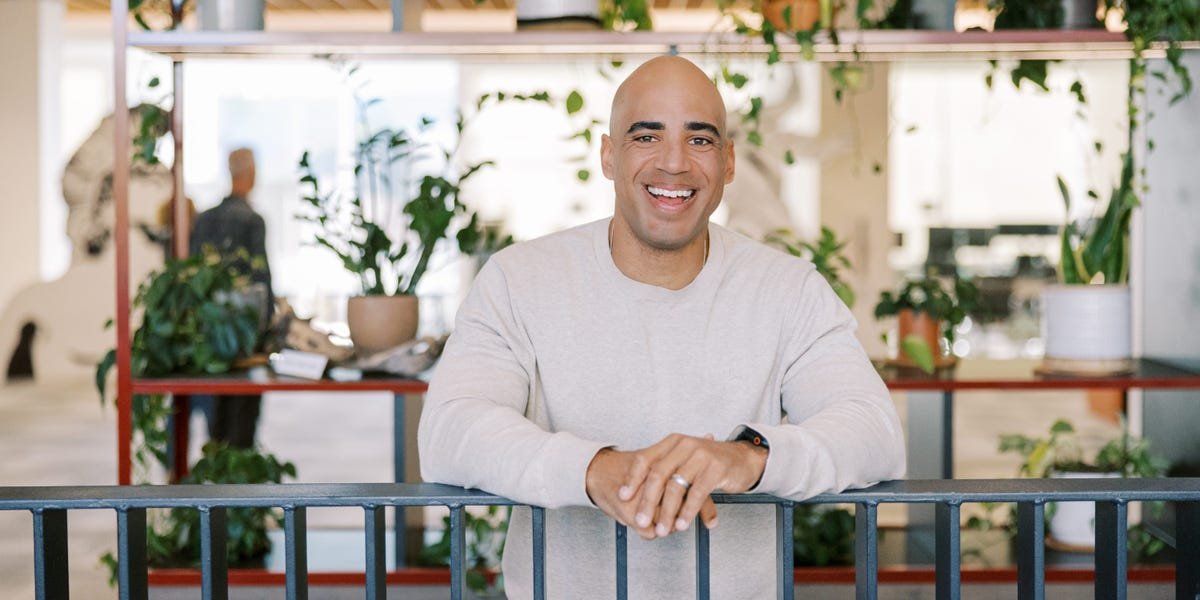
This as-told-to essay is based on a conversation with Tyler Smith, founder of Hundred Health. It has been edited for length and clarity.

I used to brag about how little sleep I got. It felt like a superpower: I could sleep just three or four hours a night, and still operate at a very high level.

That helped me get ahead early on. As a teen, I bused tables and sold firewood. By the time I was 19, I bought a house (which was possible because it was the subprime mortgage days). Having a mortgage gave me real responsibility at a young age.

It also got me thinking about a career. I couldn’t believe how much my real estate agent made on the sale. Her commission was about $13,000 — which seemed like $1 million to me at the time — and I thought she didn’t do a very good job. I realized that if I did good work in real estate, I could make even more.

I did well in real estate and developed software that took off

I dropped out of college to get into real estate. During the financial crisis, I found a niche helping banks sell foreclosures. In 2006 and 2007, I oversaw about 1,000 home sales a year and managed triple that number of properties.

I was working 14-hour days, seven days a week. It wasn’t a good life, but I was young enough that it didn’t matter. I fueled myself on energy drinks and embraced the fact that work was my life.

To help scale, I developed software to track my business’s transactions. Other brokerages inquired about what I was using, and soon I had clients paying $2,000 or $5,000 a month to use the software.

I was in the right place at the right time with the right product as real estate transactions went digital. By 2012, that software, SkySlope, was doing $12 million in annual revenue. In 2017, Fidelity bought a majority stake, valuing the company at more than $80 million.

I wanted to focus on my passion: health

That deal meant that I had enough money to never work again. I’m wired to build, though, so I planned to use my financial freedom to focus on something with purpose: a mission-driven business.

When I was 39, my wife and I were trying to have a child. I took a biological age test, which said my biological age was 47. That stopped me in my tracks, because my own father had died suddenly of a heart attack at 47.

The test showed me that what I was telling myself wasn’t true. I was working out and eating relatively healthy. I looked fit, but the data showed that what was happening inside my body didn’t match what was on the outside.

I spent over $1 million building a home wellness center

Once I saw that data, I couldn’t ignore it. I spent well over six figures hiring a top-notch healthcare team. My wife and I rented a 2,000 square-foot unit in Sacramento, which we transformed into our own personal wellness center. It had IV infusions, a hyperbaric chamber, a red light bed, cold plunges, massagers — basically anything you can name in the health and fitness world.

We were building a home in Napa and wanted to know which equipment we would actually use. We spent about $700,000 fitting out the Sacramento space, and eventually over $1 million building the wellness center in our home.

Today, I use the red light bed, oxygen therapy, and cold plunge almost daily. Other therapies — like massagers and bikes — didn’t make the final cut. I love the results of the hyperbaric chamber, but don’t like lying in it for an hour, so for now, that’s out of rotation.

I want to help others have more access to health information

I changed everything about my health and fitness, and because of that, everything in my life changed: my muscle mass and energy levels went through the roof, and my mood improved. I felt better than ever, and friends began to notice.

I know not everyone has the money and access I do. Most people have more data about their health than ever due to smart watches and wearable monitors, but they don’t have a team of doctors helping them use that information.

I started Hundred Health not only to provide data, but also to offer a personalized plan for what to do with it. I used to think that wealth was freedom, but now I know that health is — and I would like to help more people access that.


Source link

Im-a-millionaire-living-in-California-Im-happy-to-pay.jpeg

I’m a millionaire living in California. I’m happy to pay higher taxes since I have more wealth — it just makes sense.

This as-told-to essay is based on a conversation with Scott Ellis, a 55-year-old millionaire who lives in Silicon Valley, about California’s proposed 5% billionaire wealth tax. Ellis is a member of Patriotic Millionaires, a collection of wealthy Americans who advocate for a fair tax system, a livable wage, and equal access to political power. The following has been edited for length and clarity.

I never thought I’d live in California. I grew up in Colorado, went to college in Boston, and lived in Texas. I came out here for business school because I wanted to be at Stanford, and because you could play golf during the winter.

Now I love it here. It has nothing to do with taxes; taxes have never been anywhere on our list of criteria for deciding where to live. I want to live where my family is and love the weather, the jobs, and the dynamism.

Taxes are the price that we pay to live in a civil society. We have to do this together. There are examples all around the world of the power of effective government, and just like anything else, government needs to be funded. We should make it effective and efficient.

I’m proud to pay the taxes I pay. I should pay taxes that are higher than other people because I have more wealth than other people — that makes sense.

My wife and I achieved financial success in our careers

A lot of our financial success has been due to my wife’s success, as well as mine at the beginning of our careers.

I went to Harvard undergrad, worked at McKinsey for three years, and then went to Stanford. I then worked at Hewlett-Packard for almost eight years.

In 2007, my wife was a VP at Yahoo and we had two small kids. I looked at my boss’s job, and at the CEO’s job, and decided I didn’t ever want those roles. I thought, “Uh-oh, I’m on this ladder, and it’s not really where I want to go.”

Ultimately, my wife and I decided that I would step back and be the stay-at-home parent. My wife continued her career, and she’s been very successful in consumer internet at Yahoo, Google, and Pinterest.

I developed an interest in social issues in college

I studied poverty, urban America, housing, transportation, and sociology in college, and started thinking more about questions like: What does fairness look like? What does justice look like? What would it look like to build a great society?

I got busy pursuing my career, meeting my wife, and raising our kids, but as time passed and we progressed in our careers, I got back into thinking about how we help others around us. I did a bunch of volunteer work in different contexts, eventually becoming the COO and then the CSO of a nonprofit called New Teacher Center, which does intensive mentoring programs for new teachers.

Since 2012, I’ve started and run several nonprofits in the education space, and advised almost 200 individuals and organizations on things like strategy, finance, operations, and culture.

I’m also really focused on addressing excessive wealth and its impact on society and thinking about a future vision for American democracy, which is how I came to Patriotic Millionaires, an organization of wealthy Americans who advocate for higher taxes on wealthy people like ourselves, a higher minimum wage, and a broader distribution of political power across our society.

I’ve been struck by the massive accumulation of wealth

In recent years, I’ve been struck by the massive accumulation of wealth enabled by the consumer internet space, globalization, and the structure of the finance industry. It’s different from what it used to be in the ’80s and ’90s; this is a whole new ballgame.

More recently, I’ve been looking around Silicon Valley at all these people who are so incredibly wealthy, talented, and successful, and realizing how few of them are thinking about choosing to build a better society together.

They’re excited about starting new companies and raising new funds, but these are all people who have more money than they could ever spend, and their next goal is to generate even more money, mainly for people who already have more money than they could ever spend.

Meanwhile, 10% of our society is in poverty. It really feels unfair and wrong, and we can do better.

People don’t need more than $30 million

The proposed billionaire wealth tax in California doesn’t impact me and my family directly. People may think, “You’re happy to raise taxes on other people.”

But we need to start with a different conversation, about how much wealth is enough, how much wealth is too much, and what is financial success?

I believe that if you have $30 million in wealth, congratulations, you won capitalism. If you do the analysis of reasonable investment returns and inflation, you can buy a really nice first house, a nice second house, your kids’ college is paid for, your end-of-life expenses are covered, and you have a very, very luxurious ongoing existence.

So much of success in life is luck. Yes, people absolutely get educated and work hard. But it’s been found that the wealthier people are, the more they tend to attribute their wealth to how good they are and how hard they worked.

I look at single moms working three jobs, working the night shift — a heck of a lot of people who have less than $190,000 [the median household wealth] in wealth are working very hard.

Once you get beyond $30 million — and almost no one ever gets there — you get to a point where your life is so good, you really can’t materially improve your life anymore. We should implement a very aggressive annual 50% tax on all household wealth over $30 million. Excessive wealth turns into excessive power through huge campaign donations, which threatens and undermines democracy and capitalism.

The wealth tax is a step in the right direction — but not enough

I’m absolutely delighted that we’re moving in this direction, but I believe changes to wealth taxes need to happen at the federal level.

When wealthy folks bring up moving out of California, it’s a distraction. All of a sudden, instead of us talking about the fact that millions of people are going to be either losing healthcare or paying much more for healthcare, we’re worried about the 200 really rich people who might move.

People move all the time. Companies move all the time for all kinds of reasons — it’s just part of business. These conversations happen all the time — like, “Oh my gosh, there won’t be any more companies in Silicon Valley.” Well, 20 years later, look around. There are still some companies here; it’s just fine.

It’s 65 degrees and sunny here. The CEO of Nvidia recently said they’ll be staying in California because that’s where the talent is. We’ve got the Golden Gate Bridge, Hollywood, Tahoe, the Redwoods, the beach, and great weather. I’m really not worried that people aren’t going to want to live in California.

I love it here. My wife and I are thinking about living in different cities for maybe a month at a time, but I have no plans to go anywhere else. Although I definitely love Colorado — I still have my Denver Broncos coasters and will be cheering for my Broncos — I’m from Silicon Valley now, and that’s where I’m going to stay.


Source link

See-the-list-of-Californias-200-plus-billionaires-who-could-be.jpeg

See the list of California’s 200-plus billionaires who could be hit by the proposed wealth tax

California has a lot of billionaires, more than any other state and more than most countries. So a proposed wealth tax on its billionaires could be a windfall, if they stick around.

Under the Billionaire Tax Act, California residents worth over $1 billion would face a one-time tax totaling 5% of their assets.

If the tax plan receives enough signatures, it will appear on the ballot in November and, if passed, would apply retroactively to billionaires living in the state as of January 1. The tax would be due in 2027, with the option to spread the payment out over five years, with interest.

The idea has drawn sharp reactions from lawmakers and business leaders.

Google cofounders Larry Page and Sergey Brin moved entities tied to them out of the state last month just ahead of the deadline, Business Insider first reported.

Nvidia CEO and billionaire Jensen Huang said he was “perfectly fine” with the tax. Palmer Luckey, the billionaire founder of defense tech startup Anduril, said it would force companies to “immediately pivot into profit obsession over mission or long-term sustainability.”

Critics of the tax have warned it will encourage ultrawealthy residents to flee the state and hurt California’s economy.

As of January 1, there were 214 billionaires in California, according to Forbes data compiled by Americans for Tax Fairness, a group that advocates for higher taxes.

Below is the full list of billionaires in California. Names with asterisks have recently moved at least some of their business entities out of the state.

Loading
Loading
Loading
Loading
Loading
Loading
Loading
Loading
Loading
Loading
Loading


Source link

Ayelet Sheffey

What Jensen Huang, and Larry Page’s reactions to the California wealth tax reveal

It’s a classic fight-or-flight response — with a billionaire’s twist.

A proposed wealth tax in California prompted the state’s resident billionaires to consider whether they wanted to continue their residency if the one-time 5% tax is approved.

Their reactions, said CFP professional Don Hilario, who works with financial planning clients in California, boil down to risk tolerance.

The tax, as proposed, would only apply to assets in the state during the 2026 tax year. Google’s billionaire cofounder, Larry Page, moved some of his assets out of California ahead of the January 1, 2026, deadline to avoid facing the tax, Business Insider first reported. Meanwhile, Nvidia’s billionaire CEO Jensen Huang said he has “not even thought about it once.”

“We chose to live in Silicon Valley, and whatever taxes they would like to apply, so be it,” Huang told Bloomberg TV’s Ed Ludlow. “I’m perfectly fine with it.”

Hilario, whose financial planning clients include individuals in Big Tech, said that the lingering uncertainty of the tax can trigger a need for certainty and autonomy.

“People who want to have a greater sense of control will do the Larry Page route,” he said, “versus people who have the temperament to endure will take Jensen’s route.”

Hilario described a hypothetical scenario in which individuals with high net worths are considering purchasing a home. In a period where the economy and interest rates are uncertain, do you want to put the lion’s share of your expenses toward the home in the event that rates will be higher in the future, or do you hold out and continue accumulating your wealth in the event that economic conditions improve?

“That’s the same type of emotions that exist with this tax bill because the fear of not taking any action is unsettling,” Hilario said.

The proposal, put forth by the union SEIU-United Healthcare Workers West to offset potential budget cuts to healthcare and education, is far from being implemented — it would require 870,000 signatures to make it onto the November 2026 ballot.

The SEIU said in its proposal that the concentration of billionaire wealth in California makes the state “uniquely positioned to address both the well-documented crisis of wealth inequality in the United States and the emerging and interrelated crises the state faces” with the budget cuts.

In addition to Huang and Page, other billionaires are voicing their opinions on the proposed wealth tax. LinkedIn’s cofounder, Reid Hoffman, wrote in a post on X that the proposal has “massive flaws.”

“Poorly designed taxes incentivize avoidance, capital flight, and distortions that ultimately raise less revenue,” he said.

Alex Spiro, an attorney who has previously represented billionaires, wrote in a letter to California Gov. Gavin Newsom that his clients would “permanently relocate” if the tax were to become law. Hilario said that the significant uncertainty surrounding the proposal, including how assets will be valued and whether the tax would change over time, likely forced billionaires to decide how risk-averse they really are.

“I still think ultimately it’s unclear. And I think when it’s unclear, it’ll make people, in this case, investors, be more cautious and defensive,” Hilario said. “And then a big part of it is, how do we respond emotionally? I think whether you’re taking early action or enduring, you do want to gather information and avoid making a decision that would ultimately be irreversible.”


Source link

Read-the-letter-celebrity-lawyer-Alex-Spiro-wrote-to-Gavin.jpeg

Read the letter celebrity lawyer Alex Spiro wrote to Gavin Newsom, warning that his clients will ‘permanently relocate’ if California wealth tax passes

A proposed billionaire tax in California has the wealthy threatening to flee, according to a letter written by power lawyer Alex Spiro to Gov. Gavin Newsom.

In a December 11 letter that was obtained by Business Insider, Spiro lays out his opposition to the proposed tax on behalf of his clients, whom he calls “California residents who would be subject to the proposed Billionaire Tax Act.”

“It will trigger an exodus of capital and innovation from California,” Spiro wrote. “Our clients have made clear they will permanently relocate if subjected to this tax.”

The measure proposes that California residents with assets exceeding $1 billion be subject to a one-time 5% tax on the value of their assets. If the proposal receives enough signatures, it will appear on the state ballot in November 2026. If passed, it would apply retroactively to all California residents as of January 1, 2026.

While Newsom has said he is against the tax and would “fight” it, he would not have the ability to veto it if it were to pass as a ballot measure.

Several wealthy Californians, including venture capitalist Peter Thiel and Google cofounder Larry Page, have considered shrinking their presence in California, according to a New York Times report. Representatives for Page and Thiel did not respond to Business Insider when asked if they were represented by Spiro.

Over the weekend, billionaire Palmer Luckey took to X to voice his opposition to the measure.

“I made my money from my first company, paid hundreds of millions of dollars in taxes on it,” the Anduril cofounder wrote. “Now me and my cofounders have to somehow come up with billions of dollars in cash.”

While it’s not clear which clients the lawyer was referencing in his letter to Newsom, Spiro’s client roster in the past has included billionaires and A-listers. He has previously represented Kim Kardashian, Jay-Z, and Elon Musk.

Read the full letter below:

Re: Constitutional Concerns Regarding Proposed Billionaire Tax Act
Dear Governor Newsom:
I represent California residents who would be subject to the proposed Billionaire Tax Act if it qualifies for the November 2026 ballot. I write to urge you to work to prevent this initiative from moving forward. The Act has serious legal problems and would cause significant economic damage to California and the broader economy.
First, and most importantly, the Act would be unconstitutional. Although the Act purports to be a tax, it is in reality an uncompensated confiscation of property. The Act imposes a 5% levy on total accumulated wealth, including illiquid assets that generate no income. That is in substance a taking without just compensation. As the Supreme Court explained in Armstrong v. United States, the government cannot force “some people alone to bear public burdens which, in all fairness and justice, should be borne by the public as a whole.” 364 U.S. 40, 49 (1960). The Act concentrates an extraordinary burden on a small group to solve a general revenue problem— exactly what the Constitution prohibits.
Second, for the people who relocate from California in 2026 before the November election, the Act would tax them after they have become citizens of other States and without any ability to vote on the measure. The Supreme Court has held that retroactive taxation cannot be “harsh and oppressive.” United States v. Carlton, 512 U.S. 26, 30 (1994). A 5% levy on total net worth imposed on former residents who departed before the law was even enacted clearly meets that definition.
Third, the Act’s unprecedented novelty makes it especially vulnerable to a legal challenge. California has never imposed a wealth tax, much less one that reaches former residents and that is targeted at a small group of citizens. The Supreme Court closely scrutinizes unprecedented exercises of government power precisely because they lack historical precedent. See Biden v. Nebraska, 600 U.S. 477, 505 (2023). In fact, it has not hesitated to invalidate the retroactive application of new taxes, even for far less extreme measures. See Blodgett v. Holden, 275 U.S. 142 (1927). There can be no doubt that the current Supreme Court would carefully evaluate a law so out of step with the American legal tradition.
From an economic perspective, the Act creates two serious problems. First, it will trigger an exodus of capital and innovation from California. Our clients have made clear they will permanently relocate if subjected to this tax. They are not alone. See California’s wealth-tax test: Have voters finally found a policy that the state’s inherent economic strengths can’t overcome?, Wash. Post (Nov. 17, 2025) (opinion) (describing the tax as “almost tailor-made to drive most Silicon Valley tech companies to Austin, Texas”). In other words, by passing this proposal California would exchange a one-time windfall for the permanent loss of billions in annual income taxes, capital gains taxes, property taxes, and economic activity. The state’s most economically productive residents would take their businesses, jobs, and charitable giving with them. Second, the Act will force destructive asset sales. Our clients hold equity stakes in operating businesses, venture capital funds, and real estate. Paying a 5% wealth tax would require massive forced liquidations, depressing asset values and triggering market instability that would harm ordinary investors whose retirement accounts hold these same investments.
Our clients are prepared to mount a vigorous constitutional challenge if this measure advances. Litigation would be protracted and expensive, and it would generate sustained negative attention to California’s business climate. The prudent course is to prevent this constitutionally defective measure from reaching the ballot. We respectfully ask that you discourage signature gathering, oppose qualification, and if necessary, campaign against passage.
Our clients prefer to remain in California and continue contributing to the state’s economy and civic life. But they will not remain if subjected to an unconstitutional confiscation of their wealth. We hope this can be resolved through political channels rather than through years of contentious litigation.
Respectfully,
Alex Spiro


Source link

What-is-Elon-Musks-net-worth-Find-out-the-wealth.jpeg

What is Elon Musk’s net worth? Find out the wealth of the Tesla, SpaceX CEO

Elon Musk has a net worth of around $638 billion, according to Bloomberg’s Billionaires Index.

His net worth is closely tied to Tesla’s share price, but the tech mogul’s wealth comes from several sources and often fluctuates. He crossed over the $600 billion threshold in December following an $800 billion valuation of SpaceX.

That means Musk regularly trades places with Amazon founder Jeff Bezos, Meta CEO Mark Zuckerberg, and Oracle CEO Larry Ellison for the title of world’s richest person.

How has Musk’s net worth changed over time?

Musk, who was born in South Africa, moved to Canada and dropped out of a Ph.D. at Stanford, became a millionaire before he hit 30. Musk started Zip2, a website that provided city travel guides to newspapers, with his brother Kimbal Musk, and sold it to Compaq for more than $300 million in 1999. Musk, then aged 27, is believed to have got $22 million from the deal.

He went on to cofound online bank X.com in 1999. It soon merged with Peter Thiel’s Confinity to become PayPal, and the company was bought for $1.5 billion by eBay in 2002. Despite having been ousted as CEO, Musk walked away with around $165 million. 

Musk cofounded space-exploration company SpaceX in 2002. In 2004, he became an investor in and the chairman of EV company Tesla.

During the financial crisis in 2008, he saved Tesla from bankruptcy with a $40 million investment and a $40 million loan. That same year, he was named Tesla’s CEO.

Musk said 2008 was “the worst year of my life.” Alongside problems in his personal life, Tesla kept losing money and SpaceX was having trouble launching the first version of its Falcon rocket. By 2009, Musk was living off personal loans.

Tesla went public in 2010, though, and Musk’s estimated net worth steadily climbed. In 2012, he debuted on Forbes’ Billionaires List with an estimated wealth of $2 billion. 

In 2016, Musk set up the tunnel-digging business, the Boring Company.

The next year, he founded the neurotechnology startup Neuralink.

Musk’s net worth began a rapid ascent at the start of the pandemic as Tesla stock prices soared. Musk started 2020 with an estimated net worth of just under $30 billion and was worth around $170 billion just a year later — a more than five-fold increase in just a year. His estimated fortune peaked at around $340 billion in November 2021.

Musk also bought Twitter for $44 billion in October 2022, serving as its CEO until he stepped down in early June 2023.

The stock is known to be volatile and has had its ups and downs since then.

The morning of Trump’s reelection on November 6, 2024, which Musk heavily campaigned for, Tesla’s stock was up about 15%, for instance.

Following an insider share sale at SpaceX, which boosted the startup to a $350 billion valuation, Musk’s wealth surged again in December 2024 by about $50 billion in one day, making Musk the first billionaire to reach the $400 billion mark.

But in the months following its election highs, Tesla’s stock dropped by over 50% following a number of factors, including a vehicle sales slump, a rising Tesla boycott movement, and Musk’s stint in the US government, which some investors felt took him away from his day-in-day-out Tesla CEO duties.

Tesla’s stock rose back up following the CEO taking a step back from his role in the Department of Government Efficiency, but it continues to have big swings. Musk had one of his single-day highest net worth losses in June 2025 following a public spat on social media with the President, in which Trump floated the idea of having his government contracts revoked, and Musk repeatedly criticized Trump’s “Big Beautiful Bill.”

The stock has since rebounded and was up over 25% in 2025 as of December.

Musk’s net worth reached unprecedented heights in December 2025, as Musk confirmed SpaceX was planning an IPO. After an insider share sale valued the private company at $800 billion, Musk’s estimated net worth surpassed $600 billion.

Musk was the first billionaire to have reached a net worth of over $500 billion, according to Forbes, making him one step closer to becoming the world’s first trillionaire.

Where does Musk’s fortune come from?

Musk’s wealth is largely dependent on Tesla shares. Though he takes no salary from Tesla, he’s awarded stock options when the company hits challenging performance metrics.

Musk’s previous $55 billion compensation plan was voided in January 2024 on the grounds that Musk had undue influence over the package and its approval due to close ties with several board members. At its annual shareholder meeting in 2024, investors voted to approve Musk’s pay package. However, the judge upheld the original ruling, and the company has since appealed the decision.

A compensation package Tesla proposed for its CEO in September 2025 could turn Musk into the first trillionaire. The unprecedented plan included a new set of 12 milestones to be completed over a 10-year period, such as boosting the company’s valuation to $8.5 trillion, selling 12 million cars, getting a million robotaxis on the road, and coming up with a succession plan.

A large part of Musk’s net worth comes from Tesla shares, while roughly over 20% comes from SpaceX stock.

The rest of his wealth comes from shares in Twitter and The Boring Company, as well as other miscellaneous liabilities.


Source link