

A-week-of-taking-care-of-my-8-and-2-year-old.jpeg

A week of taking care of my 8 and 2-year-old grandkids left me exhausted. It also taught me we all need a little grace.

On day five of caring for my 2-year-old and 8-year-old grandsons full-time, I almost snapped.

I had slept just a few hours and woke up dehydrated, my tongue dry and sticky, my head aching. In the bathroom, I noticed yellow specks on the porcelain rim. Not surprising with a 2-year-old in the house.

But then, at 7 a.m., there it was: a puddle circling the toilet with a musty odor rising from it. I flicked on the fan, reached for a paper towel to sop up the mess, and cautioned myself against overreacting.


Grandma and grandchild walking

The author took care of her grandsons for a week.

Courtesy of Kenny Withrow


My grandson said he could do things himself

Throughout the week, I had offered to help, but George always said he could do it himself. Then, he’d slam the door into its frame.

That puddle challenged my composure. “Keep calm,” I told myself. “He’s only 2, and at least you’re not changing poopy diapers.”

George knocked and asked if I was taking a shower. I stepped into the hallway and let him know I wasn’t happy.

No answer.

I told him there was pee all over the floor.

Both Grandpa and his older brother, Stanley, had shown him how to pee in a toilet, but apparently, George liked to lift the seat and aim for the circular opening. I’d watched him steer an RC car through impossible turns, so aiming into a toilet shouldn’t have been difficult.


Grandparents with grandchidlren

The youngest grandson is a grandpa boy.

Courtesy of Kenny Withrow


George dropped his head. This non-stop chatterer went silent. He turned toward the wall and buried his face in his shoulder.

After breakfast, George became his talkative self again as he drove trucks through kinetic sand, performed somersaults off the couch, and wheeled his scooter from room to room. When he needed a bathroom break, he opted for nature pees in the backyard.

But then, as I made lunch, George scooted into the bathroom and slammed the door.

I gave him some time, then slowly, silently, peeked inside. He wasn’t sitting. He wasn’t standing. He was kneeling — reaching toward the back wall with a gigantic wad of toilet paper. The bowl was clogged with more paper — voluminous amounts of it.

What I wanted to say: WE TALKED ABOUT THIS!

What I actually said: Nothing. I just sighed.

My grandkids taught me an important lesson

That’s when big brother Stanley intervened. During the day, George followed Stanley around, imitating his every move. At night, they shared a bedroom. They had bunk beds, but instead of using the top and bottom, George and Stanley chose to sleep side by side, arms around each other, in the bottom bunk.

Stanley took one look at George on his knees, flashed a big smile, and suggested I praise him for his good work.


Family brushing teeth together

The author learned an important lesson from her grandkids.

Courtesy of the author


Then Stanley looked right at George and told him what a good boy he was. No mention of clogging the toilet. No scolding that the mess was unnecessary. No criticism of the sticky wet floor. Not even a reminder to wash his hands. Just arms open for a hug.

I stood there speechless for a few seconds. Where I saw disaster, Stanley saw effort. While I considered a lecture, he opened his arms.

I herded both boys to the sink for hand washing before lunch. After a bite to eat, we played with Monster Trucks, and when George got cranky, I put him in bed for a nap. Then I played cards with Stanley and cleaned the bathroom with chlorine bleach.

When George woke up, my husband suggested an hour at the park. With Stanley at a friend’s house, George, Grandpa, and I headed off on foot.

They taught me we all need a little grace

George is Grandpa’s boy. Every sentence begins, “Grandpa, watch…” or “Grandpa, look at this…” or “Grandpa, can I….” He holds Grandpa’s hand in every parking lot and sits in Grandpa’s lap for every book.

But as we approached an intersection and Grandpa prompted him to hold hands, George surprised me.

Instead of taking Grandpa’s hand, he reached for me, squeezed my palm, and held on long after we crossed the street. His tiny fingers curled into my fist said he wanted us to be right again.

At bedtime, when he usually chose Grandpa, George asked me to read him a book. Five books. We didn’t talk about bathrooms or disinfectants or a better aim. I just snuggled him in my lap, pulled a blanket over us, and read the words slowly, to enjoy the story a little longer. I tucked him under the covers with Doggie, his favorite stuffed toy. I kissed him and said I love you.


Grandparents with kids

Courtesy of the author


It was 8 p.m. when I joined Grandpa in the living room, too tired to read my own book, pick up stray Hot Wheels, or empty the dishwasher. Longing for bed myself, I thought about the last several hours and what I should have done better.

And I realized the lesson of the day was not how to pee into a toilet, reason with a 2-year-old, or keep a bathroom spic and span.

The lesson was that we all need a little grace.

Stanley praised George, not for succeeding, but for trying. When was the last time I’d done that?

In our world of high expectations, perfection often feels like the goal. We’re so conditioned to correct and fix — our children, coworkers, or strangers on Instagram — that we forget what encouragement looks like.

And then there was George. Without words, he reached for my hand, an ordinary kindness with extraordinary power. Adults often forget this truth, too, that love repairs itself with simple gestures.

The best love, I realized, isn’t earned through perfection, but offered in the middle of our messes.



Source link

How-Katzs-Deli-serves-70000-pounds-of-meat-a-week.jpeg

How Katz’s Deli serves 70,000 pounds of meat a week

Eating at Katz’s Delicatessen, which has been on the Lower East Side since 1888, is basically a New York rite of passage. Best known for its pastrami sandwich, the deli goes through 70,000 pounds of meat a week and serves up to 4,000 people on its busiest day. You’re going to see everything it takes to prep and deliver a flawless service during the lunch rush at this iconic Jewish deli.


Source link

To-build-muscle-you-need-a-de-load-week-Heres-how.jpeg

To build muscle, you need a ‘de-load’ week. Here’s how a powerlifting doctor strategizes rest for maximum gains.

Working hard in the gym without seeing results?

A short rest may help you break that plateau, according to a doctor who set state and national records in powerlifting.

Dr. Shernan Holtan, a hematologist and busy mom of two, has been lifting weights for over a decade. She hits the gym at 5:30 a.m. for an hour of training before heading to her day job as chief of blood and marrow transplant at Roswell Park Comprehensive Cancer Center.

Her key to avoiding physical burnout and keeping up gains: Every four to six weeks, she eases up on her training to let her body recover and build back stronger.

“You give yourself a break. Come back, lower the weight drastically for a week, and really just let your body soak up all of the stress that you just put it through to let it repair and heal,” she told Business Insider.

The strategic break is commonly referred to in the fitness world as a “de-load week.” It’s an evidence-backed way to smash through plateaus, reduce the risk of injury, and boost muscle and strength gains for everyone from elite powerlifters and bodybuilders to everyday athletes.


Dr. Shernan Holtan performing weighted lunges in the gym

Building weights is about challenging your muscles, then resting and recovering.

Roswell Park Comprehensive Cancer Center


For Holtan, deloads have enabled her to maintain steady progress for years, gradually building up the strength to squat 225 pounds (or more) for reps. In that time, she’s also started running and CrossFit, in addition to hiking, biking, and going to the gym (sometimes with her teenage daughter).

“I exercise every day, but I’m not doing crazy stuff every day,” she said.

Here’s how to know if you should take a deload, and the right way to rest for better fitness.

Why resting helps you build more muscle

Unless you’re a pro athlete, less can be more when it comes to exercise.

That’s because muscle and strength gains only happen during the rest periods between gym sessions. A good gym session can break down muscle fibers, prompting them to grow back stronger, but only if you provide them with the time and resources (energy in the form of sufficient calories and protein) to recover.

Holtan said to think of it as a slow and steady effort over time, rather than going all-out at the gym (and being too sore to come back).

“It’s little micro adjustments, tiny increases in weight, a few extra reps,” she said.

Then, over the weeks and months of training, a de-load can help your body to reset and keep making progress.

A de-load can also be a full rest from exercise, and can be a good idea during a vacation or holiday, so you can fully enjoy the time off.

When to take a de-load

The right time to take a rest can vary depending on your training and goals. Trainers typically recommend taking a break every four to 12 weeks.

The length of the rest can vary too.

If you’re consistently in the gym three times a week, you may only need a day or two to deload, and can go two or three months between breaks. Competitive athletes who train five or more days a week might benefit from longer breaks every month or two.

Holtan focuses on a specific goal for four to six weeks, then rests and repeats with a slightly different goal.


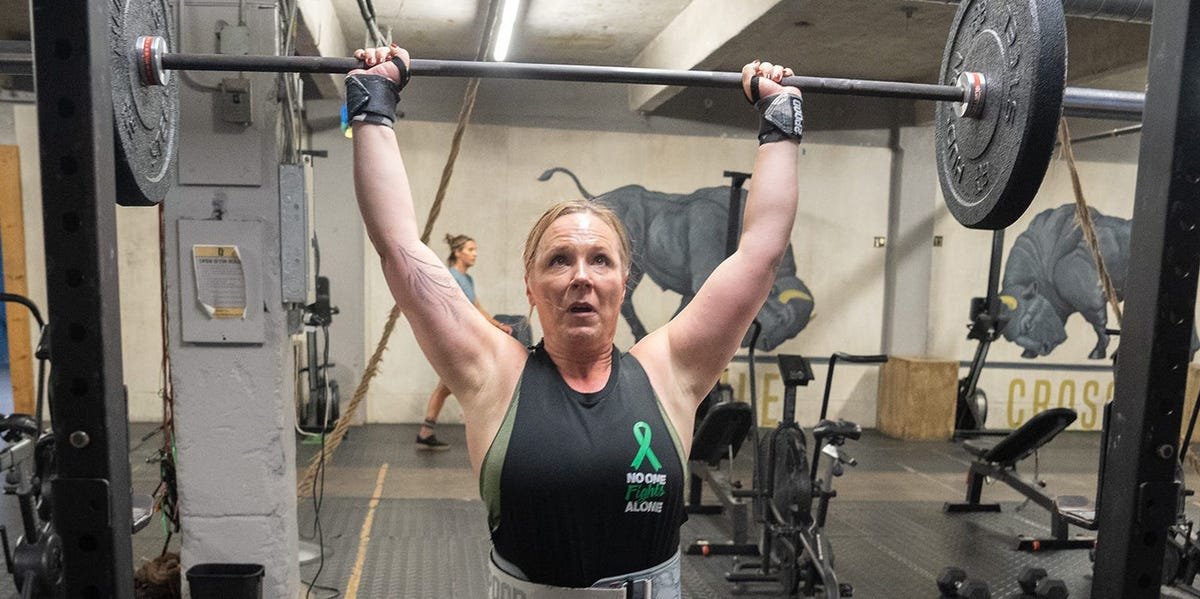
Dr Shernan Holtan lifting weights in the gym performing an overhead barbell press

Dr. Holtan said her training schedule prioritizes a specific rep range for four to six weeks, then she takes a break to recover.

Roswell Park Comprehensive Cancer Center


For instance, she might spend a month or so building up to a heavy one-rep max deadlift, bench press, and squat. After her deload week, she might focus on lifting moderate weight for more reps.

This is a type of training cycle known as periodization, which can help prevent athletes from overtraining or getting stuck in a rut.

Listening to your body can also signal that a rest might be beneficial.

If you’re just not enjoying the gym, struggle to finish a workout ,or need to foam roll the pain away, an extra rest day might be just what you need.


Source link

An-88-year-old-worked-5-days-a-week-at-a-supermarket.jpeg

An 88-year-old worked 5 days a week at a supermarket. Then strangers raised almost $2 million so he could finally retire.

Before December, Ed Bambas was among the sizable swath of older Americans still working with retirement nowhere in sight. Then, he met content creator Samuel Weidenhofer.

Weidenhofer, who has 12 million followers across social media, set up a GoFundMe fundraiser for Bambas on Monday to help him leave his job at a Detroit supermarket and retire.

“I’m opening a fundraiser to help Ed live the life he deserves to finally give him some relief, comfort and the peace of mind that comes from knowing he can enjoy his later years without constant struggle,” Weidenhofer wrote on GoFundMe.

The fundraiser had a $1 million goal. As of Sunday, over 65,000 people have donated, reaching a total of almost $2 million.

In a video shared to Weidenhofer’s social media accounts, Bambas said he’s an 88-year-old veteran who works at the supermarket five days a week, eight hours a day. Bambas said he retired from General Motors in 1999, but lost his pension after the company went bankrupt in 2009.

Bambas told Weidenhofer that his wife, who died seven years ago, had been sick around the time his pension stopped. Without his pension, Bambas had to re-enter the workforce.

Nearly 550,000 Americans 80 and older are still working, according to 2023 US Census data.

As part of Business Insider’s “80 over 80” series, reporters interviewed nearly 200 workers over 80 — in addition to conducting surveys and receiving emails — in an effort to understand why.

While some older Americans are driven by a personal desire to work, others take on jobs to combat financial insecurity. Some workers over 80 told Business Insider that they use their income to supplement their Social Security and other retirement payments. They fear that without the income, they can’t afford the cost of living.

Weidenhofer shared a video of Bambas receiving his GoFundMe check on Friday.

“It’s something dreams are made of,” Bambas said in the video.

Bambas also thanked everyone who donated to the fundraiser.

“I cannot express in any words how thankful I am to all the people,” he said.


Source link