My kindergartner is currently signed up for a summer camp without a location, a backup one without a starting date, and three waitlist lotteries. One organizer described our odds as “a fat chance.”
And it’s only March. Summer is still several months away.
Across the country, parents like me are in our annual scramble to piece together summer plans that balance affordability, availability, and, if we’re lucky, advancement.
Scheduling out 10 weeks for my children in the summer is difficult
My wife and I are raising two young kids in Philadelphia, relying largely on city-supported programs. These are reasonably well-run and relatively accessible.
Parents across the country face a familiar puzzle: navigating a fractured landscape of camps, lotteries, and deposits to keep kids safe and enriched. Programs with excess availability often lack resources. Programs in high demand often lack space.
For one week this summer, our preferred low-cost neighborhood arts camp had a lottery whose deadline had not yet closed. A similar program farther away required payment sooner. Not wanting to miss out, we applied for both. We got into the farther-away camp first, which required an immediate nonrefundable deposit — about $300. A few days later, we learned we’d gotten into our preferred neighborhood camp after all. The result: we simply lost the money.
That’s one week out of the roughly 10 weeks of summer we have to cover between the end of school and the start of the next year. As kids age, pressure mounts to stuff the summer with extra-curriculars, though there’s value in giving them unstructured independence. But young kids need to be minded while mom and dad are working.
This annual scramble has a structural cause
American schools typically close 10 to 12 weeks each summer, a calendar that dates to agricultural schedules and single-income households. But today, more American couples are dual earners, meaning both are working during the summer.
Few summer programs cover the full break. Parents must build their own patchwork system to bridge that gap.
The costs add up quickly. The average camp costs $80 per day, and twice that for overnight camps, according to the American Camp Association, though prices range widely.
Multiply $400 or more a week by several weeks per child, and the numbers climb fast. Even relying on city-run programs, we’ll spend several thousand dollars programming our kindergartner this summer, and that’s on top of our youngest, who is still in daycare.
The scramble hurts both kids, their parents, and the wider economy. Last fall, the Bipartisan Policy Center estimated a looming $329 billion loss over the next 10 years due to workforce shortages, driven by a childcare gap that deepens when schools close.
In other wealthy countries, the problem is often less acute. Many have shorter summer breaks or integrate childcare more directly with school systems. In the US, the burden falls largely on parents.
So every year, at the beginning of the year, families start playing a strange logistical game: mapping out calendars, tracking lottery deadlines, comparing deposits, and trying to avoid the weeks that might otherwise collapse into childcare chaos.
In our house, that process is still underway
After missing out on multiple lotteries for the most in-demand, nearby programs, I paid a registration fee for a different day camp while we wait to find out where that camp will be physically located. Another week is covered by a family vacation, and we’ve decided to shift a long weekend with friends into weekdays — my wife and I will be using scarce time off from work.
And we’re lucky. The city programs are relatively affordable, neighbors exchange tips, and we can cover the other costs. The real toll is logistical stress — the spreadsheets, the lottery calendars, the backup plans — and the occasional marital bickering that comes with them.
My wife and I recently exchanged icy updates as we evaluated our five-year-old’s summertime calendar as if we were planning an already-delayed product launch. Some costs of the summertime schedule scramble are clearer than others.
When my husband Shayne and I sold nearly everything we owned to travel the world full-time, we thought we were ready for anything. We had spreadsheets, backup plans, a carefully managed budget, and, as two adults in our 50s, decades of experience behind us.
What could go wrong? Turns out, plenty.
Over the past two and a half years, we’ve lived in more than a dozen countries and traveled thousands of miles. We’ve hiked to waterfalls in Bali, wandered the streets of Barcelona, and eaten our way through Thailand.
But we’ve also made mistakes that cost us time, money, and more than a little peace of mind. Some were honest slip-ups, while others came from overconfidence, but they all taught us lessons we’ll never forget. Here are five of the biggest mistakes we’ve made.
Overplanning made us feel burned out
We’ve learned to leave room for spontaneity when traveling.
Shelly Peterson
At first, we packed every destination with nonstop activities. Sunrise temples, food tours, museums, waterfalls, cultural shows — we didn’t want to miss anything.
Every time Shelly publishes a story, you’ll get an alert straight to your inbox!
Stay connected to Shelly and get more of their work as it publishes.
But within a few months, we were running on fumes. The pace was unsustainable, and on some days, it felt like we weren’t even enjoying ourselves.
These days, we travel more slowly. We leave room for naps, long walks, and spontaneous days with no agenda.
Some of our best memories now come from lazy mornings and quiet moments, not the things we planned, but the ones we stumbled into.
We underestimated how hard it is to build a real community
We assumed full-time travel would mean constantly meeting fascinating people and forming deep connections around the globe.
Although we’ve met plenty of kind and interesting travelers, most friendships are fleeting, shared over a meal or a few days before everyone moves on. We didn’t expect how lonely it can feel to always be “the new people.”
Now, we intentionally choose places with digital nomad scenes, coworking spaces, and expat meetups. In Vietnam, for example, we love that locals and expats gather for weekly street-food tours and surf lessons.
It takes effort, but building community on the road is possible. We just had to actively seek it out.
One time, we misread our visa and had to change plans at the last minute
We’ve learned to always double-check visa rules.
Shelly Peterson
When traveling to Vietnam, we completely misunderstood how our visa worked and accidentally arrived in the country on the day it expired.
Immigration let us in, but warned us we had to leave almost immediately and apply for a new visa. We scrambled to book a last-minute flight to Cambodia and ended up paying a fine.
It was stressful, chaotic, and expensive. Oddly enough, though, our visit to Cambodia became one of our favorite unexpected adventures. But now, we double and triple-check visa rules and requirements ahead of time.
We’ve also let our guard down
Travelers should always be aware and alert to their surroundings.
Shelly Peterson
In Paris, Shayne had his crossbody bag slung around his back while boarding a crowded metro train. Seemingly within seconds, his phone was gone.
It was a rookie mistake, and we knew better, but sometimes travel lulls you into a false sense of security.
That one slip-up cost us days of frustration replacing his device and updating accounts, not to mention a chunk of money.
Even seasoned travelers need to stay alert, especially in busy cities and transit hubs.
Choosing accommodations with zero walkability made exploring more difficult
When we started traveling full-time, our first stop was Bali. We booked a picture-perfect villa with sweeping ocean views and dreamy Instagram potential. What we didn’t realize, though, was that it was over an hour away from the nearest town.
It was beautiful, but it made everyday activities like walking to cafés, exploring neighborhoods, or talking with locals nearly impossible.
Now, we prioritize location over aesthetics. Being able to walk out the door and explore a neighborhood, find a local market, or grab lunch at a street stall makes us feel like we’re actually living somewhere, not just passing through.
Despite the bumps in the road, traveling full-time has been incredibly rewarding
The mistakes we’ve made haven’t just taught us how to travel smarter. They’ve reminded us to stay humble, adaptable, and patient with ourselves.
We’ve learned to slow down, embrace the unexpected, and let go of the need for every day to be perfect, because no matter how experienced you are, travel always has something new to teach you.
And often, the detours become the best parts of the journey.
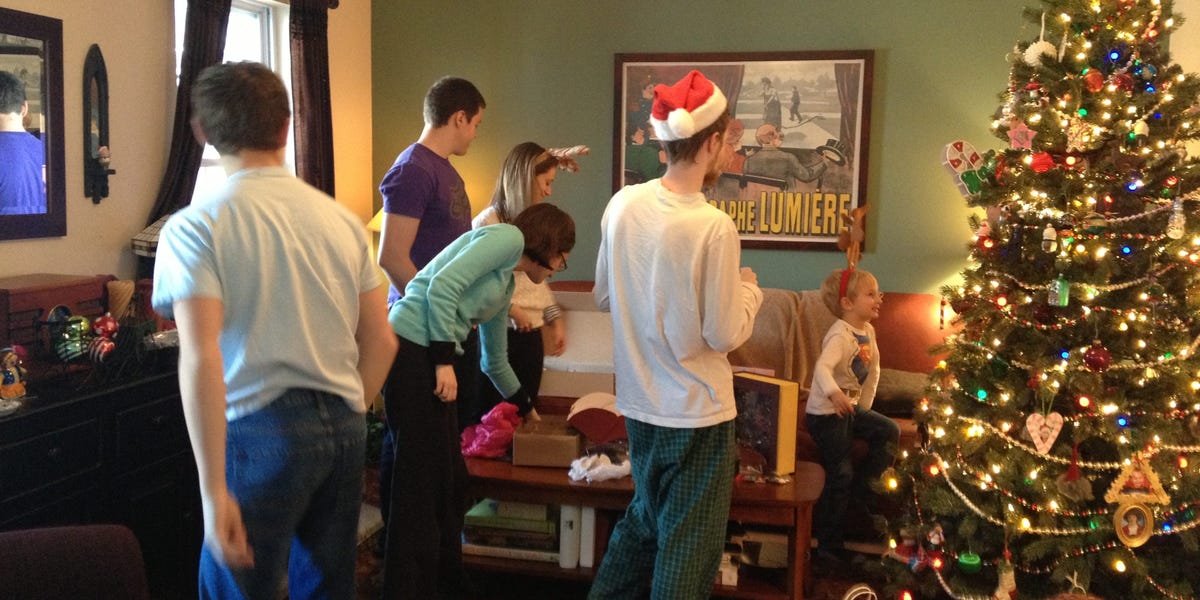
Cookie baking, decorating, stuffing stockings, building a holiday village scene with Iron Man and Thor action figures — just like a huggable snowman discovered, everyone has traditions for that time of year.
We’re a blended family with kids ranging in age from 17 to mid-30s. As our kids have moved from being wide awake at 5:30 am to testing Santa to creating their own holiday magic as adults, our traditions have grown and changed with them. As a result, it’s all less stressful.
We’ve expanded the days of the holiday
A Christmas Tweve holiday lunch with Christmas crackers and cassoulet.
Courtesy of the author
Right around Thanksgiving, I am reminded that it’s not just wonderful, it’s also a wacky and wearisome time of the year.
I grew up in blended families. By middle school, both of my parents had remarried, doubling the number of families to see during the festive season. By the fifth stop on a whirlwind Christmas Day in high school, my brother and I were stuffed with cookies and even burned out on opening presents.
For most of our 20-year marriage, I’ve felt like I’m reliving those teenage years all over again as we try to squeeze in his family, my multiple families, and the kids’ other family commitments into two overstuffed days of festive cheer.
As the kids got older and added commitments to their significant others and time for their own families, we realized Christmas is too short. Two days were just not enough time to cram in all the festivities and have at least a little time left for our family.
So, some years, we celebrate what we call “Christmas Tweve,” the day before Christmas Eve. We spend most of the day hanging out, having a festive feast, and then opening gifts. Sometimes we have a houseful overnight, and everyone stays up late watching Christmas movies and eating my feeble attempts at pancake art for breakfast.
We have scaled back the decorations
Our Advent calendar is surrounded by my favorite decoration, kid’s artwork.
Courtesy of the author
We are down to two kids living at home, and the number of holiday decorations has reduced.
One year, we had multiple trees, each decorated in a different theme — a candy-themed 5-foot tree, a mini tree in the kids’ rooms, and a fancy ornament 7-foot tree.
There were two Christmas villages, one in the kitchen. The kitchen and living room looked like Christmas exploded in them. Every room had a few decorations — a tree, figurines, holiday towels, and a wreath on the door.
There was a time when seven of us were decorating. Now it’s down to four, and we’re focusing more on the nostalgic and sentimental decorations. Our tree is covered in ornaments from places we’ve traveled and the kids created.
I used to frame the sliding door in our kitchen with the kids’ artwork – cotton-ball snowmen, sparkly handprint reindeer, and a painted winter scene.
A few years ago, my youngest and I had a holiday moment of tension when I displayed elementary school artwork with their previous name. They’re nonbinary, and it bothered them seeing that name plastered all over the kitchen.
I got creative and modified my favorites — erasing letters, trimming corners, and folding back edges. Now I display favorites onl,y and it’s down to one wall shared with our Advent calendar.
Our Advent calendar changes along with our family
One year the kids weren’t into the Advent calendar, so we did it with the dog instead.
Courtesy of the author
When the kids were younger, we had multiple Advent calendars — one with treats and one with toys. One year, it was Disney Tsum Tsums, there was “Star Wars” Lego, and then socks. A few years ago, no one was really interested, and we got one for the dog.
Now, our Advent calendar is a meaningful tradition. It’s the same one each year, and this year, my youngest helped shop for the candy, hopefully marking the start of a new tradition.
Our kids have started their own traditions
Our kids have made our holiday village their own.
Courtesy of the author
When she was in college, my stepdaughter started making an annual ornament with a silly picture of herself. The perfect gift on a tight budget — inexpensive and very meaningful.
Now she’s a mom, married, and decorating her own place. Every year, my husband, the two youngest kids, and I put all 11 ornaments she’s created on the tree — her with Chipotle burritos, in a snow globe, and with her son.
A few years ago, our oldest came to stay when his spouse was out of town. I put him and his two younger siblings in charge of the holiday village.
When I heard my youngest rummaging through their toys, I knew the holiday village was going to have a different vibe than it had in past years. Lego minifigs, Power Rangers, and assorted superheroes perched on festive rooftops and hid in the snow.
Every stage of our kids’ lives means something new. Sometimes it’s capped with a major milestone, such as a driver’s license, wedding, or graduation, as a reminder to stop and savor this time.
With the holidays, there wasn’t a big event to mentally prepare for the change. Gradually, things were different — gone were the days of classroom holiday party crafts and a big group decorating the tree. Now it’s crafts from doggy day care, Christmas Tweve, and Spider-Man in the village. And I love it.
This as-told-to essay is based on a conversation with Chet Kittleson, founder of Tin Can. It has been edited for length and clarity.
About three years ago, I was picking my daughter up from school and started chatting with parents about how arduous it is to run the kids’ social lives. One mom said that she felt like an executive assistant for her daughter. There was a lot of frustration and angst toward the kids, and as a dad of three, I understood it.
But that day, I played devil’s advocate. What else are the kids supposed to do, I asked. My first social network was the landline, but my kids didn’t have that. Most of the parents I knew were delaying cellphones, but that left the kids reliant on us for coordinating meet-ups.
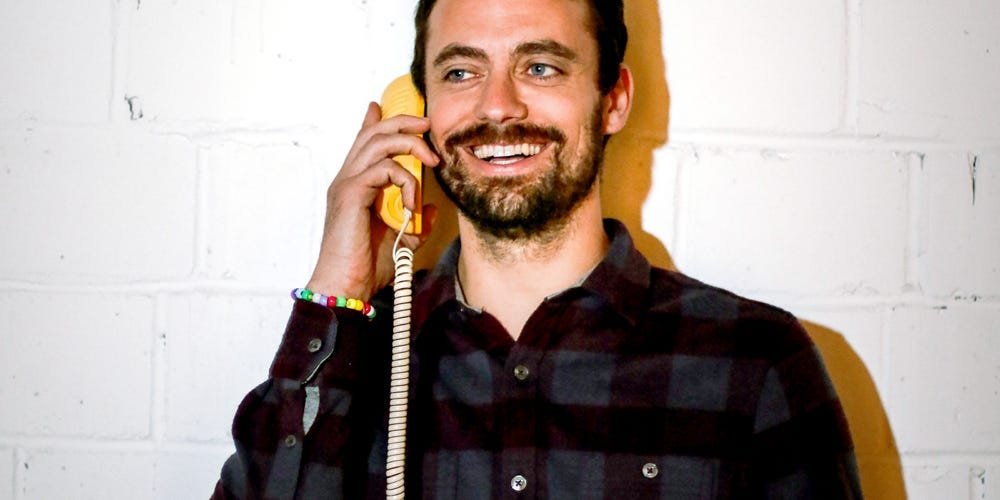
I got to thinking: wouldn’t it be cool if there was a landline my kids — who are now 10, 8, and 5 — could use to organize their own social dates?
The phone led to my daughter walking to school with friends
I had been working at the tech and real estate company Redfin, which I loved because the company environment allowed me to be a rising executive and an active dad. Still, I had this itch to build a company of my own. I left to start another real estate-related company, but ultimately, we didn’t have a product-market fit, and had to call it quits after about two years.
The cofounder’s daughter started walking to school with friends thanks to her landline.
Courtesy of Tin Can
The same week I wrapped up that venture, I brought my co-founders over to talk about making my landline idea a reality. We spent a week at my kitchen table, making prototypes. By the end of the week, we had five phones.
Two of the prototypes went to my daughter’s friends. Right away, we started noticing the kids organizing more playdates and sleepovers. My favorite moment came when the phone rang at about 8:15 in the morning. My daughter’s friend was inviting her to walk to school for the first time.
I want to use tech to build better in-person connections
Right away, I started getting texts from other local parents, asking if they could get a phone. I made about 50 prototypes and installed them myself. I asked customers what they liked about the phone and what they were worried about when it comes to kids and tech, which helped me refine the product.
We officially started selling Tin Cans in April of this year. For parents, the phone is a symbol of a simpler time. For kids who have often never experienced independent communication, it delivers a new superpower they didn’t know they wanted.
The company has raised $3.5 million in funding.
Courtesy of Tin Can
Today, we have Tin Cans in every state and Canada. We’ve raised $3.5 million. I’m excited to build a different type of technology company: one that uses tech to build connections and healthy relationships.
We’re trying to foster independent kids
Personally, that’s extremely meaningful to me because I’ve always struggled with anxiety and had my own challenges with screen addiction. I stopped using social media a few years ago after noticing that it was distracting me from moments with my kids.
Today, my family has two Tin Cans: one in a shared area of the home and another in my oldest’s room. These days, my kids frequently get calls from friends asking them to walk to school. They have more sleepovers or just chat with their grandparents.
There are also more subtle changes. When we pick up takeout, my kids are often the ones to go in and claim the order. That confidence is a symbol of the strong, autonomous children my wife and I are trying to raise.
One mother told us that Tin Can helped her daughter find her voice — literally. The girl started off talking quietly and timidly, but within weeks, was louder. That confidence translates to the real world, and the Tin Can lifestyle we’re hoping to foster.
Following several days of teasing on social media, Luke Combs officially announced his 2026 concert series, titled the “My Kinda Saturday Night” world tour. With the announcement first being sent to his “Bootleggers” fan club members and then to the general public, fans are eagerly anticipating the chance to see Combs live. With all venues in stadiums and a long roster of opening acts scheduled to join the star, it’s no wonder tickets are already in high demand.
Luke Combs has been praised for his dedication to his fans, and releasing the tour announcement and presale first to his Bootleggers fans has been specifically applauded. The “Fast Car” singer has been quoted as saying he is happy for the chance to promote country music in places where it is not typically found, and his 10 international stops can attest to that effort as well.
If seeing Luke Combs in concert next year sounds like your kind of Saturday night, we’ve got you covered. We’ve broken down everything Luke Combs and the My Kinda Saturday Night world tour, including purchasing details and price comparisons between ticket vendors. You can also browse concert and ticket specifics at your convenience on StubHub or Vivid Seats.
Luke Combs’ 2026 tour schedule
The My Kinda Saturday Night tour will kick off in Las Vegas next March, followed by several shows across the continental US and Canada. From July, Combs will embark on a tour of Europe and the UK. The My Kinda Saturday Night tour is scheduled to wrap up on August 2 in London.
North America
International
*Indicates an event that Luke Combs will be performing at in addition to other artists.
How to buy tickets for Luke Combs’ 2025 concert tour
Original tickets for the My Kinda Saturday Night tour went on presale on October 15, followed by general sale on October 17, with tickets available for purchase on Ticketmaster. As of writing, all dates still have limited availability for original tickets, and can still be purchased on Ticketmaster.
Tickets are also available for purchase from verified resale vendor sites such as StubHub and Vivid Seats. Many popular tour stops, such as Las Vegas, have limited remaining seating options; in such cases, you may find more ideal options on resale sites instead.
How much are Luke Combs tickets?
With shows still having yet to sell out, ticket prices between the original and resale options are somewhat similar, with resale options leaning slightly more affordable for certain dates. Original standard ticket prices vary depending on the venue and location, but currently tend to fall within the average range of $100 to just over $300. Many locations even offer pit options under $300 (Knoxville and South Bend, for example), which is very reasonable compared to other artists whose pit tickets can easily exceed $1,000.
As of writing, for the resale option, Vivid Seats has prices ever so slightly below those of StubHub, with the most affordable options ranging from $71 for the May 2 tour stop in Knoxville to $176 for the May 30 tour stop in Montreal. StubHub ranges from $79 for the same Knoxville show to $244 for the Green Bay performance on May 16. The biggest difference right now is that Vivid Seats has fewer international location options, which is somewhat common for the site in general.
Luke Combs has a guest appearance at Alan Jackson’s event in Nashville on June 27, and prices for this are considerably higher than his own headlining tour’s stops. This is due to the event being large, with several artists performing.
There are no VIP packages for The My Kind Of Saturday Night tour available for purchase on Ticketmaster.
Who is opening for Luke Combs’ tour?
Several artists have been confirmed to join Luke Combs on his upcoming 2026 world tour. For North American shows, Dierks Bentley, Ty Myers, The Castellows, and Thelma & James have been tapped as supporting artists. Europe will continue to see Ty Myers and the Castellows perform, with The Script also joining them for shows in Sweden, the Netherlands, and Ireland. The Teskey Brothers have been announced as an opening act for the Edinburgh show, and Thomas Rhett will also be supporting the London concert.
Will there be international tour dates?
The My Kinda Saturday Night tour has 10 international dates currently scheduled. The tour will head to Sweden in July, followed by shows in France, the Netherlands, and Ireland, and will conclude in the UK with five performances in Edinburgh and London.
Who is Luke Combs?
Luke Combs is an American country singer from North Carolina who first emerged on the scene in 2014 with his debut EP, “The Way She Rides”. He has since gone on to win several Billboard Music and Country Music awards, and also has his own polarized sunglasses and hat company called Blue Otter Polarized. Luke Combs married Nicole Hocking in 2020.
Nicole Berardi
Freelance Writer
You can purchase logo and accolade licensing to this story here.
Disclosure: Written and researched by the Insider Reviews team. We highlight products and services you might find interesting. If you buy them, we may get a small share of the revenue from the sale from our partners. We may receive products free of charge from manufacturers to test. This does not drive our decision as to whether or not a product is featured or recommended. We operate independently from our advertising team. We welcome your feedback. Email us at reviews@businessinsider.com.
When you buy through our links, Business Insider may earn an affiliate commission. Learn more
Rumors of a pair of Sonos-branded headphones have been swirling for nearly as long as the company has been a household name. After all, Sonos sells many popular wireless speakers and soundbars, so why not add a pair of headphones to the mix?
Following years of speculation, Sonos’ long-awaited headphones have arrived. They’re called the Sonos Ace ($449), and they perform great for a pair of flagship Bluetooth headphones. But the keyword there is Bluetooth. Many fans hoped the brand’s first headphones would work like its portable Roam and Move speakers, which use Bluetooth on the go but also support WiFi to stream music at home and group with other Sonos audio gear. However, WiFi streaming on the Ace turned out to be wishful thinking.
Don’t get us wrong, the Ace still stack up well against the best over-ear headphones from Bose, Sony, and Apple. But they don’t do a lot to stand out from the pack. The biggest difference, on paper anyway, is the Ace’s ability to pair with a Sonos Arc soundbar for private listening, but we could not get this feature to work with our setup. We also ran into an issue with some faint signal noise with transparency mode engaged.
Still, despite some hiccups, it’s no small feat that Sonos’ first headphones offer performance that rivals many top competitors. Even with their quirks, the Ace’s mix of great sound, fantastic noise-canceling, and an incredibly comfy fit results in a formidable pair of high-end Bluetooth headphones.
The Sonos Ace are the comfiest headphones we’ve reviewed. They also offer great noise-canceling and audio quality that rival top models from the competition. On the downside, they lack full integration with other Sonos products, and we ran into some software bugs. However, we expect Sonos will iron out those glitches in future firmware.
The Ace headphones are well-designed and easy to use
The case is stylish and functional.
Ryan Waniata/Business Insider
Apart from the issues we encountered with the headphones’ TV Swap feature (more on that below), the Ace’s setup experience is as slick and smooth as you’d expect from a brand of Sonos’ pedigree.
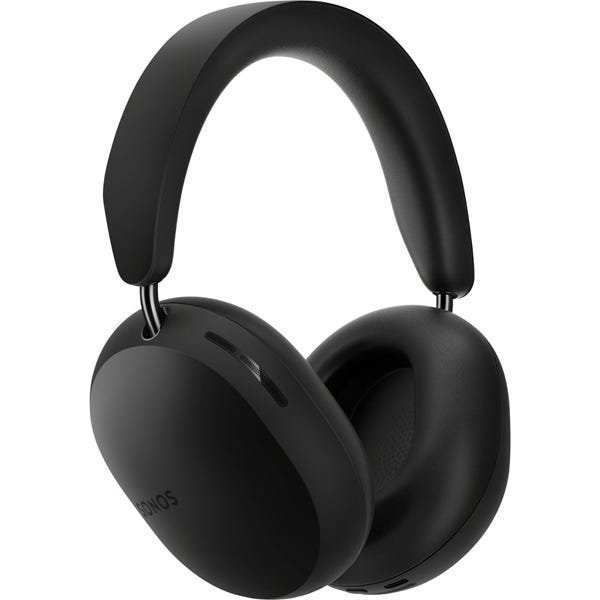
Opening the box reveals a fuzzy gray case made from 75% recycled plastic bottles. Unzip it, and you’ll find a minimalist pair of matte headphones in black or Soft White wrapped around a bean-shaped pouch. Designed to harbor the Ace’s dual USB-C cables for wired playback and charging, the pouch attaches via a strong magnet at the case’s center, efficiently utilizing the space. The whole layout feels equally aimed at style and substance.
The headphones themselves borrow aesthetic touches from rivals like the Bose QuietComfort Ultra and Apple AirPods Max but with a Sonos twist, bearing the same elegantly stripped-down design cues found across all Sonos products. From the Ace’s sleek rounded ear cups and laser-etched logo to their steel arms and cushy, vegan-leather pads, this is a familiar package that still manages to strike its own chord.
On the right ear cup are dual control buttons, including a multi-function “content key” for playback and volume via a mix of taps and slides. There’s also an adjacent key to swap between noise canceling and transparency modes. The two keys are easily distinguishable by touch for error-free control in nearly any setting. On the left cup is the power/pairing key and a USB-C input for charging and wired playback.
Downloading the Sonos app helps you quickly pair the headphones to your mobile device and add them to your list of Sonos devices where you can monitor status and battery life. Tapping the Settings icon lets you adjust features like bass and treble, head tracking for spatial audio effects, and multi-point audio to pair the headphones to a second device like a laptop or tablet.
The flexible band and fluffy pads give the Ace an edge in comfort
The Ace are incredibly comfortable to wear.
Ryan Waniata/Business Insider
Comfort is always subjective, but we can say without hesitation that the Ace are the most comfortable noise-canceling headphones we’ve encountered, beating out favorites like Bose’s QuietComfort Ultra and the Sony WH-1000XM5. After a week of wearing the Ace nearly all day, every day, we rarely experienced an inkling of discomfort.
Frankly, we’re not sure how Sonos did it. At 313 grams, the Ace are lighter than Apple’s AirPods Max, but still outweigh both Bose and Sony’s top models by a good 60 grams. You can definitely feel the heft as you swing your head around, but somehow between their ultra-soft pads and taut yet judicious clamping force, they manage to pull off the proverbial headphone trick of nearly disappearing on your head over time.
The fit is also quite stable, staying put even on light hikes and other semi-rigorous activities. Without an IP certification for water resistance, we wouldn’t recommend the Ace for sweaty jogs or gym regimens, but they’re excellent companions for nearly any other task.
The sound is rich, smooth, and detailed
Audio performance is on par with other top wireless headphones in this price range.
Ryan Waniata/Business Insider
The Ace offer a smooth and mellow sound signature. They have a penchant for digging up lush and vivid instrumental timbres, all spread across a deep and expansive soundstage. The overall performance stacks up well with some of the best-sounding headphones in their class.
The Ace do exhibit a darker tonal color than you’ll find in rivals like the spritely Bose QuietComfort Ultra. But this doesn’t affect the Ace’s talent for exposing fine details. Horns are breathy and full. Strings are smooth and lush. Acoustic guitars ring with a golden sheen. The ability to precisely place all these instruments in the mix may be the Ace’s most impressive sonic feature, allowing you to explore each instrument independently or simply sit back and let them wash over you.
There’s some sparkle in the treble for pristine clarity in high-flying percussion and loads of definition in instruments like buzzy synths and distorted electric guitars. At the other end, bass is full and punchy without being overwhelming. Unlike many headphones we test, the bass is fairly balanced by default, though we still dropped it down a notch or two in the EQ settings to clear up space in the soundstage. We also turned off the Loudness setting, which tended to make things sound a bit boomy.
On occasion, we wished for a bit more presence and clarity in vocals and dialogue, particularly when listening to podcasts, but we never struggled to hear minute details like vocal fry or room echos, allowing us to notice sounds we’d missed in previous listens. Hardwiring the Ace via a USB-C-to-3.5mm cable offers even better definition, including support for lossless audio at up to 16-bit/48Hz resolution.
The Ace supports head tracking for stereo content, which keeps the sound anchored when you turn your head to mimic the effect of listening to speakers positioned in a fixed location. This is also supported with Dolby Atmos 3D audio when synced with an Arc soundbar, but we couldn’t get that feature to work. However, with stereo content, head tracking works similarly to rivals, effectively simulating a home theater environment.
Noise-canceling and transparency modes are phenomenal, aside from one hiccup
The Sonos Ace (left) next to a pair of Bose QuietComfort Ultra headphones (right).
Ryan Waniata/Business Insider
The Ace’s incredible noise canceling is a triumph worth celebrating. This is top-tier cancellation that stacks up with some of the best pairs available, seeming to suck the air out of the world and plant you in an isolation chamber of solace.
We tested the feature indoors with studio speakers playing sound effects as well as outdoors on hikes and dog walks, where it was most impressive. Tapping the button can almost extinguish the world, from city din to chirping birds. Even traffic-laden streets glide into a soft whisper.
In head-to-head tests, only Bose’s mighty QuietComfort Ultra outpowered them, reducing sounds like keystrokes and drone effects to an even lower murmur. Even so, the Ace’s ability to offer such stark silence without a modicum of added white noise makes them a contender for one of the best noise-canceling headphones you can buy.
The Ace also have an excellent transparency mode that’s designed to let in environmental sounds to keep you aware. This mode is vividly clear and natural. It’s so good that we were able to wear them virtually all day without skipping a beat, similar to Apple’s latest AirPods. Though we weren’t able to test the Ace directly against the AirPods Max, based on previous listening, we’re confident you won’t find a more natural-sounding transparency mode on the market.
However, there is one notable caveat to our praise. With this mode engaged, we occasionally heard mild connection noise in the right earcup. Sonos sent us two models to test and this issue was present on both. It’s not enough to be a nuisance in most scenarios (it’s audible only when connecting for a call or between songs in a quiet room), but it’s still disappointing from headphones this pricey.
That said, it’s not uncommon for debut products to arrive with a few bugs, so this could be ironed out with firmware.
The Ace’s lack of WiFi streaming is disappointing, and we couldn’t get TV Swap to work
The Ace’s TV Swap feature is supposed to let you send audio from an Arc soundbar to the headphones.
Ryan Waniata/Business Insider
The Ace have many top features you’d expect from flagship noise-canceling headphones, like multi-point pairing, sensors to pause audio when you take them off, and various other settings from within the Sonos app. Their battery life of up to 30 hours per charge is highly competitive, and we could use them all day for multiple days without the need to charge.
However, the Ace’s inability to group with other Sonos speakers to stream music and other audio sources over WiFi is something of a letdown, even if it would have been unique among their peers. It’s not particularly surprising at this price — we would have expected another $100 or so added in to get seamless support for both WiFi and Bluetooth — but it does put the Ace in a somewhat siloed position within the Sonos ecosystem.
The consolation prize for the Sonos faithful is the ability to wirelessly switch audio between the Ace headphones and a Sonos Arc soundbar (and eventually the Beam and Ray). This is handled via a TV Swap button in the Sonos app, currently for iOS users only. This means you can hear movies and TV shows privately through the headphones without disturbing others. And this mode supports Dolby Atmos, so you can get a surround sound effect through the headphones. But even with an iPhone and a new Sonos Arc soundbar on hand, no matter how many times we tried, we couldn’t get either pair of Ace headphones Sonos sent us to sync with the Arc.
Sonos’ support team told us “You’ve encountered a rare bug that our team is aware of and working to address in a future release.” The headphones use a 5GHz connection for this feature (despite their lack of full WiFi support), so it’s possible our network played a part. But the fact that we could easily group the Arc with a Sonos Era 100 and Era 300 speaker for multi-room playback made the issue all the more curious (and frustrating).
We expect a firmware update to address this — this is Sonos, after all — and we’ll update this review with any changes as we continue to test.
Should you buy the Sonos Ace?
There are some kinks to work out, but the Sonos Ace are impressive wireless headphones.
Ryan Waniata/Business Insider
The Sonos Ace’s many talents, from their fabulous noise canceling and transparency modes to their comfortable fit and sweet sound, instantly put them in the conversation with other top wireless headphones on the market. From that perspective, they’re worth considering for those with an ample budget.
That said, their lack of full WiFi compatibility with the Sonos ecosystem may disappoint some ardent Sonos fans, not to mention the troubles we encountered, like their mild connection buzz and refusal to sync with the Arc soundbar over our network.
We still recommend putting the Sonos Ace on your shortlist — they’re just too damn comfortable and well-armed not to be — but we’ll wait until Sonos addresses the issues we encountered before giving them our full seal of approval.
Ryan Waniata
Freelance Writer
Ryan is a professional writer, editor, video host, and product reviewer. Since transitioning from audio engineering in Nashville in 2012, his portfolio has spanned the gamut, from entertainment op-eds and trends pieces to gadget how-tos and reviews on TVs, audio gear, smart home devices, and more. The author of hundreds of articles, his work can be seen on Business Insider, Reviewed, How to Geek, Digital Trends, and others. While writing and editing are his primary gigs, he’s also a seasoned video host and podcaster, having shot and written dozens of videos. In 2016 he created the entertainment podcast, Between the Streams, which ran for 150 episodes. Since becoming a product reviewer, he’s been on a constant quest to find the perfect product (which he has yet to do). He feels a deep responsibility to find readers and viewers of his work the absolute best tech for their money, whatever the budget. When he’s not writing, editing, or evaluating the latest gadget, Ryan can be found singing and playing guitar or adventuring in the lush green forests and sandy beaches of the Pacific Northwest.