Strong-is-the-new-skinny-Women-leaders-are-strength-training.jpeg

‘Strong is the new skinny’: Women leaders are strength training to thrive at work

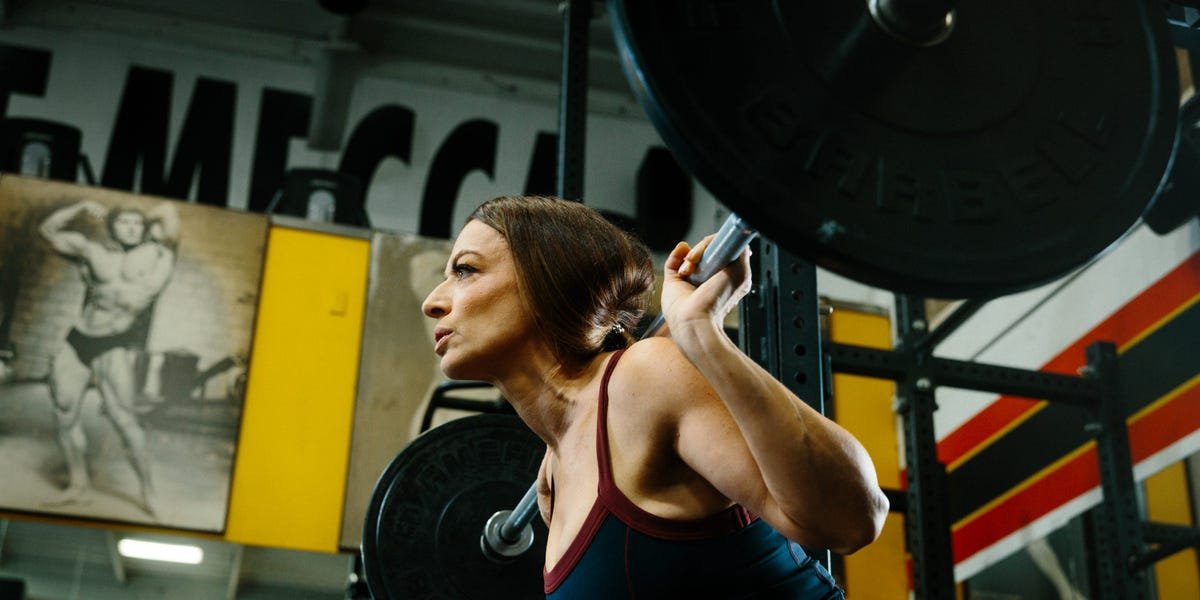
When Deb Stern steps up to the barbell for a heavy back squat, all distractions fall away.

When you’re sweating under cold steel, there’s no room for stray thoughts. Stresses about her busy caseload as an attorney, her packed schedule as a mom of two, and the hustle of New York City living are eclipsed by the more than 100 pounds of metal she’s about to lift.

It’s not easy — everything in her mind and body is alert to the challenge, the possibility of failure. She hoists the weight onto her shoulders, the ends of the barbell dipping under massive plates, and she squats, driving through her legs and core to propel the equivalent of a young hippopotamus down and back up, repeatedly.


Deb Stern

Attorney Deb Stern loves heavy barbell back squats, and said weightlifting keeps her calm and centered even with a busy caseload. 

Sydney Krantz for BI


After her workouts, Stern said, everything else in her life feels easier. She’s done the hard thing, trained herself to face down uncertainty and discomfort, and came out stronger.

Outside the gym, Stern is a structured finance lawyer, a specialist in navigating the complex legal framework behind massive piles of cash in loans and investments. It’s a high-stakes environment that demands performance every time Stern calls a client or leads a team on a new project. And after a good gym session, she’s not only up to the challenge, but embraces it head-on.

“It happens at work every day. Before weight training, I would have been super stressed out,” Stern told Business Insider. “Now, no matter what gets thrown at me, I can handle it. Bring it on.”


Deb Stern

Building strength in the gym translates into better resilience and the ability to handle real-world stresses, such as leadership roles at work. 

Sydney Krantz for BI


It’s not just the endorphins of exercise (though that helps). In an era defined by GLP-1 drugs promising to shed pounds, many women in business and tech are increasingly turning toward gains instead to project an image of competence, drive, and self-mastery. For these women, lifting weights is a way to signal ambition and confidence, and to showcase their discipline. And women aren’t lifting alone — gyms have turned workouts into a social ritual, moving networking from happy hour to the gym floor.

“I think strong is the new skinny, and that’s why we keep seeing it with young women changing their body image through strength training,” Jim Rowley, CEO of Crunch Fitness, told Business Insider.

With interest climbing, gyms and studios are downsizing their cardio equipment to make way for the weights. For instance, Gold’s Gym has decreased its cardio space by about 15%, according to the director of performance Erin Gregory. At the same time, they’ve added 30% more strength training equipment, like more squat racks, benches, and free weights.

“Women are getting more confidence on the weight room floor, which I love to see,” Gregory told Business Insider.

Beyond sculpted biceps or heavy squats, strength training is also part of a broader antiaging movement that finally acknowledges that healthy muscle mass is a key factor in living a longer, healthier life.


Deb Stern

Kettlebells, barbells, dumbbells, and exercise machines are among the options for women looking to get strong. 

Sydney Krantz for BI


And ambitious women in the workplace told Business Insider that pumping iron helps build the mental strength needed to climb an ever-steeper corporate ladder.

The right to bare arms

In an era where longevity is the ultimate status symbol, it’s hard to beat strength training. Showing off a sculpted, muscular physique signals resilience for the long haul.

A growing body of research suggests that working out, particularly with resistance training, is one of the most effective anti-aging tools we have. Women are increasingly the focus of that research after decades of being assumed to be smaller, less muscular versions of men.

“Once they actually started to study the impacts of strength training on women, the evidence supporting women’s strength training was just unbelievable,” said personal trainer Kristie Larson.


Deb Stern

Weight lifting has a myriad of benefits for women, from stronger bones to increased energy and improved mood. 

Sydney Krantz for BI


“Now women are understanding, if I want to be independent into old age, then it’s really important for me to start thinking about my bone health and building muscle mass instead of the narrative that we were constantly exposed to of just working out to be skinny.”

Women’s prestige was once tied to staying small, maintaining a petite figure and tiny waist as evidence that we could have it all: a career, 90 minutes or more of cardio a day, and the ability to subsist on salads and smiles.

Former Wall Street Journal reporter Anne Marie Chaker said she vividly recalls, as a rookie journalist, stepping into the office elevator with an editor who tried to compliment her by asking if she had lost weight.

Enter Ozempic.


Anne Marie Chaker

Anne Marie Chaker started strength training in 2017. She details the benefits in her book “Lift: How Women Can Reclaim Their Physical Power and Transform Their Lives.” 

Stella Kalinina for BI


Over the past five years, prescription weight loss medications have taken the world by storm, with about 1 in every 8 American adults trying them. While GLP-1s are by no means a shortcut to weight loss or health, the drugs have offered an unprecedented means to change one’s body far beyond what diet or supplements can consistently do alone. As the drugs have become more affordable, they’re also reshaping access to long-term weight loss support.

But you can’t buy muscle — yet. It takes hours of sweat and months of consistency to build an athletic body. As a result, showing off a muscular physique has become a status symbol boasting discipline.

Training became a corporate cheat code

More than ever, women are leveraging their physical strength to signal not only their dedication, but their capacity for leadership, said Pattie Sellers, a former assistant managing editor at Fortune.

For two decades, Sellers chaired the magazine’s running list of the world’s most powerful women, who often showed up in historically male-dominated fields like business and tech. In a bygone era, men in charge would broker deals over scotch and cigars, or lavish dinners on the company’s dime.


Anne Marie Chaker

Sculpted arms have become a status symbol for women. 

Stella Kalinina for BI


That won’t cut it in today’s high-stress environment, where the job requires real stamina, the kind of mental and physical resilience that can’t be faked.

“It’s not just optics,” Sellers said. “You’re simply not going to last if you are not strong physically, mentally, emotionally. It is too much of a pressure cooker world for leaders to survive, no matter your industry, unless you’re focusing on health and wellness.”

For women like Sarah Robb-O’Hagan, a lifelong athlete whose résumé spans Equinox and Nike, strength training was a major source of support at key moments throughout her career, including after the birth of her second child.

She said those hours in the gym have paid dividends in terms of energy, focus, and confidence at the office.

“Even if I didn’t feel like getting up and going to the gym, I knew that by the time I came home, it would give me that empowerment for the rest of the day,” she said. “Having a strong body equates to a strong mind, equates to me being able to handle the big life that I want to have.”


Anne Marie Chaker

Women can, and should, lift heavy.  

Stella Kalinina for BI


Fitting exercise into your day also highlights effective time management and multitasking skills. Chaker said it’s a non-negotiable for her, even when she has to bring her laptop to the gym and take calls or answer emails between sets. She’s seen other women do the same.

“It is a flex to show that this is something you prioritize. You can get it all done, and you can be strong and kick ass,” Chaker said.

For women, hitting the weights is an opportunity to own the room, take up space at the table literally and metaphorically, said Robb-O’Hagan. As a result, we’ve seen a new era of execs focused on presenting their physiques as symbols of discipline and rigor, taking up jiu-jitsu, adopting high-protein diets, and practicing intermittent fasting.

“What you can do physically is such a wonderful metaphor for what you can do mentally and emotionally as a leader in the workplace,” she told Business Insider. “Because ultimately strength training is about self-efficacy, and that’s really what leadership is about as well.”

Happy hour at the barbell

Late last year, Chaker had the networking opportunity of a lifetime. At a women’s leadership conference in Montana, Chaker ran into a top businesswoman — she wouldn’t name-drop out of respect for her privacy, but she’s one of the fewer than 500 women billionaires on the planet.

It all started when she asked to borrow Chaker’s resistance band during a chance meeting in the hotel gym. The impromptu one-on-one chat offered a more memorable moment of connection than any keynote speech or skill-sharing lunch, she recalled.

“Lifting is a great equalizer,” Chaker said.


Anne Marie Chaker

Strength training doesn’t need to be complicated to be effective. A simple set of dumbbells is enough to build muscle and strength.  

Stella Kalinina for BI


For Chaker, who became a bodybuilder in her 40s, lifting not only provides her with unique and intimate networking opportunities but also benefits her career.

“When I started lifting, everything in my life changed. I got a raise at work. I was interviewing better. My story ideas got better,” Chaker said. “And it wasn’t just because of cool muscles. It was because it changed my view of how I took up space in the world.”

Women aren’t pumping iron in isolation. Boutique fitness, revitalized post-pandemic, has made health an elevated and social event, prompting business leaders to move happy hour from the bar to the barbell.


Deb stern and her trainer

Beyond the physical gains, lifting weights builds confidence and the ability to take up space and rise to a challenge, crucial assets for leadership roles. 

Sydney Krantz for BI


But even as more women are interested in the weight room, it can still retain an air of gymtimidation. For savvy fitness pros, that’s created a prime audience for women-centered strength spaces, according to Larson.

Larson opened her own gym, Tension Strength, in Brooklyn after years of coaching for Row House and other studios. She noticed a demographic of high-achieving women who wanted to level up their exercise beyond cardio and Pilates, but weren’t sure where to start.

Strength training, by its nature, requires failure in order to grow. That translates well to an executive mindset, taking on challenges and setbacks to build back better, and gives women in particular a space to practice this skill without judgment.

“We’re a lot more conditioned to see men trying and failing, iterating, whereas with women, there’s this expectation that we succeed the first time or we disappear,” Larson said. “In strength training, confidence translates into all different areas of life because you understand it’s safe to try.”


Photos of the winners of Ms. Olympia, female bodybuilding's most prestigious competition, from 1980 to early 2000s adorn one of the walls at Gold's Gym in Venice, California

Weightlifting isn’t a new phenomenon for women, but it’s more popular than ever before, according to trainers. 

Stella Kalinina for BI


Sellers, the former Fortune editor, also sees women’s fitness as a means to match the close-knit, exclusive clubs that powerful men have enjoyed for decades. In 1996, just one executive on the Fortune 500 was a woman. Today, they make up 10% — still a long way to go. Sellers hopes that connections built at the gyms could help close the gap.

“We are working really hard to create the female version of the golf course,” Sellers said.


Source link

Laid-off-priced-out-and-restless-Why-4-women-over.jpeg

Laid off, priced out, and restless: Why 4 women over 50 retired abroad

Cindy Sheahan was at a crossroads. Friends and loved ones were passing away, and her marriage was starting to unravel. She could feel life passing her by — and after years spent raising her kids, she decided it was finally time to put herself first.

“I figured I’d start traveling abroad,” Sheahan, 64, told Business Insider. “My company was kind enough to let me take a sabbatical while I sorted out my world. It turned out to be a mistake for them, because I decided I wasn’t coming back.”

Over the last several years, Sheahan, now divorced, has traveled to nearly 50 countries, including Laos, Portugal, Madagascar, Turkey, and Vietnam. In 2025, she made Palermo, Sicily, her home base. And while she plans to visit the US from time to time, she says she won’t be moving back anytime soon.

“I feel like I outgrew a lot of people and places in the US,” Sheahan said. “Don’t get me wrong — I desperately miss my friends and family, especially my kids. But they’re all able to travel, and they’d much rather visit me somewhere fun than grab a drink at a bar in Denver.”

In Italy, she added, “I eat better, I’ve made new friends, I’ve cut down on expenses — and most importantly, I’m happy.”

More people are moving out of the US, and fewer are moving in

Census Bureau data shows that net international migration — essentially, arrivals minus departures — hit a high of 2.7 million in 2024. By July 2025, that number had dropped to 1.3 million, and if the current trajectory holds, the Bureau forecasts it could fall again to about 321,000 in 2026.

“If those trends continue, it would be the first time the United States has seen net negative migration in more than 50 years,” the Bureau said on its website.

The Bureau attributes the change to two trends moving in opposite directions: fewer people immigrating to the US, and more people leaving the country to live abroad.

Over the past few years, I’ve spoken with more than a dozen Americans — most of them women — about why they moved abroad. Many mention the same mix of reasons: the US has become too expensive, and they want to step away from work and build lives that feel more meaningful. It led them to places like Panama, Spain, Albania, and France.

Cepee Tabibian, a Spain-based relocation coach who has helped many Americans move overseas, told Business Insider that a growing number of her female clients are also worried about the political climate in the States.

“Before, I think people just wanted to move for a better quality of life; to fulfill a dream, to have a softer life. But now a lot of things that are coming up for people are related to the political situation,” she said.

Here are the stories of four women I spoke with about why they left the US and how their lives have changed since, for better and worse.

High living costs have pushed some women out

You’ve probably noticed how much more expensive life in the US has gotten. Data show consumer prices are up about 25% since 2020. For older single women, that can make it especially hard to get by, particularly when Social Security is their main source of income.

For Sheahan, moving abroad was partially a financial decision. She has savings and investments, but in retirement, her most dependable income is the $1,500 she receives each month in Social Security. In Denver, that wouldn’t have covered rent. In Palermo, it pays for her $800-a-month apartment and still leaves room for groceries and nights out.

“I love that I can go to the grocery store and not break the bank. You can buy tomatoes, eggplants, zucchini, sundried tomatoes, and everything else for a song,” she said. Healthcare has been cheaper for her, too; seeing a specialist costs her about $40.


A selfie of a woman, side by side with a picture of the Eiffel Tower.

Sandy Adam and the Eiffel Tower.

Sandy Adam/ Getty Images/ Elena Zolotova


Sandy Adam can relate. After she was laid off from her tech job in 2025, she was unable to find another role and retired. But the idea of living on just her $3,608-a-month Social Security benefit back in Pittsburgh made her nervous — especially with annual property taxes of about $6,900 on her 1,700-square-foot home.

“I asked myself: If I tried to live off Social Security, could I afford to stay in that house? I probably could, but it would be really tight,” Adam, 69, said. “Long-term, though, the financial predictability felt increasingly uncertain — my everyday living expenses like groceries were going up too. I wanted to simplify my life, with fewer fixed costs and fewer surprises.”

She decided moving to Europe was “more practical” than trying to make it work in the US.

She now lives in Chatou, a suburb of Paris, renting a 548-square-foot, one-bedroom apartment with her dog. She pays $1,679 a month, and while she says it still feels a little expensive, it’s given her “a soft landing” while she figures out where she ultimately wants to settle.

Some women want to reinvent themselves

For many women on the cusp of retirement, moving overseas also gives them a chance to reinvent themselves.

“It’s not just living your same exact life in a different destination,” Tabibian said. “A lot of women who come to me want to quit their jobs and maybe spend some time re-getting to know themselves, or take the time to try something different.”


A woman poses with her dog.

Natalie Lynch and her dog Enzo.

Courtesy of Natalie Lynch


Natalie Lynch had been working since she was 15. Burned out and priced out of the Bay Area, she decided to wind down her home-staging business of 24 years and move to Europe in 2024, hoping for a more relaxed and purposeful life, not to mention a lower cost of living.

“The pandemic, with its loss of freedom, loss of connectivity, and the very clear message that life can be short, was a real wake-up call for me,” Lynch, 56, told Business Insider. “I decided I needed to make some big changes, even if I didn’t have a clear idea of what the endgame would look like.”

Her time in Europe hasn’t been perfect.

She’s bounced between Italy, Spain, and, most recently, France. With only her dog, Enzo, as her travel companion, she’s felt lonely at times, and navigating European bureaucracy has been challenging — especially since she isn’t fluent in Spanish or French. Still, she said, escaping her hectic life and the rising costs back home has been life-changing.

“While I don’t think I’m living my best life here, it’s a better life than I had in California, so I’m headed in the right direction,” she said. “I haven’t figured it all out yet, but the slower pace of life, not having to grind every day running a business, and being out of the rat race has been a huge gift.”


A woman with glasses has a big grin on her face as she walks down a street.

Dawn Belisle moved to France after training as a pastry chef.

Courtesy of Dawn Belisle


After gifting herself a birthday trip to Paris in 2019 — complete with a French baking workshop — Dawn Belisle, an attorney and part-time pastry chef from Atlanta, fell so in love with France that she moved there in 2022.

“My spirit felt at peace there in a way that’s hard to describe,” Belisle, 56, told Business Insider. “Everyone was just living. They’re out and about, enjoying each other’s company. They sit at cafés, eating and drinking together. They don’t have the same hustle-and-bustle culture we have in the US.”

Belisle now lives in the Carré d’Or, one of Nice’s pricier, livelier neighborhoods. She spends her days walking the beach, shopping local markets for fresh produce, and lingering at cafés with her French and Italian friends.

She continues to work as an attorney, consulting with a couple of offices, but France has also opened the door to her second act: creating a lifestyle brand where she posts style and travel content and mentors people considering a move abroad. It’s given her a new sense of purpose.

“The peace I have in France is unbeatable,” Belisle said. “I still do a lot and keep a schedule, but I feel more in control of my life here. I’m living to live instead of work, and I’m exploring more. To me, that’s success.”

Madison Hoff, a reporter on Business Insider’s economy team, contributed to this article.


Source link

Headshot photo of Laura Italiano

Ten women testified that three wealthy brothers drugged and attacked them. Here’s what a federal jury must decide.

Three wealthy brothers, 10 rape accusers, one shocking indictment.

On Monday, the Alexander brothers — a trio who enjoyed money, good looks, and access to expensive homes and resorts around the world — will sit through the third day of deliberations in their federal sex-trafficking trial.

A Manhattan jury is considering the fates of these three men, former luxury real estate brokers Tal and Oren Alexander, and Oren’s twin brother Alon, who worked for his parents’ private security firm.

There is much to weigh.

Ten women, all testifying under pseudonyms, told jurors they were raped — sometimes through violence, sometimes after being drugged senseless, sometimes by more than one brother at once.

None called the police.

Prosecutors have argued that there was too much corroborating evidence, too much genuine pain in the women’s words for their accounts to be false.

Defense lawyers countered that the sex was consensual, and that the women later invented or imagined stories of violence and violation out of regret or in hopes of a lawsuit payday.

After testimony by more than 30 prosecution witnesses and three witnesses for the defense, a six-man, six-woman jury must now agree on a complex, ten-count indictment that could put the brothers away for life.

Here is a count-by-count roadmap to that still-pending decision.


The Hamptons backyard where the youngest accuser in the Alexander brothers sex-trafficking trial says she was raped after being handed a drugged drink in hot tub.

The Hamptons backyard where the youngest accuser in the Alexander brothers sex-trafficking trial says she was raped after being handed a drugged drink in a hot tub.

Southern District of New York/Business Insider


Count one: sex trafficking conspiracy

All three brothers are charged with conspiring to sex traffic four women who testified they were lured with something of value (a Hamptons beach getaway), only to be drugged or overpowered and then raped.

The youngest testified that she was drugged and raped at a Hamptons party by two brothers and two other men in 2009, after sneaking away from her boarding school, missing her high school prom.

To convict on this top count, jurors must find that between 2008 and 2021, the Alexanders worked together to get at least one of the four women to the Hamptons with the purpose of attacking her. They must also find that, for at least one woman, force, fraud, or coercion was then used to compel sex with at least one of the brothers.

All three brothers are charged with this count, which carries a potential sentence of 10 years to life in prison.

Count two: the sex trafficking Lindsey Acree

Lindsey Acree, who has a lawsuit pending against the brothers, told jurors that she was 25 when she and a girlfriend were invited to the siblings’ East Hampton rental home in 2011.

Acree said that soon after arriving, she was urged to enjoy the backyard jacuzzi, where Tal handed her a glass of wine that made her feel like a “zombie.”

She said that when she regained consciousness, Tal and a second man were raping her on the floor of the home’s gym.

At some point in her assault, Tal set up a tripod and camera, she said. “They were laughing a lot,” she told jurors of the two men. “I was on the ground. I couldn’t move.”

Tal alone is charged with this count.

Count three: Sex Trafficking Bela Koval

Bela Koval, a native of Ukraine, told jurors she was a 25-year-old model when Alon paid for her and a girlfriend to fly from Chicago to New York for a weekend at the brothers’ Sag Harbor rental home in 2016.

All three brothers greeted the women at the door, she said. They were taken yachting and served meals prepared by a private chef — expenses that prosecutors say the brothers shared.

Koval told the jury that at a pool party the next day, she sipped a drink handed to her by Oren that made her unsteady, “like a wave overtook my body.”

She said she felt still worse — “like my whole body was tranquilized” — after Alon gave her a glass of water. “I was unable to scream” as Oren raped her, she testified.

All three brothers are charged with sex-trafficking Koval.


An evidence photo in the Alexander brothers sex-trafficking trial shows the Hamptons mansion where two women testified they were drugged and raped.

An evidence photo shows the Sag Harbor mansion where Maya Miller testified she was raped by Tal Alexander in 2014.

Southern District of New York/Business Insider


Count four: sex trafficking Maya Miller

Maya Miller told jurors she was a 23-year-old aspiring model and about to enter nursing school when she and a girlfriend were invited by Tal to a summer weekend at the brothers’ Sag Harbor home in 2014.

Miller told the jury that she agreed because Tal promised to reimburse her for her flight from Nevada to New York and that the trip would be all-expenses-paid.

“It was the biggest home I’d ever been in,” she said of the mansion, where she and her friend were treated to a boat ride and meals by a private chef.

Tal turned “angry” as she remained sober through the second day, telling her, “I thought I invited fun girls,” Miller testified.

She testified that Tal raped her in the shower the next morning as she cried and struggled to scream.

Tal alone is charged with this count.


This exhibit from the Alexander brothers sex-trafficking trial shows a photograph of the living room of the Sag Harbor mansion where women testified they were raped in 2014 and 2016.

An evidence photo shows the Hamptons mansion where Isa Brooks testified she was raped by Tal Alexander, Alon Alexander, and two other men in 2009.

Southern District of New York/Business Insider


Count five: sex trafficking a minor

This final sex-trafficking count concerns Isa Brooks.

The Netherlands native testified she was 16 when she and a dormmate skipped their high school prom to accept a party promoter’s invite to the brothers’ Southampton mansion in 2009.

“I always heard it was, like, the place to be on Memorial Day weekend,” she said of the Hamptons.

She told the jury that during a party hours later, after drinking tequila in the backyard hot tub, “I was feeling woozy, kind of spinny.”

Brooks said she stumbled to a bedroom, where Tal began kissing her, and told her “his brother was going to join us.”

Brooks told the jury that she fell in and out of consciousness, and remembered “in flashes” being raped by Tal, Alon — the “more shy” twin — and two other men, including the one who’d given her tequila in the hot tub.

“I was wondering why they hated me,” she told the jury.

Tal and Alon are charged with this count.


Prosecutor Andrew Jones questioned Bela Koval, who testified she was raped by Oren Alexander in 2016.

Prosecutor Andrew Jones questioned Bela Koval, who testified she was raped by Oren Alexander in 2016.

Jane Rosenberg/Reuters


Count six: inducing Bela Koval to travel to engage in unlawful sexual activity

This count concerns Bela Koval, the woman who testified she was raped by Oren after being invited to Sag Harbor in 2016.

It alleges that the three brothers caused Koval to travel across state lines, from Chicago to New York, so that she could be forced or coerced into “unlawful sexual activity,” meaning her alleged rape by Oren Alexander.

Prosecutors sought to prove this count by showing jurors communications among the brothers, including a text chain in which they mentioned Koval and her girlfriend, and joked about trying to “orgy them out.” All three brothers are charged with this count.

Count seven: inducing Maya Miller to travel to engage in unlawful sexual activity

This count concerns Maya Miller, the woman who testified she was raped by Tal in the shower of a Sag Harbor mansion in 2014.

Tal alone is charged with this count.


An evidence photo from the Alexander brothers sex-trafficking trial shows the Norwegian Sky cruise ship where a woman says she was raped by Alon and Oren Alexander in 2012.

The Norwegian Sky cruise ship, where a woman says she was raped by Alon and Oren Alexander in 2012.

Southern District of New York/Business Insider


Count eight: aggravated sexual abuse by force or intoxicant

This count alleges that Alon and his twin Oren sexually abused a heavily-drugged Rhonda Stone in the cabin of a Norwegian Sky cruise ship in 2012.

Stone testified she was 23 years old when she and her older sister went on a so-called “Groove Cruise” — a three-day trip to Miami and the Bahamas featuring round-the-clock live music and DJs.

She said she lost consciousness after drinking a mixed drink handed to her by one of the brothers, and woke up “naked in the bed,” and unable to move or speak as the two took turns raping her.

Alon and Oren Alexander are charged with this count.

Count nine: sexual abuse of a physically incapacitated person

This count offers an alternate theory of sexual abuse and also concerns Rhonda Stone and the 2012 cruise trip.

To convict, the jury must find that Stone was “physically incapable of declining participation” in a sexual act.

Alon and Oren are charged with this count.


A courthouse sketch of Amelia Rosen, an accuser in the Alexander brothers sex trafficking trial in New York.

Amelia Rosen testified she was 17 years old when Oren Alexander filmed her having sex with himself and a second man.

Jane Rosenberg/Reuters


Count 10: sexual exploitation of a minor

This count concerns Amelia Rosen, who prosecutors allege was 17 years old and incapacitated when she was videotaped having sex with Oren and a second man in a Manhattan apartment in 2009.

Jurors appeared visibly upset when the video was shown to them in court. Prosecutors said it shows Rosen slurring her words and barely able to stand.

“I can hardly understand what I was saying,” Rosen testified tearfully when shown snippets of the video in court.

Oren alone is charged with this count.


Source link

A-doctor-shares-3-ways-women-can-lower-their-cancer.jpeg

A doctor shares 3 ways women can lower their cancer risk, starting in their teens and 20s

Over the past five to 10 years, OB-GYN Dr. Thaïs Aliabadi noticed an uptick in younger cancer patients in her practice.

Suddenly, more in their 30s and 40s were getting diagnosed with breast, uterine, and colon cancer, the latter of which is now the leading cause of cancer death in people under 50.

As to the causes, Aliabadi has her own theories.

“I think our lifestyles, our metabolic changes, the rates of obesity, the increase in insulin resistance, our poor diet, lack of exercise, chronic inflammation — these have all played a huge role,” she told Business Insider. She also mentioned environmental pollutants that can disrupt the endocrine system and the fact that women are getting pregnant later or not at all, which can change hormone exposure and increase the risk of breast cancer.

In better news, she also said higher rates of diagnoses also mean “we’ve gotten better and better at cancer detection and risk assessment,” as awareness around early symptoms have also improved.

While so many factors can feel out of our control, “I wish every woman knew that cancer is not always completely random,” Aliabadi said. In some cases, “we can actually see risk long, long before the disease appears.”

Aliabadi shared her three tips for preventing cancers in women (such as breast and ovarian cancer), from analyzing your risk to focusing on your metabolic health.

Improve your metabolic health with diet, sleep, and exercise


People on treadmills

Regular exercise can lower the risk of multiple cancers.

skynesher/Getty Images


In terms of overall prevention, Aliabadi said starting a few healthy habits as early as possible is key.

“If you want to lower your risk of cancer, number one on the list is to maintain a healthy metabolic profile,” she said. It means lowering cholesterol, inflammation, and visceral fat — the fat surrounding your internal organs.

She said exercise, such as strength training and cardio, improves insulin sensitivity, reduces inflammation, and balances hormones, lowering the risk of multiple cancers.

Eating a diet “rich in whole foods” and cutting back on ultra-processed foods can also make a huge difference by boosting gut health and cutting down cholesterol.

Other good habits for metabolic health include stress reduction and getting adequate sleep. “Sleep deprivation is poison to our longevity, and persistent stress can affect our hormones and our immune pathways,” she said.

These habits don’t just decrease cancer risk — they also reduce the risk of cardiovascular disease, diabetes, and other chronic illnesses.

Cut down on carcinogens where you can


Pouring wine

Even moderate drinking increases cancer risk.

Elena Noviello/Getty Images


Aliabadi said environmental toxins, like chemicals in food packaging, can be “a little tougher” to be aware of because of how ubiquitous they are.

However, there are still ways to reduce exposure to carcinogens (cancer-causing agents) and endocrine disruptors. A commonly spoken about one is tobacco, so abstaining from smoking cigarettes or vaping “can significantly lower many cancer risks,” she said.

The one she really emphasized cutting back on is alcohol, as even moderate drinking can increase cancer risks.

“In my office, I have zero tolerance for alcohol,” she said. “Not even a couple of glasses a week.”

Collect data on your body


Young woman mammogram

Depending on risk factors, you might need to start screening earlier.

German Adrasti/Getty Images


While cancer screenings have recommended starting ages — some of which have been recently lowered to reflect an uptick in younger patients — Aliabadi says you shouldn’t rely on them.

“We need to stop thinking that prevention starts at 40, that mammograms start at 40,” she said. “Prevention starts in our teens and in our 20s, believe it or not.”

She urges women to take a two-minute online test and learn their lifetime risk assessment score for breast cancer, which uses information like family history, genetic mutations, and breast density to more accurately estimate when you should get screened. Olivia Munn, a patient of Aliabadi’s, famously took the test and was diagnosed with early-stage breast cancer despite having no symptoms.

Aliabadi said that testing for seemingly unrelated conditions, like PCOS, endometriosis, fertility, genetic conditions, and insulin resistance, can all play a role in evaluating your cancer risk and give you a better idea of how vigilant you should be.

Aliabadi, who herself had a high lifetime risk assessment score for breast cancer and was initially dismissed by doctors, said a patient knowing their body helps them better advocate for themselves and seek out second opinions if needed.

“If someone at the front desk tries to scare her away, she will be her own health advocate,” Aliabadi said. “She will know exactly why she’s there and why she needs that mammogram.”


Source link

Italian-fashion-designer-Valentino-dies-at-93-His-legacy-was.jpeg

Italian fashion designer Valentino dies at 93. His legacy was his devotion to dressing women — many adored him.

  • Italian fashion designer Valentino Garavani has died at 93 in Rome.
  • He launched the Valentino fashion house in 1960 and soon became a key figure in the fashion world.
  • Here’s a look at how women across fashion and Hollywood paid tribute to him.

Italian fashion designer Valentino Garavani, known as Valentino, has died at 93, his foundation announced in an Instagram post on Monday.

“Our founder, Valentino Garavani passed away today at his Roman residence, surrounded by his loved ones,” the caption read.

Valentino founded his eponymous fashion house in 1960 and quickly became one of fashion’s defining figures. He was celebrated for his glamorous, elegant designs and his signature shade, “Valentino Red.”

His clothes were worn by numerous celebrities and even royalty, including Princess Diana, Jackie Kennedy Onassis, and Elizabeth Taylor.

“I know what women want,” he said in “Valentino: The Last Emperor,” a 2008 documentary about his life and career. “They want to be beautiful.”

Here’s how women across fashion and Hollywood paid tribute to the designer after his death.

Gwyneth Paltrow

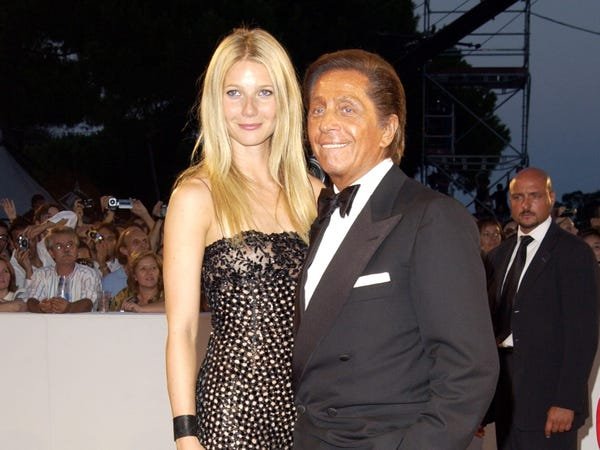
Gwyneth Paltrow and Valentino Garavani at the 2002 Venice Film Festival.

J. Vespa/WireImage

Gwyneth Paltrow paid tribute to Valentino in an Instagram post featuring a photo of her kissing the late designer on the cheek.

“I was so lucky to know and love Valentino-to know the real man, in private. The man who was in love with beauty, his family, his muses, his friends. His dogs, his gardens, and a good Hollywood story. I loved him so much. I loved how he always pestered me to ‘at least wear a little mascara’ when I came to dinner. I loved his naughty laugh,” Paltrow wrote in the caption.

“This feels like the end of an era. He will be deeply missed by me and all who loved him. Rest in peace, Vava,” she wrote.

Paltrow has worn Valentino gowns for many major moments over the years, including the 2013 Met Gala and her 2018 wedding to Brad Falchuk.

Cindy Crawford


Cindy Crawford and designer Valentino Garavani walk the runway at the finale of the Valentino Fall 1997 Couture Runway Show.

Cindy Crawford and Valentino Garavani at the Valentino Fall 1997 Couture runway show.

WWD/Penske Media via Getty Images

Cindy Crawford paid tribute to the designer on Instagram, sharing a photo of the pair on the runway together.

“I’m heartbroken to hear of Valentino Garavani’s passing. He was a true master of his craft, and I will always be grateful for the years I had the privilege of working closely with him,” Crawford wrote.

Crawford has walked the Valentino runway and appeared in multiple campaigns for the brand over the years.

Carla Bruni


Carla Bruni and Valentino Garavani at Paris Fashion Week in 2017.

Carla Bruni and Valentino Garavani at Paris Fashion Week in 2017.

Pascal Le Segretain/Getty Images

Former French first lady and model Carla Bruni also took to Instagram to share a tribute to Valentino.

“I’m moved by the departure of the immense Valentino who will leave so much beauty in the world. He was a teacher and it was an honor and a great privilege to know him and parade for him and I will always remember his great kindness and infinite elegance,” Bruni wrote in her caption in Italian. “My thoughts are with @giancarlogiammetti and all of Valentino’s family. Rest in peace #valentino.”

Bruni has modeled for Valentino numerous times throughout her career.

Claudia Schiffer


Valentino Garavani on the runway with model Claudia Schiffer during the finale of his spring 1998 couture collection.

Valentino Garavani on the runway with Claudia Schiffer during the finale of his spring 1998 couture collection.

WWD/Penske Media via Getty Images

Claudia Schiffer paid tribute to Valentino with a series of Instagram photos, including shots of her with the designer and from her campaigns for the brand.

“Heartbroken to hear of the passing of my old friend Valentino. He is what true legends are made of, living on forever through the brand he created, the embodiment of timeless elegance and glamour. I loved the special times where I got to bring his creations to life on and off the runway. One of my favourite campaigns was in Rome where I became Anita Ekberg in La Dolce Vita, a memory I will cherish forever,” Schiffer wrote in her caption.

“I will remember the fun holidays I spent with him in Mallorca, Ibiza and St Tropez. My Valentino wedding gown which I have framed at home as a constant reminder of his gentle, generous, sweet and loyal nature. Having him create my wedding gown was one of the great honors of my life, a moment I will cherish forever. I feel so proud to have been a part of his life. Repose en paix, Monsieur Valentino,” she wrote.

Sarah Jessica Parker


Valentino Garavani and Sarah Jessica Parker at the Schiaparelli and Prada Costume Institute Benefit red carpet.

Valentino Garavani and Sarah Jessica Parker at a red carpet event in the early 2010s.

Lars Niki/Corbis via Getty Images

Sarah Jessica Parker shared an Instagram post featuring a black background with red text that read “RIP VAVA. May 11, 1932 – January 19, 2026.”

“So many memories. So happy to recall. Of course, wish I had more. For your extraordinary talent, your decadent generosity and your love of all things beautiful, we are all more fortunate for the grand gestures you shared with the world. Godspeed Valentino Garavani,” Parker wrote in her caption.

Kim Kardashian


Valentino Garavani and Kim Kardashian attend the Valentino show at Paris Fashion Week in 2014.

Valentino Garavani and Kim Kardashian at the Valentino show at Paris Fashion Week in 2014.

Pascal Le Segretain/Getty Images

Kim Kardashian shared a series of Instagram Stories featuring photos of herself with the late designer.

“Sweet Valentino. You were magical, so special. Thank you for your magic. Rest in peace,” Kardashian wrote in her caption.

Helena Christensen


Helena Christensen and Valentino Garavani at an event in the early 2000s.

Helena Christensen and Valentino Garavani at an event in the early 2000s.

Evan Agostini/Getty Images

Model Helena Christensen left a comment on the Instagram post announcing the designer’s death.

“Such wonderful memories with this beautiful talented man and genius,” she wrote.

Christensen has appeared on the Valentino runway multiple times throughout her career.


Source link

Women-at-the-top-are-exhausted-and-burned-out-according.jpeg

Women at the top are exhausted and burned out, according to a McKinsey and Lean In report

Women are hitting the top of the corporate ladder only to find something waiting for them: exhaustion.

According to a report published Tuesday by McKinsey and LeanIn.org, a nonprofit founded by Sheryl Sandberg, burnout among senior-level women is the highest it has been in the past five years.

Around 60% of these women said they have frequently felt burned out at work in the past few months, compared with 50% of senior-level men, per numbers from the “Women in the Workplace” 2025 study.

Women who are newer to leadership roles are feeling the strain more acutely. Among senior-level women who have been at their companies for five years or less, 70% reported frequent burnout, and 81% said they are concerned about their job security.

“These high levels of concern align with research that shows women often face extra scrutiny when they’re new to organizations and have to work harder to prove themselves,” the report said, adding that Black women in leadership face exceptionally high burnout and job insecurity. “In contrast, when women and men in leadership have longer tenures, their levels of burnout and job security are quite similar.”

The report, an annual study of women in corporate America, surveyed 9,500 employees across 124 companies between July and August. The study also includes interviews with 62 HR executives and company-reported data from 124 organizations that together employ about 3 million people.

LeanIn.org launched a study with McKinsey in 2015 to track how women progress through the corporate pipeline and where companies fall short. The group is named after Sandberg’s 2013 book “Lean In,” which sparked a national debate about women’s ambition, leadership, and workplace equality.

This year’s findings paint a bleak picture for women at the top. Senior-level women who are hesitant to advance their careers say they see a steeper path forward compared to their male counterparts. Eleven percent of senior women who don’t want to advance say they don’t see a realistic route to promotion, compared with 3% of senior men. And 21% say more senior-level people look burned out or unhappy, nearly double the share of men who say the same.

It’s not because women are less committed — the report found that women and men are equally locked in. What differs is the desire to keep climbing, per the report.

The data shows a clear ambition gap: 80% of women want to be promoted to the next level, compared with 86% of men. That gap is widest at the beginning and the top of the pipeline — 69% vs. 80% at the entry level, and 84% vs. 92% among senior leaders.

This is the first time in the report’s 11-year history that women have shown lower interest in promotion than men, it said.

This gap in ambition to advance falls away “when women receive the same career support that men do,” the report added. In other words, companies are responsible for creating the burnout problem for women.

“This is only happening in the companies that aren’t doing the right thing when women get the full support and the same stretch opportunities. They’re not leaning out at all,” Sandberg said in a Tuesday interview with Bloomberg Television.

“What’s happening is that women face more barriers at every level of the career,” she added.

More companies are cutting back on DEI and support for women

Even as companies say they are committed to diversity and inclusion, at least one in six have reduced the teams or resources behind those efforts, the report said.

About 13% of employers have pulled back or eliminated women-focused career-development programs, and another 13% have cut formal sponsorship programs, which play a key role in helping employees advance, it added.

“Women overall are less likely to have sponsors — and this really matters. Employees with sponsors are promoted at nearly twice the rate of those without,” the report said.

The report also found that companies are rolling back remote and flexible work options, which can hinder women’s ability to stay and advance in their careers. One in four has scaled back remote or hybrid work arrangements, and 13% have reduced flexible working hours over the past year.

At the same time, the report said that women who work remotely most of the time are “less likely to have a sponsor and far less likely to have been promoted in the last two years than women who work mostly on-site.” Meanwhile, men receive more similar levels of sponsorship and promotions regardless of their work arrangement.

At the entry level, a stage where advocacy and visibility are essential, women are also less likely than men to receive stretch assignments and other opportunities, the report added.

Last year, the “Women in the Workplace” study found that more women were advancing to senior leadership roles. By 2024, women held 29% of C-suite roles, up from 17% in 2015.

However, progress fades at the entry and management levels, per the report. “For every 100 men promoted to manager in 2018, 79 women were promoted. And this year, just 81 women were,” it added.


Source link