I-won-New-York-Citys-affordable-housing-lottery-Five-years-later.jpeg

I won New York City’s affordable-housing lottery. Five years later, I feel trapped with my family in 800 square feet.

On an otherwise uneventful day in July 2021, I got an email that ended up changing my life.

Two months earlier, I’d applied on New York City’s housing lottery website for a chance to live in a newly built apartment complex in a neighborhood I could never afford under normal circumstances.

I didn’t think much about it because the system itself is kind of mindless: You fill out your income details one time when first setting up your profile and then simply hit “Apply” whenever a building in your income bracket comes up.

By that point, I’d applied to dozens of buildings and none had ever panned out. My randomly assigned log numbers — which determine the order in which leasing agents contact applicants — were always in the five- or six-digit range. In other words, hopeless.

After all, winning the NYC affordable-housing lottery is a numbers game. In 2024, a Department of Housing Preservation and Development representative told BI that the department receives about 3.5 million applications a year and that, on average, there are 450 applications per rental unit.

I hadn’t even bothered to check my log number for this building before I was called for it — it turned out I was number 41. I waved off my then-boyfriend’s suggestion that we go to the beach and instead spent the Fourth of July collecting all the documents required to verify my income.

A week later, I was contacted to view an apartment. Three months after that, I was moving into the high-rise building of my dreams.

Through the program, I snagged a one-bedroom apartment in a coveted neighborhood for $2,295


dog on floor of apartment with person walking in background

A photo of an earlier, less cramped version of my apartment. 

Caralynn Matassa


At the time, I was living in a large rent-stabilized one-bedroom in Brooklyn for $1,250 — it was a steal, and I figured I would stay there forever.

So the lottery apartment’s rent ($2,295), though supposedly “affordable” for those of us making 130% of the Area Median Income (or “AMI”), made me queasy. Technically, I could afford it, but it meant slashing my disposable income and ability to save.

But when I looked at the details, it was clearly the right move: This would be by far the best neighborhood and nicest apartment I’d ever lived in.

It would also be the first time in my entire life I’d ever had a washer, dryer, and dishwasher in my home, let alone access to building amenities like a pool, coworking spaces, and even an arcade.


dog next to a bike

My apartment costs less than the going market rate. 

Caralynn Matassa


My Brooklyn apartment, on the flip side, was in an unkempt pre-war building where the only “amenity” to speak of was a heating pipe that whistled so loudly it sounded like a plane was taking off in my bedroom.

Despite a price that’s probably eye-watering to people who live outside the city, the new 800-square-foot apartment was also a great deal for its location.

At the time I signed my lease, the median asking rent for a one-bedroom in that neighborhood was at least $1,000 more.

For 2021 Caralynn, it was perfect. Then, that boyfriend became my husband — and a permanent resident of the apartment — and shortly after, my one-person, one-dog household became three people and one dog when our daughter was born in late 2022.

The apartment still worked for us during the infant stage after we made a few minor modifications and I forced my maximalist self to adopt a minimalist perspective.

But now, with a toddler and a whole lot of toys, things are feeling decidedly less spacious.

Over the years, we’ve had to get creative with the space


Side by side of desk area, nursery area, play ar

Three of the many incarnations of the apartment’s nook. 

Caralynn Matassa


Since my daughter was born, the apartment has gone through every conceivable configuration.

We’ve trialed dine-in kitchen setups versus separate dining spaces in the living area and tried creating a tiny bedroom for my daughter in my onetime office nook instead of all sharing one bedroom.

My husband and I also once carved out part of the living room as our sleeping space — a pseudo second bedroom — to give our daughter the bedroom, too.


baby on play mat in front of tv

We’ve rearranged our space a lot over the years. 

Caralynn Matassa


I’ve spent countless hours researching Murphy beds. The only place we haven’t tried putting our couch is on the ceiling.

Still, giving this apartment up for a modicum more space feels foolish. When I moved, it wasn’t with the idea that this was the neighborhood where I’d raise my kids, but it’s actually one of the most family-friendly areas in the city.

We have great schools, tons of parks, access to multiple subway lines, and even a Trader Joe’s practically at our doorstep.


dresser next to built-in shelving area

I try to find furniture that serves more than one purpose. 

Caralynn Matassa


And while the crowded space is occasionally overstimulating for me and my late-diagnosed ADHD, the apartment is still workable.

My toddler, for one, has no interest in personal space and much prefers co-sleeping with us anyway. The wheels are constantly turning in my head about how we can best repurpose the space when she does want her own room, though.

At this time, moving out just doesn’t feel like a real option


person hanging string lights in apartment window

It seems silly to give up this apartment. 

Caralynn Matassa


It’s not in the cards right now to move to a two-bedroom in our building or elsewhere in our neighborhood. Because our apartment is rent-stabilized, increases with each lease renewal are capped: Our monthly rent today is just $2,550.

Comparatively, the median market rate for one-bedrooms in our area has soared to over $4,000 a month — and over $6,000 for two-bedrooms.

Sure, we could leave New York City entirely — and we’ve discussed it — but that would mean giving up all the things we’ve come to value most, like easy access to endless entertainment and culture.

So, I’m still applying to the affordable-housing lottery here. To date, I’ve submitted 188 applications.

I’ve qualified for a number of apartments, but none have panned out, either because they’re not much bigger than our current unit or because they’re in neighborhoods we don’t like as much.

I have no idea whether lightning will strike twice for us and we’ll qualify for a bigger, better unit in our neighborhood before our household income exceeds the maximum for our bracket.

For now, I’ve resigned myself to sitting with two competing feelings: immense gratitude that we’ve gotten to live relatively affordably in an incredible place for as long as we have, and stress that a time is coming where this won’t actually be tenable.




Source link

From-NFL-team-owners-to-computer-science-researchers-Meet-the-12.jpeg

From NFL team owners to computer-science researchers: Meet the 12 billionaires who have won Oscars

Updated

  • These 12 billionaires are also Oscar winners.
  • Some are the famous filmmakers behind some of the most commercially successful movie franchises.
  • Others are billionaires who have accumulated their wealth through other avenues.

When thinking about Oscar winners, NFL team owners and computer-science researchers might not immediately come to mind.

But some of these icons of their industries have joined other, more famously creative billionaires to accept Hollywood’s highest honors.

Out of the hundreds of Academy Award winners each year, only a tiny minority have net worths comparable to those of tech and industry leaders who define the ultrawealthy class.

The “Avatar” and “Titanic” director James Cameron recently became the newest member of the exclusive club, with Forbes reporting that the filmmaker surpassed the $1 billion net worth mark in December.

Cameron, whose films have earned an estimated $9 billion at the box office, is joining the minds behind some of the biggest box-office hits, including director Steven Spielberg, “Star Wars” creator George Lucas, and “Lord of the Rings” creator Peter Jackson.

In February, Forbes also crowned Spielberg, who has a net worth of $7.1 billion, as the world’s wealthiest celebrity in 2026.

As you start getting ready for your Oscars’ watch party, see which 12 billionaires have won Academy Awards, and see the movies, documentaries, and short films they’ve worked on as directors, producers, writers, executive producers, or in other capacities.

We’ve ranked them on their estimated net worths, as reported by Forbes as of March 12.

Steven Rales

Rales has worked closely as a producer in Wes Anderson films since 2006.

Rodin Eckenroth/Getty Images

Estimated net worth: $7.8 billion

Rales, the chairman and cofounder of medical manufacturer Danaher, founded the film production company Indian Paintbrush in 2006 and has worked closely with director Wes Anderson ever since.

Rales also owns film distributors Janus Films and The Criterion Collection and has a 20% in the NBA Indiana Pacers.

He won the best live-action short film award in 2024 with Anderson’s “The Wonderful Story of Henry Sugar,” which he produced.

Jeffrey Lurie


Jeffrey Lurie looked on during a Philadelphia Eagles game.

Jeffrey Lurie purchased the Philadelphia Eagles in 1994.

Brooke Sutton/Contributor/Getty Images

Estimated net worth: $7.6 billion

The Boston businessman purchased the Philadelphia Eagles for $185 million in 1994 and has won two Super Bowls since. But Lurie has a background in film, and has produced and executive-produced more than a dozen movies.

His grandfather founded the General Cinema movie-theater chain, which operated 1,500 screens at its peak in 1991 before it was acquired by AMC in the early 2000s.

Lurie has won three Oscars for best documentary as executive producer of “Inside Job” in 2011, “Inocente” in 2013, and “Summer of Soul” in 2022.

Steven Spielberg


Steven Spielberg at the Oscars.

The filmmaker is regarded as the most commercially successful film director of all time.

Amy Sussman/WireImage

Estimated net worth: $7.1 billion

The film director and producer has worked on some of the most successful films of the past 30 years, including “Jurassic Park,” “Jaws,” and “E.T. the Extra-Terrestrial.”

He’s regarded as the most commercially successful film director of all time and a pioneer of the modern blockbuster, with his films amassing a box-office total of over $10.7 billion over 37 films, as reported by The Numbers.

He won the Oscar for best director in 1999 with “Saving Private Ryan” and in 1994 with “Schindler’s List,” which also won best picture that year.

In February, he also achieved EGOT status when he took home a Grammy for best music film for “Music by John Williams,” which he produced.

Jeff Skoll


Jeff Skoll, Ricky Strauss, Davis Guggenheim, winner Best Documentary Feature for

The former eBay president (left) has executive-produced two best picture award-winning films.

Jeff Vespa/WireImage

Estimated net worth: $5.3 billion

Skoll, who was eBay’s first president from 1996 to 1998, founded film production company Participant Media in 2004 to create films that increased awareness of social issues.

He won best picture as executive producer of “Spotlight” in 2016 and “Green Book” in 2019.

In total, Participant Media won 21 Academy Awards over 86 nominations, including best international film for “Roma.” The company shuttered in 2024.

George Lucas


George Lucas holds Irving G. Thalberg Memorial Award at the 64th Annual Academy Awards

The founder of Lucasfilm sold his production company to Disney in 2012.

Frank Trapper/Corbis via Getty Images

Estimated net worth: $5.1 billion

The creator of the “Star Wars” and “Indiana Jones” franchises founded the film production company Lucasfilm in 1971 and sold it to Disney for $4 billion in 2012.

In 1992, he won the Oscars’ Irving G. Thalberg Award, which awards “creative producers whose bodies of work reflect a consistently high quality of motion picture production.” He was also nominated for best director and best original screenplay for “American Graffiti” and “Star Wars” in 1973 and 1977, respectively.

Oprah Winfrey


Oprah Winfrey speaks onstage during the 87th Annual Academy Awards at Dolby Theatre on February 22, 2015 in Hollywood, California.

The media mogul was nominated for best supporting actress in 1985 and won an honorary award in 2011.

Kevin Winter/Getty Images

Estimated net worth: $3.2 billion

The TV host and media mogul has often been regarded as the most powerful woman in media and was once the world’s only Black billionaire.

She won the Oscars’ Jean Hersholt Humanitarian Award, which recognizes “outstanding contributions to humanitarian causes” in 2011. She was also nominated for best supporting actress in 1985 for “The Color Purple.”

Steve Tisch


The New York Giants co-owner (right) has produced over 40 films, including “Forrest Gump.”

Jim Smeal/Ron Galella Collection via Getty Images

Estimated net worth: $2.2 billion

The chairman, co-owner, and executive vice president of the New York Giants has produced over 40 films and has worked closely with Columbia and Sony Pictures.

He won the Oscar for best picture in 1995 with “Forrest Gump.”

Peter Jackson


Peter Jackson, winner of Best Director for

The “Lord of the Rings” and “Hobbit” creator has amassed over $6.5 billion at the box office.

Albert L. Ortega/WireImage

Estimated net worth: $1.9 billion, per Forbes

The “Lord of The Rings” and “Hobbit” filmmaker has written, directed, and worked on over 20 films and is the fifth highest-grossing director of all time, with his films surpassing $6.5 billion at the box office, per The Numbers rankings.

In 2004, he won Oscars for best director, best adapted screenplay, and best picture for “The Lord of the Rings: The Return of the King.”

Pat Hanrahan


Pat Hanrahan arrives at the Academy Of Motion Picture Arts And Sciences' Scientific And Technical Awards Ceremony at Beverly Hills Hotel on February 15, 2014.

Pat Hanrahan has won multiple Academy Awards.

Valerie Macon/Getty Images

Estimated net worth: $1.6 billion

The computer graphics researcher, founding Pixar Animation Studio employee, and computer-science and electrical-engineering professor at Stanford University has worked on groundbreaking animation software that led to films like “Toy Story.”

He won a scientific and engineering Academy Award in 1993 and two technical achievement Oscars in 2004 and 2014.

Richard Anthony Wolf


Dick Wolf attends Variety Power of Law presented by City National Bank.

The “Law & Order” producer won best short film as a producer for “Twin Towers” in 2003.

Araya Doheny/Variety via Getty Images

Estimated net worth: $1.5 billion

The film producer, best known for creating the “Law & Order” franchise, founded Wolf Entertainment in 1988. It has become one of the most prolific companies in the television business.

He won the Academy Award for best short film as a producer with “Twin Towers” in 2003.

Tyler Perry


Tyler Perry holding his Oscar statue.

The Madea creator has an estimated net worth of $1.4 billion.

ABC via Getty Images

Estimated net worth: $1.4 billion

The filmmaker and playwright created the Madea character in 1999 and founded his own production company, Tyler Perry Studios, in 2006. In 2019, he unveiled the new 330-acre studio grounds in Atlanta. His films have made over $765 million at the box office.

He received the Oscars’ Jean Hersholt Humanitarian Award in 2021.

James Cameron


James Cameron Oscars win in 1998

The director of “Titanic” and “Avatar” has earned over $9 billion at the box office.

Getty Images/Bob Riha, Jr.

Estimated net worth: $1.1 billion

The director of “The Terminator,” “Titanic,” and “Avatar,” has directed three of the top five highest-grossing movies of all time, as listed by Box Office Mojo. Despite having directed only 10 feature films, Cameron is the second-highest-grossing director of all time.

He won the Academy Award for best director and best picture with “Titanic” in 1998.


Source link

Ive-lived-in-and-visited-so-many-of-Americas-biggest.jpeg

I’ve lived in and visited so many of America’s biggest cities, but these 6 small towns have really won me over

I remember arriving in Leavenworth, a town of about 3,000 people, and immediately feeling like we had stepped into an entirely new country, despite being just a short three-hour day trip from Seattle.

The drive itself revealed just how varied Washington’s landscape can be, moving from familiar surroundings into farmland and alpine scenery.

Despite visiting in early April, right before wildflower season, the setting still felt storybook-like, with open fields nearby and snow-capped peaks in the distance.

Downtown Leavenworth leaned fully into its Bavarian theme, from German restaurants and beer gardens to a quirky nutcracker museum. Even the exteriors of everyday places, such as grocery stores and coffee shops, matched the town’s aesthetic, completing the immersion.

We stayed at Abendblume Inn, a small bed-and-breakfast with a distinctly European feel that overlooks the Cascade Mountains. It famously serves up breakfast aebleskiver, Danish pancake puffs often dusted with powdered sugar or served with jam, to make the Euro experience feel complete.

Perhaps my favorite find was the local reindeer farm, where we could pet and feed the animals. Although Leavenworth is known for its Christmas festivities, visiting out of season revealed a quieter version of the town that felt just as intentional.


Source link

China-focused-hedge-funds-surged-in-2025-Heres-who-won-big.jpeg

China-focused hedge funds surged in 2025. Here’s who won big.

At the start of 2025, alarms were blaring about the risk of investing in China.

A new protectionist administration was taking over in the US at the same time China’s domestic real estate market was teetering. A possible US ban on TikTok, the popular social media app, imperiled ByteDance, one of the country’s biggest tech companies. American companies seemed to have surged ahead of Chinese rivals in artificial intelligence development.

Twelve months later, and many of the biggest fears appear to be overblown. The Chinese government has focused on stimulating the economy, leading public companies to significantly increase their buybacks. ByteDance sold a majority stake in its US TikTok operations and is now more valuable than ever, with HSG, the venture capital firm formerly known as Sequoia China, valuing the company at between $350 billion and $370 billion recently. And China’s AI scene, led by startup DeepSeek, is keeping pace with Western peers, and Nvidia will be permitted to sell its powerful H200 chips to Chinese companies, the US government said Tuesday.

Hedge funds willing to invest in the country last year were rewarded. Bridgewater, which manages $92 billion across all its strategies, generated a 34.2% return in its China Total Returns fund, a person close to the manager told Business Insider. Tekne Capital, managed by Beeneet Kothari, a onetime lieutenant of billionaire Stanley Druckenmiller, was up more than 50% last year, a person close to the manager said.

Kothari’s $1.5 billion firm is an investor in Chinese companies such as DiDi Global, recruiting firm Kanzhun, and data-center builder GDS, the person said. Kothari told Business Insider in an interview last year that the headwinds facing the country made strong companies very cheap.

According to HSBC’s Hedge Weekly report, funds based in China and investing in the country performed well. $3.4 billion Pinpoint’s China-focused strategy returned more than 24%, while its multistrategy offering, which invests across Asia, was up 11.6%. George Jiang’s long-running Golden China fund made close to 33%, and Epimelis Capital, run by Hutchin Hill and Goldman Sachs veteran Fei Sun, made 35% in its China-centric strategy.

The average China-focused fund was up close to 18%, according to Hedge Fund Research, outpacing the industry average of 10.7%.

Going into 2026, investors will be watching how the volatile relationship between the US and China evolves, especially around trade agreements connected to chips, as well as any indication that China might invade Taiwan.

ByteDance will also be a focus for funds — Tiger Global and Coatue are both backers — as the social media giant continues to grow.


Source link

I-won-28-million-in-the-Powerball-when-I-was.jpeg

I won $28 million in the Powerball when I was 21. One choice saved me from becoming a broke lottery winner.

The holiday season may have most of us ready to slow down, but the stakes for Wednesday night’s Powerball are just heating up. The top prize for Wednesday night’s drawing is estimated to be $1.7 billion, making it the sixth-largest jackpot in Powerball history.

If there is a winner on Wednesday, it could feel like a Christmas miracle, but former Powerball winner, Timothy Shultz, said there’s also a slim chance of going broke within a few years, despite amassing that amount of wealth.

Schultz won $28 million in 1999 while working at a gas station and retired a multimillionaire by the age of 21. In an effort not to become one of the unfortunate winners who eventually lose it all, he put a specific plan in place.

Consulting wealth professionals is the first step Schultz took after winning the Powerball

“Suddenly, I’d gone from a gas station attendant to retired at 21,” Shultz told Business Insider in a 2024 interview. “I felt like I was holding a magic wand. Everything was possible, but I also wanted to be financially responsible.”

He said, “At 21, I had no idea what to do with that kind of money and was lucky I sought professional guidance. I didn’t want to become a statistic of lottery winners going broke within a few years.”

Before turning in the ticket, he said he consulted with wealth professionals to understand how much he could afford to spend and give to others. “I helped many people, but also wanted to live within my means.”

Investing the money helped him maintain his wealth

Before he received any of the money, he established a plan with advisors to invest it conservatively, ensuring the returns could last him a lifetime. “I mostly invested in stocks, bonds, and mutual funds,” he said.

Emily Irwin, a Wells Fargo advisor who guides lottery winners on how to spend their money, told Business Insider in a 2023 interview that this is exactly what winners should do.

She also advised assembling a team of financial planners as soon as possible and that, “You must carefully consider experts specializing in high-net-worth and ultra-high-net-worth tax planning.” Irwin also said winners should interview several candidates, as these advisors will most likely be in their lives for years.

Other ways the 1999 Powerball winner spent his money

The first thing Shultz purchased with the money was the latest video game system. A luxury, he said, he “couldn’t afford before winning.” The next thing he did was set up his investments.

After establishing his investments, Schultz said he helped his family, bought vehicles, and traveled. He even went back to college to study film and broadcast journalism, a dream come true for him

But after winning, and still being surrounded by other struggling college students, Shultz felt pressure to pay for friends’ vacations, meals, or anything they did together.

He said, “When you win the lottery, people don’t view the money as something you’ve earned. A family member explicitly told me I got something for nothing by winning the lottery and should keep giving them and others money.”

Despite his successful investments, he still has one regret

These days, Schultz said he spends most of his free time exercising and working on his podcast and YouTube channel, “Lottery, Dreams, and Fortune,” which highlights the story of other lottery winners. “YouTube brings in some money, but I can live off my investments,” he said.

Despite making great investment choices, Schultz still regrets overlooking one specific investment.”I wish I had invested in bitcoin a few years ago, but that’s my only regret about how I’ve spent the winnings,” he said.

Still, Shultz’s initial decision to seek professional financial help set him up for years of success.

Correction: December 23, 2025 —An earlier version of this story misstated the details of the next Powerball drawing. It is for $1.7 billion on Wednesday night.


Source link

Paramount-wanted-to-use-24-billion-in-Middle-Eastern-money.jpeg

Paramount wanted to use $24 billion in Middle Eastern money to help buy WBD. That’s not why Netflix won.

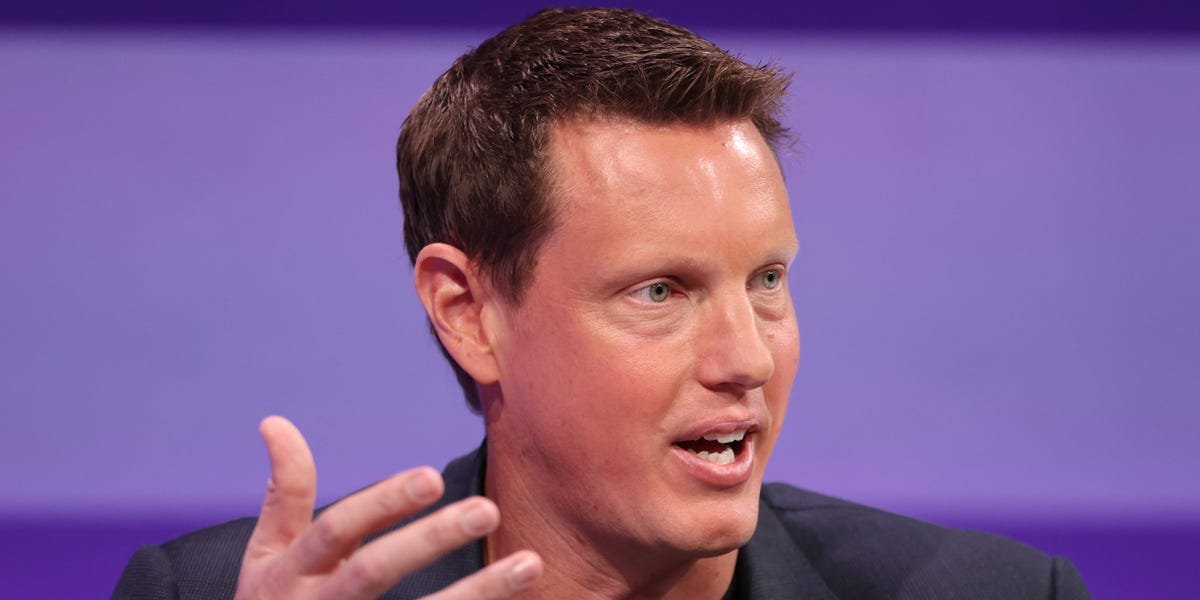
Larry and David Ellison, who own Paramount, want to use $24 billion in Middle Eastern money to finance their bid for Warner Bros. Discovery. Is that a problem for WBD?

You might think so — especially since $10 billion of that came from the Saudi government. That’s the same government that US intelligence said killed a Washington Post journalist in 2018. The kind of partner you might think a major American media conglomerate would want to keep at arm’s length.

But that’s not a problem WBD raises in its newest communication to shareholders, where it urges them to take the deal offered by Netflix instead.

What actually worries WBD about the Ellisons’ bid isn’t the Ellisons’ particular partners. It’s that the Ellisons had partners.

In a regulatory filing that tells the backstory of the proposed WBD sale, WBD execs and their reps repeatedly told the Ellisons they wanted a firm commitment that Larry Ellison — currently the world’s 5th-richest man, with an estimated net worth of $243 billion — would guarantee the deal himself.

Instead, WBD argues, the Ellisons never gave them the assurances they wanted.

The filing does bring up the fact that money from Middle Eastern sovereign wealth funds would likely complicate regulatory issues for a proposed Ellison/Paramount deal. (Ditto for a proposed $1 billion investment from China’s Tencent, which the Ellisons later took out of their proposal.) But those are presented as technical hurdles. Not moral or patriotic dealbreakers.

And they’re just part of a laundry list of complaints WBD makes about the Ellisons. Among them: A December 2 tweet from New York Post reporter Charlie Gasparino, which WBD said violated a confidentiality agreement Paramount had signed.

And when it comes to the main pitch WBD is making to investors, all of that stuff disappears. It just boils down to “we did our homework, and the Netflix deal is better.”

That’s not shocking: If you’re a WBD investor, you are (supposedly) only interested in getting the maximum value for shares. And WBD’s filing argues that Netflix is the one that can pay the most.

Now we’re waiting to see what the Ellisons do next: Many observers believe they’ll return with yet another, higher bid. Will this one have Gulf money, too?


Source link

Another-South-Korean-shipbuilder-just-won-a-US-Navy-maintenance.jpeg

Another South Korean shipbuilder just won a US Navy maintenance job as the country’s yards scoop up more American work

South Korean shipyards are steadily becoming an integral part of US Navy maintenance work. Following in the footsteps of some of the nation’s shipbuilding giants, another local shipbuilder just secured a new contract.

HJ Shipbuilding and Construction announced on Monday that it won a deal to service a US Navy vessel — the Lewis and Clark-class dry cargo ship USNS Amelia Earhart — as Washington increasingly turns to South Korea’s impressive commercial shipbuilding sector to support strained American yards and keep the fleet afloat.

The maintenance contract is with the Navy’s Naval Supply System Command and Military Sealift Command.

The work on the Amelia Earhart — which will include an inspection of the ship’s hull and systems, follow-up repairs and replacements, and a paint job — will begin in January 2026 at the Yeongdo Shipyard in Busan. The vessel will be delivered to the Navy by the end of March.

The Amelia Earhart is one of the Navy’s supply ships that refuels and resupplies aircraft carriers and warships at sea. Its overhaul adds to a growing list of US Navy work going to South Korean companies.


A grey vessel sails in the dark blue ocean next to an aircraft carrier with a fighter jet sitting on it. The sky is blue in the background.

South Korea is investing billions in US shipbuilding initiatives, including upgrades to shipyards and equipment.

Official US Navy photo


Major South Korean shipbuilder Hanwha Ocean finished repairs on the USNS Wally Schirra, another Lewis and Clark-class vessel, in March, marking a first for a South Korean shipyard. And then HD Hyundai Heavy Industries, one of the country’s largest shipbuilders, received a maintenance contract for another ship in the class, the USNS Alan Shepard.

HJ Shipbuilding and Construction said it’s the first midsize shipbuilder in South Korea to win a maintenance contract with the US Navy.

While smaller voyage repairs to US Navy ships occur regularly at allied yards, the continued contract wins for South Korean shipyards highlight the growing shipbuilding collaboration between Washington and Seoul.

That partnership, which has included business deals for South Korean companies abroad as well as investments in American yards, is part of a broader willingness by the Trump administration to rely on its Pacific ally amid efforts to fix US shipbuilding issues.

Billions of dollars are being put into modernizing US shipyards and addressing workforce and training issues as South Korea’s government calls its investments a plan to “Make American Shipbuilding Great Again.” The US is also turning to Japan, another large shipbuilder, for assistance.

South Korea and Japan are the second and third largest shipbuilders in the world, respectively, and Navy leadership is increasingly recognizing their value in this sector. China, however, dominates the shipbuilding industry, relying heavily on its dual-use yards, workforce, and equipment to make military and commercial vessels at a rapid pace.


Source link

Read-the-memo-Warner-Bros-Discovery-sent-employees-after-Netflix.jpeg

Read the memo Warner Bros. Discovery sent employees after Netflix won the bidding war for its key assets

  • Netflix agreed to purchase Warner Bros. in a $72 billion deal.
  • Netflix will buy HBO Max and the Warner Bros. studio, but not WBD’s TV networks like CNN and TNT.
  • Here is the memo Warner Bros. Discovery CEO David Zaslav sent to employees.

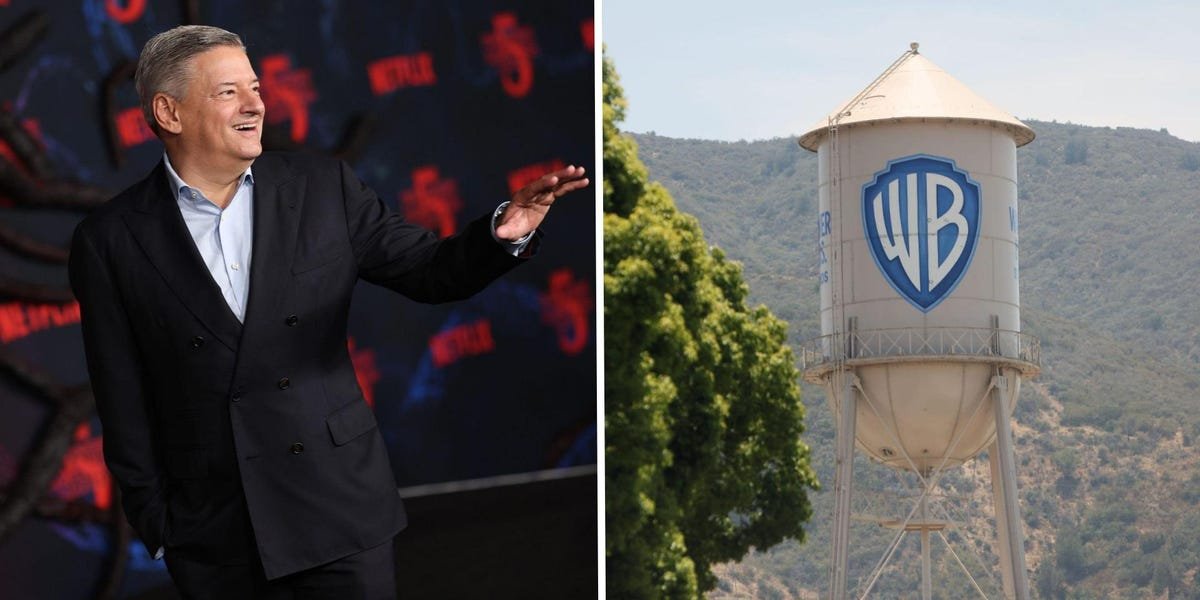
Netflix is buying Warner Bros. Discovery’s studio and streaming businesses in a seismic $72 billion deal that promises to shake up Hollywood.

The Netflix-WBD tie-up, which the companies announced on Friday morning, would be the industry’s largest since Disney bought 21st Century Fox for $71 billion in 2019. Netflix is planning to buy HBO Max and the top-performing Warner Bros. studio, but not WBD’s TV networks like CNN, TNT, and TBS.

Netflix must first secure regulatory approval from the US and foreign governments, which some media analysts say could be a challenge. If all goes as planned, the deal is set to close in 12 to 18 months, the companies said.

Netflix beat out Paramount Skydance and Comcast in a bidding war.

Since Netflix is only buying the Warner Bros. studio and HBO Max, the remaining TV assets that are seen as less valuable will be spun out, as WBD originally planned. WBD was formed in April 2022 after a merger between AT&T’s WarnerMedia and Discovery.

“In the coming days, we will establish an Integration Office, which will coordinate all planning with Netflix, consistent with regulatory requirements,” WBD CEO David Zaslav wrote in a note to employees on Friday. “Until the transaction closes, WBD and Netflix remain separate companies. It may be tempting to reach out directly to counterparts or former colleagues at Netflix, but it is essential that all interactions are managed through this office to ensure we meet every legal and regulatory obligation.”

Here’s the full memo that Zaslav sent employees on Friday morning:

This communication has been sent to everyone at WBD.
Team,
The Board of Directors of Warner Bros. Discovery (WBD) approved a transaction under which Warner Bros. will be acquired by Netflix, subject to regulatory approvals and closing conditions, including the completion of the separation of Discovery Global from WBD.
As part of the structure, the Global Networks business will form a new standalone company, Discovery Global, with Gunnar Wiedenfels to serve as CEO once the new company separates from WBD, now expected to be completed in Q3 2026.
This decision reflects the realities of an industry undergoing generational change – in how stories are financed, produced, distributed, and discovered – and recognizes the strong, transformed company we are today, the significant value we have created, and the resilience and attractiveness that now position us in a rapidly evolving marketplace. Over the past several months, the Board evaluated a full set of strategic paths. Their conclusion is that this structure – Warner Bros. joining Netflix, and Discovery Global becoming a focused standalone company – provides the strongest long-term foundation for both sets of businesses.
As outlined in the announcement, the proposed combination of Warner Bros. and Netflix reflects complementary strengths, more choice and value for consumers, a stronger entertainment industry, increased opportunity for creative talent, and long-term value creation for shareholders.
I know this announcement creates many questions about what’s next. For some, it brings clarity about direction. For others, it raises questions about what this means for their teams and their work. All of those reactions are understandable. A transaction of this nature naturally creates uncertainty, and not all answers will be available immediately. Some will be clarified in the coming days and weeks; others depend on regulatory processes and on work that cannot begin until separation or closing.
People across WBD have navigated extraordinary change over the last three years, while building a company with real creative, journalistic, and commercial strength. That deserves to be acknowledged plainly.
What we can say now, based on the direction set out today, is that this structure provides a clearer path forward for Warner Bros. within Netflix, and for Discovery Global as a standalone company. For both, the goal is to position their creative work, talent, and brands to navigate a market that is constantly evolving and increasingly global.
What happens now
Later today, we will hold a Global Town Hall to walk through what we know and what is still to be determined. Calendar invites will follow shortly after this email.
Business Unit leaders will hold discussions specific to their areas in the coming days, so you can hear directly from your leader.
Managers will also come together early next week so they have the context and support they need to guide their teams through the early stages of this transition.
What happens next
The path toward a separation of WBD into Warner Bros. and Discovery Global will shift. We will redirect work tied to the earlier, planned two-company operating model and focus instead on the steps required to enable this transaction.
In the coming days, we will establish an Integration Office, which will coordinate all planning with Netflix, consistent with regulatory requirements. Until the transaction closes, WBD and Netflix remain separate companies. It may be tempting to reach out directly to counterparts or former colleagues at Netflix, but it is essential that all interactions are managed through this office to ensure we meet every legal and regulatory obligation.
What this means for you
We also recognize that many people are looking for more clarity about what to focus on, how to prioritize work, and what this means for their teams. Those details will become clearer over the next several weeks, as we move toward our 2026 goal-setting and operating plan alignment processes.
As part of that, you will hear guidance from your Business Unit and functional leaders early in the new year, with expectations and priorities anchored to what we know at that point in the regulatory process.
In the meantime, please continue to focus on the work needed to wrap up 2025, support year-end deliverables, and take the opportunity to rest and recharge over the holidays.
We will continue to communicate regularly, and new information will be shared in One Insider and on the One website. And we will see you later today at the Global Town Hall.
As we move through this next chapter, our aim is simple: handle decisions with care, communicate clearly about what we know, and make sure people have the information and support they need at each step.
I know moments like this carry weight. And they can also mark the beginning of new possibilities. The work you bring to this company – and the way you have shown up for one another – has built something that others clearly see value in. That matters. And while I cannot predict every step ahead, I am confident in the strength of our brands, in the talent of our teams, and in the stories, journalism, and experiences we will continue to bring to audiences around the world.
David


Source link