Im-the-oldest-US-Olympian-ever-to-compete-I-had.jpeg

I’m the oldest US Olympian ever to compete. I had to keep my full-time job, and worked over 40 hours while on the road.

This as-told-to essay is based on a conversation with Rich Ruohonen. It has been edited for length and clarity.

I started curling when I was about 12 years old. My dad taught my brother and me. Curling was a demonstration sport back then. I played in college and in law school, but not at a level close to what I play now. I’ve been playing pretty competitively for the last 25 years.

I made my first men’s national championship team in 1998 and then again in 2001. I’ve been to the last 21 out of 23 national championships; I won two of them. I’ve also been in Olympic trials. But the 2026 Olympics were my first Olympics. I was the alternate on the US men’s curling team.

I am the oldest US Olympian ever to compete.

It’s unusual to have a day job as an Olympian

I’m a lawyer and a competitive curler. Most global athletes are paid by their governments to compete in curling, bobsledding, etc. Their only job is to train for the World Championships, which happen every year, and the Olympics, which occur every four years. They might get a salary, have their expenses paid, and get to keep any winnings.

Unfortunately, in the US, that’s not how it works. It’s one of the disadvantages of being a US athlete. It makes it difficult to train full-time. We do get a small stipend, but many US athletes have side jobs.

I have to work training into my day job

My schedule is complicated. On a week when I am not preparing for a competition, I’m at the gym four days a week, leaving my house at 5:15 a.m. to drive 30 miles to the training facility. I’m there at 6 a.m. and train until 7:30 a.m., then jump in the shower and rush to work. I work from 8 a.m. to 6 p.m., sometimes longer. I go home and sometimes work again.

I play in a Tuesday night league during the season. I also “throw rocks,” what we call practice in curling, several nights a week. I’ll often throw on Saturdays and Sundays, two to four hours a day. Every waking moment between those sessions, I’m working, including the weekends, to get caught up at my day job.

When I’m on the road, I’m still putting in 40 hours or more of work. It’s not easy. It’s not that I don’t have any fun, but it’s a lot of work. I don’t sleep a lot.

Curling at this level is a major commitment. There has been a lot of sacrifice, including from my wife, who stayed home because I wasn’t there and who had to do more of the stuff with the kids, who are 21 and 24 now.

While the Olympics might be over, I’m still curling

I’m playing in the senior World Championship in April. I am sure I am the only guy to ever go to the senior World Championship and the Olympics in the same year. We are hoping to win gold this year. I also do a lot of charity curling, such as for the Lupus Foundation. People raise money to play with me as their skip.

There’s already been some interest in me playing in the 2030 Olympics, but it’s hard to say yes. It’s been a huge commitment for 25 years. Even though I’d be in an alternate role again in 2030, I’m still required to do all the practices and attend everything. These other curlers are in their 20s; I’m twice their age. I haven’t fully decided. I’m still throwing well enough to keep playing, and I feel good about playing at this level. But it is harder to get up in the morning with my knees cracking all the time. I also think of how nice it would be to go to Mexico in the winter instead of Calgary.


Source link

I-landed-a-job-by-cold-emailing-the-CEO-Nothing.jpeg

I landed a job by cold emailing the CEO. Nothing else worked for me.

This as-told-to essay is based on a conversation with Cathy Xie, a 25-year-old marketing professional based in Toronto. It’s been edited for length and clarity.

I remember opening my laptop about a month into my job hunt, seeing yet another automated rejection, and feeling this kind of collapsing desperation. I knew I needed to do something different in my approach if I wanted to stand out in the job market.

I tried three new job-finding strategies, but I didn’t get hired until I sent an email directly to a CEO with the subject line “My landlord inspired this email.”

Job seekers should be thinking less about their résumé and cover letters, and more about how they can get a potential employer’s attention.

I mass-applied to jobs for a month

In 2024, I founded a startup aimed at helping students and new grads with unconventional backgrounds pivot into tech and navigate the job market. Unfortunately, we had to shut down about a year and a half later due to changes in the market. It’s a little ironic that the tech job market is what put me back on the job hunt.

After mass applying to roles across marketing, product, and growth, largely targeting tech and AI companies, I felt drained. I was also spending so much time doom-scrolling on TikTok, watching video after video of young Gen Z job seekers talking about their frustrations with the job market.

Job searching was always in the back of my mind, and I knew it was time to try a different approach.

Referrals and niche startup boards only helped me so much

The first route I tried was referrals, but those were not a huge success.

My next approach was scouring niche startup boards, subscribing to free newsletters that posted about startups hiring, and even following LinkedIn creators who report on startups that had just raised. Then I’d apply directly through the company’s website and try to email someone on the team who would likely be my manager for that position. Though I didn’t end up with a job from that approach, it was still a great way to network.

My last approach, cold emailing a founder, ultimately landed me my new role. I’d been following this founder’s journey on LinkedIn for a while because I was passionate about his startup’s mission to address the housing crisis in major cities. He posted that he was hiring a marketing manager and included a link to apply. I thought to myself, “I am not applying the traditional way again.”

I had just come across a social media post from someone about how cold emailing helped them achieve so many of their life goals, and how rejection was redirection. It made me think maybe I should just email the founder directly. I had nothing to lose.

The founder responded to my email

I know, as a founder, you get thousands of emails, so I needed to make sure my email was one he had to open.

It was also important to me to make my email as personal as possible because I think it’s a lost art. Especially with AI, we’ve become overly formal with writing. My subject line was “My landlord inspired this email” because I thought it was funny and might grab his attention.

In the body, I introduced myself, described my past roles and how they prepared me for this job, and wrote about my passion for and interest in the startup itself. I tried to keep it personable and a little funny. I kept it around 150 words, so it was short and sweet.

He responded just over a week later by emailing me back and messaging me on LinkedIn to set up an intro call with him and the CMO. After two more interviews, including an intro to a case study and a case study presentation, I was offered the role of marketing manager.

The job has been great so far, and my team is amazing.

Here’s my advice for job seekers

The first two questions a lot of people ask themselves when applying to a job are “How should I write my résumé?” and “How should I write my cover letter?”

However, I think the question you should ask yourself instead is, “How can I get the attention of this person?” Once you ask yourself how you can get in front of a person, you open up so many ways to approach this job hunt, rather than just doing the traditional cold application.

With this wave of AI, it’s so easy not to put in effort with job applications and just mass apply. But I think what comes with getting people’s attention is putting in the effort.

You can spend a few hours cold applying and maybe get one or two automated emails, or you can spend those hours doing a couple of very personalized outreaches. It will take effort, but I think it’s important to put that effort in if you want to stand out in today’s job market.

Do you have a story to share about finding a job with an unconventional method? If so, please reach out to the editor, Manseen Logan, at mlogan@businessinsider.com.


Source link

Alpine-skier-Mikaela-Shiffrin-30-says-she-worked-with-a.jpeg

Alpine skier Mikaela Shiffrin, 30, says she worked with a psychologist to ‘desensitize’ herself to the Olympics

Mikaela Shiffrin, 30, may be a three-time Olympic gold medalist, but there was a time when just hearing the name of the Games felt overwhelming.

On Friday’s episode of “Not Gonna Lie with Kylie Kelce,” Shiffrin said getting ready for one of the biggest competitions in sports took years of work, much of it away from cameras and crowds.

“My Olympic experiences have been so wildly different. Now it’s four, and I’m really aware, right now, of all of the work that’s gone into — actually, not the medal — but the work that’s gone into showing up on race day, and being able to show up with the mentality and the skiing that I wanted to do,” Shiffrin told podcast host Kylie Kelce.

The grind continued even away from the slopes, she said, especially when it came to managing the pressure that comes with the Games.

“Even this summertime, the amount of conversations I had with my psychologist talking about all the different feelings surrounding the Olympics, and like desensitizing to the word, and imagining the vibe, imagining the colors,” Shiffrin said.

She added that she even visited Paris two summers ago to get a feel for the Olympic atmosphere and “desensitize” herself to it.

Not only that, Shiffrin has structured her life around staying physically and mentally ready at all times.

“There’s just so much life outside of the sport, but we do so much of our life, you know, it’s all geared towards the sport,” Shiffrin said, adding that she hasn’t had alcohol in two years because it tends to make her sick.

“And I’m like, I can’t afford to be sick, literally ever. So, we’re just going to not have any alcohol. Like, we’re going to drink electrolytes, man,” Shiffrin said.

It still throws her off that something she’s trained for over years can be decided in seconds.

“But you spend so much time doing all of this work and training for something, and then the moment it happens is, you know, 47 seconds, or like in the blink of an eye, and it’s just really weird,” she said.

Shiffrin is widely considered the greatest alpine ski racer of all time, with 108 World Cup wins. She made her Olympic debut at the 2014 Sochi Games at age 18, winning her first Olympic gold in slalom and becoming the youngest athlete in history to do so.

On Wednesday, nearly a decade later, she earned another gold medal in slalom — her first Olympic victory since 2018.

This isn’t the first time Shiffrin has spoken about the steps she takes to stay focused.

Speaking to WDSU News on Friday, she said she deliberately avoided social media in the lead-up to her races at the Winter Olympics.

“If I was scrolling my feed or something, I just knew I was going to come across things that would get into my brain that would be not at all conducive to the experience that my team and I came for,” Shiffrin said.

On Saturday, she told NBC Sports that she chose not to “set expectations” for herself heading into the Milan Cortina Games — a mindset she said ultimately helped her ski her best.

“On race day, I felt like I skied my best skiing, and that was really my goal,” she said.


Source link

I-worked-14-hour-days-at-a-startup-A-cancer-diagnosis.jpeg

I worked 14-hour days at a startup. A cancer diagnosis changed how I succeeded at Netflix and Meta.

This is an as-told-to essay based on a conversation with David Ronca, a retired video systems engineer. He spent 12 years at Netflix and six years at Meta. This story has been edited for length and clarity.

My time at a startup in the early years of my engineering career was like a really bad relationship.

I joined a company that specialized in video playback around 2000. I loved working on video. I consider those seven years like going to school, and I came out with a Ph.D. in practical video systems. But it was the hardest seven years I’ve ever had in terms of work demands.

I was told when I joined that it would be really important that you’re seen around here a lot. So I would work until 7, 8, 9 — sometimes until 10 p.m. Then we started hitting delivery schedules, and I was getting to work around 10 in the morning and going home sometimes at 2:30 in the morning. We’re talking 14-hours days, six to seven days a week. Eighty hours a week would’ve been a break.

We didn’t have good direction. We’d be four or five months into solving a hard problem before leadership would stop us and say, “Go work on this instead.” It was madness.

We were using work hours to compensate for really bad decisions.

In January 2004, I started feeling ill. On a Sunday, I didn’t feel so good, and by midweek, I got worse.

On Friday night, January 17, my wife took me to the emergency room. The doctor told me, “This is likely colon cancer.” After the first surgery, he said, “There’s no way you have a tumor like this and it’s not cancer.”

Two weeks earlier, I had been running and feeling great. Within a week, I was in a hospital bed on machines.

It took another week before doctors could do the full surgery. And you spend that time with no idea what they’re going to find. That was a very dark week.

My mother died of breast cancer when she was 48. I was 16. Now, I’m in the hospital at 44. I remember thinking, “History doesn’t repeat, but it rhymes.”

My wife would bring the three kids. My oldest, who was seven, would sit quietly in the room with me. My youngest was two years old. He didn’t really know me.

I was looking at my young son, thinking he’s going to grow up without a dad.

After surgery, they told me it was stage 3 colon cancer. They removed 60% of my colon. There was lymph node metastasis. My five-year survival prognosis was about 25%.

‘I will not work like this’

I went back to work part-time at first.

I was told that I had used up all my sick leave and vacation and was put on California disability, which is around $200 a week.

By that time, this was a company I had spent four years working 24/7 for.

I told my boss, “I’m sorry, I will not do this. I still want to work here, but if I have to leave, I will quit. Because I will not work like this.”

From that point on, I didn’t. And that was the irony of it all.

I feel like I did some of my best engineering after that. The real change was that I was no longer wasting my brainpower and my thinking on junk.

You don’t do good work after 12 hours. You can’t work sustained all-nighters and be productive. The quality of your work is going to suck. I don’t care who you are. For most mere mortals, you try to work those hours, you’re just not going to be doing good work.

I also started making intentional decisions for life, not just work.

I coached soccer for all three of my kids. I went to their games. My daughter did ballet, and we were there all the time. We started planning and taking family vacations — hiking in the mountains, RV road trips, and Maui.

I realized you have to work to have a life, but you have to have a life to work. So you want to stand in the middle of those things.

Hours worked are not a performance metric

In 2007, after several clean scans, I joined Netflix. I delayed accepting the offer until I got my scan report. I didn’t want to change jobs yet because if you have positive liver metastasis, you’d be lucky to get two years.

In my interview, Patty McCord, the chief talent officer at the time, told me, “We don’t value 24/7 work. You won’t be successful here working all the time.”

That was almost foreign to me. But it also didn’t mean we didn’t work hard.

At Netflix, I was part of the early streaming team — maybe 12 to 16 people. We made aggressive schedules, and we didn’t miss them. We launched a Netflix app on the original iPad on Day One within two months.

The culture at the company was: If you have to work 24/7 for us to be successful, you’ve got a problem, and we’ve got a problem, and we’re going to fix it.

Even at Meta, my favorite poster had a silhouette of a rocking horse that said, “Don’t mistake motion for progress.”

In other words, high performance is not measured by how much work you do. It’s measured by how impactful your results are.

This is not to say that it’s wrong to work more than eight hours. Instead, you should understand why you’re working more hours. It should be intentional. Intentional exceptions.

If I were to tell my younger self anything, it would be to make work-life balance part of your DNA. Learn to take time off.

Don’t wait until you have cancer or some other near-death experience to realize this.


Source link

I-worked-closely-with-Rev-Jesse-Jackson-after-he-took.jpeg

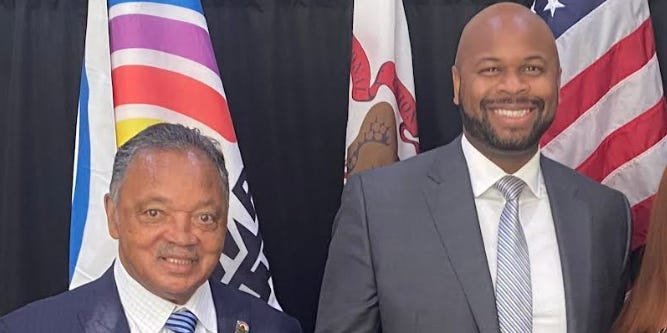
I worked closely with Rev. Jesse Jackson after he took a chance on me at age 19. Here’s what he taught me about leadership.

Rev. Jesse Jackson Sr. took a chance on me as a 19-year-old college student.

At that age, as an intern in 2009, I should’ve been pouring coffee, maybe making copies. Instead, he put me to work on college affordability policy, youth violence prevention, and immigration reform at his Rainbow PUSH (People United to Serve Humanity) Coalition on the South Side of Chicago.

That was nearly two decades ago. This week, he passed away.

A few weeks ago, I sat with him in the hospital. He was extremely present even as Progressive Supranuclear Palsy disorder had taken his voice — the same instrument that had formed seemingly impossible coalitions and made the moral case for justice in language that brought people together instead of tearing them apart.

I considered Rev. Jackson a close mentor

I met him in 2009 at a press conference he held to announce his intention to negotiate the release of journalist Roxana Saberi from an Iranian prison.

Saberi was an alum of Northwestern University, where I was a student. Several classmates and I had staged a rally to call attention to her issue, and Rev. Jackson had invited us to join him at his press conference in Chicago.

When it ended and everyone packed up to leave, I made a split-second decision.

I grabbed him by the shoulder — strongly enough that his security detail sprang into action — and asked if I could volunteer for his Reduce-the-Rate initiative on college affordability. It was an issue that deeply resonated with me, as I’d borrowed a crippling amount to attend Northwestern. He said yes.

That moment changed everything. Less than a month later, I became the campaign’s manager, working part-time during school. I handled policy research and community interface and accompanied Rev. Jackson to meetings and events. I spent time with him every week and at times even did my homework at his house.

He became a mentor, coaching me and looking out for me not only professionally, but personally. I left the role in 2011, but over the years, we stayed close.

From Rev. Jackson, I learned three lessons about leadership that have shaped everything I’ve done since.

Lesson 1: Lean into hard moments, not out.

Rev. Jackson had a pattern: When things got difficult, he moved closer to the problem, not away from it.

He negotiated the release of over 200 hostages across Syria, Cuba, Iraq, and Serbia. He flew into war zones and sat across the table from dictators. He showed up to Texaco’s headquarters during their discrimination scandal. He walked into corporate boardrooms where he wasn’t welcome.

Many leaders I know do the opposite. When crisis hits, they create distance — delegate to lawyers, let the public relations team handle it, wait for it to blow over.

Rev. Jackson taught me that the moments when you want to step back are precisely when you need to step forward. Your measure as a leader is taken in the hardest moments, not the easy ones.


The author with Rev. Jackson during an interview outside of Pacific Gardens Mission, a homeless shelter in Chicago, in 2012.

The author with Rev. Jackson during an interview outside of Pacific Gardens Mission, a homeless shelter in Chicago, in 2012.

Courtesy of Bradley Akubuiro


Lesson 2: Never stop investing in people.

Rev. Jackson had no reason to believe in my abilities. But he understood that individuals have incredible capacity for growth — they just don’t start off optimally productive.

He put a 19-year-old on policy work that mattered, then put me on-air representing the campaign. That wasn’t reckless — it was intentional investment. He knew that by giving people opportunities, some would disappoint him over the years, but the ones who didn’t might surpass what he could’ve imagined.

I’ve carried that forward — looking for people others overlook and investing in their growth. Not everyone pans out. But the ones who do become extraordinary.

Real leadership isn’t about finding perfect people. It’s about developing the potential in imperfect ones.

Lesson 3: Conflict and conversation can coexist.

Rev. Jackson was simultaneously the agitator and the negotiator. The prophet and the pragmatist.

He showed up uninvited to shareholder meetings and organized boycotts, but also sat down with those same executives afterward to identify resolutions.

“Diamonds can’t be produced without pressure,” he once told me. This applies to individuals, organizations, and systems.

He understood that real change requires both confrontation and conversation. You can’t just be nice and hope things improve. But you also can’t only apply pressure and expect people to come around.

I watched him do this with the Wall Street Project, pressuring corporations like Texaco and Coca-Cola to commit billions to diversity initiatives. He made them uncomfortable with boycotts. Then he sat down with their leadership and helped build solutions.


Bradley with Rev. Jackson and his son, Rainbow PUSH Coalition COO, Yusef Jackson, in 2025.

The author (right) with Rev. Jackson and his son, Rainbow PUSH Coalition COO, Yusef Jackson, in 2025.

Courtesy of Bradley Akubuiro.


Too many leaders think they have to choose to either be tough or be empathetic. Rev. Jackson taught me that’s a false choice; the best leaders do both.

The work continues

Rev. Jackson once told me the work of justice isn’t about being comfortable. It’s about being consistent. It’s about showing up when it’s hard, especially when staying silent would be easier.

He showed up. Consistently. The work he did — building coalitions across impossible divides, making the moral case in language that united rather than divided — we need it now more than ever.

Last year, during one of my Saturday visits to Rainbow PUSH, I brought the manuscript for my book “Faster. Messier. Tougher: Crisis Communications Strategies in an Era of Populism, AI, and Distrust.” He saw how I was continuing on the work and agreed to put his name behind it.

Last week, when I held the first copy from the printer and saw the quote from him on the front cover, it was so moving. That he could support me one last time means the world to me.

I grabbed his shoulder at 19 because I didn’t want to let the moment pass. He taught me to lean into hard moments, develop people others overlook, and hold the tension between conflict and conversation.

That work doesn’t end with him. It’s up to us to pick it up.

Bradley Akubuiro is a partner at Bully Pulpit International, where he advises corporate leaders like Levi Strauss and the NFL on high-visibility reputation and diversity and inclusion matters.


Source link

I-used-to-be-proud-of-only-sleeping-3-hours.jpeg

I used to be proud of only sleeping 3 hours because I worked so much. Now I realize health is freedom, not wealth.

This as-told-to essay is based on a conversation with Tyler Smith, founder of Hundred Health. It has been edited for length and clarity.

I used to brag about how little sleep I got. It felt like a superpower: I could sleep just three or four hours a night, and still operate at a very high level.

That helped me get ahead early on. As a teen, I bused tables and sold firewood. By the time I was 19, I bought a house (which was possible because it was the subprime mortgage days). Having a mortgage gave me real responsibility at a young age.

It also got me thinking about a career. I couldn’t believe how much my real estate agent made on the sale. Her commission was about $13,000 — which seemed like $1 million to me at the time — and I thought she didn’t do a very good job. I realized that if I did good work in real estate, I could make even more.

I did well in real estate and developed software that took off

I dropped out of college to get into real estate. During the financial crisis, I found a niche helping banks sell foreclosures. In 2006 and 2007, I oversaw about 1,000 home sales a year and managed triple that number of properties.

I was working 14-hour days, seven days a week. It wasn’t a good life, but I was young enough that it didn’t matter. I fueled myself on energy drinks and embraced the fact that work was my life.

To help scale, I developed software to track my business’s transactions. Other brokerages inquired about what I was using, and soon I had clients paying $2,000 or $5,000 a month to use the software.

I was in the right place at the right time with the right product as real estate transactions went digital. By 2012, that software, SkySlope, was doing $12 million in annual revenue. In 2017, Fidelity bought a majority stake, valuing the company at more than $80 million.

I wanted to focus on my passion: health

That deal meant that I had enough money to never work again. I’m wired to build, though, so I planned to use my financial freedom to focus on something with purpose: a mission-driven business.

When I was 39, my wife and I were trying to have a child. I took a biological age test, which said my biological age was 47. That stopped me in my tracks, because my own father had died suddenly of a heart attack at 47.

The test showed me that what I was telling myself wasn’t true. I was working out and eating relatively healthy. I looked fit, but the data showed that what was happening inside my body didn’t match what was on the outside.

I spent over $1 million building a home wellness center

Once I saw that data, I couldn’t ignore it. I spent well over six figures hiring a top-notch healthcare team. My wife and I rented a 2,000 square-foot unit in Sacramento, which we transformed into our own personal wellness center. It had IV infusions, a hyperbaric chamber, a red light bed, cold plunges, massagers — basically anything you can name in the health and fitness world.

We were building a home in Napa and wanted to know which equipment we would actually use. We spent about $700,000 fitting out the Sacramento space, and eventually over $1 million building the wellness center in our home.

Today, I use the red light bed, oxygen therapy, and cold plunge almost daily. Other therapies — like massagers and bikes — didn’t make the final cut. I love the results of the hyperbaric chamber, but don’t like lying in it for an hour, so for now, that’s out of rotation.

I want to help others have more access to health information

I changed everything about my health and fitness, and because of that, everything in my life changed: my muscle mass and energy levels went through the roof, and my mood improved. I felt better than ever, and friends began to notice.

I know not everyone has the money and access I do. Most people have more data about their health than ever due to smart watches and wearable monitors, but they don’t have a team of doctors helping them use that information.

I started Hundred Health not only to provide data, but also to offer a personalized plan for what to do with it. I used to think that wealth was freedom, but now I know that health is — and I would like to help more people access that.


Source link

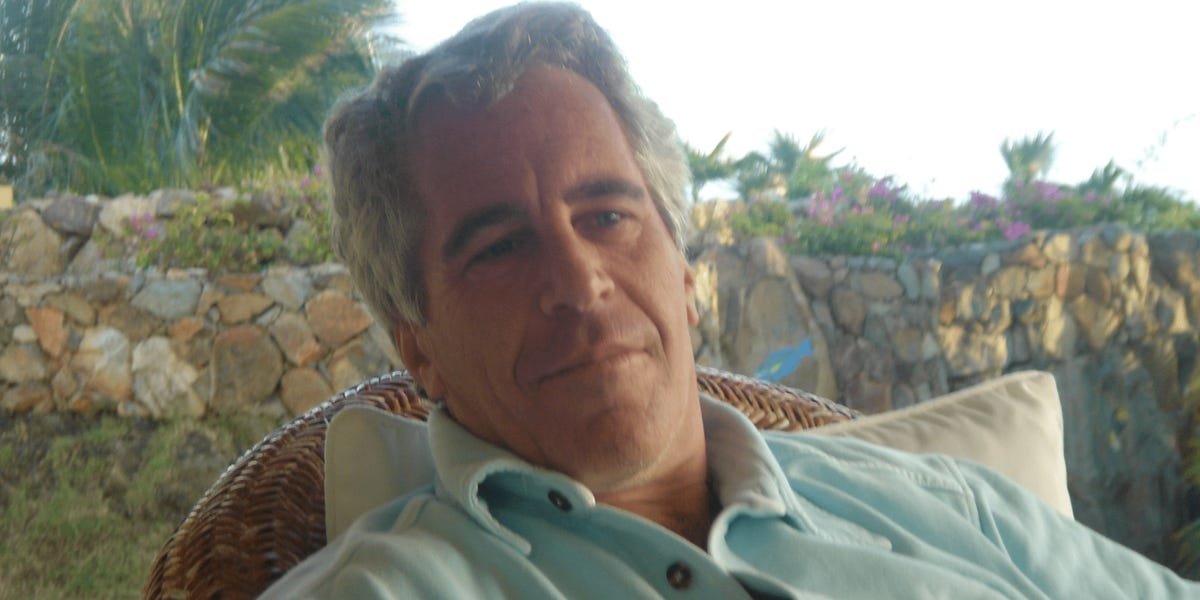
Jeffrey-Epstein-and-Brad-Karp-worked-together-to-surveil-womans.jpeg

Jeffrey Epstein and Brad Karp worked together to surveil woman’s alleged ‘extortion’ attempt

Before Brad Karp resigned as chairman of Paul Weiss, the elite Wall Street law firm said he interacted with Jeffrey Epstein to “negotiate a series of fee disputes” on behalf of Leon Black, the billionaire former Apollo Global Management CEO.

Recently released records from the Justice Department show the two men also discussed how to handle a woman who allegedly demanded Black pay her $100 million.

The emails show Epstein and Karp trading notes about secret recordings, professional surveillance, and efforts to have the woman arrested for what Epstein described as an “extortion” attempt.

“I have come to the conclusion that we will need to bring in law enforcement sooner rather than later,” Epstein told Karp in a typo-strewn email. “Needs tobe a close sensitive relation Your call on fbi or nypd.”

Karp stepped down as the chair of Paul Weiss on Wednesday after the Epstein files revealed he advised the convicted sex offender on his legal battles with women and asked for help getting his son a role in a Woody Allen movie. He has also resigned from the board of Union College, his alma mater.

The latest emails, some of which were first reported by Law.com, show Karp agreeing with Epstein’s recommendation to have the investigation firm Nardello & Co. surveil the woman — referred to as “GG” — for “a full week” in 2015.

A spokesperson for Nardello confirmed the firm worked on the case for Black’s legal counsel, but denied working with Epstein, who Black paid for financial advice.

“In the course of that engagement, no one at Nardello had any contact or communication with Epstein whatsoever nor did the firm know that Mr. Black’s counsel was sharing documents or other work product with Epstein,” the firm said.

The emails show Karp updated Epstein on GG’s movements in August of that year. He informed Epstein about “GG” staying at an apartment in Manhattan’s Upper East Side neighborhood before being “snuck out” through the garage, “in a car with tinted windows,” to JFK airport.

“we have license plate numbers,” Karp told Epstein.

Karp also kept Epstein updated about a transcript of a meeting with GG that took place at the Four Seasons.

“GG is in Moscow; the transcript should be completed tomorrow,” Karp told Epstein in one email. “I’ll send it to you as soon as I receive it.”

Representatives for Paul Weiss didn’t immediately respond to Business Insider’s requests for comment.

At the time, Black was concluding an extramarital relationship with Guzel Ganieva, according to a 2022 lawsuit he filed against her. In the suit, Black claimed that Ganieva demanded $100 million from him in 2015 during a meeting at the Four Seasons restaurant. The lawsuit accused Ganieva of participating in an “extortion plot” with her lawyers and Black’s rivals, saying she threatened to reveal their relationship to his wife and Apollo’s board if she didn’t get the money. A judge dismissed the lawsuit later that year, finding the lawsuit’s claims were “vague” and “more creative writing than factual.”

A person familiar with the matter confirmed that the “GG” in the newly released emails was a reference to Guzel Ganieva.

Susan Estrich, an attorney representing Black, told Business Insider that Ganieva was trying to “blackmail” Black following a “years long consensual relationship” at the time that Epstein and Karp were exchanging emails.

Guzel, in her own lawsuit, alleged Black forced her into violent sexual encounters while promising to help her with educational and career ambitions. A judge dismissed the allegations, finding a non-disclosure agreement between Ganieva and Black barred her from bringing the case.

Ganieva also said Black introduced her to Epstein, whose relationship with Black led him to step down as the CEO and chairman of Apollo in 2021. An Apollo investigation found Black stopped using Epstein’s financial services in 2018 over a fee dispute.

An attorney for Ganieva didn’t immediately respond to Business Insider’s requests for comment.

The Justice Department’s files show Nardello, the investigative firm, sent Karp and another Paul Weiss attorney, Lorin Reisner, transcripts of conversations between “GG” and their client, referred to in the transcripts as “John Doe.” Karp then forwarded them to Epstein.

The transcripts show GG and John Doe discussing their past relationship. John Doe repeatedly raises what he claims were GG’s requests for millions of dollars.

“For me, it’s not about money, it’s about respect,” GG told John Doe in a transcript where he refers to her as “Guzel.” “I think you were very unfair to me,” she added.

At one point, Epstein advised Karp and Reisner — who joined Paul Weiss after serving as Chief of the Criminal Division of the US Attorney’s Office for the Southern District of New York — to “have her arrested” and possibly deported.

He urged Karp to contact law enforcement before the woman could file a lawsuit.

“i think the extortion claim AFTER a filing is fairly weak. and would be seen to be an intimidattion tactic from a powerful man, if you think you are being extorted,” Epstein wrote with his signature freestyle grammar.

Karp responded enthusiastically.

“I’ll check again with lorin, but my strong belief is that the answer is yes,” he told Epstein. “Especially with the referral coming from the most recent head of the sdny usao.”


Source link