World-War-II-museum-ships-suddenly-feel-less-like-history.jpeg

World War II museum ships suddenly feel less like history after a US submarine sank an Iranian warship

For Brian Auer, the operations manager at Historic Ships in Baltimore, the video of a US Navy submarine sinking an Iranian warship this week looked strikingly familiar.

“I saw the footage of that Iranian frigate getting torpedoed, and it looks like any picture I see from World War II of a similar attack happening,” he told Business Insider of the video released by the Department of Defense on Wednesday.

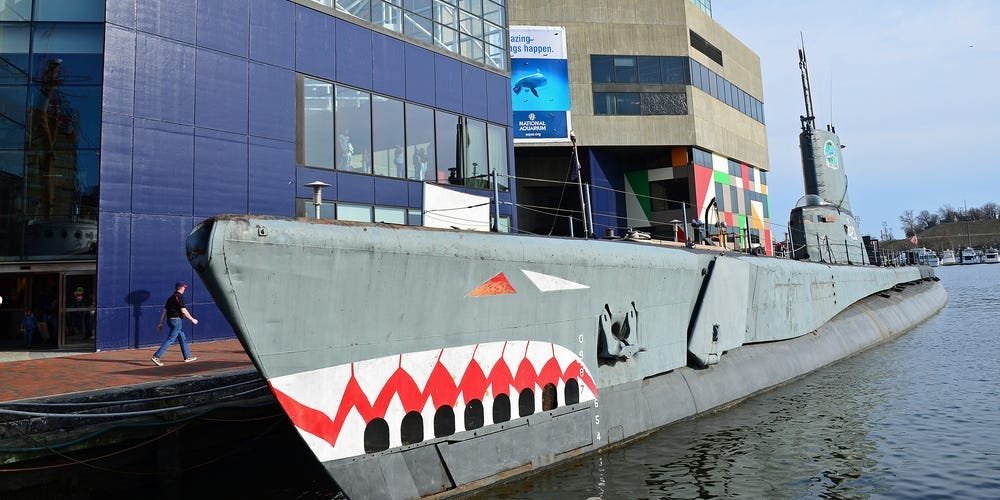
Before this week’s attack in the Indian Ocean, the last confirmed US Navy submarine to sink an enemy ship in combat was the USS Torsk, a World War II submarine that sank two Japanese vessels in 1945 before becoming part of the museum that Auer manages.

Since 1945, large-scale battles between warships have been rare. As naval warfare reemerges as a key strategy in Operation Epic Fury against Iran, museum ships that saw combat in World War II are finding new relevance, showing not just how naval war was fought, but how it might look today. Suddenly, the floating museums feel a lot less like history.

“Those of us who work on museum ships don’t like war,” Ryan Szimanski, the curator at Battleship New Jersey in Camden, New Jersey, told Business Insider. “In many cases, we work here to try and teach people about how awful wars were.

“However, the fact that the United States has fought a naval action — one of the first ones since World War II — is making museum ships like us relevant and part of the public discussion in a way that we haven’t been.”

Museum ships offer immersive experiences


Battleship New Jersey in Camden, New Jersey.

Battleship New Jersey in Camden, New Jersey.

Talia Lakritz/Business Insider


There are around 75 World War II-era museum ships open to the public across the US. These decommissioned battleships, submarines, destroyers, aircraft carriers, and other vessels offer visitors the chance to climb aboard and explore the interiors themselves.

Guided tours, often led by Navy veterans with firsthand experience serving on similar vessels, take visitors through combat areas, such as torpedo rooms, gun turrets, and command centers.

Battleship New Jersey, for example, offers a rare look into Tomahawk cruise missiles as the first surface warship to carry them in 1982. The long-range missiles have also been used to sink Iranian ships during Operation Epic Fury.


The combat engagement center on board the USS New Jersey, which features a Tomahawk Weapons System.

The combat engagement center on board the USS New Jersey features a Tomahawk Weapons System.

Talia Lakritz/Business Insider


“Because those are contemporary systems, to be able to see a Tomahawk missile, to be able to see Tomahawk missile launchers in a museum — there’s only a handful of museum ships like us that you could come and see to get that experience,” Szimanski said.

Some ships even offer sleepover experiences where guests can eat meals in the crew’s mess and spend the night in sailors’ bunks.

“It is highly unlikely that the average person will get the chance to visit an active-duty Navy ship,” Szimanski said. “So to experience the conditions, to see what it’s like to serve on a warship, particularly one that has seen combat, visiting a museum ship is your best chance.”

‘Remarkably similar’ to modern Navy ships


The USS Torsk in Baltimore.

The USS Torsk submarine in Baltimore.

Vacclav/Shutterstock


While some technologies and configurations found in World War II submarines may be outdated, many aspects of how they operate remain the same.

“It’s important to remember that the Navy, the military, all of us, operate in a world governed by laws of physics, and so there are some things that are just never going to change in how submarines work,” Auer said. “If you walk through a modern Ohio-class, ballistic missile submarine, you’re going to find things that are exactly the same, or done exactly the same way, on the USS Torsk. And what we can really show is where those things were first done, and why they were done that way, and why they are still done that way.”

Modern submarines still appear “remarkably similar” to their museum counterparts, Szimanski said. The layout of submarines hasn’t changed all that much since World War II. They largely still have the same spaces to eat, sleep, and fire torpedoes.

Auer says that when he leads tours of the USS Torsk for active-duty sailors, he often gets the response, “Huh, we’re still doing it this way.”


The forward torpedo room inside the USS Torsk submarine.

The forward torpedo room inside the USS Torsk.

Pixel Doc/Shutterstock


The biggest differences can be found in the ships’ capabilities, Hugh McKeever, the shipboard education manager at the Independence Seaport Museum in Philadelphia, told Business Insider.

Diesel-powered submarines like the USS Becuna, which sank 3,888 tons of shipping in World War II before arriving at the Independence Seaport Museum, had to spend most of their time on the surface with only about 12 hours’ worth of oxygen at a time. Today’s nuclear-powered submarines operate with an unlimited fuel supply and can stay submerged for upward of six months.

“As far as going out to sea, their ability is pretty much limited only by food,” McKeever said.

Overall, World War II-era submarines are less antiquated than one might assume. Some even still work. The USS Torsk’s sister ship, the USS Cutlass, was commissioned in 1945, sold to Taiwan in 1973, and remains operational as part of the Republic of China Navy.

“These boats, to us, are so outdated that they’re museums, but for the rest of the world, they’re relatively advanced,” Auer said. “They’re still very capable of doing the function they were originally designed for. So, were they implemented by some foreign threat, they would be a threat.”

Floating museums find new relevance


The USS Becuna, a World War II submarine, is part of the Independence Seaport Museum in Philadelphia.

The USS Becuna, a World War II submarine, is part of the Independence Seaport Museum in Philadelphia.

Talia Lakritz/Business Insider


For ship museum curators, the resurgence of naval battles in the US war with Iran underscores the contemporary relevance of World War II museum ships and the battle stars they earned. McKeever, for one, anticipates getting more questions about torpedoes as the summer tourist season ramps up.

“For the US as a maritime power, the economic prosperity of the country is tied to the sea and the Navy,” McKeever said. “Our museum vessels represent that constant need for change and growth as a country.”

After all, as Szimanski noted, it was just days ago that no active US Navy ships had ever sunk an enemy warship — the only Navy ships that had fought a naval battle were all museum ships. Despite some rust and peeling paint, it seems they still have a lot to teach us.



Source link

Ive-been-to-Disney-World-in-every-season-Here-are.jpeg

I’ve been to Disney World in every season. Here are 7 reasons winter is the best time of year to go.

With more than 20 trips to Walt Disney World, I’ve visited during every season and most months of the year — a June work trip, November family trip for our Disney wedding, a 5th birthday trip in May, and in the runDisney ChEAR squad with a friend in February.

This year was my fourth time visiting in the winter months of January/February, and it was just my husband and me. Despite some very chilly days, this trip confirmed it — winter is officially my favorite time to visit Disney World, especially when it’s a kid-free trip.

Winter is a time to explore the parks differently

In the months when avoiding heat and crowds is a priority, it’s best to arrive early, stay late, and avoid being outdoors during the hottest hours of the day.


Woman with Olaf in Disney

It was summer inside Olaf’s character meet but outside it was only 40 degrees.

Courtesy of the author


When it’s cold, it’s kind of the opposite. We focused on the indoor attractions and spots with indoor queues in the morning.

At 11 a.m., we searched for opportunities to be in the brisk afternoon air and lovely sunshine.

Once the sun started setting and it started getting chillier around 4:30/5 p.m., we headed to eat, taking our time over meals at restaurants geared more toward adults, like Takumi-Tei at EPCOT.

We found rare characters, cold-weather costumes, and new Cast Members

Late January/early February is one of the start times for the Disney College Program, also known as DCP in Disney lingo.


Mice costumes at Disney

Meeting rare characters in training is a perk of winter visits.

Courtesy of the author


Some of my favorite Cast Member interactions have been with excited, brand-new college kids in “Earning My Ears” ribbons. These Cast Members are proof that some of the biggest Disney fans work in the parks.

This is also a time to randomly meet rare characters because characters are being “warmed up” (Disney speak for training) for parades, shows, and character meet and greets.

On this trip, we had two character firsts at EPCOT — meeting both Geppetto from “Pinocchio” and the mice from “Cinderella.” Usually, the only place to see these characters is during a parade.

I got a wave from Geppetto and helped the mice search for Cinderella’s glass slipper.

EPCOT is also home to many outdoor character meet-and-greets. When the temperature drops, the cold-weather costumes come out — Alice dons a gorgeous cloak, Moana has sleeves with seashells, and Aurora gets a stunning pink fur trim on her gown.

We found a new favorite location for a nighttime show, California Grill

With the not-so-magical weather, we changed our plans for the nighttime show.

Even in a hat, gloves, and multiple layers, the chilly nighttime air coming off the lagoon at EPCOT for Harmonious and the cold seats at Hollywood Studio Fantasmic! weren’t appealing.


Magic Kingdom fireworks

California Grill has a unique view of the Magic Kingdom fireworks

Courtesy of the author


Instead, we made our first visit to California Grill. Seeing fireworks fill the sky over Magic Kingdom, toasty warm with a goat cheese ravioli and a glass of Skywalker wine, was an experience I will happily repeat.

The best EPCOT Festival is for a few weeks and only in the winter

I’ve been to every one of the four annual EPCOT festivals multiple times.

EPCOT International Festival of the Arts is, without a doubt, my favorite. It’s the smallest, shortest, and least busy festival.

We visited the festival every day of our four-day trip. We climbed inside 3D chalk art, saw popular Disney artists, hopped inside scenes from Disney movies, and sampled sips and bites almost too beautiful to eat.


mural

Thousands of people from all over the world come together to transform this mural to a colorful celebration of community.

Courtesy of the author


What I love most about the Festival of the Arts is the sense of community and inclusiveness.

We joined thousands of people from around the world to transform a wall into a colorful community art piece.

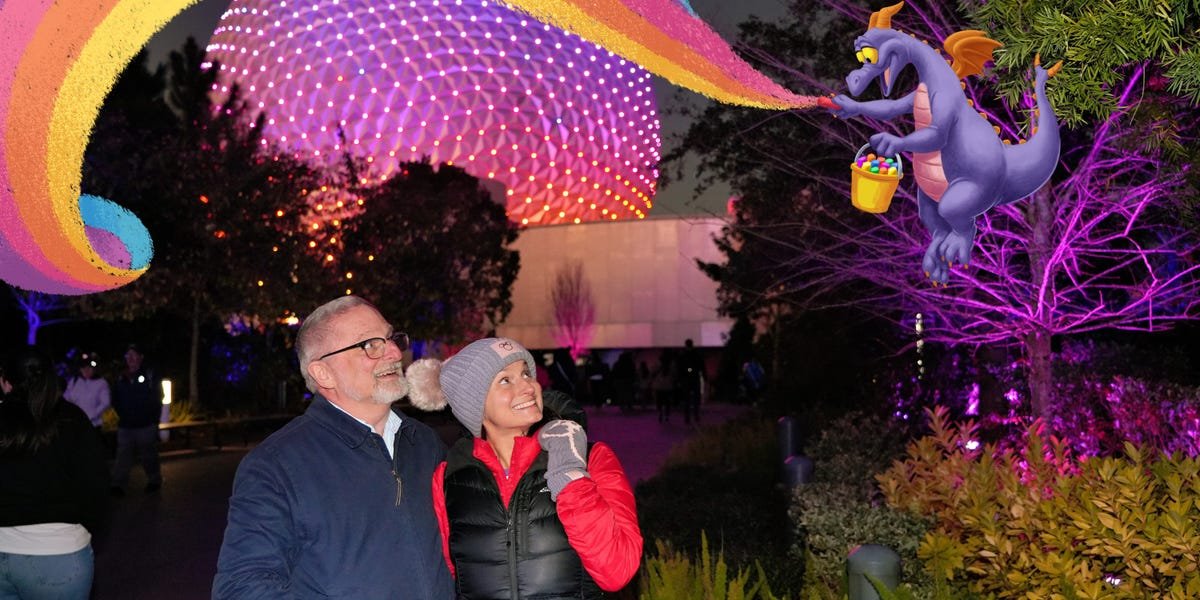
And, before leaving the park for the evening, we stood with other guests watching Spaceship Earth light up in rainbows while The Muppets sang “Rainbow Connection.”

This trip, we were prepared for the cold weather

Almost every winter trip to Disney, I have come home with an impulse purchase made while freezing in the park.

There’s the blanket from the EPCOT Mexico pavilion we huddled under during the fireworks in November, and the Mickey sweatshirt bought at a very chilly late-night Mickey’s Very Merry Christmas Party. I have two hoodies from my last trip in February — it was so chilly, I wore both at the same time.


Woman at Epcot

Wearing items purchased for an Alaska Disney Cruise in Orlando was a surprisingly fun first

Courtesy of the author


Not this time! We were prepared for the cold, and instead of a suitcase full of cute vintage-inspired Disney dresses — my usual park look — I packed packable puffer jackets and gloves, and got creative with Disney-esque layers.

Multiple guests and Cast Members complimented my Minnie Ear beanie and Mickey-inspired red and black puffer jacket layers — items I got for an Alaska Disney Cruise that I never thought I’d wear in Florida, but looked great in front of the magical glow of Spaceship Earth.


Source link

The-CEO-of-the-World-Economic-Forum-is-stepping-down.jpeg

The CEO of the World Economic Forum is stepping down after a review of his Epstein ties

  • Børge Brende, the long-serving head of the World Economic Forum, is stepping down.
  • His resignation comes after the WEF launched an independent review into his ties to Jeffrey Epstein.
  • Emails released by the Department of Justice appeared to show Brende had dinner with Epstein three times.

The president and CEO of the World Economic Forum, Børge Brende, has announced he will step down in the wake of an investigation into his relationship with Jeffrey Epstein.

“I believe now is the right moment for the Forum to continue its important work without distractions,” Brende, who led the organisation behind the annual Davos conference for over 8 years, said.

The WEF co-chairs, André Hoffman and Larry Fink, said the independent review, which was made public earlier in February, found “there were no additional concerns beyond what has been previously disclosed.”

Emails released by the Department of Justice appeared to show Brende had dinner with Epstein three times in 2018 and 2019.

In a statement to Reuters earlier this month, Brende said he was “completely unaware of Epstein’s past and criminal activities.”

Hoffman and Fink said Alois Zwinggi will serve as the WEF’s interim president and CEO.

This is a breaking news story. Check back for updates.


Source link

The-Enola-Gay-dropped-the-atomic-bomb-on-Hiroshima-in.jpeg

The Enola Gay dropped the atomic bomb on Hiroshima in World War II. Here’s where the plane is now.

  • Enola Gay, a B-29 bomber, dropped the “Little Boy” atomic bomb on Hiroshima on August 6, 1945.
  • The plane is on display at the National Air and Space Museum’s second, larger location in Virginia.
  • The exhibit has been the subject of controversy as interest groups have debated the plane’s legacy.

The Enola Gay, the Boeing B-29 Superfortress bomber that dropped the atomic bomb on Hiroshima in World War II, is so large that it couldn’t fit into the Smithsonian National Air and Space Museum’s flagship location on the National Mall in Washington, DC.

Instead, it’s displayed at the museum’s second location, the Steven F. Udvar-Hazy Center in Chantilly, Virginia.

The Udvar-Hazy Center features over 200 aircraft on display, but the Enola Gay remains one of the most prominent objects in its collection.

Take a closer look at the historic aircraft.

Enola Gay dropped the first-ever atomic bomb used in warfare on Hiroshima on August 6, 1945.

Enola Gay.

Photo 12/Ann Ronan Picture Library/Photo 12/Universal Images Group via Getty Images

A second “Fat Man” atomic bomb was dropped on Nagasaki on August 9, 1945, by another Boeing B-29 Superfortress named Bockscar, which is on display at the National Museum of the US Air Force in Dayton, Ohio.

The emperor of Japan announced the country’s surrender on August 15.

The plane was named after pilot Paul Tibbets’ mother, Enola Gay Tibbets.


The crew of the Enola Gay.

The crew of the Enola Gay. Paul Tibbets is second from the left.

Art Edger/NY Daily News Archive via Getty Images

Tibbets commanded the Air Force’s 509th Composite Group in charge of deploying nuclear weapons. The hand-picked squadron trained at an abandoned airfield in Windover, Utah.

The “Little Boy” atomic bomb deployed by the Enola Gay weighed 9,700 pounds.


The

The “Little Boy” atomic bomb was loaded into the Enola Gay.

PhotoQuest/Getty Images

To make the B-29 aircraft capable of carrying the atomic bomb, all of its protective and defensive armament, except for the 50-caliber tailguns, were removed to get rid of excess weight. It was also left unpainted, which saved the 850 pounds that the paint would have added.

The bomb exploded 1,900 feet above Hiroshima with devastating effects.


Hiroshima after the atomic bomb.

Hiroshima after the atomic explosion of August 1945.

Universal History Archive/Universal History Archive/Universal Images Group via Getty Images

At least 70,000 people died in the initial blast from the bombing of Hiroshima, and the death toll over five years may have exceeded 200,000 people due to the aftereffects, according to the US Department of Energy’s Office of History and Heritage Resources.

Japan and anti-nuclear weapons scientists released an updated higher estimate in the 1970s that counted 140,000 deaths at Hiroshima.

The Enola Gay was rattled by shockwaves from the explosion, even as it had already flown 11.5 miles away.

After the Enola Gay spent decades in storage, the Smithsonian began restoration work on the bomber in 1984.


The Enola Gay underwent restoration work at a Smithsonian facility.

Restoration of Enola Gay at the Paul E. Garber facility of the Smithsonian in Silver Hill, Maryland.

Ben Martin/Ben Martin/Getty Images

It took museum staff 300,000 hours to reassemble and restore the Enola Gay, with 12 truckloads transporting all of its parts.

The historical narratives around the use of the atomic bomb were fiercely debated when parts of the Enola Gay first went on display in 1995.


The fuselage of the Enola Gay on display at the National Air and Space Museum in Washington, DC, in 1995.

The fuselage of the Enola Gay on display at the National Air and Space Museum in Washington, DC, in 1995.

Jeffrey Markowitz/Sygma via Getty Images

In 1995, the fuselage and other parts of the Enola Gay were displayed at the National Air and Space Museum’s flagship location in Washington, DC, in an exhibit tied to the 50th anniversary of the bombing of Hiroshima.

The script of the exhibit was rewritten several times as various interest groups debated how it was presented and how the decision to drop the bomb was framed, according to the Smithsonian Institution Archives.

Veterans’ groups pushed for the exhibit to emphasize Japanese aggression and present the narrative that dropping the atomic bomb saved lives by ending the war. Anti-war activists opposed having the exhibit justify the use of the bomb and sought to highlight its victims by protesting with alternative exhibits on the sidewalk outside the museum.

The Enola Gay went on permanent display at the National Air and Space Museum’s Steven F. Udvar-Hazy Center in 2003.


The Enola Gay Superfortress bomber at the Smithsonian Air and Space Museum's Udvar-Hazy Center ahead of its opening in 2003.

The Enola Gay Superfortress bomber at the Smithsonian Air and Space Museum’s Udvar-Hazy Center ahead of its opening in 2003.

Mark Wilson/Getty Images

Weighing 137,500 pounds with a wingspan of 141 feet, the fully assembled plane is too large for the National Air and Space Museum’s flagship location on the National Mall in Washington, DC. The Steven F. Udvar-Hazy Center in Chantilly, Virginia, offers more room with 340,000 square feet of exhibit space.

The Udvar-Hazy Center features an elevated walkway, allowing visitors to view the plane from above as well as on the ground.


The Enola Gay viewed from an elevated platform at the National Air and Space Museum's Steven F. Udvar-Hazy Center.

The Enola Gay viewed from an elevated platform at the National Air and Space Museum’s Steven F. Udvar-Hazy Center.

Talia Lakritz/Business Insider

The Enola Gay is displayed among other aircraft from World War II, including the Northrop P-61C Black Widow, the first US aircraft designed for combat at night.

The Enola Gay stands out as one of the museum’s most historically significant aircraft.


The Enola Gay.

The Enola Gay.

Talia Lakritz/Business Insider

Over 80 years after the bombing of Hiroshima, the Enola Gay remains not just a World War II artifact, but a symbol of a turning point that ushered the world into the nuclear age.

After years of debate over how to present the aircraft, the permanent exhibition takes a minimalist approach, leaving visitors to decide how to understand its legacy.


Source link

I-toured-the-USS-Lionfish-a-Balao-class-submarine-that-rescued.jpeg

I toured the USS Lionfish, a Balao-class submarine that rescued downed pilots in World War II. Take a look inside.

  • The USS Lionfish was commissioned in 1944 and earned one battle star for service in World War II.
  • It sank a Japanese submarine, rescued the crew of a B-29 bomber, and served as a training submarine.
  • The Balao-class submarine is now a museum docked at Battleship Cove in Fall River, Massachusetts.

The World War II submarine USS Lionfish was part of America’s “Silent Service.”

Despite comprising less than 2% of all US Navy vessels during World War II, submarines like the USS Lionfish sank 55% of Japanese vessels in battle.

This once-fearsome vessel is now a 311-foot-long museum exhibit, allowing the public to learn about its top-secret wartime operations.

Take a look inside the USS Lionfish.

Commissioned in 1944, the USS Lionfish earned one battle star for service during World War II.

The USS Lionfish at sea in an undated photo.

Arkivi/Getty Images

Over the Balao-class submarine’s two war patrols, she sank a Japanese submarine, destroyed a schooner, and rescued the crew of a downed American B-29 bomber.

The USS Lionfish was recommissioned for the Korean War, serving from 1951 to 1953.

From 1960 to 1971, the USS Lionfish served as a reserve training submarine, teaching crew members to operate similar vessels.

Since 1973, the USS Lionfish has been on display at Battleship Cove, a maritime museum in Fall River, Massachusetts.


The USS Lionfish.

The USS Lionfish.

Talia Lakritz/Business Insider

Tickets to Battleship Cove cost $25 per adult. I visited the museum in January to take a closer look at the retired submarine.

The first stop on my self-guided tour was the forward torpedo room, where 16 torpedomen slept and worked.


The forward torpedo room on board the USS Lionfish.

The forward torpedo room.

Talia Lakritz/Business Insider

The forward torpedo room featured six torpedo tubes, each storing a torpedo, and 10 reloads. The 16 crew members slept alongside the torpedoes on pull-out bunks, remaining ready to fire at all times.

Behind the torpedo room was officers’ country, which included the officers’ pantry.


The officers' pantry on board the USS Lionfish.

The officers’ pantry.

Talia Lakritz/Business Insider

In the officers’ pantry, meals for the higher-ranking crew members were reheated and plated on Navy china. They ate the same food as the rest of the sailors, but in a fancier setting.

Officers used the wardroom for dining, working, and relaxing.


The wardroom on board the USS Lionfish.

The wardroom on board the USS Lionfish.

Talia Lakritz/Business Insider

It could also serve as an operating room in medical emergencies.

Junior officers slept in a room with four bunks.


The junior officers' quarters on board the USS Lionfish.

The junior officers’ quarters.

Talia Lakritz/Business Insider

Officers enjoyed more privacy on board than enlisted men.

Senior officers had even more privacy in a room with a triple bunk.


The senior officers' quarters on board the USS Lionfish.

The senior officers’ quarters.

Talia Lakritz/Business Insider

The submarine’s second-in-command, known as the executive officer, slept in this room.

The commanding officer slept in the only private room on board the submarine.


The commanding officer's stateroom on board the USS Lionfish.

The commanding officer’s stateroom.

Talia Lakritz/Business Insider

The commanding officer’s stateroom featured a small desk that functioned as a private workspace.

Chief petty officers slept five to a room in their quarters.


The chief petty officers' quarters on board the USS Lionfish.

The chief petty officers’ quarters.

Talia Lakritz/Business Insider

Chief petty officers served as liaisons between the officers and the crew. This room was also colloquially known as the “goat locker” since the more experienced officers were affectionately nicknamed “old goats.”

In the ship’s office, an administrator known as the yeoman handled all of the ship’s paperwork.


The ship's office on board the USS Lionfish.

The ship’s office.

Talia Lakritz/Business Insider

Personnel files, orders of supplies, and other administrative tasks were the yeoman’s domain.

Equipment in the control room managed the submarine’s depth, speed, steering, and navigation.


The control room on board the USS Lionfish.

The control room.

Talia Lakritz/Business Insider

The commanding officer issued orders from the control center or the conning tower located directly above. The USS Lionfish’s conning tower wasn’t open to the public, but I did get to look inside one while touring another Balao-class submarine, the USS Becuna.

Communications and covert operations were handled in the radio room.


The radio room on board the USS Lionfish.

The radio room.

Talia Lakritz/Business Insider

The USS Lionfish was equipped with sonar, or “sound navigation and ranging,” to listen for enemy ships in the surrounding waters.

Chefs prepared meals for the submarine’s 80 crew members in the main galley.


The main galley on board the USS Lionfish.

The main galley.

Talia Lakritz/Business Insider

The galley prepared four meals a day: breakfast, lunch, dinner, and midnight rations known as “mid-rats.”

The crew’s mess was an all-purpose room where sailors ate, lounged, and played games.


The crew's mess on board the USS Lionfish.

The crew’s mess.

Talia Lakritz/Business Insider

Frozen and refrigerated food was stored in compartments underneath the floor.

The bunks have been removed from the crew’s berthing during ongoing restoration work.


The crew's berthing on board the USS Lionfish.

The crew’s berthing.

Talia Lakritz/Business Insider

Other Balao-class submarines held 35 or 36 bunks in this space.

The USS Lionfish featured two engine rooms, each containing two diesel engines.


The forward engine room on board the USS Lionfish.

The forward engine room.

Talia Lakritz/Business Insider

Each engine room was responsible for half of the ship’s electric and propulsion power.

In the maneuvering room, switches controlled the flow of electricity to the submarine’s generators.


The maneuvering room on board the USS Lionfish.

The maneuvering room.

Talia Lakritz/Business Insider

While surfaced, the submarine’s four diesel engines powered its generators, which in turn powered the ship’s motors. While submerged, storage batteries powered the motors.

My tour ended with the after torpedo room at the back of the submarine.


The after torpedo room on board the USS Lionfish.

The after torpedo room.

Talia Lakritz/Business Insider

Around 13 enlisted men worked and slept in the after torpedo room, which featured four torpedo tubes.

The USS Lionfish remains unique among World War II submarines.


The USS Lionfish docked at Battleship Cove in Fall River, Massachusetts.

The USS Lionfish docked at Battleship Cove in Fall River, Massachusetts.

Talia Lakritz/Business Insider

Over 50 submarines underwent a Greater Underwater Propulsive Power 1-A, or “GUPPY,” modernization after World War II. However, the USS Lionfish remained as it was.

Museum staff and volunteers are working to restore the USS Lionfish and preserve its original configuration. Even in frigid temperatures, I saw volunteers holding tools and walking carefully around the deck’s open panels, revealing the complex mechanics beneath.


Source link

I-left-the-US-in-2015-and-have-since-lived.jpeg

I left the US in 2015 and have since lived around the world. Reverse culture shock hit me harder than leaving ever did.

This as-told-to essay is based on a conversation with Kat Smith, 35, who has lived abroad since 2015. Smith, the founder of Away Abroad, a website for female travelers, currently lives in Trieste, Italy, with her husband. This conversation has been edited for length and clarity.

I think people don’t always believe me when I say it, but living abroad has always felt more fun to me. I love the cultural challenges, the language barrier, the different food, and the process of figuring out the day-to-day.

I’m originally from Conyers, a small town just outside Atlanta. In high school, I moved to Athens, Georgia. It was a typical small, suburban place — there weren’t many people traveling internationally. Certainly, no one was moving abroad the way I eventually did.

When I was 18, between graduating from high school and starting at the University of Georgia, my parents basically forced a gap semester on me. They came home from a dinner party one night and were like, “Instead of going to college, you’re going to Guatemala.”

I did not want to go, but hindsight is 20/20.

Going to Guatemala was the best thing that could have happened to me. While I was there, I met a Peace Corps volunteer. Spending time with them and being in the country changed my perception of the world and opened my eyes to what was even possible.

When I got back and started university, I met with an advisor who had also served in the Peace Corps. After talking with him more, it just felt like the right path for me.

Living abroad changed me as a person

In 2013, almost exactly a month after I graduated from university, I joined the Peace Corps and left the US for Ecuador.

At the time I applied, you didn’t really have much say in where you went. I basically said, “Send me anywhere in the world,” and they sent me to Ecuador. During training, they placed me in a community based on my skill set and the community’s needs.

I ended up in Tumbaco for 3 months for training and then in Arenillas, a really small town in the southwestern province of El Oro, where I lived for about two years.

When my service ended, a friend of mine and I hitchhiked through the Peruvian Amazon and ended up working at an eco-lodge in the middle of the rainforest for a few months.


A man sits in a boat, bananas sit on the boat's floor, and a sunset looms in the background.

Smith’s boat ride on the Amazon River.

Courtesy of Kat Smith


Around that time, in 2015, my dad was like, “Okay, you haven’t been home in almost three years. I’m buying you a ticket—you’re coming to visit.” So, begrudgingly, I went back to the US.

I remember feeling reverse culture shock more intensely than I ever felt culture shock. It completely caught me off guard. All of a sudden, the US didn’t feel like home anymore. I felt like I didn’t fit in.

I also knew I wasn’t the same person I’d been when I’d left, which created an internal conflict. I don’t want to be that dramatic, but I had a different mindset, and trying to be the old me was hard.

I’ve traveled and lived all around the world

Over the years, I’ve lived in Panama City, been to Colombia, worked on a yacht in the South of France, and backpacked through Eastern Europe for a couple of months. I also backpacked between Vietnam and Thailand, and taught English in South Korea.


A man and woman, in wedding attire, stand in front of a bright pink wall in Colombia.

Smith and her husband, Rafael Tudela, in Cartagena, Colombia.

Courtesy of Kat Smith


Somewhere in the middle of all of that, I fell in love and got married in Colombia in 2018. Not long after, my husband and I moved to Vietnam, where we stayed for three years while I was teaching English, before leaving in 2021 because of COVID restrictions.

After Vietnam, we went back to the US for a while. We bought a van, converted it, and traveled up and down the West Coast. I loved nature, but after a few months, I was ready to leave again.


A woman sits in the back of an open van, mountains stand before her.

Smith inside of the van she traveled with across the West Coast.

Courtesy of Kat Smith


So we tried Albania next. We stayed for a couple of months, but it didn’t feel like the right long-term fit. Instead, we kept moving and spent time around the Balkans — traveling through Montenegro, Serbia, Bosnia, and Croatia.

My journey hasn’t been perfect

Looking back, I’ve made a few mistakes along the way.

One of the things I cringe about most is how I treated my friends and family back home. I was pretty insensitive about their choices — friends who just wanted to graduate, buy a house 10 minutes from where they grew up, and settle into a typical, structured, no-surprises kind of life. I think I judged that because I felt like what I was doing was so extravagant.

But honestly, I was a bit of a brat about accepting other people’s paths.

I did something similar with my family, too. I didn’t really consider what it meant for them when I left. I was so focused on what it meant for me, and not necessarily on how it was affecting everyone around me.


A group of friends walk down a street in Seoul, Korea.

Smith and friends exploring a neighborhood in Seoul.

Courtesy of Kat Smith


Italy is home — for now

In 2023, we moved to Italy for a job opportunity for my husband. He has an EU Blue Card — basically a work permit for skilled workers — and I’m on a family reunification visa linked to his.

We’ve been living in Trieste for the past 2.5 years. Trieste is fantastic, but it’s also an up-and-coming city that’s gotten really expensive, fast. Even in the short time we’ve been here, we’ve seen a big jump in costs. Our rent, for example, increased by $308 a month, which still feels crazy.

Our apartment is really nice: one bedroom, one bath, open floor plan, and close to everything. I’m really into nature, and we have a beautiful view of the sea and the hills. We were paying $1,423 a month, and now it’s $1,732.


A city view of Trieste.

The view from Smith’s apartment in Trieste.

Courtesy of Kat smith


That rising cost of living is one of the reasons we started looking at other places — just to get more for our money.

We ended up buying an apartment in Belluno for $260,955, and we’ll move in April. Belluno is a much smaller town, kind of a gateway to the Dolomites, and it sits north of Venice. We’re big mountain people, and the Dolomites are genuinely my happy place. Being closer to them means we can hike and snowboard more regularly without a long drive, which was a huge perk for us.

Although we didn’t choose Italy initially and only moved here for my husband’s job, there are a lot of reasons we’ve chosen to stay rather than move on like we typically do after a few years.

Italy has a strategic geographic position. I love living smack dab in the middle of the world. Not only is this exciting adventure-wise, but it’s also meant more people have been able to visit us, including our parents, who aren’t as keen on the long-haul flights.


A woman and her dog stand on a walking trail, sitting high above a city in Montenegro.

Smith and her dog on a hike in Montenegro.

Courtesy of Kat Smith


On top of that, the culture clicks for both of us. As an intercultural couple, we have different triggers, things we look for, and things we want to avoid. Northern Italy has provided the perfect balance for us.

I really hope Italy can be our home base, at least for the foreseeable future. But I also know myself: If, two years from now, it doesn’t feel right, we’ll pivot. I’m not setting a deadline; it’s more about whether it still feels like home. And right now, it does.


Source link

How-we-spent-1600-on-a-2-day-trip-to-Disney.jpeg

How we spent $1,600 on a 2-day trip to Disney World — and what we’d do differently next time

I’ve been to Disney World many times, and I like to think I know how to do it on a “budget” … at least, a loose one.

Recently, my partner and I planned a last-minute trip to the theme park on our way to visit family in Southern Florida for the holidays.

Between flights, transportation to and from the airport, lodging, park tickets, food, and souvenirs, we spent about $1,600, or $800 each … for about 48 hours in the Disney bubble.

Here’s a look at what we spent, ways we saved, and what we might do differently next time.

We stuck with a value resort since we wouldn’t be spending much time in our room


Author and their partner with suitcases in front of All-Star music hotel

All-Star Music is a value resort at Disney.

Jordyn Bradley


We spent $237 on our flights from Fort Myers, Florida, to Orlando and landed a few hours before we planned to visit Disney World.

By the time we arrived at our value resort, All-Star Music, our room was ready for check-in ($319 for two nights).

We tend to choose value resorts because they are the cheapest hotels on Disney property. Plus, stays come with complimentary bus transportation to the parks and Disney Springs.

All-Star Music was the cheapest of the five Disney value resorts when we booked, and our room provided us with enough space for our short stay.

After grabbing some snacks at the hotel food court ($25), we took a much-needed nap and got ready to visit Magic Kingdom.

Since we attended a seasonal event, we didn’t need buy separate park tickets


Author and their partner smiling with Mickey and Minnie in festive outfits

Mickey’s Very Merry Christmas Party was fun.

Jordyn Bradley


Fortunately, past me unknowingly helped me save during the trip.

I had two unused tickets to last year’s Mickey’s Very Merry Christmas Party — an additional ticketed event held at Magic Kingdom — that I was able to put toward a new party date. I just had to pay the difference, which was $21 for both tickets.

These tickets typically run $169 to $209 per person, and they felt virtually free since I’d already paid for them in the past.

We also didn’t need to buy a park ticket because we were able to enter Magic Kingdom at 4 p.m. on our event day — and we could stay until midnight.

Several drinks and treats were included with our ticket


Author Jordyn Bradley and partner at magic kingdom at night

Our Mickey’s Very Merry Christmas Party tickets came with some freebies.

Jordyn Bradley


When we arrived at Mickey’s Very Merry Christmas Party, we each got an ornament and a Mickey-shaped peppermint marshmallow.

Our ticket also included festive treats and drinks, like cookies and hot chocolate, that we picked up throughout the evening. I’d estimate we consumed at least $30 worth of treats.

We got our sugar fill with those and purchased a few savory bites, like my favorite meal at Magic Kingdom, the ham-and-Gruyère croissant sandwich with chips ($11) at Gaston’s Tavern.

We also got popcorn for only $2.50 because we got a refill in our reusable popcorn bucket — it’s a must-pack item for every Disney trip.

I kept my souvenir purchases to a pair of mix-and-match character ears ($46 for a headband and two characters to go on it) and a commemorative event pin ($23).

The party also included performances, a holiday parade, fireworks, character meet and greets, and access to classic rides (which sometimes have shorter waits than a normal park day).

We got to ride all the Magic Kingdom rides we wanted to (some multiple times) without having to pay extra for line-skipping Lightning Lane passes.

A Magic Kingdom ticket on its own can run upwards of $200 depending on the day, so the special event add-ons, like unique character meet and greets and complimentary snacks, definitely make the ticket price worth it.

These events are my hack to a cheaper Disney day if you’re down to have a late night and stay in one park instead of opting for a flexible-but-pricier park-hopper pass.

If it’s your first time at Magic Kingdom and you can get a one-day ticket for the same price or less than the party ticket, I’d stick with the former so you can go at your own pace.

Our second day was focused on eating around the world at Epcot, and we didn’t spare any expense


piece of carrot cake on plate

I don’t regret buying the carrot cake.

Jordyn Bradley


We purchased two single-day tickets to Epcot for our second day, which cost us $381.

On longer trips, we normally opt for the flexibility of park-hoppers, but we didn’t want to spend our limited time traveling between parks. Plus, the flexible multi-park ticket would’ve cost over $70 more per person.

Since we were staying in Epcot, we didn’t buy Lightning Lane passes.

I don’t think they’re worth it here because the park doesn’t have many rides — plus, we could use single-rider lanes to skip large waits at both Remy’s Ratatouille Adventure and Test Track.

Most of our money was spent at on food and drinks from booths at Epcot International Food and Wine Festival.


Flauta de Barbacoa and Strawberry-Pomegranate in Epcot

We got a lot of drinks and bites during the Epcot International Food and Wine Festival.

Jordyn Bradley


We revisited festival classics, like the filet mignon with mashed potatoes ($20 for two orders) from the Canada pavilion, and tried some new favorites, like the flauta de barbacoa ($9) from the booth in Mexico. We loved the latter so much we got it twice.

Other favorites included the warm carrot cake with cream-cheese icing ($5), which I get every year, and my favorite drink, the Ottawa Apple ($16.50).


Drink and chicken and dumplings in Epcot

The chicken dumplings we had were just OK.

Jordyn Bradley


Some bites were just OK, like the chicken dumplings ($6) in the China pavilion.

However, I’m glad we looked into festival menus in advance to plan which booths we wanted to prioritize. This helped us save time and money while getting me more excited about our trip.

I shelled out the most money on collectible pins


Author and their parter with Rafiki at Disney

I often meet characters and trade pins when I visit Disney.

Jordyn Bradley


Every time I go to Disney, I know I’m going to put most of my souvenir budget toward collectible enamel pins, and this trip was no exception.

Many of these pins can only be purchased at Disney parks, and collecting and trading them is a popular hobby.

On this trip, I was trying to complete a set and only needed one more pin, so I bought multiple mystery two-packs at about $23 each.

Ultimately, I spent $165 on mystery packs, which is more than my share of the hotel. I didn’t complete my set and I ended up with way more pins than I wanted (or needed).

Next time, I’ll buy one or two pins that I can pick out myself instead of mystery packs. I also plan to hold off on buying more until I can swap the ones I don’t want at one of the trading stations in the parks.

We ended our trip with a free activity

After our full Epcot day, our last afternoon was spent walking around Disney Springs.

The shopping and dining spot has free parking and is a nice place to wander if you’re wanting to be part of the Disney bubble without forking over hundreds for tickets.

Then, we headed to the airport for our flights home ($197).

All in all, we enjoyed ourselves and made the most of our 48 hours


Author Jordyn Bradley hugging  Donald Duck

I didn’t calculate what I spent until I got home, but I didn’t shy away from lots of snacks and mystery pin packs, so it’s not surprising how we got there.

Jordyn Bradley


Many people could spend what we did on our two-day trip and stay at resorts with nicer amenities or have more park days and sit-down meals.

However, because this trip was last-minute, we were happy with anything we made the time for, and since it was shorter, we felt better about having a higher food and souvenir budget.

Those were our priorities, especially since we never spend enough time at our hotel to justify booking a nicer one at a higher nightly rate.

We could’ve made the trip more affordable by spending less on souvenirs, which we will likely do next time. However, now I have more pins to trade for my next trip — and a way to remember one of our favorites.


Source link

Ex-Microsoft-exec-says-college-curricula-need-a-revamp-—-heres.jpeg

Ex-Microsoft exec says college curricula need a revamp — here’s the curriculum to succeed in an AI world

Ex-Microsoft exec Craig Mundie has heard this question again and again — parents asking him a version of the same worry: Their kids are heading toward college, artificial intelligence is advancing fast, and jobs feel uncertain. What, exactly, should their kids be studying?

That question — what education will matter most in five years — reflects a deeper uncertainty about the future.

Mundie, who spent 22 years at Microsoft helping steer the company’s vision toward AI and retired as the company’s chief research and strategy officer in 2014, says that parents are simply asking the wrong question.

It’s not only the students who have to change to fit the new AI era — it’s the education system itself, said Mundie, who now advises other executives on AI and public policy.

Rather than chasing down the right job, Mundie urges families to prepare kids for a world where learning itself becomes continuous, personalized, and done in partnership with intelligent machines.

AI is altering the human experience

During an interview with Business Insider’s Reem Makhoul in June, Mundie said artificial intelligence and robotics are poised to reshape work more deeply than past technologies. See the edited cut of his interview below:

That shift, Mundie said, forces a bigger question than which job skills will survive. It challenges how societies define human value. This is something Mundie’s been pondering for over a decade.

In his 2015 book “Genesis,” Mundie, with co-authors Eric Schmidt and Henry Kissinger, examined how AI could alter the human experience. “What we say is we have to think differently about how we value ourselves and what we do.”

For much of history, he said, dignity has been tied to work because people had to work to survive. AI could loosen that link by automating more tasks across both physical and intellectual labor.

Meanwhile, humans will need to learn how to work alongside intelligent machines, and the traditional higher-education system doesn’t offer a clear path toward that, right now.

He described today’s education system as sharply divided between STEM and the humanities. The liberal arts emphasize reasoning, but at the expense of special technical skills you learn in STEM fields, Mundie said.

Students will need both skills moving forward. “If I could create a new curriculum in college, it would be a liberal education in technology,” and STEM, he said.

The classroom model itself is reaching its limits


An adult teaching children on a touch screen in a classroom setting.

Mundie says the future of education will be driven by individuals’ motivation to learn and not standardized curricula.

Hispanolistic/Getty Images


Mundie went further, questioning whether the classroom model that dominates education today still makes sense.

He traced that structure back to the printing press, which created a surge in written information and a need for mass literacy. Schools, he said, became an efficient “machine for teaching” because societies lacked enough individual tutors.

AI changes that constraint.

We can have scalable, polymathic teachers, Mundie said. “We can have as many teachers as we want now because the AI will be the teacher.”

He said this opens the door to a more personalized, Socratic model of learning, where students can interact continuously with an intelligent system that adapts to their curiosity, pace, and interests. Progress would be limited less by standardized curricula and more by a student’s motivation and capacity.

Schools and universities have been slow to embrace this shift. Early reactions often involved banning AI tools outright. “They’ve now given up on that,” Mundie said.

That resistance, he added, is typical of incumbent systems. “The natural tendency of the incumbent is to preserve the incumbent system,” or make only incremental changes, he added. But “when you get something as powerful as these AIs, most incumbent systems are not going to be preserved.”

He also pointed to early experiments on the right track, like versions of Khan Academy, an online non-profit educational platform founded in 2008 and headquartered in California. It uses an AI tutor, named Khanmigo, designed to guide students rather than simply give answers. In those systems, he said, the AI nudges students toward better questions and deeper understanding.

“So that’s the difference between sort of a broad chat about anything interface and an AI application that was specifically oriented around teaching,” he said, adding, “That’s just one tiny example of how people will build more and more apps on these common artificial intelligence platforms.”

“We will move beyond the specific generic interface to a world of millions of applications that are really customized in some clever way to guide people to solutions in the areas they care about,” he said. These agents may, in fact, do much of the work autonomously by interacting with others, he added.

Mundie said parents and older generations may have difficulty imagining this model, while children are likely to adapt quickly. The harder question, in his view, is whether educational institutions are willing to change.


Source link

Sarah Saril

BTS 2026-2027 world tour: Full schedule and where to buy tickets

After nearly four years away from full‑group performances due to South Korea’s mandatory military service, BTS is returning in a big way with a massive 2026-2027 world tour — their first major global trek since 2022. The tour will span five continents, with more than 70 shows across Asia, North and South America, Europe, and Australia, beginning in April 2026 in Goyang, South Korea, and extending into March 2027, featuring stadium dates and festival appearances around the globe. Keep reading to learn how to get BTS tickets for their sold-out shows.

BTS debuted in 2013 under Big Hit Music with seven members: RM, Jin, Suga, J‑Hope, Jimin, V, and Jung Kook. The group quickly rose to international prominence with a blend of hip‑hop, pop, R&B, EDM, deeply personal lyrics, and energetic choreography. BTS shattered global records with hits like Dynamite, Butter, and Boy With Luv, and became known for their positive messages around self‑love and mental health. Their devoted fan base, known as ARMY, has helped BTS become one of the highest‑earning and most-streamed artists worldwide.

The 2026 tour not only marks BTS’ long‑awaited return to large‑scale touring as a complete group but also supports their upcoming new album, scheduled for release in March 2026. With an ambitious schedule covering dozens of major cities and multiple shows per stop, this world tour is shaping up to be one of the most significant live music events of the decade. Keep reading to see the group’s schedule and head to StubHub and Vivid Seats to secure your seats.

BTS’ 2026-2027 world tour schedule

Tickets for BTS’ world tour are being released in phases, with official presales for ARMY (the fan club) starting in January, followed by general sale.. ARMY members are encouraged to register on Weverse before the presale deadline to receive early access codes, and general sales typically begin shortly after, in many regions beginning January 24, 2026. Demand is expected to be extremely high, especially in major markets such as Los Angeles, Tampa, Mexico City, Chicago, and Tokyo, so securing tickets early is critical.

  • April 9, 2026 — Goyang, South Korea at Goyang Stadium
  • April 11, 2026 — Goyang, South Korea at Goyang Stadium
  • April 12, 2026 — Goyang, South Korea at Goyang Stadium
  • April 17, 2026 — Tokyo, Japan at Tokyo Dome
  • April 18, 2026 — Tokyo, Japan at Tokyo Dome
  • April 25, 2026 — Tampa, FL at Raymond James Stadium
  • April 26, 2026 — Tampa, FL at Raymond James Stadium
  • May 2, 2026 — El Paso, TX at Sun Bowl Stadium
  • May 3, 2026 — El Paso, TX at Sun Bowl Stadium
  • May 7, 2026 — Mexico City, Mexico at Estadio GNP Seguros
  • May 9, 2026 — Mexico City, Mexico at Estadio GNP Seguros
  • May 10, 2026 — Mexico City, Mexico at Estadio GNP Seguros
  • May 16, 2026 — Stanford, CA at Stanford Stadium
  • May 17, 2026 — Stanford, CA at Stanford Stadium
  • May 23, 2026 — Las Vegas, NV at Allegiant Stadium
  • May 24, 2026 — Las Vegas, NV at Allegiant Stadium
  • May 27, 2026 — Las Vegas, NV at Allegiant Stadium
  • June 12, 2026 — Busan, South Korea
  • June 13, 2026 — Busan, South Korea
  • June 26, 2026 — Madrid, Spain at Riyadh Air Metropolitano
  • June 27, 2026 — Madrid, Spain at Riyadh Air Metropolitano
  • July 1, 2026 — Brussels, Belgium at King Baudouin Stadium
  • July 2, 2026 — Brussels, Belgium at King Baudouin Stadium
  • July 6, 2026 — London, UK at Tottenham Hotspur Stadium
  • July 7, 2026 — London, UK at Tottenham Hotspur Stadium
  • July 11, 2026 — Munich, Germany at Allianz Arena
  • July 12, 2026 — Munich, Germany at Allianz Arena
  • July 17, 2026 — Paris, France at Stade de France
  • July 18, 2026 — Paris, France at Stade de France
  • August 1, 2026 — East Rutherford, NJ at MetLife Stadium
  • August 2, 2026 — East Rutherford, NJ at MetLife Stadium
  • August 5, 2026 — Foxborough, MA at Gillette Stadium
  • August 6, 2026 — Foxborough, MA at Gillette Stadium
  • August 10, 2026 — Baltimore, MD at M&T Bank Stadium
  • August 11, 2026 — Baltimore, MD at M&T Bank Stadium
  • August 15, 2026 — Arlington, TX at AT&T Stadium
  • August 16, 2026 — Arlington, TX at AT&T Stadium
  • August 22, 2026 — Toronto, ON at Rogers Stadium
  • August 23, 2026 — Toronto, ON at Rogers Stadium
  • August 27, 2026 — Chicago, IL at Soldier Field
  • August 28, 2026 — Chicago, IL at Soldier Field
  • September 1, 2026 — Los Angeles, CA at SoFi Stadium
  • September 2, 2026 — Los Angeles, CA at SoFi Stadium
  • September 5, 2026 — Los Angeles, CA at SoFi Stadium
  • September 6, 2026 — Los Angeles, CA at SoFi Stadium

Browse BTS tickets on StubHub and Vivid Seats.

How much are BTS tickets?

If you’re eyeing resale tickets for BTS’ 2026 and 2027 World Tour, StubHub and Vivid Seats are two of the most popular places fans turn when primary sales sell out. On Vivid Seats, current listings for BTS concerts show a wide pricing spectrum, with more affordable seats often starting in the $600‑plus range for upper‑level sections at stadium shows, while premium floor or VIP packages can climb significantly higher depending on demand and location. These prices reflect both the immense global popularity of BTS and the fierce competition among buyers looking for seats to the World Tour.

StubHub similarly offers a range of resale options and, very importantly, provides a FanProtect Guarantee that helps ensure tickets are legitimate and will be delivered in time for the event or replaced if problems arise. While resale costs can run well above face value (sometimes into the thousands for premium listings), StubHub’s buyer protections make it one of the more trusted resale platforms among concertgoers; many fans use it specifically for large tours where official inventory is limited.


See more: Is StubHub legit? | Bruno Mars tickets | PinkPantheress tickets | Ariana Grande tickets | Twice tickets | Cardi B tickets

Follow our WhatsApp channel and Instagram for more deals and buying guides.

You can purchase logo and accolade licensing to this story here.

Disclosure: Written and researched by the Insider Reviews team. We highlight products and services you might find interesting. If you buy them, we may get a small share of the revenue from the sale from our partners. We may receive products free of charge from manufacturers to test. This does not drive our decision as to whether or not a product is featured or recommended. We operate independently from our advertising team. We welcome your feedback. Email us at reviews@businessinsider.com.


Source link

Live-updates-Davos-2026-begins-business-and-world-leaders-arrive.jpeg

Live updates: Davos 2026 begins, business and world leaders arrive

Flying commercial isn’t always the best option for Davos attendees, and many are arriving by private jet.

Marc Benioff’s Gulfstream G700 is one of the latest jets to touch down near the alpine resort.

Flying commercial isn’t always the best option for Davos attendees, and many are arriving by private jet.

Marc Benioff’s Gulfstream G700 is one of the latest jets to touch down near the alpine resort.

The Salesforce CEO’s plane flew over 14 hours from Hawaii to Friedrichshafen, Germany, according to data from JetSpy. It touched down shortly after 11 a.m. local time on Monday

It’s perhaps the swankiest jet to arrive so far. The price tag for a G700 starts at $78 million.

Benioff is scheduled to speak tomorrow.

Two BlackRock-owned Gulfstream G650 jets have landed in Zurich, too, per JetSpy’s tracking data.

One of them arrived on Sunday morning, followed by the other about 25 hours later. They both came from New York’s Westchester County Airport.

BlackRock CEO Larry Fink is also the interim co-chair of the WEF. He’s due to speak tomorrow morning.

Corporate jets owned by Google, IBM, The Carlyle Group, and Eli Lilly have also landed in the region since Saturday, per JetSpy.

Airspace restrictions mean very few will land at the airport closest to Davos. Instead, most are arriving in Zurich, and some at Friedrichshafen. The German town is about 60 miles from Davos as the crow flies.


Source link