
What-smart-people-are-saying-about-NYCs-proposed-annual-pied-a-terre.jpeg

What smart people are saying about NYC’s proposed annual pied-à-terre tax on homes worth $5 million

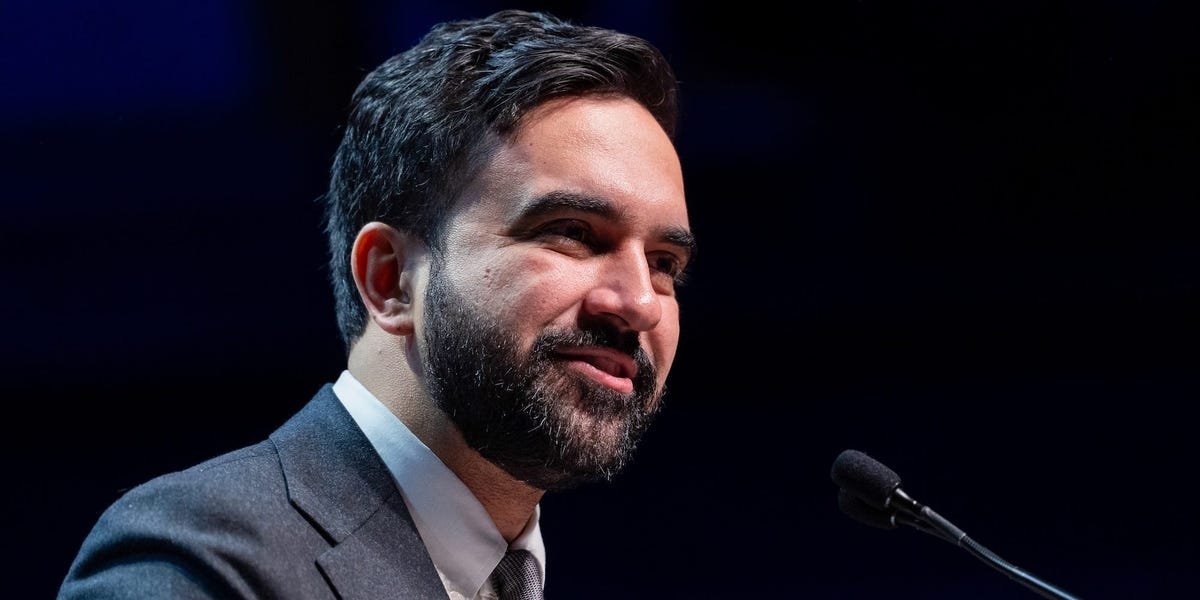
New York City’s new mayor, Zohran Mamdani, is making good on his campaign promise of taxing the rich.

On Thursday, Mamdani and New York Governor Kathy Hochul jointly announced a new tax proposal aimed at wealthy people who own second homes in the city.

The proposed pied-à-terre tax would tax luxury homes worth more than $5 million and could raise up to $500 million in revenue for New York City, according to the Hochul Administration.

The policy is splitting expert opinion — dividing academics, think tank researchers, and analysts among familiar lines.

Supporters see it as a practical way to raise revenue from the ultrawealthy, while critics argue it’s a narrow fix that could have unintended consequences for the housing market.

Here’s how smart people are reacting to the news so far.

Emily Eisner, Acting Executive Director at the Fiscal Policy Institute: ‘Much-needed revenue’

Eisner, in a statement published Tuesday by the Fiscal Policy Institute, framed the proposal as part of a broader effort to align New York City’s tax system with its growing wealth.

The tax “will raise much-needed revenue from wealthy property owners who do not reside in the city,” she wrote. “This is an important step in building a tax code that reflects the city’s immense wealth and can fund deep investments in its workforce, housing, and transit infrastructure.”

The Fiscal Policy Institute is a nonpartisan think tank focused on analyzing issues related to the fairness of New York’s tax system.

Over the past 15 years, New York City’s revenues have failed to keep pace with its economic growth, leaving the tax system increasingly out of sync with underlying conditions, Eisner said in her statement. That gap has contributed to pressure on public services and, she said, stems in large part from the city’s limited authority to adjust its tax structure in response to rising inequality.

Gabriel Zucman, professor at the Paris School of Economics: ‘Absolutely nobody leaves’

Speaking at Mayor Zohran Mamdani’s Tax Day forum, Zucman, a professor of economics at the Paris School of Economics, pushed back on one of the central objections of the tax — that it will drive wealthy homeowners out of New York.

“It is largely indeed a myth,” he said, adding that the more accurate term is “propaganda.”

He said that whenever any level of government — city, state, or country — considers even a modest tax increase on the very wealthy, it often triggers warnings about people leaving. The narrative, he said, is used to push back against higher taxes.

The research, however, shows the opposite.

“There’s a lot of work, careful empirical studies that have been conducted exploiting tax variation, tax increases or tax cuts, and [seeing] how this correlates with migration,” he said. “The overwhelming conclusion is that it’s not the case that absolutely nobody leaves.”

Nicole Gelinas, Senior Fellow at the Manhattan Institute: ‘Gimmicky’

Gelinas told the Jewish News Syndicate that the proposal cannot be considered full tax reform. Instead, she said, it’s “one gimmicky, tax-the-rich idea essentially as a marketing ploy as the state budget remains stalled.”

Gelinas is a senior fellow at the Manhattan Institute, a public policy think tank that focuses on urban violence and public sector reform. She’s also a journalist who serves as a contributing editor of City Journal — which is published by the Manhattan Institute — and a contributing opinion writer at the New York Times, where she writes about urban policy and politics.

She told the JNS that while the proposal may sound good to most people without second homes, it isn’t a “rational tax strategy.”

A better option, she said, would be “gently discouraging keeping a house or apartment unoccupied” as part of a broader reform of property taxes.

Bess Freedman, CEO of Brown Harris Stevens: ‘Impacting homeowners at all levels’

According to Jewish New Syndicate, Freedman, the CEO of the real estate brokerage Brown Harris Stevens, wrote a memo to her staff saying the effects of the tax could extend well beyond the extremely rich.

“While this proposal is being framed as a tax on the ultrawealthy, the reality is that its impact would extend far beyond a narrow segment of the market,” she said.

Freedman said that a decline in luxury property values would ripple through the broader market, compressing prices and ultimately “impacting homeowners at all levels.”

James Whelan, President of the Real Estate Board of New York: ‘Lost construction jobs’

Whelan, the president of the Real Estate Board of New York, raised concerns about the broader economic impact, arguing the tax could discourage investment in the city.

“This annual tax will weaken the city’s broader economy — all without addressing its fiscal problems in the first place. Its impact will reach far beyond a small group of owners,” Whelan wrote in a statement to Business Insider. “It will not raise the amount of revenue expected, but will eliminate thousands of construction jobs, lower property values, and raise costs for New Yorkers.”

He also noted that the state should shift its focus to “policies that encourage investment and housing production to create a more affordable city, not ones that stifle its growth.”


Source link

Amanda Krause headshot

A woman spent $25 on a quirky cat statue at an estate sale. It turned out to be an Italian art piece worth $3,000.

When Jordan Piluso went to a New Jersey estate sale in late January, she had one goal: to purchase a porcelain rabbit from the designer brand Herand.

She’d learned about the sale online and viewed photos of the items available. She didn’t plan to buy any other decorative animals.

But her mission quickly changed.

“When I walked into the house, this [ceramic] cat was sitting on a piano right in the entryway,” the 34-year-old stay-at-home mom told Business Insider. “No one was looking at it, so I just grabbed it. I thought it was such a whimsical, out-there decor piece, and that’s my style.”

She later purchased the $25 cat decoration, along with a few other pieces. She didn’t know it at the time, but her secondhand find was actually an Italian art piece from Fornasetti.

“I love very eclectic, conversational pieces, and I just thought: I’ve never seen anything like this cat,” she added.


Jordan Piluso and the Fornasetti cat she bought at an estate sale.

Jordan Piluso and the Fornasetti cat she bought at an estate sale.

Jordan Piluso


Hidden in plain sight

When Piluso purchased her cat statue, she didn’t immediately look for markings or a signature indicating the artisan who made it.

“I picked it up and was like, ‘You’re coming with me,'” she said. “It was just a no-brainer.”

The people running the estate sale were equally unaware of its origins.

“They were just happy to get rid of it,” she said.


The Fornasetti cat decor piece that Jordan Piluso bought at an estate sale.

The Fornasetti cat that Jordan Piluso found at an estate sale.

Jordan Piluso


It wasn’t until Piluso got home and did a Google image search that she realized it might be valuable. She saw photos of similar cat pieces by the Italian artist Piero Fornasetti and noticed that each had a stamp at the base of its tail.

Sure enough, her cat statue has one too. It reads “Fornasetti Milano, Made in Italy” and features an image of a hand holding a paintbrush.


The Fornasetti stamp on the ceramic cat purchased by Jordan Piluso.

The Fornasetti stamp at the base of the cat statue.

Jordan Piluso


Cats have been a signature motif for the late artist and his brand for decades.

Its modern feline pieces retail between $73 (€62) and $2,353 (€2000) each, while vintage cat statues like Piluso’s have sold for upward of $2,500 on secondhand sites.

Piluso confirmed with the brand via email that it’s authentic and was hand-painted between the late 1950s and early 1960s. Business Insider reviewed the email exchange.

Ken Farmer, an antique and fine-art appraiser, told Business Insider that Fornasetti created over 13,000 designs during his career and aimed to bring art into ordinary homes.

“This playful, smiling cat ceramic figure with black leopard spots on a white field, circa 1960, is likely worth $1,000 to $1,500 at auction and $3,000 retail,” he said.

Valuable, but priceless

The potential profit she could gain from her Fornasetti piece doesn’t matter much to Piluso. She has no intentions of selling it.

“It’s something that brings me so much joy,” she said. “I’m always going to be able to talk about this when people come over. I can tell my kids the story someday.”

“To me, that is a far more valuable gift than the monetary value this cat could bring,” she continued.

Her husband, a dog person, was less convinced that they should keep the decor piece when Piluso originally brought it home. However, he’s since come around, she said.

The couple is keeping the ceramic cat, which doesn’t have a name, on a tall mantle out of reach of their toddler.

Secondhand treasures

Don’t worry — Piluso didn’t leave the estate sale without the pink-and-gold embellished bunny she had initially gone there for.

She purchased the rabbit piece for $600 and a ceramic tiger for $50 — both of which will be displayed prominently in her home.


The ceramic pieces Jordan Piluso bought at an estate sale.

The decor pieces Jordan Piluso bought at a recent estate sale.

Jordan Piluso


Piluso said she’s relatively new to shopping secondhand. She was looking for a hobby after having her second child, and eventually landed on decorating her home with vintage pieces.

She said she loves the charm vintage decor adds to her home and the stories she can share with guests. That’s why her husband encouraged her to create a TikTok account to share her finds with a wider audience.

And clearly, she’s a natural at finding hidden gems.

“When you go to estate sales or thrifting, don’t be afraid of the oddities,” she said. “They can be the coolest, and in this case, some of the most valuable things you can find.”


Source link

We-sold-our-house-in-Utah-to-rent-in-Denver.jpeg

We sold our house in Utah to rent in Denver. The move was a big financial risk, but it was worth it.

Sometimes, a decision doesn’t make sense on paper, but it just feels right to your soul. That’s what my family’s big move was like.

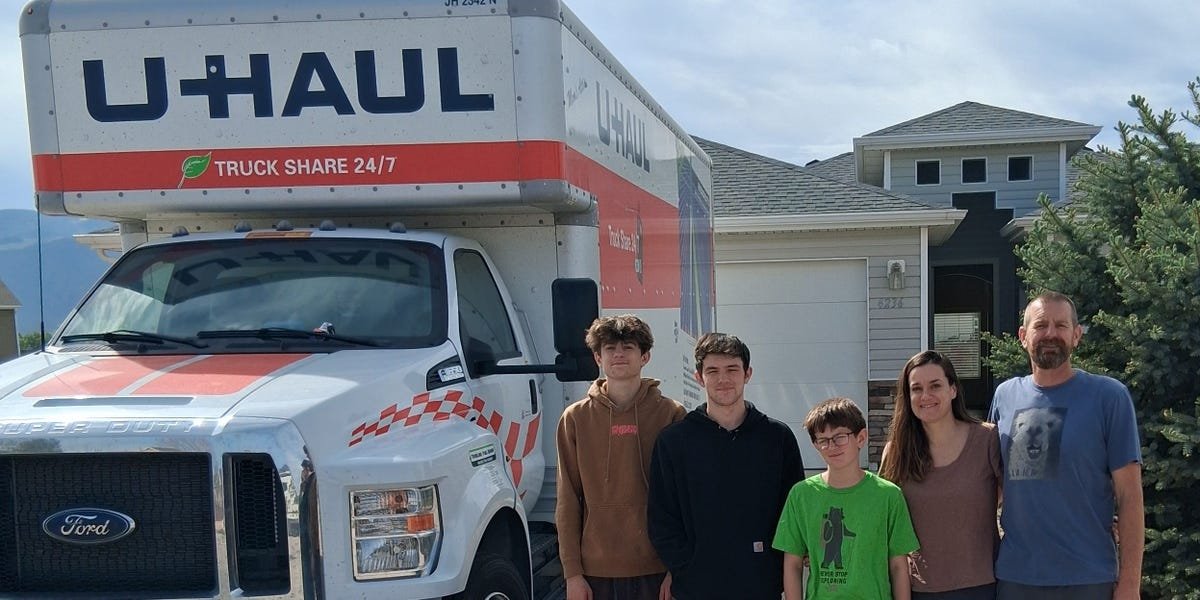
Last year, our family of five sold our affordable home in rural southern Utah to move into a more expensive rental in a Denver suburb.

We had wanted a change for a long time, and the timing finally felt right. We could’ve stayed where we were “safe” financially, but all our family members were struggling in different ways.

I couldn’t shake the feeling that nothing would really get better until we were brave enough to make a big change — so we did.

Moving from Utah to Denver was a difficult financial decision

One of the hardest parts to accept about moving was leaving our extended family and a house that we had lived in for 13 years.

Even more difficult was that our house in Utah was affordable. We were privileged to buy a house when prices were reasonable, and mortgage rates were low. We would have moved a long time ago, but we felt stuck in a home we had outgrown because it was cheap.

We knew that if we sold our house, we would be paying a lot more elsewhere. But the decision still felt right for our family.

We figured Denver was worth the price increase

We chose a Denver suburb because we love the outdoors and also miss the opportunities that a city provides. We have friends in the area, so we knew we would have a community once we arrived.


Katy Anderson's kids in nature in denver

The author’s kids enjoy Denver’s nature.

Courtesy of Katy Anderson


We chose an area known for its “small town feel.” As soon as we moved in, I immediately fell in love with the neighborhood. We are surrounded by an abundance of mature trees, and are within walking distance of wonderful trails for walking and biking.

I’ve been amazed at the wildlife around us, especially considering we live in a Metro area.

Just walking the trails in our neighborhood, we’ve seen rabbits, coyotes, elk, raccoons, turkeys, and many different species of birds. We feel closer to nature here than we did in rural Utah.

After living here for a few weeks, we decided to purchase e-bikes so we could ride much farther along the trails, including to coffee shops, restaurants, city gardens, and parks.

This area also provides us with access to shopping, museums, concerts, and sporting venues. After living in a secluded town for so many years, having these amenities feels like a luxury.

We’re saving money in other ways

Our rent is high in Denver, and that has been the biggest adjustment.

Before we made the move, I was also worried about the cost of living, but I have been pleasantly surprised. Our kids even get free school lunch thanks to a statewide Healthy School Meals for All program. My kids have all commented that the food is of better quality. They actually want to eat the school lunches here.

We are paying much less for gas in Colorado, as we are driving substantially less. In Utah, we lived on the outskirts of town and had to drive 15 to 20 minutes to get to work or to the nearest grocery store.

When we moved to Colorado, we also immediately ended most of our subscriptions and streaming services. We’ve cut down on our discretionary spending and are eating more family meals at home.

We also chose jobs that would help us adjust to our new housing costs

We knew we would be paying more for housing no matter where we moved, so we chose a location with ample work opportunities. My husband is a psychiatric nurse practitioner, and I have picked up a part time job in addition to my freelance writing business.

We are all making more money in Colorado than we could in Utah, where the minimum wage is still $7.25 per hour. Two of my teenage sons were amazed when they realized how much more they could earn in their new city.

Right now, we are enjoying the freedom of renting. Buying a home in this economy feels daunting, and we want to take our time exploring Colorado to see where we may want to buy if it feels right.

For now, I am grateful that my kids have a chance to experience living in a bigger city with more diversity and opportunities. Overall, I feel like we fit in here in a way that we never did in our old town, and that is priceless.


Source link

My-husband-and-I-moved-in-with-my-grandparents-to.jpeg

My husband and I moved in with my grandparents to save money. The temporary adjustment period was worth it.

I grew up spending weekends, school breaks, and holidays in my grandparents’ home, but moving into it years later with a husband wasn’t something I ever pictured.

We moved into my grandparents’ basement not long after we got married in spring 2025. We both traveled as kids and have gone on a few short adventures as a couple, but we’d never done any long-term.

With our lease ending in the fall, it felt like the perfect time to make a big change, and we started looking at flights to Japan.

I eventually came across a deal on December plane tickets that we couldn’t pass up, but the opportunity left us with a two-month gap to fill before moving away.

Short-term rentals and Airbnbs were too expensive to commit to, especially with a big move ahead. So, when my grandparents suggested we stay in their basement, only 40 minutes away from where we’d been living, it was easily the most practical option.

Being back in my grandparents’ home reminded me how much of my childhood still lives here


Decorations at the writer's grandparents' house, including a fan from Japan, painted handprints, and Polaroids of the writer.

Moving in with my grandparents as an adult brought me right back to my childhood.

Alessa Hickman


Even before we started unpacking, the house instantly brought me back to my childhood. My grandparents have moved a few times over the years, but no matter the location, their home always feels the same.

The dishes and teacups I grew up using are still in the cupboards. The same family photos and decorations are on the fridge and walls, with new additions that have been layered in over the years.

Then there’s Crash, my grandparents’ herb-loving budgie bird, who has a habit of landing on people (and plates) without warning. They’ve only had him for a few years, but their home has always included animals, so even a new bird felt completely natural.

Being surrounded by the memories, familiar faces, and sense of home that shaped my childhood felt grounding during this period of change.

Moving here as an adult meant learning how to fit our lives together differently


The writer's husband with a blue bird on his shoulder.

We had to adjust to new routines, boundaries … and my grandparents’ budgie bird, Crash.

Alessa Hickman


Living with my grandparents came with a series of practical adjustments.

As my husband and I prepared to move abroad, we packed up or sold almost everything we owned, and now found ourselves living outside the city, setting up temporary workstations, and cooking for four instead of two.

Before long, the basement had boxes tucked into corners, the kitchen cabinets were full of our spices and small appliances, and my plant collection had completely taken over the front entrance table.

Moving in also meant navigating new boundaries and having conversations about topics that didn’t come up when I was younger — like finances, household responsibilities, and how much space to give each other.

One of the first conversations we had was about food. Cooking is one of my love languages, so even before we moved in, I told my grandparents that I wanted to take on the family meals.

After so many years of being cared for in their home, it felt important to give something back in a way that came naturally to me.

Because I work remotely, we also had to have conversations about my work-from-home schedule. I had work deadlines to meet and calls to take, which meant setting expectations around when I would be working and when I would be free.

That adjustment took some time on all sides, but those early conversations ultimately helped us find common ground.

This time with my grandparents gave me a chance to appreciate family in a new way


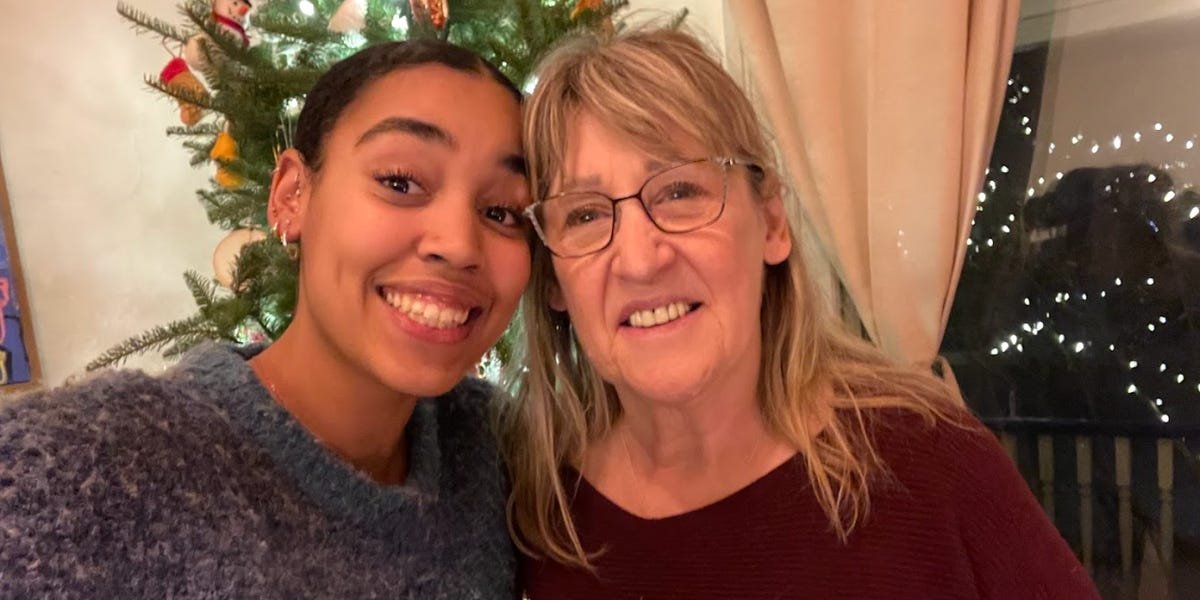
The writer and her grandmother posing for a selfie and smiling in her grandparents' house.

The experience turned into a meaningful chapter of my life.

Alessa Hickman


As I’ve grown older and gotten busier, my time with family has naturally become shorter and much more spread out.

Between work, different homes, relationships, and planning a move abroad, so many visits have been quick moments squeezed in on birthdays, holidays, or weekend check-ins.

Having a stretch of time with family like this isn’t something that comes up often, and it made the simple moments with my grandparents feel more meaningful — sitting down for dinner together, cooking a meal we used to eat when I was little, or laughing at the stories we’ve all heard a thousand times.

This in-between season has been filled with memories, lessons, and changes that taught me how much growth can happen in familiar spaces.

As we start this new chapter abroad, I’m grateful that this time with my grandparents was part of our journey. It reminded me to embrace the unexpected moments, make the most of every experience, and start our next adventure with an open mind.


Source link