Five Big Tech bosses have taken a nearly $200 billion blow to their combined net worth this year as AI buzz eases and the US and Israel’s war with Iran continues to spook investors.
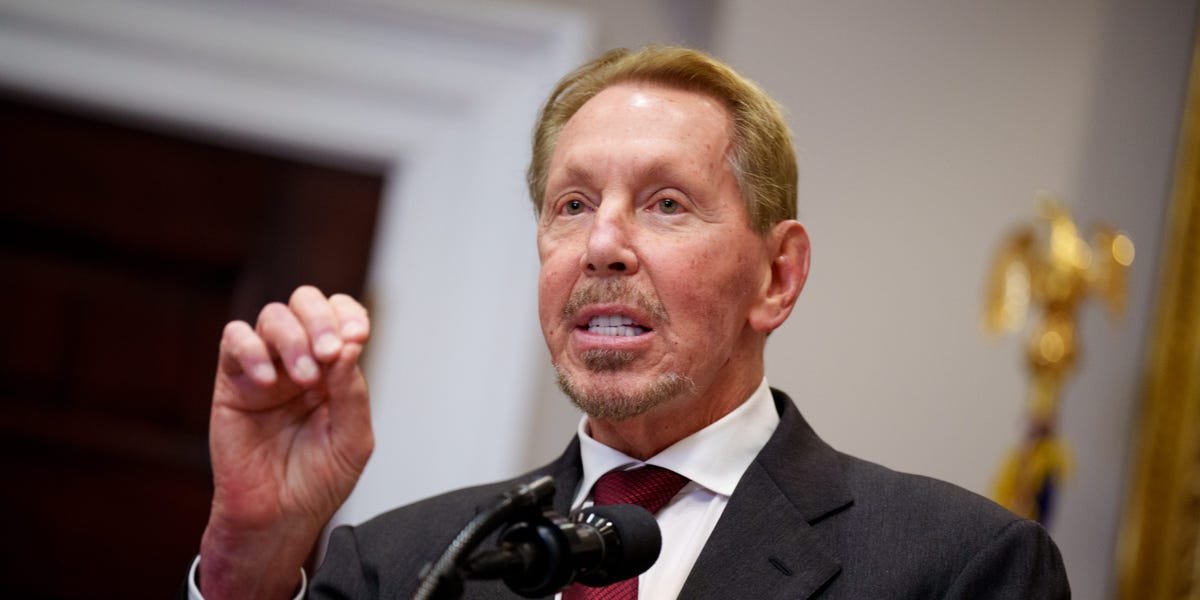
Larry Ellison, Oracle’s cofounder and tech chief, has seen his personal fortune shrink by about $60 billion since the start of January, the Bloomberg Billionaires Index shows.
Ellison was worth $188 billion at Friday’s close, well off a peak of nearly $400 billion in September last year, when he briefly dethroned Elon Musk as the world’s richest person.
His sharp wealth drop has been fueled by a nearly 30% plunge in Oracle’s stock price this year, as investors have soured on the enterprise-software giant’s debt-fueled buildout of AI data centers.
Meta cofounder and CEO Mark Zuckerberg has taken a $46 billion hit to his wealth this year, reducing it to $187 billion at Friday’s close.
Shares of Facebook, Instagram, and WhatsApp’s parent company have tumbled 20% this year as the social-media giant fends off lawsuits and faces mounting skepticism over its massive AI spending plans.
Amazon founder Jeff Bezos and Alphabet cofounders Larry Page and Sergey Brin are down about $31 billion, $32 billion, and $29 billion year to date.
Shares of the e-commerce behemoth and the search-and-advertising titan are down around 14% and 12% each this year, as investors have pared their bets on blue-sky AI growth projections.
Broad losses
These five men alone have seen a combined $198 billion erased from their net worths this year. Other big names in business are deep in the red too: former Microsoft CEO Steve Ballmer is down $41 billion this year at $128 billion as of Friday’s close, reflecting a 26% slump in the enterprise-software group’s stock price.
Outside of tech, LVMH founder and CEO Bernard Arnault has seen his wealth wiped out by almost $58 billion this year, driven by a 29% tumble in the luxury giant’s stock.
The virtual closure of the Strait of Hormuz, a key shipping route for global flows of oil and liquefied natural gas (LNG), has spiked crude prices, heaped fresh pressure on consumers, eroded growth forecasts, reignited inflation fears, and dashed hopes for rapid interest-rate cuts in several countries.
Page, Bezos, Brin, Ellison, Zuckerberg, and Arnault rank second to seventh on Bloomberg’s rich list, in that order. Musk still tops the ranking with a $17 billion gain this year to $637 billion. That reflects the soaring valuations of his private businesses, such as SpaceX and xAI, as Tesla stock is down 20% this year.
Huge excitement about AI and its potential to supercharge productivity and multiply corporate profits have driven tech stocks to new highs in recent years.
But skeptics such as Michael Burry of “The Big Short” fame have warned that the buzz has created a bubble characterized by nosebleed valuations, overbuilding, and circular dealmaking that will end badly.
All but two of the world’s 10 wealthiest people have seen their fortunes shrink this year as jitters mount over the AI boom and the broader run-up in stocks.
Alphabet’s Larry Page and Sergey Brin, Amazon’s Jeff Bezos, Meta’s Mark Zuckerberg, Oracle’s Larry Ellison, LVMH’s Bernard Arnault, Nvidia’s Jensen Huang, and Berkshire Hathaway’s Warren Buffett are all in the red for 2026 so far, per the Bloomberg Billionaires Index.
Ellison has seen his personal wealth slump by an unrivaled $47 billion to $200 billion as of Tuesday’s close, reflecting a 23% plunge in Oracle stock year to date.
Investors have grown more skeptical about the database giant’s AI infrastructure buildout, particularly as big names such as Michael Burry of “The Big Short” have warned the strategy won’t pay off.
However, Oracle’s shares were trading 10% higher in Wednesday’s premarket after the company’s earnings report on Tuesday signaled strong AI demand.
Every time Theron publishes a story, you’ll get an alert straight to your inbox!
Stay connected to Theron and get more of their work as it publishes.
Bezos’ fortune has shrunk by $15 billion this year to $239 billion, reflecting a 7% drop in Amazon stock as Wall Street frets over the immense cost of its AI buildout.
The online retail and cloud services giant has projected it will spend $200 billion on microchips, data centers, and other AI equipment this year.
Lower down the rich list, Microsoft’s former CEO, Steve Ballmer, has seen $25 billion wiped off his net worth this year, reducing it to $143 billion at Tuesday’s close.
The enterprise software giant’s shares have slumped 16% this year as traders increasingly worry AI tools could displace the company’s Office suite.
Outside of tech, Arnault has seen around $42 billion wiped off his net worth this year, reducing it to about $166 billion at Tuesday’s close. That reflects a 22% plunge in LVMH stock so far this year, courtesy of cooling growth and the risk that the Iran conflict disrupts international trade and travel for a prolonged period.
Elon Musk and Jim Walton are the only members of the top 10 to have grown their net worths this year as of Tuesday’s close.
Musk has added an unmatched $44 billion to his personal wealth this year, lifting it to $664 billion. The gain reflects the soaring value of his stakes in SpaceX and xAI, which has more than offset the hit from an 11% drop in Tesla’s stock price this year.
Walton, an heir to the Walmart fortune, has added $12 billion to his net worth this year, thanks to a 12% jump in the retailer’s shares. That’s been fueled by Wall Street buzz over the growth of Walmart’s online business and the potential payoff from its AI investments.
His siblings, Alice and Rob, have also added around $12 billion to their respective fortunes. All three siblings rank among the top 10 wealth gainers this year.
No one really tells you how to look for a home — and I don’t mean a structure with four walls and a front door.
I mean the place you’re proud to be part of, to describe to people who’ve never been, to bond over with strangers you’ve just met.
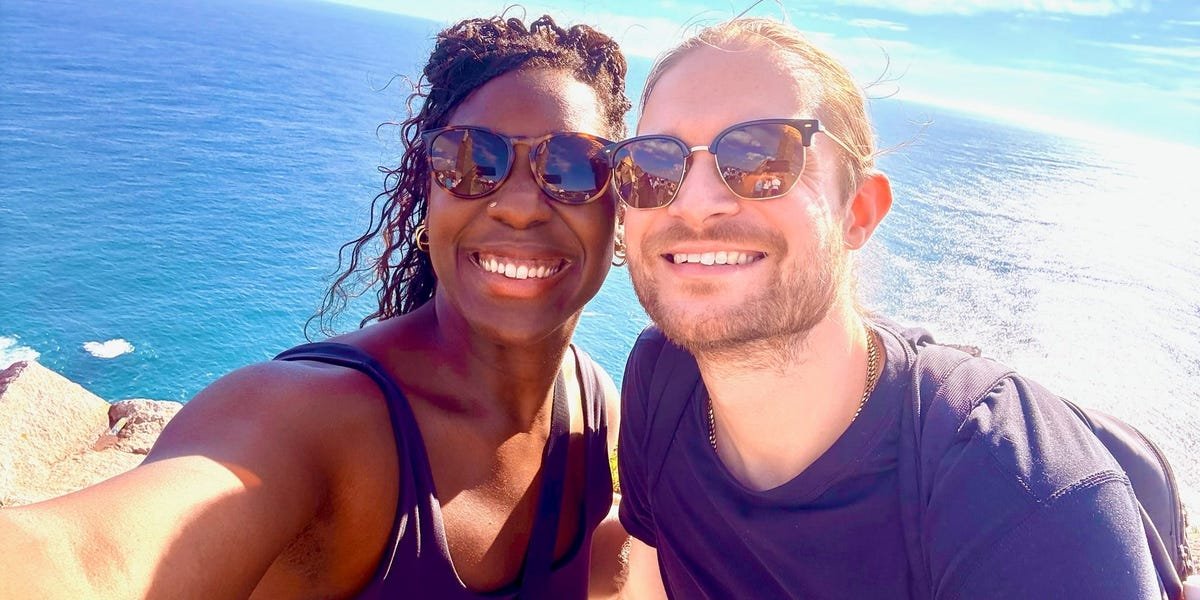
If I’m honest, my husband Cody and I started our search for a new home from vastly different perspectives: I’m a Guyanese-American Black woman raised by Caribbean parents in an eclectic corner of North Jersey.
I grew up proudly wearing my badge of independence as I took the bus and train between my hometown and New York City, the sound of different languages lulling me to sleep on the way home from Manhattan.
Cody, the firstborn in a blended, mostly evangelical family, jumped at the chance to leave rural Indiana as soon as he was able. He craved walkability, third spaces, and access to culturally diverse communities.
We met nearly 12 years ago in North Carolina and, for a while, found some common ground in Durham — its tight-knit community felt familiar to me, and the (semi) walkable neighborhoods suited him.
When remote companies became our sole source of work, we found ourselves with the freedom and opportunity to do what we hadn’t before: travel overseas.
Soon, we began to wonder if home might exist outside the contiguous US.
Throughout our summer of travel, we began looking for a place to settle
We spent time exploring London.
Ashley Stahm
We’d never been to Europe, so we took two months in the summer of 2023 to travel to Paris, Nice, and Cassis, France; Brussels, Belgium; Amsterdam, Netherlands; and London, England.
Those cities, of course, are as different as the four corners of the US, and perhaps even more so due to linguistic, cultural, and climate differences.
We packed a single checked bag and hauled it from city to city on trains and across cobblestones, shedding our crewnecks and rain jackets as we walked along Amsterdam’s canals for shorts and bathing suits in the south of France.
We loved the bicycle infrastructure in Amsterdam, the café culture in Paris, and the cultural diversity and ample green space in London.
However, our research taught us that the Netherlands, France, and the UK would not be particularly easy countries for us to immigrate to.
Not to mention, we stayed in each city during the summer, experiencing the most vibrant version of each. What would living in London feel like in winter, with the sun lost behind endless overcast skies? What would Paris be like when it rained days on end?
We enjoyed visiting Amsterdam during the summer.
Ashley Stahm
Around six weeks into our foray across those four countries that summer, we took a beat. What, exactly, were we looking for?
We’d seen Big Ben. We’d seen the Eiffel Tower. We’d biked across canals in Amsterdam, and had Belgian waffles in the place they originated because, well, of course we did.
The magic of our first European tour was captivating, sure, but we were looking for a home.
We realigned on the basics: We specifically wanted a place where we could build a childfree community. We craved places for adults to meet and support one another, with the intent of growing old together.
We never, ever wanted to own a car again. We wanted healthcare to feel accessible. We needed a feasible way to immigrate and integrate, language, bureaucracy, and all.
We wanted to be in this new home for the long haul.
As our travels continued, we found a not-so-great fit and one city that felt right
We spent our travels exploring new places and celebrating milestones.
Ashley Stahm
It was with that renewed direction that we went home and planned for our next trip across the Atlantic: this time to Lisbon, Portugal, and Barcelona, Spain.
Although their two countries shared a border, these two cities couldn’t have been more different to us.
In Barcelona, Catalan was spoken so widely that my high-school Spanish wasn’t as useful as I’d hoped. Between the stifling summer heat and what I perceived as a noticeable lack of visible representation of dark-skinned Black (and Afro-Caribbean) women like myself, the city just wasn’t a match for me.
I wasn’t expecting to see reflections of myself everywhere; I was in Europe, after all. However, knowing that Spain is home to millions of immigrants, I also hadn’t expected to feel so conspicuous and be pored over so much.
Although I left Spain feeling more alienated than ever, Portugal soon stole our hearts.
Everywhere I looked, I saw melanin. Throughout our time in Lisbon, I heard a mix of languages and accents — not just European Portuguese, but also Brazilian, Angolan, and Mozambican Portuguese, along with French and English — reflecting the diversity of the people around me.
I sat among greenery, quiosques, miradouros, and old ladies in crisp slacks with beers in hand at 11 a.m., gossiping with their neighbors before heading to the local tasca for almoço and a pastel de nata.
For us, Lisbon felt like it could be home.
After 2 years of searching, we’ve settled on Lisbon
From the north in Porto to the south in the Algarve, I couldn’t pick my jaw up off the floor.
Ashley Stahm
Eventually, we decided to move to Portugal’s capital city, where we had found walkable neighborhoods and a social community of both locals and expats — just as we’d hoped.
It’s warm and sunny year-round, so we didn’t need to worry so much about possible gloominess during other seasons.
Portugal also offers a universal public healthcare system that seems accessible, plus more visa routes than some other countries we’d considered.
Like most truly multicultural countries, though, it is grappling with geopolitical and economic friction that we’re still learning about.
However, there was what was on our list, and then there was what our hearts needed: A country willing to welcome us, teach us, and be patient (as we figured out how to file our immigration paperwork in a language we’re still learning).
We’re immigrants in a land whose respect we are still earning, alongside friends from all over the globe who are starting over, just like us. The effort is well worth it.
From where we stand, a full two years after we began our search, we’re finally home.
Target likely can’t wait to close the book on last year as it looks to turn the page and return to growth.
The bullseye retailer on Tuesday reported a 1.7% decline in total sales for the last fiscal year, which ended January 31, with a 1.5% drop for the quarter. That’s including the addition of a batch of new stores and growth in its digital business.
“I’m incredibly proud of how our team navigated through a challenging year in 2025,” CEO Michael Fiddelke said in a statement. “Our team is firmly focused on writing Target’s next chapter of growth.”
Adjusted fourth quarter earnings per share of $2.44 exceeded the Bloomberg analyst consensus of $2.13, but the outlook of less than a percentage point increase in comparable sales and first quarter EPS of $1.30 were less than Wall Street estimates.
While the fourth quarter’s results extend a three-year streak of flat or declining comparable sales, the company said traffic and transactions started to pick back up in December and January, and are on track to deliver net sales growth in every quarter of 2026.
“Target saw a healthy, positive sales increase in February, serving as an important milestone on our path back to growth this year, and reinforcing my confidence in the momentum we’re building and the future we’re creating together,” Fiddelke said.
Analysts said ahead of the earnings release that Fiddelke and his team have their work cut out for them.
“Time is Target’s greatest adversary,” Mizuho analyst David Bellinger said in a weekend note ahead of the release.
“While senior management is taking the necessary steps to re-position the business, others are not standing still,” he added, referring in particular to Walmart, which has been gaining momentum as Target struggles.
“Ultimately, the company needs to show how it can better compete and define its place in the market,” UBS analyst Michael Lasser said in a note leading up to the results.
Fiddelke is set to unveil his larger turnaround strategy Tuesday morning at Target’s headquarters in Minneapolis. One month into his new role, the CEO has said he’s focused on four key priorities: improving the merchandising, elevating the shopping experience, investing in tech, and supporting workers and communities.
The company also said it was seeing strong recent performance in non-merchandise sales, including its Roundel ads business, Target Plus membership, and same-day delivery services.