Ive-been-to-Disney-World-in-every-season-Here-are.jpeg

I’ve been to Disney World in every season. Here are 7 reasons winter is the best time of year to go.

With more than 20 trips to Walt Disney World, I’ve visited during every season and most months of the year — a June work trip, November family trip for our Disney wedding, a 5th birthday trip in May, and in the runDisney ChEAR squad with a friend in February.

This year was my fourth time visiting in the winter months of January/February, and it was just my husband and me. Despite some very chilly days, this trip confirmed it — winter is officially my favorite time to visit Disney World, especially when it’s a kid-free trip.

Winter is a time to explore the parks differently

In the months when avoiding heat and crowds is a priority, it’s best to arrive early, stay late, and avoid being outdoors during the hottest hours of the day.


Woman with Olaf in Disney

It was summer inside Olaf’s character meet but outside it was only 40 degrees.

Courtesy of the author


When it’s cold, it’s kind of the opposite. We focused on the indoor attractions and spots with indoor queues in the morning.

At 11 a.m., we searched for opportunities to be in the brisk afternoon air and lovely sunshine.

Once the sun started setting and it started getting chillier around 4:30/5 p.m., we headed to eat, taking our time over meals at restaurants geared more toward adults, like Takumi-Tei at EPCOT.

We found rare characters, cold-weather costumes, and new Cast Members

Late January/early February is one of the start times for the Disney College Program, also known as DCP in Disney lingo.


Mice costumes at Disney

Meeting rare characters in training is a perk of winter visits.

Courtesy of the author


Some of my favorite Cast Member interactions have been with excited, brand-new college kids in “Earning My Ears” ribbons. These Cast Members are proof that some of the biggest Disney fans work in the parks.

This is also a time to randomly meet rare characters because characters are being “warmed up” (Disney speak for training) for parades, shows, and character meet and greets.

On this trip, we had two character firsts at EPCOT — meeting both Geppetto from “Pinocchio” and the mice from “Cinderella.” Usually, the only place to see these characters is during a parade.

I got a wave from Geppetto and helped the mice search for Cinderella’s glass slipper.

EPCOT is also home to many outdoor character meet-and-greets. When the temperature drops, the cold-weather costumes come out — Alice dons a gorgeous cloak, Moana has sleeves with seashells, and Aurora gets a stunning pink fur trim on her gown.

We found a new favorite location for a nighttime show, California Grill

With the not-so-magical weather, we changed our plans for the nighttime show.

Even in a hat, gloves, and multiple layers, the chilly nighttime air coming off the lagoon at EPCOT for Harmonious and the cold seats at Hollywood Studio Fantasmic! weren’t appealing.


Magic Kingdom fireworks

California Grill has a unique view of the Magic Kingdom fireworks

Courtesy of the author


Instead, we made our first visit to California Grill. Seeing fireworks fill the sky over Magic Kingdom, toasty warm with a goat cheese ravioli and a glass of Skywalker wine, was an experience I will happily repeat.

The best EPCOT Festival is for a few weeks and only in the winter

I’ve been to every one of the four annual EPCOT festivals multiple times.

EPCOT International Festival of the Arts is, without a doubt, my favorite. It’s the smallest, shortest, and least busy festival.

We visited the festival every day of our four-day trip. We climbed inside 3D chalk art, saw popular Disney artists, hopped inside scenes from Disney movies, and sampled sips and bites almost too beautiful to eat.


mural

Thousands of people from all over the world come together to transform this mural to a colorful celebration of community.

Courtesy of the author


What I love most about the Festival of the Arts is the sense of community and inclusiveness.

We joined thousands of people from around the world to transform a wall into a colorful community art piece.

And, before leaving the park for the evening, we stood with other guests watching Spaceship Earth light up in rainbows while The Muppets sang “Rainbow Connection.”

This trip, we were prepared for the cold weather

Almost every winter trip to Disney, I have come home with an impulse purchase made while freezing in the park.

There’s the blanket from the EPCOT Mexico pavilion we huddled under during the fireworks in November, and the Mickey sweatshirt bought at a very chilly late-night Mickey’s Very Merry Christmas Party. I have two hoodies from my last trip in February — it was so chilly, I wore both at the same time.


Woman at Epcot

Wearing items purchased for an Alaska Disney Cruise in Orlando was a surprisingly fun first

Courtesy of the author


Not this time! We were prepared for the cold, and instead of a suitcase full of cute vintage-inspired Disney dresses — my usual park look — I packed packable puffer jackets and gloves, and got creative with Disney-esque layers.

Multiple guests and Cast Members complimented my Minnie Ear beanie and Mickey-inspired red and black puffer jacket layers — items I got for an Alaska Disney Cruise that I never thought I’d wear in Florida, but looked great in front of the magical glow of Spaceship Earth.




Source link

Alice Tecotzky

JPMorgan will spend almost $20 billion on technology this year

JPMorgan plans to boost its technology budget by almost $2 billion this year, to $19.8 billion — a roughly 10% increase compared to 2025.

Speaking at the firm’s 2026 company update on Monday, CFO Jeremy Barnum said “technology remains a major driver of our expense growth,” which is up around $9 billion for the year. The bulk of the tech expenses comes from $1.2 billion in investments, including some AI-related projects.

Later in the presentation, CEO Jamie Dimon said that returns on AI are difficult to quantify initiative by initiative. Answering a question from Wells Fargo analyst Mike Mayo, who pressed him on the bank’s technology spend on a recent earnings call, Dimon said that time saved is often “too vague” to measure concretely.

“I think the hardest thing to measure has always been tech projects,” Dimon said. “That’s been true my whole life.”

When it comes to where the firm is investing, Barnum said it’s focusing on “the highest impact areas,” such as customer service in call centers, personalized insights for clients, and technology for software engineers. GenAI is, Barnum told investors, growing as a proportion of the bank’s AI usage.


JPMorgan Company Update

A slide from the company update presentation breaks down technology spending.

JPMorgan


Some of the $2 billion increase is due to inflation hitting everyone, including higher AI hardware costs. Technology head count growth isn’t a major driver — Barnum said the bank has budgeted in some additional head count in the area to work on new products, but that the culture generally discourages hiring more people whenever a new opportunity arises.

Despite JPMorgan’s status as a tech-forward firm — and No. 1 ranking on Evident AI’s index of AI maturity at banks — executives didn’t brush off competition. Marianne Lake, in response to an earlier question from Mayo, said the bank has some strategic assets, including in data.

“Only the paranoid survive,” Lake, the CEO of consumer and community banking, said. “We aren’t walking around thinking we have the divine right to success, we are walking around thinking about how to optimize the value that we give to our customers, how to perfect our processes and our systems.”

JPMorgan isn’t the only bank spending big on technology. Its rivals are also rapidly integrating AI throughout trading floors, back offices, and more to create efficiencies and improve customer experiences. Bank of America said it plans to spend around $14 billion on technology this year.

Dimon has previously asked investors to “trust him” on his bank’s spending, saying he is trying to keep the company from falling behind during its January earnings call.

“We need to have the best tech in the world,” he continued. “That drives investment, it drives margin, it drives competition.”


Source link

We-wanted-to-freeze-time-with-our-daughters-So-we.jpeg

We wanted to freeze time with our daughters. So we rented out our house and sent them to school in 3 countries in one year.

We were racing to keep up with our packed family schedule. Days blurred into school, work, gymnastics, birthdays, and dinner parties — energizing in theory, exhausting in reality. We were scraping by.

I remember peak multitasking: listening to my 6-year-old read aloud while making breakfast, and trying to finish putting on eyeliner while the eggs finished cooking in the pan.

My husband and I longed for wide-open days to actually connect, but school holidays were never long enough to decompress. We could see how easily the years might slip by, buried in logistics, until suddenly the kids were packing for college.

We wanted to freeze time. So we hatched a plan to leave our “normal” life for a year and have a wild adventure together as a family.

We came up with a plan

In July 2024, we rented out our London home, stored our belongings, and took the bus to Heathrow with two backpacks and a carry-on.

We weren’t wandering aimlessly. We planned to live in three locations, traveling for five weeks before and after each stop.

I pivoted my marketing consultancy toward travel writing and speaking, while my husband’s academic research guided our shortlist of places we wanted to live. His research enabled legal residency which allowed the girls to attend school. We chose Japan, the US, and the Netherlands, staying three to four months in each.

We picked Tsukuba, Japan, to immerse ourselves in a completely unfamiliar culture; Great Neck, New York, near where we’re both from, to give our daughters a taste of American life and spend rare time with family; and Leiden, the Netherlands, to experience its bike- and water-centered lifestyle.

Residency came with a lot of admin.


A woman wearing a fluffy hat in Hokkaido, Japan.

Lucas had a plan to homeschool her daughters in Japan (pictured), but ended up sending them to a local school.

Provided by Lisa Lucas


For Japan, we had originally planned to homeschool. Our 8-year-old surprised us by asking to attend a local Japanese school, despite only knowing a few phrases she had picked up during the three weeks we spent traveling around the country.

The school welcomed both girls. Like their classmates, they walked to school alone, changed into indoor shoes, helped serve lunch, and cleaned the classrooms.

In New York, we lived with family outside the city. The girls rode a yellow school bus for the first time, while my husband commuted by train. It was a stark contrast to London — no uniforms, more complicated mornings, and the sobering reality of active-shooter drills.

In Leiden, the girls attended a small international school. Students biked along canals and tended their own garden plots as part of a Dutch gardening program.


Two young girls wearing bike helmets looking out to the water in Leiden, the Netherlands.

Their daughters enjoyed cycling while living in Leiden, the Netherlands.

Provided by Lisa Lucas


We packed light

Living out of backpacks forced minimalism. I loved escaping the endless to-do list of home life and focusing on actually living.

I wore a single black maxi dress almost every day in Asia — biking through alleys or hiking through the jungle — and it somehow worked.

If anything, I’d bring even less next time. With fewer possessions, our mental bandwidth expanded. We could focus on fun, without guilt.

Parenting on the road

When we first told the girls about our plan, our youngest cried. They loved their friends, their teachers, and the rhythm of school. They couldn’t imagine leaving and not coming back. We tried tempting them with volcanoes and snorkeling in Indonesia.

They came around, somewhat. They loved most moments, but they also always wanted to go home. We promised it would only be a year.


Family in a truck with Mount Bromo, Indonesia in the background

The family spent time exploring other parts of Asia, including a trip to Mount Bromo, a volcano in Indonesia.

Provided by Lisa Lucas


Our priority was making them feel safe and secure. We talked about adaptability as a life skill, but we also held them close and reminded them they were loved.

Most days, we’d say, “We’re still on the trip,” and it made us feel like a team. The girls learned how to be the new kid, make friends, and settle into unfamiliar rhythms. They learned you can reinvent your life more than once.

The intensity bonded us. We had waterfalls to ourselves, watched wild snow monkeys, and made friends who invited us to visit them in Cozumel. I celebrated my usually grim January birthday on a Thai beach.

In the US, we were present for heavy family moments, including my grandfather’s passing.

We were still on the trip — until we weren’t

Returning to London after 13 months felt surreal. Our 6-turned-7-year-old kissed the ground at Heathrow.

The trip changed us. It gave us shared memories — Hokkaido cream, a road trip from New York to Miami, sunsets from an Alpine hut — but more importantly, it clarified what matters: slow time together, not renovations or packed calendars.

We’re happy to be home, blender included. But we’re already dreaming about our next extended adventure.

Do you have a story about taking a gap year that you want to share? Get in touch with the editor: akarplus@businessinsider.com.


Source link

How-Rikers-Island-jail-makes-7-million-meals-a-year.jpeg

How Rikers Island jail makes 7 million meals a year

New York City’s infamous jail, Rikers Island, currently houses nearly 7,000 detainees. Chefs, not inmates, do the cooking. But while they’re on their shift, the chefs are locked in, too. There are cameras everywhere, monitored from the guard’s office. Knives are chained to heavy machinery. Can lids slide into a locked cage. Spoons are locked up in the office. Inside Rikers’ kitchens, there’s a delicate balance between the chefs, guards, and the detainees who wash the dishes.


Source link

The-economy-grew-strongly-last-year-but-hiring-stagnated-Its.jpeg

The economy grew strongly last year, but hiring stagnated. It’s making the gap between the rich and everyone else worse.

The data is in, and last year presents an economic conundrum: Overall growth was relatively strong, but job growth was virtually nonexistent. It bodes ill for the gap between the rich and everyone else.

Newly released data showed the US economy grew 2.2% in 2025. That’s a respectable pace, although cooler than the past few years. Economic activity was affected by the record-long government shutdown in the fall, businesses figuring out how to handle trade announcements, and new investments.

Meanwhile, the US added the fewest jobs since 2003 outside recessions. While unemployment stayed low, hiring and job openings fell, meaning plenty of people couldn’t find a job. It’s an unfortunate situation for new graduates looking to get on the first rung of the career ladder, job switchers eager for a fresh opportunity, and basically anyone looking to land a job quickly outside the in-demand healthcare and social assistance sectors.

The divide between output and jobs is widening another divide: some call it a “K-shaped economy” where the rich are earning and spending more, while everyone else is stagnating. And it doesn’t look like 2026 will be much better.

“Consumers are feeling the weight of the price increases, and combined with the jobs outlook that’s worsening they say, ‘OK, when I look out, I don’t see prices going down that much, but I do see my wage is not growing and my job not being as reliable or secure as it once was,'” Atsi Sheth, the chief credit officer at Moody’s Ratings, told Business Insider.

A historical divide between job and output growth

Economist Mohamed El-Erian said in a Financial Times opinion piece before the newest GDP figures that while this “decoupling of job growth from economic growth” has happened before in the US, it’s typically occurred during recession recoveries and “not in the midst of a prolonged period of robust growth such as the one we are experiencing today.”

“We’re in this unusual environment where economic activity has remained quite robust, and yet job gains have fallen to near zero,” Gregory Daco, the chief economist at EY, told Business Insider.

The US added a measly 181,000 jobs last year; annual figures are often at least a million. It’s comparable to 2003, when the US only added 124,000 jobs in the wake of the 2001 recession.

Daco said GDP’s strength is “masking a growing bifurcation” and thinks the polarization will persist and maybe worsen because supply shocks, such as trade and tax policies, AI, and demographic changes, aren’t reversing.

“In some cases, we’re seeing a more significant effect on economic activity,” Daco said.

Some economic experts are optimistic about the year ahead. “We expect a strong year of economic growth in 2026, driven by business investment, consumer spending and fading trade headwinds,” said Rick Gardner, chief investment officer of RGA Investments. ZipRecruiter economist Nicole Bachaud thinks the job market could be at a “pivot point” after stronger hiring in January.

“Demand in other sectors that are more cyclically based instead of demographically based is starting somewhat to show signs of growth,” Bachaud said.

The gap between the rich and everyone else

The strength in the economy isn’t being felt by all. People at the top are feeling much better than pretty much everyone else. They don’t have to worry as much about rising prices of necessities and slowing wage growth.

“The wealthier, more affluent consumers are benefiting from wealth accumulation, allowing them to still spend relatively freely,” Daco said. “They’re also enjoying faster wage growth, while lower-income families are seeing reduced wage growth, near-zero real wage growth, and not much wealth appreciation outside of real estate, if they have that.”

Sheth said the benefits of GDP growth have been higher for those who earn from investments and capital gains. “They’ve benefited a lot from financial market booms, whereas those who earn their income primarily by wages have benefited some, but not as much,” she said.

Diane Swonk, chief economist at KPMG, told Business Insider that “What productivity growth we’ve seen since basically the turn of the century has accrued mostly to the owners of capital, not rank and file workers. And that means we’ve seen wealth compound, but also income inequality worsen.”

Sheth said regardless of how people refer to the disconnect happening in the economy, the “real trouble” is that wages are no longer keeping up with the rising cost of living and that people are having to pay a lot more to buy essentials.

Swonk said inflation is “the most regressive tax” because of how much lower-income households have to spend on necessities relative to their earnings.

“When those goods go up in price, obviously that affects them even harder, and so it’s a very regressive tax,” Swonk said, adding, “Oftentimes, we lose sight of the fact that it really is the level of prices that people are still reacting to.”

The Federal Reserve Bank of New York said in a report that inflation-adjusted consumer spending has increased for high-income households since 2023, but low-income household spending has mostly trended down. “The trend since 2023 is different from the trend during the pandemic recession and recovery, when consumption growth was similar across income groups,” the report said.

Amid those price increases and changes to spending habits, wage growth has drastically cooled for lower earners. Lower-income wage growth surged between 2021 and 2022, but has since cooled down a lot from the late 2022 peak. Sheth also pointed out that wage growth for hourly workers, who she said are likely “subject to much more fluctuation and downside risk than if you have a steady salary,” has also been falling faster than those not paid hourly.

Sheth said another issue is that the lower end of the wage spectrum is under more credit stress.

“We’re seeing greater credit stress in subprime auto, for instance, some parts of borrowing, but again at the lower end of the spectrum,” Sheth said. “But overall, if you compare household balance sheets today to, say, the pre-global financial crisis era, they’re generally stronger — much stronger at middle- and upper-income levels, of course, but generally stronger.”

Where we’re going in 2026 and how AI could keep widening the gap

El-Erian said in the Financial Times piece that, “This period of decoupling of employment from growth may prove more persistent and more consequential,” partly because the effects of AI are still unfolding.

AI-related investments have already made a dent in real GDP growth based on findings from the Federal Reserve Bank of St. Louis. “As firms continue integrating AI into their operations and building the infrastructure required to support it, these categories are likely to remain significant drivers of investment well into 2026 and beyond,” the authors wrote.

Laura Ullrich, the director of economic research in North America at the Indeed Hiring Lab, described a “precarious balance” between GDP and the job market. Ullrich is unsure whether employers will decide they should hire more to keep up with the relatively robust economic growth or make job cuts because they aren’t keeping up.

“I do think the uncertainty about the role AI plays adds in another interesting pivot,” Ullrich said. “Because if AI is able to take on the work of humans, then we could see economic growth without hiring picking up much. But, I’m skeptical that that’s happening in big ways right this second.”

Aside from the impact of AI, the US doesn’t need as many jobs to hold unemployment stable at a time when the population isn’t growing as quickly, so it’s possible job growth continues to be lower than previously experienced.

“The low-hire, low-fire job market isn’t just about policy changes in the new administration or about AI,” Jed Kolko, senior fellow at the Peterson Institute for International Economics, told Business Insider. “So, there may not be a quick fix.”

Even the Fed is cautious.

“While participants generally assessed that, under appropriate monetary policy, the labor market likely would stabilize and then improve this year, they continued to note that the outlook for the labor market remained uncertain,” minutes from the January Federal Reserve meeting said.


Source link

Celebrity-deaths-2026-Remembering-the-famous-people-we-lost-this.jpeg

Celebrity deaths 2026: Remembering the famous people we lost this year

The Rev. Jesse Jackson was a leader of the Civil Rights Movement, a minister, and an activist icon who twice ran for president.

Born on October 8, 1941, in Greenville, South Carolina, Jackson experienced Jim Crow segregation on public buses and at school firsthand. It would shape the rest of his life.

His fight for civil rights began in the 1960s, when he helped organize protests and demonstrations across the US and worked closely alongside civil rights icon Dr. Martin Luther King Jr.

His decadeslong career as a leading civil rights activist included support for modern national movements, such as the push for voting rights, the fight against racism, and a higher minimum wage.

Jackson ran for president twice, both times as a democrat. He placed third for the party’s nomination in 1984 and second in 1988. This marked the most successful presidential runs of any Black candidate prior to Barack Obama.

Jackson announced in 2017 that he’d been diagnosed with Parkinson’s disease. In November 2025, Jackson was treated in a Chicago hospital after complications from progressive supranuclear palsy (PSP), a rare neurodegenerative condition.

Jackson died on February 17.


Source link

Meta-says-it-wont-chop-the-bottom-5-performers-this.jpeg

Meta says it won’t chop the bottom 5% performers this year

  • Meta denies plans for new performance-based layoffs amid online speculation.
  • Meta previously considered annual job cuts based on performance to manage low performers.
  • Meta recently cut 10% of its Reality Labs division, affecting over 1,000 employees.

Meta says it will not have a fresh round of performance-based layoffs, even as a smattering of online chatter has raised questions about whether the social media giant will quietly restart its performance-driven purge.

“These are individual cases not related to any company wide initiatives,” a Meta spokesperson told Business Insider when asked about a recent restructuring. “For example we are not doing any 5% low performers like we did last year.”

That’s a notable shift in tone from early 2025, when Business Insider reported that an internal FAQ circulating at Meta suggested performance-based job cuts could become an annual practice, with the company saying it “may use future performance cycles” to move out its lowest performers. Early last year, Meta cut 5% of its workforce, saying it was focusing on its lowest performers.

The clarification also comes as Meta continues to reshape other parts of the business. Last month, the company cut about 10% of its Reality Labs division, a move that affected over 1,000 employees.

Have a tip? Contact Pranav Dixit via email at pranavdixit@protonmail.com or Signal at 1-408-905-9124. Use a personal email address and a nonwork device; here’s our guide to sharing information securely.


Source link

reporter allie kelly

Cancer under 50 can cost $45,000 — and that’s just in the first year of treatment

A GoFundMe for James Van Der Beek’s family highlights a harsh reality of young cancer diagnoses: they can be financially devastating.

“The costs of James’s medical care and the extended fight against cancer have left the family out of funds,” reads the fundraising page.

The effort raised over $1 million in 24 hours following the actor’s death from colorectal cancer on February 11.

Van Der Beek, who was 48, was diagnosed with stage 3 colon cancer in 2023 and publicly announced his diagnosis in late 2024. He is survived by his wife, Kimberly, and their six children. The fundraiser says the money will help pay off Van Der Beek’s care, cover household expenses, and support the kids’ education.

The family’s story underscores the financial struggles for millions of Americans navigating a cancer diagnosis under 50. While it’s hard to face steep healthcare costs at any time, it can be especially challenging during prime earning years. Van Der Beek worked in TV and movies from the 1990s to the early 2020s.

Young cancer patients lose $5,000 in yearly wages

Business Insider heard from dozens of patients as part of a yearlong investigation into young cancer cases. They told us about the credit card debt they incurred from treatment, the skyrocketing cost of health insurance, and the impact of cancer on their working lives long past recovery.

Our newsroom collaboration with health economists at GoodRx found that the average 30-something with a stage 3 colon cancer diagnosis spends $45,000 out of pocket in their first year of treatment. Chemotherapy, prescriptions, insurance premiums, fertility treatments, and unexpected costs like transportation and mobility aids are included in that figure.

Lost wages are too — young patients in their prime earning years typically miss out on thousands of dollars in income.

The GoodRx analysis of data in the national Medical Expenditure Panel Survey found that the average cancer patient ages 18 to 44 loses $5,104 in annual wages and 26 days of work due to illness. This is markedly more than older patients outside their prime working window: Patients ages 45 to 64 lose $2,903 in wages and 18 days of work.

These numbers are averages, and a particular patient’s wage losses and costs may vary depending on their age, job, treatment plan, and location. But it highlights a truth for young adults like Van Der Beek: Bills for cancer care can hit at a time when people are financially vulnerable or facing income instability.

Financial challenges can also be compounded by career setbacks. Young cancer patients told Business Insider they struggled to balance their workload with constant medical appointments and worried about losing out on promotions. Some had to quit their jobs, while others couldn’t afford to give up their employer-sponsored health insurance. Medical debt is among the top causes of bankruptcy in the US, and is more frequently reported by millennials than any other generation.

What’s harder to capture in data is the emotional toll young cancer has on patients, especially those who consider their careers to be part of their identities.

As Van Der Beek told Business Insider last year: “All these beautiful things that I love, and I used to define myself as — a father, a provider, a husband — all that got taken away, or at least paused. I had to sit there and say, ‘Well, what am I?’ And it was, ‘I’m still worthy of love.'”


Source link

Goldmans-CEO-lays-out-the-3-forces-lining-up-to.jpeg

Goldman’s CEO lays out the 3 forces lining up to make this a breakout year for dealmaking

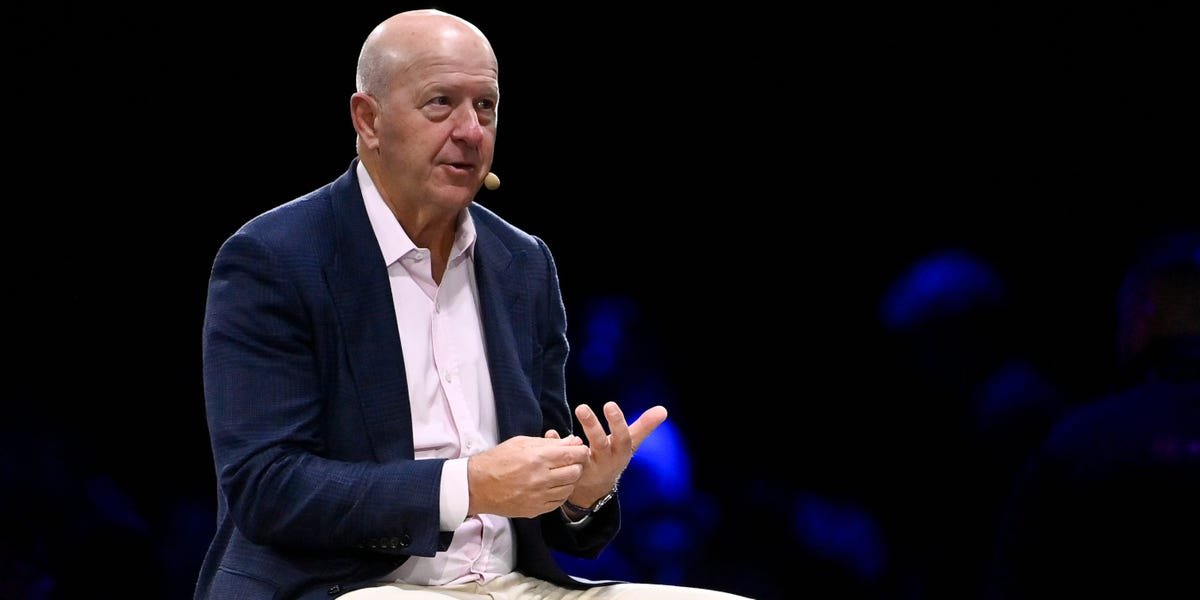
David Solomon is officially done playing defense.

The Goldman Sachs CEO has steered the bank through several grueling years for the industry, including a multi-year drought in private equity spending and extreme trading volatility. But after a booming 2025, Solomon told investors at a UBS financial services conference on Tuesday that the firm is entering 2026 with the wind at its back.

Solomon praised policymakers in Washington for spurring acquisitive appetites. “You have a massive deregulatory trend in the United States after a very tough regulatory period in the United States, across all industries,” Solomon said.

The receptive comments about the government’s heightened support for M&A came just months after President Donald Trump lashed out at Solomon on Truth Social in August, mocking his former side gig as a DJ and encouraging him to step down from the CEO throne. Trump’s rebuke came after a Goldman Sachs economist suggested that tariff policies could cost consumers.

Despite that dustup, Solomon is now leaning into the administration’s growth-oriented agenda, arguing that the friction of the past has been replaced by a “constructive” new reality for the banking sector.

Here are the three factors Solomon named on Tuesday that have left him feeling bullish about 2026’s dealmaking forecast.

From a ‘no’ to a ‘maybe’

Solomon thinks that, coming off strong results last quarter, 2026 will represent an inflection point for the global mood toward M&A. For the past five years, he said, strategic buyers had encountered a “different regulatory regime,” adding: “Whatever the question was, the answer was no.”

“Now, whatever the question is, the answer’s maybe,” he told UBS Erika Najarian, who hosted the discussion.

That, too, he said, could drive a resurgence in the IPO market, which has been expected to return this year. And in terms of mergers and the kind of corporate dealmaking that is Goldman’s bread and butter, “this could be a top decile” year, Solomon said.

And one major driver he pointed to is cash-rich, asset-heavy private equity sponsors.

The PE gambit

A key pipeline for Goldman has been banking for the world’s top private equity sponsors, many of whom held assets longer than their own investors would like while waiting out a period of lackluster valuations and uncomfortably high interest rates.

That’s left limited partners hungry for capital returns to reinvest in future deals, the secondaries and continuation vehicles markets booming, and banks praying that 2026 is the year that their private equity clients finally indicate they’re ready for action.

Solomon said the pressure for sponsors to return capital to their investors has reached a breaking point.

“We’re reaching a point in time where that unlock” is starting to occur, Solomon said. He pointed to mounting “pressure from the LP community and the cycle life of fundraising has reached a point in time for most of these firms that they can’t get into the valuation debate as much. They’ve got to move forward.”

The downstream effects of AI investments

Solomon has been on a mission to make Goldman AI-ready and has pointed to the massive investment in the space. “The need for capital to continue on this technology cycle is going to have an impact on the overall capital-raising cycle, so I see all this stuff accelerating, and I feel pretty good about it,” he said. He cited mega-tech names that have turned to the debt market to raise liquidity for AI-related projects.

It won’t always be smooth sailing, Solomon conceded, framing Trump’s governing style as something of an open question for markets. “He also has a tendency in policy to move from policy action to policy action,” he said. “I’d still say there’s uncertainty around trade. There is uncertainty around inflation, and there’s uncertainty on geopolitics.”

But, he concluded, “I think the likely outcome in 2026 is we’re going to have a pretty constructive year for capital markets, a pretty constructive year for M&A — particularly large-cap, strategic M&A — and the result of that should be very favorable for the people in this room.”


Source link

How-Reco-raised-30-million-and-grew-an-additional-400.jpeg

How Reco raised $30 million and grew an additional 400% last year as companies sprint into AI

New York-based cybersecurity startup Reco has raised $30 million in Series B funding as companies rapidly expand their AI use.

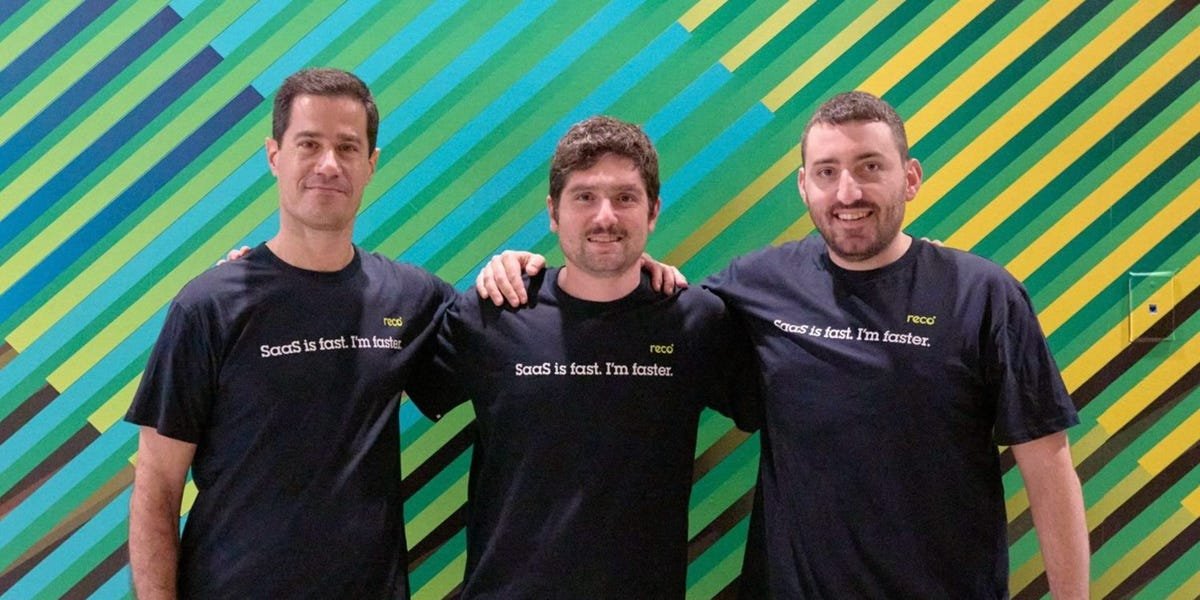
Ofer Klein, Gal Nakash, and Tal Shapira founded Reco in 2020 to fill the gap between a company’s existing cybersecurity protections and the other tech tools employees use, which is often AI.

“AI adoption has accelerated exponentially, and companies that blocked AI access a year ago cannot block it anymore,” Klein told Business Insider. “And I’m not talking about small mom-and-pop shops; I’m talking about the biggest banks, insurance, healthcare, pharma, and hospitals.”

Zeev Ventures led its latest round, with participation from all existing investors, which includes Insight Partners and Boldstart Ventures. New corporate investors for this round include Workday Ventures, TIAA Ventures, S Ventures, and Quadrille Capital.

“My investment strategy has always been to double down on what’s working,” Oren Zeev, the famed seed investor behind Zeev Ventures, said in a statement. “I’ve seen this pattern with successful companies like Navan and Tipalti, and I’m seeing it again with Reco. The signals we see show rapidly growing market demand for AI SaaS security, and we are experiencing exceptional growth.”

While software-as-a-service (SaaS) stocks have recently plunged amid concerns about AI disruption, Zeev sees a “massive” opportunity in AI for security.

After growing 500% year-over-year in 2024, Reco said it grew an additional 400% in 2025, driven by a sharp increase in business AI adoption.

Cybersecurity startups also raised nearly $14 billion in 2025, according to Pinpoint Search Group. That represented a 47% increase from 2024 and the most funding since 2021.

Klein said Reco began pulling in far larger companies than expected, repeatedly beating internal plans as AI went from blocked to mandatory.

“We built a plan, and we overachieved, and we updated the plan, and we overachieved again,” said Klein. “We said, ‘OK, enough is enough, let’s take more money and double down on AI SaaS.”‘

Klein said the biggest challenge for Reco now is keeping up with demand.

“The business is driving this huge traction into AI enablement,” he said. “Our biggest challenge right now: how we grow fast enough to meet this market need.”

Klein’s cofounders also bring in experience from working with the government. Nakash previously headed research at the Office of the Prime Minister of Israel, while Shapira holds a machine learning Ph.D. and also worked at Israel’s Office of the Prime Minister.

Reco faces competition from Torq, backed by Insight Partners and now valued at $1.2 billion, according to PitchBook. It also competes with Blackstone-backed Cyera, recently valued at $9 billion.


Source link