Sarah Michelle Gellar, 48, says a small but practical detail at home has helped her avoid common couple conflicts.
In a People interview published on Wednesday, the actor said that having “one bedroom, two bathrooms” has been the key to her long-lasting marriage.
“You don’t have to be so fancy that there’s two bathrooms in your bedroom! There just has to be another bathroom available,” Gellar told People, adding that the setup “stops a lot of petty fighting.”
Gellar has been married to Freddie Prinze Jr. since 2002. The pair first met on the set of “I Know What You Did Last Summer,” and share two kids.
The “Buffy the Vampire Slayer” star said keeping a clear boundary between her public and private personas has helped her relationship last in Hollywood.
“I always say I’m two people: I’m Sarah Michelle Gellar and I’m Sarah Prinze,” she said. “They’re different people.”
The version of her with her husband has “a quieter life and a private life,” she said.
Gellar also stressed that strong relationships don’t last without effort.
“You have to be willing to work. And that goes for relationships, friendships, anything. You have to put the work in,” she said.
“I do feel like we live in this very disposable society. When I was a kid, when your TV broke, my mom and I would carry it like eight blocks in New York City to the TV repair shop,” she said.
But now, she said, people are more likely to replace things than repair them.
“I think because of that, we don’t work as hard at things because it’s easier just to ‘get a new one,'” Gellar added. “You have to put the work in. You have to carve out the time.”
It’s not the first time Gellar has credited separate bathrooms with helping her marriage last.
In 2017, she said that the setup works because not everything needs to be shared.
“I feel like there are certain things that should just be kept your own and they never need to know. Also, maybe possibly a separate shopping credit card, or if you’re a guy, maybe a separate gaming card, you know, so I don’t have to see how much video games cost,” she told Harry Connick Jr. on his talk show.
She reiterated the idea during an April appearance on “Today with Jenna & Friends,” adding, “It’s that simple.”
Gellar isn’t alone. Other celebrities have also embraced having more space at home, including separate bedrooms.
Carson Daly has called sleep divorce “the best thing” to ever happen to his marriage, while Barbara Corcoran said getting a second bedroom prompted her to love her husband “twice as much.”
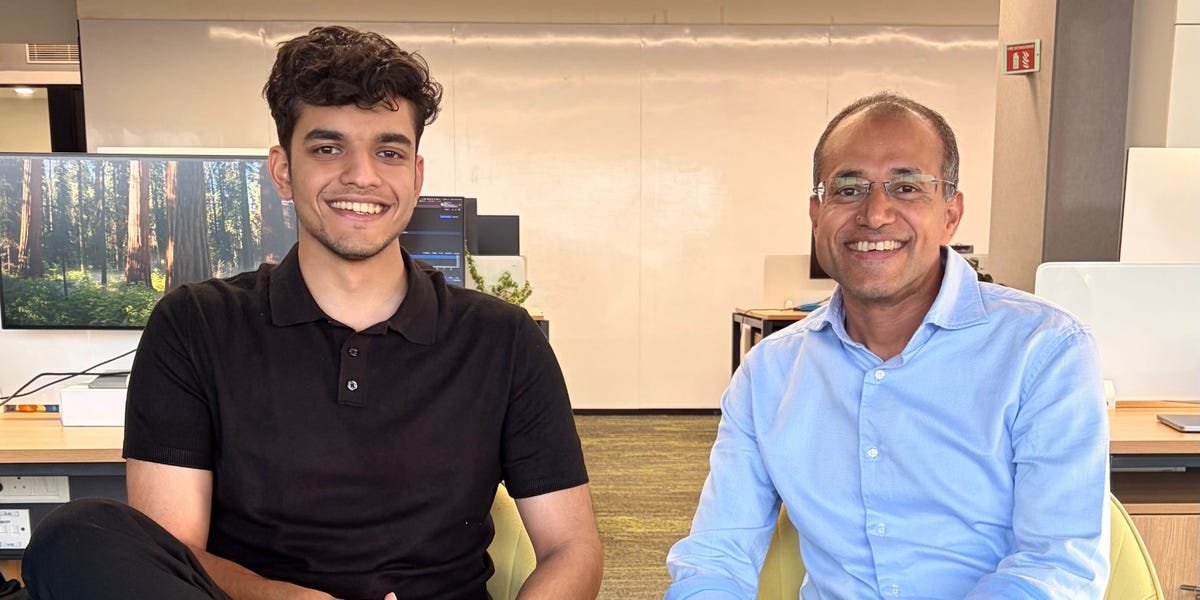
This as-told-to essay is based on conversations with Amit Jain and Raghav Saraf, cofounders of Bengaluru-based agentic AI startup Zamp. It has been edited for length and clarity.
Raghav Saraf: I joined Zamp four days after my last high school exam ended in 2022. I met Amit at a blockchain hackathon I had participated in, where I built a payment gateway. My product was really similar to what Amit was trying to build at Zamp, and the hackathon organizer introduced us.
Amit Jain: Before I founded Zamp, I was a managing director at Sequoia India and Southeast Asia based in Singapore, and Uber’s head of Asia Pacific prior to that. Venture capital was awesome, but I had an itch to get back into running a company. I wanted to start something of my own and spent six to nine months brainstorming startup ideas before coming up with the idea that led to Zamp.
Saraf: When I first spoke to Amit, the plan was to go to the US for my undergrad. I thought about how working with his team would be super fun and decided to try it out for a three-month summer internship.
Zamp had five to 10 employees at the time, and I was able to take on large projects and maximize my learning during those three months. At the end of the summer, I realized I was learning much faster than I would in college and was sold on the idea of staying at the company. But it took some time to convince my parents about the idea of skipping college.
Jain: I remember getting “interviewed” by Raghav’s dad in a coffee shop under my office after he decided to join us. Very politely, his dad just wanted to do a pulse check on who I am and why his son wanted to join me before allowing him to work for us. I was lucky to have passed that interview and fortunate that Raghav could join us.
Saraf: I always knew that college was important, not for the actual textbook learning but because of the people and the environment I’d be in. I’m 21 now, and it’s been almost four years since I decided to miss college, and friends from my cohort have started graduating. When I talk to them, I’m pretty happy with my decision. They say college was a good experience, but they don’t feel prepared to apply what they learnt to the professional world.
Move to cofounder
Jain: Now, Zamp has about 80 employees and a fairly global customer base, including top banks.
Saraf: We don’t have titles here, but I lead everything related to product at the company. Amit handles sales, customer relations, hiring, and everything else.
Jain: Our decision to promote Raghav to cofounder came gradually. He was a pleasure to work with from day one, and the critical thinking, judgment, and maturity he displayed were well beyond those of most leaders I’ve seen in my career. The cofounder potential had always been there, but it became evident over the course of a year or two. When we made the announcementin 2025, it wasn’t a surprise to anyone because Raghav had been gradually taking on more responsibility.
Saraf: After we announced the change, my team was very supportive. They told me I was already a leader to them, and nothing has changed. My school classmates were very surprised but happy for me. More than anything, becoming a cofounder made the biggest difference to my parents, who went from saying, “We’re not sure what this guy is building,” to “He knows what he is doing.”
Jain: Timing is a minor factor in deciding who becomes a cofounder, and it doesn’t need to happen at the time a company is founded. I think a startup is a journey, and a cofounder is somebody who has played and will play or continues to play a critical role in that direction of that startup. So, looking back at the last four years, it was more about the role Raghav plays.
Working like peers
Saraf: I had to teach myself everything on the job. I didn’t know how to build products, how to go to market, how to lead teams, or do most of what I know now. I’m sure that will continue to be the case a few years later as well. Learning to me is a very active process — understanding my gaps, reading books about it, and teaching myself.
I’m close with the people on my team, and we hang out often and spend weekends together. One of my colleagues is also my flatmate. But I maintain a balance: When we’re at work, everyone recognizes that I’m leading the team.
Jain: Our relationship is 100% like peers, and we complement each other very well.
Saraf: What surprised me about working here was the level of trust and openness, and the ability to make my own decisions. If I were in Amit’s position, I probably wouldn’t have let a 17-year-old drive things.
This story is available exclusively to Business Insider
subscribers. Become an Insider
and start reading now. Have an account? .
I’ve lived in Florida for over 25 years and have explored some of the state’s most peaceful islands.
I love Cedar Key, a charming small town with lots of local businesses.
North Captiva Island, which is only accessible by boat or plane, is also worth a visit.
When thinking about islands in Florida, places like Key West, Sanibel, or Fisher Island probably come to mind. However, after living in the Sunshine State for more than 25 years, I know there are so many more beautiful places to explore.
Beyond the famous names are lesser-known gems that offer natural beauty, charm, and a sense of escape. Whether you’re craving a quiet beach day, a kayaking adventure, or a peaceful getaway without the crowds, these six islands deliver.
Santa Rosa Island feels like a secret paradise.
Santa Rosa Island has gorgeous sunsets. Joseph Sohm/Shutterstock
If you’re looking for a beach that feels like a total escape, Santa Rosa Island might just be your new favorite spot.
Tucked along the Florida panhandle, this barrier island includes areas that are part of the Gulf Islands National Seashore, a federally protected stretch of coastline.
I could spend days basking in the soft, sugar-white sand, emerald-green water, and peaceful vibes.
There’s plenty to do on St. George Island.
St. George Island offers everything from sunbathing to hiking. Leny Silina Helmig/Shutterstock
In my opinion, St. George Island is the definition of a true beach escape.
Located on the Florida Panhandle and connected to the mainland by a long bridge, it offers 22 miles of uncrowded beaches, clear water, and an easygoing vibe that’s hard to beat.
The island is known for its family-friendly atmosphere, stargazing (thanks to minimal light pollution), and state park, which is perfect for beachcombing, hiking, or just soaking up the sun.
Cedar Key has a charming small-town island vibe.
Cedar Key has an old-time feel. Leigh Trail/Shutterstock
Located on Florida’s Gulf Coast, visiting Cedar Key feels like stepping back in time — in the best way possible.
It’s a quaint little island town known for its charm, fresh seafood, and slower pace of life. I also love that most spots are small businesses run by locals.
Instead of modern architecture, you’ll find weathered wooden docks and colorful cottages, giving it an old-Florida feel. It’s the kind of place where you kayak through calm waters by day and eat local clams on a breezy porch by night.
Duck Key is the perfect place for a romantic getaway.
Visiting Duck Key is fun for the whole family. A. Emson/Shutterstock
If you’ve driven the Overseas Highway through the Florida Keys, you might’ve zoomed right past Duck Key without even realizing it. But in my opinion, it’s totally worth a stop.
About halfway between Key Largo and Key West, this little island is low-key, peaceful, and packed with old-school Keys charm.
I recommend visiting Hawks Cay Resort, which has everything from lagoon-style pools to a dolphin experience right on site. Go kayaking or paddleboarding right from the shore, take a snorkeling tour, or enjoy a cocktail with a view.
Whether you’re planning a family vacation or a romantic getaway, the island caters to both, offering activities for everyone.
Gasparilla Island is a quiet seaside escape.
My favorite part of Gasparilla Island is the Port Boca Grande Lighthouse. cpparrothead/Shutterstock
Located off Florida’s Gulf Coast, Gasparilla Island is a gorgeous spot with historic seaside charm.
With powdery white-sand beaches, clear waters, and a tranquil vibe, the island is perfect for those looking to unwind and enjoy the outdoors.
At the heart of the island is the charming town of Boca Grande, filled with pastel-colored cottages, golf carts cruising the streets, and a laid-back atmosphere.
On the island, you’ll also find the Port Boca Grande Lighthouse, which is, in my opinion, one of the most beautiful lighthouses in the state.
North Captiva Island is a true off-the-grid escape.
North Captiva Island is the perfect place to unplug. Marissa Sisco/Shutterstock
If you really want to unplug, North Captiva Island is the spot. It’s only accessible by boat or small plane, and there are no cars on the island — just golf carts and barefoot beachgoers.
With very little commercial development here, you’ll want to come prepared with snacks, water, and a good beach read. In return, you’ll get miles of untouched beaches and a truly remote escape.
This story was originally published on August 28, 2025, and most recently updated on March 16, 2026.
Our family’s first trip to Windermere changed everything.
Sitting on the bank of a stream with my feet dipped in its cold, clear water, surrounded by trees budding for spring — even with the baby kicking away inside me at eight months pregnant, I felt a kind of bliss that’s hard to put into words.
The only sounds were the distant mooing of cows and the occasional squeals of our toddler’s laughter at the nearby bed and breakfast.
I had no doubt in my mind that our four-hour drive from Northampton was worth it.
Since that trip nearly two decades ago, we’ve been to this small English town in the Lake District many times. Each visit only confirms there’s no place like Windermere — and I still dream of moving here someday.
The town feels like its own secret world, but it’s still well-connected and home to top-notch food and attractions
A train driving through the Lake District in the fall.
by Andrea Pucci/Getty Images
Tucked between rolling fells (grassy hills) and England’s largest lake of the same name, the town of Windermere feels like its own world.
Home to fewer than 10,000 residents, it’s small enough to cross on foot yet expansive in feel.
The surrounding hills and lake feel quietly confident. They soften the skyline and set a slower pace, making it clear this isn’t a place built for rushing.
All of this gives Windermere a wonderfully quiet, oasis-like rhythm.
Despite feeling removed from the hustle and bustle, it’s surprisingly well-connected and close enough to reach without much fuss.
It’s a short drive from cities like Lancaster and Carlisle. By train, it’s three hours from London, an hour and a half from Manchester, and two or three hours from Edinburgh.
It’s also in the county of Cumbria, which has something for everyone, whether you want to partake in watersports and hiking, visit Scafell Pike (England’s highest mountain and a war memorial), try local specialties like sticky toffee pudding and Cumberland sausage, or just seek out some serenity.
Fleetwith Pike and Buttermere in the English Lake District.
WhitcombeRD/Getty Images
Over the years, some of our most cherished Lake District moments have come from serene walks and hikes around the lakes and fells of Windermere and nearby towns, as well as leisurely cruises and visits to the world-famous Beatrix Potter attractions.
And though many of its local cafés have small-town charm, this area has serious food cred, too. The Lake District is home to several Michelin-starred restaurants.
Even so, unlike busier hot spots, Windermere has retained its identity and sense of self. It is protective of its pace, its peace, its essence.
People here seem to look out for each other. They don’t just nod as they pass; they stop to chat and remember people’s names.
By 5:30 p.m., many shops and cafés close, while a handful of restaurants, pubs, and the local Sainsbury’s stay open late. Even at night, the town feels safe and calm, especially compared to larger cities.
I dream of living here someday
Many places are lovely to visit, but Windermere feels like somewhere that meets you exactly where you are, offering something for every stage of life.
After all these years, I still sometimes feel that same stillness I felt on our very first trip when I was sitting by the water and realizing we’d found somewhere special.
Each visit has marked a different chapter in our family’s lives, from being pregnant with a toddler in tow to returning with teenagers who now set their own pace.
Somehow, though, Windermere has grown with us, and I often wonder what it might feel like if we stayed a little longer. After all, there’s something comforting and restorative about living where nature is such a big part of daily life.
When I imagine where I’d call home in the UK, it’s not London, Birmingham, Manchester, or even Northampton, where we live now.
It’s Windermere … maybe once the children have grown up.
Steve Jobs was 21 when he cofounded Apple in 1976. Mark Zuckerberg was 19 when Facebook launched. Whitney Wolfe Herd was 25 when she unveiled Bumble.
Many of today’s startup founders are still young and scrappy. And in the age of AI, they’re even more empowered to barrel ahead.
Some are following the footsteps of tech titans before them and dropping out of college. Others are opting out of the undergraduate experience altogether, with a few ditching high school to pursue careers in tech.
Arlan Rakhmetzhanov, founder of AI coding startup Nozomio, told Business Insider that he dropped out of high school in Kazakhstan after getting accepted into the competitive startup accelerator program, Y Combinator (YC). At the age of 18, he raised $6.2 million for Nozomio.
Rakhmetzhanov isn’t the only teenager finding success in AI. There’s also Toby Brown, a UK teen who raised $1 million for his AI project. There’s also Zach Yadegari, the teenage cofounder of Cal AI, a nutrition app.
College-aged founders are also building companies and raising capital, such as the Yale students behind Series AI, a new social networking startup.
Alyx van der Vorm (25) and Faraz Siddiqi (23) both raised capital for their startups this year.
Kevin Farley; Muhammad Anjum
The median age for YC participants is now 24 years old, compared to 30 in 2022, YC’s Pete Koomen told The New York Times in August.
Business Insider has interviewed the founders of 12 startups who are 25 years old or younger and have raised millions in funding since 2024 about the pitch decks they used to impress investors.
Read 12 pitch decks founders who are 25 years old or younger used to raise millions:
Note: Founders were 25 or younger when Business Insider published the following articles.
Series A
Seed
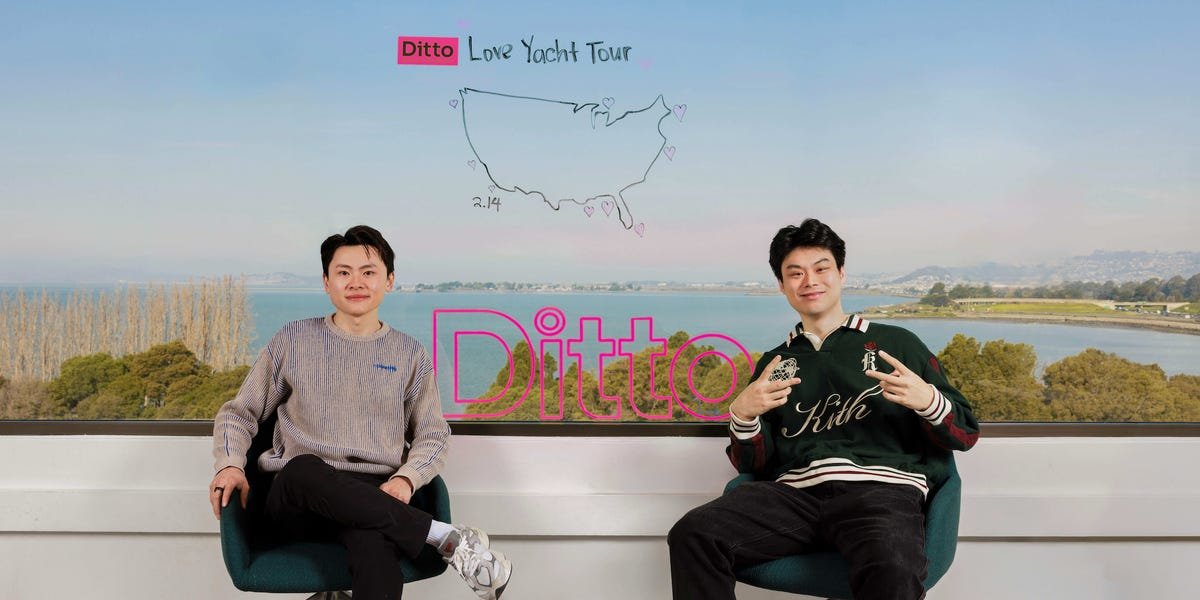
Ditto, an AI dating startup founded by UC Berkeley dropouts, raised $9.2 million when the founders were 23 and 24. Read its 12-page pitch deck.
Lyra, an AI video call startup, raised a $6 million seed out of YC when its founder was 23. Read the 8-slide pitch deck it used.
Nexad, an AI adtech startup, raised a $6 million seed after wrapping up A16z’s Speedrun accelerator. Nexad’s CEO was 25. Read the 10-page pitch deck.
Orange Slice, a YC-backed sales tech platform, raised $5.3 million when its founders were 23. Read the 7-page pitch deck.
Golpo, a generative AI video startup, raised a $4.1 millionseed out of YC when its founders — who are also brothers — were 19 and 20. Read its 7-page pitch deck.
Bluejay, an AI agent startup, raised a $4 million seed coming out of YC when its founders were 23. Read its 9-page pitch deck.
Novoflow, an agentic AI startup building tools for medical clinics, raised $3.1 million when its founders were 18 and 19. Read its pitch deck.
CodeFour, an AI police tech startup, was founded by two 19-year-old MIT dropouts and raised $2.7 million coming out of YC. Read the pitch deck.
Cerca, a dating app that connects people with mutual friends, raised a $1.6 million seed when its CEO was 23. Read the 10-slide deck.
Pre-seed
Series, an AI social networking startup, raised a $3.1 million pre-seed when its founders were 21.
This story has been updated with additional examples.
This as-told-to essay is based on a conversation with Kenny Jary of the social media account Patriotic Kenny. It has been edited for length and clarity.
Back in the day, I always said that I wanted a tattoo. I was in the United States Navy, and everyone had tattoos. But I wasn’t really ready for it. You know how it is, you just put things off until the right opportunity comes.
And the right opportunity came, many decades later, thanks to two friends.
I met Amanda Kline and Jenny Cooper in 2021 through a local coffee shop owner. They were told about me, and then spotted me the next day thanks to my scooter, which was decorated with American flags.
At 84, I got my first tattoo
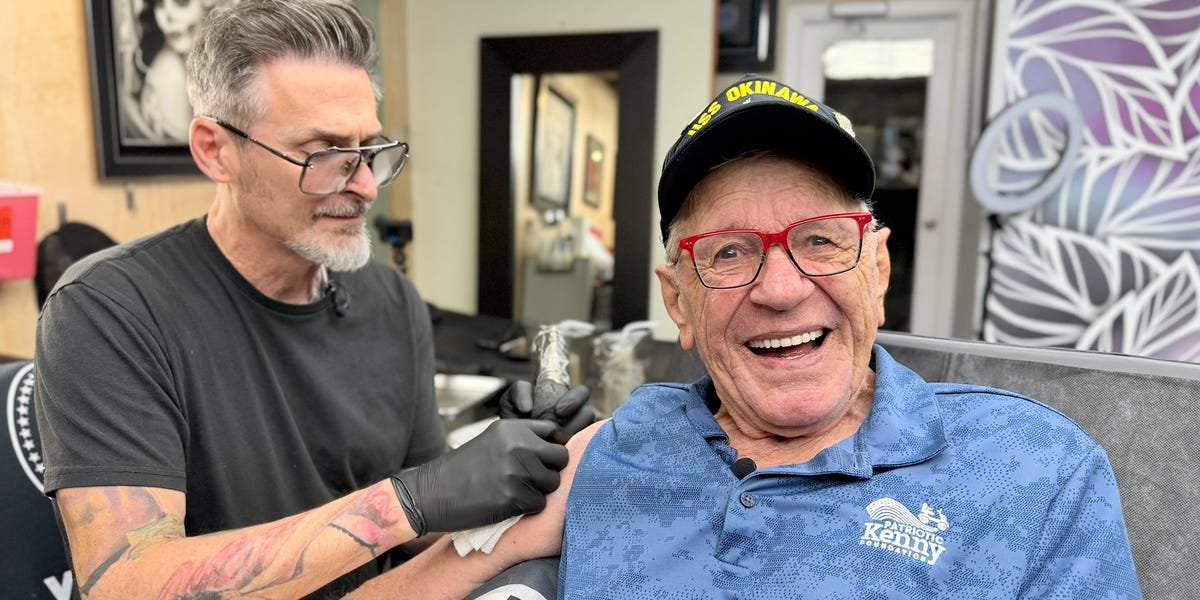
My new friends surprised me on my birthday; I had no idea where we were going. We flew to San Diego, and Joey Hamilton of TLC’s “Ink Masters” did the tattoo. Joey’s quite famous. He’s also a veteran.
Kenny Jary got his first tattoo thanks to his two new friends.
Courtesy of Kenny Jary
It didn’t hurt at all. If anything, it felt like a little kid scratching. It’s just a small tattoo, one that I wanted to represent the United States Navy. There’s an anchor, and then it has three stars to represent Minnesota. There are three rings to represent my three kids, and our group of three: me, Amanda, and Jenny.
I believe it’s never too late to cross something off your bucket list
I think people should cross things off their bucket lists because life goes fast. One minute you’re a teenager and the next you’re nearly 90. If you keep waiting, you might miss your chance.
When I try something I’ve always wanted to do, I feel proud and alive. Recently, I have traveled to new places, flown on big planes, met new people from all over, and now I have my first tattoo. Each time I try something new, it reminds me that I am still growing.
I’ve always been the Kenny I am, way up until right now. Nothing has changed since I was knee-high to a grasshopper. I’ve always been jolly — I think you need to smile and be jolly, it makes the world go round and makes you feel better. Laughter is most important.
Kenny Jary got tattooed by Joey Hamilton from TLC’s “Ink Masters.”
Courtesy of Kenny Jary
But I was not always this open to new things. When I was younger, I liked what felt safe. As I got older, I realized that trying new things makes life bigger. I have tried traveling far from home, speaking in front of crowds, and sharing my story online. At first, I felt nervous. Then I feel excited. After I do it, I feel like I’m leaving a legacy.
This friendship has changed my life
I trust Amanda and Jenny because they truly care about me. They listen to me. They protect me. They push me in a good way, not a scary way. They want me to have a full life. That trust comes from time, honesty, and love. Our relationship is important because we support each other and are family. No matter what we’re doing, we’re always having a good time together.
I tell everybody that they’re my daughters now, and I treat them just like my own daughter. Amanda and Jenny have brought me a whole new life, I mean that sincerely. I do more things at 84 years old than I thought possible. I get out of the house and do things. Don’t get me wrong — I still have COPD, I still struggle, but you have to get out and do things. Four years ago, when we started the TikTok account, I didn’t have anything. My scooter broke down. It was junk. I had bought it at a garage sale. Then I had the good fortune to meet these women.
We began a foundation three years ago, called the Patriotic Kenny Foundation. I got my scooter from online donations. We had all these fans, millions of them. I told Amanda I was going to pay it forward with scooters. We’ve been doing it for three years now, and we’ve given out 160 scooters across the country. Every quarter, we donate 12 to veterans. This year is the 250th anniversary of the United States. I’m so proud.
When the tech doing my ultrasound stopped halfway through and told me she needed to get the doctor, I braced for bad news.
This was my first pregnancy after a miscarriage. My eyes focused on the flickering overhead lights, trying so hard to contain my tears inside my eyes. My focus was interrupted by my doctor’s high-pitched voice, who — as she opened the door to the room — squealed, “Well, you’re having twins!”
My husband started laughing, and I started sobbing, but they weren’t happy tears. I was absolutely terrified of having twins.
I was in denial about having twins
I was so shocked that I kept telling my husband not to get his hopes up. I reminded him of the pregnancy loss we had just experienced, about how sometimes pregnancies start with multiple embryos, but only one baby makes it to the end, and at one point, I even suggested that one baby could eat the other in my uterus.
None of those things happened, and by the 20-week mark, I came around to the idea of having twins. It was clearly happening, evident by my enormous belly.
Every time Conz publishes a story, you’ll get an alert straight to your inbox!
Stay connected to Conz and get more of their work as it publishes.
My fear was rooted in that I really struggled after my first child was born. I was utterly unprepared for the monumental shift that comes with motherhood. Compounded by the fact that I cannot operate without at least eight hours of sleep, I fell into a spiral of postpartum anxiety and depression that went completely undetected at my multiple check-ups.
I figured that having two more babies would mean that my sleep would be even worse, and therefore, my anxiety and depression would be doubled.
I focused on myself
Knowing my struggles, my doula suggested that we focus on myself when it came to preparing for postpartum the second time around, instead of the babies. My husband and I already knew what to expect when it came to having newborns, but neither of us wanted me to be crying 24/7, as I had been two years prior.
The stakes were low, intentionally.
The stakes were low for the author after the birth of her twins.
Courtesy of the author
I decided that the twins were going to be fed whichever way worked, whether it was breastmilk from my breasts, from a bottle, or formula. My focus was not to extend myself trying to make breastfeeding work. When it came to feeding, I also decided they would get bottles for their night feeds, so we could ensure they were getting enough calories for optimal sleep. My husband would wake up with me, feed the babies while I pumped, then we would each change one, and put them back to sleep. If one baby woke up to eat, we woke the other too, so they’d be on somewhat of a schedule.
I also didn’t expect to be fitting back into my clothes by a certain date, or even attempt to wear real clothes for months. When the pandemic hit, and everyone was at home, it helped me with my FOMO. No one was doing anything anyway, so I didn’t really care if I was wearing the same T-shirt for three days. Who was going to notice?
They are so close
As they grew older, and I experienced the twin magic right in front of my eyes, I also realized that they had a built-in play buddy.
While with my son, I had to sit on the floor with him and keep him entertained; the twins would play independently with each other for chunks of time, letting me do something as simple as load the laundry.
Now that they are 6 years old, they help each other out all the time. If one is thirsty in the middle of the night, instead of coming to us to wake us up, they go together to grab water and run back to bed. They, of course, fight like any siblings, but they can also spend hours in their room setting up their stuffed animals as an audience for one of their pretend dance performances.
Recently, I was looking back at photos of me pregnant with them, and I could see the fear in my eyes. I wish I could go back in time and tell myself that I was better prepared for twins than I was for a singleton, and that I was in for one of the most unbelievable rides of my life.
Fifteen years ago, Fukushima, Japan, was home to one of the worst nuclear disasters in history. Today, some places in the region look just as they did in the immediate aftermath of that fateful Friday in 2011.
After a 9.0 magnitude earthquake and tsunami ravaged the electrical grid and flooded the reactor units, the Fukushima Daiichi Nuclear Power Plant suffered a nuclear incident that resulted in the plant’s three functioning cores experiencing meltdowns within three days.
In the aftermath of the disaster, more than 100,000 people were evacuated from their homes, with even more displaced from the area, per the World Nuclear Association.
The surrounding area saw high radioactive releases, resulting in the incident’s level-7 rating on the International Nuclear and Radiological Event Scale. The only other nuclear disaster in history to be classified as a level 7 was the 1986 Chernobyl disaster.
David W. Miller, an adjunct professor of nuclear, plasma, and radiological engineering at the University of Illinois Urbana-Champaign, assisted in research and recovery work with Japanese engineers following the disaster. For his efforts, he was awarded the Society Contribution Award by the Japan Society of Mechanical Engineering.
Part of the post-disaster collaboration between Japanese and American engineers was focused on improving Japan’s authority hierarchies at nuclear power plants. Miller told Business Insider the Fukushima incident was worsened by a power structure that was rank-oriented rather than collaboration-based.
Political interference was also a problem, Miller said. At the time of the disaster, Japanese law allowed the prime minister to overrule and influence the decisions of plant managers. Following the disaster, Japan took steps to reform its nuclear regulatory structure and develop a collaboration-based model at its nuclear plants.
“Sharing knowledge, good practices, and lessons learned is critical for success in the nuclear age,” Miller said. “An error-free operation is not only an absolute mandate, it’s a reality that needs to happen.”
While Fukushima provided valuable lessons in nuclear management and disaster mitigation, the incident left behind devastating effects that are still felt to this day.
See the immediate aftermath of the disaster and what it looks like 15 years later, in photos.
An earthquake and ensuing tsunami on March 11, 2011, triggered the disaster.
A police officer searches for missing people in Namie, near the Fukushima Dai-ichi Nuclear Power Plant in Fukushima prefecture on March 11, 2013. YOSHIKAZU TSUNO/AFP/GettyImages
After the worst earthquake in Japan’s history was recorded off the coast of Honshu, a tsunami that reached heights of 130 feet barreled into the coast and easily surpassed seawalls. The combined events resulted in over 18,000 deaths.
All in all, 123,000 houses were destroyed and damages from the disaster totaled $220 billion, making it the most expensive natural disaster in history, per the National Centers for Environmental Information.
The nuclear power plant, which was about 110 miles from the earthquake’s epicenter, suffered reactor meltdowns.
The destroyed Fukushima Daiichi Nuclear Power Plant in November 2011. All three active cores experienced meltdowns in the days following the disaster. AFP/POOL/AFP via Getty Images
Following the earthquake, the plant’s reactors were intact and automatically shut down as designed. However, the tsunami soon toppled seawalls in front of the plant, reaching its diesel generators and rendering them ineffective.
With cooling systems unable to operate, the plant’s three active cores significantly melted within 72 hours. In the following days, the plant suffered multiple hydrogen explosions, further complicating containment efforts.
Miller described the plant workers as heroes who prevented the situation from worsening further. “They rose to the occasion with smart brainstorming,” he said.
Though radiation was released into the surrounding area, no immediate deaths or long-term health effects have been reported from radiation.
However, according to the World Nuclear Association, there were 2,313 “disaster-related” deaths recorded among evacuees, such as deaths from physical and mental stress and the impacts of displacement on elderly residents.
Today, some parts of towns like Okuma still remain uninhabited and inaccessible.
An inaccessible road to the Okuma Junior High School in Fukushima, Japan. NurPhoto/NurPhoto via Getty Images
Immediately after the disaster, the town of Okuma was ordered to evacuate. The closest town to the nuclear power plant, Okuma had a population of over 10,000 at the time of the incident.
After some parts of Okuma were cleared for re-entry in 2019, 1,086 residents have since moved back, less than 10% of its population at the time of the disaster, The Japan News reported.
Some parts of the town remain abandoned.
For students of the Okuma Junior High School, the disaster meant relocating to the nearby town of Aizu-Wakamatsu. In 2022, the school merged with two others to form the Manabiya Yumenomori school in the town, Inquirer.net reported.
Okuma and other towns are trying to return to normalcy.
Okuma Disaster Public Housing in Fukushima, Japan, was built for residents looking to return to the town. NurPhoto/NurPhoto via Getty Images
Housing projects like Okuma Disaster Public Housing aim to provide housing for residents who wish to return, and incentives are offered to potential residents.
The area’s residents are very familiar with radiation dosimeters.
A radiation dosimeter in Yonomori Station in Fukushima, Japan. NurPhoto/NurPhoto via Getty Images
In the surrounding areas, personal radiation dosimeters were widely distributed to residents following the disaster. In 2011, 65,000 people in the Fukushima prefecture measured their radiation levels using these devices before returning them for analysis, per Science.
The devices have become commonplace for residents.
Efforts to dispose of and recycle contaminated waste are widespread in the area.
Bags of radiation-contaminated soil are gathered at a temporary storage field in Okuma town of Fukushima prefecture on February 19, 2025. Yuichi YAMAZAKI/AFP via GettyImages
After the disaster produced large amounts of contaminated waste, Japan is seeking to maximize the reuse of materials. This includes a plan to recycle nearly 10 million cubic meters of soil that was removed after the meltdown.
The soil — deemed safe enough for reuse — would be used in the construction of roads, railways, seawalls, and other civil engineering structures, according to the International Atomic Energy Agency (IAEA).
The area is subject to strict inspections.
Fukushima is subject to inspections from the International Atomic Energy Agency (IAEA) and other organizations. Yuichi YAMAZAKI/AFP via GettyImages
Fukushima is subject to inspections on local, national, and international levels.
The prefectural government monitors inspections of agricultural, forestry, and fisheries products, while Japan’s national nuclear regulatory body and the IAEA conduct inspections to ensure safety standards are met.
The disposal of wastewater continues to be met with backlash.
Protesters in Fukushima hold a banner reading “No dumping of radioactive water into the ocean.” PHILIP FONG/AFP via Getty Images
In the summer of 2023, Japan started to release treated wastewater into the ocean, an undertaking that proved controversial. Though the water goes through an extensive treatment process, which has been approved by the IAEA, many locals in Japan are critical of the operation.
The plan has also drawn criticism from United Nations human rights experts over health and safety concerns.
Some structures remain destroyed 15 years later.
An izakaya abandoned since the 2011 disaster stands near Futaba Station in Fukushima, Japan, on March 10, 2026. NurPhoto/NurPhoto via Getty Images
Though many once-contaminated areas are starting to see redevelopment, some structures look just as they did 15 years ago.
In towns like Futaba, located within 2 miles of the Fukushima Nuclear Power Plant, damaged and destroyed buildings are abundant.
The Japan News reported that Futaba’s population is just 2.7% of what it was before the disaster, at 193 residents, many of whom have moved to the area for the first time.
Some plant workers and community members have found new ways to help out.
Former nuclear plant worker Toru Akama started an animal shelter for abandoned pets. Philip FONG/AFP via GettyImages
Toru Akama was a former Fukushima plant worker who started an animal shelter following the disaster. Akama began taking in abandoned animals when their owners had left them behind. He’s helped over a thousand abandoned pets find new homes since 2011.
“I felt it was my duty to protect them,” Akama told AFP News Agency.
This January marked the first restart of a TEPCO-operated nuclear reactor in Japan since 2011.
Unit 6 of the Kashiwazaki-Kariwa Nuclear Power Plant was restarted in January, marking the first restart of a reactor in Japan since 2011. JAPAN POOL/JIJI PRESS/AFP via GettyImages
In 2015, Unit 1 of the Sendai Nuclear Power Station in Kagoshima resumed operations, becoming the first reactor to restart since the disaster.
Then this January, Unit 6 of the Kashiwazaki-Kariwa Nuclear Power Plant was restarted, marking the first use of a reactor by Tokyo Electric Power Company (TEPCO) — which owned and operated the Fukushima Daiichi plant — since 2011.
Since the Fukushima disaster, many reforms and strict standards have been implemented before the return to nuclear power. Miller said facilities must now feature water-tight doors and seawalls that can withstand even the worst-case scenario tsunamis, waterproof diesel generators, and improved iodine-release filtration systems.
Miller also noted that greater training and knowledge initiatives have been implemented for operators and plant staff, including what he calls a “coach me” culture focused on collaboration.
Nuclear energy remains a controversial issue in Japan.
Demonstrators protest in front of the Tokyo Electric Power Company’s headquarters. Kazuhiro NOGI/AFP via GettyImages
Despite strict regulations and safety assurances from organizations like the IAEA, many people in Japan are still worried.
An October 2024 survey from the Japan Atomic Energy Relations Organization found 58% of respondents had a positive opinion of nuclear energy, while 40% of respondents said nuclear power should be “gradually reduced.”
Only 18% said the country should “increase” or “maintain” its level of nuclear power.
Throughout university, Google was always my dream job. I watched “The Internship” and dreamt of the day that I would get to work there.
Eventually, after a few years, I made my way in and landed a role at Google as a global product lead. Prior to that, I was at Meta as the business operations and planning lead for North America. Now I’ve left Big Tech to build multiple businesses, including one that is doing seven figures a year, and invest in over 20 companies.
None of that was a straight line. The first time I interviewed at Google, I was one of three finalists after a 12-month process, but I walked out knowing I had lost the moment I opened my mouth.
I bombed the final round so badly that it took three years before I interviewed there again. Here’s what happened, and the four lessons I’ve carried into every interview and career decision since.
I interviewed for a sales account manager role on Google’s ad team
I had never interviewed at a Big Tech company before, and the process was unlike anything I’d experienced.
I spent months preparing. I did hundreds of practice interviews. I was still so painfully nervous I could feel my hands shaking in the waiting room.
Somehow, I made it to the final interview. During the interview, the interviewer asked the most deceptively simple question imaginable: “What do you do for fun outside of work?”
I froze.
Here’s the truth: I was a nerd. A genuine, unashamed nerd who spent his evenings building websites, obsessively testing productivity tools, and writing about everything he learned. I had started a tiny tech newsletter I shared with a handful of friends (and my mom).
I had this image in my head of what a “Google person” looked like. Cool hobbies. Cool parties. Cool music. I was convinced that if I told her who I really was, she’d disqualify me on the spot.
So I lied.
I tried to change my personality for the job, and it didn’t work
I told the interviewer, “I go to a lot of parties and music festivals and watch a lot of TV.”
The color drained from her eyes. I could feel it happening in real time. She followed up: “What kind of music festivals? What was the best show you watched?”
I doubled down.
“I like Drake and Taylor Swift. And I’ve basically watched every show on Netflix. Literally every single one.”
I never got a callback. She thanked me for my time, said they decided to go with another candidate, and that was that. It took three years before Google interviewed me again.
What I’ve learned since
A year after that failure, I interviewed at another tech company — a better role, higher pay, and in my dream city. This time, I told them everything.
I talked about the tech newsletter I was building. I walked them through the websites I’d built for fun. I rambled about my obsession with productivity software in a way that — in hindsight — must have seemed slightly unhinged.
I got the job. Honestly, it changed my life.
Those two experiences taught me four things I now share with every early-career professional I coach.
The lessons Yeung learned earlier in his career have helped him become a successful entrepreneur.
Courtesy of Andrew Yeung
1. The version of yourself you perform in an interview has to survive the job
Here’s the practical problem with lying in an interview: if it works, you’ve created a prison for yourself.
If I had gotten that Google role by pretending to love music festivals and Taylor Swift, I would’ve had to sustain that fiction with a manager I saw every single day. The relationship starts on a false foundation. The version of you that got hired isn’t the version that shows up on Monday morning.
When you’re authentic in an interview, you’re not just trying to impress them — you’re also evaluating whether this is a place where the real version of you can actually thrive. That calculus matters.
2. Generic answers are a death sentence
“I like Drake and Taylor Swift” is the résumé equivalent of “I’m a hard worker who loves a challenge.” It says nothing. It connects with no one. It helps no one.
“I run a tech newsletter about productivity tools — mostly friends, and my mom read it” is memorable, specific, and real. Even if the hiring manager has zero interest in productivity software, they now have a picture of who you are.
The goal isn’t to guarantee they’ll love your hobbies. The goal is to give them something real to react to.
3. Your niche obsessions are your competitive advantage
At the time, I was embarrassed by my interests. I thought they made me less hireable.
The opposite turned out to be true.
My obsession with building things, writing about what I learned, and exploring new tools were exactly the signals a company like Google was looking for. Someone who builds things in their spare time because they simply can’t help it.
Ask yourself: What are the interests you’re most tempted to hide in an interview? Chances are, those are exactly the ones that make you most distinctive.
4. Culture fit is a two-way interview
After failing that Google interview, I was devastated. I spent months replaying every answer.
What I understand now is that culture fit isn’t just something that happens to you — it’s something you also get to assess. A company that would pass on me for being a nerd who builds websites and runs newsletters was probably not a company where I would have thrived.
The right fit wants the real you. If it doesn’t, you’ve learned something valuable — for free, before you’re three years into the wrong job.
Andrew Yeung is a former Meta and Google employee who now throws tech parties through Andrew’s Mixers, runs a tech events company called Fibe, and invests at Next Wave NYC.
This story is available exclusively to Business Insider
subscribers. Become an Insider
and start reading now. Have an account? .
After spending most of my life in the US, I moved to the English countryside five years ago.
I expected a culture shift, but I didn’t realize that even small talk would look different here.
I wish I’d known that many groceries here tend to expire faster and that I’d be walking much more.
Having grown up watching the “Harry Potter” movies and “The Parent Trap” on repeat, part of me always dreamed of moving to England — but the reality of living here has been full of ups and downs.
I was born and raised in Portland, Oregon, and went to college in Orange County, California. I lived abroad for a couple of years before meeting my British husband and settling down in the UK countryside.
Even though the lack of a language barrier made this an easier adjustment than some of my other moves, there have still been more moments of culture shock than I expected.
Groceries seem to expire faster, but they taste fresher.
In my experience, groceries in the UK taste much fresher. Wirestock Creators/Shutterstock
I’ve found that some perishables can go stale very quickly here. Part of the reason is that a lot of the preservatives we add to produce in the US aren’t allowed in the UK.
Though a chicken breast or parsley would have lasted me at least a week in the US, these same goods expire within three to four days in the UK.
This has made grocery shopping a new kind of challenge, but my meals taste a lot fresher.
Since moving to the UK, I’ve had a difficult time finding my favorite type of deodorant. 1000 Words/Shutterstock
One thing that was nearly impossible to find for my first three years living in the UK? A non-aerosol deodorant.
I came across a couple of sticks (also called roll-ons) in stores here, but the formulas were all gel-based. Now, whenever I’m back in the US, I stock up on my favorite non-gel, roll-on deodorants.
Conversational language is very different.
I was surprised to learn that casual communication is pretty different in the UK. Nishaa Sharma
I came to the UK knowing that some words would take on new meanings: Underwear would become “pants,” for instance, and pants would become “trousers.”
Still, I didn’t expect casual small talk to look so different. It’s not uncommon to hear “You all right?” or “You OK?” while patronizing a supermarket or café.
As I quickly learned, people asking these questions usually aren’t worried about me having a bad day. They’re basically asking, “What’s up?”
The humor is much drier.
I’ve had a few uncomfortable moments adjusting to British humor. Tint Media/Shutterstock
I don’t have the strongest sarcasm detector, which made adjusting to the British sense of humor a challenge.
It took me a solid two years to get used to the self-deprecating, dry jokes here. As a sensitive soul used to America’s brand of straightforward humor, I even had to ask those around me to dial down the jabs.
Almost everything closes early — especially on Sundays.
Even fast-food restaurants tend to close at about 10 or 11 p.m. in my UK town. Pete Stuart/Shutterstock
Outside major cities such as London, Birmingham, and Manchester, it’s unusual to find shops open after 5 p.m. — or 6 p.m., if you’re lucky. Even grocery stores typically close by 8 p.m. on weekdays.
On Sundays, most local shops and eateries shut down even earlier. Pubs typically serve Sunday roast dinner between 12 and 4 p.m., and the average town center is fully quiet by 4 p.m.
This was an adjustment for me. Growing up in Oregon, grocery stores were typically open until 9 p.m., and some near my college in Southern California didn’t even close until 1 a.m.
I find myself walking much more often.
There’s no shortage of nature trails throughout the UK. edhphotography/Shutterstock
In most of the US, having a car is a necessity.
In the UK, meanwhile, many of the town centers I’ve lived around — and explored — are designed to be more walkable, with roads limited to pedestrian, bus, and cyclist access only.
The UK’s walking culture has also affected my social life and leisure activities. Though I lived near some beautiful greenery in the US, I often had to drive to visit a walkable nature trail.
Here in Southwest England, though, I’ve found many nature pathways in both bigger cities and smaller towns. Now, walks are a major part of our weekends and social lives.
The average salary is lower here — but the PTO allowances are higher.
I was surprised and disappointed by UK salaries. Helen Hotson/Shutterstock
One of the biggest drawbacks of living and working in the UK is that the pay is generally lower.
For example, according to data from the Office for National Statistics, the median household income in the UK in 2024 was £36,700.
The same year, census data showed that the median household income in the US was just over $83,000 — a salary that would’ve been worth at least £60,000 at the time.
On the plus side, full-time employees receive a minimum of 28 paid days off a year here in the UK,whereas US workers aren’t guaranteed any.
We also have a universal healthcare system in the UK, which helps bridge the pay gap in some ways.
The country feels pretty well-connected by public transportation.
Whenever I travel to London, I have an easy time getting around. Nishaa Sharma
Even though I live in a remote town in the countryside, accessing the major cities is still easy. Many of the UK’s buses and trains run almost every hour.
Whenever I’m in London, I find the nation’s capital easier to navigate than many US cities. The city’s tube system is intuitive and fast, with tubes departing roughly every five minutes.
On the other hand, many trains I’d used to travel between US cities felt slower and more outdated. When I was in college, even getting around a major city such as Los Angeles felt next to impossible without a car.
Still, trains within the UK cost more than flights to mainland Europe.
Train prices in the UK can vary. David Hughes/Shutterstock
Though trains to London are frequent and fast, they can also be really expensive.
A weekday round-trip ticket can cost up to £150 from where I live, nearly triple the price of a budget flight to Spain, Croatia, or Greece.
On the flip side, though, the accessibility of mainland Europe is one of the best parts of living here — and makes planning those extra PTO days I’ve banked much more fun.
This story was originally published on June 2, 2025, and most recently updated on March 9, 2026.